
This lesson details the specific vehicle types and weight limitations permitted under the German Category B driver's license. Understanding these legal boundaries is essential for ensuring you operate only vehicles you are authorized to drive, forming the foundation of your legal responsibilities as a new driver.
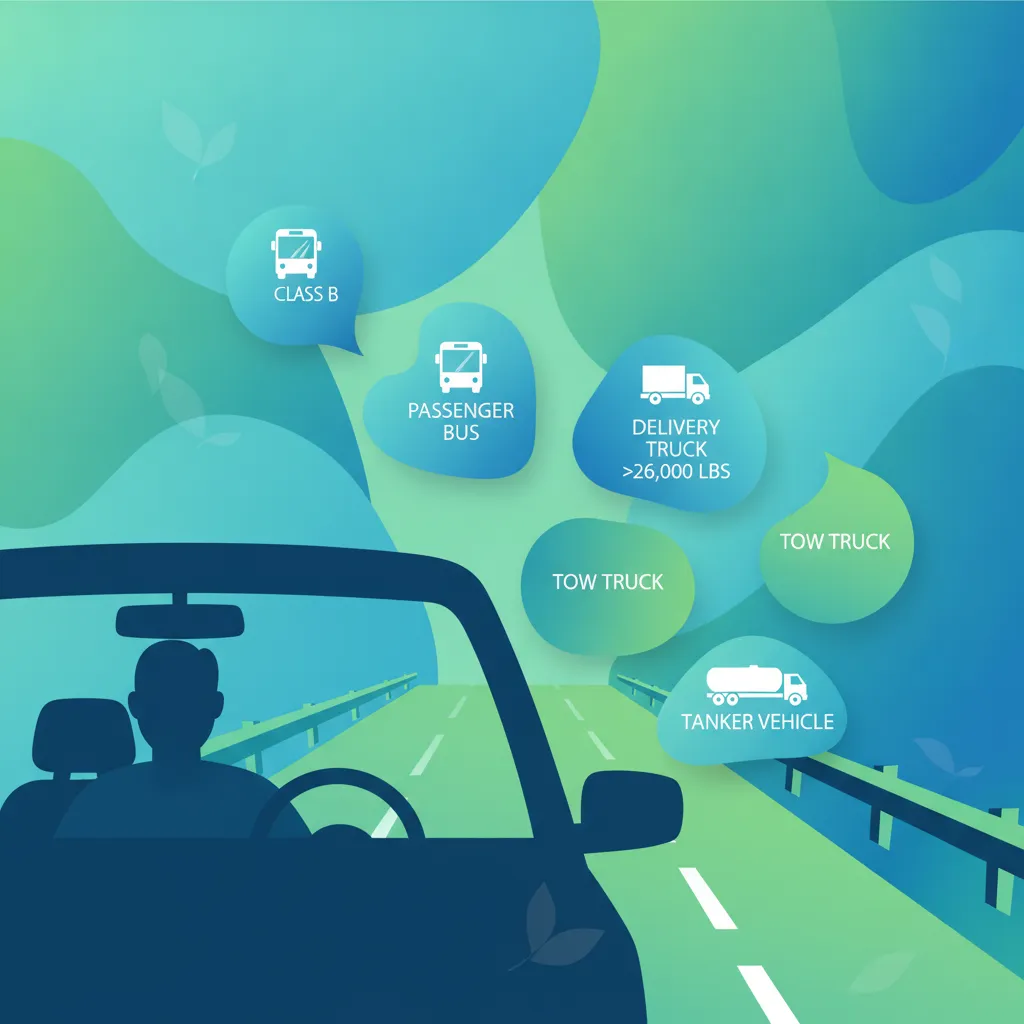
Lesson content overview
Welcome to the German Driving License Theory – Comprehensive Category B Course. This foundational lesson will thoroughly explain the specific vehicles you are legally permitted to operate with a German Class B driving license. Understanding these regulations is crucial not only for passing your theoretical exam but also for ensuring safe and compliant driving on German roads. We will cover passenger cars, light commercial vehicles, and the detailed rules concerning trailer towing, including the various subcategories.
The Class B driver's license is the most common category in Germany and across the European Union. It grants permission to drive a range of vehicles primarily designed for passenger transport and light goods. The key to understanding this category lies in its precise definitions regarding vehicle mass and passenger capacity.
The Class B license primarily authorizes the operation of passenger cars (Kraftwagen) and light commercial vehicles (leichte Nutzfahrzeuge). This includes standard sedans, hatchbacks, SUVs, vans, and light trucks. These vehicles are integral to daily life, and the Class B license ensures drivers are competent to handle their typical operational demands.
This category focuses on vehicles that are not excessively large or heavy, striking a balance between utility and manageability for the average driver. The scope of Class B is carefully defined to align with general driving skills and standard road infrastructure, preparing you for a wide array of common driving situations.
A critical factor determining whether a vehicle falls under Class B is its maximum permissible gross vehicle weight, known in German as Masse zulässiger Gesamtmasse (MGRZ) or sometimes zulässiges Gesamtgewicht (zGG). For a standard Class B license, this value must not exceed 3,500 kg. This limit includes the vehicle's own weight, the driver, all passengers, and any cargo.
This weight limit is a crucial safety measure, as it directly impacts a vehicle's braking distance, acceleration, and handling characteristics. Vehicles that exceed 3,500 kg MGRZ require a higher license class, such as C1, reflecting the increased demands on driver skill and vehicle knowledge.
It is a common misunderstanding to confuse the MGRZ (maximum permissible gross vehicle weight) with the Leergewicht (curb weight). The curb weight is the weight of the vehicle empty, including fuel and standard equipment, but without passengers or cargo. The MGRZ, however, is the absolute maximum weight the vehicle is legally allowed to be when fully loaded, including everything and everyone inside. Always refer to the vehicle's registration documents for its official MGRZ to ensure compliance.
In addition to weight, Class B licenses also have a specific limit on the number of passengers. With a Class B license, you are permitted to drive vehicles designed to carry up to 8 passengers in addition to the driver. This means a total of 9 seats, including the driver's seat.
Vehicles that are designed to transport more than 8 passengers plus the driver, such as larger minibuses or coaches, fall into different license categories (e.g., Class D1 or D). Adhering to this passenger limit is essential for safety, as vehicles designed for more occupants typically have different handling characteristics and safety requirements.
The Class B license also allows for towing trailers, but with specific weight restrictions that are crucial to understand. These regulations ensure that the combined weight of the towing vehicle and the trailer remains manageable and safe.
For a standard Class B license, there are two primary rules governing trailer towing:
You may tow a light trailer with a maximum permissible gross vehicle weight (MGV) of up to 750 kg. This covers many small utility trailers, boat trailers, or lightweight caravans. This limit applies regardless of the towing vehicle's weight.
If the trailer's MGV exceeds 750 kg, then a more complex rule applies: The total combined maximum permissible mass of the towing vehicle and the trailer together must not exceed 3,500 kg. This means that if your car has an MGV of 2,000 kg and you want to tow a trailer with an MGV of 1,500 kg, the total combined MGV is 3,500 kg, which is permissible with a standard Class B license. However, if your car's MGV is 2,800 kg, you could only tow a trailer with an MGV of up to 700 kg (2,800 kg + 700 kg = 3,500 kg) under a standard Class B license. The individual MGV of the trailer can be over 750kg, as long as the combined weight is less than 3500kg.
Beyond weight limits, successful and safe towing also depends on the correct technical setup. The towing vehicle must have an approved tow hitch (Kupplung) that is compatible with the trailer. Furthermore, trailers exceeding certain weight thresholds, typically above 750 kg MGV, are legally required to have their own independent braking system. This ensures adequate stopping power for the combined vehicle and trailer unit, significantly enhancing safety, particularly in emergencies or on descents.
For drivers who need to tow heavier trailers or larger caravan combinations, the German driving license system offers specific extensions and subcategories to the Class B license. These require additional training or examination to ensure the driver possesses the necessary skills for handling more complex and heavier vehicle combinations.
The Class B/E license is designed for drivers who need to tow trailers with an MGV greater than 750 kg, where the combined mass of the towing vehicle and trailer exceeds 3,500 kg. With a B/E license, you can tow a trailer with an MGV of up to 3,500 kg, provided the towing vehicle's MGV is also up to 3,500 kg. This means the total combined maximum permissible mass can be up to 7,000 kg (3,500 kg for the towing vehicle + 3,500 kg for the trailer). The B/E license requires a separate practical driving test.
The B96 extension is a simpler route for towing heavier combined vehicle weights without needing a full B/E license. With a B96, you can operate a vehicle combination (towing vehicle plus trailer) where the sum of their maximum permissible masses (MGV) is greater than 3,500 kg but does not exceed 4,250 kg. The towing vehicle itself must still have an MGV of no more than 3,500 kg, and the trailer's MGV can exceed 750 kg. Obtaining the B96 extension typically involves specific practical training but does not require a separate driving test.
The B/95 certification is a less common subcategory, usually relevant for very specific professional transport requirements. This certification allows for a higher maximum permissible mass of the tow vehicle itself, up to 4,250 kg (when towing certain types of trailers, often without a combined weight limit being the primary concern, but rather the individual axle loads and vehicle capabilities). This often applies to vehicles operating under special permits or for specific commercial purposes.
The B/95 certification typically requires passing a practical test focused on advanced trailer handling. This ensures that drivers operating these heavier vehicle-trailer combinations possess specialized skills for maneuvering, braking, and managing the unique dynamics involved with such loads. This training is more intensive than that for B96 and B/E, reflecting the increased complexity and potential risks.
Adhering to the specific scope and inclusions of the Class B license is not merely a recommendation; it is a legal requirement outlined in German traffic law (Straßenverkehrs-Ordnung, StVO) and driving license regulations. Compliance ensures your safety and the safety of others on the road, while non-compliance carries significant legal consequences.
The StVO provides the foundational rules for all road users in Germany, and the regulations regarding driving license classes are a core part of this framework. Driving a vehicle or a vehicle-trailer combination that exceeds the limits of your Class B license is considered driving without the proper authorization, which is a serious offense. This could lead to fines, points on your driving record, and even the revocation of your license.
Beyond the license itself, the vehicles you operate must also be roadworthy (verkehrssicher) and properly insured (versichert). Roadworthiness means the vehicle meets all technical standards, including properly functioning brakes, lights, tires, and steering. When towing, both the towing vehicle and the trailer must meet these standards individually, and their coupling must be secure and compliant.
Operating a vehicle without adequate insurance is illegal and can result in severe financial penalties in the event of an accident. It is important to ensure your insurance policy covers the specific vehicle types and towing combinations you intend to use.
Always check your vehicle's registration documents (Zulassungsbescheinigung Teil I) for its official maximum permissible gross vehicle weight (MGRZ) and other technical specifications. For trailers, similar documents will provide the trailer's MGV.
Understanding the intricacies of Class B regulations is essential to avoid common pitfalls that can lead to violations and compromise safety. Many drivers, often unintentionally, exceed their license limitations due to misunderstandings or oversight.
One of the most frequent violations is overloading a vehicle's mass or exceeding its passenger capacity. This can happen when drivers mistakenly assume the curb weight (Leergewicht) is the limiting factor, rather than the maximum permissible gross vehicle weight (MGRZ). Similarly, carrying more than 8 passengers plus the driver, even in a vehicle that physically accommodates them, is illegal for a Class B holder. Overloaded vehicles have significantly reduced braking performance, impaired handling, and increased wear on components, posing serious safety risks.
Another common issue arises with improper trailer weight or combined mass violations. Drivers might assume that as long as the total weight of the car and trailer feels manageable, it is legal. This often leads to towing trailers heavier than 750 kg without the necessary B/E or B96 endorsement, or exceeding the 3,500 kg combined mass limit for a standard Class B. Furthermore, using incorrect coupling equipment or neglecting to ensure the trailer has required braking systems also constitutes a violation and a major safety hazard, risking trailer detachment or loss of control.
Violating Class B regulations carries severe consequences. Aside from fines and points on your driving record, you could face legal charges for driving without the appropriate license (Fahren ohne Fahrerlaubnis), which can result in significant penalties, license revocation, or even imprisonment in serious cases. In the event of an accident, your insurance coverage could be voided if you were operating the vehicle illegally, leading to immense personal financial liability. The most critical consequence, however, is the increased risk of accidents, potentially leading to injuries or fatalities.
Compliance with Class B limits is fundamentally a matter of safety. The regulations are designed to ensure that drivers operate vehicles within manageable parameters, especially when external conditions or specific scenarios add complexity.
The weight and distribution of a vehicle's load profoundly affect its handling characteristics. A heavily loaded vehicle will have:
Proper weight distribution, with heavier items low and centered, is crucial to maintain vehicle stability.
Environmental factors significantly amplify the challenges of managing heavy loads.
As a driver, you bear the ultimate responsibility for ensuring your vehicle and any towed trailer comply with your license category and are operated safely. This includes:
These considerations are not just theoretical; they are practical aspects of defensive driving that directly mitigate risks and promote road safety for everyone.
Always consider a safety margin. Even if a load is technically within limits, demanding conditions might require an even more conservative approach to speed and maneuvering.
The German Class B driving license is a versatile authorization that permits you to operate passenger cars and light commercial vehicles. Its core limits are a maximum permissible gross vehicle weight (MGRZ) of 3,500 kg and a passenger capacity of up to 8 passengers plus the driver (total 9 seats).
When it comes to towing, a standard Class B license allows for trailers with an MGV of up to 750 kg. If the trailer's MGV exceeds 750 kg, the combined MGRZ of the towing vehicle and trailer must not exceed 3,500 kg. For heavier trailer combinations, specialized subcategories like B/E (combined MGV up to 7,000 kg), B96 (combined MGV up to 4,250 kg), and B/95 (special certification) are required, each necessitating additional training or a practical test.
Adhering to these regulations is paramount for road safety and legal compliance. Violations, such as overloading or improper trailer use, can lead to severe penalties, compromise safety, and potentially invalidate insurance coverage. Understanding the specific scope of your Class B license and its subcategories is a fundamental aspect of becoming a responsible and safe driver on German roads.
The German Class B license covers passenger cars and light commercial vehicles up to 3,500 kg MGRZ with seating for up to 9 people. Towing rules allow trailers up to 750 kg MGV freely, but heavier trailers require the combined weight to stay under 3,500 kg. Extended towing capabilities exist through B/E (up to 7,000 kg combined) and B96 (up to 4,250 kg combined), each with specific training requirements. Always verify official MGRZ from registration documents rather than estimating from curb weight, and remember that exceeding license limits invalidates insurance and constitutes a serious traffic offense under StVO.
A short set of high-value points that capture the most important learning from this lesson.
A standard Class B license permits vehicles with a maximum permissible gross vehicle weight (MGRZ) of 3,500 kg, including the vehicle, driver, passengers, and cargo.
Class B holders may transport up to 8 passengers plus the driver, for a total of 9 seats.
Trailers with an MGV up to 750 kg can be towed without restriction; if the trailer exceeds 750 kg, the combined MGV of vehicle and trailer must not exceed 3,500 kg.
The B/E subcategory allows towing trailers up to 3,500 kg MGV, with a combined maximum of 7,000 kg.
The B96 extension permits combined vehicle and trailer weights between 3,500 kg and 4,250 kg without requiring a full B/E license.
Explore all units and lessons included in this driving theory course.
MGRZ (Masse zulässiger Gesamtmasse) is the absolute maximum legal weight including everything inside the vehicle, not the curb weight (Leergewicht) which excludes passengers and cargo.
Standard Class B trailer rule: MGV up to 750 kg always permitted; if over 750 kg, combined total must stay at or below 3,500 kg.
Trailers exceeding 750 kg MGV must have their own independent braking system for legal compliance.
B/E requires a separate practical driving test; B96 requires only practical training without a separate test.
Operating outside your license scope voids insurance coverage and may constitute driving without authorization (Fahren ohne Fahrerlaubnis).
Confusing curb weight (Leergewicht) with MGRZ, leading to unintentional overloading because drivers only check the empty vehicle weight.
Assuming that if the car-trailer combination feels manageable, it must be legal, rather than calculating against the official 3,500 kg combined limit.
Towing a trailer exceeding 750 kg MGV without the required B/E or B96 endorsement.
Carrying more than 8 passengers plus the driver, even in a vehicle that physically fits more people.
Using improper coupling equipment or neglecting to verify the trailer has required braking systems.
Lesson content overview
A short set of high-value points that capture the most important learning from this lesson.
A standard Class B license permits vehicles with a maximum permissible gross vehicle weight (MGRZ) of 3,500 kg, including the vehicle, driver, passengers, and cargo.
Class B holders may transport up to 8 passengers plus the driver, for a total of 9 seats.
Trailers with an MGV up to 750 kg can be towed without restriction; if the trailer exceeds 750 kg, the combined MGV of vehicle and trailer must not exceed 3,500 kg.
The B/E subcategory allows towing trailers up to 3,500 kg MGV, with a combined maximum of 7,000 kg.
The B96 extension permits combined vehicle and trailer weights between 3,500 kg and 4,250 kg without requiring a full B/E license.
Explore all units and lessons included in this driving theory course.
MGRZ (Masse zulässiger Gesamtmasse) is the absolute maximum legal weight including everything inside the vehicle, not the curb weight (Leergewicht) which excludes passengers and cargo.
Standard Class B trailer rule: MGV up to 750 kg always permitted; if over 750 kg, combined total must stay at or below 3,500 kg.
Trailers exceeding 750 kg MGV must have their own independent braking system for legal compliance.
B/E requires a separate practical driving test; B96 requires only practical training without a separate test.
Operating outside your license scope voids insurance coverage and may constitute driving without authorization (Fahren ohne Fahrerlaubnis).
Confusing curb weight (Leergewicht) with MGRZ, leading to unintentional overloading because drivers only check the empty vehicle weight.
Assuming that if the car-trailer combination feels manageable, it must be legal, rather than calculating against the official 3,500 kg combined limit.
Towing a trailer exceeding 750 kg MGV without the required B/E or B96 endorsement.
Carrying more than 8 passengers plus the driver, even in a vehicle that physically fits more people.
Using improper coupling equipment or neglecting to verify the trailer has required braking systems.
Explore search topics learners often look for when studying Scope and Inclusions of Class B. These topics reflect common questions about road rules, driving situations, safety guidance, and lesson level theory preparation for learners in Germany.
Browse additional driving theory lessons that cover connected traffic rules, road signs, and common driving situations related to this topic. Improve your understanding of how different rules interact across everyday traffic scenarios.
Explore the precise vehicle classifications, maximum permissible weights, and trailer towing rules applicable to the German Category B driving license. Learn the legal definitions and boundaries for cars and light commercial vehicles to ensure compliance with StVO.
This lesson explains the specific rules and limitations for towing trailers with a Category B license in Germany. It details how to calculate the permissible total weight of the car and trailer combination. The lesson also covers the practical aspects of safely coupling a trailer, checking its lights, and the changes in vehicle handling that drivers must adapt to when towing.
This lesson covers the general permissions and limitations that come with holding a German Category B driving license. It clarifies the conditions for license eligibility, including medical fitness and mandatory vehicle insurance coverage. The content also addresses potential restrictions, the process for obtaining special permits, and the circumstances that can lead to a temporary or permanent driving ban.

This lesson provides a detailed overview of the German licence categories C1, C1E, C, and CE, explaining the specific vehicle weight limits associated with each class. It clarifies the legal definitions that differentiate rigid trucks from vehicle combinations. You will also learn about the required driver qualifications and the theoretical knowledge necessary for each category.

This lesson explains the legal and safety requirements for transporting goods and cargo. It covers the importance of proper load distribution to maintain vehicle stability and the methods for securely fastening items to prevent them from shifting or falling. The regulations concerning maximum vehicle weight, roof loads, and the correct marking of loads that overhang the vehicle are also detailed.

This lesson covers the dimensional limits for heavy vehicles, focusing on height, width, and length restrictions. It explains how to interpret clearance signage for bridges, tunnels, and overhead obstacles, and discusses the implications for route planning. The content also addresses the importance of understanding turning radii and swept paths to avoid collisions.

This lesson introduces the various types of trailers, including rigid trailers, low-loaders, and refrigerated units. It explains the different coupling devices, such as fifth wheel couplings and drawbars, and the importance of ensuring compatibility. The content also covers the function of safety latches and kingpin systems.
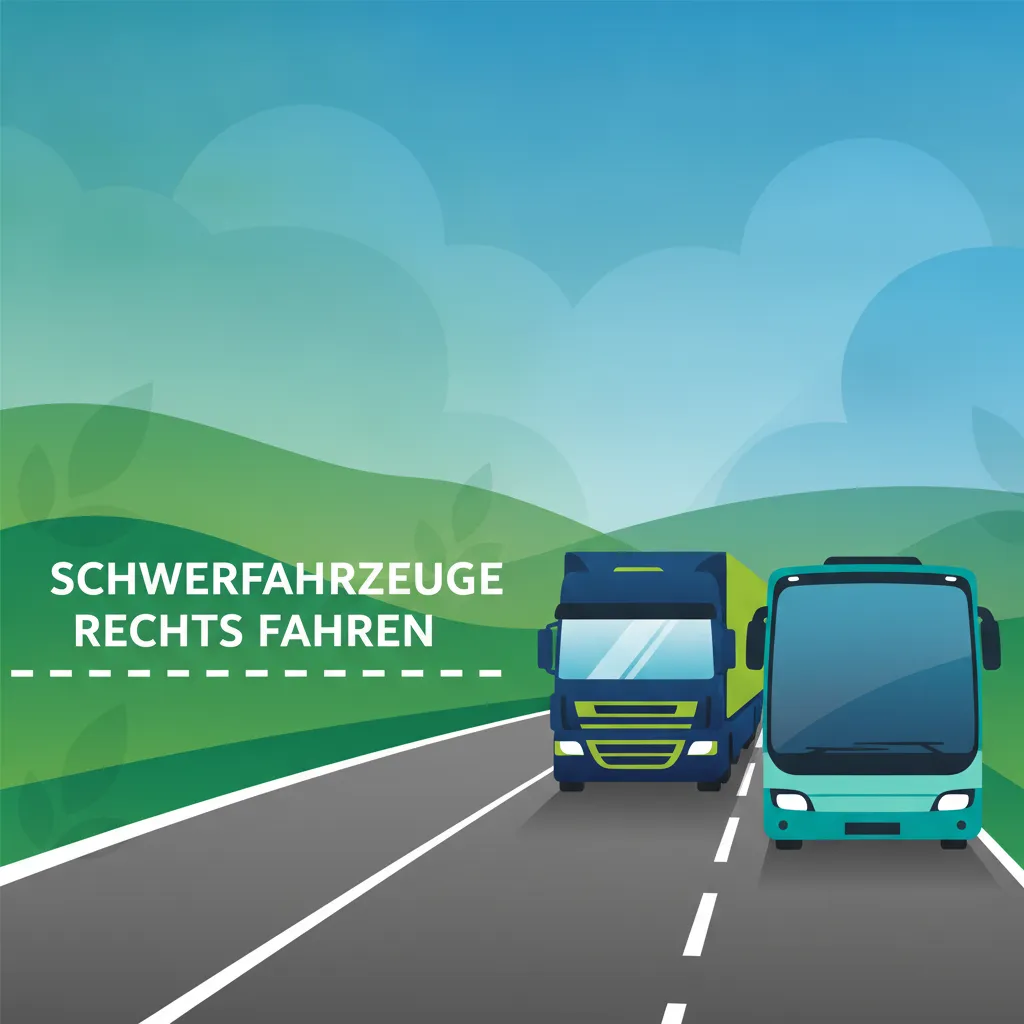
This lesson explains the specific regulations for operating heavy vehicles on Autobahnen, including speed limits, lane discipline, and overtaking rules. It discusses the use of dedicated truck lanes and the importance of maintaining appropriate following distances. The content also covers procedures for merging and exiting high-speed roads safely.
This lesson explains the specific rules for two special German driving license programs: BF17 (Accompanied Driving at 17) and the B197 extension. It details the requirements for young drivers and their supervisors under the BF17 program. Furthermore, it explains how the B197 regulation allows drivers trained on automatic vehicles to also operate manual transmission cars after completing specific training.
This lesson provides specialized instruction for drivers of D1E and DE category vehicles, which involve towing a trailer. It covers the physics of vehicle combinations, including the effects of the articulation point on turning and reversing. Learners will understand principles of split braking systems, proper load distribution to prevent trailer sway, and the additional safety checks required before operating such a combination.
This lesson focuses on the distribution of loads across axle groups and the legal limits for axle loads. It explains the importance of correct weight distribution to avoid axle overloading, which can lead to road damage and safety hazards. The content also covers methods for measuring axle loads and the legal requirements for maintaining proper axle load limits.
Delve into the specific German driving theory for towing trailers with a Category B license. This lesson covers permissible trailer weights, coupling rules, and requirements for light trailers and caravans to ensure safe and legal operation.
This lesson explains the specific rules and limitations for towing trailers with a Category B license in Germany. It details how to calculate the permissible total weight of the car and trailer combination. The lesson also covers the practical aspects of safely coupling a trailer, checking its lights, and the changes in vehicle handling that drivers must adapt to when towing.
This lesson provides specialized instruction for drivers of D1E and DE category vehicles, which involve towing a trailer. It covers the physics of vehicle combinations, including the effects of the articulation point on turning and reversing. Learners will understand principles of split braking systems, proper load distribution to prevent trailer sway, and the additional safety checks required before operating such a combination.
This lesson introduces the various types of trailers, including rigid trailers, low-loaders, and refrigerated units. It explains the different coupling devices, such as fifth wheel couplings and drawbars, and the importance of ensuring compatibility. The content also covers the function of safety latches and kingpin systems.
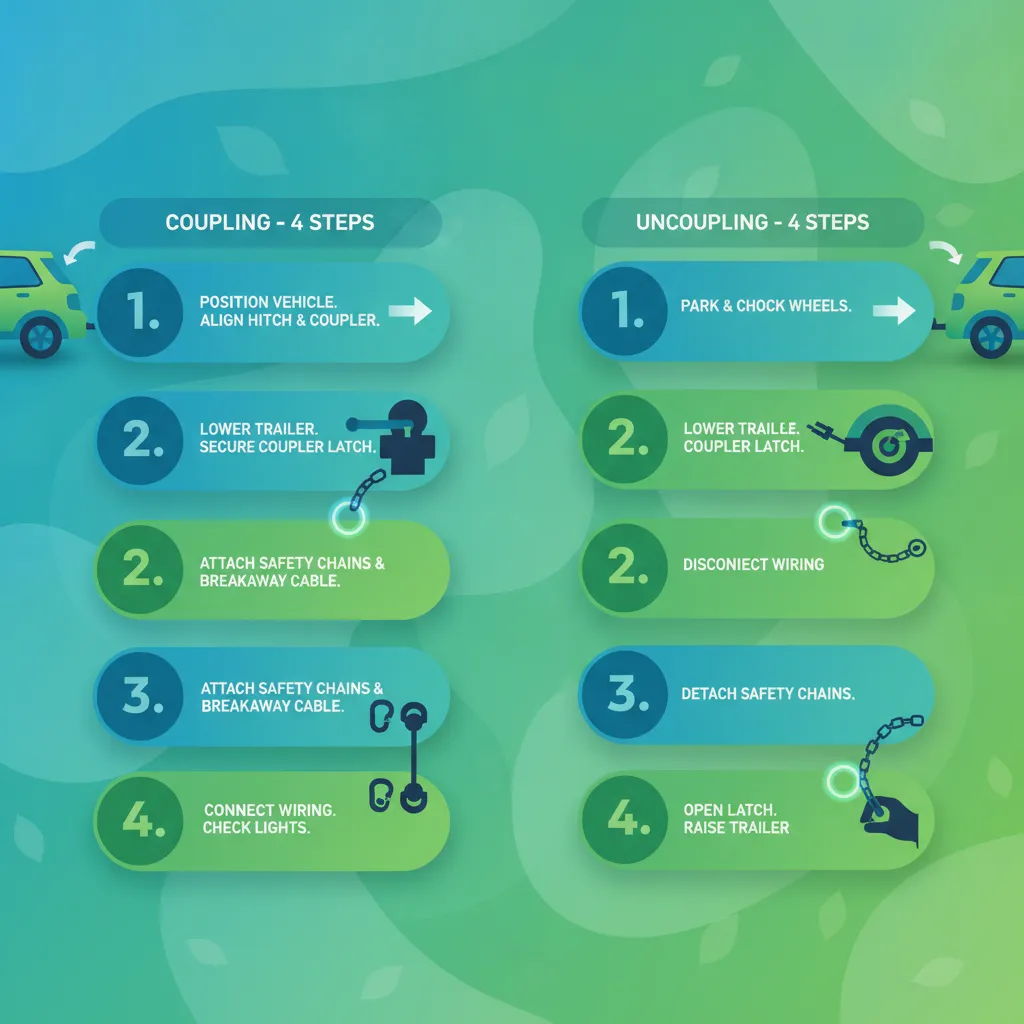
This lesson outlines the standard procedure for coupling and uncoupling trailers, emphasizing safety checks such as verifying the lock, hand brake, and brake connections. It discusses the importance of wheel chocks and correct alignment of the tow vehicle. The content includes a visual inspection checklist to ensure a secure connection.
This lesson explains the specific regulations for operating heavy vehicles on Autobahnen, including speed limits, lane discipline, and overtaking rules. It discusses the use of dedicated truck lanes and the importance of maintaining appropriate following distances. The content also covers procedures for merging and exiting high-speed roads safely.
This lesson covers the dimensional limits for heavy vehicles, focusing on height, width, and length restrictions. It explains how to interpret clearance signage for bridges, tunnels, and overhead obstacles, and discusses the implications for route planning. The content also addresses the importance of understanding turning radii and swept paths to avoid collisions.
This lesson provides a detailed overview of the German licence categories C1, C1E, C, and CE, explaining the specific vehicle weight limits associated with each class. It clarifies the legal definitions that differentiate rigid trucks from vehicle combinations. You will also learn about the required driver qualifications and the theoretical knowledge necessary for each category.
This lesson provides a detailed breakdown of the German licence categories D1, D1E, D, and DE. It explains the legal definitions, including permissible vehicle dimensions, passenger capacity, and rules for operating vehicle combinations. Key regulations from the Straßenverkehrs-Ordnung (StVO) pertaining to passenger transport are examined to provide a solid legal foundation for professional driving.
This lesson covers the general permissions and limitations that come with holding a German Category B driving license. It clarifies the conditions for license eligibility, including medical fitness and mandatory vehicle insurance coverage. The content also addresses potential restrictions, the process for obtaining special permits, and the circumstances that can lead to a temporary or permanent driving ban.

This lesson outlines the legal requirements for vehicle roadworthiness, including mandatory periodic inspections (TÜV) and the issuance of safety certificates. It explains the standards for emissions, safety devices, and the proper documentation of defects. The content underscores the importance of complying with inspection intervals and addressing repair obligations promptly.
Find clear answers to common questions learners have about Scope and Inclusions of Class B. Learn how the lesson is structured, which driving theory objectives it supports, and how it fits into the overall learning path of units and curriculum progression in Germany. These explanations help you understand key concepts, lesson flow, and exam focused study goals.
A Category B license allows you to drive motor vehicles with a maximum permissible mass not exceeding 3,500 kg, designed for the carriage of no more than eight passengers excluding the driver.
You can tow a trailer with a maximum permissible mass not exceeding 750 kg, or a heavier trailer provided the total permissible mass of the vehicle and trailer combination does not exceed 3,500 kg.
Yes, provided the motorhome does not exceed the maximum permissible mass of 3,500 kg. If it exceeds this weight, a different license category is required.
Yes, German regulations allow for higher weight limits for certain alternative fuel and electric vehicles to account for the weight of batteries, often extending to 4,250 kg under specific conditions.
Begin your targeted revision now. Use our practice search to quickly find specific German driving theory questions. Filter by StVO rules, road signs, or hazard perception to create your focused study plan. Master challenging areas and prepare confidently for your theoretical driving test.