
This lesson explores the technical and legal requirements for axle load distribution in heavy vehicles. Understanding these limits is essential for maintaining vehicle stability, preventing road damage, and ensuring you comply with German traffic regulations during your C-category theory examination.

Lesson content overview
Understanding how weight is distributed across your heavy vehicle's axles is paramount for safe operation and legal compliance in Germany. Incorrect axle load distribution can lead to severe consequences, from accelerated road wear and structural damage to vehicle instability and dangerous accidents. This lesson will thoroughly explain the principles, legal requirements, measurement techniques, and critical importance of maintaining proper axle load limits for German heavy vehicle driving license categories C1, C1E, C, and CE.
Axle load distribution refers to how the total weight of a vehicle, including its tare weight (empty weight) and payload (cargo and passengers), is spread across its individual axles or axle groups. Each axle or axle group is designed to carry a specific maximum weight, known as its legal axle load limit. Adhering to these limits is not merely a bureaucratic requirement; it is a fundamental aspect of road safety and infrastructure preservation.
Roads, bridges, and other infrastructure elements are engineered to withstand certain loads. When heavy vehicles exceed these limits, especially on individual axles, they inflict disproportionate stress, leading to premature cracking, rutting, and overall deterioration of road surfaces. This accelerated wear costs millions in public funds for repairs and compromises safety for all road users.
Proper weight distribution is vital for maintaining a heavy vehicle's stability, steering responsiveness, and braking efficiency. An overloaded front axle can impair steering control, while an overloaded rear axle can reduce front-wheel traction, making steering difficult and potentially leading to skidding, especially under braking or on slippery surfaces. Balanced loads minimize the risk of rollovers, especially when cornering or encountering sudden maneuvers.
German law, particularly the Road Traffic Regulations (Straßenverkehrs-Ordnung – StVO) and the Vehicular Traffic Act (Straßenverkehrsgesetz – StVG), imposes strict limits on axle loads. Non-compliance results in significant fines, points on the driver's license, and in severe cases, vehicle impoundment or even the suspension of the driving license. Professional drivers must understand and rigorously follow these regulations to avoid legal repercussions.
For legal and technical purposes, axles on heavy vehicles are often considered in "axle groups" rather than individually. An axle group comprises one or more axles that are positioned closely together and designed to share the load. The load limits are typically specified for these groups.
A collection of one or more axles that are considered together for the purpose of load distribution and legal weight limits. These groups are designed to share the vehicle's overall weight effectively.
Heavy vehicles commonly feature different configurations of axle groups, each with its own legal maximum load:
The specific maximum permitted axle load for each of these groups is stipulated in the vehicle's registration documents (Fahrzeugschein) and in national regulations. Drivers must always refer to these official documents, as limits can vary based on vehicle type, suspension system, and national laws. A common misunderstanding among drivers is to consider each axle individually, rather than understanding that the group as a whole has a defined limit. For example, a tandem rear axle group has a single overall limit that applies to the combined weight carried by both axles within that group.
The maximum permissible axle loads are strictly regulated in Germany to ensure road safety and protect infrastructure. These limits are not arbitrary; they are based on the structural capacity of roads and bridges and the design specifications of the vehicles themselves.
The highest legally allowed weight that a specific axle group is permitted to carry on public roads. This limit is set by law and specified in the vehicle's official registration documents.
These limits are a critical part of a heavy vehicle's specifications. For instance, a common front axle limit might be 7,500 kg, while a tandem drive axle might be limited to 11,500 kg per axle or a combined 18,000 kg for the group, depending on the number of axles and spacing. These values are crucial when calculating the payload and distributing cargo.
It is imperative that the measured axle load, which is the actual weight resting on an axle group at any given time, never exceeds the maximum permitted axle load as specified in the vehicle's registration documents (Fahrzeugschein). The vehicle's rated capacity for an axle group is its maximum design limit, and this must always align with or exceed the legal limit to ensure safe operation.
The Straßenverkehrs-Ordnung (StVO) explicitly states that drivers are responsible for ensuring their vehicle's loading, including the distribution of weight, does not exceed the legally permitted axle loads. This applies to all motor vehicles operating on public roads in Germany.
StVO Rule: Drivers must ensure that the loading does not exceed the legally permitted axle loads as indicated in the vehicle registration documents (Fahrzeugschein). This rule is mandatory and aims to prevent damage to road infrastructure and ensure safe vehicle operation.
This regulation places a direct responsibility on the driver. Before commencing a journey, especially with a laden heavy vehicle, a driver must verify that the cargo has been positioned correctly to avoid individual axle groups being overloaded. Ignoring these limits can lead to significant legal consequences and pose serious safety hazards.
Beyond direct fines, the Straßenverkehrsgesetz (StVG) addresses liability in the event of an accident involving an overloaded vehicle. If an accident occurs and the vehicle is found to be overloaded beyond its permitted axle loads, the driver (and potentially the vehicle owner or operator) can be held liable for damages.
StVG Rule: In the event of an accident, the driver is liable for damages if the vehicle was overloaded beyond the permitted axle loads. This is a mandatory regulation, as overloading significantly increases the risk and potential severity of accidents.
This means that even if the overloading was not the sole cause of the accident, it could be a contributing factor, increasing the driver's legal and financial burden. This underscores the importance of stringent adherence to axle load limits not just for preventing fines, but for mitigating severe legal consequences in unfortunate events.
Accurately determining the weight carried by each axle group is a fundamental step in ensuring compliance with legal limits and safe vehicle operation. Reliance on visual estimation is insufficient and often leads to inadvertent overloading.
Static weighing is the most common and accurate method for measuring axle loads. It involves parking the vehicle on a certified weighing platform or a series of individual axle scales.
The vehicle is driven onto a weighbridge, either as a whole or one axle group at a time.
The scale records the precise weight resting on the axle group(s).
This process is repeated for all axle groups until the weight for each, and the total gross vehicle weight, are obtained.
Any necessary adjustments to cargo placement are made, and the vehicle is re-weighed to confirm compliance.
Static weighing is highly accurate and is typically performed at logistics depots, designated public weigh stations, or roadside inspection points. It provides definitive proof of compliance or identifies areas requiring load adjustment.
Dynamic weighing involves driving the vehicle over specialized sensors embedded in the road surface while it is in motion. These systems estimate the axle loads as the vehicle passes over them.
A method of estimating axle loads by driving the vehicle over sensors embedded in the road while in motion. While less precise than static weighing, it is useful for screening and high-volume checks.
Dynamic weighing is often used by authorities for preliminary checks to identify potentially overloaded vehicles that then require a more precise static weigh-in. While convenient, its accuracy can be influenced by vehicle speed, suspension characteristics, and road surface conditions.
Best Practice: Always weigh your heavy vehicle after loading, and certainly before embarking on a long journey, especially if the load distribution feels uncertain or if you are carrying unusual cargo. If the initial weighing reveals an overloaded axle group, the cargo must be redistributed, and the vehicle re-weighed until all axle loads are within legal limits.
Some drivers mistakenly rely on the overall permissible mass (Gross Vehicle Weight – GVW) and assume that if the total weight is acceptable, then axle loads must also be. This is a dangerous misconception. An overall legal GVW does not guarantee that individual axle groups are not overloaded due to poor weight distribution.
Exceeding axle load limits carries a multitude of serious consequences, impacting vehicle safety, mechanical integrity, and the driver's legal standing.
An overloaded axle group places excessive stress on numerous vehicle components, leading to accelerated wear and potential failure:
The mechanical stresses of overloading directly translate into severe safety hazards on the road:
The legal ramifications for exceeding axle load limits in Germany are severe and designed to deter non-compliance:
The employer or vehicle owner can also face penalties if they knowingly or negligently allow an overloaded vehicle to operate.
Despite clear regulations, heavy vehicle drivers frequently make errors regarding axle load distribution. Awareness of these common pitfalls can help prevent violations.
Axle load distribution and its risks are not static; they are significantly influenced by various external and internal factors. Professional drivers must consider these conditional variations.
Understanding the direct cause-and-effect relationships between load distribution and vehicle dynamics is key to safe heavy vehicle operation.
Let's look at real-world scenarios to solidify the understanding of axle load distribution.
Setting: A truck driver is loading a heavy goods vehicle with a tandem rear axle in a German logistics center for a journey across the country. The truck has a legal front axle limit of 8,000 kg and a tandem rear axle limit of 19,000 kg. The total permissible GVW is 26,000 kg. The tare weight is 10,000 kg.
Rule/Decision Point: The driver needs to ensure the cargo (payload) is distributed so that neither the front nor the tandem rear axle group exceeds its legal limit, and the total GVW remains within 26,000 kg.
Correct Behavior: The driver uses load planning software or manual calculations to estimate the weight distribution. They prioritize placing heavier items closer to the center of the vehicle's load bed, ensuring even distribution over the tandem axles. After loading, they drive the truck to a certified weighbridge at the depot. The measurements confirm the front axle is at 7,500 kg and the tandem rear axle is at 18,000 kg, with a total GVW of 25,500 kg. All limits are respected.
Incorrect Behavior: The driver quickly loads the cargo, placing a disproportionate amount of heavy items towards the very rear of the trailer, without checking the distribution. Visually, the truck doesn't seem "overloaded" overall. Upon a roadside inspection, it's discovered that while the total GVW is 25,000 kg (within limits), the tandem rear axle group is carrying 21,000 kg, exceeding its 19,000 kg limit. This leads to a substantial fine and requires immediate redistribution of the load.
Explanation: Even if the overall vehicle weight is within limits, poor load placement can easily lead to an overloaded axle group. This highlights the necessity of accurate measurement and careful planning, not just visual estimation.
Setting: A heavy truck with a crane is delivering bags of cement to a construction site in a dense urban area of Germany. The truck has a single front axle and a tandem rear axle.
Rule/Decision Point: The driver must ensure the axle loads are within limits, especially considering the added dynamic load and shifting center of gravity when operating the crane, and the tight maneuvering required in the city.
Correct Behavior: Before leaving the depot, the driver confirms the weight of the cement bags and plans their placement to ensure an even load over the tandem rear axles and adequate weight on the front steering axle for control. During delivery, the driver positions the truck carefully, understanding that operating the crane will temporarily shift the center of gravity and potentially increase stress on certain axles. The driver completes the delivery safely without incident, aware of the extended braking distances of a loaded vehicle in urban traffic.
Incorrect Behavior: The driver loads too much cement towards the front of the load bed, overloading the front steering axle. In the city, this makes steering heavy and less responsive. When braking suddenly for a pedestrian, the overloaded front tires struggle for grip, and the stopping distance is significantly extended, narrowly avoiding an accident. Furthermore, operating the crane with an already front-heavy load puts undue stress on the front suspension and chassis.
Explanation: In urban environments, precise vehicle control and efficient braking are paramount. Overloading any axle, especially the steering axle, severely compromises these capabilities, increasing risks to both the driver and vulnerable road users.
Mastering the principles of axle load distribution and adhering to German legal limits is a cornerstone of professional heavy vehicle driving. It transcends mere compliance, directly influencing road safety, vehicle longevity, and the preservation of critical infrastructure.
Remember these key takeaways:
By diligently applying these principles, heavy vehicle drivers contribute to safer roads for everyone, protect valuable infrastructure, and maintain their professional standing.
Axle load distribution involves spreading total vehicle weight across individual axles or axle groups, each with strict legal maximums defined in German regulations and the vehicle's Fahrzeugschein. Single, tandem, and tridem axle groups carry combined limits applied to the group as a whole, making proper cargo placement critical for compliance. Accurate measurement through certified static or dynamic weighing is essential since visual estimation cannot reliably detect overloaded axle groups. Even when total GVW is legal, poor weight distribution can still overload individual axle groups. Overloading produces cascading consequences: mechanical failures (tire blowouts, suspension damage, brake wear), severe safety hazards (increased stopping distances, reduced steering control, higher rollover risk), and serious legal penalties including fines, points on the driver's license, and increased liability in accidents under StVG provisions.
A short set of high-value points that capture the most important learning from this lesson.
Axle load distribution describes how total vehicle weight (tare weight plus payload) is spread across individual axles or axle groups, each with specific legal maximum limits defined in the Fahrzeugschein.
Germany regulates axle loads under StVO and StVG; drivers bear direct legal responsibility for ensuring their vehicle's loading does not exceed permitted axle loads.
Axle groups (single, tandem, tridem) have combined legal limits that apply to the group as a whole, not to each axle individually.
Accurate measurement through certified static weighing or calibrated dynamic weighing is essential; visual estimation cannot reliably detect overloaded axle groups.
Overloading carries severe consequences across multiple dimensions: mechanical component damage, safety hazards (reduced braking, instability, rollover risk), and legal penalties including fines, points, and increased liability.
Explore all units and lessons included in this driving theory course.
Tandem and tridem axle groups have combined maximum limits; placing too much cargo in one area can overload the group even when overall GVW is legal.
Always weigh your vehicle after loading and reweigh after any load adjustment until all axle groups are confirmed compliant.
Even if total GVW is within limits, poor cargo placement can still overload individual axle groups and violate their specific limits.
Weather conditions (wet/icy roads, hot temperatures) significantly compound the safety risks associated with overloaded axles.
In urban environments, overloaded steering axles severely reduce maneuverability and extend braking distances, endangering vulnerable road users.
Assuming that as long as gross vehicle weight is legal, all individual axle loads must also be within limits.
Failing to reweigh after redistributing cargo to correct an initial overload, assuming the adjustment was sufficient.
Incorrectly treating each axle within a tandem or tridem group as having its own separate limit rather than a combined group limit.
Using unofficial or uncalibrated weighing equipment, leading to inaccurate measurements and false confidence.
Ignoring that trailer axle groups have their own separate legal limits which contribute to gross combination mass.
Lesson content overview
A short set of high-value points that capture the most important learning from this lesson.
Axle load distribution describes how total vehicle weight (tare weight plus payload) is spread across individual axles or axle groups, each with specific legal maximum limits defined in the Fahrzeugschein.
Germany regulates axle loads under StVO and StVG; drivers bear direct legal responsibility for ensuring their vehicle's loading does not exceed permitted axle loads.
Axle groups (single, tandem, tridem) have combined legal limits that apply to the group as a whole, not to each axle individually.
Accurate measurement through certified static weighing or calibrated dynamic weighing is essential; visual estimation cannot reliably detect overloaded axle groups.
Overloading carries severe consequences across multiple dimensions: mechanical component damage, safety hazards (reduced braking, instability, rollover risk), and legal penalties including fines, points, and increased liability.
Explore all units and lessons included in this driving theory course.
Tandem and tridem axle groups have combined maximum limits; placing too much cargo in one area can overload the group even when overall GVW is legal.
Always weigh your vehicle after loading and reweigh after any load adjustment until all axle groups are confirmed compliant.
Even if total GVW is within limits, poor cargo placement can still overload individual axle groups and violate their specific limits.
Weather conditions (wet/icy roads, hot temperatures) significantly compound the safety risks associated with overloaded axles.
In urban environments, overloaded steering axles severely reduce maneuverability and extend braking distances, endangering vulnerable road users.
Assuming that as long as gross vehicle weight is legal, all individual axle loads must also be within limits.
Failing to reweigh after redistributing cargo to correct an initial overload, assuming the adjustment was sufficient.
Incorrectly treating each axle within a tandem or tridem group as having its own separate limit rather than a combined group limit.
Using unofficial or uncalibrated weighing equipment, leading to inaccurate measurements and false confidence.
Ignoring that trailer axle groups have their own separate legal limits which contribute to gross combination mass.
Explore search topics learners often look for when studying Axle Load Distribution and Legal Limits. These topics reflect common questions about road rules, driving situations, safety guidance, and lesson level theory preparation for learners in Germany.
Browse additional driving theory lessons that cover connected traffic rules, road signs, and common driving situations related to this topic. Improve your understanding of how different rules interact across everyday traffic scenarios.
Understand the legal requirements for axle load distribution in Germany for C1, C1E, C, and CE driving licences. Learn how to calculate and maintain correct weight distribution to avoid road damage and ensure vehicle safety.

This lesson provides a detailed overview of the German licence categories C1, C1E, C, and CE, explaining the specific vehicle weight limits associated with each class. It clarifies the legal definitions that differentiate rigid trucks from vehicle combinations. You will also learn about the required driver qualifications and the theoretical knowledge necessary for each category.
This lesson explains the specific regulations for operating heavy vehicles on Autobahnen, including speed limits, lane discipline, and overtaking rules. It discusses the use of dedicated truck lanes and the importance of maintaining appropriate following distances. The content also covers procedures for merging and exiting high-speed roads safely.

This lesson covers the dimensional limits for heavy vehicles, focusing on height, width, and length restrictions. It explains how to interpret clearance signage for bridges, tunnels, and overhead obstacles, and discusses the implications for route planning. The content also addresses the importance of understanding turning radii and swept paths to avoid collisions.

This lesson explains the specific rules and limitations for towing trailers with a Category B license in Germany. It details how to calculate the permissible total weight of the car and trailer combination. The lesson also covers the practical aspects of safely coupling a trailer, checking its lights, and the changes in vehicle handling that drivers must adapt to when towing.
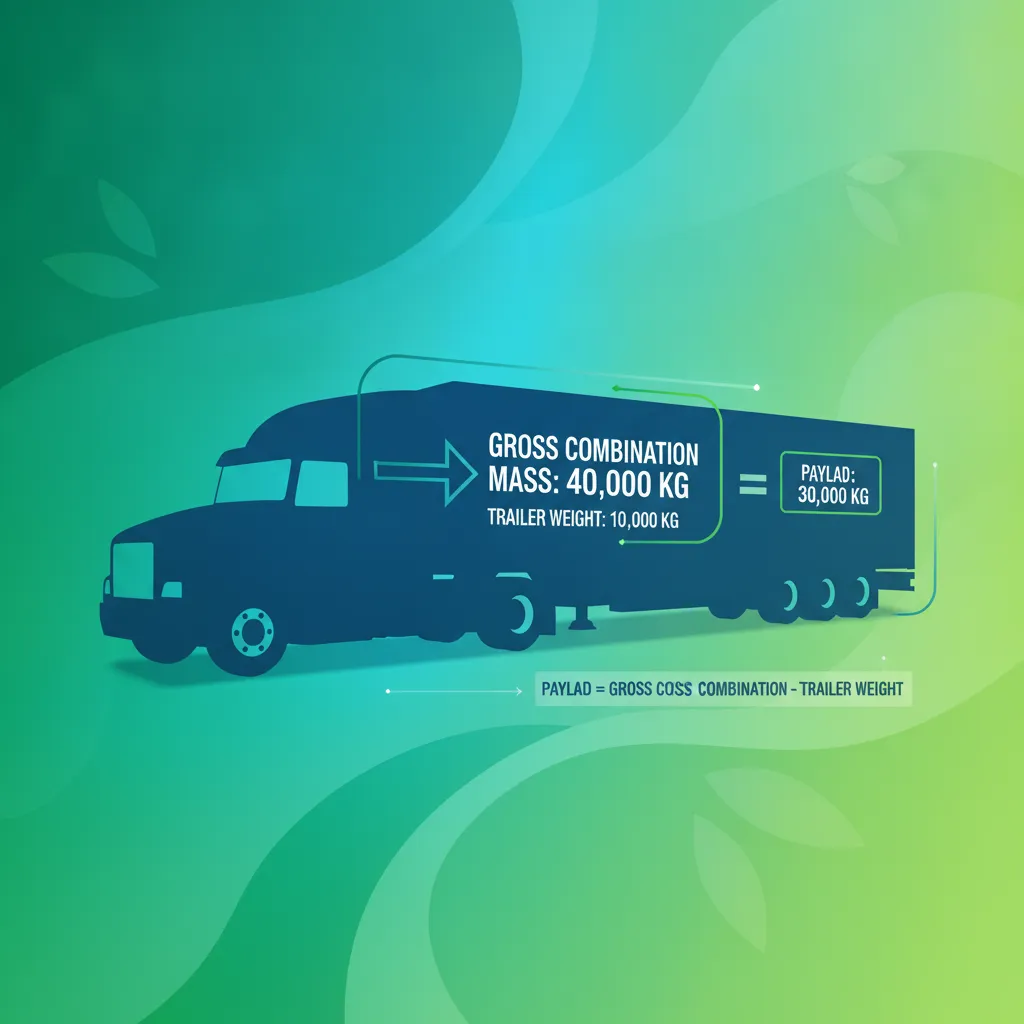
This lesson teaches how to calculate the payload and gross combination mass (GCM) for vehicle combinations. It explains the difference between vehicle mass and payload, and introduces the concept of tongue load and its impact on handling and braking. The content provides practical examples and calculation formulas for determining permissible loads for safe operation.

This lesson defines the specific vehicle types covered by the German Category B license, focusing on passenger cars and light commercial vehicles. It details the regulations concerning maximum permissible gross vehicle weight and the legal limits for towing trailers. You will learn to identify which vehicles fall under this category according to German and EU standards to ensure full compliance.

This lesson explains the legal and safety requirements for transporting goods and cargo. It covers the importance of proper load distribution to maintain vehicle stability and the methods for securely fastening items to prevent them from shifting or falling. The regulations concerning maximum vehicle weight, roof loads, and the correct marking of loads that overhang the vehicle are also detailed.

This lesson introduces the fundamental structural components of heavy vehicles, focusing on the frame and chassis design. It explains the role of different suspension types, such as leaf springs and air suspension, in load distribution and ride comfort. The content also discusses how chassis rigidity and material fatigue affect vehicle safety and longevity.

This lesson focuses on the importance of thorough route planning for heavy vehicles, taking into account dimensional and weight limits. It discusses how to use mapping tools and road signage to identify bridges, tunnels, and roads with restrictions. The content also covers how to plan alternative routes to avoid impassable areas.
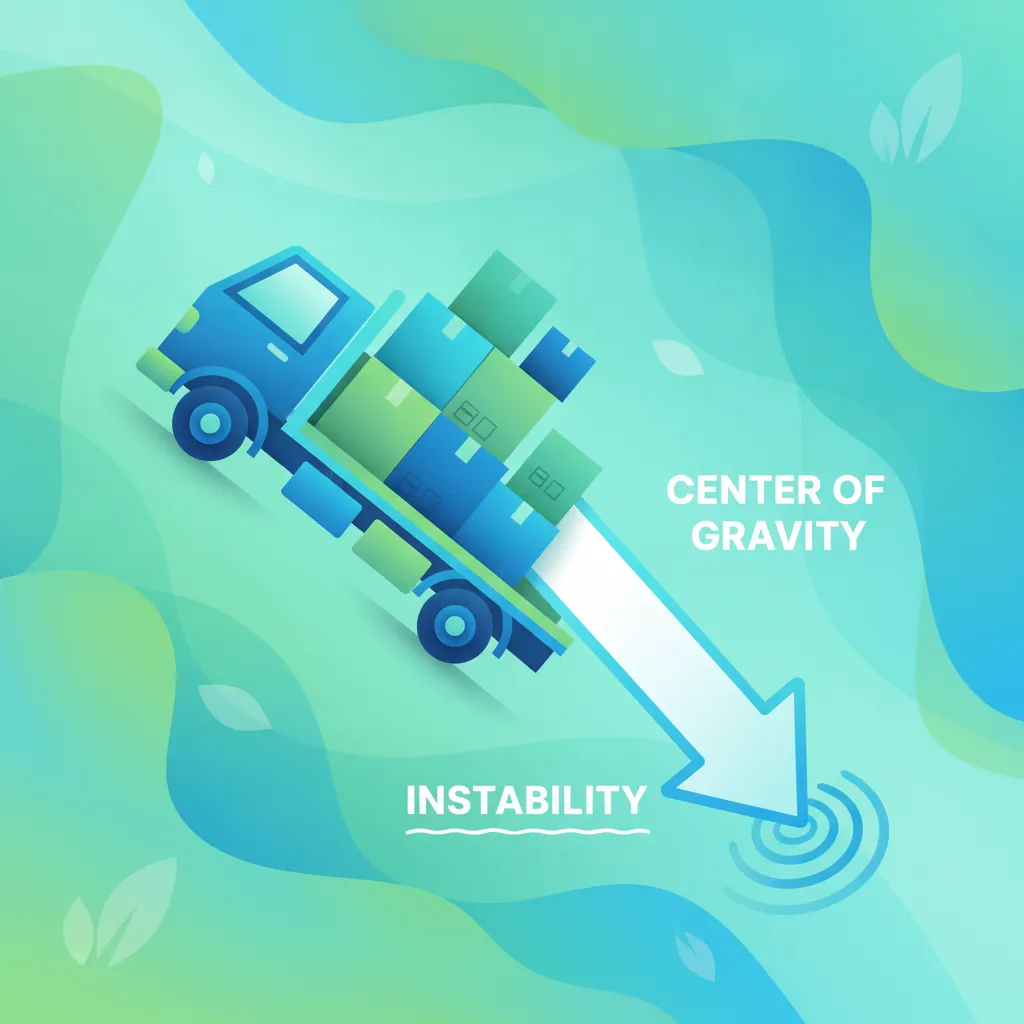
This lesson introduces the principles of load distribution and the impact of the centre of gravity on vehicle stability. It explains how cargo placement influences axle loads and the overall balance of the vehicle. The content emphasizes the importance of maintaining a low centre of gravity to reduce rollover risk.
Explore the critical importance of managing gross combination mass, payload, and axle load distribution for heavy vehicles. This lesson covers the risks and legal consequences of exceeding weight limits in Germany for C-category licences.

This lesson outlines the legal ramifications of operating a heavy vehicle while fatigued or overloaded. It covers potential fines, license suspension, and the negative impact on insurance coverage. The content also discusses the increased liability in the event of an accident caused by these violations.

This lesson explains the concepts of permissible total mass and actual mass, as well as the risks and legal consequences of overloading. It discusses how exceeding mass limits can lead to fines, increased stopping distances, and a higher risk of instability. Additionally, the content highlights the impact of overloading on vehicle wear and legal liabilities.
This lesson explains the specific regulations for operating heavy vehicles on Autobahnen, including speed limits, lane discipline, and overtaking rules. It discusses the use of dedicated truck lanes and the importance of maintaining appropriate following distances. The content also covers procedures for merging and exiting high-speed roads safely.

This lesson explores the legal framework governing heavy vehicle operation in Germany, focusing on the Straßenverkehrs-Ordnung (StVO) and specific commercial transport regulations. It details the professional duty of care required from drivers, including responsibilities for vehicle inspection and documentation. You will understand the enforcement mechanisms and potential penalties for non-compliance.
This lesson focuses on the importance of thorough route planning for heavy vehicles, taking into account dimensional and weight limits. It discusses how to use mapping tools and road signage to identify bridges, tunnels, and roads with restrictions. The content also covers how to plan alternative routes to avoid impassable areas.

This lesson examines the risks associated with load shifting during braking and cornering maneuvers. It explains how inertia and weight transfer can cause cargo to move, potentially leading to instability or loss of control. The content emphasizes the importance of proper load securing to mitigate these risks and maintain vehicle stability.
Find clear answers to common questions learners have about Axle Load Distribution and Legal Limits. Learn how the lesson is structured, which driving theory objectives it supports, and how it fits into the overall learning path of units and curriculum progression in Germany. These explanations help you understand key concepts, lesson flow, and exam focused study goals.
Correct distribution ensures the vehicle remains stable during steering and braking. If an axle is overloaded, it can cause excessive tire wear, damage to road infrastructure, and potentially lead to a rollover or loss of control, which are frequently tested scenarios in the C-category exam.
Exceeding axle load limits is a regulatory offense in Germany. In the context of your theory exam, you must recognize that overloading leads to increased braking distances, mechanical failure, and potential legal penalties for the operator and driver.
Payload increases the overall gross weight, which must be distributed to ensure no individual axle exceeds its permitted technical limit. You will encounter questions asking how shifting cargo positions changes the pressure on the drive axle versus the steering axle.
While the fundamental physics of axle load remain the same, the specific weight limits and the number of axles vary by vehicle category. The exam requires you to know the specific limitations for the class of license you are seeking.
Begin your targeted revision now. Use our practice search to quickly find specific German driving theory questions. Filter by StVO rules, road signs, or hazard perception to create your focused study plan. Master challenging areas and prepare confidently for your theoretical driving test.