
This lesson details the critical vehicle lighting systems required for safe operation on German roads. By mastering these regulations, you will understand how to signal your intentions to other road users and maintain visibility in various weather conditions, fulfilling a key requirement of the Category B curriculum.
Lesson content overview
Effective vehicle lighting is fundamental to road safety and clear communication with other road users. This comprehensive lesson, part of your German Driving License Theory – Comprehensive Category B Course, delves into the intricacies of your vehicle's lighting systems. Mastering their correct usage is not only a legal requirement under German traffic law (StVO) but also a crucial skill for safe driving, ensuring you can see and be seen, and clearly signal your intentions in all driving conditions.
Proper illumination on a vehicle serves two primary purposes: enhancing the driver's ability to see the road ahead and making the vehicle visible to others. Beyond mere visibility, a sophisticated system of signal lights allows drivers to communicate their planned maneuvers and alert others to potential hazards, thereby preventing accidents. This makes lighting a foundational aspect of defensive driving and proactive road safety, directly impacting reaction times and the overall flow of traffic.
Headlights are essential for forward illumination, especially during periods of darkness or reduced visibility. They consist of two main types: dipped beam and main beam, each with specific uses and regulations designed to maximize safety without creating hazards for others.
Dipped beam headlights, also known as low beam, are your primary lights for driving at night or when visibility is generally poor. They project a focused, downward-angled light pattern that illuminates the road surface and immediate surroundings without rising to eye level of other drivers. This design is crucial for preventing dazzling oncoming traffic or drivers of vehicles you are following, ensuring that everyone maintains clear vision.
It is mandatory to use dipped beam headlights whenever natural light is insufficient for clear visibility. This includes not only night-time driving but also conditions such as heavy rain, fog, snowfall, or when driving through tunnels, even during daylight hours. Activating your dipped beam ensures you can adequately perceive the road and any obstacles, while also making your vehicle clearly visible to others.
Main beam headlights, often called high beam, offer a significantly wider and longer range of illumination compared to dipped beam. They project a powerful, high-angle light that allows you to see much further down the road, which is particularly beneficial on unlit rural roads or motorways where there is no street lighting. The enhanced visibility helps drivers spot potential hazards, pedestrians, or animals much earlier, allowing for more reaction time.
However, due to their intensity, main beam headlights must be used with extreme caution and only under specific conditions. Their primary restriction is to avoid causing glare that could temporarily blind other drivers. This means you must switch off your main beam and revert to dipped beam whenever you encounter oncoming traffic or are following another vehicle within a distance of approximately 150 metres.
Always dim your main beam headlights to dipped beam when an oncoming vehicle approaches or when you are following another vehicle. Failing to do so can cause severe glare, endangering other drivers and potentially leading to accidents.
The proper application of headlights is strictly regulated by German traffic law (StVO) to ensure road safety. Understanding these rules is vital for all drivers.
Fog lights are specialized lights designed to provide better visibility in conditions of severely reduced visibility, such as dense fog, heavy rain, or thick snowfall. Unlike standard headlights, they are positioned lower on the vehicle and emit a wider, flatter beam that cuts under the fog or precipitation, reducing reflections and glare.
Front fog lights are typically white or amber and help illuminate the road immediately ahead without reflecting light back into the driver's eyes from the fog. They are often used in conjunction with dipped beam headlights when visibility is significantly impaired. Their primary benefit is to improve your own perception of the road surface and immediate surroundings.
According to German traffic law, front fog lights may only be used when visibility is significantly reduced due to fog, heavy rain, or snow. They are not permitted for use in clear weather, as their wide beam can cause unnecessary glare for other drivers.
Rear fog lights are a distinct safety feature, usually a single, intense red light (or a pair) located at the rear of the vehicle. They are considerably brighter than standard tail lights and are designed to make your vehicle more conspicuous to drivers behind you in conditions of extremely poor visibility.
The use of rear fog lights is much more restricted than front fog lights under German law. They may only be activated when visibility due to fog, heavy rain, or snow is less than 50 metres. When rear fog lights are on, the maximum permissible speed is 50 km/h. They must be switched off immediately once visibility improves beyond 50 metres, as their intense brightness can dazzle and irritate following drivers, especially at night or in improved conditions.
Never use rear fog lights in clear weather or when visibility is greater than 50 metres. They can be extremely dazzling and distracting to other drivers, increasing the risk of rear-end collisions.
Daytime Running Lights (DRL) are increasingly common on modern vehicles. These lights automatically activate when the engine starts and are designed to make your vehicle more noticeable to others during daylight hours. Unlike headlights, DRLs are not intended to illuminate the road for the driver, but purely to enhance the vehicle's visibility to other road users, especially pedestrians, cyclists, and drivers emerging from side roads or shadows.
While DRLs enhance safety during the day, it's crucial to understand their limitations. They are not a substitute for dipped beam headlights in poor visibility conditions (e.g., fog, heavy rain, tunnels, dusk/dawn). In such scenarios, you must manually switch to your dipped beam headlights, as DRLs often do not activate the rear tail lights, leaving the rear of your vehicle unlit and difficult to see.
Beyond making your vehicle visible, lighting systems play a vital role in communicating your intentions and potential hazards to other road users. This proactive communication is key to preventing collisions and maintaining smooth traffic flow.
Brake lights are perhaps the most direct form of communication between vehicles. Located at the rear of your vehicle, these bright red lights activate automatically whenever you press the brake pedal. Their purpose is to immediately alert drivers behind you that your vehicle is slowing down or stopping, allowing them to adjust their speed and maintain a safe following distance.
Modern vehicles are typically equipped with three brake lights: two standard lights on either side and a third, higher-mounted brake light (CHMSL - Centre High-Mounted Stop Lamp) for added visibility. It is a legal requirement that all brake lights must be fully functional. Regular checks of your brake lights are essential, as a faulty brake light significantly increases the risk of a rear-end collision.
Indicator lights, commonly known as turn signals or blinkers, are amber lights that flash to signal your intention to turn, change lanes, merge, or exit a roundabout. They are a critical communication tool that provides advance warning to surrounding traffic, allowing other drivers and vulnerable road users (like cyclists and pedestrians) to anticipate your actions and react accordingly.
Under German traffic law (StVO), indicator lights must be activated clearly and in good time – generally, at least three seconds before beginning your maneuver. This allows sufficient time for other road users to notice your signal and adjust. After completing the maneuver, you must ensure the indicator automatically cancels or manually switch it off if it doesn't. Failing to signal, signaling too late, or forgetting to cancel your signal are common violations that can lead to dangerous misunderstandings and accidents.
Always use your indicator lights even if you believe there is no other traffic around. It's a fundamental habit for safe driving and ensures you communicate your intentions to any unseen road users.
Hazard warning lights, often activated by a prominent red triangle button on the dashboard, cause all indicator lights (front, side, and rear) to flash simultaneously. Their purpose is to signal a potential danger or to indicate that your vehicle is stationary and posing an obstacle to traffic.
Situations requiring the use of hazard warning lights include:
It is important not to use hazard warning lights while moving unless in specific, acute emergency situations, as this can confuse other drivers who might perceive your vehicle as a stationary obstacle. Always turn them off once the hazard has cleared or the vehicle is moving safely again.
The Straßenverkehrs-Ordnung (StVO), Germany's road traffic regulations, contains specific and legally binding rules for the use of vehicle lighting. Adherence to these rules is paramount for maintaining safety and avoiding penalties.
Several common mistakes or inappropriate uses of lighting systems are not only against StVO regulations but also dangerous:
Understanding the rules is one thing; applying them effectively in real-world scenarios is another. Here are some examples:
Being aware of typical mistakes can help you prevent them and ensure safer driving practices:
A thorough understanding and correct application of your vehicle's lighting systems are indispensable skills for any driver, particularly within the context of the German Driving License Theory – Comprehensive Category B Course. Each light — from the dipped beam and main beam headlights providing forward vision, to the specialized fog lights, the visibility-enhancing Daytime Running Lights, and the critical communication tools of brake lights, indicator lights, and hazard warning lights — serves a unique and vital purpose.
Adhering to the specific regulations outlined in the German traffic law (StVO) ensures not only your legal compliance but, more importantly, enhances safety for yourself and all other road users. By proactively using your lights to see, be seen, and communicate your intentions, you contribute significantly to a safer and more predictable road environment.
This lesson covers all vehicle lighting systems required under German traffic law (StVO) for Category B drivers. It establishes that dipped beam headlights are mandatory whenever visibility drops below normal daylight conditions, while main beam headlights are restricted to dark, unlit roads with no traffic within 150 metres to prevent glare. Fog lights are specialised tools with strict usage conditions: front fog lights can be used in dense fog, heavy rain, or snow alongside dipped beam, whereas rear fog lights are permitted only when visibility falls below 50 metres, mandating a 50 km/h speed limit and immediate deactivation once conditions improve. Daytime Running Lights enhance daytime conspicuity but are not a substitute for dipped beam in poor visibility since they do not activate rear lights. Effective use of brake lights, indicator lights (signalling at least three seconds before maneuvers), and hazard warning lights (reserved for stationary hazards) ensures clear communication with other road users and prevents accidents.
A short set of high-value points that capture the most important learning from this lesson.
Dipped beam headlights are mandatory whenever natural light is insufficient, including tunnels, heavy rain, fog, snow, and dusk/dawn.
Main beam may only be used when no oncoming traffic or vehicle ahead is within approximately 150 metres to avoid dangerous glare.
Rear fog lights are restricted to visibility below 50 metres only; their use imposes a mandatory 50 km/h speed limit.
Daytime Running Lights do not activate rear tail lights and cannot replace dipped beam in poor visibility conditions like fog or tunnels.
Indicator lights must be activated at least three seconds before any maneuver and cancelled immediately after completing it.
Explore all units and lessons included in this driving theory course.
150m rule: switch from main beam to dipped beam when approaching or following another vehicle within 150 metres.
50m rule: rear fog lights only when visibility drops below 50 metres; immediately switch off when it improves beyond this threshold.
DRL limitation: daytime running lights enhance conspicuity but do not illuminate the road or activate rear lights—switch to dipped beam when visibility is reduced.
Three-second signal rule: indicators must be activated clearly and in good time before turning, changing lanes, or merging.
Hazard lights are for stationary hazards only; do not use them while driving except in specific acute emergencies.
Relying solely on automatic headlights without manually verifying light settings during dusk, dawn, or in patchy fog.
Using rear fog lights in clear weather or when visibility exceeds 50 metres, which dazzles and distracts following drivers.
Forgetting to cancel indicator lights after completing a turn or lane change, misleading other road users.
Using main beam headlights as a default at night instead of reserving them for unlit roads with no traffic within 150 metres.
Assuming Daytime Running Lights satisfy the legal requirement for headlights in tunnels or heavy rain—they do not activate rear lights.
Lesson content overview
A short set of high-value points that capture the most important learning from this lesson.
Dipped beam headlights are mandatory whenever natural light is insufficient, including tunnels, heavy rain, fog, snow, and dusk/dawn.
Main beam may only be used when no oncoming traffic or vehicle ahead is within approximately 150 metres to avoid dangerous glare.
Rear fog lights are restricted to visibility below 50 metres only; their use imposes a mandatory 50 km/h speed limit.
Daytime Running Lights do not activate rear tail lights and cannot replace dipped beam in poor visibility conditions like fog or tunnels.
Indicator lights must be activated at least three seconds before any maneuver and cancelled immediately after completing it.
Explore all units and lessons included in this driving theory course.
150m rule: switch from main beam to dipped beam when approaching or following another vehicle within 150 metres.
50m rule: rear fog lights only when visibility drops below 50 metres; immediately switch off when it improves beyond this threshold.
DRL limitation: daytime running lights enhance conspicuity but do not illuminate the road or activate rear lights—switch to dipped beam when visibility is reduced.
Three-second signal rule: indicators must be activated clearly and in good time before turning, changing lanes, or merging.
Hazard lights are for stationary hazards only; do not use them while driving except in specific acute emergencies.
Relying solely on automatic headlights without manually verifying light settings during dusk, dawn, or in patchy fog.
Using rear fog lights in clear weather or when visibility exceeds 50 metres, which dazzles and distracts following drivers.
Forgetting to cancel indicator lights after completing a turn or lane change, misleading other road users.
Using main beam headlights as a default at night instead of reserving them for unlit roads with no traffic within 150 metres.
Assuming Daytime Running Lights satisfy the legal requirement for headlights in tunnels or heavy rain—they do not activate rear lights.
Explore search topics learners often look for when studying Lighting Systems, Daytime Running Lights, Signal Lights. These topics reflect common questions about road rules, driving situations, safety guidance, and lesson level theory preparation for learners in Germany.
Browse additional driving theory lessons that cover connected traffic rules, road signs, and common driving situations related to this topic. Improve your understanding of how different rules interact across everyday traffic scenarios.
Explore advanced concepts of vehicle lighting beyond basic usage. Understand specific StVO regulations for headlights, fog lights, and signal lights in various conditions, including low visibility and specific road types like Autobahns.

This lesson covers the lighting and reflector requirements for heavy vehicles, including headlamps, side markers, and brake lights. It explains the function of these systems and the necessity of underrun protection to safeguard other road users. The content also discusses regulations governing lighting systems and their importance for safety in all conditions.
This lesson provides a thorough explanation of traffic light systems ('Lichtzeichenanlagen') used in Germany. It details the meaning of red, amber, and green lights and the correct response to each phase of the signal sequence. The lesson also covers special signals, such as the green arrow for turning right on red, pedestrian and cyclist signals, and the authority of signals given by a police officer, which override all other signs.
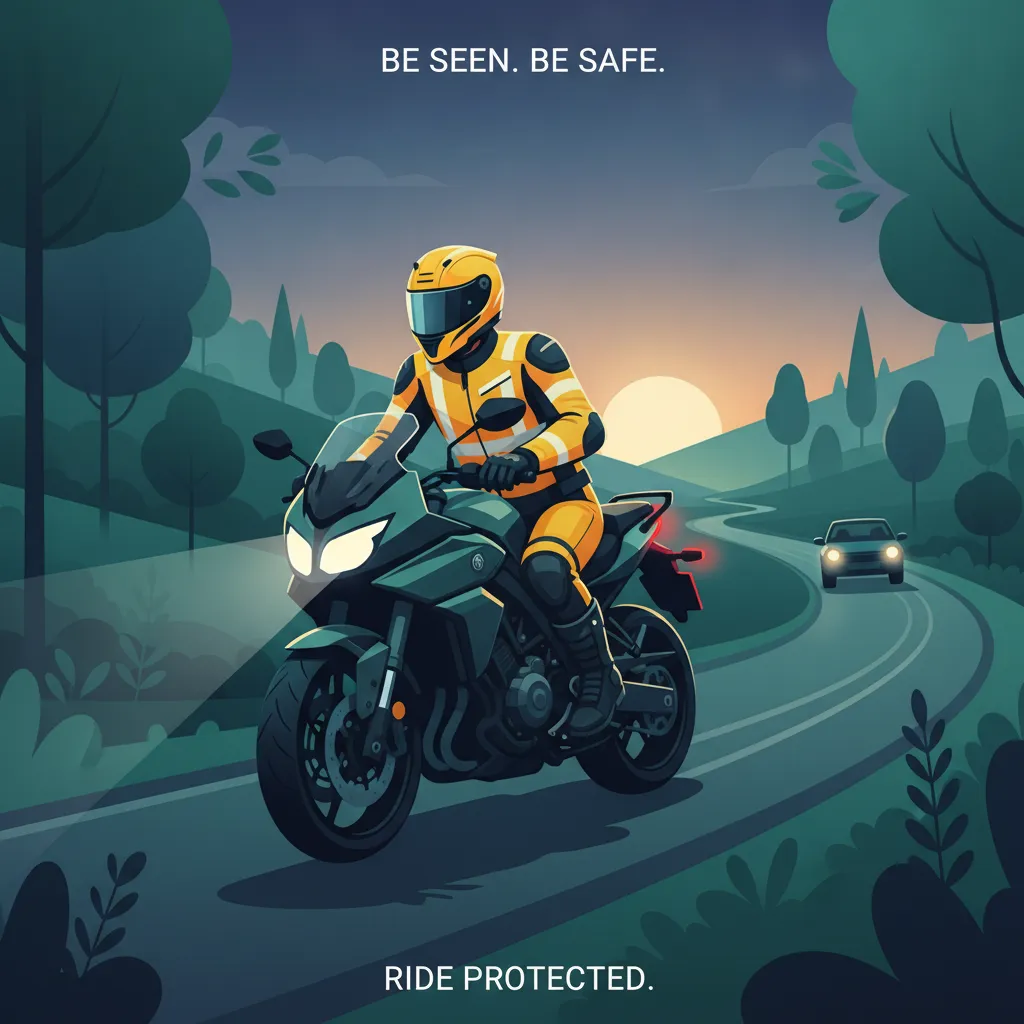
This lesson details the importance of personal protective equipment for rider safety. It covers the legal standards for helmets in Germany, the benefits of wearing abrasion-resistant jackets and gloves, and the value of high-visibility clothing. It also explains the proper use of vehicle lighting systems to ensure visibility to others.

This lesson teaches drivers how to safely manage their vehicle in challenging weather. It explains the dangers of aquaplaning in heavy rain, the loss of traction on snow and ice (including 'black ice'), and the severely reduced visibility in fog. You will learn to adjust your speed, increase following distances, and use lights correctly to suit these conditions.

This lesson explores the critical role of visibility in safe driving, covering topics such as sight distance, managing blind spots, and the correct use of mirrors. It provides guidance on how to adjust your driving in conditions of reduced visibility, such as at night, in fog, or during heavy rain, including the proper use of headlights. The importance of the over-the-shoulder check ('Schulterblick') is also a key focus.
This lesson outlines the driver's legal responsibility to ensure their vehicle is in a safe and roadworthy condition before every journey. It covers essential pre-drive checks, such as verifying lights, tyres, and fluid levels (oil, coolant, washer fluid). The lesson also explains the mandatory equipment that must be carried in the vehicle, including a warning triangle, high-visibility vest, and first-aid kit.
This lesson focuses on the legal responsibilities and duties of a vehicle operator according to German traffic law, primarily the StVO. It covers the obligation to drive safely, the rules of conduct at an accident scene, and the legal consequences of traffic violations. Understanding these principles is crucial for maintaining road safety and avoiding penalties such as fines, points, or driving bans.
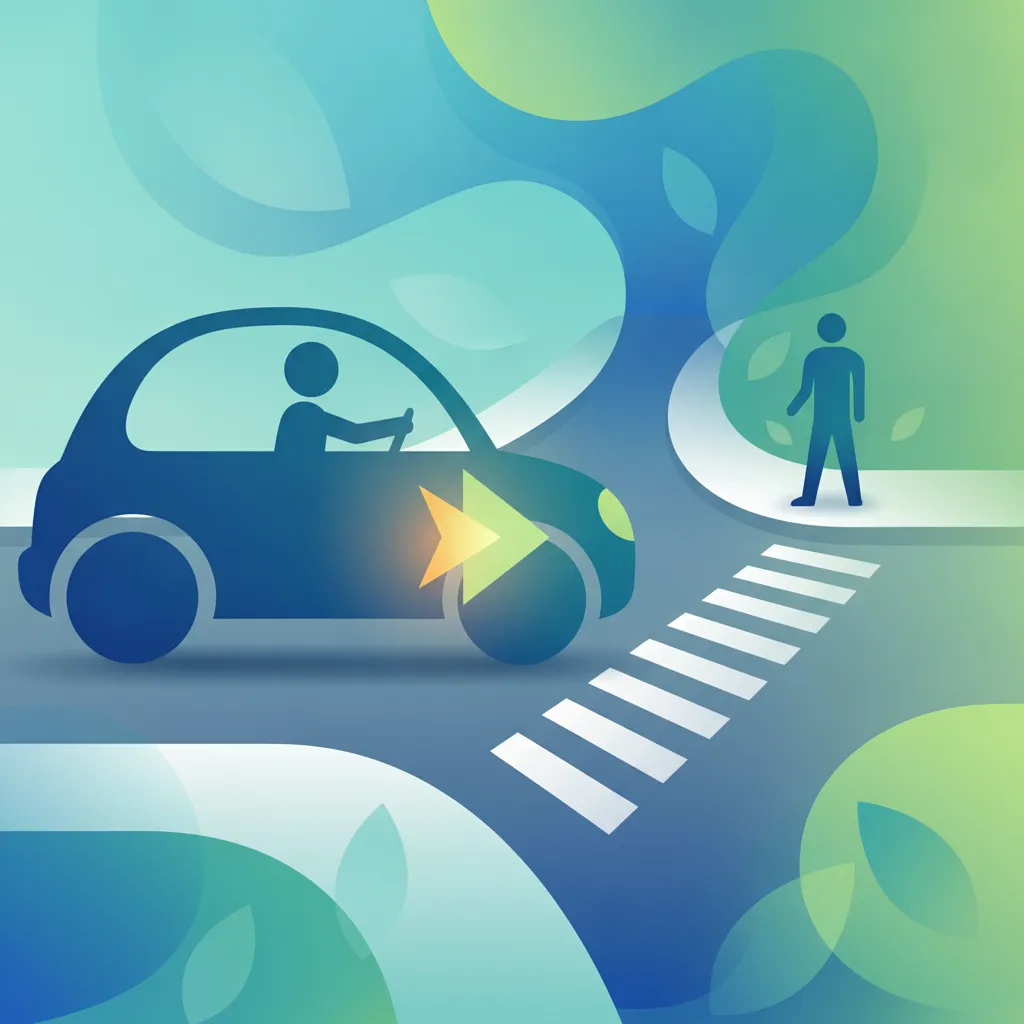
Effective communication is critical for road safety, and this lesson details the correct use of a vehicle's signaling devices. It explains when and how to use turn signals (indicators), hazard warning lights, the horn, and headlight flashes to clearly communicate your intentions to other road users. Proper signaling helps prevent misunderstandings and is a key component of defensive and cooperative driving.
This lesson covers the essential behavioral rules mandated by the German Road Traffic Act (StVO) that form the foundation of safe driving. Key principles discussed include the mandatory rule to drive on the right side of the road, maintaining a safe following distance, and adapting speed to conditions. It also explains the regulations for overtaking, merging, and parking to ensure smooth and safe traffic flow.
Master the use of all vehicle lights crucial for visibility and communication. This includes understanding daytime running lights, dipped and main beams, as well as brake lights, indicators, and hazard warnings for safe interaction on German roads.
This lesson explores the critical role of visibility in safe driving, covering topics such as sight distance, managing blind spots, and the correct use of mirrors. It provides guidance on how to adjust your driving in conditions of reduced visibility, such as at night, in fog, or during heavy rain, including the proper use of headlights. The importance of the over-the-shoulder check ('Schulterblick') is also a key focus.
Effective communication is critical for road safety, and this lesson details the correct use of a vehicle's signaling devices. It explains when and how to use turn signals (indicators), hazard warning lights, the horn, and headlight flashes to clearly communicate your intentions to other road users. Proper signaling helps prevent misunderstandings and is a key component of defensive and cooperative driving.

This lesson focuses on how motorcyclists can clearly communicate their intentions to other road users to prevent misunderstandings and collisions. It covers the correct use of indicators, brake lights, and standardized hand signals for turning and stopping. The importance of making eye contact with other drivers to confirm they have seen you is also a key topic for enhancing safety.
This lesson provides a thorough explanation of traffic light systems ('Lichtzeichenanlagen') used in Germany. It details the meaning of red, amber, and green lights and the correct response to each phase of the signal sequence. The lesson also covers special signals, such as the green arrow for turning right on red, pedestrian and cyclist signals, and the authority of signals given by a police officer, which override all other signs.
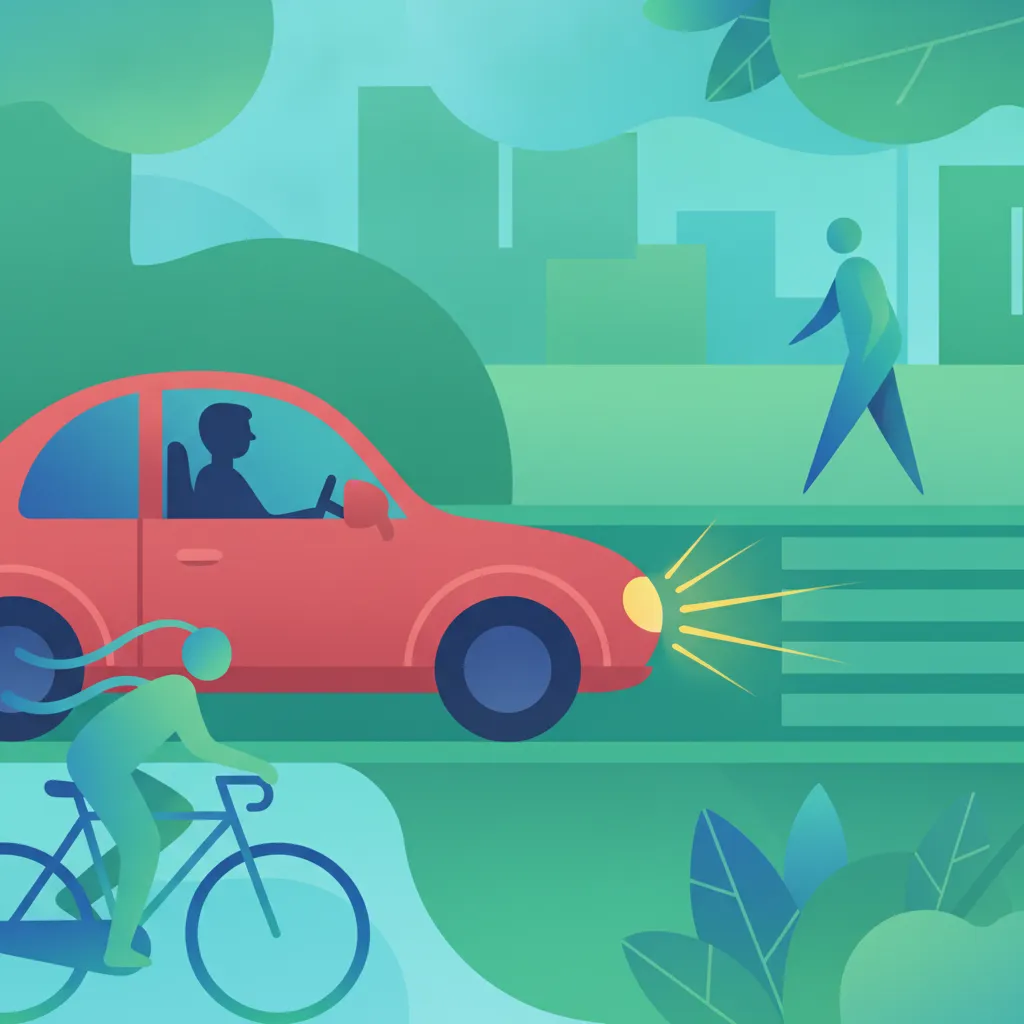
This lesson provides comprehensive guidance on using vehicle signals to communicate with other road users. It covers the correct timing and use of turn indicators, the application of hand signals when necessary, and the proper use of hazard lights. Effective signaling is presented as a cornerstone of predictable and safe driving.
This lesson focuses on strategies to enhance a rider's visibility to others, a key aspect of motorcycle safety. It explains how high-visibility gear with neon colors and retroreflective materials functions to make the rider more conspicuous during both day and night. The content covers different types of reflective accessories and their proper placement to maximize effectiveness in traffic.
This lesson covers the lighting and reflector requirements for heavy vehicles, including headlamps, side markers, and brake lights. It explains the function of these systems and the necessity of underrun protection to safeguard other road users. The content also discusses regulations governing lighting systems and their importance for safety in all conditions.
Find clear answers to common questions learners have about Lighting Systems, Daytime Running Lights, Signal Lights. Learn how the lesson is structured, which driving theory objectives it supports, and how it fits into the overall learning path of units and curriculum progression in Germany. These explanations help you understand key concepts, lesson flow, and exam focused study goals.
You may only use the rear fog light when visibility is severely reduced by fog to less than 50 metres. It is strictly prohibited to use it in other conditions as it can blind drivers behind you.
Yes. Daytime running lights do not illuminate the road or your rear lights sufficiently. You must switch to dipped headlights when visibility decreases, such as entering a tunnel, in rain, or at dusk.
No, this is a common misconception. Hazard lights must only be used to warn others of a danger, such as a breakdown, the end of a traffic jam on the motorway, or when you are being towed.
You must dim your main beams immediately if there is a risk of blinding an oncoming driver, a driver in front of you, or other road users like cyclists, especially on unlit rural roads.
Begin your targeted revision now. Use our practice search to quickly find specific German driving theory questions. Filter by StVO rules, road signs, or hazard perception to create your focused study plan. Master challenging areas and prepare confidently for your theoretical driving test.