
This lesson provides a complete guide to traffic light systems and signaling rules within the German StVO. Mastering these signals is essential for ensuring safety at junctions and correctly interpreting the directives of police officers, which always take priority over standard traffic lights.
Lesson content overview
Welcome to this in-depth lesson on traffic lights and signals, a fundamental topic for every aspiring driver in the German Driving License Theory – Comprehensive Category B Course. Understanding these signals, known in Germany as 'Lichtzeichenanlagen', is paramount for safe navigation and adherence to the Straßenverkehrs-Ordnung (StVO), Germany's comprehensive road traffic regulations. This lesson provides a thorough explanation of all types of traffic signals you will encounter, from standard light sequences to special indications and the overriding authority of police directives.
Navigating signalized intersections confidently requires not just knowing the colors, but understanding the precise actions expected in each phase. This knowledge builds upon foundational principles of road usage, right-of-way, and general traffic signs, ensuring you are prepared for the complexities of German road traffic. Mastering traffic light protocols is a cornerstone of responsible driving, reducing conflicts and enhancing safety for all road users, including vulnerable pedestrians and cyclists.
Traffic light systems, or 'Lichtzeichenanlagen', are indispensable tools for managing traffic flow at busy intersections, pedestrian crossings, and specific points where road user interaction needs careful control. Their primary purpose is to allocate priority, reduce potential conflicts, and significantly enhance safety for everyone on the road. These systems operate on a precisely timed sequence, designed to provide clear and unambiguous instructions to drivers, pedestrians, and cyclists alike.
The consistent and predictable sequencing of traffic lights is crucial for maintaining order and preventing accidents. By dictating who moves and when, traffic lights create a structured environment, especially in urban areas where multiple streams of traffic and pedestrians converge.
Traffic signals play a critical role in the German road network by ensuring orderly and safe movement. They are particularly vital at complex junctions, high-volume pedestrian crossings, and areas with mixed traffic types (vehicles, trams, bicycles). Without these systems, chaos and significantly increased accident risks would prevail, especially in densely populated areas.
For Category B drivers, understanding every nuance of these signals is not just about passing the theoretical exam; it's about developing the predictive skills necessary for real-world driving. Correctly interpreting and reacting to traffic lights ensures smooth traffic flow and minimizes the chances of collision, protecting yourself and others.
In German road traffic, there is a clear hierarchy of control that dictates which instructions you must obey when multiple signals are present or seem to conflict. This hierarchy is fundamental to preventing confusion and ensuring immediate compliance in critical situations.
Memorize the Hierarchy: Police Officer Signals > Traffic Lights > Road Signs > General Right-of-Way Rules. Always obey the higher authority first.
This means that if a police officer is directing traffic, their signals always take precedence over any traffic lights or road signs. Similarly, if traffic lights are operating, they override any permanent road signs that might indicate a different right-of-way rule (e.g., a 'Give Way' sign at a junction controlled by lights). Only when no higher authority is present do the general right-of-way rules apply, such as 'right before left'.
The standard sequence of a traffic light is designed to guide vehicle movement smoothly and safely through intersections. Each color dictates a specific action, and understanding the transition between these phases is crucial for safe driving.
When a traffic light displays a red light, it means a mandatory and complete stop. You must bring your vehicle to a halt before the marked stop line or, if no line is present, before the edge of the intersecting roadway. This ensures that the intersection is clear for crossing traffic or pedestrians who have a green signal.
Driving through a red light (Rotlichtverstoß) is a serious traffic violation in Germany, carrying significant penalties including fines, points on your license, and potentially a driving ban, especially if the light has been red for more than one second.
You are only permitted to cross a red light if your vehicle has already entered the intersection or passed the stop line before the light turned red. In such cases, you should proceed carefully to clear the intersection, ensuring safety.
The phase where both red and amber lights are illuminated simultaneously is a signal to prepare to go. During this phase, vehicles should get ready to move, meaning drivers can engage the clutch or prepare their automatic transmission. However, it is absolutely critical not to move forward or start driving during this phase.
This combined signal indicates that the green light is imminent. Drivers must be ready but are strictly prohibited from moving until the green light appears.
A common misunderstanding among drivers is to interpret "red + amber" as permission to start moving. Doing so can cause confusion, unexpected movements, and potentially lead to accidents, especially if other road users are still clearing the intersection. Wait for the green light before proceeding.
A green light indicates that you may proceed through the intersection or along the road, provided the way is clear. While a green light grants you permission to move, it does not automatically grant you absolute right-of-way without caution. You must always ensure that the path ahead is clear and that it is safe to proceed.
Even with a green light, you must still yield to pedestrians and cyclists who are crossing the road and have a green walking person signal. Also, never enter an intersection if you cannot clear it entirely, even if the light is green, as this could block crossing traffic.
Drivers turning left on a green light without a specific left-turn arrow must yield to oncoming traffic that is proceeding straight, unless otherwise indicated by road signs or arrows. This is a crucial aspect of right-of-way at intersections.
When the light changes from green to amber (yellow light), it signals that the light is about to turn red. The primary rule is to stop if it is safe to do so. You must stop before the stop line or the edge of the intersection if you can do so without sudden or harsh braking that might endanger following traffic.
If you are already so close to the stop line or have entered the intersection when the amber light appears that a safe stop is no longer possible, you should proceed through the intersection quickly and safely. Accelerating to "beat the light" when a safe stop is possible is dangerous and illegal. The amber phase is a warning, not an invitation to speed up.
Beyond the standard red, amber, and green cycle, German roads feature several special traffic signals designed to manage specific movements, warn of hazards, or provide unique instructions. Recognizing these variations is key to comprehensive traffic light understanding.
A green arrow specifically for right turns, often displayed next to or below the main traffic light, allows drivers to turn right even when the main light is red. This special signal is known as the 'Grüner Pfeil'.
A supplementary green arrow that permits a right turn on red, but only after coming to a complete stop and yielding to all crossing pedestrians and cyclists.
There are two main types of green arrows:
Always distinguish between the illuminated green arrow within the main signal (Leuchtpfeil) and the green arrow on a black plate (Grüner Pfeil). The latter always requires a stop and yielding, even if the path appears clear.
A flashing amber light (Blinkgelb) is primarily a warning signal. It indicates that you should proceed with extreme caution. This signal is often used at pedestrian crossings during off-peak hours, or at intersections when the main traffic lights are out of order or operating only for certain phases.
When encountering a flashing amber light, drivers must reduce their speed, be prepared to stop, and ensure the way is clear before proceeding. You must be particularly vigilant for pedestrians, cyclists, or other vehicles that might be crossing, as they might not have a clear signal.
A flashing red light (Blinkrot) is a stronger warning than flashing amber and typically requires a mandatory stop. It functions similarly to a stop sign (Stoppschild) or a level crossing barrier signal. You must come to a complete stop before the stop line or hazard, then proceed only when it is safe to do so.
This signal is commonly found at unguarded railway crossings, fire station exits, or emergency vehicle entrances, where absolute priority for the crossing entity (train, emergency vehicle) is paramount. Always stop, look, and listen before proceeding past a flashing red light.
Many larger or more complex intersections in Germany feature lane-specific or directional arrows within the traffic light heads. These arrows dictate movement for specific lanes or for specific turning maneuvers (e.g., a left-turn arrow, a straight-ahead arrow, or a right-turn arrow).
If you are in a lane controlled by a specific arrow, you must only follow the direction indicated by that arrow. For example, a green left-turn arrow means only vehicles intending to turn left in that lane may proceed. This helps manage complex traffic movements and prevents conflicts between different traffic streams.
To ensure the safety of vulnerable road users, Germany employs specific traffic signals for pedestrians ('Fußgängerampel') and increasingly for cyclists ('Radfahrerampel'). Drivers must be aware of these signals and their implications, as they directly impact right-of-way at crossings.
Pedestrian signals are typically located at crossings and consist of two main phases:
Some pedestrian signals also feature a flashing green walking person. This means that pedestrians who have already started crossing may continue to do so, but those who have not yet stepped onto the road must not begin crossing. Drivers should anticipate pedestrians finishing their crossing during this phase.
In many urban areas, especially at busy intersections or along dedicated cycle paths, you may encounter traffic lights specifically for cyclists. These 'Radfahrerampeln' often use bicycle symbols instead of vehicle symbols or standard pedestrian symbols. They operate similarly to vehicle traffic lights (red, amber, green) but are timed for cyclist flow.
As a driver, always be aware of separate cyclist signals. Cyclists might have a green light when vehicle traffic has a red, or vice versa, to allow for protected turning movements or crossing phases. Yield to cyclists according to their specific signal indications.
The highest authority in traffic control in Germany is a uniformed police officer. Any signals or directives given by a police officer override all other traffic control devices, including traffic lights, road signs, and general right-of-way rules. It is imperative to understand and immediately obey police signals, especially in emergency situations, during traffic control, or at accident scenes.
Police officers use specific hand and arm signals to direct traffic. Here are the most common ones:
The principle of police signal authority is non-negotiable. If you are at an intersection where traffic lights are green, but a police officer signals for you to stop, you must stop. Conversely, if the lights are red and the officer signals you to proceed, you must go. Disobeying a police officer's instructions is a serious offense and can lead to significant penalties. This system ensures flexibility and safety during unusual or hazardous traffic conditions.
Adhering to traffic light rules is not just a legal requirement but a fundamental aspect of safe and defensive driving. Understanding the underlying reasoning behind these regulations helps in making better decisions on the road.
The German StVO (Strassenverkehrs-Ordnung) specifies precise rules for obeying traffic lights. Violations, especially running a red light, are treated very seriously.
Driving conditions can significantly impact how you approach and react to traffic lights.
Being aware of common errors can help you drive more safely and legally.
For your German Category B driving license, mastering traffic lights and signals is non-negotiable. You must be able to:
This lesson covers Germany's traffic light systems (Lichtzeichenanlagen) as governed by the StVO, explaining the correct response to each signal phase: red demands a full stop, red and amber means prepare to go, green permits proceeding only when clear while yielding to vulnerable road users, and amber requires stopping if safe. Special signals like the green arrow for right turns on red and flashing amber/red carry specific rules, with the black-plate green arrow always requiring a complete stop. Police officer signals hold ultimate authority, overriding all other traffic control. Understanding these rules is essential for both passing the Class B theory exam and safe real-world driving in Germany.
A short set of high-value points that capture the most important learning from this lesson.
Traffic control follows a strict hierarchy: Police Officer Signals override Traffic Lights, which override Road Signs, which override General Right-of-Way Rules.
The red and amber phase together signals 'prepare to go' — you must not move until the green light appears.
There are two types of green arrows: a Leuchtpfeil (within the main signal) allows proceeding without stopping, while a Grüner Pfeil on a black plate always requires a complete stop before turning right on red.
Pedestrians and cyclists have their own signals; you must yield to them even when your vehicle traffic light is green.
A flashing amber light means proceed with caution, but a flashing red light requires a mandatory stop, similar to a stop sign.
Explore all units and lessons included in this driving theory course.
Red = mandatory complete stop before the stop line; rolling through is a violation.
Amber = stop if safe to do so; only proceed if stopping would cause danger to following traffic.
Grüner Pfeil always requires a full stop and yielding to pedestrians/cyclists, regardless of how clear the intersection appears.
Police officer signals always take absolute priority over any traffic light, sign, or right-of-way rule.
At flashing amber, reduce speed and be prepared to stop; at flashing red, stop completely before proceeding.
Interpreting 'red + amber' as permission to start moving — it only means prepare to go.
Turning right on red without a green arrow, which is illegal in Germany unless the specific Grüner Pfeil sign is present.
Not yielding to pedestrians or cyclists who have a green signal, assuming vehicle green light grants absolute priority.
Attempting to 'beat' an amber light by accelerating when a safe stop was possible.
Failing to recognize that police officer signals override all other traffic control devices, including working traffic lights.
Lesson content overview
A short set of high-value points that capture the most important learning from this lesson.
Traffic control follows a strict hierarchy: Police Officer Signals override Traffic Lights, which override Road Signs, which override General Right-of-Way Rules.
The red and amber phase together signals 'prepare to go' — you must not move until the green light appears.
There are two types of green arrows: a Leuchtpfeil (within the main signal) allows proceeding without stopping, while a Grüner Pfeil on a black plate always requires a complete stop before turning right on red.
Pedestrians and cyclists have their own signals; you must yield to them even when your vehicle traffic light is green.
A flashing amber light means proceed with caution, but a flashing red light requires a mandatory stop, similar to a stop sign.
Explore all units and lessons included in this driving theory course.
Red = mandatory complete stop before the stop line; rolling through is a violation.
Amber = stop if safe to do so; only proceed if stopping would cause danger to following traffic.
Grüner Pfeil always requires a full stop and yielding to pedestrians/cyclists, regardless of how clear the intersection appears.
Police officer signals always take absolute priority over any traffic light, sign, or right-of-way rule.
At flashing amber, reduce speed and be prepared to stop; at flashing red, stop completely before proceeding.
Interpreting 'red + amber' as permission to start moving — it only means prepare to go.
Turning right on red without a green arrow, which is illegal in Germany unless the specific Grüner Pfeil sign is present.
Not yielding to pedestrians or cyclists who have a green signal, assuming vehicle green light grants absolute priority.
Attempting to 'beat' an amber light by accelerating when a safe stop was possible.
Failing to recognize that police officer signals override all other traffic control devices, including working traffic lights.
Explore search topics learners often look for when studying Traffic Lights and Signals. These topics reflect common questions about road rules, driving situations, safety guidance, and lesson level theory preparation for learners in Germany.
Browse additional driving theory lessons that cover connected traffic rules, road signs, and common driving situations related to this topic. Improve your understanding of how different rules interact across everyday traffic scenarios.
Understand the meaning of all traffic light phases, including the green arrow, and learn how police officer signals override other traffic controls. Essential knowledge for safe intersection navigation in Germany.
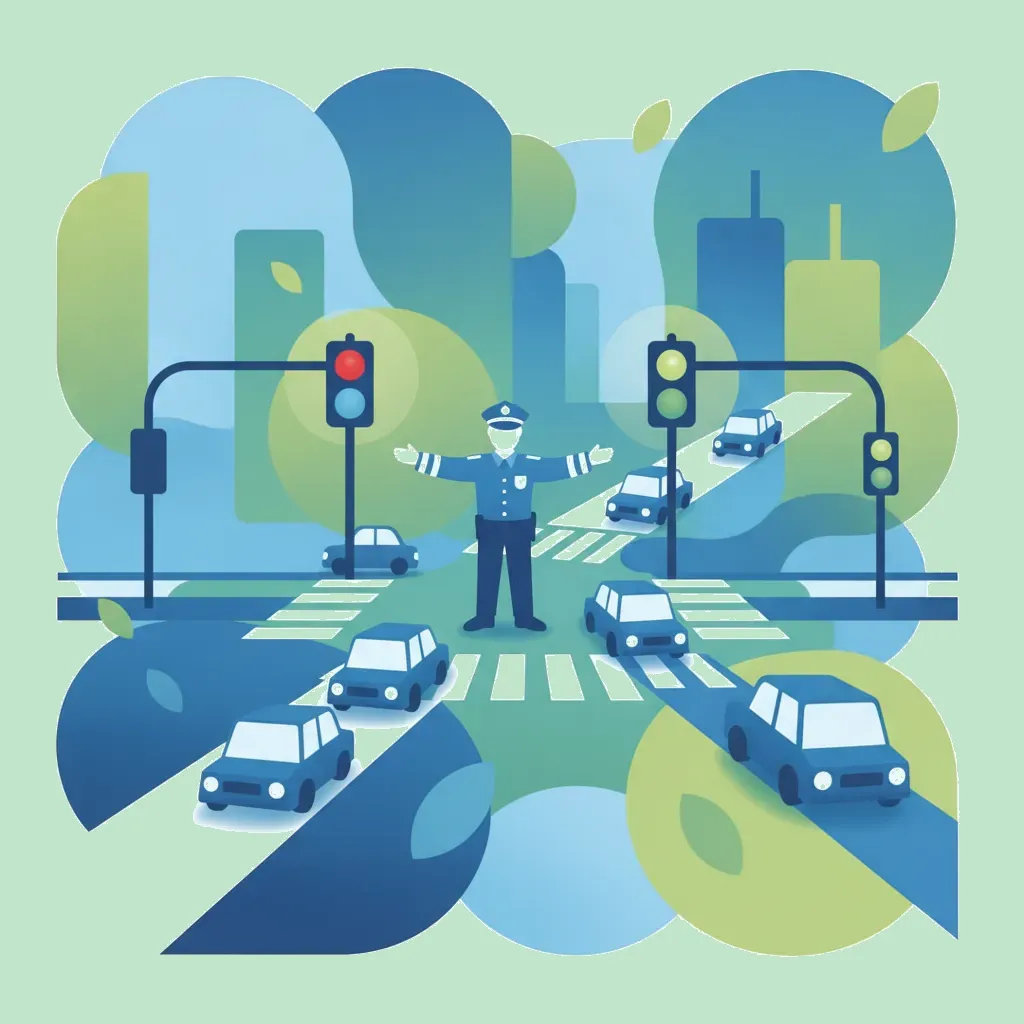
This lesson explains the function and meaning of traffic light signals, including standard cycles, flashing lights, and arrows. It also details how to interpret and obey hand signals given by police officers, which override all other signs and signals. Understanding these instructions is crucial for navigating controlled junctions and emergency situations.
Effective communication is critical for road safety, and this lesson details the correct use of a vehicle's signaling devices. It explains when and how to use turn signals (indicators), hazard warning lights, the horn, and headlight flashes to clearly communicate your intentions to other road users. Proper signaling helps prevent misunderstandings and is a key component of defensive and cooperative driving.

This lesson provides a comprehensive guide to a vehicle's lighting systems, explaining the purpose and correct usage of each type of light. It covers dipped and main beam headlights, fog lights, and the legally required use of lights during the day or in poor visibility. You will also review the function of brake lights, indicators, and hazard warning lights for communication and safety.
This lesson familiarizes drivers with the various special traffic signals and signs that apply exclusively to buses and other public transport vehicles. It covers the interpretation of bus-only signals (often showing bars or letters), flashing priority indicators, and lane-use control signs. Correctly understanding these signals is crucial for legal compliance and for taking advantage of public transport priority measures in urban areas.
This lesson provides comprehensive guidance on using vehicle signals to communicate with other road users. It covers the correct timing and use of turn indicators, the application of hand signals when necessary, and the proper use of hazard lights. Effective signaling is presented as a cornerstone of predictable and safe driving.
This lesson explains the concept of a priority road ('Vorfahrtstraße'), where you have right-of-way over traffic from intersecting roads. You will learn to recognize the signs that mark the beginning and end of a priority road. The lesson also covers how priority is managed through signals, including standard traffic lights, the special 'Grünpfeil' (green arrow) sign, and the overriding authority of a police officer directing traffic.

This lesson explains the various types of road markings and their significance for guiding traffic and ensuring safety. It covers the difference between solid and broken lines for lane separation and overtaking rules, the function of stop lines at intersections, and the markings for pedestrian crosswalks. You will also learn to interpret directional arrows, bicycle lane markings, and other symbols painted on the road.
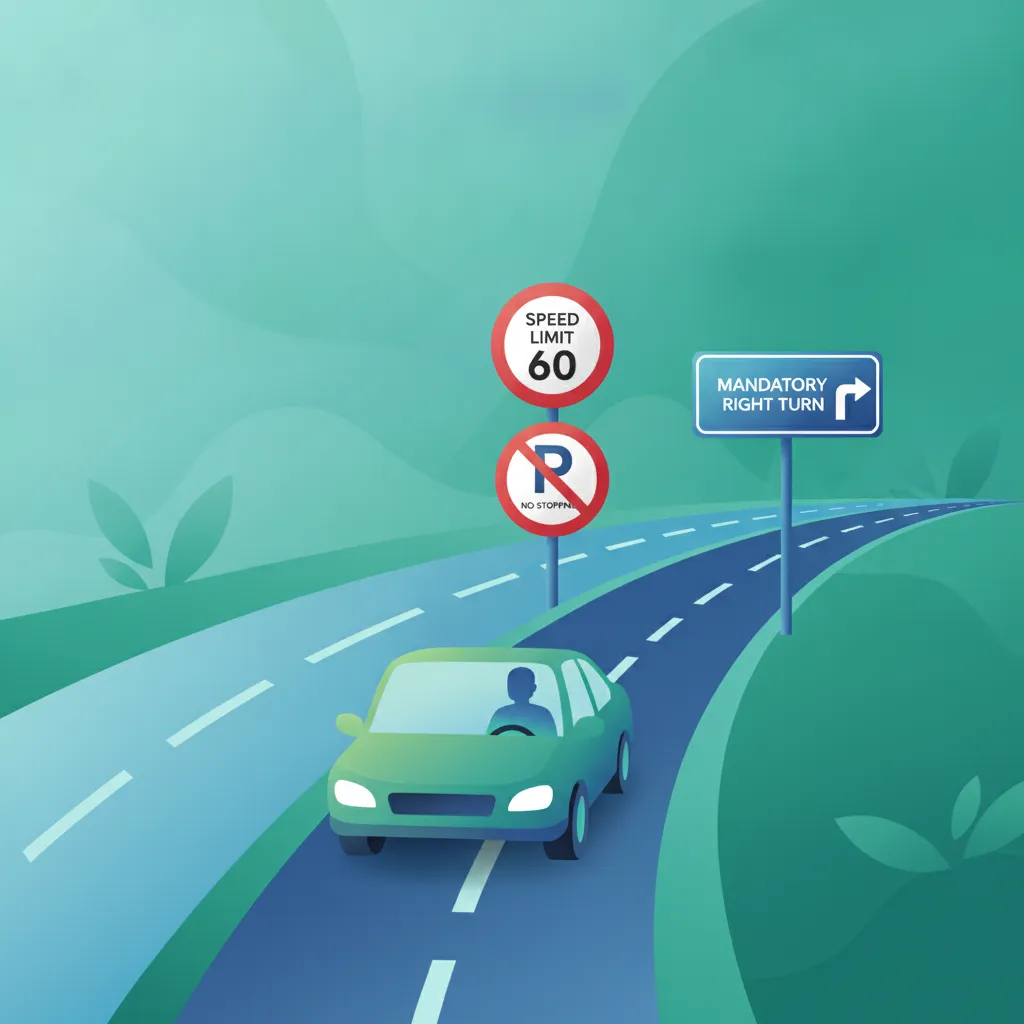
This lesson covers regulatory signs, which are legally enforceable and command specific actions from drivers. You will learn the meaning of critical signs such as the stop sign, yield sign, no-entry signs, and various parking and stopping prohibitions. The content also explains signs that establish speed limits, one-way streets, and restricted areas like environmental or pedestrian zones.

This lesson focuses on how motorcyclists can clearly communicate their intentions to other road users to prevent misunderstandings and collisions. It covers the correct use of indicators, brake lights, and standardized hand signals for turning and stopping. The importance of making eye contact with other drivers to confirm they have seen you is also a key topic for enhancing safety.
This lesson provides an overview of the German system for penalizing traffic offenses. It explains the catalogue of fines ('Bußgeldkatalog'), the system of demerit points ('Punkte in Flensburg') for more serious violations, and the conditions under which a temporary driving ban ('Fahrverbot') or a full revocation of the license can be imposed. Understanding these consequences reinforces the importance of lawful driving.
Explore specific traffic light signals for pedestrians and cyclists, and understand how these interact with general traffic rules. Learn about overriding signals and ensuring safety at complex German junctions.
This lesson explains the function and meaning of traffic light signals, including standard cycles, flashing lights, and arrows. It also details how to interpret and obey hand signals given by police officers, which override all other signs and signals. Understanding these instructions is crucial for navigating controlled junctions and emergency situations.
This lesson details the safe approach and navigation of various intersection types, including those controlled by traffic lights, stop signs, and give-way signs. Emphasis is placed on comprehensive observation of traffic flow, establishing eye contact with other road users, and ensuring clear visibility before proceeding. The lesson also covers correct lane positioning for turning and the importance of anticipating pedestrian movements.
This lesson familiarizes drivers with the various special traffic signals and signs that apply exclusively to buses and other public transport vehicles. It covers the interpretation of bus-only signals (often showing bars or letters), flashing priority indicators, and lane-use control signs. Correctly understanding these signals is crucial for legal compliance and for taking advantage of public transport priority measures in urban areas.
This lesson provides comprehensive guidance on using vehicle signals to communicate with other road users. It covers the correct timing and use of turn indicators, the application of hand signals when necessary, and the proper use of hazard lights. Effective signaling is presented as a cornerstone of predictable and safe driving.
This lesson provides specific guidance on how to safely share the road with pedestrians and cyclists, who are among the most vulnerable road users. It covers the rules of conduct at zebra crossings, traffic lights for pedestrians, and designated cycle lanes. The content emphasizes the importance of vigilance, yielding right-of-way, and maintaining a safe distance to prevent accidents in urban and rural environments.
This lesson focuses on the unique challenges and safety protocols required when operating alongside trams and light rail systems. It clarifies the strict right-of-way rules that typically favor trams and explains how to safely navigate shared roadways and cross tracks. Learners will be taught to recognize specific signals and markings related to tramways to prevent conflicts and ensure the safety of all road users.
This lesson focuses on the interaction between heavy vehicles and vulnerable road users at crossings, particularly when turning right. It covers the need for heightened vigilance, the importance of properly using mirrors, and correct signaling to alert others. The content highlights legal responsibilities and safe distance requirements to prevent accidents.
This lesson focuses on the particular care required when driving near pedestrians, with a special emphasis on children and the elderly, whose behavior can be unpredictable. It covers the rules for yielding at zebra crossings and the importance of reducing speed near schools, playgrounds, and residential areas. The goal is to instill a habit of constant vigilance and readiness to stop.
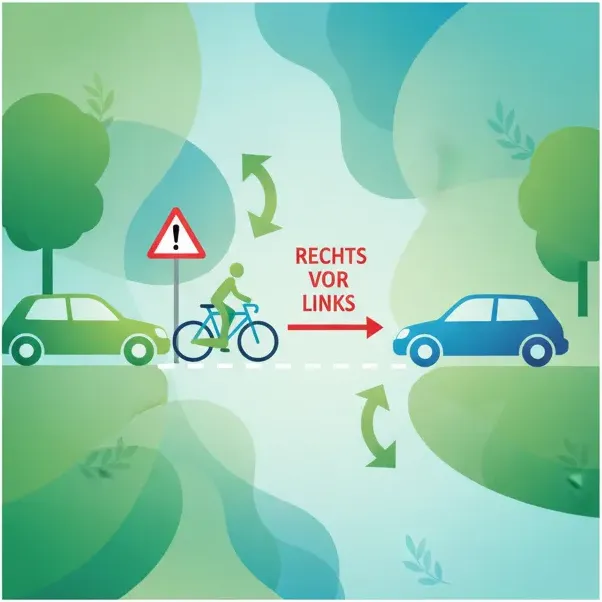
This lesson provides a detailed guide to navigating various types of intersections safely and correctly. It explains how priority is determined by traffic signs (such as the priority road, yield, and stop signs) and traffic lights. The lesson also covers complex scenarios, including the rules for turning left across oncoming traffic, to ensure you can handle any junction with confidence.
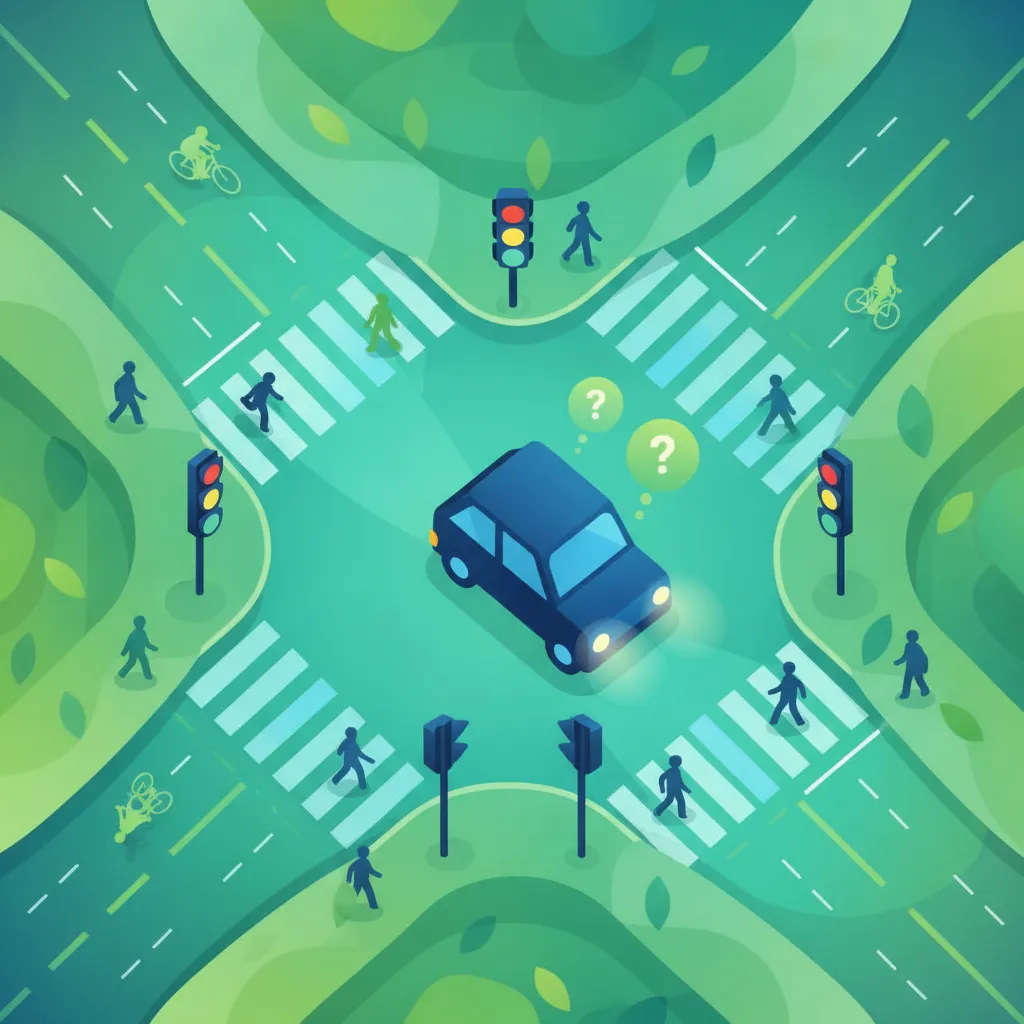
This lesson teaches a structured method for approaching any intersection. It covers identifying the type of junction, determining who has the right-of-way based on signs or rules, and performing thorough visual checks. The focus is on developing a safe and decisive approach to reduce risk in these high-conflict areas.
Find clear answers to common questions learners have about Traffic Lights and Signals. Learn how the lesson is structured, which driving theory objectives it supports, and how it fits into the overall learning path of units and curriculum progression in Germany. These explanations help you understand key concepts, lesson flow, and exam focused study goals.
The green metal arrow allows you to turn right at a red light, provided you first come to a complete stop at the stop line and ensure that no other road users are hindered or endangered.
Yes, manual signals and instructions given by a police officer always take precedence over traffic lights and road signs. You must follow the officer's commands immediately.
You must stop if it is safe to do so. Only if you are so close to the junction that stopping would cause a safety hazard or a rear-end collision should you proceed with caution.
Yes, in many German cities, there are separate, smaller traffic lights specifically for cyclists, often mounted at a lower height. Always ensure you are following the signal meant for your specific lane or road user group.
Begin your targeted revision now. Use our practice search to quickly find specific German driving theory questions. Filter by StVO rules, road signs, or hazard perception to create your focused study plan. Master challenging areas and prepare confidently for your theoretical driving test.