
This lesson explores the essential physics behind motorcycle stability, focusing on how you maintain balance at various speeds. You will learn the mechanics of countersteering and how to use your body position to control your motorcycle effectively, preparing you for both the theoretical exam and practical riding challenges.

Lesson content overview
Learning to ride a motorcycle involves much more than simply operating the controls; it demands a deep understanding of how the vehicle interacts with the road and how a rider’s subtle inputs dictate its behavior. This lesson delves into the fundamental principles that govern motorcycle stability and steering, crucial knowledge for anyone preparing for the German Motorcycle Licence Theory Course (Classes A, A1, A2). We will explore the physics behind why a motorcycle stays upright at speed, how you instinctively steer it, and how your body positioning profoundly influences its handling.
At first glance, a motorcycle might seem inherently unstable, designed to fall over when stationary. However, once in motion, a powerful physical phenomenon takes over, granting it remarkable stability: the gyroscopic effect. This principle is fundamental to understanding why motorcycles behave the way they do, especially at higher speeds.
The stabilizing torque generated by a spinning object (like a motorcycle wheel) that resists changes to its axis of rotation. This resistance helps keep the motorcycle upright when moving.
The gyroscopic effect describes the tendency of a spinning object to maintain its orientation in space. For a motorcycle, the wheels act as gyroscopes. As they rotate, particularly at speed, they generate angular momentum. This momentum creates a strong resistance to any force that tries to tilt or change the motorcycle’s direction of travel. In essence, the rotating wheels want to continue spinning in their current plane, making the motorcycle inherently more stable and resistant to falling over.
This intrinsic stability is why riding a motorcycle at 60 km/h often feels easier and more stable than trying to balance it at 5 km/h. The gyroscopic forces are much stronger at higher speeds, providing a natural self-correcting mechanism. If the bike momentarily leans slightly to one side, the gyroscopic effect can help to right it, acting like an invisible hand pushing it back towards vertical.
The strength of the gyroscopic effect is directly proportional to both the speed of the wheel's rotation and its mass and diameter. This means:
Understanding the gyroscopic effect is not just academic; it has critical practical implications for every rider:
While the gyroscopic effect keeps a motorcycle stable, it's another fundamental principle that allows us to turn: countersteering. This concept often surprises new riders because it involves an action that feels counter-intuitive at first. However, it is the most efficient and natural way for a motorcycle to change direction at speed.
The act of applying a brief, subtle push on the handlebars in the opposite direction of the desired turn to initiate a lean and consequently a turn. For example, to turn right, the rider pushes the left handlebar or pulls the right.
Motorcycles do not turn by simply rotating the handlebars in the direction you want to go, especially at speeds above walking pace. Instead, they turn by leaning. To initiate this lean, a rider uses countersteering. When you push forward on the left handlebar (or pull back on the right), the front wheel briefly steers to the right. This slight, momentary steer to the right causes the motorcycle to lean left. Once the motorcycle is leaning left, its inherent gyroscopic stability and the centrifugal force of the turn naturally guide it through a left-hand curve.
This technique is essential for several reasons:
The process of countersteering is often described as "push right, go right" and "push left, go left," referring to the direction of the desired lean and turn, not the initial steer of the front wheel.
Let's break down the mechanics for a right turn:
This entire process happens almost instantaneously and becomes intuitive with practice. Many experienced riders use countersteering without consciously thinking about it.
The application of countersteering subtly changes with speed:
Practice gentle, deliberate countersteering inputs in a safe, open area. Start by focusing on turning just by pushing on the handlebars, without consciously leaning your body, to feel how the bike responds.
One of the most common misunderstandings for new riders is the belief that a motorcycle turns like a bicycle, by simply turning the handlebars in the direction of the desired turn. While this works at very low speeds (walking pace), attempting this at higher speeds will be ineffective and can lead to a delayed reaction or even an accident. The bike will resist turning, feeling "heavy" or unresponsive. This is because the gyroscopic forces actively resist the change in the front wheel's orientation without a lean.
Beyond steering inputs, the rider's body plays a crucial role in controlling a motorcycle. Body positioning and weight transfer are not just for racing; they are fundamental techniques that enhance stability, improve cornering performance, and maximize tire grip in everyday riding situations.
The human rider constitutes a significant portion of the motorcycle's total mass. By strategically shifting this mass, the rider can actively influence the bike's center of gravity and, consequently, its lean angle and the load distribution on its tires. This isn't about dramatically flailing around; it's about subtle, coordinated movements that work in harmony with steering inputs.
For most turns and corners, especially at moderate to higher speeds, riders adopt an inside body position. This involves shifting the upper body (and sometimes the hips) slightly towards the inside of the turn.
While less common as a deliberate technique for turning, an outside body position (keeping the body more upright or slightly outside the motorcycle's lean) can be observed in specific situations:
Effective motorcycle control is always a coordinated effort. Countersteering initiates the lean, and body positioning refines it.
Look Ahead: Focus your vision through the turn, not directly at the road immediately in front of you. Your body and bike will naturally follow your gaze.
Countersteer: Gently push the handlebar in the direction of your desired lean (e.g., push right to lean right).
Body Position: As the bike begins to lean, shift your upper body and head towards the inside of the turn, maintaining a relaxed posture.
Throttle Control: Maintain steady or slightly increasing throttle through the corner to stabilize the chassis and maintain traction.
Smoothness: All inputs should be smooth and progressive, avoiding abrupt movements that can destabilize the bike.
Improper body positioning, such as sitting rigidly or leaning to the outside of a turn, can reduce tire grip, force the bike into a much steeper lean angle, and significantly compromise stability, especially in challenging road conditions.
While higher speeds bring the benefit of gyroscopic stability, low-speed maneuvers demand constant vigilance and active input from the rider. This is where the German Motorcycle Licence Theory Course emphasizes fundamental control, as proficiency in slow riding is a key aspect of practical tests (Praktische Prüfung) and everyday urban riding.
At speeds below approximately 10-15 km/h, the gyroscopic effect provides minimal assistance in keeping the motorcycle upright. The motorcycle feels "heavy" and wants to fall over. This requires the rider to actively manage balance through continuous micro-adjustments using their body, handlebars, and sometimes feet.
Common scenarios where low-speed balance is critical include:
The ability to keep a motorcycle upright at a complete standstill without putting feet on the ground.
Maintaining stability and control while moving at very low speeds, often involving subtle, continuous adjustments.
Mastering low-speed balance is often considered a hallmark of a proficient motorcycle rider. It instills confidence and is directly tested during your practical driving examination.
The principles of balance and countersteering are foundational, but their application needs to be adapted to various external factors and challenging scenarios.
Adding a passenger or luggage significantly alters a motorcycle's center of gravity and overall dynamics.
When riding with extra weight, riders must adjust:
In an emergency, such as needing to avoid a sudden obstacle, quick and decisive countersteering is paramount.
The muscle memory developed through practicing correct countersteering techniques allows for instinctive and effective emergency responses.
While the German road traffic regulations (Straßenverkehrs-Ordnung - StVO) do not specifically detail how a motorcycle should be steered or balanced, they implicitly demand that riders possess the necessary skills to control their vehicle safely at all times.
Paragraph 1 of the StVO, the general duty of care, states that "Anyone participating in traffic must behave in such a way that no other person is harmed, endangered, hindered or annoyed more than is unavoidable under the circumstances." This overarching principle applies to motorcycle handling.
A rider who exhibits poor balance, struggles with steering, or cannot effectively navigate turns could be deemed to be operating their vehicle unsafely, potentially leading to fines or even more severe legal consequences in the event of an incident. The ability to control the motorcycle includes mastering countersteering and maintaining balance under various conditions.
Understanding the theoretical principles of balance and countersteering is the first step. True mastery comes through consistent practice and mindful application. The more you consciously apply these techniques, the more intuitive they become, eventually integrating into your subconscious riding habits.
By internalizing these principles, you not only improve your riding skill but also significantly enhance your safety and confidence on German roads and beyond.
This lesson explains the physics behind motorcycle stability, specifically how the gyroscopic effect of spinning wheels creates natural stability at speed while requiring active rider balance at low speeds. The core technique of countersteering is detailed: pushing the handlebar opposite to the desired turn initiates a lean through brief opposite steering, and this becomes more intuitive as gyroscopic forces strengthen with speed. Body positioning enhances control by shifting mass to reduce required lean angle, with inside position preferred for cornering grip. Low-speed balance demands continuous micro-adjustments using clutch friction zone, rear brake, and forward vision, while all inputs must remain smooth especially on compromised surfaces.
A short set of high-value points that capture the most important learning from this lesson.
The gyroscopic effect from spinning wheels increases with speed, providing natural stability above 30 km/h but minimal assistance below 10-20 km/h
Countersteering means pushing the handlebar in the direction you want to lean: pushing right initiates a right turn by briefly steering left
Inside body position shifts your mass toward the inside of the turn, allowing the motorcycle to stay more upright with greater tire contact and grip
Low-speed maneuvers require continuous micro-adjustments using the friction zone, rear brake, and looking far ahead for balance
All inputs must be smooth and progressive; abrupt steering on wet or loose surfaces easily causes loss of traction
Explore all units and lessons included in this driving theory course.
Push right to go right; the initial handlebar input opposes the final turn direction, not matches it
At low speeds below 20 km/h, gyroscopic stability disappears and rider input becomes the primary balance mechanism
Kniechluss (gripping the fuel tank with knees) provides a stable pivot point for low-speed control
When riding with passengers or luggage, expect a higher center of gravity requiring adjusted steering inputs and braking distances
Target fixation causes riders to steer toward obstacles; always look through the escape path during emergencies
Believing motorcycles turn by simply turning handlebars in the desired direction; this only works at walking pace and fails at normal speeds
Over-leaning the body instead of letting the motorcycle lean; excessive body position reduces available lean angle reserve
Using abrupt or aggressive countersteering inputs on wet roads, leading to front wheel slide and loss of control
Tensing up and gripping handlebars tightly, which reduces the ability to make fine steering adjustments and disrupts balance
Focusing on the front wheel or obstacle rather than through the turn, causing delayed reactions and poor line choice
Lesson content overview
A short set of high-value points that capture the most important learning from this lesson.
The gyroscopic effect from spinning wheels increases with speed, providing natural stability above 30 km/h but minimal assistance below 10-20 km/h
Countersteering means pushing the handlebar in the direction you want to lean: pushing right initiates a right turn by briefly steering left
Inside body position shifts your mass toward the inside of the turn, allowing the motorcycle to stay more upright with greater tire contact and grip
Low-speed maneuvers require continuous micro-adjustments using the friction zone, rear brake, and looking far ahead for balance
All inputs must be smooth and progressive; abrupt steering on wet or loose surfaces easily causes loss of traction
Explore all units and lessons included in this driving theory course.
Push right to go right; the initial handlebar input opposes the final turn direction, not matches it
At low speeds below 20 km/h, gyroscopic stability disappears and rider input becomes the primary balance mechanism
Kniechluss (gripping the fuel tank with knees) provides a stable pivot point for low-speed control
When riding with passengers or luggage, expect a higher center of gravity requiring adjusted steering inputs and braking distances
Target fixation causes riders to steer toward obstacles; always look through the escape path during emergencies
Believing motorcycles turn by simply turning handlebars in the desired direction; this only works at walking pace and fails at normal speeds
Over-leaning the body instead of letting the motorcycle lean; excessive body position reduces available lean angle reserve
Using abrupt or aggressive countersteering inputs on wet roads, leading to front wheel slide and loss of control
Tensing up and gripping handlebars tightly, which reduces the ability to make fine steering adjustments and disrupts balance
Focusing on the front wheel or obstacle rather than through the turn, causing delayed reactions and poor line choice
Explore search topics learners often look for when studying Principles of Balance and Countersteering. These topics reflect common questions about road rules, driving situations, safety guidance, and lesson level theory preparation for learners in Germany.
Browse additional driving theory lessons that cover connected traffic rules, road signs, and common driving situations related to this topic. Improve your understanding of how different rules interact across everyday traffic scenarios.
Explore the deeper physics behind motorcycle stability and control, building on balance and countersteering. Understand how gyroscopic effects, weight transfer, and chassis dynamics influence handling in various riding conditions for your German theory test.

This lesson delves into the principles of vehicle dynamics that govern two-wheeled vehicles. It explains the importance of balance, the concept of counter-steering for initiating turns, and how body position influences handling. Understanding these physical forces allows for smoother, safer, and more confident control of the vehicle.

This lesson provides a detailed guide to the functional layout of a motorcycle's primary controls. It covers the purpose and correct operation of the handlebars, throttle, clutch, brake levers, and foot pedals. The content emphasizes proper hand and foot positioning to ensure precise manipulation and reduce rider fatigue for enhanced safety and response times.
This lesson explains the crucial role of the suspension system in motorcycle handling and ride quality. It describes how front forks and rear shock absorbers work to absorb road imperfections and maintain stability. Learners are introduced to fundamental setup principles, such as preload and damping adjustments, to optimize the bike's response to different loads and road conditions.

This lesson examines how various road surfaces and conditions affect tyre grip and traction. It teaches riders to recognize and adapt to hazards like wet patches, loose gravel, or oil spills. The content covers techniques for maintaining control through smooth throttle and brake inputs, preventing traction loss while accelerating, braking, and cornering on compromised surfaces.

This lesson introduces the essential components of a motorcycle's braking system, including disc brakes, drum brakes, and the function of an Anti-lock Braking System (ABS). It teaches learners how to inspect brake pads and rotors for wear and understand the feel of the brake levers. The concept of balanced braking force distribution between the front and rear wheels is explained for maintaining stability.
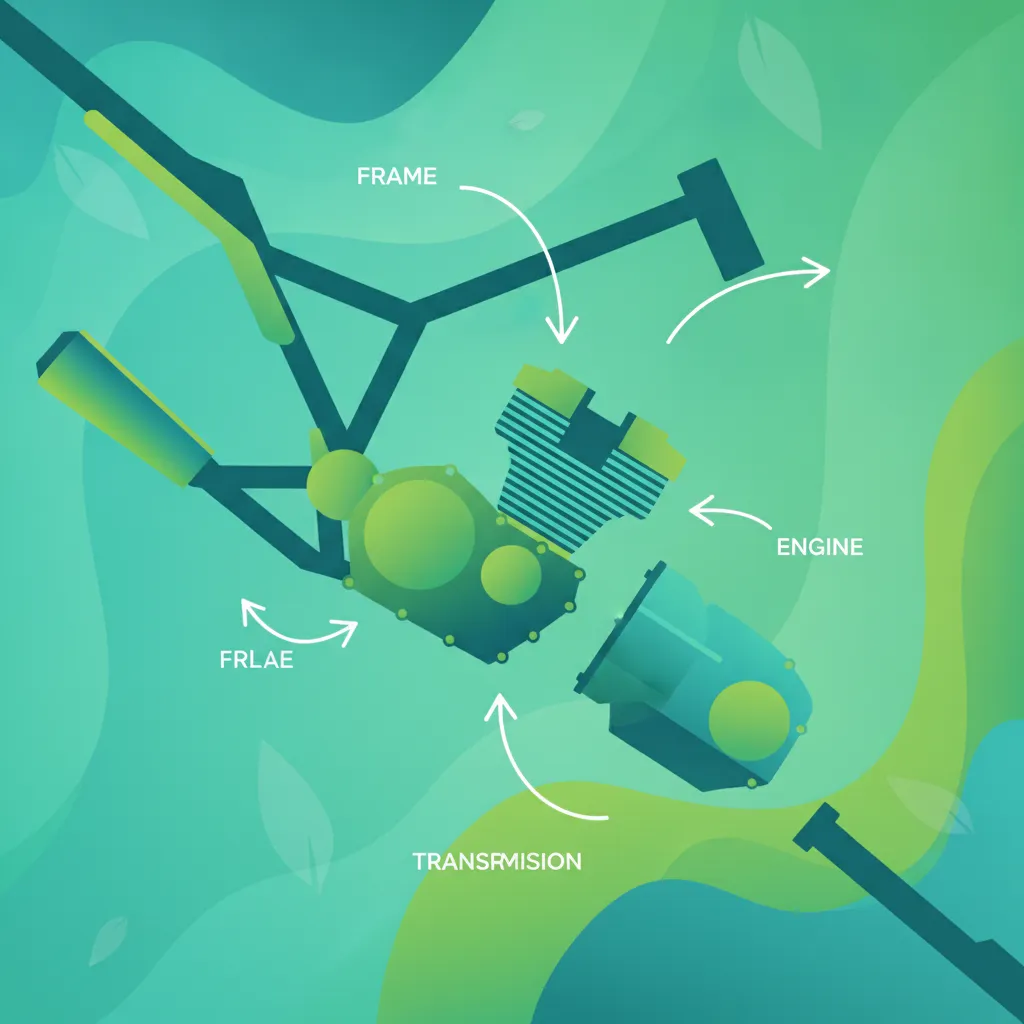
This lesson details the fundamental structure of a motorcycle, focusing on the frame, engine, and transmission. It explains how frame geometry influences handling and stability, while different engine types affect power delivery. Learners will also understand the mechanics of the transmission system, including clutch operation and gear shifting, and their role in controlling the motorcycle.

This lesson breaks down the technique of cornering into three distinct phases: entry, apex, and exit. Learners will understand how to assess a corner and select an appropriate entry speed to ensure a smooth and controlled lean. The content explains how to identify the apex for an optimal line and how to apply throttle smoothly for a stable exit, maintaining traction throughout.

This lesson provides a systematic approach to safely negotiating blind corners where visibility is limited. It teaches riders to control their entry speed, adopt a defensive lane position, and use visual scanning techniques to assess the road ahead. The content emphasizes adjusting lean angle and being prepared for unexpected hazards that may be hidden around the bend.

This lesson teaches crucial risk awareness and accident prevention strategies for motorcyclists. It examines common accident scenarios and teaches riders how to identify potential hazards in advance. Key concepts include defensive riding, maintaining situational awareness, and understanding how a proactive mindset contributes to a safer riding experience on the road.
This lesson introduces the fundamentals of a motorcycle's braking system, emphasizing the dominant role of the front brake due to forward weight transfer during deceleration. It explains how to apply both front and rear brakes in a coordinated manner to achieve maximum, stable stopping power. The content also covers how to modulate brake pressure smoothly and progressively to avoid losing traction and locking a wheel.
Learn the specific techniques for maintaining balance and precise control when maneuvering a motorcycle at low speeds. This lesson covers essential skills for navigating tight spaces and urban environments, crucial for your German theory exam.
This lesson provides a systematic approach to safely negotiating blind corners where visibility is limited. It teaches riders to control their entry speed, adopt a defensive lane position, and use visual scanning techniques to assess the road ahead. The content emphasizes adjusting lean angle and being prepared for unexpected hazards that may be hidden around the bend.
This lesson delves into the principles of vehicle dynamics that govern two-wheeled vehicles. It explains the importance of balance, the concept of counter-steering for initiating turns, and how body position influences handling. Understanding these physical forces allows for smoother, safer, and more confident control of the vehicle.
This lesson breaks down the technique of cornering into three distinct phases: entry, apex, and exit. Learners will understand how to assess a corner and select an appropriate entry speed to ensure a smooth and controlled lean. The content explains how to identify the apex for an optimal line and how to apply throttle smoothly for a stable exit, maintaining traction throughout.
This lesson examines how various road surfaces and conditions affect tyre grip and traction. It teaches riders to recognize and adapt to hazards like wet patches, loose gravel, or oil spills. The content covers techniques for maintaining control through smooth throttle and brake inputs, preventing traction loss while accelerating, braking, and cornering on compromised surfaces.

This lesson details the correct procedures for entering a motorway, using the acceleration lane to match traffic speed, and merging safely. It reinforces the strict lane discipline required, including keeping to the right lane except when overtaking. The content also provides guidance on maintaining increased following distances and performing safe lane changes at high speeds.
This lesson provides a detailed guide to the functional layout of a motorcycle's primary controls. It covers the purpose and correct operation of the handlebars, throttle, clutch, brake levers, and foot pedals. The content emphasizes proper hand and foot positioning to ensure precise manipulation and reduce rider fatigue for enhanced safety and response times.

This lesson covers the regulations and safe techniques for overtaking other vehicles in urban environments. It emphasizes the importance of thorough observation, including mirror and blind spot checks, before committing to the maneuver. Learners will understand how to choose a safe gap, manage their speed differential, and maintain strict lane discipline throughout the overtaking process.

This lesson details the correct procedure for executing left turns, right turns, and U-turns. It emphasizes the importance of proper signaling, correct lane positioning before the turn, and managing speed throughout the maneuver. The content also covers fundamental cornering techniques to maintain stability and control.

This lesson focuses on maintaining a safe buffer around the vehicle in traffic. It explains the 'two-second rule' as a simple method for ensuring adequate following distance and discusses how to adjust this for adverse conditions. A key focus is on developing hazard anticipation skills through continuous scanning and risk assessment.
This lesson focuses on the specific techniques for safely navigating roundabouts, a common feature in urban traffic. Learners are taught the correct lane selection for their intended exit, the importance of proper signaling upon entry and exit, and maintaining an appropriate speed. The content highlights the need to yield to circulating traffic and to be aware of other vehicles changing lanes within the roundabout.
Find clear answers to common questions learners have about Principles of Balance and Countersteering. Learn how the lesson is structured, which driving theory objectives it supports, and how it fits into the overall learning path of units and curriculum progression in Germany. These explanations help you understand key concepts, lesson flow, and exam focused study goals.
At higher speeds, the gyroscopic effect of the wheels makes the motorcycle want to remain upright. Countersteering provides the necessary force to overcome this stability and lean the bike into the desired direction.
While body position is important for weight distribution, countersteering is the primary method for initiating turns at speeds above approximately 15-20 km/h. Relying only on body weight is ineffective and slow for high-speed maneuvering.
Questions often focus on the physical principles of steering and the correct directional input on the handlebars. You must recognize that pushing the right handlebar causes the bike to turn right, which is counter-intuitive for many beginners.
At very low speeds, such as during parking maneuvers or u-turns, the steering is primarily managed by handlebar angle and rear brake control. Countersteering is specific to handling at speeds where gyroscopic forces are present.
Begin your targeted revision now. Use our practice search to quickly find specific German driving theory questions. Filter by StVO rules, road signs, or hazard perception to create your focused study plan. Master challenging areas and prepare confidently for your theoretical driving test.