
This lesson guides you through the legal and practical requirements for overtaking other vehicles within urban environments. You will learn how to assess traffic gaps, perform necessary observations, and maintain strict lane discipline to stay safe during your motorcycle training and beyond. This is a critical module for mastering the urban navigation skills required for your German motorcycle license.
Lesson content overview
Navigating urban environments on a motorcycle demands precision, excellent observation skills, and strict adherence to traffic regulations, especially when performing overtaking maneuvers. This chapter of your German Motorcycle Licence Theory Course (Classes A, A1, A2) delves into the specific rules, techniques, and considerations for safely overtaking other vehicles and maintaining proper lane usage in city traffic. Understanding these principles is crucial for ensuring your safety and the safety of all other road users.
Overtaking in urban traffic presents unique challenges compared to rural roads or motorways. Higher traffic density, frequent intersections, pedestrian activity, parked vehicles, and shorter clear distances necessitate a more cautious and deliberate approach. A successful overtaking maneuver requires careful planning, precise execution, and an unwavering commitment to safety.
The primary goal is to pass a slower vehicle safely, efficiently, and legally, without creating a hazard for yourself or others. This involves a clear understanding of observation, speed management, gap selection, and maintaining impeccable lane discipline throughout the entire process.
Every overtaking maneuver, particularly in urban settings, hinges on several fundamental principles. Mastering these is essential for any responsible motorcyclist.
Observation is the cornerstone of safe overtaking. Before initiating any move, you must conduct a complete visual check of the intended overtaking path. This means far more than just a quick glance in your mirrors.
Use all available visual information:
The purpose of this extensive observation is to ensure your chosen route is entirely clear of other vehicles, cyclists, and pedestrians, acting as an indispensable precondition for a safe maneuver.
On a motorcycle, your peripheral vision is excellent, but a dedicated shoulder check is still paramount to cover blind spots fully. Never rely solely on mirrors.
Gap selection involves choosing an appropriate space in the traffic flow to execute your overtaking maneuver safely. This applies both to the space ahead of the vehicle you intend to pass and, if necessary, to any oncoming traffic.
You must estimate if there is enough space to:
The length of the overtaking zone must be sufficient, taking into account your speed differential and the length of both your motorcycle and the vehicle being overtaken. This assessment is vital to prevent collisions or sudden, forced braking, which can be particularly dangerous on a motorcycle.
Speed management during an overtaking maneuver means adjusting your speed to safely and efficiently pass the slower vehicle. You need to maintain a higher speed than the vehicle you are overtaking to complete the maneuver as quickly as possible, thereby minimizing the time spent in the opposing or adjacent lane.
However, this increased speed must always remain within legal limits. It's a common misconception that speed limits can be disregarded while overtaking. While you need a sufficient speed differential to pass effectively, you must not exceed the posted speed limit for the road section, even during the overtaking process, unless specific, rare exceptions apply (e.g., in the final approach to an intersection, under very specific conditions defined by German law). Adhering to speed limits maintains overall traffic safety and avoids legal consequences.
Lane discipline is crucial throughout the entire overtaking maneuver. This refers to using the correct lane for overtaking and returning to your original lane safely and smoothly. Poor lane discipline can lead to unpredictable vehicle behavior, confusion for other road users, and potential conflicts.
After successfully overtaking, you must return to your original lane safely, ensuring you have ample clearance from the overtaken vehicle. Cutting back too early is a dangerous mistake that can force the overtaken driver to brake suddenly, creating a hazardous situation.
In Germany, overtaking is governed by specific rules outlined in the Straßenverkehrs-Ordnung (StVO), or Road Traffic Regulations. These rules are designed to ensure safety and maintain orderly traffic flow.
The fundamental principle for overtaking in Germany is that drivers must not overtake unless they have sufficient clear distance ahead to complete the maneuver safely and without endangering or impeding other road users. This applies to all overtaking attempts, regardless of road type.
The right-hand driving rule is also paramount: vehicles must generally keep to the right side of the road, unless they are overtaking or if specific lane markings dictate otherwise. This rule facilitates orderly traffic flow and organizes overtaking opportunities by usually allowing overtaking on the left.
Overtaking is strictly prohibited in certain zones where visibility is compromised or traffic dynamics are complex. These prohibitions are indicated by signs or road markings and are mandatory for safety reasons.
You must not overtake in:
Ignoring these prohibitions is a serious violation that significantly increases the risk of dangerous head-on collisions or side-impact accidents.
In urban traffic, special conditions can apply regarding overtaking on the left. If a road has multiple lanes in the same direction, you generally overtake on the left. However, within a single lane, if the vehicle ahead is moving very slowly or is stationary (e.g., in a traffic jam), you may pass them on the left, provided there is enough space and you do not impede traffic or endanger anyone. This is typically not considered an "overtaking maneuver" in the traditional sense of changing lanes to pass, but rather careful navigation within your lane.
On roads with two or more marked lanes for traffic in the same direction, you are generally allowed to overtake on the left. If the right-hand lane is moving slower, you can use the left lane to overtake. This differs from single-lane, two-way roads where you move into the opposing traffic lane. When overtaking on multi-lane roads, ensure you use your turn signals, check blind spots, and move smoothly into the adjacent lane.
After completing an overtaking maneuver, you must return to your original lane safely. The rule dictates that you must maintain a minimum safe distance from the overtaken vehicle before moving back. This prevents you from cutting off the other driver and ensures they have sufficient reaction time. While German law often refers to an "appropriate" distance, a general recommendation for safe practice is at least 1.5 meters or an equivalent vehicle length.
Cutting back into the lane too early is a common violation that can lead to sudden braking by the overtaken driver and significantly increases the risk of a collision.
As previously mentioned, drivers must not exceed the established speed limits even when performing an overtaking maneuver. The notion that you can temporarily speed up beyond the limit to complete an overtake is incorrect and illegal in Germany. All overtaking must be performed within the posted speed limits.
Communicating your intentions to other road users is paramount. You must indicate your intention to overtake using the appropriate turn signals (blinkers) well before starting the maneuver. This signals your lane change to drivers behind you and any vehicles in the lane you intend to enter, reducing confusion and the risk of accidents. Signal your intention to move left to overtake, and then signal right again before returning to your original lane.
Failure to signal your intentions is a common cause of accidents and can result in fines and penalty points.
Certain situations and types of road users require particular attention and caution during overtaking.
Motorcyclists and cyclists are considered vulnerable road users due to their lack of protective bodywork. When overtaking another motorcyclist, a cyclist, or a moped rider, drivers must maintain a minimum safe distance before returning to the lane. This distance is often recommended to be at least 1.5 meters for motorcycles and 2 meters for cyclists, though the law refers to an "appropriate" safe distance. This buffer provides crucial space in case the vulnerable road user needs to swerve or is affected by wind blast from your motorcycle. Always be extra cautious and give them ample room.
When pedestrians are present, especially near the edge of the traveling lane or on pavements adjacent to your overtaking path, extreme caution is required. If visibility is restricted or if overtaking would pose any danger to pedestrians, the maneuver must be avoided. Overtaking near pedestrian crossings is strictly prohibited. Your priority is always the safety of pedestrians.
Overtaking larger vehicles, such as trucks, buses, or vehicles with trailers, requires significantly more clear distance and time due to their length and slower acceleration. These vehicles also create a larger blind spot. On rural roads and sometimes in urban fringes, vehicles that are longer than standard cars (e.g., tractors, vehicles with trailers) must not overtake unless a safe passing space of a minimum of 10 meters is clearly visible for the duration of the maneuver. While this rule is more prevalent outside urban areas, the principle of needing more space applies universally when dealing with larger vehicles.
Adverse weather conditions (rain, fog, snow, strong winds) or poor road surfaces (potholes, gravel, wet leaves, ice) drastically increase the risk associated with overtaking. In such conditions, your stopping distance increases, visibility decreases, and traction is reduced. You should be far more conservative with overtaking decisions, often choosing to delay the maneuver until conditions improve or avoiding it altogether. At night, reduced visibility also makes overtaking riskier, requiring brighter headlights and increased caution.
Understanding common errors can help you avoid them.
| Violation | Why It's Wrong | Correct Behavior | Consequence |
|---|---|---|---|
| Overtaking in a no-overtaking zone | Visibility is compromised or road layout is unsafe | Wait until the zone ends and conditions are safe | Fine, points, increased accident risk |
| Cutting back into the lane too early | Reduces safety buffer for the overtaken vehicle | Ensure a safe distance (approx. 1.5 m) before returning to the lane | Potential collision, legal penalties |
| Overtaking without proper signaling | Other road users are unaware of your intention to change lanes | Signal intent well before starting the maneuver | Fines, dangerous situations, increased accident risk |
| Overtaking a motorcyclist/cyclist without safe clearance | Vulnerable road users require adequate space | Maintain adequate side clearance (e.g., 1.5 m for motorcycles, 2 m for cyclists) | Fine, points, potential injury to vulnerable road user |
| Overtaking while exceeding the posted speed limit | Compromises safety and is illegal | Stay within speed limits even during overtaking | Fine, points, increased accident risk |
| Overtaking on a curve without sufficient sight | Reduces reaction time to oncoming traffic | Overtake only on straight, clear sections with full visibility | Fine, points, high risk of head-on collision |
| Failure to perform a shoulder check | Leaves blind spots unchecked | Always perform a quick shoulder check before changing lanes or overtaking | Collision with vehicle in blind spot |
Successfully and safely executing an overtaking maneuver in urban traffic is a complex skill that combines strict adherence to German regulations with excellent riding technique and hazard perception. Always remember:
By consistently applying these principles, you will significantly enhance your safety and confidence as a motorcyclist in Germany's urban environments.
This lesson covers the essential rules and techniques for safe overtaking maneuvers in German urban traffic, specifically for motorcycle riders. It emphasizes a systematic observation approach combining mirrors and shoulder checks, proper gap assessment, and strict adherence to posted speed limits throughout the maneuver. Key prohibited overtaking zones are clearly defined (intersections, pedestrian crossings, railway crossings, curves), along with the requirement to signal intentions and maintain lane discipline. The lesson also addresses vulnerable road users, requiring increased clearance when passing motorcyclists and cyclists, and provides a table of common violations with their consequences to help learners avoid critical mistakes on the road and in the exam.
A short set of high-value points that capture the most important learning from this lesson.
Thorough observation combines mirror checks with mandatory shoulder checks to cover blind spots that mirrors cannot see
Overtaking must be executed within posted speed limits; exceeding the limit to complete a pass is illegal under German law
Never overtake at intersections, pedestrian crossings, railway crossings, or on curves where visibility is restricted
After overtaking, return to your lane only after maintaining a safe distance of approximately 1.5 meters from the overtaken vehicle
Vulnerable road users like cyclists and motorcyclists require extra lateral clearance (1.5–2 meters) during overtaking maneuvers
Explore all units and lessons included in this driving theory course.
Overtaking is generally prohibited where road signs (e.g., road sign 276) or road markings explicitly forbid it
On multi-lane roads, overtake on the left; on single-lane roads, move into the opposing traffic lane to pass
Use turn signals before changing lanes to overtake and again before returning to your original lane
Adverse weather conditions (rain, fog, snow) require a much more conservative approach to overtaking decisions
The right-hand driving rule means vehicles keep to the right and overtake on the left as the standard practice
Relying solely on mirrors without performing a shoulder check, leaving blind spots unchecked
Cutting back into the original lane too early, cutting off the overtaken vehicle and forcing sudden braking
Attempting to overtake in prohibited zones such as near pedestrian crossings or within intersections
Overtaking a cyclist or motorcyclist without maintaining adequate side clearance of at least 1.5–2 meters
Failing to signal lane changes, leaving other road users unaware of the overtaking intention
Lesson content overview
A short set of high-value points that capture the most important learning from this lesson.
Thorough observation combines mirror checks with mandatory shoulder checks to cover blind spots that mirrors cannot see
Overtaking must be executed within posted speed limits; exceeding the limit to complete a pass is illegal under German law
Never overtake at intersections, pedestrian crossings, railway crossings, or on curves where visibility is restricted
After overtaking, return to your lane only after maintaining a safe distance of approximately 1.5 meters from the overtaken vehicle
Vulnerable road users like cyclists and motorcyclists require extra lateral clearance (1.5–2 meters) during overtaking maneuvers
Explore all units and lessons included in this driving theory course.
Overtaking is generally prohibited where road signs (e.g., road sign 276) or road markings explicitly forbid it
On multi-lane roads, overtake on the left; on single-lane roads, move into the opposing traffic lane to pass
Use turn signals before changing lanes to overtake and again before returning to your original lane
Adverse weather conditions (rain, fog, snow) require a much more conservative approach to overtaking decisions
The right-hand driving rule means vehicles keep to the right and overtake on the left as the standard practice
Relying solely on mirrors without performing a shoulder check, leaving blind spots unchecked
Cutting back into the original lane too early, cutting off the overtaken vehicle and forcing sudden braking
Attempting to overtake in prohibited zones such as near pedestrian crossings or within intersections
Overtaking a cyclist or motorcyclist without maintaining adequate side clearance of at least 1.5–2 meters
Failing to signal lane changes, leaving other road users unaware of the overtaking intention
Explore search topics learners often look for when studying Overtaking Maneuvers and Safe Lane Usage in Urban Traffic. These topics reflect common questions about road rules, driving situations, safety guidance, and lesson level theory preparation for learners in Germany.
Browse additional driving theory lessons that cover connected traffic rules, road signs, and common driving situations related to this topic. Improve your understanding of how different rules interact across everyday traffic scenarios.
Explore complex overtaking scenarios and advanced lane discipline specific to German urban traffic. Understand detailed StVO regulations and best practices for safe maneuvers beyond basic guidelines, crucial for your motorcycle theory.
This lesson explores the complex and fast-paced nature of urban traffic environments. It covers topics such as high traffic density, frequent pedestrian crossings, and complex intersections that require heightened awareness. Learners will develop strategies for adapting their speed and lane positioning to navigate these challenges safely, especially during peak rush hour periods and in areas with traffic calming measures.
This lesson covers the rules and safety considerations for overtaking ('Überholen'). It explains where overtaking is prohibited and how to assess whether it is safe and necessary to do so. The procedure for checking traffic, signaling, moving out, passing, and safely returning to the lane is detailed, with a strong focus on judging the speed and distance of oncoming traffic.
This lesson covers the principles of correct vehicle positioning and lane discipline, which are essential for predictable and safe driving. It reinforces the 'Rechtsfahrgebot' (drive on the right) principle and explains how to choose the appropriate lane on multi-lane roads and motorways. Proper positioning for turns and maintaining a safe space cushion around the vehicle are also key topics.
This lesson focuses on complex traffic environments where different types of road users share the same space. It provides guidance on situations like driving on streets with integrated tram tracks or where bus and bicycle lanes are part of the roadway. The content emphasizes understanding the specific priority rules and being extra vigilant to anticipate potential conflicts in these busy, shared zones.
This lesson focuses on the critical maneuver of changing lanes ('Fahrstreifenwechsel'), a common cause of accidents if done incorrectly. It teaches a systematic, safe procedure based on thorough observation, clear signaling, and a final blind spot check. You will learn how to assess traffic speed and identify a safe gap before smoothly moving into the adjacent lane.
This lesson provides a complete guide to driving on the German Autobahn. It covers the correct procedure for entering and exiting via acceleration and deceleration lanes, the strict lane discipline rule of keeping right ('Rechtsfahrgebot'), and the principle of overtaking only on the left. It also explains the recommended speed limit and the critical procedure for forming an emergency corridor ('Rettungsgasse') in a traffic jam.
This lesson provides instruction on the rules and best practices for operating a large passenger vehicle on the Autobahn. It covers the principles of strict lane discipline, regulations for minimum speed, and correct procedures for overtaking and merging. The importance of maintaining significantly increased following distances at high speeds and planning for exits well in advance is a key focus.
This lesson introduces the concept of defensive driving ('vorausschauendes Fahren'), a proactive approach focused on anticipating and mitigating potential risks. It teaches techniques for scanning the road ahead, identifying potential hazards early, and managing the space around your vehicle to create a safety buffer. The goal is to develop a mindset that prioritizes safety and collision avoidance above all else.
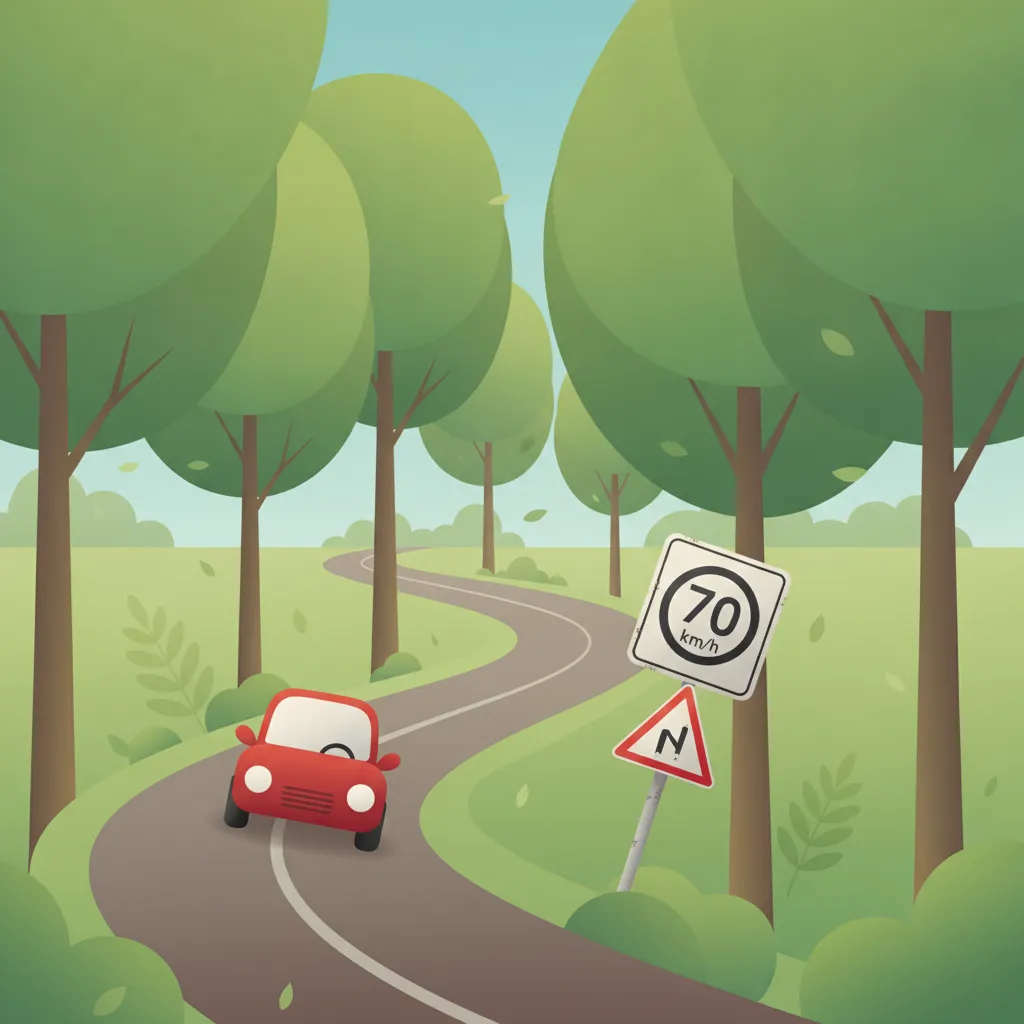
This lesson examines the specific hazards associated with driving on rural roads. It covers how to handle narrow lanes, sharp bends, and poor road surfaces, as well as how to anticipate and safely interact with slow-moving agricultural vehicles or livestock. Strategies for speed adaptation due to limited visibility and the risks associated with overtaking in these conditions are thoroughly discussed.
This lesson covers the principles of effective route planning and the practical skills for navigating different types of junctions. It provides guidance on using navigation aids and understanding the specific challenges large vehicles face at roundabouts and complex intersections. Emphasis is placed on correct lane selection and positioning well in advance of a turn to execute the maneuver safely and without impeding other traffic.
Enhance your observation skills and learn effective communication techniques for navigating busy German urban traffic. This lesson focuses on crucial checks and signals needed for safety, particularly when considering maneuvers like overtaking.

This lesson teaches the essential observation techniques required for safe riding, focusing on the systematic use of mirrors and shoulder checks to manage blind spots. It emphasizes developing active scanning habits to maintain constant situational awareness of the surrounding traffic environment. Learners will understand how effective head movement and use of peripheral vision are critical for detecting potential hazards early.

This lesson focuses on how motorcyclists can clearly communicate their intentions to other road users to prevent misunderstandings and collisions. It covers the correct use of indicators, brake lights, and standardized hand signals for turning and stopping. The importance of making eye contact with other drivers to confirm they have seen you is also a key topic for enhancing safety.

This lesson teaches riders how to interact safely and predictably with pedestrians, cyclists, and public transport vehicles. It highlights the importance of yielding at designated crossings, maintaining a safe passing distance, and anticipating the movements of buses and trams. The content emphasizes using eye contact and clear signaling to foster safe and respectful interactions with all road users.
This lesson highlights the specific risks associated with motorcyclists, who are less visible and more vulnerable than car drivers. It teaches you to actively look for motorcycles, especially at intersections and during lane changes, as their smaller profile can be easily missed. You will learn about their potential for rapid acceleration and instability, emphasizing the need for extra following distance.
This lesson focuses on maintaining a safe buffer around the vehicle in traffic. It explains the 'two-second rule' as a simple method for ensuring adequate following distance and discusses how to adjust this for adverse conditions. A key focus is on developing hazard anticipation skills through continuous scanning and risk assessment.

This lesson focuses on the importance of strategic road positioning for enhancing safety and visibility. Learners explore different lane positions and understand when to use them to see, be seen, and create a safety buffer. The content emphasizes maintaining a long visual focus down the road to anticipate hazards and avoid target fixation, particularly when cornering.
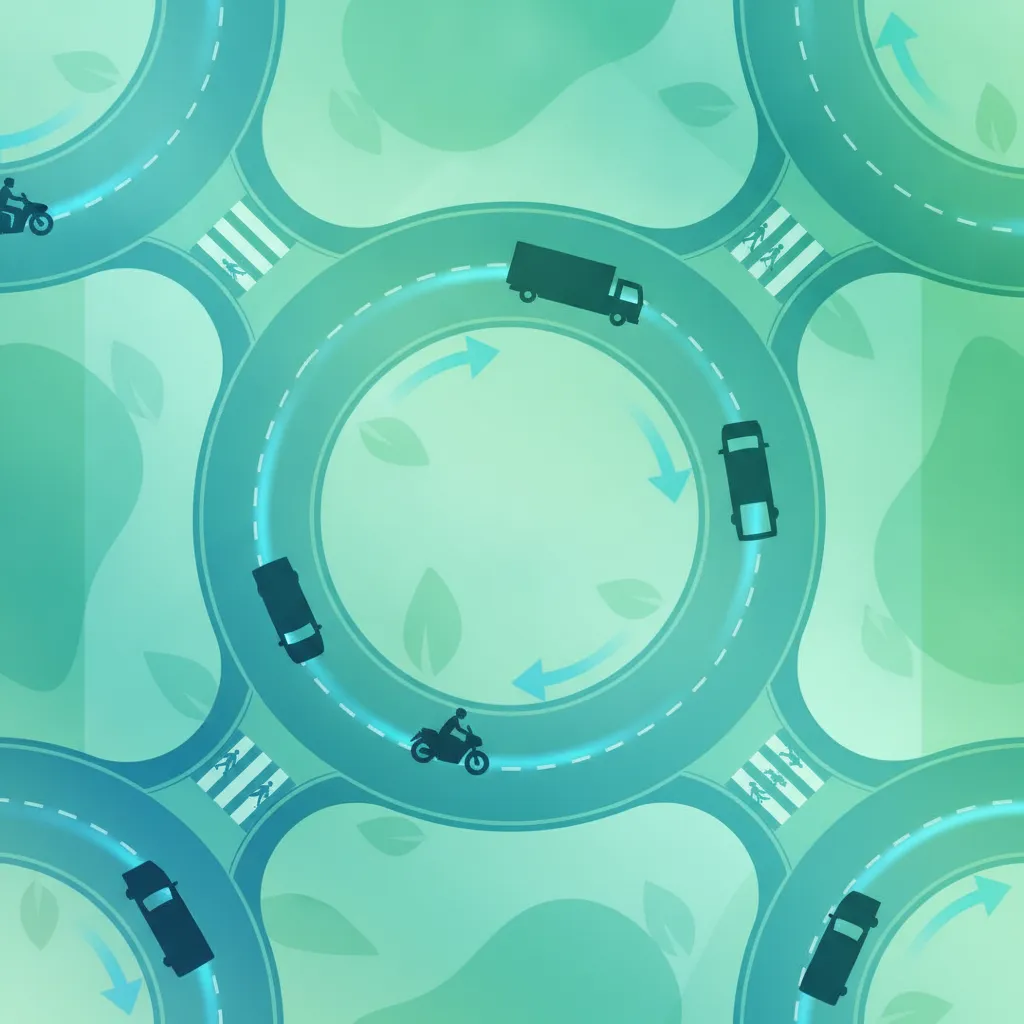
This lesson focuses on the specific techniques for safely navigating roundabouts, a common feature in urban traffic. Learners are taught the correct lane selection for their intended exit, the importance of proper signaling upon entry and exit, and maintaining an appropriate speed. The content highlights the need to yield to circulating traffic and to be aware of other vehicles changing lanes within the roundabout.
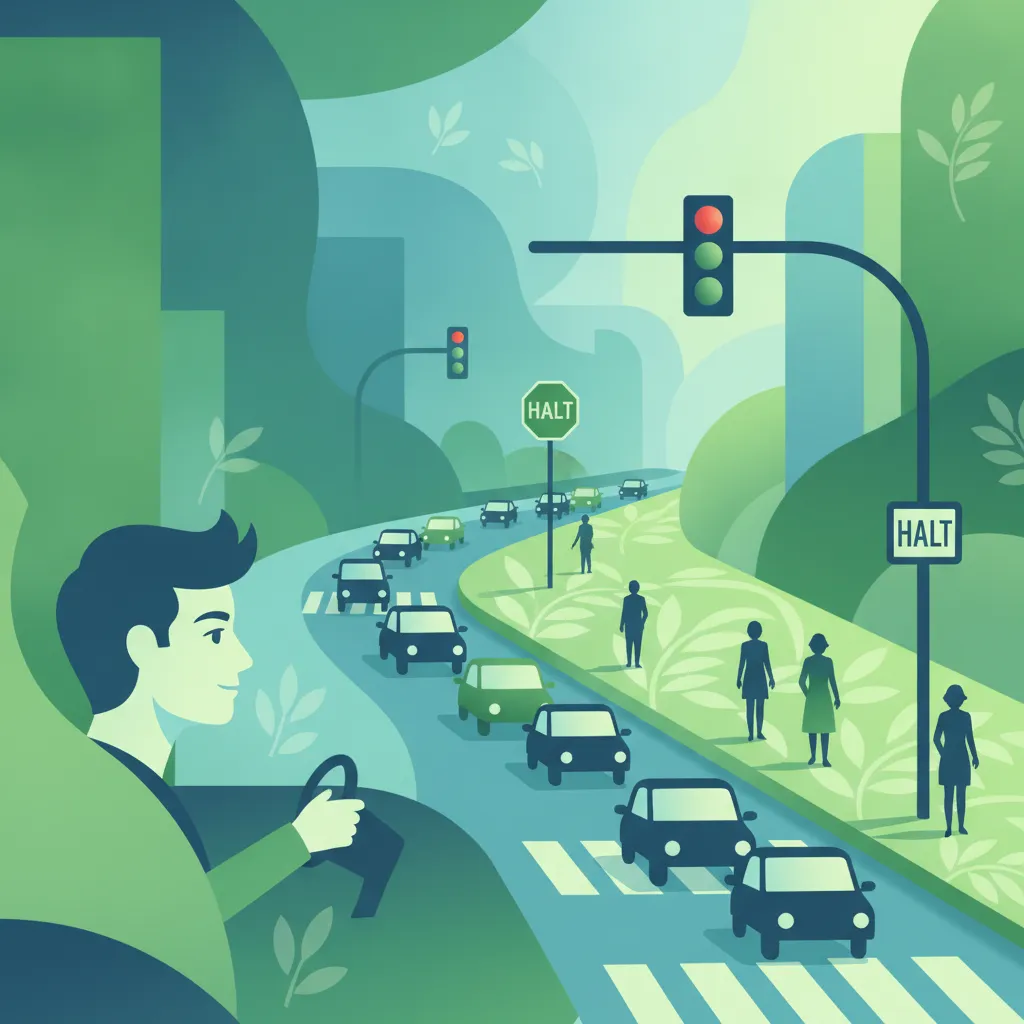
This lesson details the safe approach and navigation of various intersection types, including those controlled by traffic lights, stop signs, and give-way signs. Emphasis is placed on comprehensive observation of traffic flow, establishing eye contact with other road users, and ensuring clear visibility before proceeding. The lesson also covers correct lane positioning for turning and the importance of anticipating pedestrian movements.

This lesson teaches the systematic observation techniques required for safe driving, starting with how to scan the road far ahead, nearby, and to the sides. It details the correct frequency for checking interior and exterior mirrors to maintain situational awareness. The lesson highlights the indispensable over-the-shoulder check ('Schulterblick') to cover the vehicle's blind spot before any change in direction.

This lesson details the correct procedures for entering a motorway, using the acceleration lane to match traffic speed, and merging safely. It reinforces the strict lane discipline required, including keeping to the right lane except when overtaking. The content also provides guidance on maintaining increased following distances and performing safe lane changes at high speeds.
Find clear answers to common questions learners have about Overtaking Maneuvers and Safe Lane Usage in Urban Traffic. Learn how the lesson is structured, which driving theory objectives it supports, and how it fits into the overall learning path of units and curriculum progression in Germany. These explanations help you understand key concepts, lesson flow, and exam focused study goals.
Generally, you must overtake on the left. However, in urban traffic with multiple marked lanes in the same direction, vehicles may drive past those on the left if speeds are low or if there is heavy congestion, but this is subject to strict conditions under the StVO.
You should check your mirrors and perform a shoulder check before every change of lane or direction. Maintain awareness of your surroundings throughout the entire maneuver to ensure no other vehicle has pulled into your path.
Failing to account for the blind spot is a frequent cause of errors. Many learners forget to perform a physical shoulder check, focusing only on the mirrors, which can lead to missing vehicles or cyclists moving alongside.
The fundamental road rules apply to all classes. However, riders of A1 or A2 bikes should be particularly mindful of their lower acceleration capacity, requiring more time and space to complete an overtake safely compared to high-powered Category A motorcycles.
Begin your targeted revision now. Use our practice search to quickly find specific German driving theory questions. Filter by StVO rules, road signs, or hazard perception to create your focused study plan. Master challenging areas and prepare confidently for your theoretical driving test.