
This lesson demystifies the physics of vehicle stopping, which is a core component of the German Category B theory exam. By breaking down the total stopping distance into reaction and braking segments, you will learn how to estimate safe distances and understand how variables like weather and speed impact your ability to stop safely.

Lesson content overview
Welcome to this essential lesson for your German Driving License Theory – Comprehensive Category B Course. Mastering the concepts of stopping distance, reaction distance, and braking distance is not merely about passing your exam; it's fundamental to safe driving, accident prevention, and understanding the physical limits of a vehicle. This chapter will delve into these critical components, explain how they are calculated, and explore the many factors that influence them on German roads and beyond.
The total stopping distance (in German, Anhalteweg) is the complete distance a vehicle travels from the moment a driver perceives a hazard and decides to stop, until the vehicle comes to a complete halt. This distance is a combination of two distinct phases: the time it takes for the driver to react and begin braking, and the time it takes for the vehicle to actually stop once the brakes are applied.
Understanding your vehicle's Anhalteweg is vital. It directly impacts the safe following distance you must maintain behind other vehicles and dictates the appropriate speed you should select for various road and weather conditions. Overlooking these distances can lead to dangerous situations and collisions, especially in unexpected circumstances.
The total stopping distance is always the sum of two distinct distances:
Both components are significantly affected by speed, but they are also influenced by a range of other factors that every driver must be aware of.
The reaction distance is the length your vehicle travels during your perception-reaction time (PRT). This is the interval from when you first become aware of a situation requiring a stop until you actually begin to apply the brakes. Even for an alert driver, this is never instantaneous.
While exact reaction times vary, a widely accepted average perception-reaction time for an alert driver is approximately 1 to 1.5 seconds. For the purpose of estimating reaction distance in a German driving theory context, a simple rule of thumb formula is often used:
Reaction Distance (in meters) ≈ (Speed in km/h ÷ 10) × 3
Let's look at some examples:
This formula provides a quick and practical estimate, assuming a reaction time of approximately 1.08 seconds. It highlights that the reaction distance increases proportionally with speed. Double your speed, and you double your reaction distance.
Your individual reaction time is not constant; it can be significantly altered by various internal and external factors:
Remember, the formulas provide an ideal estimation. Your actual reaction distance can be much longer under adverse conditions or if you are not fully alert. Always assume a longer reaction time in challenging situations.
The braking distance is the distance your vehicle travels from the moment the brakes are fully engaged until it comes to a complete stop. Unlike reaction distance, which is primarily human-dependent, braking distance is heavily influenced by the vehicle's physical characteristics and the road environment.
The relationship between speed and braking distance is not linear; it is exponential. This is due to the principle of kinetic energy, which is the energy an object possesses due to its motion. Kinetic energy is proportional to the square of the speed (KE ∝ v²).
This means that if you double your speed, your kinetic energy quadruples. To dissipate this quadrupled energy and bring the vehicle to a stop, the braking distance will also approximately quadruple. This is a critical concept for safe driving.
Doubling your speed roughly quadruples your braking distance. This is why driving at high speeds dramatically increases the risk and severity of accidents.
For estimating braking distance under normal conditions (dry road, good tires, alert driver), a common rule of thumb formula used in German driving theory is:
Braking Distance (in meters) ≈ (Speed in km/h ÷ 10) × (Speed in km/h ÷ 10) or (Speed ÷ 10)²
Let's apply this to the same speeds:
Notice how quickly the braking distance grows with increasing speed compared to the reaction distance. At 100 km/h, the braking distance is 100 meters, while the reaction distance is only 30 meters.
The coefficient of friction between your tires and the road surface plays a crucial role in braking efficiency.
The mechanical condition of your vehicle directly impacts its ability to stop safely.
The total stopping distance (Anhalteweg) is the sum of the reaction distance and the braking distance. This is the absolute minimum distance you need to bring your vehicle to a complete halt from the moment a hazard is identified.
Using the rules of thumb:
Total Stopping Distance (in meters) ≈ Reaction Distance + Braking Distance
Let's re-examine our examples with both components:
At 30 km/h (dry road, alert driver):
At 50 km/h (dry road, alert driver):
At 100 km/h (dry road, alert driver):
These figures clearly illustrate how dramatically the total stopping distance increases with speed.
Every speed limit, every recommendation for following distance, and every defensive driving technique is ultimately rooted in the concept of total stopping distance.
In Germany, the Straßenverkehrs-Ordnung (StVO), or Road Traffic Regulations, governs driving behavior, including speed and distance rules, which implicitly consider stopping distances. While the StVO doesn't specify exact stopping distance formulas, its rules for speed limits and following distances are designed to ensure drivers can stop safely.
The distance maintained behind the vehicle ahead. In Germany, this is typically half your speed in meters outside urban areas, or the "two-second rule" which allows for total stopping distance.
General Rule for Following Distance: Outside urban areas, the StVO generally advises maintaining a following distance in meters that is at least half your speed in km/h. For example, at 100 km/h, you should maintain at least 50 meters. This rule is a minimum and should be increased.
The Two-Second Rule: A more universal and safer guideline is the two-second rule. Choose a fixed point on the road (e.g., a sign or bridge). When the vehicle ahead passes this point, you should be able to count "one-thousand-one, one-thousand-two" before your vehicle reaches the same point. This ensures you have approximately two seconds of travel time, which is generally sufficient to cover your total stopping distance under normal conditions.
Always increase your following distance to three seconds or more when:
Maintaining an adequate following distance is not just a recommendation; it is a legal requirement. Tailgating (zu dichtes Auffahren) is a serious offense in Germany, especially on motorways, and can result in substantial fines, points on your driving license, and even a driving ban, depending on the speed and the severity of the violation.
Understanding the theoretical calculations is important, but applying this knowledge in real driving situations is paramount.
In urban areas, speeds are lower, typically 30 km/h or 50 km/h. While stopping distances are shorter, the frequency of hazards (pedestrians, cyclists, parked cars, traffic lights) is much higher.
At 50 km/h, your total stopping distance is around 40 meters. This means if you are following too closely, you may not be able to stop in time for a sudden pedestrian crossing or a vehicle braking hard ahead.
On German Autobahnen, where speeds can reach 130 km/h or more, the total stopping distances become immense. At 130 km/h, the total stopping distance is approximately 130 meters (reaction) + 169 meters (braking) = 299 meters (using the same rule of thumb formulas adapted for higher speed, for 130 km/h, braking distance (130/10)^2 = 13^2 = 169 meters). This is almost the length of three football fields!
This highlights why maintaining a very generous following distance is crucial on motorways, often needing more than the standard two-second rule, especially when following heavy goods vehicles (HGVs) which have longer braking distances.
When rain, snow, or ice reduce road friction, the braking distance dramatically increases. If the braking distance on a wet road is twice that on a dry road, then at 50 km/h, your braking distance would be 50 meters instead of 25 meters, making your total stopping distance 15 meters (reaction) + 50 meters (braking) = 65 meters. This requires a significant reduction in speed and a much larger following distance.
The formulas provided are simplified estimates for normal conditions. Always drive defensively and adjust your speed and following distance far more generously in real-world adverse conditions.
For your German Driving License Theory, and for your safety on the road, remember these core principles:
Anhalteweg) is the sum of reaction distance and braking distance.Stopping distance in German driving theory is divided into two components: reaction distance (the distance traveled during perception-reaction time, calculated as speed divided by 10 times 3) and braking distance (which grows exponentially with speed as the square of speed divided by 10). At 50 km/h, the total stopping distance is approximately 40 meters on dry roads; at 100 km/h it reaches 130 meters, illustrating why speed management is critical. Environmental factors such as rain, snow, ice, and poor visibility significantly increase braking distances, while driver factors like fatigue, distraction, and impairment extend reaction times. The two-second rule provides a practical minimum for following distance under normal conditions, with longer gaps required for adverse weather, high speeds, or reduced driver alertness.
A short set of high-value points that capture the most important learning from this lesson.
The total stopping distance (Anhalteweg) is the sum of reaction distance and braking distance, and both must be accounted for when assessing safety margins.
Reaction distance grows linearly with speed: at 50 km/h it is 15 meters, at 100 km/h it is 30 meters, using the formula (speed ÷ 10) × 3.
Braking distance grows exponentially with speed due to kinetic energy principles: doubling your speed roughly quadruples your braking distance.
Road conditions dramatically alter braking distance—wet roads can double it, while icy roads can extend it to 5–10 times the dry-road distance.
The two-second rule provides a practical minimum following distance under normal conditions and must be extended in poor weather, darkness, or when fatigued.
Explore all units and lessons included in this driving theory course.
Formula for reaction distance: (speed in km/h ÷ 10) × 3; for braking distance: (speed in km/h ÷ 10)².
Kinetic energy is proportional to the square of speed, which is why high-speed braking distances increase dramatically.
Poor visibility, fatigue, distraction, alcohol, and certain medications all lengthen perception-reaction time beyond the normal 1–1.5 seconds.
The StVO recommends following distances of at least half your speed in meters outside urban areas as a legal minimum.
At 130 km/h on a dry road, total stopping distance approaches 300 meters—nearly three football fields.
Assuming braking distance increases linearly with speed, when in fact it increases with the square of speed due to kinetic energy.
Using dry-road braking distances in wet, icy, or snowy conditions without applying appropriate multipliers.
Forgetting that reaction distance is only one component and ignoring it when estimating safe following distances.
Assuming ABS always reduces stopping distances; it primarily helps maintain steering control during hard braking rather than shortening the stop.
Underestimating how significantly factors like worn tires, heavy loads, or driver fatigue extend the actual stopping distance beyond ideal calculations.
Lesson content overview
A short set of high-value points that capture the most important learning from this lesson.
The total stopping distance (Anhalteweg) is the sum of reaction distance and braking distance, and both must be accounted for when assessing safety margins.
Reaction distance grows linearly with speed: at 50 km/h it is 15 meters, at 100 km/h it is 30 meters, using the formula (speed ÷ 10) × 3.
Braking distance grows exponentially with speed due to kinetic energy principles: doubling your speed roughly quadruples your braking distance.
Road conditions dramatically alter braking distance—wet roads can double it, while icy roads can extend it to 5–10 times the dry-road distance.
The two-second rule provides a practical minimum following distance under normal conditions and must be extended in poor weather, darkness, or when fatigued.
Explore all units and lessons included in this driving theory course.
Formula for reaction distance: (speed in km/h ÷ 10) × 3; for braking distance: (speed in km/h ÷ 10)².
Kinetic energy is proportional to the square of speed, which is why high-speed braking distances increase dramatically.
Poor visibility, fatigue, distraction, alcohol, and certain medications all lengthen perception-reaction time beyond the normal 1–1.5 seconds.
The StVO recommends following distances of at least half your speed in meters outside urban areas as a legal minimum.
At 130 km/h on a dry road, total stopping distance approaches 300 meters—nearly three football fields.
Assuming braking distance increases linearly with speed, when in fact it increases with the square of speed due to kinetic energy.
Using dry-road braking distances in wet, icy, or snowy conditions without applying appropriate multipliers.
Forgetting that reaction distance is only one component and ignoring it when estimating safe following distances.
Assuming ABS always reduces stopping distances; it primarily helps maintain steering control during hard braking rather than shortening the stop.
Underestimating how significantly factors like worn tires, heavy loads, or driver fatigue extend the actual stopping distance beyond ideal calculations.
Explore search topics learners often look for when studying Stopping Distance, Reaction Distance, Braking Distance. These topics reflect common questions about road rules, driving situations, safety guidance, and lesson level theory preparation for learners in Germany.
Browse additional driving theory lessons that cover connected traffic rules, road signs, and common driving situations related to this topic. Improve your understanding of how different rules interact across everyday traffic scenarios.
Explore how driver condition, weather, and vehicle maintenance impact stopping distance. This lesson details the real-world variables beyond basic formulas, essential for safe driving and understanding German traffic regulations.
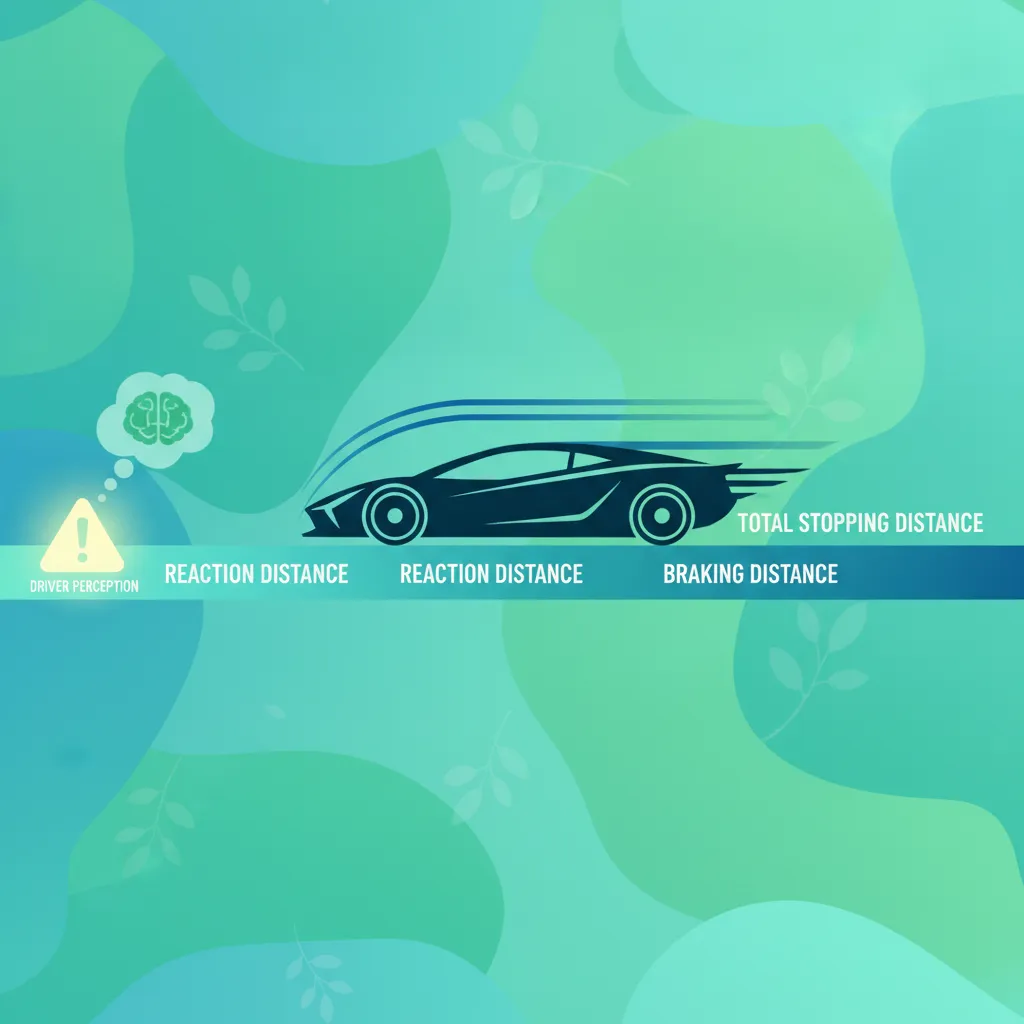
This lesson explains the two components of total stopping distance: reaction distance and braking distance. It teaches learners how factors like speed, road conditions, and rider attentiveness influence how far the motorcycle travels before coming to a complete stop. By understanding these principles, riders can make better decisions about safe speeds and following distances to ensure they can stop in time.
This lesson focuses on the importance of maintaining a safe following distance ('Sicherheitsabstand') to the vehicle ahead. It teaches practical methods for judging this distance, including the universally applicable two-second rule and the German 'halber Tacho' (half the speedometer reading in meters) rule. The lesson stresses the need to increase this distance in poor weather or when visibility is reduced.
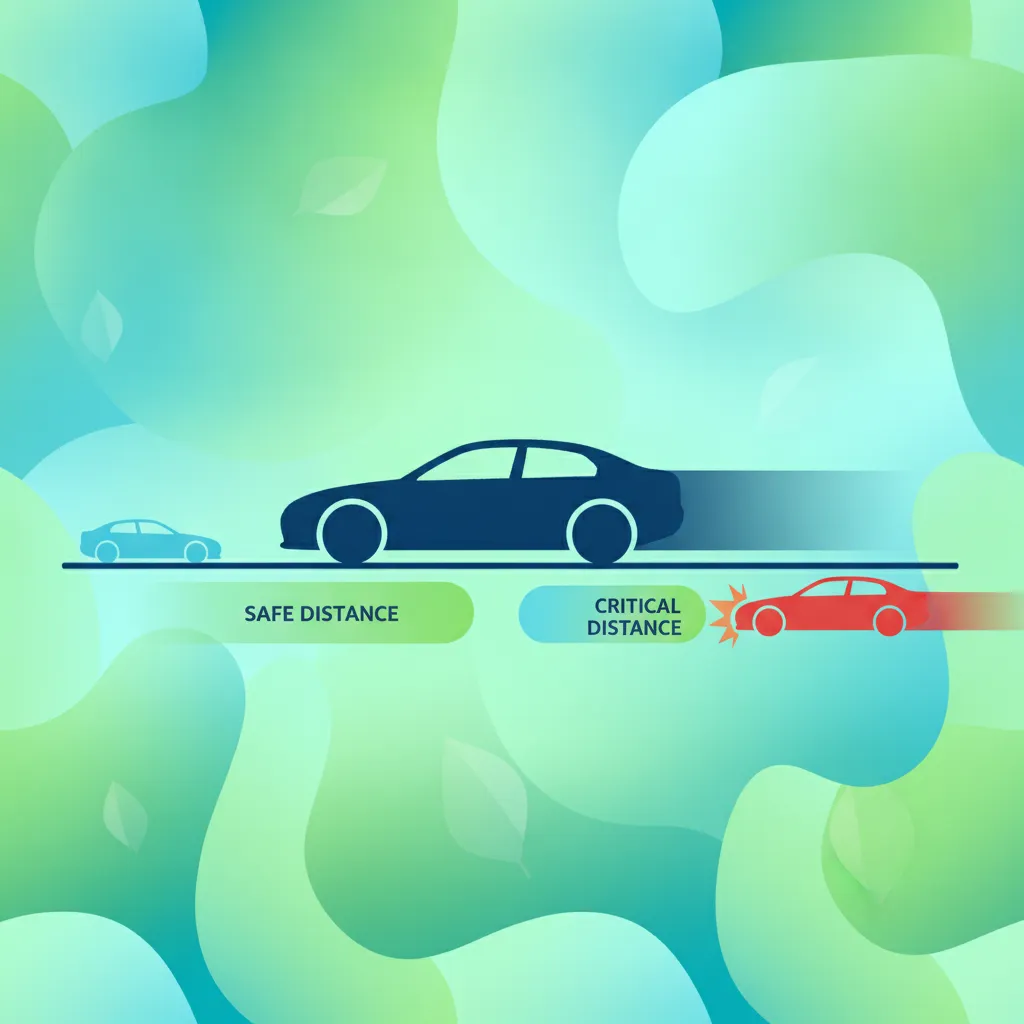
This lesson breaks down the concept of total stopping distance into reaction distance and braking distance. It teaches various braking techniques, including how to perform an emergency stop safely and the function of an Anti-lock Braking System (ABS). The relationship between speed, road condition, and braking effectiveness is a central theme.

This lesson covers the crucial skills of managing speed and maintaining a safe buffer from other vehicles. It teaches methods for calculating an appropriate following distance, such as the time-gap method, which adapts to different speeds and conditions. Learners will understand how to adjust their speed based on traffic flow, road surface, and weather to ensure they always have enough time and space to stop safely.

This lesson provides a method for calculating the braking distance of loaded vehicles, considering factors such as speed, load, and road conditions. It explains the formula for total stopping distance, including reaction time and braking distance components. The content highlights the importance of maintaining adequate safety margins for emergency braking.

This lesson explores the critical role of visibility in safe driving, covering topics such as sight distance, managing blind spots, and the correct use of mirrors. It provides guidance on how to adjust your driving in conditions of reduced visibility, such as at night, in fog, or during heavy rain, including the proper use of headlights. The importance of the over-the-shoulder check ('Schulterblick') is also a key focus.

This lesson clarifies the legal distinction between 'stopping' ('Halten') and 'parking' ('Parken') in Germany and explains the specific rules for each. You will learn to identify areas where stopping and parking are prohibited through signs and road markings. The lesson also covers the correct use of parking aids like the blue parking disc ('Parkscheibe') and paid parking systems.
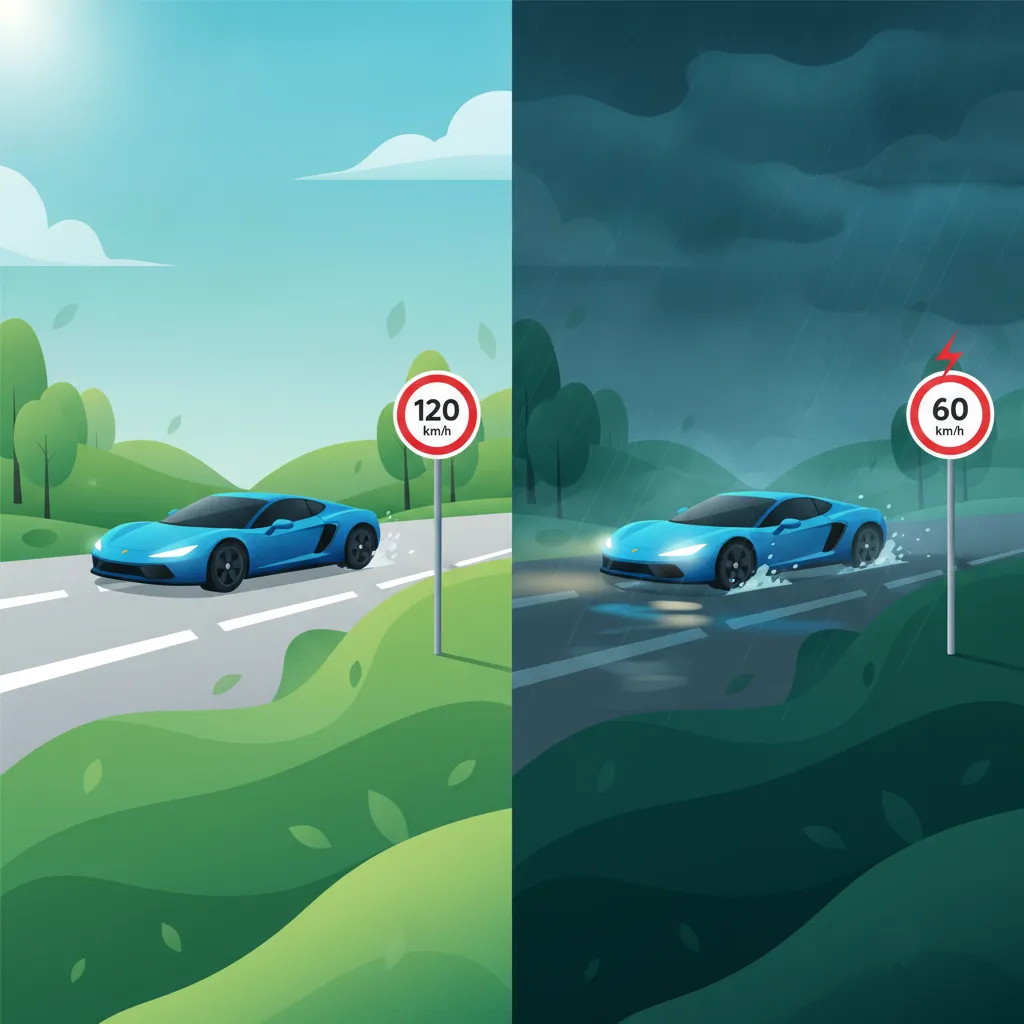
This lesson details the various speed limits applicable in Germany, from urban zones to rural roads. It emphasizes the critical skill of adapting speed to prevailing conditions such as rain, fog, or poor road surfaces. The content explains how external factors significantly impact vehicle handling and stopping distances.

This lesson focuses on the particular care required when driving near pedestrians, with a special emphasis on children and the elderly, whose behavior can be unpredictable. It covers the rules for yielding at zebra crossings and the importance of reducing speed near schools, playgrounds, and residential areas. The goal is to instill a habit of constant vigilance and readiness to stop.

This lesson focuses on the critical safety practice of maintaining an adequate following distance from the vehicle ahead. It explains how to use the 'two-second rule' as a simple and effective method for judging a safe gap in ideal conditions. The content also covers why this distance must be increased significantly in adverse weather or poor visibility to allow for longer reaction and braking times.
This lesson provides a deeper look into the physics of vehicle dynamics, focusing on the relationship between speed, reaction time, and braking distance. It's crucial for comprehending why safe speeds and following distances are mandated by German traffic law.
This lesson covers the crucial skills of managing speed and maintaining a safe buffer from other vehicles. It teaches methods for calculating an appropriate following distance, such as the time-gap method, which adapts to different speeds and conditions. Learners will understand how to adjust their speed based on traffic flow, road surface, and weather to ensure they always have enough time and space to stop safely.
This lesson details the various speed limits applicable in Germany, from urban zones to rural roads. It emphasizes the critical skill of adapting speed to prevailing conditions such as rain, fog, or poor road surfaces. The content explains how external factors significantly impact vehicle handling and stopping distances.
This lesson provides a complete guide to driving on the German Autobahn. It covers the correct procedure for entering and exiting via acceleration and deceleration lanes, the strict lane discipline rule of keeping right ('Rechtsfahrgebot'), and the principle of overtaking only on the left. It also explains the recommended speed limit and the critical procedure for forming an emergency corridor ('Rettungsgasse') in a traffic jam.
This lesson focuses on the importance of maintaining a safe following distance ('Sicherheitsabstand') to the vehicle ahead. It teaches practical methods for judging this distance, including the universally applicable two-second rule and the German 'halber Tacho' (half the speedometer reading in meters) rule. The lesson stresses the need to increase this distance in poor weather or when visibility is reduced.
This lesson details the statutory speed limits in Germany, including the standard limits within built-up areas, on rural roads, and on the Autobahn. It emphasizes that the posted limit is a maximum and that drivers must always adapt their speed to traffic, weather, and visibility conditions. The concept of the recommended speed ('Richtgeschwindigkeit') on the Autobahn is also explained.

This lesson provides instruction on the rules and best practices for operating a large passenger vehicle on the Autobahn. It covers the principles of strict lane discipline, regulations for minimum speed, and correct procedures for overtaking and merging. The importance of maintaining significantly increased following distances at high speeds and planning for exits well in advance is a key focus.
This lesson explains the two components of total stopping distance: reaction distance and braking distance. It teaches learners how factors like speed, road conditions, and rider attentiveness influence how far the motorcycle travels before coming to a complete stop. By understanding these principles, riders can make better decisions about safe speeds and following distances to ensure they can stop in time.
This lesson examines the direct impact of a passenger vehicle's dimensions on its operation. It explains key concepts such as turning radius, swept path, and rear overhang, which are crucial for safe maneuvering in confined areas. Learners will understand how to account for these characteristics when positioning the vehicle in a lane, making turns, and navigating challenging urban environments to avoid collisions.
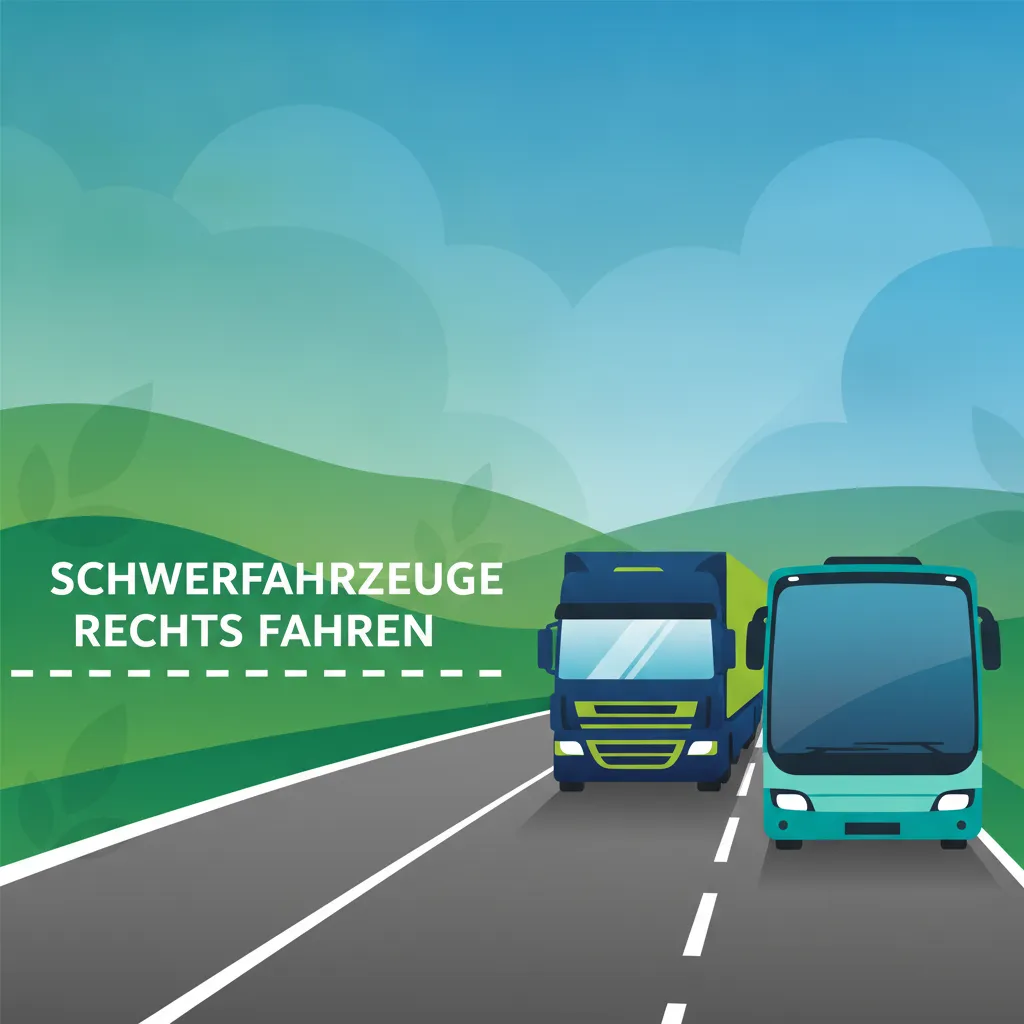
This lesson explains the specific regulations for operating heavy vehicles on Autobahnen, including speed limits, lane discipline, and overtaking rules. It discusses the use of dedicated truck lanes and the importance of maintaining appropriate following distances. The content also covers procedures for merging and exiting high-speed roads safely.

This lesson focuses on the logistical and safety aspects of planning long-distance passenger services. It covers the legal requirements for driving hours and rest periods, which are monitored by a tachograph. Learners will understand the importance of proactive fatigue management, scheduling regular breaks, and planning routes that include appropriate rest stops to ensure both driver alertness and passenger comfort throughout the journey.
Find clear answers to common questions learners have about Stopping Distance, Reaction Distance, Braking Distance. Learn how the lesson is structured, which driving theory objectives it supports, and how it fits into the overall learning path of units and curriculum progression in Germany. These explanations help you understand key concepts, lesson flow, and exam focused study goals.
Reaction distance is the distance covered from the moment you perceive a hazard to the moment you press the brake pedal. Braking distance is the distance covered from the moment you hit the pedal until the vehicle comes to a complete standstill.
In theory exam scenarios, assume that adverse conditions like wet, icy, or snow-covered roads significantly increase your braking distance. You must account for these conditions by increasing your following distance accordingly.
They are straightforward calculations often required for multiple-choice questions. Once you memorize the standard coefficients for speed, you will find these questions much easier to solve quickly during the test.
The two-second rule serves as a practical, real-world application of the stopping distance theory. It ensures that you maintain a sufficient buffer to react and brake safely, even if the vehicle in front stops abruptly.
Begin your targeted revision now. Use our practice search to quickly find specific German driving theory questions. Filter by StVO rules, road signs, or hazard perception to create your focused study plan. Master challenging areas and prepare confidently for your theoretical driving test.