
This lesson teaches you how to maintain optimal visibility and understand sight distance, which are critical for safe driving in Germany. You will explore how to manage your field of view, adjust to poor weather, and correctly use mirrors and the essential Schulterblick. This knowledge is vital for your Category B theory exam and real-world safety.

Lesson content overview
Driving safely on German roads, particularly for those preparing for the German Category B driving license, requires a profound understanding of visibility and sight distance. These critical concepts dictate a driver's ability to perceive, anticipate, and react to hazards, ensuring the safety of all road users. This lesson delves into how various elements—from lighting conditions and weather to vehicle design and driver behavior—impact what you see and how you should respond.
Mastering visibility and sight distance is not merely about observing the road; it's about actively managing your environment to create sufficient reaction time. It's a foundational element that intertwines with speed management, following distances, and defensive driving principles, empowering you to make informed decisions behind the wheel.
Visibility refers to the range within which a driver can clearly see and identify potential hazards, other vehicles, pedestrians, and cyclists. It encompasses both your ability to see the surroundings and other road users' ability to see your vehicle. Adequate visibility is crucial for making timely driving decisions, such as when to brake, accelerate, or change lanes.
The definition of good visibility is dynamic, constantly changing with time of day, weather conditions, and even the type of road you are on. Maintaining awareness of these changes and adjusting your driving accordingly is a hallmark of a responsible driver.
Sight distance, or Sichtweite in German, is the maximum distance at which a driver can perceive an object or situation and react to it safely. This is not just about how far you can visually see, but how far you can see and respond effectively, considering your vehicle's speed and your reaction time.
There are two primary types of sight distance relevant to driving. Static sight distance refers to the visibility available when your vehicle is stationary, offering a baseline. Dynamic sight distance, however, is the more critical measure, as it factors in your vehicle's movement and speed. As your speed increases, the dynamic sight distance required to react safely also increases significantly.
The purpose of understanding sight distance is paramount: it directly influences the appropriate speed you should maintain under varying conditions. Driving faster than your available sight distance means you might not be able to stop or maneuver safely if an unexpected hazard appears, creating a dangerous situation.
Vehicle lighting systems are your primary tools for enhancing visibility, both for you to see the road and for others to see your vehicle. Proper use of these lights is not just a matter of convenience; it is a legal requirement and a fundamental safety practice on German roads.
The low beam, known as Abblendlicht in German, is your standard headlight setting. It provides a focused beam of light that illuminates the road ahead without blinding oncoming drivers or those you are following. You should use low beams during normal night driving conditions, in tunnels, and whenever visibility is reduced, such as at dusk or dawn.
Using low beams ensures that you have sufficient illumination to navigate safely while being considerate of other road users. Failing to switch from high beams to low beams when necessary is a common mistake with potentially dangerous consequences.
High beam headlights, or Fernlicht, offer a brighter, more expansive illumination that extends much farther down the road. They are invaluable for driving on unlit rural roads at night, significantly increasing your forward visibility and helping you spot distant hazards.
However, using high beams requires careful judgment. You must switch to low beam immediately if you encounter oncoming traffic or when following another vehicle at a close distance. The powerful glare of high beams can temporarily blind other drivers, leading to dangerous situations. The general rule is to dim your high beams when an oncoming vehicle is within approximately 150 meters, or when you are following another vehicle close enough that your lights reflect brightly in their mirrors.
Fog lights, or Nebelscheinwerfer, are specialized lights designed to improve visibility in severely reduced conditions such as dense fog, heavy rain, or snow. Positioned low on the vehicle, they project a broad, flat beam that cuts through precipitation more effectively than standard headlights, reducing glare back into the driver's eyes.
It is crucial to understand that fog lights are not for general use. They may only be activated when normal visibility is severely impaired. Using them in clear conditions can dazzle other drivers and is against regulations. In conditions of extremely poor visibility (e.g., fog so dense that sight distance is below 50 meters), you may also use rear fog lights, which are significantly brighter than normal taillights, to make your vehicle more visible from behind.
Beyond direct forward vision, a driver relies heavily on mirrors to monitor surrounding traffic and potential hazards. However, mirrors alone are not enough; understanding and actively managing blind spots is vital for safe maneuvering.
Your vehicle typically has an internal rear-view mirror and two external side-view mirrors. These reflective surfaces collectively provide crucial rearward and sideward visibility. Before every journey, it is essential to adjust your mirrors correctly.
Incorrect mirror adjustment can severely limit your field of vision, leaving large portions of the road uncovered and increasing the risk of accidents, especially during lane changes or turns.
Even with perfectly adjusted mirrors, there are areas around your vehicle that remain invisible. These are known as blind spots, or Toter Winkel in German. They are typically located to the rear-quarter of your vehicle, on either side. Vehicles, especially motorcycles or bicycles, can easily disappear into these zones, making them undetectable through your mirrors alone.
Ignoring these blind spots is a common cause of collisions, particularly when changing lanes. A responsible driver must always be aware of these areas and take proactive steps to check them.
To overcome the limitations of mirrors and effectively check blind spots, the over-the-shoulder check, or Schulterblick, is indispensable. This involves a brief, quick glance over your shoulder in the direction you intend to move (e.g., over your left shoulder before changing to the left lane).
This quick head turn allows you to directly see into the blind spot area not covered by your mirrors, confirming that the lane is clear of other vehicles, cyclists, or pedestrians. Performing the Schulterblick is a mandatory procedure before changing lanes, merging, or making turns where there's a risk of hidden traffic. It is a critical habit that significantly enhances safety.
German traffic law, primarily the Straßenverkehrs-Ordnung (StVO) and Fahrzeug-Zulassungsverordnung (StVZO), clearly defines regulations regarding visibility and vehicle lighting. Adhering to these rules is not just about avoiding fines; it's about safeguarding lives.
According to German law (§17 StVO), headlights must be used not only from sunset to sunrise but also during daylight hours if visibility is significantly impaired. This includes conditions such as fog, heavy rain, snowfall, or when driving through tunnels. The rationale is clear: your vehicle must be visible to others and you must be able to see the road ahead.
Driving without headlights when conditions require them can lead to dangerous situations and is subject to penalties. Always err on the side of caution and switch on your lights if there's any doubt about visibility.
The StVO specifies that the dipped beam (Abblendlicht) must be used when there is oncoming traffic or when you are following another vehicle at close distances. The main beam (Fernlicht) is reserved for unlit roads where there are no oncoming vehicles and no vehicle ahead is close enough to be dazzled. This rule is crucial for preventing glare and maintaining the safety of all road users.
Fog lights (Nebelscheinwerfer) are powerful tools but are strictly regulated. They may only be used when visibility is severely reduced due to fog, heavy rain, or snow (§17 StVO). This is often defined as visibility less than 50 metres. Using fog lights in clear conditions is not permitted as it can cause unnecessary glare for other drivers.
German law (§4 StVO) mandates that drivers must always maintain a sufficient following distance to be able to stop safely if the vehicle ahead brakes suddenly. In conditions of reduced visibility, such as fog or heavy rain, this distance must be significantly increased. The "half-tachometer" rule (half your speed in metres, e.g., 50 km/h means 25m) or the two-second rule provides a baseline, but these must be adjusted upwards in adverse conditions.
If you are towing a trailer, especially one that does not have its own independent lighting system, German regulations (StVZO) may require the towing vehicle to use its dimmed or high-beam headlights between sunset and sunrise. This ensures that the entire combination (vehicle and trailer) is adequately visible to other road users, preventing rear-end collisions.
Hazard warning lights (Warnblinkanlage) are designed to signal a stationary vehicle that poses a hazard to other road users. This includes breakdowns, accidents, or other obstructions on the road (§16 StVO). They must not be used while driving, for example, in a traffic jam, as this can confuse other drivers about your vehicle's status and intentions.
Visibility is rarely constant, requiring drivers to continuously adapt their strategies. Different environmental and contextual factors demand specific adjustments to your driving behavior.
Driving at night inherently involves reduced ambient light, which limits peripheral vision and contrast. You should use low beams as a default, switching to high beams only when conditions permit (no oncoming traffic, no vehicles ahead). Keeping your headlights clean and properly aimed is crucial for maximizing their effectiveness. Avoid driving with interior lights on, as this can reduce your night vision by making your pupils contract.
Understanding the rules is one thing; consistently applying them is another. Many accidents are preventable by avoiding common mistakes related to visibility.
Mistake: Failing to switch on low beams at dusk, dawn, or in moderately reduced visibility (e.g., light rain). Consequence: Your vehicle is less visible to others, and you might miss subtle hazards on the road. Safe Practice: Make it a habit to turn on your low beams whenever visibility is anything less than perfectly clear daylight.
Mistake: Keeping high beams on when an oncoming vehicle approaches or when following another car too closely. Consequence: Dazzles other drivers, impairing their vision and potentially causing them to swerve or brake abruptly. Safe Practice: Always switch to low beam well in advance when you see oncoming headlights or approach a vehicle from behind.
Mistake: Relying solely on mirrors, especially during lane changes or merging. Consequence: Failing to see vehicles (especially smaller ones like motorcycles or bicycles) hidden in your blind spots, leading to side-swipe collisions. Safe Practice: Always perform a quick, decisive Schulterblick before initiating any lateral movement, in addition to checking your mirrors.
Mistake: Mirrors are not correctly angled, creating larger-than-necessary blind spots or a poor view of the road behind. Consequence: Reduced situational awareness, inability to monitor surrounding traffic effectively. Safe Practice: Adjust your mirrors before every drive. Your side mirrors should show only a sliver of your own vehicle.
Mistake: Maintaining a normal following distance during fog, heavy rain, or snow. Consequence: Insufficient time to react and brake safely if the vehicle ahead stops suddenly, leading to rear-end collisions. Safe Practice: Double or even triple your following distance in adverse conditions. The two-second rule is a minimum baseline; always increase it when visibility is poor.
Mistake: Activating fog lights in clear conditions, especially at night. Consequence: Unnecessary glare and distraction for other drivers, potentially confusing them. Safe Practice: Use fog lights only when visibility is genuinely and severely reduced due to fog, heavy rain, or snow.
The principles governing visibility and sight distance are rooted in the physics of light, human visual perception, and critical reaction time.
Visibility and sight distance are cornerstones of safe driving. For the German Category B driving license, a thorough understanding and consistent application of these principles are essential.
By integrating these practices into your daily driving, you enhance your safety and contribute to safer roads for everyone.
This lesson covers the essential relationship between visibility, sight distance, and safe driving under German traffic law. Drivers must understand that visibility refers to both seeing and being seen, while sight distance (Sichtweite) directly determines appropriate speed. Proper use of vehicle lighting—low beams for normal conditions, high beams for unlit roads only, and fog lights exclusively in severe weather—ensures both safety and legal compliance. Blind spots require active management through correctly adjusted mirrors and mandatory over-the-shoulder checks (Schulterblick) before any lane changes. In reduced visibility conditions, drivers must reduce speed and substantially increase following distances, with legal obligations under StVO and StVZO specifying exact requirements for headlight use, fog lights, and hazard warning lights.
A short set of high-value points that capture the most important learning from this lesson.
Visibility is dynamic and constantly changes with lighting, weather, and road conditions, requiring continuous driver adaptation.
Sight distance (Sichtweite) determines your maximum safe speed; if your speed exceeds how far you can see and react, you create dangerous situations.
Fog lights (Nebelscheinwerfer) must only be used when visibility drops below approximately 50 metres due to fog, rain, or snow.
Mirrors alone cannot cover all areas around your vehicle; blind spots (Toter Winkel) require direct visual confirmation via the Schulterblick.
Following distance must be significantly increased in reduced visibility, more than doubling the normal baseline.
Explore all units and lessons included in this driving theory course.
Switch from high beam to low beam when an oncoming vehicle is within 150 metres or when following another vehicle closely.
Always perform the Schulterblick (over-the-shoulder check) before any lateral movement such as lane changes, merging, or turning.
Low beams (Abblendlicht) are your default setting in darkness, tunnels, and whenever visibility is reduced.
The two-second rule gives a minimum baseline for following distance; always increase it substantially in fog, rain, or snow.
Hazards lights (Warnblinkanlage) are only for stationary vehicles presenting a hazard, never for use while driving.
Keeping high beams on when approaching oncoming traffic or following another vehicle, dazzling other drivers and causing dangerous glare.
Relying exclusively on mirrors to check adjacent lanes without performing the Schulterblick, missing motorcycles or cyclists in blind spots.
Using fog lights in clear weather conditions, which causes unnecessary glare for other road users.
Maintaining normal following distances during heavy rain or fog, leaving insufficient braking distance if the vehicle ahead stops.
Failing to activate headlights during dusk, dawn, or light rain, making the vehicle less visible to others.
Lesson content overview
A short set of high-value points that capture the most important learning from this lesson.
Visibility is dynamic and constantly changes with lighting, weather, and road conditions, requiring continuous driver adaptation.
Sight distance (Sichtweite) determines your maximum safe speed; if your speed exceeds how far you can see and react, you create dangerous situations.
Fog lights (Nebelscheinwerfer) must only be used when visibility drops below approximately 50 metres due to fog, rain, or snow.
Mirrors alone cannot cover all areas around your vehicle; blind spots (Toter Winkel) require direct visual confirmation via the Schulterblick.
Following distance must be significantly increased in reduced visibility, more than doubling the normal baseline.
Explore all units and lessons included in this driving theory course.
Switch from high beam to low beam when an oncoming vehicle is within 150 metres or when following another vehicle closely.
Always perform the Schulterblick (over-the-shoulder check) before any lateral movement such as lane changes, merging, or turning.
Low beams (Abblendlicht) are your default setting in darkness, tunnels, and whenever visibility is reduced.
The two-second rule gives a minimum baseline for following distance; always increase it substantially in fog, rain, or snow.
Hazards lights (Warnblinkanlage) are only for stationary vehicles presenting a hazard, never for use while driving.
Keeping high beams on when approaching oncoming traffic or following another vehicle, dazzling other drivers and causing dangerous glare.
Relying exclusively on mirrors to check adjacent lanes without performing the Schulterblick, missing motorcycles or cyclists in blind spots.
Using fog lights in clear weather conditions, which causes unnecessary glare for other road users.
Maintaining normal following distances during heavy rain or fog, leaving insufficient braking distance if the vehicle ahead stops.
Failing to activate headlights during dusk, dawn, or light rain, making the vehicle less visible to others.
Explore search topics learners often look for when studying Visibility and Sight Distance. These topics reflect common questions about road rules, driving situations, safety guidance, and lesson level theory preparation for learners in Germany.
Browse additional driving theory lessons that cover connected traffic rules, road signs, and common driving situations related to this topic. Improve your understanding of how different rules interact across everyday traffic scenarios.
Understand how reduced visibility due to night, fog, or rain impacts driving decisions. Learn essential German traffic rules (StVO) on sight distance, headlight use, and managing blind spots for safer driving.

This lesson provides a comprehensive guide to a vehicle's lighting systems, explaining the purpose and correct usage of each type of light. It covers dipped and main beam headlights, fog lights, and the legally required use of lights during the day or in poor visibility. You will also review the function of brake lights, indicators, and hazard warning lights for communication and safety.

This lesson teaches drivers how to safely manage their vehicle in challenging weather. It explains the dangers of aquaplaning in heavy rain, the loss of traction on snow and ice (including 'black ice'), and the severely reduced visibility in fog. You will learn to adjust your speed, increase following distances, and use lights correctly to suit these conditions.

This lesson teaches the systematic observation techniques required for safe driving, starting with how to scan the road far ahead, nearby, and to the sides. It details the correct frequency for checking interior and exterior mirrors to maintain situational awareness. The lesson highlights the indispensable over-the-shoulder check ('Schulterblick') to cover the vehicle's blind spot before any change in direction.

This lesson explores how different weather conditions impact driving safety and vehicle performance. It discusses the risks of hydroplaning in heavy rain, reduced visibility in fog, and loss of traction on snow and ice. Drivers will learn how to adapt their speed, increase following distances, and make smooth control inputs to maintain vehicle stability and prevent skids in these challenging conditions.

This lesson provides a comprehensive guide to identifying and managing the significant blind spots around a large passenger vehicle. It covers the correct adjustment and use of all mirrors, supplemented by camera systems, to gain maximum visibility. The importance of performing physical checks ('shoulder checks') before turning or changing lanes is emphasized to detect smaller road users like cyclists and pedestrians who may be hidden from view.

This lesson focuses on the high-risk maneuver of reversing, emphasizing the importance of all-around observation due to limited visibility. It teaches techniques for controlling the vehicle at very low speeds and using mirrors and direct observation to manage large blind spots behind the car. The priority is to ensure the path is clear of pedestrians and obstacles at all times.

This lesson teaches the proper adjustment of all required mirrors to maximize the field of vision and minimize blind spots. It discusses the limitations of indirect vision and the importance of aligning mirrors based on the driver's seating position. The content also outlines the typical blind zones for heavy vehicles and strategies to mitigate them.
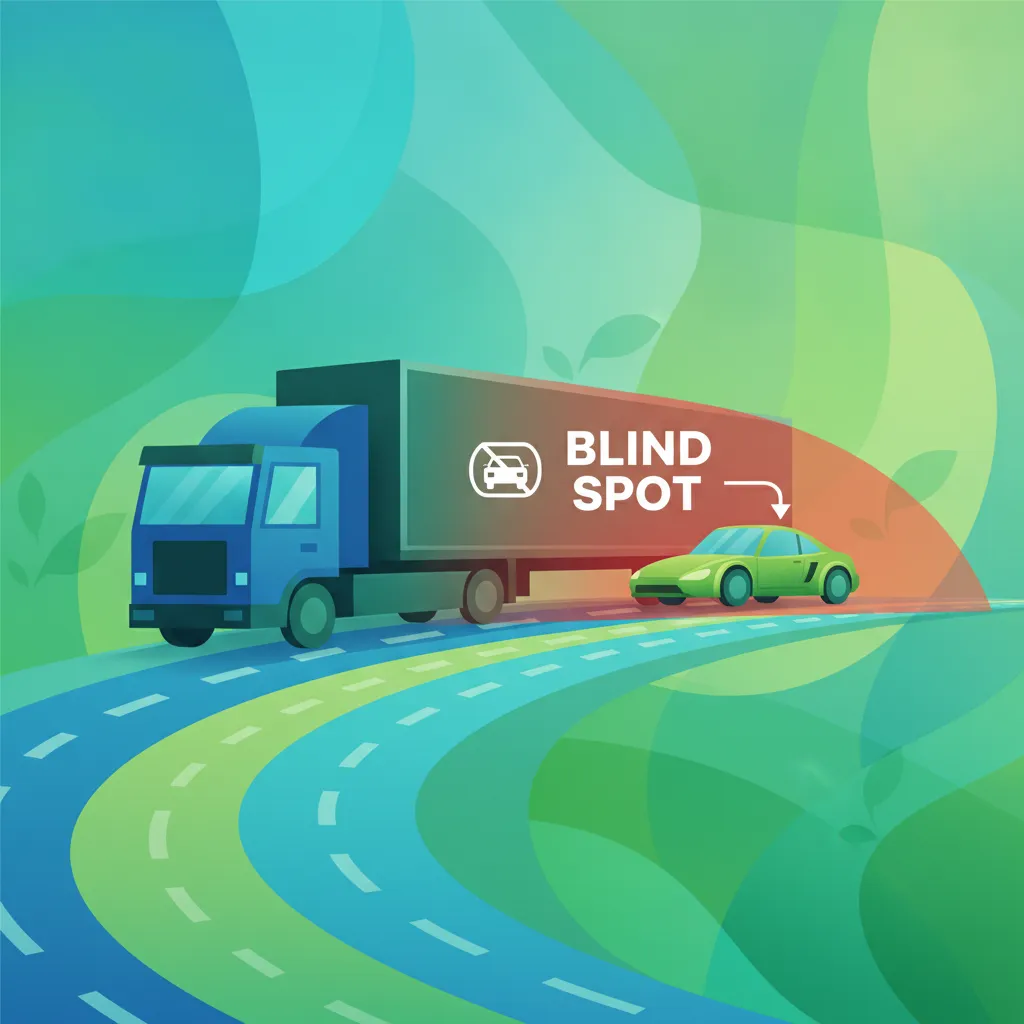
This lesson focuses on the blind spot zones specific to trucks and vehicle combinations, explaining where these zones are located. It covers the use of blind spot mirrors and other aids to enhance driver awareness during lane changes and turns. The content stresses the importance of maintaining safe distances from vulnerable road users.
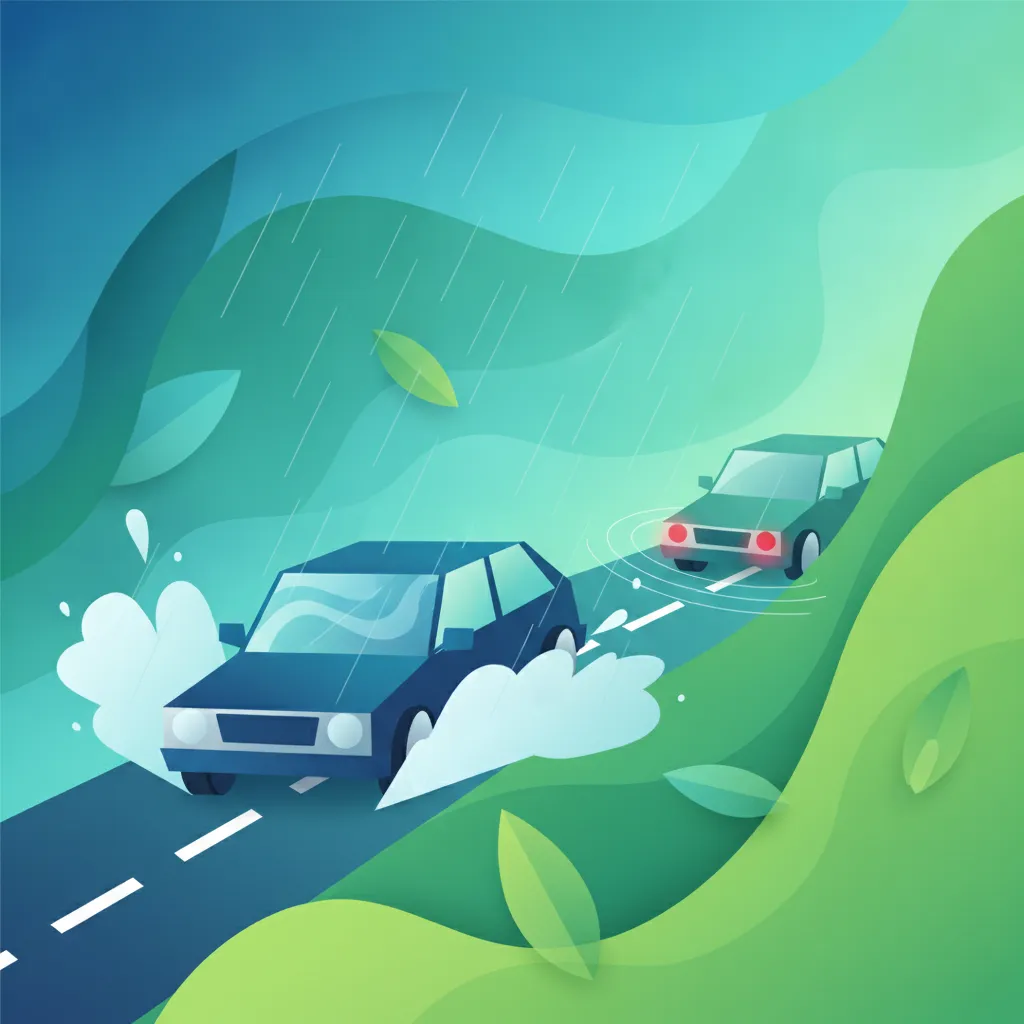
This lesson examines the specific hazards posed by different weather conditions. It explains how rain can lead to hydroplaning and reduced grip, how fog impairs visibility, and how strong winds can affect stability. Riders will learn practical strategies, such as reducing speed and increasing following distance, to mitigate these risks.

This lesson focuses on strategies to enhance a rider's visibility to others, a key aspect of motorcycle safety. It explains how high-visibility gear with neon colors and retroreflective materials functions to make the rider more conspicuous during both day and night. The content covers different types of reflective accessories and their proper placement to maximize effectiveness in traffic.
Learn practical techniques for safe driving, including correct mirror usage, understanding sight distance limitations, and the importance of the 'Schulterblick'. This lesson focuses on adapting your driving to various visibility conditions according to German regulations.
This lesson teaches the systematic observation techniques required for safe driving, starting with how to scan the road far ahead, nearby, and to the sides. It details the correct frequency for checking interior and exterior mirrors to maintain situational awareness. The lesson highlights the indispensable over-the-shoulder check ('Schulterblick') to cover the vehicle's blind spot before any change in direction.
This lesson focuses on the high-risk maneuver of reversing, emphasizing the importance of all-around observation due to limited visibility. It teaches techniques for controlling the vehicle at very low speeds and using mirrors and direct observation to manage large blind spots behind the car. The priority is to ensure the path is clear of pedestrians and obstacles at all times.

This lesson teaches the essential observation techniques required for safe riding, focusing on the systematic use of mirrors and shoulder checks to manage blind spots. It emphasizes developing active scanning habits to maintain constant situational awareness of the surrounding traffic environment. Learners will understand how effective head movement and use of peripheral vision are critical for detecting potential hazards early.
This lesson teaches the proper adjustment of all required mirrors to maximize the field of vision and minimize blind spots. It discusses the limitations of indirect vision and the importance of aligning mirrors based on the driver's seating position. The content also outlines the typical blind zones for heavy vehicles and strategies to mitigate them.
This lesson provides a comprehensive guide to identifying and managing the significant blind spots around a large passenger vehicle. It covers the correct adjustment and use of all mirrors, supplemented by camera systems, to gain maximum visibility. The importance of performing physical checks ('shoulder checks') before turning or changing lanes is emphasized to detect smaller road users like cyclists and pedestrians who may be hidden from view.
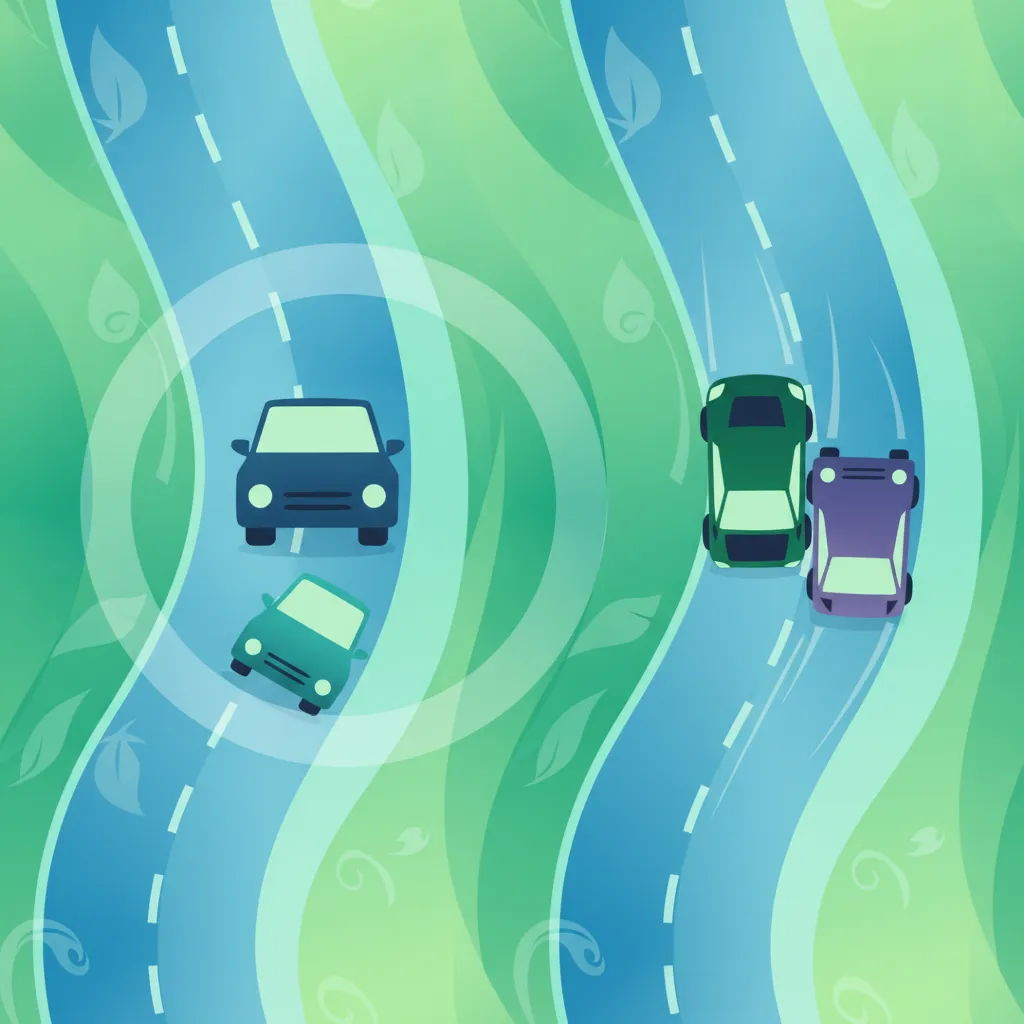
This lesson introduces the concept of defensive driving ('vorausschauendes Fahren'), a proactive approach focused on anticipating and mitigating potential risks. It teaches techniques for scanning the road ahead, identifying potential hazards early, and managing the space around your vehicle to create a safety buffer. The goal is to develop a mindset that prioritizes safety and collision avoidance above all else.
This lesson focuses on the blind spot zones specific to trucks and vehicle combinations, explaining where these zones are located. It covers the use of blind spot mirrors and other aids to enhance driver awareness during lane changes and turns. The content stresses the importance of maintaining safe distances from vulnerable road users.
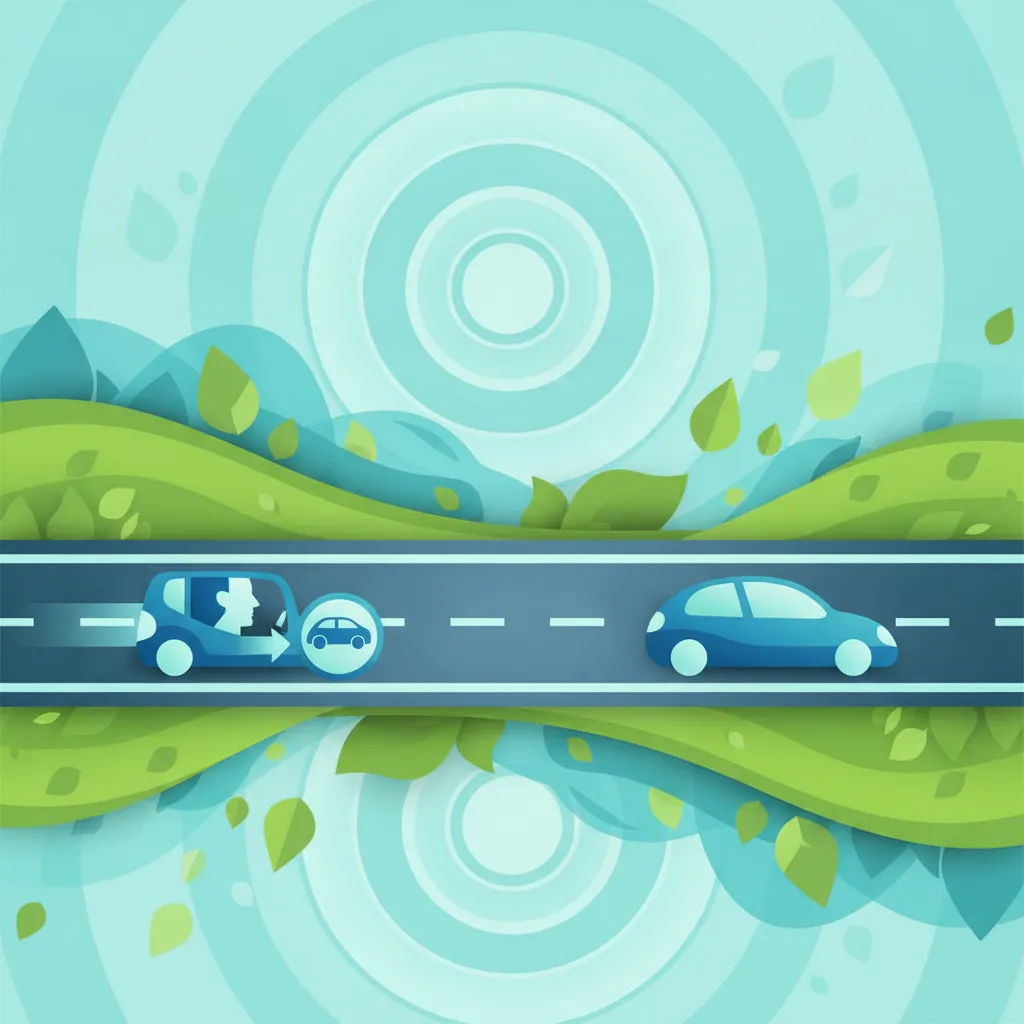
This lesson focuses on the critical maneuver of changing lanes ('Fahrstreifenwechsel'), a common cause of accidents if done incorrectly. It teaches a systematic, safe procedure based on thorough observation, clear signaling, and a final blind spot check. You will learn how to assess traffic speed and identify a safe gap before smoothly moving into the adjacent lane.
This lesson teaches riders how to develop strong visual perception skills for the road. It covers systematic scanning patterns, the correct use of mirrors, and the critical importance of performing a head check to cover blind spots. Understanding the larger blind spots of trucks and buses is also a key safety component.
This lesson covers safe reversing techniques for both rigid trucks and articulated combinations, emphasizing the use of mirrors and cameras. It discusses the risks of jackknifing during reversal and the importance of speed control and safety checks. The content outlines best practices for planning a safe reversing path, potentially with a guide person.
Find clear answers to common questions learners have about Visibility and Sight Distance. Learn how the lesson is structured, which driving theory objectives it supports, and how it fits into the overall learning path of units and curriculum progression in Germany. These explanations help you understand key concepts, lesson flow, and exam focused study goals.
The shoulder check is required to verify that the blind spot is clear before changing lanes or turning, as mirrors do not cover the entire area beside the vehicle. Failing to perform this check is a common cause of driving test failure and a major safety risk.
Increased speed narrows your field of vision and reduces the time you have to react to hazards. In your exam, you must recognize that higher speeds require you to look further ahead to maintain a sufficient safety margin.
In Germany, rear fog lights may only be used when visibility is significantly reduced by fog to less than 50 meters. Front fog lights can be used when visibility is generally poor due to rain, snow, or fog.
You must increase your following distance and reduce speed, as your sight distance is limited to the range of your headlights. Always ensure your lights are clean and correctly adjusted to see hazards early.
Begin your targeted revision now. Use our practice search to quickly find specific German driving theory questions. Filter by StVO rules, road signs, or hazard perception to create your focused study plan. Master challenging areas and prepare confidently for your theoretical driving test.