
This lesson guides you through the critical task of identifying and navigating varied road surface conditions. You will learn to adjust your riding style for hazards like gravel, wet leaves, and slippery manhole covers, ensuring you maintain control of your moped or scooter. Mastering these surface dynamics is essential for both your AM theory exam and your safety as a rider in Germany.
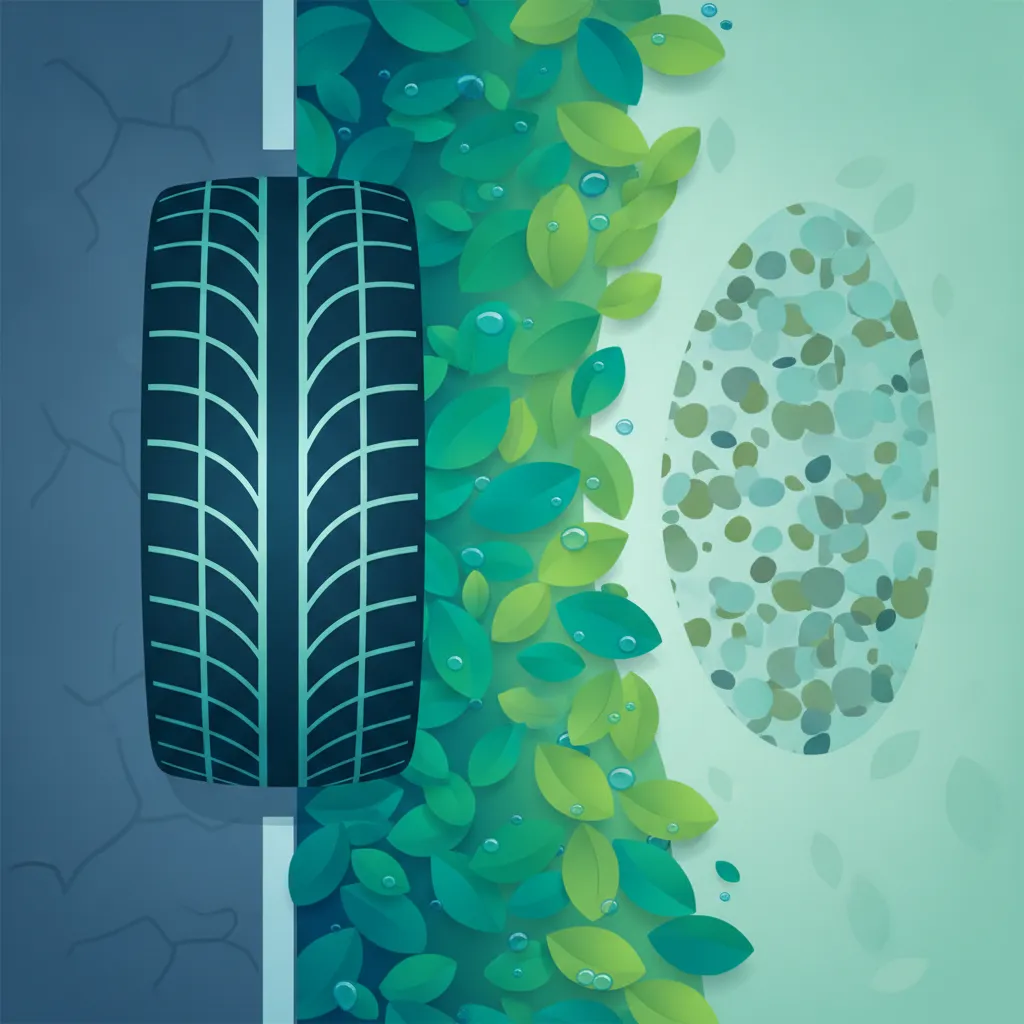
Lesson content overview
As an AM licence holder, operating mopeds, scooters, and light quadricycles requires a keen awareness of your surroundings, especially the condition of the road surface beneath your tyres. The road isn't always smooth and predictable; various characteristics can significantly impact your vehicle's grip and stability. This lesson explores common road surface hazards such as loose gravel, wet leaves, manhole covers, tram tracks, and general slippery pavement, providing essential techniques to manage them safely. Understanding these challenges is fundamental to maintaining control, preventing accidents, and ensuring a safe journey on German roads.
The interaction between your tyres and the road surface, known as traction, is crucial for accelerating, braking, and steering. Different materials and conditions on the road can dramatically alter this grip. For instance, a dry, clean asphalt road offers excellent traction, allowing for responsive control. However, surfaces that are wet, oily, sandy, or covered with loose materials drastically reduce this friction, demanding immediate adjustments to your riding technique. Reduced traction can lead to skidding, loss of control, and potentially serious accidents. Therefore, recognizing these conditions early and adapting your riding style are core principles for safe operation of your AM licence vehicle.
This topic builds upon foundational knowledge of vehicle control, speed management, and following distances (covered in Lesson 4: Speed, Braking, Following Distance and Vehicle Control) and is vital for developing strong risk perception and hazard anticipation skills (further explored in Lesson 7: Risk Behaviour, Legal Consequences, Breakdowns and Emergencies).
Navigating roads with unpredictable surfaces safely depends on three core principles that guide your decisions and actions.
Effective hazard anticipation is your first line of defence. This means constantly scanning the road ahead, not just for other traffic but also for potential changes in the road surface. Look far down the road and to the sides for visual cues like discoloured patches, reflections (indicating wetness), or visible debris. The earlier you spot a hazard, the more time you have to react calmly and appropriately. This proactive approach allows you to choose an optimal trajectory that minimizes exposure to the hazard or adjust your speed well in advance.
When faced with reduced traction, your speed and control inputs must change. Higher speeds amplify the risk on slippery surfaces because they increase kinetic energy and reduce the time available to react. Therefore, the primary response is almost always to reduce your speed. Beyond speed, your technique for braking, accelerating, and steering needs to become smoother and more gentle. Abrupt actions on a low-traction surface can easily lead to a skid or loss of control.
On any surface with reduced grip, think "smooth." Smooth acceleration, smooth braking, smooth steering. Sudden inputs can break traction.
Smooth and controlled inputs are paramount. On slippery surfaces, the margin for error is significantly reduced. Even a slight over-application of the front or rear brake, or an aggressive turn of the handlebars, can cause your tyres to lose grip. Practise using progressive braking, where you gradually increase pressure, and gentle throttle control. When turning, use subtle countersteering — the initial push on the handlebar in the opposite direction of the turn to initiate a lean — and maintain a steady, light throttle to stabilize the vehicle.
Each type of road surface hazard presents unique challenges and requires specific adaptations to your riding technique.
Definition: Loose gravel consists of small, unbound stones scattered on the road surface, ranging from fine pebbles to larger aggregates. It often accumulates at road edges, on unpaved shoulders, or after construction work.
Identifying Gravel Patches: Gravel is usually visible as a lighter, uneven strip or patch on the darker asphalt. Be particularly wary on rural roads, at the exits of construction sites, or near driveways leading from unpaved areas.
Riding Strategy for Gravel: Loose gravel significantly reduces tyre grip, making acceleration, braking, and turning hazardous.
A section of road, often a shoulder or a short feeder lane, covered with loose stones rather than paved asphalt.
Common Mistakes with Gravel:
Definition: A layer of moist or wet leaves covering the road, particularly common in autumn. When wet, leaves become incredibly slick, akin to riding on ice, due to their waxy surfaces and the trapped water creating a frictionless layer.
Why Wet Leaves Are So Slippery: Decomposing leaves, especially when wet, release tannins and other substances that further reduce friction. They obscure potholes and other road imperfections, adding another layer of danger. This makes them particularly hazardous on curves, where a greater lean angle is required.
Safe Approaches to Leaf-Covered Roads:
Seasonal Considerations and Visibility: Autumn is the peak season for this hazard. Be extra vigilant during and after rain showers when leaves are at their slickest. At night or in poor light, wet leaves can be nearly invisible, making hazard anticipation even more critical.
Definition: Metal covers for underground utility access points (e.g., sewers, communication cables) and metal gratings (e.g., storm drains, bridge expansion joints) are common features on urban roads. These surfaces are smooth by design and offer significantly less friction than asphalt, especially when wet or oily.
Recognizing Metal Hazards: Manhole covers and gratings are typically dark grey or black metal and are easily spotted on the lighter asphalt. However, they can blend in with the road at night or in heavy rain.
Techniques for Crossing Manhole Covers Safely:
When braking on a wet manhole cover, your tyre can lose grip instantly, leading to a sudden and uncontrolled slide. Always brake before or after the cover.
Increased Risk in Wet Conditions: Rain and moisture make these metal surfaces extremely slippery. Oil spills, common in city traffic, can further exacerbate the problem.
Definition: Grooved metal rails embedded in the road surface for trams (Straßenbahn). These tracks present a unique hazard because a narrow vehicle tyre can get caught in the groove, leading to a sudden loss of control.
Understanding the Danger of Grooves: The main danger lies in your tyre dropping into the track groove, which can happen if you cross at a shallow angle. Once a tyre is trapped, it can steer the vehicle unexpectedly or cause it to fall.
The Perpendicular Crossing Method:
Tram Tracks on Curves and at Intersections: These areas require even greater caution. At curved sections, the tracks themselves curve, making a truly perpendicular crossing difficult. In such cases, slow down to a crawl, maintain an upright position, and cross the tracks at the largest possible angle you can safely manage. Be especially careful at busy intersections where tracks may crisscross or run close to traffic.
Definition: Any road condition that generally reduces tyre grip beyond what is normally expected, including oil patches, deep water puddles (leading to hydroplaning), melted ice, and even very cold, damp asphalt.
Identifying Various Slippery Agents:
Hydroplaning Risk and Prevention:
The loss of tyre contact with the road surface due to a layer of water building up between the tyres and the road, causing the vehicle to skim on top of the water and lose steering control.
Hydroplaning is a significant risk in heavy rain or when encountering deep puddles at speed.
Riding on Oily or Icy Surfaces: These surfaces offer minimal traction.
In Germany, road users are bound by the Straßenverkehrs-Ordnung (StVO), which includes general duties that apply to all situations, including those involving hazardous road surfaces.
StVO §1: Basic Rules states that "Participation in road traffic requires constant caution and mutual consideration." This general principle means you must always be aware of potential dangers, including road surface conditions, and act in a way that does not endanger others.
StVO §34: Special Driving Maneuvers and Responsibilities can be interpreted to cover situations where inadequate speed or careless actions on hazardous surfaces lead to incidents. Failure to adapt your riding to conditions can be considered a breach of this duty.
StVO §3 states that "The speed must be adjusted to the road, traffic, visibility and weather conditions as well as to the personal abilities and characteristics of the vehicle and load." This regulation legally obliges you to reduce your speed when approaching or riding on hazardous surfaces.
While no specific StVO paragraph directly dictates how to brake on wet leaves, the general principles of safe operation (StVO §1 and §34) imply that you must use appropriate techniques. If a rider causes an accident due to hard braking on a slippery surface when gentle braking would have prevented it, they could be held liable for negligence.
Being aware of common mistakes can help you develop safer habits and avoid dangerous situations.
The level of risk associated with road surface hazards is not constant; it changes with various environmental and operational factors.
Rain, fog, and freezing temperatures amplify the slipperiness of all hazardous surfaces. Rain turns dry leaves into deadly slick patches and makes metal covers treacherous. Freezing rain or black ice can make any surface dangerous. Always assume reduced grip and adjust your riding accordingly in adverse weather.
At night or in low light conditions (e.g., dawn, dusk, fog), identifying road surface hazards becomes significantly harder. Discoloured patches, subtle wetness, or the texture of gravel can be almost invisible. Your anticipation skills become even more critical, and a further reduction in speed is advisable to compensate for limited visibility.
Urban roads, common for AM licence vehicles, typically feature more manhole covers, gratings, and tram tracks than rural roads. They also often have more oil spills due to heavy traffic. Rural roads, on the other hand, might have more gravel at edges or from agricultural vehicles. Higher traffic density means less room to manoeuvre around hazards, making early detection and smooth, controlled reactions even more vital.
A heavily loaded moped or scooter can have its handling characteristics altered, potentially making it more difficult to recover from a skid. Worn tyres, especially those with reduced tread depth, are far less effective at displacing water and maintaining grip on slippery surfaces. Always ensure your tyres are in good condition and correctly inflated.
Successfully navigating Germany's diverse road surfaces as an AM licence holder is a testament to your observation, anticipation, and control skills. The key takeaways are clear: identify low-traction surfaces like gravel, wet leaves, manhole covers, and tram tracks early. Always reduce your speed and apply gentle, smooth control inputs when encountering these hazards. Remember to cross tram tracks perpendicularly, take wider lines around wet leaves, and avoid braking directly on wet manhole covers. Increased following distance and extra caution in adverse weather conditions or low visibility are non-negotiable. By understanding the physics of traction and diligently applying these techniques, you can significantly mitigate the risk of loss of control and ensure safe, confident riding.
This lesson covers how to identify and handle road surface hazards specific to AM licence riding in Germany, including loose gravel, wet leaves, manhole covers, tram tracks, and general slippery pavement. The core strategy is to reduce speed early, scan the road ahead for surface changes, and apply smooth, gentle control inputs to maintain traction. Specific techniques include crossing tram tracks at a 90-degree angle, riding straight through gravel without braking, and avoiding any braking or turning directly on wet leaves or metal covers. Understanding StVO requirements reinforces that speed must always be adjusted to road and weather conditions, making hazard perception a legal and safety imperative.
A short set of high-value points that capture the most important learning from this lesson.
Traction varies dramatically with road surface condition, and reduced grip demands immediate technique adjustments
Speed reduction is the primary response to any low-griction surface hazard
Each hazard type requires a specific strategy: gravel needs straight-line riding, wet leaves need avoidance, tram tracks need perpendicular crossing
Smooth and gentle control inputs prevent skidding on any compromised surface
Early hazard detection through constant road scanning gives you more time to react safely
Explore all units and lessons included in this driving theory course.
Wet leaves create near-ice conditions due to their waxy surface and trapped water layer
Manhole covers are most dangerous when wet; always brake before or after crossing them, never on them
Tram tracks must be crossed at 90 degrees to prevent your tyre dropping into the groove
On gravel, avoid braking entirely if possible; use only the rear brake very lightly if necessary
Hydroplaning occurs when water builds between tyre and road, causing loss of steering control at speed
Maintaining normal speed when entering a gravel patch, leading to loss of control
Hard braking when surprised by wet leaves, which causes immediate skidding
Attempting to turn while your tyres are on or between tram tracks
Approaching deep puddles or manhole covers at speed without adjusting throttle or steering line
Underestimating small wet leaf patches as insignificant; treat all patches as extremely slippery
Lesson content overview
A short set of high-value points that capture the most important learning from this lesson.
Traction varies dramatically with road surface condition, and reduced grip demands immediate technique adjustments
Speed reduction is the primary response to any low-griction surface hazard
Each hazard type requires a specific strategy: gravel needs straight-line riding, wet leaves need avoidance, tram tracks need perpendicular crossing
Smooth and gentle control inputs prevent skidding on any compromised surface
Early hazard detection through constant road scanning gives you more time to react safely
Explore all units and lessons included in this driving theory course.
Wet leaves create near-ice conditions due to their waxy surface and trapped water layer
Manhole covers are most dangerous when wet; always brake before or after crossing them, never on them
Tram tracks must be crossed at 90 degrees to prevent your tyre dropping into the groove
On gravel, avoid braking entirely if possible; use only the rear brake very lightly if necessary
Hydroplaning occurs when water builds between tyre and road, causing loss of steering control at speed
Maintaining normal speed when entering a gravel patch, leading to loss of control
Hard braking when surprised by wet leaves, which causes immediate skidding
Attempting to turn while your tyres are on or between tram tracks
Approaching deep puddles or manhole covers at speed without adjusting throttle or steering line
Underestimating small wet leaf patches as insignificant; treat all patches as extremely slippery
Explore search topics learners often look for when studying Road Surface Characteristics, Gravel, Wet Leaves, and Slippery Pavement. These topics reflect common questions about road rules, driving situations, safety guidance, and lesson level theory preparation for learners in Germany.
Browse additional driving theory lessons that cover connected traffic rules, road signs, and common driving situations related to this topic. Improve your understanding of how different rules interact across everyday traffic scenarios.
Learn essential riding techniques for managing common road surface hazards in Germany. This lesson covers how to safely navigate gravel, wet leaves, manhole covers, and tram tracks to maintain control and avoid skidding. Essential for AM license theory.

This lesson examines how various road surfaces and conditions affect tyre grip and traction. It teaches riders to recognize and adapt to hazards like wet patches, loose gravel, or oil spills. The content covers techniques for maintaining control through smooth throttle and brake inputs, preventing traction loss while accelerating, braking, and cornering on compromised surfaces.

This lesson addresses the challenges of operating a small AM vehicle in dense, mixed traffic. It provides strategies for increasing visibility to other drivers, positioning oneself defensively, and safely sharing lanes with cyclists. The content emphasizes awareness of larger vehicles' blind spots and maintaining a safe space cushion.
This lesson examines the specific hazards posed by different weather conditions. It explains how rain can lead to hydroplaning and reduced grip, how fog impairs visibility, and how strong winds can affect stability. Riders will learn practical strategies, such as reducing speed and increasing following distance, to mitigate these risks.
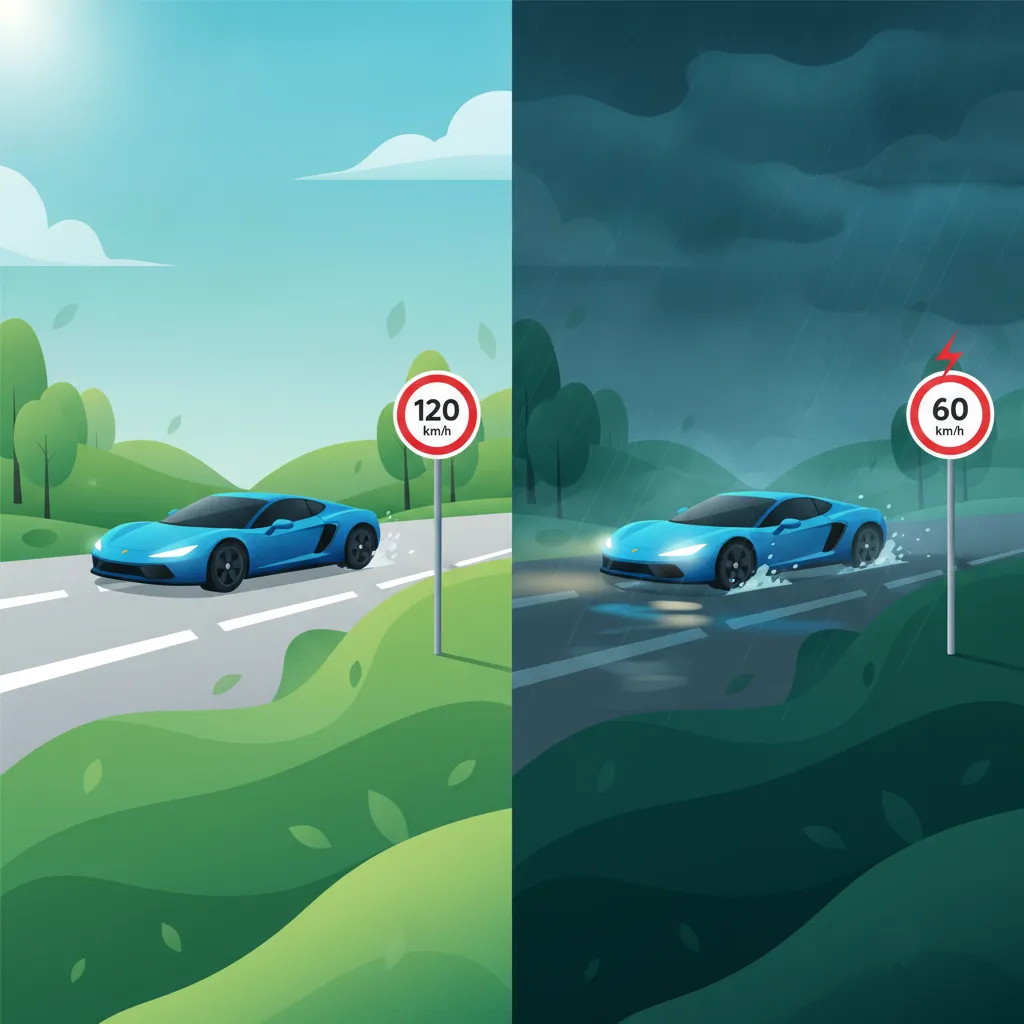
This lesson details the various speed limits applicable in Germany, from urban zones to rural roads. It emphasizes the critical skill of adapting speed to prevailing conditions such as rain, fog, or poor road surfaces. The content explains how external factors significantly impact vehicle handling and stopping distances.

This lesson teaches drivers how to safely manage their vehicle in challenging weather. It explains the dangers of aquaplaning in heavy rain, the loss of traction on snow and ice (including 'black ice'), and the severely reduced visibility in fog. You will learn to adjust your speed, increase following distances, and use lights correctly to suit these conditions.
This lesson explores how different weather conditions impact driving safety and vehicle performance. It discusses the risks of hydroplaning in heavy rain, reduced visibility in fog, and loss of traction on snow and ice. Drivers will learn how to adapt their speed, increase following distances, and make smooth control inputs to maintain vehicle stability and prevent skids in these challenging conditions.
This lesson focuses on interpreting various road markings, from lane lines and directional arrows to stop lines and pedestrian crossings. It explains the rules associated with solid versus broken lines and how to navigate temporary markings found in construction zones. Correctly reading these markings is vital for proper lane discipline and safety.
This lesson focuses on complex traffic environments where different types of road users share the same space. It provides guidance on situations like driving on streets with integrated tram tracks or where bus and bicycle lanes are part of the roadway. The content emphasizes understanding the specific priority rules and being extra vigilant to anticipate potential conflicts in these busy, shared zones.

This lesson focuses on the unique challenges and safety protocols required when operating alongside trams and light rail systems. It clarifies the strict right-of-way rules that typically favor trams and explains how to safely navigate shared roadways and cross tracks. Learners will be taught to recognize specific signals and markings related to tramways to prevent conflicts and ensure the safety of all road users.
This lesson covers safe interaction with special vehicles. It details the challenges of driving near large trucks (LKW), including their extensive blind spots, longer stopping distances, and the effects of wind turbulence when overtaking them. A critical part of the lesson is explaining the correct procedure for reacting to emergency vehicles by creating an emergency corridor ('Rettungsgasse') on multi-lane roads.
Understand how adverse weather and different road surfaces like wet pavement or loose gravel critically impact your motorcycle's grip and control. This lesson explains adjustments needed for safe riding in varied conditions, aligning with German traffic regulations.
This lesson examines the specific hazards posed by different weather conditions. It explains how rain can lead to hydroplaning and reduced grip, how fog impairs visibility, and how strong winds can affect stability. Riders will learn practical strategies, such as reducing speed and increasing following distance, to mitigate these risks.
This lesson teaches drivers how to safely manage their vehicle in challenging weather. It explains the dangers of aquaplaning in heavy rain, the loss of traction on snow and ice (including 'black ice'), and the severely reduced visibility in fog. You will learn to adjust your speed, increase following distances, and use lights correctly to suit these conditions.

This lesson examines how different weather conditions, such as rain, strong winds, and fog, directly impact motorcycle safety. It explains how wet surfaces reduce tyre grip and increase braking distances, requiring smoother rider inputs. The content also provides strategies for managing reduced visibility and the physical effects of crosswinds on the motorcycle's stability.
This lesson explores how different weather conditions impact driving safety and vehicle performance. It discusses the risks of hydroplaning in heavy rain, reduced visibility in fog, and loss of traction on snow and ice. Drivers will learn how to adapt their speed, increase following distances, and make smooth control inputs to maintain vehicle stability and prevent skids in these challenging conditions.
Find clear answers to common questions learners have about Road Surface Characteristics, Gravel, Wet Leaves, and Slippery Pavement. Learn how the lesson is structured, which driving theory objectives it supports, and how it fits into the overall learning path of units and curriculum progression in Germany. These explanations help you understand key concepts, lesson flow, and exam focused study goals.
Manhole covers are made of metal, which becomes extremely slippery when wet. They offer significantly less grip than asphalt, increasing the risk of your wheels losing traction and sliding if you brake or steer sharply while on them.
Always try to cross tram tracks at as close to a 90-degree angle as possible. If you cross at a shallow angle, your tires can easily get stuck in the rail groove or lose grip on the metal, leading to a fall.
Yes, wet leaves are notorious for being as slippery as ice. They create a layer between your tires and the road, drastically reducing friction, and can hide surface irregularities like potholes underneath.
When you encounter gravel, keep your speed steady and avoid sudden braking or aggressive steering inputs. Stay upright and maintain a relaxed grip on the handlebars to let the vehicle stabilize itself until you return to firm pavement.
Begin your targeted revision now. Use our practice search to quickly find specific German driving theory questions. Filter by StVO rules, road signs, or hazard perception to create your focused study plan. Master challenging areas and prepare confidently for your theoretical driving test.