
Welcome to the 'Vehicle Control in Cornering and Acceleration' lesson, part of the 'Speed, Braking, Following Distance & Vehicle Control' unit for your Icelandic Category AM moped license. This lesson builds on basic vehicle handling, focusing on the dynamic skills needed to navigate turns and manage speed effectively, crucial for both your theory exam and safe real-world riding.

Lesson content overview
Navigating turns and accelerating smoothly are fundamental skills for any rider, especially for those operating a moped under the Icelandic Moped (Category AM) Driving License Theory Course. This lesson delves into the critical dynamic principles that govern vehicle control during cornering and acceleration, emphasizing the importance of smooth control inputs and proper body positioning. Understanding these concepts is vital not only for passing your theory exam but, more importantly, for ensuring your safety and the safety of others on the road.
When a moped negotiates a turn, various forces act upon the vehicle and rider, causing weight to shift and affecting the grip of the tyres. Mastering cornering and acceleration involves skillfully managing these forces to maintain traction, optimize your path, and exit turns safely and efficiently. Excessive speed, abrupt changes in throttle, or incorrect body positioning can lead to a loss of traction, increasing the risk of skids and collisions. Therefore, Icelandic traffic regulations and best practices emphasize moderate speeds, smooth inputs, and precise line usage.
This lesson builds upon your understanding of basic vehicle dynamics, braking principles, and traffic priority rules. It will also prepare you for more advanced riding scenarios, particularly in challenging Icelandic weather conditions, where external factors significantly influence vehicle behavior.
Effective cornering and acceleration on a moped involve a deep understanding of how physical forces interact with your vehicle. Two core concepts, weight transfer and the traction circle, are central to managing grip and stability.
Weight transfer refers to the redistribution of a moped’s mass among its points of contact—the front and rear wheels, influenced by the rider’s position—during acceleration, braking, or turning. This shift in load directly impacts how much grip each tyre can provide.
During longitudinal weight transfer, braking shifts weight forward, increasing the load and thus the available traction on the front tyre, while simultaneously reducing the load and grip on the rear tyre. Conversely, acceleration shifts weight rearward, increasing rear tyre traction for propulsion but reducing front tyre traction, which can affect steering.
Lateral weight transfer occurs during cornering. As you lean into a turn, centrifugal force pushes the moped outward. The outside tyre (the one on the side of the lean) bears a greater load, increasing its grip, while the inside tyre unloads. Riders must anticipate and manage these transfers to prevent loss of control, such as oversteer (rear wheel loss of traction) or understeer (front wheel loss of traction). Maintaining a balanced weight distribution is key to stability.
The traction circle is a conceptual tool that illustrates the finite grip capability of your moped's tyres. It represents the maximum combined longitudinal (acceleration/braking) and lateral (cornering) forces that the tyres can exert before losing grip.
The fundamental principle is that total grip is limited. If you demand more grip in one direction, less is available in the other. For instance, in a turn, the tyres are already using a significant portion of their available grip for lateral forces (cornering). If you then apply too much throttle, demanding high longitudinal force (acceleration), you exceed the tyre's total grip capability, leading to a slide or understeer. Similarly, braking hard mid-corner can lead to a loss of lateral grip.
Smooth throttle application and gentle braking are crucial for staying within the traction circle and maintaining stability, especially when exiting a turn. Riders should never assume tyres can provide full braking and full cornering forces simultaneously.
Beyond understanding the underlying physics, mastering specific control techniques is paramount for safe and efficient moped operation. These include counter-steering, smooth throttle application, choosing the ideal line, and proper body positioning.
For two-wheeled vehicles like mopeds, counter-steering is the primary method to initiate a lean and begin a turn. It involves briefly steering the handlebars in the opposite direction of the intended turn.
For example, to turn left, you gently push the left handlebar forward (which momentarily steers the front wheel to the right). This causes the moped to lean to the left, initiating the turn. Once the lean is established, you maintain the desired lean angle by applying steady pressure to the handlebar on the side of the turn. This technique allows a moped to begin a turn smoothly with minimal body lean and is fundamental to responsive steering. Proper timing is critical; delayed counter-steering can lead to abrupt corrections and potential loss of control.
Smooth throttle application, also known as throttle modulation, refers to the gradual increase or decrease of engine power, particularly critical when entering or exiting a corner. Abrupt throttle changes can destabilize the moped and lead to a loss of traction.
When accelerating out of a turn, gradually rolling on the throttle prevents sudden weight shifts that could cause the rear wheel to spin or lose grip (oversteer). Similarly, rapid deceleration using engine braking or abrupt braking mid-corner can shift weight forward too quickly, potentially causing the front wheel to tuck or slide (understeer).
Icelandic traffic law prohibits sudden acceleration that endangers other road users. This rule is especially pertinent in curves, where tyre grip is already being utilized for lateral forces. Practicing gentle and consistent throttle inputs will enhance stability and reduce the risk of skidding.
The ideal line (often adapted from racing for road use) is the optimal path through a corner that maximizes tyre grip and minimizes travel distance while crucially preserving safety margins on public roads. It guides riders to position their moped for balanced forces throughout the turn.
This line typically involves an outside-inside-outside trajectory:
On public roads, the ideal line must always respect lane markings, oncoming traffic, and vulnerable road users. Cutting sharply across lane lines to shorten the path is dangerous and illegal, as it can lead to conflicts with opposing traffic. Maintaining lane discipline is paramount.
The rider’s body positioning significantly influences a moped's handling and stability. By shifting your mass relative to the moped's centre of gravity (CoG), you can aid in balancing the vehicle and improving tyre contact.
When leaning into a curve, shifting your body weight slightly towards the inside of the turn helps to counterbalance the centrifugal force. This allows the moped to maintain a desired lean angle with less effort from the tyres, effectively increasing the available grip. Conversely, shifting weight rearward during acceleration helps to keep the front tyre planted, improving front tyre grip for steering.
Common mistakes include "standing up" on the footrests during strong turns, which raises the combined centre of gravity of the moped and rider, thereby reducing stability. Riders should keep their feet on the footrests and ensure their body movements are smooth and controlled, not obstructing the steering.
Adhering to specific traffic regulations is non-negotiable when operating a moped, especially concerning speed, lane use, and throttle control during turns. These rules are designed to prevent accidents and ensure the safety of all road users.
Riders must always observe the posted speed limits for a road segment. However, it is crucial to adjust speed for cornering safety even if the posted limit is higher than what is safe for the specific curve. This is especially true for curves with limited visibility. Excessive speed increases centrifugal force dramatically, significantly raising the risk of losing traction and control.
Staying within your designated lane and respecting all road markings is a mandatory legal requirement. Crossing into opposing traffic or onto the shoulder while turning is strictly prohibited. This rule is fundamental for preventing head-on collisions and maintaining an orderly flow of traffic. When taking a right turn on a two-way street, you should generally stay near the right curb throughout the maneuver.
Icelandic traffic law prohibits abrupt acceleration that endangers other road users. This applies directly to cornering. Applying sudden, excessive throttle while mid-turn can cause the rear wheel to spin and lead to a loss of control. Therefore, throttle must be applied gradually and smoothly, especially when exiting a curve, to maintain stability and prevent skidding.
Overtaking another vehicle on the inside of a curve is strictly prohibited. The limited sight distance in a curve creates a high risk of head-on collisions with oncoming traffic that may not be visible. Overtaking is only permissible on the outside of a curve if visibility is clear, and it can be executed safely without endangering other road users or violating lane discipline. It is generally safest to wait until after the curve to overtake.
Riders are legally required to wear a helmet at all times. Additionally, when visibility is reduced (e.g., at dusk, night, in rain, or fog), wearing reflective clothing and bright colors is mandatory. This significantly increases your conspicuity to other drivers, particularly during cornering maneuvers where your side profile may be more exposed to traffic. Enhanced visibility is a critical safety measure, helping others see you and react appropriately, especially when you are maneuvering through a curve.
Understanding potential pitfalls is just as important as knowing the correct techniques. Many accidents occur due to common errors during cornering and acceleration.
| Situation | Why it's Wrong | Correct Behaviour | Consequence |
|---|---|---|---|
| Riding a curve faster than the posted limit | Exceeds safe speed for the curve's radius, increasing centrifugal force. | Reduce speed before entering the curve, brake before the turn, accelerate only after the apex. | Loss of traction, possible crash, fines, legal penalties. |
| Abrupt throttle while mid-turn | Shifts weight forward, reducing rear tyre grip, risking understeer or oversteer. | Smoothly roll on throttle after the apex, maintain a steady line. | Wheel spin, loss of control, accident. |
| Cutting across lane lines to 'tighten' a turn | Invades the opposite lane, risking collisions with oncoming traffic. | Stay within your lane, use proper apex technique (outside-inside-outside within your lane). | High-risk collision, legal penalties. |
| Standing on footrests during a leaning turn | Raises the combined center of gravity, decreasing stability and control. | Keep feet on footrests, shift body weight towards the inside of the turn to aid lean. | Reduced stability, possible rollover or loss of balance. |
| Overtaking a slower rider on the inside of a blind curve | Limited sight distance for both parties, high risk of head-on collision. | Wait until after the curve or overtake on the outside where visibility is clear and safe. | Near-miss or collision, severe legal repercussions. |
| Using full throttle after a sudden stop in wet conditions | Low traction surfaces cause immediate wheel spin and loss of rear grip. | Apply throttle gently and gradually, considering the low traction. Increase following distance. | Skidding, loss of control, potential crash. |
| Ignoring reflective gear at dusk or night | Reduced conspicuity, especially on curves where side profiles are visible. | Wear high-visibility clothing (e.g., reflective vest) and ensure proper lighting is active. | Increased risk of being unseen by other drivers, potential collision. |
Cornering and acceleration techniques must be adapted to various environmental and contextual factors. These variations demand careful judgment and proactive adjustments.
Understanding the cause-and-effect relationships in moped control solidifies your riding knowledge and helps in predicting outcomes.
Mastering vehicle control in cornering and acceleration is a cornerstone of safe moped riding in Iceland. By understanding the core principles and applying the correct techniques, you significantly reduce the risk of accidents and enhance your confidence on the road.
This lesson provides a comprehensive foundation for handling your moped effectively. This knowledge will be crucial as you progress to understanding even more challenging riding conditions, such as those encountered in Iceland's unique weather and road environments.
Effective moped cornering and acceleration depend on understanding weight transfer and the traction circle, which define how tyre grip is distributed between lateral and longitudinal forces during a turn. Key techniques include counter-steering to initiate the lean, smooth throttle modulation to maintain stability, correct body positioning to assist balance, and using the outside-inside-outside ideal line within your lane. In Iceland, riders must adhere to speed limits adjusted for curve safety, maintain strict lane discipline, avoid abrupt throttle, and respect overtaking restrictions in curves. Environmental factors such as wet or gravel surfaces, reduced visibility, and vehicle load require earlier speed reduction and gentler control inputs to stay within available tyre grip.
A short set of high-value points that capture the most important learning from this lesson.
Weight transfer during cornering shifts load to the outside tyre, increasing its grip while the inside tyre unloads.
The traction circle shows that tyre grip is finite; demanding more grip for acceleration leaves less available for cornering and vice versa.
Counter-steering initiates a turn by briefly steering opposite to the desired direction, which causes the moped to lean.
The ideal line through a corner follows an outside-inside-outside path within your lane, optimizing grip and visibility.
Accelerate only after passing the apex; premature throttle mid-corner can destabilize the moped.
Explore all units and lessons included in this driving theory course.
Icelandic law prohibits abrupt throttle application that endangers other road users, especially in curves.
Speed must be reduced before entering a curve; entry speed determines control throughout the turn.
Overtaking on the inside of a curve is forbidden due to limited sight distance and high collision risk.
Worn or incorrectly inflated tyres dramatically reduce available grip, increasing crash risk.
Body weight should shift slightly inside the turn; standing on footrests raises the centre of gravity and reduces stability.
Riding faster than the posted limit into a curve, which exceeds safe speed for the curve's radius and increases centrifugal force beyond tyre grip limits.
Applying sudden throttle mid-turn, causing forward weight shift, rear tyre unloading, and potential oversteer or spin.
Cutting across lane lines to tighten a turn, invading the opposite lane and risking head-on collisions.
Standing upright on the footrests while leaning, which raises the combined centre of gravity and decreases stability.
Overtaking on the inside of a blind curve where limited visibility creates high risk of collision with oncoming traffic.
Lesson content overview
A short set of high-value points that capture the most important learning from this lesson.
Weight transfer during cornering shifts load to the outside tyre, increasing its grip while the inside tyre unloads.
The traction circle shows that tyre grip is finite; demanding more grip for acceleration leaves less available for cornering and vice versa.
Counter-steering initiates a turn by briefly steering opposite to the desired direction, which causes the moped to lean.
The ideal line through a corner follows an outside-inside-outside path within your lane, optimizing grip and visibility.
Accelerate only after passing the apex; premature throttle mid-corner can destabilize the moped.
Explore all units and lessons included in this driving theory course.
Icelandic law prohibits abrupt throttle application that endangers other road users, especially in curves.
Speed must be reduced before entering a curve; entry speed determines control throughout the turn.
Overtaking on the inside of a curve is forbidden due to limited sight distance and high collision risk.
Worn or incorrectly inflated tyres dramatically reduce available grip, increasing crash risk.
Body weight should shift slightly inside the turn; standing on footrests raises the centre of gravity and reduces stability.
Riding faster than the posted limit into a curve, which exceeds safe speed for the curve's radius and increases centrifugal force beyond tyre grip limits.
Applying sudden throttle mid-turn, causing forward weight shift, rear tyre unloading, and potential oversteer or spin.
Cutting across lane lines to tighten a turn, invading the opposite lane and risking head-on collisions.
Standing upright on the footrests while leaning, which raises the combined centre of gravity and decreases stability.
Overtaking on the inside of a blind curve where limited visibility creates high risk of collision with oncoming traffic.
Explore search topics learners often look for when studying Vehicle Control in Cornering and Acceleration. These topics reflect common questions about road rules, driving situations, safety guidance, and lesson level theory preparation for learners in Iceland.
Browse additional driving theory lessons that cover connected traffic rules, road signs, and common driving situations related to this topic. Improve your understanding of how different rules interact across everyday traffic scenarios.
Explore advanced techniques for controlling your moped through corners, focusing on managing weight transfer, traction limits, and precise line selection. This lesson delves deeper into dynamic handling principles crucial for safe riding in diverse Icelandic conditions, building upon fundamental control skills.
This lesson focuses on the specific challenges of riding on gravel and uneven rural roads. It teaches techniques for maintaining stability and traction on loose surfaces, including speed management, body positioning, and gentle control inputs. Understanding how to handle these conditions is essential for safely exploring areas outside of main urban centers in Iceland.
This lesson details the fundamentals of lane discipline and proper turning techniques for moped riders. It covers the correct use of turn signals, judging appropriate cornering speed, and executing safe lane changes. The material provides a step-by-step guide to navigating intersections and curves with control and predictability, ensuring safety for the rider and other road users.
This lesson outlines best practices for positioning a moped on urban roads to maximize visibility and safety. It explains how to choose a lane position that makes you visible to drivers ahead and behind, while avoiding road debris and dooring hazards from parked cars. The content addresses adapting your position based on traffic speed, density, and road conditions.
This lesson details how various weather conditions impact moped stability, traction, and visibility. It provides practical strategies for handling crosswinds, avoiding hydroplaning in rain, and maintaining grip on icy or snowy surfaces. Riders will learn to assess weather-related risks and adapt their speed and control inputs to navigate challenging conditions safely.

This lesson explores the conduct required at uncontrolled crossings where the right-hand rule typically applies. It emphasizes the need to reduce speed, be prepared to stop, and establish clear communication with other road users. Riders will learn to assess the situation carefully and proceed only when it is confirmed to be safe, a critical skill for rural and residential areas.
This lesson examines the psychological factors crucial for safe riding, promoting a defensive mindset and heightened risk awareness. It provides strategies for managing stress, identifying potential hazards early, and making proactive decisions to prevent dangerous situations. Cultivating mental discipline and a safety-conscious attitude is fundamental to long-term rider safety on Icelandic roads.
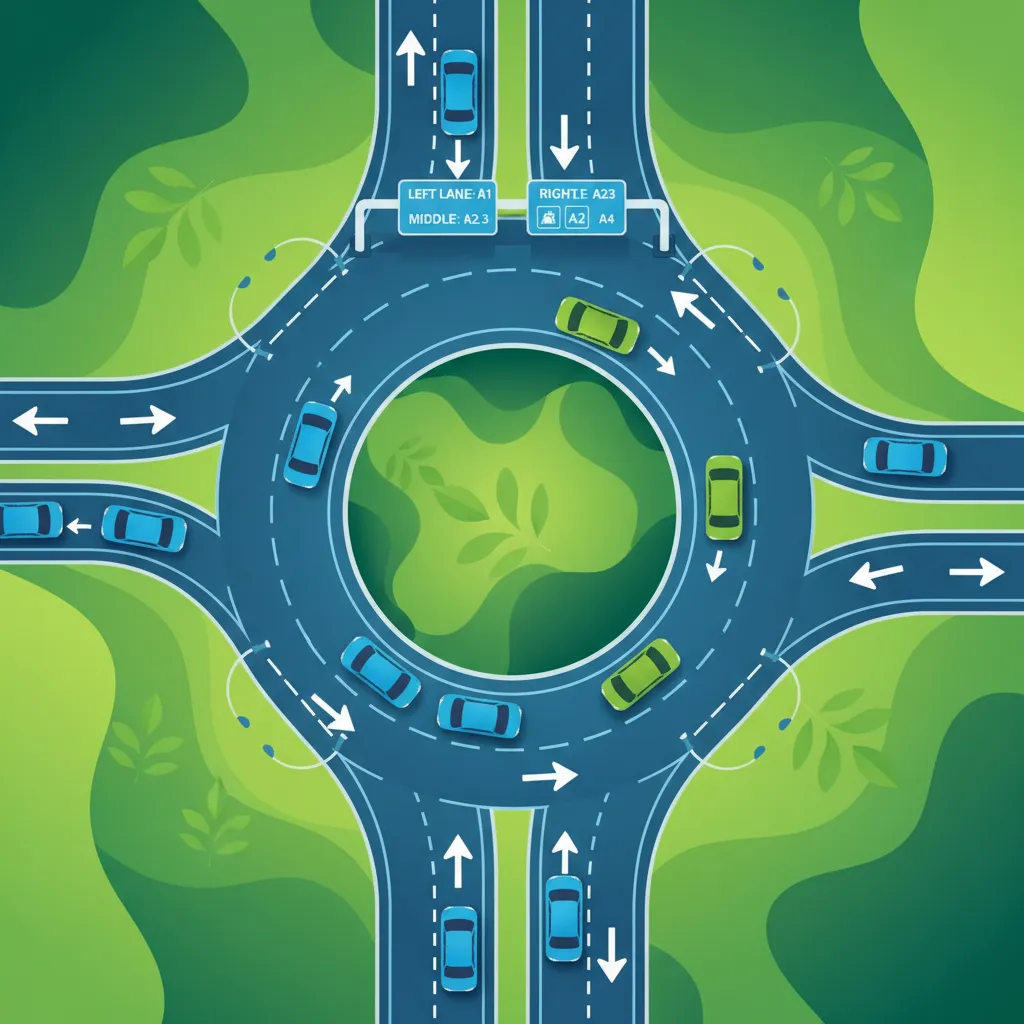
This lesson provides a detailed guide to navigating roundabouts, focusing on the rule to yield to circulating traffic before entering. It covers correct lane positioning for different exits, proper signaling, and maintaining a safe speed within the roundabout. Special guidance is provided for moped riders to enhance their visibility and safety among larger vehicles.

This lesson details the fundamentals of effective braking, covering both controlled deceleration and emergency stops. Learners will understand how factors like speed, road surface, and reaction time collectively determine total stopping distance. It also explains how to balance front and rear brake application to maximize stopping power without losing control.

This lesson explores the specific challenges of driving on Icelandic gravel roads, focusing on the reduced traction and vehicle dynamics associated with loose surfaces. The content explains how to adapt speed appropriately, maintain safe following distances, and use gentle braking to avoid skidding. Learners also study proper lane sharing etiquette, including how to safely pass other vehicles and manage loose stones that may be thrown, ensuring vehicle stability.
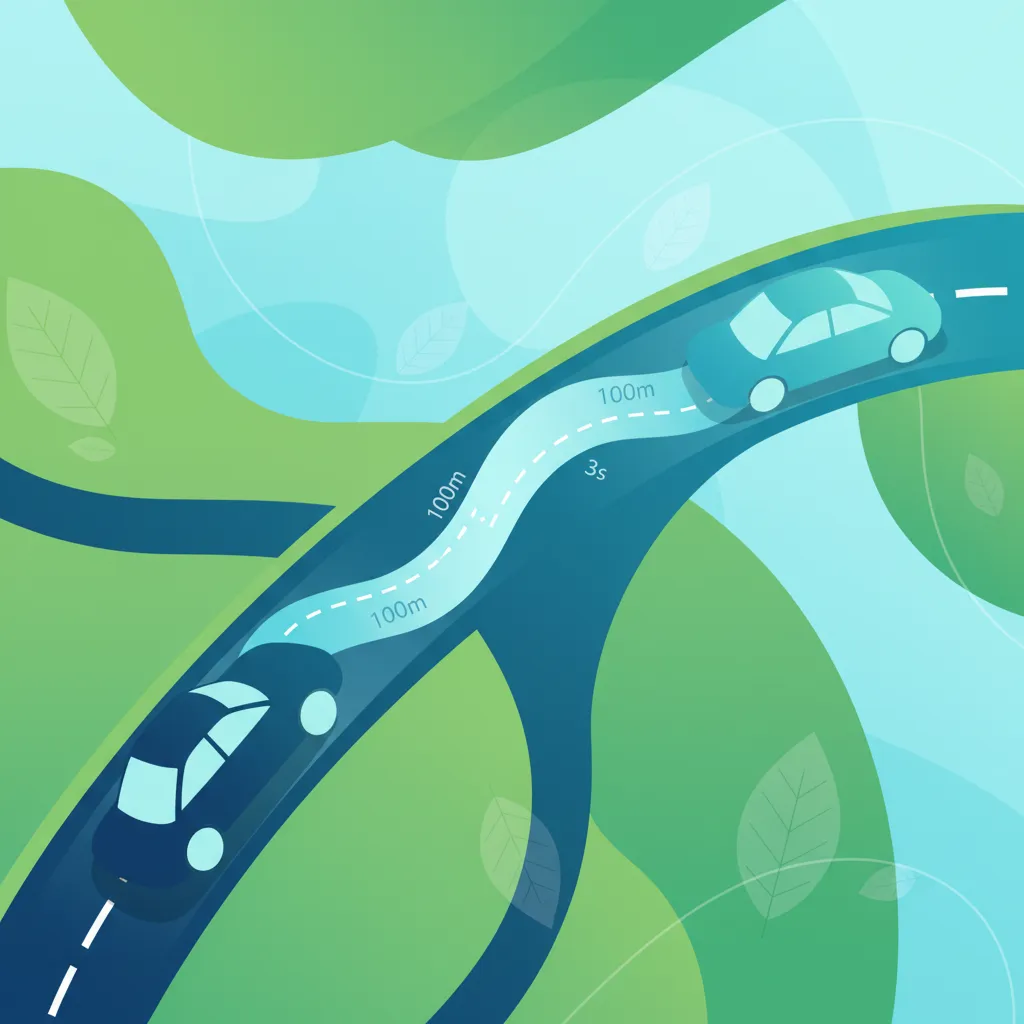
This lesson focuses on the concept of maintaining a safe following distance using the time-gap method. It explains how to create a sufficient buffer zone to react to sudden stops by the vehicle ahead. Riders will learn to adjust this gap based on speed, weather, and visibility to prevent rear-end collisions and ensure adequate reaction time.
Understand the most frequent errors riders make during cornering and acceleration, and learn how to avoid them. This lesson focuses on preventing loss of traction, improper line choice, and abrupt control inputs to ensure safer riding and compliance with Icelandic traffic rules.
This lesson details the fundamentals of lane discipline and proper turning techniques for moped riders. It covers the correct use of turn signals, judging appropriate cornering speed, and executing safe lane changes. The material provides a step-by-step guide to navigating intersections and curves with control and predictability, ensuring safety for the rider and other road users.
Find clear answers to common questions learners have about Vehicle Control in Cornering and Acceleration. Learn how the lesson is structured, which driving theory objectives it supports, and how it fits into the overall learning path of units and curriculum progression in Iceland. These explanations help you understand key concepts, lesson flow, and exam focused study goals.
The most crucial factor is selecting the correct speed before you enter the corner. Too fast, and you risk losing traction or control. The Icelandic theory exam often tests your understanding of 'slowing before the bend' for this very reason.
Your body position plays a significant role in stability and traction. Leaning your upper body slightly into the turn helps counteract the moped's lean, maintaining balance and allowing you to carry more speed safely. Proper technique can be vital for difficult questions on the AM test.
You should apply throttle gradually only as you begin to straighten the moped and exit the corner. Accelerating too early or too aggressively while still leaned can cause the moped to stand up unexpectedly or lose traction. This is a common pitfall tested in the theory exam.
Common mistakes include braking in the corner, accelerating too early, taking a corner too fast, or having incorrect body positioning. These errors can lead to instability or loss of control, and understanding them is key to passing the AM theory exam questions related to vehicle dynamics.
The Icelandic AM theory exam includes questions on vehicle control to ensure you can ride safely. Understanding principles like speed, line, and throttle application in corners is essential for correctly answering scenario-based questions about road situations.
Utilize our advanced practice set search to pinpoint the exact Icelandic driving theory topics you need to review. Filter by subject, difficulty, or question type to create a highly effective study plan and ensure you are fully prepared for your official driving licence test in Iceland.