
Welcome to the lesson on Following Distance and Safe Gap for your Icelandic Category AM moped license. Maintaining a safe distance from the vehicle ahead is crucial for preventing accidents. This lesson will teach you how to use the time-gap method and adjust your following distance based on conditions, ensuring you have adequate reaction time on Iceland's roads.
Lesson content overview
Maintaining a safe following distance is one of the most fundamental principles of defensive riding, especially for Category AM moped riders navigating Iceland's diverse road conditions. This lesson will equip you with the knowledge and practical methods to ensure you always have enough space and time to react to sudden changes in traffic, preventing collisions and contributing to smoother, safer journeys. Understanding and consistently applying these principles is crucial for passing your Icelandic moped theory exam and for your safety on the road.
A safe following distance is the essential buffer zone you create between your moped and the vehicle directly in front of you. This isn't merely a suggestion; it's a critical safety measure that directly impacts your ability to ride defensively and avoid common accidents, particularly rear-end collisions. For moped riders, who are often less visible and have different braking characteristics than larger vehicles, this buffer is even more vital.
The underlying logic is rooted in physics and human physiology: every stop requires both a reaction distance and a braking distance. Your moped needs a certain amount of space to come to a complete halt after you perceive a hazard and apply the brakes. Without an adequate gap, you simply won't have the time or space to stop safely, especially when faced with unexpected events such as a sudden stop by the vehicle ahead, a patch of ice, or debris on the road.
This concept integrates seamlessly with other vital riding skills you'll learn in this Icelandic Moped (Category AM) Driving License Theory Course. It builds upon your understanding of speed management (Lesson 6.1) and braking principles (Lesson 6.2) by providing the necessary spatial context. It also influences your road positioning (Lesson 5) and prepares you for safe vehicle control in more complex scenarios like cornering (Lesson 6.4) and riding in challenging Icelandic weather (Lesson 7).
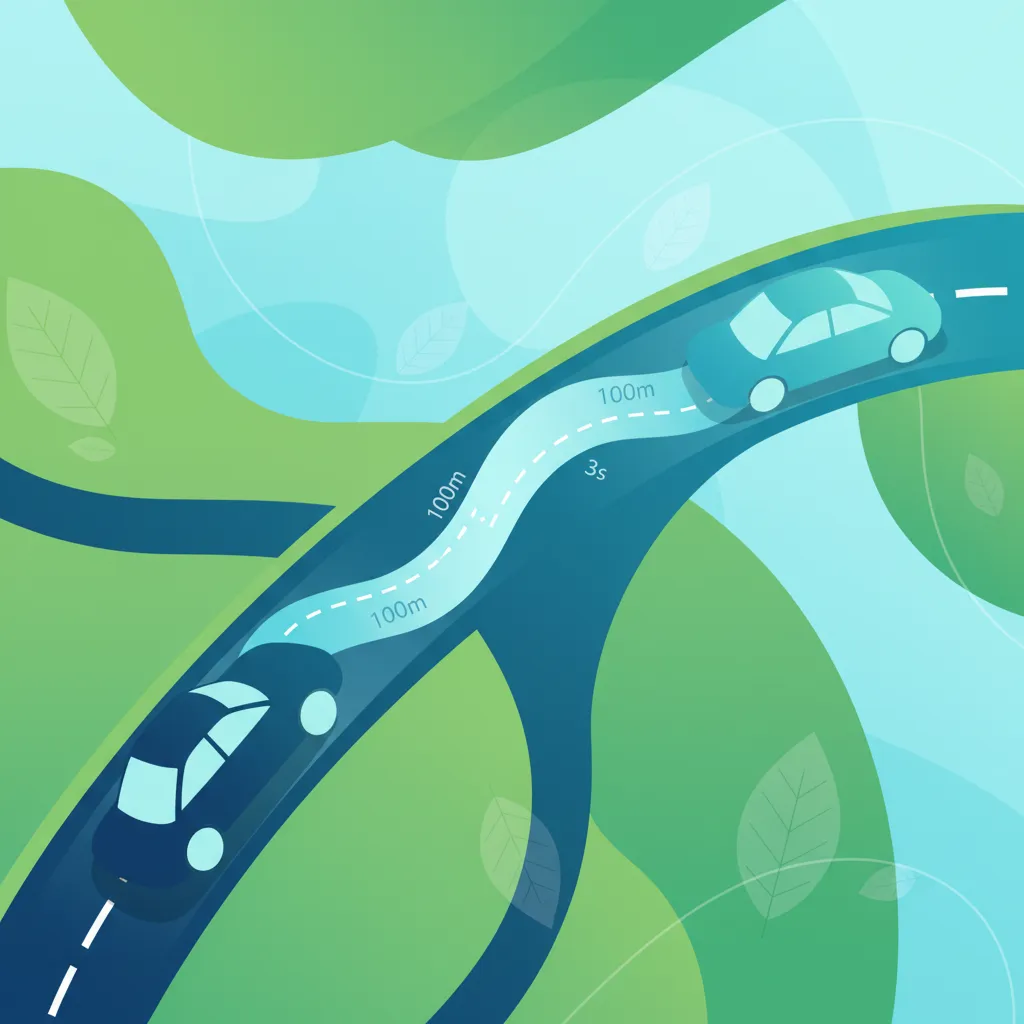
The most effective and widely recognized method for maintaining a safe following distance is the time-gap method, often referred to as the "Two-Second Rule." This technique measures the distance in terms of time, making it universally applicable across different speeds and easier to judge accurately than a fixed meter distance.
The two-second rule is straightforward:
Choose a Fixed Point: As the vehicle in front of you passes a fixed, easily identifiable point on the road (like a road sign, lamppost, or shadow), begin counting "one thousand one, one thousand two."
Pass the Same Point: If your moped reaches that same fixed point before you finish counting "one thousand two," you are following too closely.
Adjust and Re-evaluate: Slow down slightly and increase your distance until you can comfortably count at least two full seconds from when the vehicle ahead passes the point to when your moped passes it.
This method inherently accounts for your speed: at higher speeds, a two-second gap naturally covers a greater physical distance, providing the necessary extra stopping room. For instance, at 30 km/h, a two-second gap is approximately 16.7 metres, while at 45 km/h, it extends to around 25 metres. This dynamic adjustment is what makes the time-gap method so robust for various riding situations in Iceland.
Visual estimates of distance can be highly misleading, especially as speed increases. What looks like a safe distance at 20 km/h can be dangerously short at 40 km/h. The time-gap method translates the physical distance into a universal temporal buffer, which is independent of your visual perception of speed or the size of the vehicle ahead. It provides a consistent, measurable safety margin crucial for moped riders.
Your total stopping distance is the sum of your reaction distance and your braking distance. Both components are influenced by several factors, and understanding these is essential for correctly judging and adjusting your safe following distance.
Reaction time is the interval between recognizing a hazard and initiating a response, such as applying the brakes. For an average moped rider, this typically takes about 1.5 seconds under ideal conditions. However, this can significantly increase due to factors like fatigue, distraction, illness, or intoxication. During this reaction time, your moped continues to travel at its current speed.
Even a small delay in perception or decision-making can drastically extend your overall stopping distance. This is why the time-gap must always accommodate this crucial human element before any braking action can even start.
Braking distance is the distance your moped travels from the moment you apply the brakes until it comes to a complete stop. Unlike reaction time, braking distance is heavily influenced by external factors and the condition of your moped.
Key factors affecting braking distance include:
For example, at 50 km/h on dry asphalt, a moped's braking distance is approximately 12–13 metres. However, if the road is wet, this distance can easily increase by 30-50%, demanding a much larger safety margin.
While the two-second rule is your baseline, Icelandic conditions often demand an extended following distance. Being able to adapt your gap based on prevailing circumstances is a hallmark of a responsible and safe moped rider.
Iceland's weather can change rapidly, and adverse conditions significantly impact both your perception-reaction time and your moped's braking performance.
Carrying a passenger or heavy cargo alters your moped's weight distribution and increases its total mass. This directly impacts braking distance and vehicle stability. When riding with a passenger or significant load, increase your time-gap by at least 0.5 seconds to a full second. A moped with a passenger on a wet road, for instance, should ideally maintain a gap of 3.5 to 4 seconds.
Iceland features various road surfaces, including gravel roads and sections under construction. These surfaces offer less grip than paved roads. When riding on loose gravel, uneven surfaces, or dirt tracks, significantly increase your following distance to compensate for reduced traction and potential instability. A three-second gap is a sensible minimum.
Even though mopeds have speed limits, when you are riding at the maximum allowable speed (e.g., 45 km/h) on a rural road, your physical stopping distance will be much longer than in urban traffic. Maintain at least a two-second gap as your baseline, remembering that this translates to a greater physical distance at higher speeds. Be extra vigilant for unexpected hazards like wildlife.
In congested urban traffic with frequent stop-and-go patterns, it can be tempting to reduce your following distance. However, sudden stops are common in these environments. Always strive to maintain at least a two-second gap, even if it means you leave a larger space than other vehicles. This provides the necessary buffer to react to abrupt braking by the vehicle ahead, preventing a shunt.
When stopping behind another vehicle, always leave enough space to see the bottom of its rear tires. This gives you room to manoeuvre around it if it breaks down, or if you need to quickly move to avoid another hazard from behind.
Complex traffic situations like intersections, roundabouts, and merging lanes demand particular attention to your following distance. These are high-conflict areas where sudden decisions and movements are common.
Icelandic traffic law emphasizes the responsibility of every driver, including moped riders, to maintain a safe following distance. While specific numerical distances might vary or be implied rather than explicitly stated for all speeds, the overarching principle is clear: you must be able to stop safely without colliding with the vehicle ahead under all prevailing circumstances.
Violation of safe following distance regulations can lead to fines, demerit points on your license, and increased insurance premiums, in addition to the obvious risk of collision and injury.
Even experienced riders can sometimes make mistakes regarding following distance. Being aware of these common pitfalls can help you develop safer habits.
Let's illustrate these concepts with some practical examples you might encounter while riding your moped in Iceland:
Scenario 1: Dry Urban Street (35 km/h) You are riding your moped on a dry urban street at 35 km/h. A car ahead brakes suddenly for a pedestrian.
Scenario 2: Rainy Rural Road (45 km/h) You are on a rural road at 45 km/h, and it starts to rain heavily, making the asphalt wet.
Scenario 3: Moped with a Passenger at Night (25 km/h) You are riding your moped with a passenger in the evening, with low light conditions and some ambient street lighting.
Understanding the 'why' behind safe following distances reinforces its importance:
Safe following distance for mopeds is measured using the time-gap (two-second) method, where you count from when the vehicle ahead passes a fixed point until your moped passes it. Your total stopping distance combines your reaction distance (typically 1.5 seconds of perception and response time) and your braking distance, which varies with speed, road surface, and vehicle condition. Icelandic conditions often demand extended gaps — at least 3 seconds in rain, 5+ seconds on ice, and extra time when carrying passengers or riding at night due to reduced depth perception. Maintaining proper gaps prevents rear-end collisions and is a core defensive riding skill assessed in the Category AM theory exam.
A short set of high-value points that capture the most important learning from this lesson.
The two-second rule is your baseline for maintaining safe following distance at any speed.
Total stopping distance = reaction distance + braking distance; both increase with speed.
Wet roads can increase braking distance by 30-50%, requiring at least a 3-second gap.
Carrying a passenger or cargo increases your stopping distance and requires an extra 0.5 to 1 second of gap.
Riding at night reduces depth perception, so always add at least one extra second to your gap.
Explore all units and lessons included in this driving theory course.
Use a fixed point on the road to count 'one thousand one, one thousand two' — if you reach it before finishing, you're too close.
In rain, extend to 3 seconds; on ice, extend to 5+ seconds or more.
When stopped behind another vehicle, leave enough space to see the bottom of its rear tires.
Doubling your speed roughly quadruples your braking distance.
Visual estimates of distance become unreliable at higher speeds — always use the time-gap method.
Assuming a visual estimate of distance is sufficient; the time-gap method is far more reliable.
Failing to extend the gap in wet conditions, which dramatically reduces tire grip.
Forgetting to add extra gap when carrying a passenger or cargo.
Stopping too close to the vehicle ahead, leaving no room to manoeuvre if it breaks down.
Entering intersections or roundabouts without ensuring a safe exit gap.
Lesson content overview
A short set of high-value points that capture the most important learning from this lesson.
The two-second rule is your baseline for maintaining safe following distance at any speed.
Total stopping distance = reaction distance + braking distance; both increase with speed.
Wet roads can increase braking distance by 30-50%, requiring at least a 3-second gap.
Carrying a passenger or cargo increases your stopping distance and requires an extra 0.5 to 1 second of gap.
Riding at night reduces depth perception, so always add at least one extra second to your gap.
Explore all units and lessons included in this driving theory course.
Use a fixed point on the road to count 'one thousand one, one thousand two' — if you reach it before finishing, you're too close.
In rain, extend to 3 seconds; on ice, extend to 5+ seconds or more.
When stopped behind another vehicle, leave enough space to see the bottom of its rear tires.
Doubling your speed roughly quadruples your braking distance.
Visual estimates of distance become unreliable at higher speeds — always use the time-gap method.
Assuming a visual estimate of distance is sufficient; the time-gap method is far more reliable.
Failing to extend the gap in wet conditions, which dramatically reduces tire grip.
Forgetting to add extra gap when carrying a passenger or cargo.
Stopping too close to the vehicle ahead, leaving no room to manoeuvre if it breaks down.
Entering intersections or roundabouts without ensuring a safe exit gap.
Explore search topics learners often look for when studying Following Distance and Safe Gap. These topics reflect common questions about road rules, driving situations, safety guidance, and lesson level theory preparation for learners in Iceland.
Browse additional driving theory lessons that cover connected traffic rules, road signs, and common driving situations related to this topic. Improve your understanding of how different rules interact across everyday traffic scenarios.
Explore how speed, weather, road conditions, and vehicle load impact the safe following distance required for moped riders. Understand adjustments needed for Icelandic driving.
This lesson examines the calculation of safe following distances using the two-second rule and formulas that factor in vehicle speed and road conditions. The content explains how reaction time, weather conditions like ice or rain, and vehicle load affect braking zones. Students also learn specific techniques for stopping on hills and how to avoid tailgating, thereby maintaining sufficient safety margins under all Icelandic weather conditions.
This lesson covers the statutory speed limits applicable to Category AM vehicles in various environments, from urban centers to rural roads. It emphasizes the critical importance of adapting speed to conditions such as rain, wind, or poor visibility. Riders will learn practical techniques for managing acceleration and maintaining a safe, legal speed at all times.

This lesson focuses on methods to enhance a rider's visibility, covering high-visibility clothing, reflective materials, and strategic lighting. Learners will understand how to use daytime running lights and position themselves to minimize time in others' blind spots. These proactive techniques are essential for being seen by other road users, significantly reducing the risk of collisions.
This lesson outlines best practices for positioning a moped on urban roads to maximize visibility and safety. It explains how to choose a lane position that makes you visible to drivers ahead and behind, while avoiding road debris and dooring hazards from parked cars. The content addresses adapting your position based on traffic speed, density, and road conditions.
This lesson details how various weather conditions impact moped stability, traction, and visibility. It provides practical strategies for handling crosswinds, avoiding hydroplaning in rain, and maintaining grip on icy or snowy surfaces. Riders will learn to assess weather-related risks and adapt their speed and control inputs to navigate challenging conditions safely.
This lesson details the fundamentals of effective braking, covering both controlled deceleration and emergency stops. Learners will understand how factors like speed, road surface, and reaction time collectively determine total stopping distance. It also explains how to balance front and rear brake application to maximize stopping power without losing control.
This lesson examines the psychological factors crucial for safe riding, promoting a defensive mindset and heightened risk awareness. It provides strategies for managing stress, identifying potential hazards early, and making proactive decisions to prevent dangerous situations. Cultivating mental discipline and a safety-conscious attitude is fundamental to long-term rider safety on Icelandic roads.
This lesson details the fundamentals of lane discipline and proper turning techniques for moped riders. It covers the correct use of turn signals, judging appropriate cornering speed, and executing safe lane changes. The material provides a step-by-step guide to navigating intersections and curves with control and predictability, ensuring safety for the rider and other road users.
This lesson examines regulatory signs that impose legal obligations, focusing on those most relevant to moped riders like speed limits and mandatory direction signs. Learners will understand how sign shapes and colors convey specific commands or prohibitions. Attention is given to signs with vehicle-specific restrictions, ensuring riders know when rules apply directly to them.

This lesson explores the dynamic principles of cornering and acceleration, emphasizing smooth control inputs and proper body positioning. Learners will understand how to manage weight transfer and traction to navigate turns safely and efficiently. It covers how to choose the correct speed and line through a corner, and how to apply throttle smoothly on exit.
Analyze practical driving theory scenarios demonstrating correct and incorrect following distances for mopeds in various Icelandic traffic situations, including urban, rural, and adverse weather.
This lesson examines the calculation of safe following distances using the two-second rule and formulas that factor in vehicle speed and road conditions. The content explains how reaction time, weather conditions like ice or rain, and vehicle load affect braking zones. Students also learn specific techniques for stopping on hills and how to avoid tailgating, thereby maintaining sufficient safety margins under all Icelandic weather conditions.
This lesson covers the statutory speed limits applicable to Category AM vehicles in various environments, from urban centers to rural roads. It emphasizes the critical importance of adapting speed to conditions such as rain, wind, or poor visibility. Riders will learn practical techniques for managing acceleration and maintaining a safe, legal speed at all times.
This lesson outlines best practices for positioning a moped on urban roads to maximize visibility and safety. It explains how to choose a lane position that makes you visible to drivers ahead and behind, while avoiding road debris and dooring hazards from parked cars. The content addresses adapting your position based on traffic speed, density, and road conditions.
This lesson focuses on methods to enhance a rider's visibility, covering high-visibility clothing, reflective materials, and strategic lighting. Learners will understand how to use daytime running lights and position themselves to minimize time in others' blind spots. These proactive techniques are essential for being seen by other road users, significantly reducing the risk of collisions.
This lesson details how various weather conditions impact moped stability, traction, and visibility. It provides practical strategies for handling crosswinds, avoiding hydroplaning in rain, and maintaining grip on icy or snowy surfaces. Riders will learn to assess weather-related risks and adapt their speed and control inputs to navigate challenging conditions safely.
This lesson focuses on the specific challenges of riding on gravel and uneven rural roads. It teaches techniques for maintaining stability and traction on loose surfaces, including speed management, body positioning, and gentle control inputs. Understanding how to handle these conditions is essential for safely exploring areas outside of main urban centers in Iceland.
This lesson focuses on the interaction between motor vehicles and cyclists or e-scooter users on Icelandic roads, exploring the dedicated cyclist lane system and safe overtaking regulations. The content covers the required minimum passing distance, the legal status of e-scooters, and the importance of awareness when sharing narrow urban streets. Recommended signaling practices are also discussed to alert vulnerable users of your intentions, especially during nighttime riding.
This lesson examines the psychological factors crucial for safe riding, promoting a defensive mindset and heightened risk awareness. It provides strategies for managing stress, identifying potential hazards early, and making proactive decisions to prevent dangerous situations. Cultivating mental discipline and a safety-conscious attitude is fundamental to long-term rider safety on Icelandic roads.

This lesson explores the conduct required at uncontrolled crossings where the right-hand rule typically applies. It emphasizes the need to reduce speed, be prepared to stop, and establish clear communication with other road users. Riders will learn to assess the situation carefully and proceed only when it is confirmed to be safe, a critical skill for rural and residential areas.
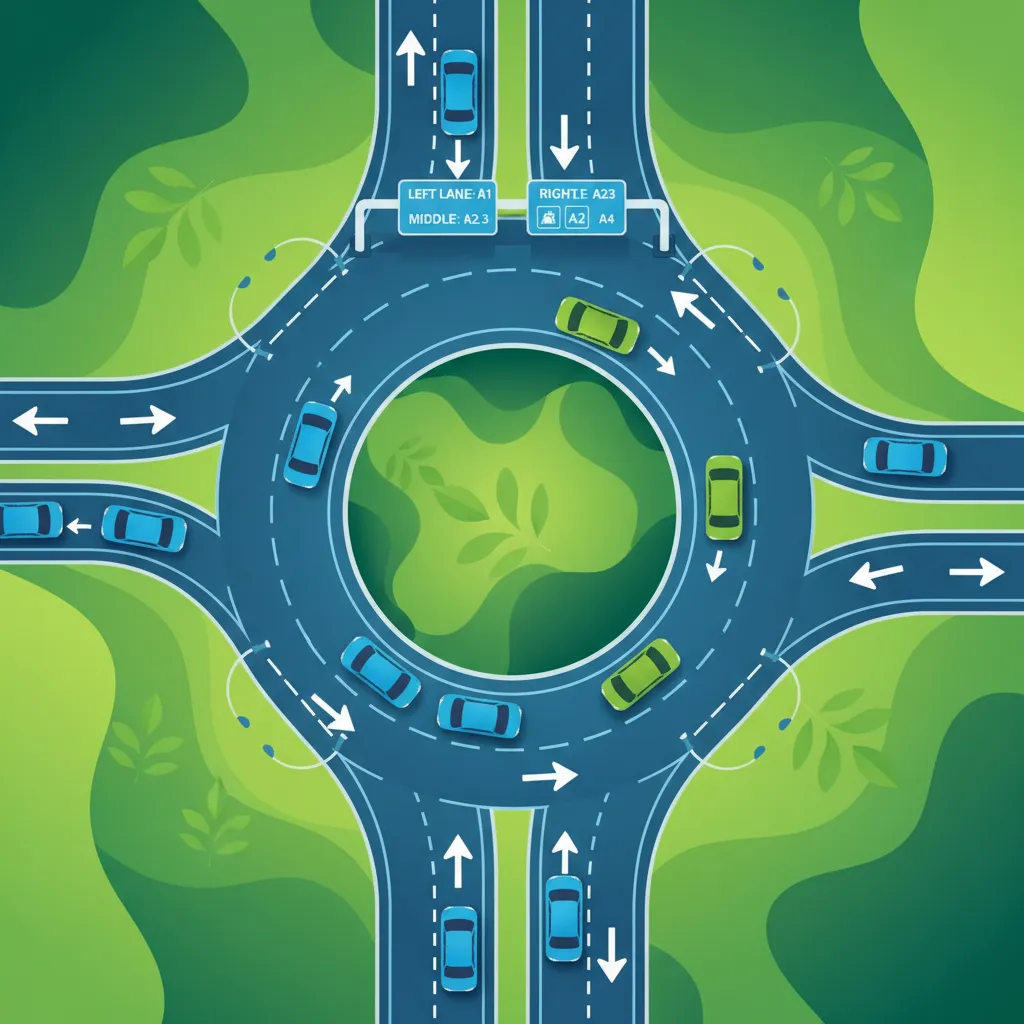
This lesson provides a detailed guide to navigating roundabouts, focusing on the rule to yield to circulating traffic before entering. It covers correct lane positioning for different exits, proper signaling, and maintaining a safe speed within the roundabout. Special guidance is provided for moped riders to enhance their visibility and safety among larger vehicles.
Find clear answers to common questions learners have about Following Distance and Safe Gap. Learn how the lesson is structured, which driving theory objectives it supports, and how it fits into the overall learning path of units and curriculum progression in Iceland. These explanations help you understand key concepts, lesson flow, and exam focused study goals.
The time-gap method, often simplified as the 'two-second rule', involves picking a fixed point (like a signpost) that the vehicle in front of you passes. You then count two seconds. If you pass the same point before finishing your count, you are too close. This method provides a consistent buffer, allowing you time to react.
While the two-second rule is a good starting point, Iceland's weather and road conditions can be unpredictable. Factors like heavy rain, ice, snow, fog, or gravel roads significantly increase stopping distances. For these conditions, you must extend your following gap to three or even four seconds to maintain a safe margin.
As your speed increases, the distance your moped travels during two seconds also increases, as does your actual stopping distance. Therefore, maintaining a constant two-second gap at higher speeds covers a much greater physical distance and provides more reaction time than at lower speeds.
Not keeping a safe distance is a leading cause of rear-end collisions. On a moped, being hit from behind can be particularly dangerous. It can lead to serious injuries and is a common scenario tested in the Icelandic theory exam, so understanding this is vital for your safety and exam success.
For the AM category theory exam in Iceland, you need to demonstrate understanding of the two-second rule as a baseline. However, you must also show awareness of when to increase this gap, especially considering variable weather and road conditions typical in Iceland. The exam may present scenarios requiring a longer gap.
Utilize our advanced practice set search to pinpoint the exact Icelandic driving theory topics you need to review. Filter by subject, difficulty, or question type to create a highly effective study plan and ensure you are fully prepared for your official driving licence test in Iceland.