
Welcome to the 'Rider Mindset and Risk Awareness' lesson, a key part of your Icelandic Category AM moped license theory preparation. This lesson focuses on the psychological aspects of safe riding, building on foundational knowledge from previous units. By understanding how mindset impacts safety, you’ll be better prepared for real-world riding and the specific scenarios tested in the official theory exam.
Lesson content overview
Operating a moped (Category AM) safely on Iceland's diverse roads demands more than just technical skill; it requires a disciplined and proactive mental approach. This lesson delves into the psychological and cognitive factors that are crucial for every rider, emphasizing the development of a defensive mindset and heightened risk awareness. By understanding how your mental state influences decision-making, reaction times, and hazard assessment, you can significantly reduce the likelihood of accidents and ensure long-term safety.
Your mindset as a rider is the invisible force that shapes every decision you make on the road. It dictates how you perceive the traffic environment, interpret potential dangers, and react to unexpected situations. For Category AM moped riders, particularly in Iceland where conditions can change rapidly, cultivating a robust safety mindset is paramount. This mental discipline is key to maintaining control, anticipating risks, and making proactive choices that prevent dangerous situations.
A strong rider mindset encompasses mental preparation before a journey, effective stress management during the ride, continuous hazard perception, and a commitment to defensive riding. These elements work together to compensate for the inherent limitations of human perception and cognition, such as attention span and reaction time. By internalizing these principles, you allocate your attention efficiently, make informed judgments, and consistently prioritize safety over convenience.
Situational awareness is your ability to continuously perceive, comprehend, and project what is happening in the traffic environment around you. It's about being fully present and understanding the dynamic interplay of vehicles, pedestrians, road conditions, and weather. This core principle enables early hazard detection and timely decision-making, which are vital for moped riders due to their smaller size and increased vulnerability.
To achieve robust situational awareness, riders must practice several sub-skills:
For instance, while riding through an Icelandic town, a rider consistently checks their mirrors for approaching vehicles, observes the flow of traffic at intersections, and notices changes in the road texture, such as patches of wet gravel, before they affect control. Icelandic Traffic Law (§31) reinforces this by requiring riders to maintain a "safe distance" that allows adequate reaction time, directly linking to strong situational awareness. Over-reliance on simply looking straight ahead is a common misunderstanding that can lead to late hazard detection.
Defensive riding is a proactive philosophy that places safety above all else. It's based on the assumption that other road users may make mistakes, act unpredictably, or simply not see you. By adopting a defensive stance, you create a buffer of time and space, significantly reducing your exposure to collisions.
Key aspects of defensive riding for Category AM moped riders include:
For example, when navigating a busy street in Reykjavik, a defensive rider might position their moped slightly to the left within their lane. This not only provides space for potentially overtaking cars but also ensures they are more visible to oncoming traffic and gives them extra room to react to sudden braking ahead. Ignoring defensive riding principles even in low-speed urban settings can be dangerous, as many moped accidents occur at intersections or in congested areas.
Always assume you are invisible to other drivers, especially larger vehicles. Actively work to make yourself seen and anticipate their potential movements.
Risk assessment is the continuous, systematic evaluation of potential dangers—their probability and severity—in any given riding scenario. This ongoing process guides your decisions regarding speed, route planning, overtaking, and overall riding behavior.
Risks can be categorized into three main types:
A practical application of risk assessment occurs before a ride: checking the weather forecast and deciding to postpone a ride on a mountain pass if heavy snow is expected. When riding on a wet gravel road, a rider performing good risk assessment will instinctively reduce speed, increase their following distance, and avoid sharp braking or sudden steering inputs. Underestimating the cumulative impact of seemingly minor risks, such as slightly low tire pressure combined with wet roads, is a common error.
Stress and fatigue significantly impair judgment, reduce reaction times, and decrease your ability to perceive hazards. Effective stress management involves recognizing, mitigating, and coping with both physiological and psychological stressors while riding. This is particularly important for AM riders who might be less experienced and feel more vulnerable.
Common stressors for riders include heavy traffic congestion, adverse weather conditions, time pressure, and personal anxieties. Techniques to manage these include:
For instance, if a rider feels exhausted after a long workday, they should postpone a planned leisure ride until they are well-rested, rather than risking fatigue-induced errors. It's a misunderstanding to believe that caffeine or adrenaline can fully compensate for insufficient rest or high stress levels. Taking a short, safe break during a heavy rainstorm to let the weather pass and calm elevated stress levels is a wise decision. Icelandic law even mandates rest periods for professional drivers (though AM riders are typically not professional), highlighting the universal importance of breaks for safety.
Self-regulation is the internal monitoring and adjustment of your own behavior to consistently stay within legal and safety parameters, even when there's no external enforcement. It's about personal accountability and disciplined riding habits.
Components of strong self-regulation include:
For example, before each ride, a disciplined rider conducts a quick checklist: ensuring their helmet is properly fastened, lights are working, tire pressure is correct, and fuel is adequate. They also inspect their brakes for proper function. This adherence to routine checks goes beyond a one-time technical inspection and ensures ongoing safety. Icelandic law (§98) requires helmets to be worn at all times, and lights (§54) must be on from sunset to sunrise and during reduced visibility, making these checks legally mandatory.
Mental rehearsal, or visualization, is a cognitive technique where you mentally practice riding scenarios and appropriate responses before you actually ride. This powerful tool enhances decision-making speed, reduces anxiety, and improves the correctness of your reactions in real-time situations.
The purpose of mental rehearsal is to create and strengthen neural pathways for various riding situations. By vividly imagining a scenario, such as approaching a complex intersection or encountering a sudden obstacle, and then visualizing the correct, safe response (e.g., braking, signaling, lane positioning), you prepare your brain for actual execution.
Mental rehearsal does not replace actual physical practice, but it significantly complements it, making your physical practice more effective and your reactions quicker when unexpected events occur.
Before departing, a rider might spend a few minutes picturing an upcoming section of their journey, visualizing how they will approach turns, interact with other traffic, and react to potential hazards like a sudden stop ahead. This kind of preparation can reduce panic and improve performance, especially in high-stress situations or challenging Icelandic conditions like strong winds or icy patches. While there are no direct laws associated with mental rehearsal, it reinforces compliance with various traffic rules, such as proper signaling (§75).
Understanding and adhering to Icelandic traffic laws is fundamental to safe moped riding and forms a critical part of a responsible rider's mindset. These regulations are designed to protect all road users.
According to Icelandic Traffic Act (§98), all Category AM moped riders and passengers must wear an approved helmet at all times while operating the moped on public roads. This is mandatory regardless of speed or location, as head injuries are a leading cause of fatalities in two-wheeled vehicle accidents. Always ensure your helmet is properly fastened and fits snugly.
Icelandic Traffic Act (§54) dictates that a moped's headlamp must be used from sunset to sunrise, and at any other time visibility is reduced, such as during fog, heavy rain, or snow. Proper lighting ensures your moped is visible to other road users, significantly reducing the risk of collisions. Always check that your lights are functional before riding in low-light conditions.
Icelandic Traffic Act (§33) specifies that the maximum speed for Category AM mopeds is 45 km/h on public roads. In urban zones or residential areas, this limit is often reduced, with common limits of 30 km/h or even 20 km/h where indicated by signage. Adhering to these limits is crucial for preventing excessive kinetic energy, which in turn ensures safer stopping distances and greater control, especially on varying Icelandic road surfaces.
Icelandic Traffic Act (§31) requires riders to maintain a safe following distance from the vehicle ahead. This distance must be sufficient to allow for full braking without colliding, should the vehicle ahead stop abruptly. A common guideline in dry conditions is a 2-second gap, which should be extended to 4 seconds or more in wet, icy, or gravel conditions to account for increased stopping distances.
Icelandic Traffic Act (§55) mandates that riders wear high-visibility clothing or reflective elements when riding at night or during periods of poor weather (e.g., fog, heavy rain, snow). This significantly increases your detection by other drivers, especially crucial for smaller vehicles like mopeds. Dark clothing during twilight or night time reduces visibility and is a significant safety risk.
Icelandic Traffic Act (§40) sets a strict blood alcohol concentration (BAC) limit of 0.02% for Category AM riders. Any amount of alcohol can impair perception, judgment, and reaction time, making riding exceptionally dangerous. The only safe approach is to abstain from alcohol entirely if you plan to ride.
Even with good intentions, certain mistakes are common among moped riders. A strong safety mindset actively works to identify and avoid these pitfalls:
Iceland's unique environment demands a highly adaptable rider mindset. Conditions can change rapidly, and being mentally prepared for these variations is crucial.
The relationship between your mindset and safety outcomes is a direct cause-and-effect chain.
These insights are backed by the science of human perception and cognition. The average rider's reaction time is about 1.5 seconds under normal conditions. Stress, fatigue, or distraction can add up to 0.5 seconds or more, which translates to meters traveled at moped speeds, making the difference between avoiding and being involved in a collision. The perception-action loop (how quickly you perceive a threat and act on it) can be shortened and improved through deliberate mental rehearsal.
Multitasking, such as using a phone while riding, significantly overloads your working memory, compromising hazard perception and making defensive riding impossible. Eliminating distractions is a core part of a responsible mindset.
By internalizing these concepts and consciously applying them, riders can develop a resilient safety mindset essential for navigating Iceland’s dynamic roads safely and confidently.
This lesson covers the psychological foundations of safe moped riding in Iceland, emphasizing that mindset directly shapes decision-making and hazard response. It teaches situational awareness through scanning, threat identification, and projection, and advocates a defensive riding philosophy that assumes other drivers may act unpredictably. The lesson addresses risk assessment across environmental, vehicle, and human factors, explains stress and fatigue management techniques, and reinforces key Icelandic Traffic Law requirements including helmet use, lighting, speed limits, following distance, and alcohol restrictions. Practical scenarios illustrate how these principles apply to Icelandic conditions including urban intersections, rural gravel roads, mountain passes, and night riding.
A short set of high-value points that capture the most important learning from this lesson.
A defensive rider mindset assumes other road users may make mistakes and creates buffers of time and space to compensate for human limitations.
Situational awareness requires continuous scanning, active threat identification, and projecting the movements of other road users before situations become critical.
Risk assessment is an ongoing evaluation of environmental, vehicle, and human risk factors that guides speed, route, and riding behavior decisions.
Mental rehearsal (visualization) strengthens neural pathways for riding responses, making actual reactions faster and more correct under stress.
Icelandic conditions—variable weather, gravel roads, strong winds, and rapid changes—demand heightened adaptability and proactive planning.
Explore all units and lessons included in this driving theory course.
Maximum speed for Category AM mopeds is 45 km/h, with lower limits often applying in urban and residential areas.
Headlights must be used from sunset to sunrise and during reduced visibility; riders must wear reflective clothing in low-light or adverse weather conditions.
A safe following distance in dry conditions is typically 2 seconds, extending to 4 seconds or more on wet, icy, or gravel surfaces.
The BAC limit for Category AM riders is 0.02%, with abstinence being the only truly safe approach.
Techniques for managing stress and fatigue include controlled breathing, progressive muscle relaxation, mental breaks, and proper hydration and sleep.
Over-relying on looking straight ahead instead of practicing continuous visual scanning of mirrors, sides, and far ahead.
Assuming automatic light sensors are sufficient without manually activating low beams in all reduced-visibility conditions.
Maintaining a normal 2-second following distance in rain, snow, or on gravel, where braking distances are significantly increased.
Neglecting pre-ride mechanical checks, especially tire pressure and brake function, which become critical under adverse conditions.
Riding in dark clothing at night or in poor weather without reflective elements, drastically reducing visibility to other road users.
Lesson content overview
A short set of high-value points that capture the most important learning from this lesson.
A defensive rider mindset assumes other road users may make mistakes and creates buffers of time and space to compensate for human limitations.
Situational awareness requires continuous scanning, active threat identification, and projecting the movements of other road users before situations become critical.
Risk assessment is an ongoing evaluation of environmental, vehicle, and human risk factors that guides speed, route, and riding behavior decisions.
Mental rehearsal (visualization) strengthens neural pathways for riding responses, making actual reactions faster and more correct under stress.
Icelandic conditions—variable weather, gravel roads, strong winds, and rapid changes—demand heightened adaptability and proactive planning.
Explore all units and lessons included in this driving theory course.
Maximum speed for Category AM mopeds is 45 km/h, with lower limits often applying in urban and residential areas.
Headlights must be used from sunset to sunrise and during reduced visibility; riders must wear reflective clothing in low-light or adverse weather conditions.
A safe following distance in dry conditions is typically 2 seconds, extending to 4 seconds or more on wet, icy, or gravel surfaces.
The BAC limit for Category AM riders is 0.02%, with abstinence being the only truly safe approach.
Techniques for managing stress and fatigue include controlled breathing, progressive muscle relaxation, mental breaks, and proper hydration and sleep.
Over-relying on looking straight ahead instead of practicing continuous visual scanning of mirrors, sides, and far ahead.
Assuming automatic light sensors are sufficient without manually activating low beams in all reduced-visibility conditions.
Maintaining a normal 2-second following distance in rain, snow, or on gravel, where braking distances are significantly increased.
Neglecting pre-ride mechanical checks, especially tire pressure and brake function, which become critical under adverse conditions.
Riding in dark clothing at night or in poor weather without reflective elements, drastically reducing visibility to other road users.
Explore search topics learners often look for when studying Rider Mindset and Risk Awareness. These topics reflect common questions about road rules, driving situations, safety guidance, and lesson level theory preparation for learners in Iceland.
Browse additional driving theory lessons that cover connected traffic rules, road signs, and common driving situations related to this topic. Improve your understanding of how different rules interact across everyday traffic scenarios.
Learn proactive riding strategies to anticipate hazards and avoid dangerous situations. This lesson focuses on creating safety buffers and assuming others may make mistakes to ensure safer journeys on Icelandic roads.

This lesson investigates the significant hazards posed by parked vehicles, particularly the risk of a driver opening a door into a rider's path. It teaches techniques for maintaining a safe buffer zone and scanning for signs of occupancy in parked cars. Riders will learn how to anticipate this common urban danger and plan escape routes to avoid sudden collisions.
This lesson outlines best practices for positioning a moped on urban roads to maximize visibility and safety. It explains how to choose a lane position that makes you visible to drivers ahead and behind, while avoiding road debris and dooring hazards from parked cars. The content addresses adapting your position based on traffic speed, density, and road conditions.

This lesson focuses on methods to enhance a rider's visibility, covering high-visibility clothing, reflective materials, and strategic lighting. Learners will understand how to use daytime running lights and position themselves to minimize time in others' blind spots. These proactive techniques are essential for being seen by other road users, significantly reducing the risk of collisions.

This lesson explores the blind spot zones of cars, trucks, and buses, highlighting the vulnerability of moped riders. It provides effective strategies for positioning your vehicle to remain visible to other drivers at all times. Riders will learn to anticipate lane changes and movements from larger vehicles, significantly reducing the risk of being unseen in traffic.
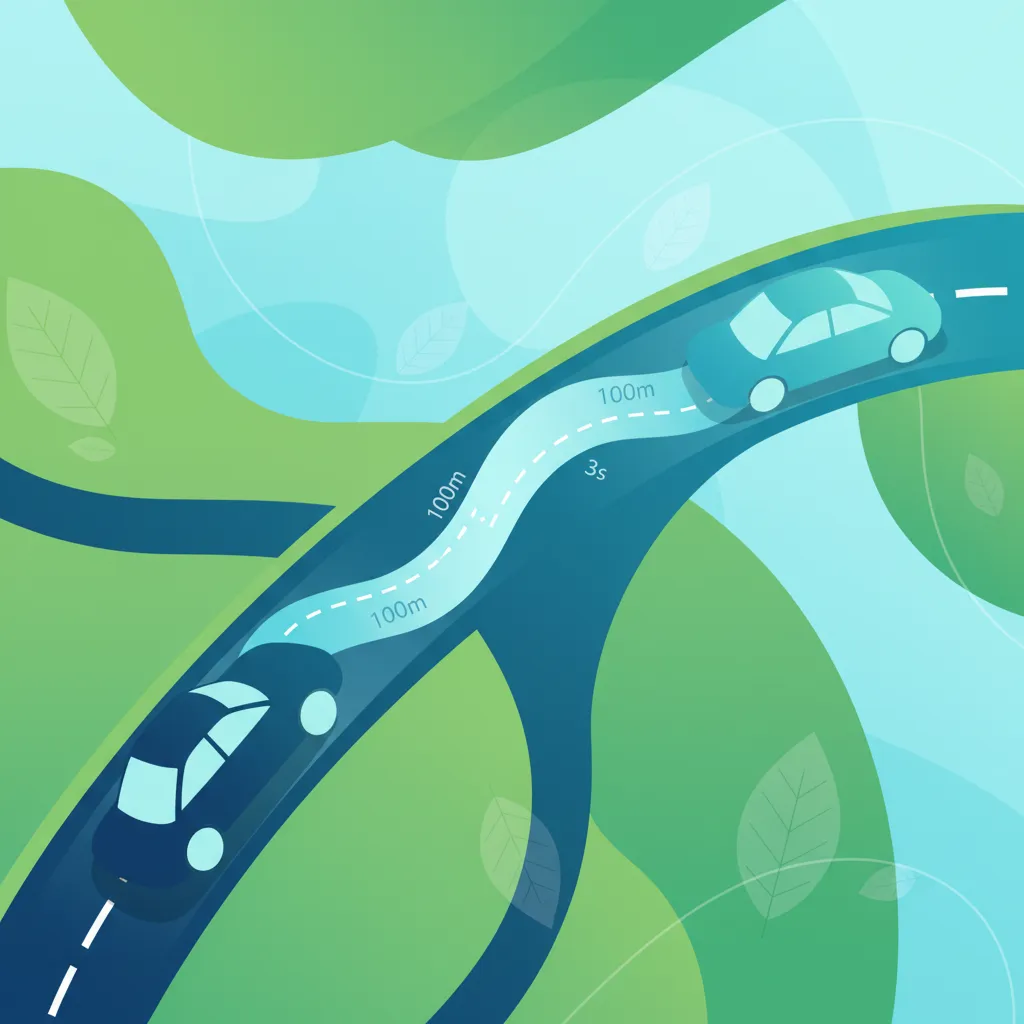
This lesson focuses on the concept of maintaining a safe following distance using the time-gap method. It explains how to create a sufficient buffer zone to react to sudden stops by the vehicle ahead. Riders will learn to adjust this gap based on speed, weather, and visibility to prevent rear-end collisions and ensure adequate reaction time.
This lesson explores the range of protective clothing vital for moped riders, focusing on abrasion resistance, impact protection, and weather adaptability. It covers the selection of appropriate gloves, boots, and jackets designed to mitigate injury and enhance comfort in Iceland's climate. The material explains how layering can provide both safety and insulation, allowing for safe riding in various conditions.

This lesson details the fundamentals of effective braking, covering both controlled deceleration and emergency stops. Learners will understand how factors like speed, road surface, and reaction time collectively determine total stopping distance. It also explains how to balance front and rear brake application to maximize stopping power without losing control.

This lesson explores the dynamic principles of cornering and acceleration, emphasizing smooth control inputs and proper body positioning. Learners will understand how to manage weight transfer and traction to navigate turns safely and efficiently. It covers how to choose the correct speed and line through a corner, and how to apply throttle smoothly on exit.
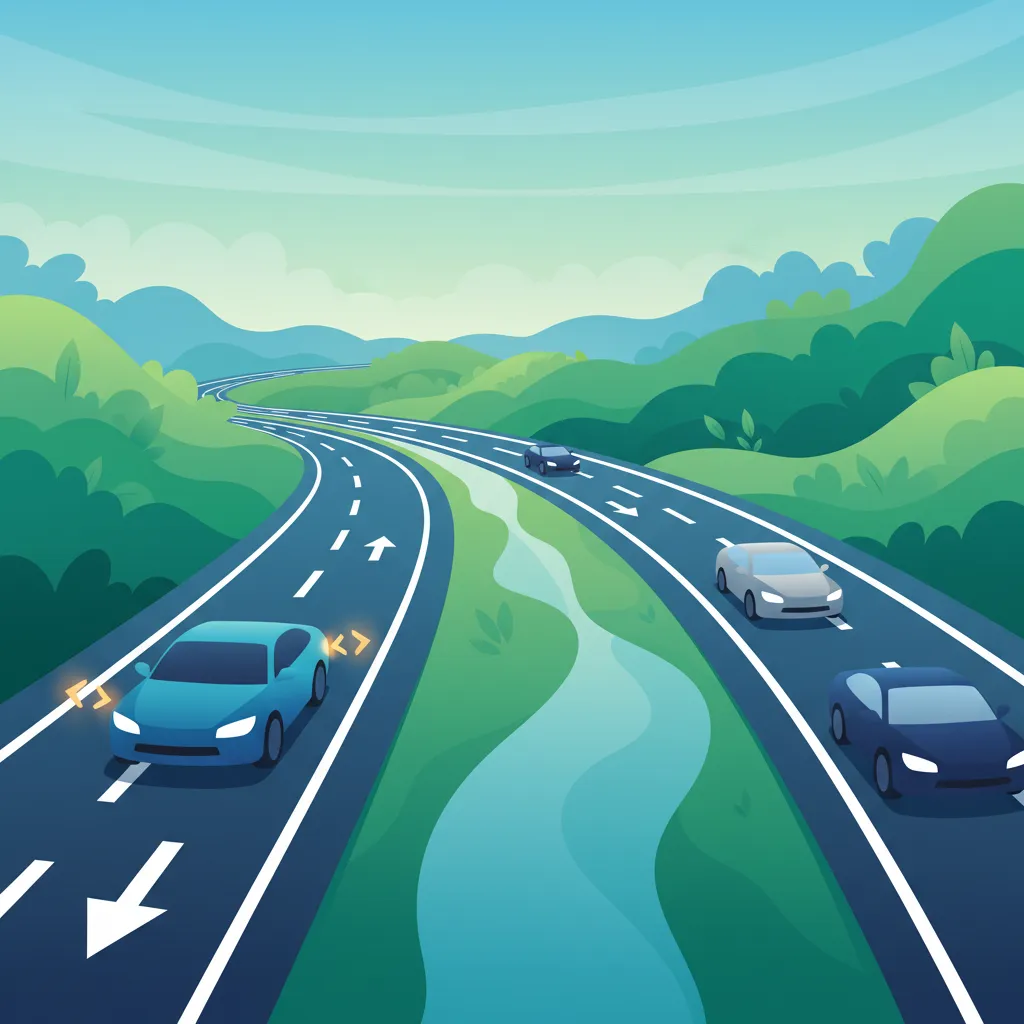
This lesson details the fundamentals of lane discipline and proper turning techniques for moped riders. It covers the correct use of turn signals, judging appropriate cornering speed, and executing safe lane changes. The material provides a step-by-step guide to navigating intersections and curves with control and predictability, ensuring safety for the rider and other road users.
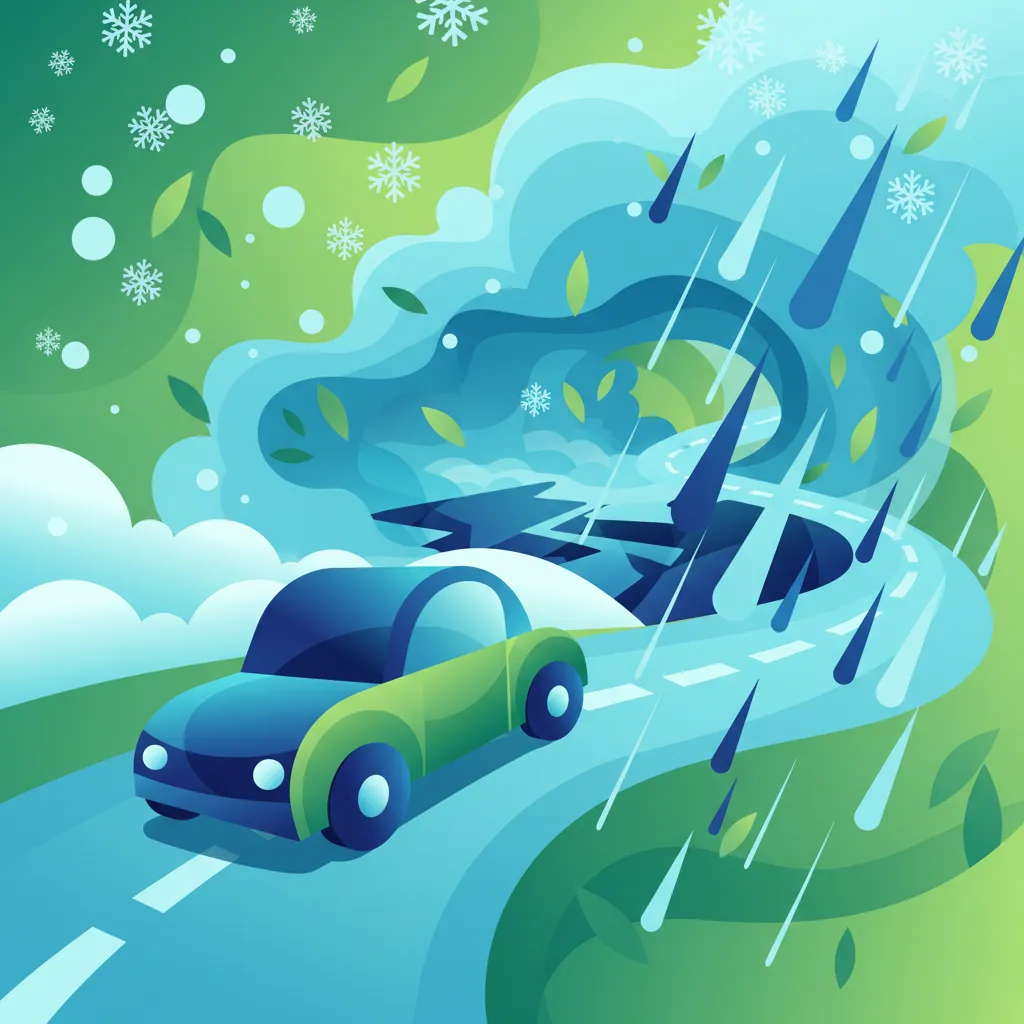
This lesson details how various weather conditions impact moped stability, traction, and visibility. It provides practical strategies for handling crosswinds, avoiding hydroplaning in rain, and maintaining grip on icy or snowy surfaces. Riders will learn to assess weather-related risks and adapt their speed and control inputs to navigate challenging conditions safely.
Develop your ability to assess environmental, vehicle, and human risks. This lesson explores practical scenarios to improve your hazard perception and decision-making skills in various Icelandic traffic conditions.
This lesson outlines best practices for positioning a moped on urban roads to maximize visibility and safety. It explains how to choose a lane position that makes you visible to drivers ahead and behind, while avoiding road debris and dooring hazards from parked cars. The content addresses adapting your position based on traffic speed, density, and road conditions.
This lesson focuses on methods to enhance a rider's visibility, covering high-visibility clothing, reflective materials, and strategic lighting. Learners will understand how to use daytime running lights and position themselves to minimize time in others' blind spots. These proactive techniques are essential for being seen by other road users, significantly reducing the risk of collisions.
This lesson explores the blind spot zones of cars, trucks, and buses, highlighting the vulnerability of moped riders. It provides effective strategies for positioning your vehicle to remain visible to other drivers at all times. Riders will learn to anticipate lane changes and movements from larger vehicles, significantly reducing the risk of being unseen in traffic.
This lesson investigates the significant hazards posed by parked vehicles, particularly the risk of a driver opening a door into a rider's path. It teaches techniques for maintaining a safe buffer zone and scanning for signs of occupancy in parked cars. Riders will learn how to anticipate this common urban danger and plan escape routes to avoid sudden collisions.
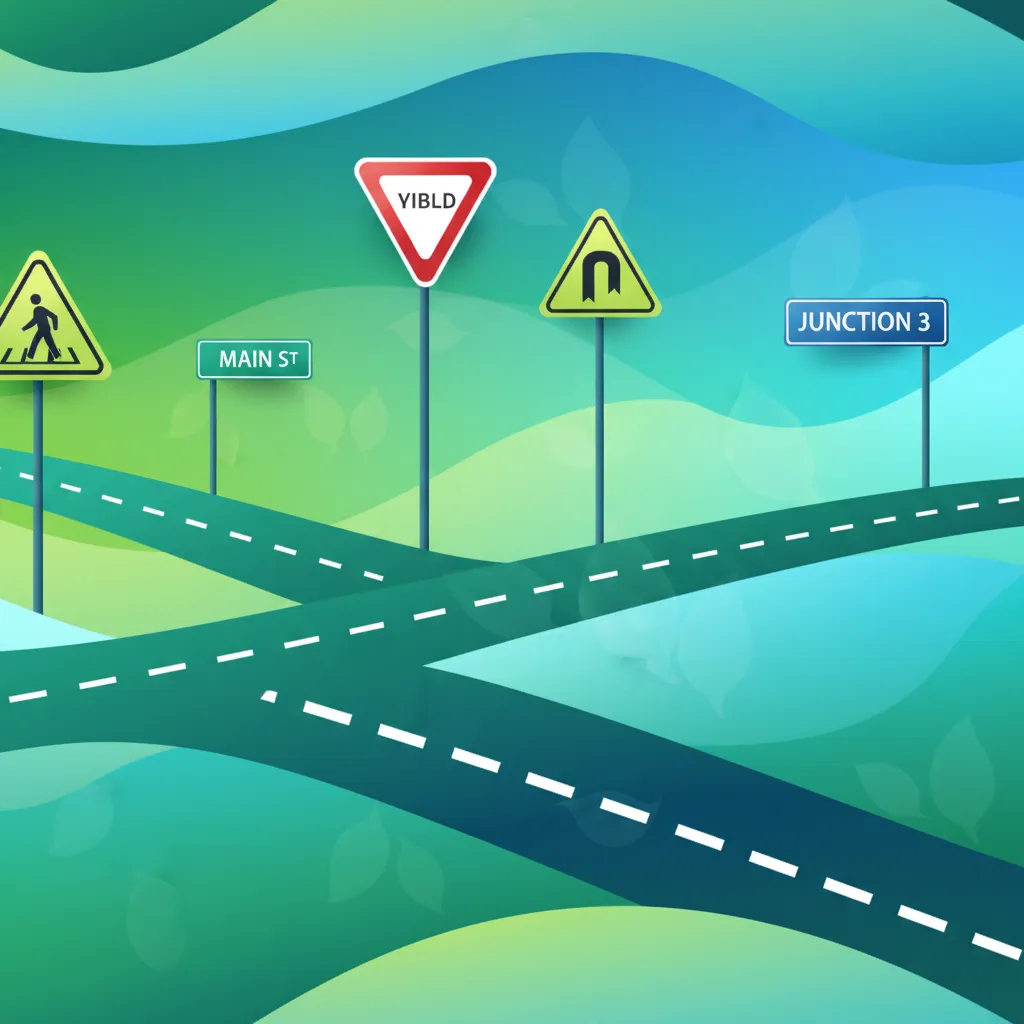
This lesson familiarizes learners with signs that warn of upcoming hazards, such as sharp curves, slippery surfaces, or animal crossings. It emphasizes the importance of early hazard recognition and response, which is especially critical for vulnerable moped riders. Understanding these signs allows riders to anticipate road conditions and adjust their riding strategy accordingly for increased safety.
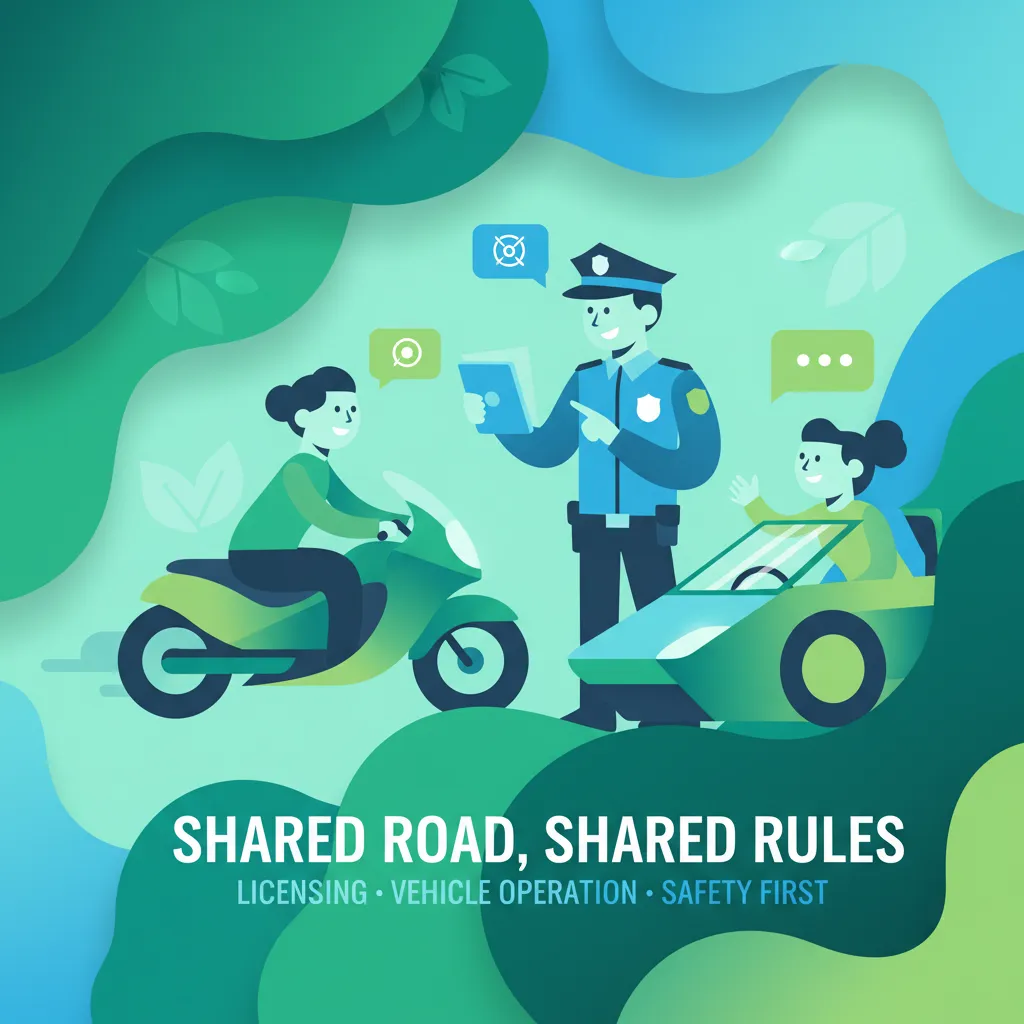
This lesson covers the extensive obligations that come with riding a moped, emphasizing the duty of care to other road users. It details specific legal requirements, such as mandatory helmet use, adherence to speed limits, and correct signaling protocols. Understanding these responsibilities helps riders grasp the consequences of non-compliance and fosters a culture of safety on the road.
This lesson details how various weather conditions impact moped stability, traction, and visibility. It provides practical strategies for handling crosswinds, avoiding hydroplaning in rain, and maintaining grip on icy or snowy surfaces. Riders will learn to assess weather-related risks and adapt their speed and control inputs to navigate challenging conditions safely.
This lesson explores the range of protective clothing vital for moped riders, focusing on abrasion resistance, impact protection, and weather adaptability. It covers the selection of appropriate gloves, boots, and jackets designed to mitigate injury and enhance comfort in Iceland's climate. The material explains how layering can provide both safety and insulation, allowing for safe riding in various conditions.
This lesson examines regulatory signs that impose legal obligations, focusing on those most relevant to moped riders like speed limits and mandatory direction signs. Learners will understand how sign shapes and colors convey specific commands or prohibitions. Attention is given to signs with vehicle-specific restrictions, ensuring riders know when rules apply directly to them.

This lesson explores the conduct required at uncontrolled crossings where the right-hand rule typically applies. It emphasizes the need to reduce speed, be prepared to stop, and establish clear communication with other road users. Riders will learn to assess the situation carefully and proceed only when it is confirmed to be safe, a critical skill for rural and residential areas.
Find clear answers to common questions learners have about Rider Mindset and Risk Awareness. Learn how the lesson is structured, which driving theory objectives it supports, and how it fits into the overall learning path of units and curriculum progression in Iceland. These explanations help you understand key concepts, lesson flow, and exam focused study goals.
The Icelandic AM theory exam includes questions designed to assess your understanding of safe riding practices, which heavily rely on a responsible mindset. Recognizing risks and adopting a defensive attitude are crucial for preventing accidents, and the exam evaluates your awareness of these psychological factors for road safety.
Develop risk awareness by actively scanning your environment for potential hazards, anticipating the actions of other road users, and considering the impact of road conditions and weather. Always ride defensively, assuming others may not see you or follow traffic rules correctly. This proactive approach is key to safe riding.
Common mistakes include overconfidence (believing you're invincible), underestimating risks, distraction (by phones, thoughts, or surroundings), and riding under the influence of stress or anger. Acknowledging these pitfalls is the first step towards developing a safer mindset.
Iceland's unique conditions, such as variable weather, long periods of darkness, and rural roads with less traffic, require a particularly strong sense of risk awareness and adaptability. Riders must be mentally prepared for sudden changes and potential hazards not always present in other climates.
Yes, a positive and safety-conscious mindset is crucial for the AM theory exam. It helps you interpret scenario-based questions correctly, understand the implications of different actions, and choose the safest option, which is what the exam aims to test.
Utilize our advanced practice set search to pinpoint the exact Icelandic driving theory topics you need to review. Filter by subject, difficulty, or question type to create a highly effective study plan and ensure you are fully prepared for your official driving licence test in Iceland.