
Logo
Icelandic Driving Theory Courses

Lesson 3 of the Priority Rules, Intersections, Crossings & Roundabouts unit

Icelandic Moped Theory (AM): Navigating Roundabouts

Welcome to the section on navigating Iceland's traffic intersections. This lesson focuses on understanding and safely using roundabouts, a common feature in Icelandic traffic. Mastering roundabout rules is crucial for your Category AM moped license exam and for safe, predictable riding.
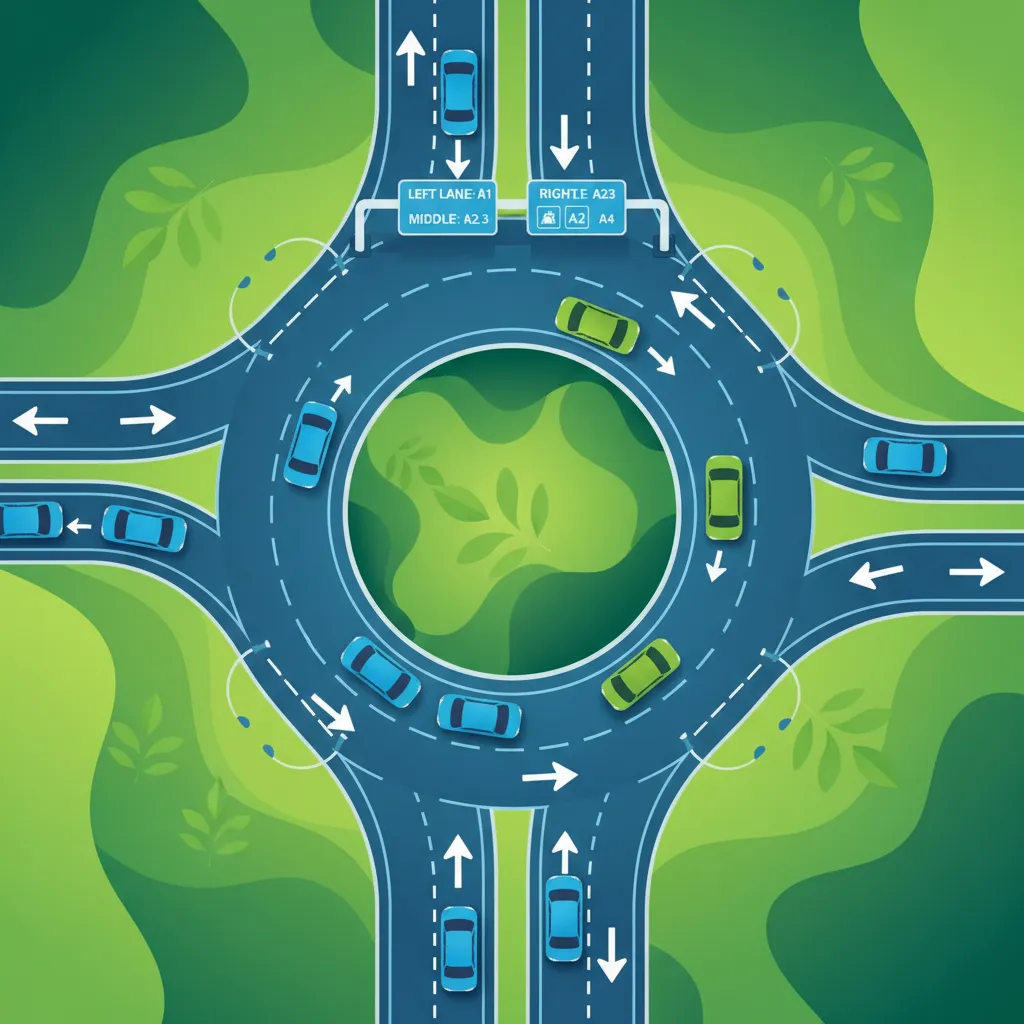
roundaboutspriority rulesintersection navigationAM licensemoped safety
Icelandic Moped Theory (AM): Navigating Roundabouts

Lesson content overview

Icelandic Moped Theory (AM)

Navigating Roundabouts: A Comprehensive Guide for Icelandic Moped Riders

Roundabouts are common circular intersections designed to improve traffic flow and reduce the severity of collisions compared to traditional intersections. For riders of Icelandic Category AM mopeds, navigating these junctions safely requires a deep understanding of specific rules, good judgment, and constant vigilance. This lesson provides detailed guidance on how to approach, enter, circulate, and exit roundabouts, focusing on the unique considerations for moped riders.

Understanding Roundabouts and Why They Matter for Moped Safety

A roundabout is a special type of circular intersection where traffic flows in one direction around a central island. In Iceland, following right-hand traffic rules, vehicles circulate in a counter-clockwise direction. Their design aims to prevent head-on collisions and reduce the number of conflict points, making them generally safer than intersections controlled by stop signs or traffic lights.

What is a Roundabout? Defining Circular Intersections in Iceland

At its core, a roundabout facilitates continuous traffic movement by requiring vehicles to yield before entering. Instead of waiting for a clear path in all directions, drivers and riders only need to assess traffic already circulating within the circle. This design streamlines flow and often reduces congestion, especially during peak hours.

The main distinction from a traffic circle (which may have different right-of-way rules) is the mandatory yield-before-entry rule for roundabouts. This single principle is fundamental to their safe and efficient operation. For moped riders, understanding this and other specific rules is paramount for maintaining safety among larger vehicles.

Why Mastering Roundabout Navigation is Crucial for Category AM Riders

Roundabouts represent high-conflict points on the road network, particularly for lightweight vehicles like mopeds. Due to their smaller size, mopeds can be less visible to drivers of cars and trucks, increasing the risk of being overlooked or misjudged. Incorrect entry, poor lane positioning, or inadequate signaling can lead to serious collisions.

Mastery of roundabout navigation is not only essential for passing the Icelandic AM licence theory exam but, more importantly, for ensuring your safety in real-world driving conditions. Developing predictable riding habits and enhancing your visibility are key components of defensive riding in roundabouts.

Essential Principles for Moped Riding in Roundabouts

Safe and effective roundabout navigation for moped riders hinges on several core principles. Adhering to these guidelines ensures predictable behavior, reduces conflict points, and significantly enhances your safety.

Yielding to Circulating Traffic: The Golden Rule for Roundabout Entry

The most critical rule when approaching any roundabout in Iceland is to yield to circulating traffic. This means that any vehicle already moving within the roundabout has priority over vehicles waiting to enter. You must not enter until there is a safe and sufficient gap in the circulating traffic flow.

Definition

Yield

To give way to another vehicle or traffic flow, allowing them to proceed before you.

This rule applies universally, whether the entry point is uncontrolled or marked with a yield line or sign. Before entering, you must look to your left (as traffic circulates counter-clockwise) and assess the speed and proximity of vehicles already inside the roundabout. Entering without yielding forces circulating traffic to brake or swerve, creating a high risk of collision.

Warning

Never assume you have the right-of-way when entering a roundabout. Always be prepared to stop and wait for a safe gap in circulating traffic.

Strategic Lane Positioning for Mopeds in Single and Multi-Lane Roundabouts

Choosing and maintaining the correct lane is vital for predictable and safe navigation through a roundabout, especially for moped riders. Your lane selection should always correspond to your intended exit.

Single-Lane Roundabouts

In single-lane roundabouts, all vehicles share the same path. Moped riders should position themselves centrally within the lane to enhance visibility and deter other vehicles from attempting to squeeze past.

Multi-Lane Roundabouts

Multi-lane roundabouts require more careful planning.

Lane Selection in Multi-Lane Roundabouts

  1. Exiting at the first or second exit (turning right or straight ahead): Typically, you should use the outer lane (right-hand lane) upon entry. Stay in this lane throughout your maneuver until you exit.

  2. Exiting beyond the second exit (turning left, or going all the way around): You should generally use the inner lane (left-hand lane) upon entry. Remain in this lane until you are past the exit before your intended one, then signal right and carefully move to the outer lane if safe and necessary before exiting. However, many multi-lane roundabouts allow for all exits from the outer lane, especially for smaller vehicles. Always observe road markings and signage carefully.

Tip

For mopeds, it's often safest to use the outer lane in multi-lane roundabouts if your exit is reachable from there. This minimizes lane changes within the roundabout, reducing exposure to blind spots of larger vehicles.

Common Mistakes:

  • Entering the outer lane but attempting to cut across to an inner lane abruptly.
  • Assuming all exits are reachable from any lane, which is not always the case and can cause confusion and conflict.

Effective Signaling: Communicating Your Intentions Clearly

Using your turn signals effectively is paramount for communicating your intentions to other road users, especially in the dynamic environment of a roundabout.

Signaling Procedure for Moped Riders:

  1. Before Entry: Generally, you do not signal upon entry unless specifically indicated by local signage for specific types of roundabouts or turns (e.g., signaling left if taking a left turn/late exit from a multi-lane roundabout where required to position in the inner lane). In most cases, the yield rule and lane positioning convey your initial intent.
  2. During Circulation: No signal is typically required while circulating unless you need to change lanes (which should be avoided by mopeds if possible).
  3. Before Exit: This is the most crucial signal. Activate your right-hand turn signal just after passing the exit immediately before your intended exit. This clearly indicates your intention to leave the roundabout to following and entering traffic.

Note

Icelandic Traffic Law emphasizes signaling before leaving a roundabout. Precise adherence to this rule is crucial for safety.

Common Mistakes:

  • Forgetting to signal before exiting, which can confuse drivers behind you or those waiting to enter, leading to abrupt braking or unexpected maneuvers.
  • Signaling left while already circulating, which is typically unnecessary and can be confusing.

Controlling Your Speed: Safe Entry, Circulation, and Exit

Appropriate speed management is essential for safely navigating roundabouts. Your speed must allow you to react to changing traffic conditions, stop if necessary, and maintain control of your moped.

Definition

Design speed

The speed at which a road or intersection is engineered to accommodate safely, typically 30–40 km/h for urban roundabouts.

Speed Guidelines for Moped Riders:

  • Approach: Reduce your speed significantly before entering the roundabout. This gives you ample time to observe circulating traffic and identify a safe gap.
  • Entry: Do not accelerate aggressively into the roundabout. Enter at a steady, controlled speed that allows you to easily yield if needed.
  • Circulation: Maintain a consistent, reduced speed while circulating. For urban roundabouts, this is typically around 30 km/h, unless signs indicate otherwise. Avoid sudden acceleration or braking.
  • Exit: Decelerate gently as you prepare to exit. Ensure you can stop within the roundabout's diameter if an unexpected hazard arises (e.g., a pedestrian crossing).

Warning

Excessive speed reduces your reaction time, increases your stopping distance, and makes it harder for other drivers to predict your movements, significantly increasing accident risk.

Maximizing Moped Visibility: Being Seen by Other Road Users

Due to their smaller profile, mopeds are inherently less visible than cars and trucks. In roundabouts, where multiple vehicles are maneuvering, it is imperative for moped riders to take proactive measures to enhance their conspicuity.

Definition

Conspicuity

The quality of being clearly seen or noticed by others.

Visibility Enhancement Techniques:

  • Bright Clothing and Reflective Gear: Always wear high-visibility clothing (e.g., fluorescent vests, jackets) during the day, and reflective gear at night or in low-light conditions.
  • Headlights On: Keep your low-beam headlights on at all times, day or night. This is a legal requirement for mopeds in Iceland.
  • Strategic Lane Positioning: Position yourself centrally within your chosen lane. This makes you more prominent and less likely to be overlooked or squeezed by larger vehicles. Avoid riding in the "blind spot" of cars and trucks, especially inside the roundabout.
  • Maintain an Alert Stance: A "head-up" riding posture can make you appear taller and more visible to drivers of larger vehicles.

Tip

Assume other drivers may not see you. Ride defensively and make yourself as visible as possible at all times, especially in complex situations like roundabouts.

Icelandic Traffic Regulations for Roundabout Use

Understanding the specific legal framework governing roundabouts in Iceland is crucial for compliance and safety. These rules are integrated into the broader Icelandic Traffic Law (Lög um umferð).

The core legal provisions relevant to roundabouts in Iceland are:

  • Yielding Rule: Vehicles entering a roundabout must yield to traffic already circulating within it. This rule is fundamental and failure to comply is a serious traffic violation.
  • Signaling Before Exiting: Riders are legally required to activate their right turn signal before leaving a roundabout. This ensures that other drivers, both circulating and waiting to enter, are aware of your intended path.

These regulations are designed to ensure predictable behavior and smooth traffic flow, minimizing collision risks.

Moped-Specific Rules: Headlights and Protective Gear

In addition to general roundabout rules, mopeds have specific legal requirements that enhance safety:

  • Headlights Mandatory: Moped riders are legally required to have their low-beam headlights on at all times, regardless of lighting conditions (day or night). This significantly improves your visibility to other road users.
  • Protective Gear: Wearing an approved helmet, protective gloves, and ideally a high-visibility vest is mandatory for moped riders. This gear not only protects you in case of a fall but also contributes to your conspicuity.

Adhering to these moped-specific rules is not just about avoiding penalties; it's about safeguarding your life on the road.

Common Roundabout Mistakes and How to Avoid Them

Even experienced riders can make mistakes in roundabouts. Being aware of these common errors can help you prevent them and enhance your safety.

Preventing Collisions: Yielding Violations and Lane Misuse

ViolationWhy It’s WrongCorrect BehaviorTypical Consequence
Entering without yieldingCreates immediate conflict with circulating traffic; high collision risk.Wait for a clear, safe gap; only proceed when no vehicles are within the circulating path approaching your entry.Serious collision, potentially fatal; legal penalties (fine, license points).
Changing lanes within roundaboutUnexpected lane changes cause side-impact collisions and confusion for others.Remain in your chosen lane throughout the roundabout. If a lane change is absolutely necessary, ensure it is clearly marked, safe, and signaled.Side-impact crash; legal citation.
Misinterpreting multi-lane exit requirementsExiting from the wrong lane can cause sudden lane cuts or block traffic.Follow lane markings to your intended exit. Plan your entry lane choice carefully.Abrupt lane changes, collision potential.

Enhancing Safety: Signaling Errors and Speeding Dangers

ViolationWhy It’s WrongCorrect BehaviorTypical Consequence
Late signaling before exitOther drivers cannot anticipate your exit, leading to abrupt braking or confusion.Activate your right turn signal at least 3 seconds before your intended exit point.Near-miss, potential rear-end collision.
Exceeding speed limit in roundaboutReduces reaction time, increases stopping distance, and risk of losing control.Maintain a speed appropriate for the roundabout's design and conditions (e.g., ≤30 km/h for mopeds in urban areas).Loss of control, increased stopping distance, collision.
Riding in blind spot of larger vehicleThe larger vehicle driver may not see you, leading to merging accidents.Keep visible; position centrally within your lane. Avoid lingering in vehicle blind spots.Collision, serious injury.
Not using headlights in low-visibilityReduces your conspicuity, making you difficult to detect by other drivers.Keep low beams on at all times, especially in fog, rain, dusk, or dawn. Use high-visibility gear.Failure to detect, rear-end or side impact.

Adapting to Conditions: Roundabouts in Diverse Situations

Roundabouts require additional caution and adjustments based on environmental and traffic conditions. Moped riders must be especially vigilant as their vehicles are more susceptible to adverse conditions.

Riding in Adverse Weather and Low Visibility

  • Rain/Ice/Snow: Reduce your speed significantly (by 10-20 km/h or more) and increase your following distance. Wet or icy surfaces drastically reduce tire grip, increasing braking distances and the risk of skidding. Accelerate and brake very gently.
  • Fog/Dusk/Night: Ensure your low-beam headlights are on and clean. Wear high-visibility and reflective gear. Consider waiting for larger gaps before entering, as other drivers' perception of distance and speed may be impaired.
  • Wind: Strong winds can affect moped stability. Grip the handlebars firmly, lean into the wind if necessary, and reduce speed.
  • Heavy Traffic: During rush hour, roundabouts can become congested. Apply extra caution, increase your observation time, and be prepared to wait longer for a safe gap. Avoid forcing your way into tight spaces, which can escalate conflict.
  • Complex Multi-Lane Roundabouts: Some larger roundabouts may have more than two lanes, spiral markings, or specific signage for exits. Always study the roundabout layout and overhead signs before entering. For mopeds, if multiple lanes lead to your exit, it's often safer to stick to the outermost appropriate lane to minimize internal lane changes.

Interacting with Vulnerable Road Users at Roundabouts

  • Pedestrians: Always yield to pedestrians crossing at designated crosswalks, especially those leading into or out of roundabout approaches. Pedestrians may not expect mopeds to be moving quickly.
  • Cyclists: Treat cyclists as on-road vehicles. Maintain a safe lateral distance when passing them, and be aware that they might take a wider path through the roundabout.
  • Other Mopeds/Motorcycles: Be aware of shared blind spots. Use clear positioning and signaling defensively, assuming other riders might also be less visible.

The Logic Behind Roundabout Rules: Safety and Traffic Flow

The rules governing roundabout navigation are not arbitrary; they are meticulously designed based on principles of traffic engineering, human psychology, and physics to maximize safety and efficiency.

How Yielding Creates Smooth Traffic Flow

The fundamental "yield to circulating traffic" rule is a cornerstone of roundabout design. It creates a continuous, predictable flow of traffic within the circle by assigning clear priority. When entry vehicles consistently yield, traffic inside the roundabout rarely needs to stop, leading to:

  • Reduced Conflicts: Eliminates head-on collisions and minimizes right-angle crashes.
  • Smoother Movement: Prevents stop-and-go traffic that often plagues signalized intersections, reducing fuel consumption and emissions.
  • Lower Speeds: The geometric design naturally encourages lower speeds, which in turn reduces the severity of any collisions that do occur.

The Physics of Speed and Braking in Circular Intersections

  • Kinetic Energy: A vehicle's kinetic energy increases exponentially with speed. This means a small increase in speed results in a much larger increase in the energy that must be absorbed in a crash. Limiting speed in roundabouts directly reduces the potential for severe injuries.
  • Reaction Time: The average human reaction time is approximately 0.7 seconds. At higher speeds, a vehicle covers a greater distance during this reaction time, leaving less room to brake or maneuver. Maintaining a reduced speed in a roundabout provides critical extra time for moped riders to react to sudden changes.
  • Centripetal Force: As you turn through a roundabout, centripetal force acts to push your moped outwards. Higher speeds amplify this force, increasing the risk of losing traction and control, especially on wet or slippery surfaces.

Understanding these underlying principles reinforces why strict adherence to speed limits and yielding rules is paramount for moped riders' safety.

Key Vocabulary for Roundabout Navigation

Practical Roundabout Scenarios for Icelandic Moped Riders

Applying theoretical knowledge to real-world situations is crucial. These scenarios illustrate correct and incorrect behaviors in common roundabout situations for moped riders.

Scenario 1: Simple Entry at a Single-Lane Roundabout

  • Setting: Small urban roundabout, dry weather, daylight.
  • Actors: Moped rider, car already circulating.
  • Decision Point: Yield before entry.
  • Correct Behavior: The moped rider slows down, observes the circulating car from the left, waits for it to pass the entry point, and then smoothly enters the roundabout, positioning centrally in the lane.
  • Incorrect Behavior: The rider accelerates and attempts to merge directly in front of the circulating car, forcing the car to brake abruptly.
  • Explanation: Proper yielding prevents conflict and maintains smooth traffic flow. Forcing entry is dangerous and a common cause of collisions.

Scenario 2: Multi-Lane Roundabout with a Later Exit

  • Setting: Two-lane roundabout, moderate traffic, dry conditions.
  • Actors: Moped rider (intending to take the third exit), truck circulating in the outer lane.
  • Decision Point: Lane selection for a later exit.
  • Correct Behavior: The moped rider, intending a later exit, enters the inner lane (left-hand lane) while observing traffic. After passing the second exit, the rider activates the right turn signal and, if safe, can carefully transition to the outer lane before exiting.
  • Incorrect Behavior: The rider enters the outer lane and then attempts to switch to the inner lane inside the roundabout or tries to exit from the inner lane without a clear path, cutting off the truck.
  • Explanation: Planning your lane position before entry is key. Mopeds should minimize lane changes within the roundabout due to blind spots. Always signal well in advance of your exit.

Scenario 3: Navigating in Low Visibility at Night

  • Setting: Rural roundabout, night, light fog present.
  • Actors: Moped rider, car approaching from an opposite entry.
  • Decision Point: Maintaining visibility and safe speed.
  • Correct Behavior: The rider ensures low-beam headlights are on, wears a reflective vest, and approaches at a significantly reduced speed. They increase their observation time for circulating traffic and wait for a larger, clearer gap before entering.
  • Incorrect Behavior: The rider rides with headlights off, no reflective gear, and speeds through the roundabout, assuming others will see them.
  • Explanation: Low visibility conditions significantly impair other drivers' ability to see mopeds. Proactive measures like enhanced lighting, reflective gear, and reduced speed are crucial for safety.

Scenario 4: Heavy Traffic and Patience

  • Setting: Urban roundabout with three lanes, heavy rush-hour traffic, wet roads.
  • Actors: Moped rider, bus, several cars.
  • Decision Point: Timing entry and speed selection.
  • Correct Behavior: The rider patiently waits for a larger and safer gap, reduces speed even further due to wet conditions, and signals early for their exit to avoid sudden maneuvers. They maintain an increased following distance.
  • Incorrect Behavior: The rider forces entry into a tight gap, causing the bus to brake abruptly and other cars to swerve.
  • Explanation: In heavy traffic or adverse conditions, patience and defensive riding are paramount. Forcing entry creates dangerous situations and disrupts the flow of traffic.

Further Your Learning and Practice

Learn more with these articles

Check out these practice sets

Lesson recap

Quick summary before you move on

Fast revision

Navigating roundabouts as an Icelandic moped rider requires mastering three core skills: yielding to circulating traffic before entry, selecting the correct lane based on your intended exit, and signaling right before leaving. Speed management is critical - maintain around 30 km/h and avoid sudden acceleration or braking. Due to their smaller profile, mopeds must maximize visibility through constant headlight use, bright clothing, and central lane positioning. These rules, grounded in Icelandic traffic law, ensure both exam success and safe real-world riding.


Core takeaways

Main ideas from this lesson

A short set of high-value points that capture the most important learning from this lesson.

Always yield to circulating traffic before entering a roundabout - vehicles already inside have priority over those waiting to enter

Select your entry lane based on your intended exit: outer lane for first/second exits, inner lane for later exits

Activate your right turn signal just after passing the exit immediately before your intended exit

Maintain a reduced speed (around 30 km/h) throughout the roundabout and avoid aggressive acceleration or braking

Keep your low-beam headlights on at all times to enhance visibility among larger vehicles

Remember this

Details worth keeping in mind

Point 1

In Iceland, traffic circulates counter-clockwise (to the left) around the central island

Point 2

A yield sign or line at entry means you must give way to all vehicles already inside the roundabout

Point 3

Signal before exiting, not upon entry or while circulating (unless changing lanes)

Point 4

Position yourself centrally in your lane to maximize visibility and avoid being squeezed by larger vehicles

Point 5

Mopeds must use headlights at all times regardless of weather or lighting conditions - this is a legal requirement

Watch for this

Frequent learner mistakes

Entering the roundabout without yielding, forcing circulating traffic to brake or swerve

Forgetting to signal before exiting, confusing following traffic and those waiting to enter

Choosing the wrong lane upon entry, then attempting to cut across or exit from an incorrect position

Riding in the blind spot of cars or trucks, where drivers may not see the moped at all

Changing lanes within the roundabout, creating conflict points and potential side-impact collisions

Search topics related to Navigating Roundabouts

Explore search topics learners often look for when studying Navigating Roundabouts. These topics reflect common questions about road rules, driving situations, safety guidance, and lesson level theory preparation for learners in Iceland.

how to drive a moped in icelandic roundaboutsiceland moped theory test roundabout rulesyielding to traffic on roundabouts icelandcategory AM moped roundabout navigationmoped lane position roundabout icelandsafely using icelandic roundabouts am licensewhat are the rules for roundabouts in iceland for mopeds

Related driving theory lessons for Navigating Roundabouts

Browse additional driving theory lessons that cover connected traffic rules, road signs, and common driving situations related to this topic. Improve your understanding of how different rules interact across everyday traffic scenarios.

Advanced Rules for Navigating Icelandic Roundabouts

Explore complex scenarios and advanced rules for multi-lane roundabouts in Iceland. Understand correct lane discipline, signaling nuances, and priority nuances for Category AM riders to ensure safe circulation and exit.
roundaboutsadvanced rulesprioritylane disciplinetraffic theory
Roundabout Navigation and Yield Rules lesson image

Roundabout Navigation and Yield Rules

This lesson focuses on the operation of roundabouts, which are common in Icelandic towns and rural areas, and explains how drivers must yield to circulating traffic upon entry. The content covers how to interpret roundabout signage and follow lane markings to maintain correct positioning. Students also learn strategies for safe exit, handling multi-lane roundabouts, and recognizing deceptive entries that require heightened vigilance for smooth navigation.
Icelandic Driving Theory BPriority Rules, Intersections & Roundabouts
View lesson
Intersection Types and Priority Determination lesson image

Intersection Types and Priority Determination

This lesson examines various intersection configurations in Iceland, including those controlled by traffic lights, four-way stops, and uncontrolled intersections without signals. Learners study how priority is determined in each scenario through signage, road markings, and the relative position of vehicles. The lesson also covers specific turning regulations and highlights the importance of assessing sight lines to ensure safe passage through complex junctions.
Icelandic Driving Theory BPriority Rules, Intersections & Roundabouts
View lesson
Traffic Light Systems and Signals lesson image

Traffic Light Systems and Signals

This lesson focuses on the operation of traffic lights in Iceland, describing standard three-phase cycles (red, amber, green) and variations such as flashing amber for yielding. Learners will also explore dedicated signals for pedestrians, cyclists, and turning movements, including arrow indications. The lesson explains how signal timing integrates with right-of-way rules at intersections, ensuring drivers can interpret and respond to each light state to maintain safety.
Icelandic Driving Theory BRoad Signs, Traffic Lights & Road Markings
View lesson
Right‑of‑Way Basics and Yielding Rules lesson image

Right‑of‑Way Basics and Yielding Rules

This lesson introduces the fundamental concepts of right-of-way in Iceland, explaining the priority hierarchy that dictates when a driver must yield to others. Learners study the meaning of give-way and yield signs, the distinction between main and side roads, and how stop signs and markings affect vehicle positioning. By understanding these legal obligations, students will be able to determine correct actions at any junction, reducing the risk of collisions.
Icelandic Driving Theory BPriority Rules, Intersections & Roundabouts
View lesson
Turning Principles and Signalling lesson image

Turning Principles and Signalling

This lesson focuses on the principles of executing safe turns, highlighting the correct use of turn signals and lane positioning before initiating a turn. Learners examine the timing required for signaling, the rules governing right-turns and left-turn yields, and the importance of checking blind spots and cyclist lanes. The lesson also addresses the concept of turning radius to ensure drivers can complete turns without compromising the safety of others on the road.

Icelandic Driving Theory BLane Use, Positioning, Turning & Manoeuvres
View lesson
Traffic Light Signals and Interpretation lesson image

Traffic Light Signals and Interpretation

This lesson dissects the three-color traffic light system, detailing the meaning of red, amber, and green signals, including flashing lights and directional arrows. It explains how signal timing impacts moped riders and the legal requirement to obey all signals at intersections. Proper interpretation is crucial for navigating signalized junctions safely and avoiding conflicts with other traffic.
Icelandic Moped Theory (AM)Road Signs, Traffic Lights & Road Markings for AM Riders
View lesson
Road Markings and Pavement Symbols lesson image

Road Markings and Pavement Symbols

This lesson provides a comprehensive overview of the road markings found on Icelandic roads, from solid and broken lane lines to symbols indicating turning lanes and pedestrian crossings. The content details the visual meanings of each marking, such as solid lines indicating no crossing and broken lines permitting lane changes. Additionally, the lesson addresses the purpose of reflective markers and surface textures used in low-visibility or icy conditions, providing a framework for interpreting pavement cues.
Icelandic Driving Theory BRoad Signs, Traffic Lights & Road Markings
View lesson
Right-of-Way Principles at Intersections lesson image

Right-of-Way Principles at Intersections

This lesson examines the legal framework defining right-of-way, distinguishing between priority and secondary roads, and detailing yielding responsibilities. It teaches riders how to assess intersections and approach safely based on Icelandic traffic law. Understanding these principles is critical for preventing collisions and ensuring smooth traffic flow at all types of junctions.
Icelandic Moped Theory (AM)Priority Rules, Intersections, Crossings & Roundabouts
View lesson
Lane Discipline and Road Positioning lesson image

Lane Discipline and Road Positioning

This lesson explores the proper use of lane markings to maintain correct vehicle centering and adherence to the prescribed traffic flow direction in Iceland. The content describes how to interpret solid and broken lines, maintain safe following distances within a lane, and avoid unintended lane departures. Learners also examine the legal prohibitions on using the road shoulder for general travel, ensuring compliance with lane discipline rules for overall traffic safety.
Icelandic Driving Theory BLane Use, Positioning, Turning & Manoeuvres
View lesson
Complex Manoeuvres: U‑turns and Three‑point Turns lesson image

Complex Manoeuvres: U‑turns and Three‑point Turns

This lesson covers the conditions under which U-turns and three-point turns are permitted in Iceland, focusing on road width, visibility, and legal restrictions. The content outlines the step-by-step procedure for safely performing a three-point turn in confined spaces, including correct mirror usage and blind spot checks. Learners also explore scenarios where U-turns are prohibited, such as on narrow gravel roads or where signage explicitly bans such manoeuvres.

Icelandic Driving Theory BLane Use, Positioning, Turning & Manoeuvres
View lesson

Moped Visibility and Hazard Awareness in Roundabouts

Learn crucial techniques for enhancing moped visibility in roundabouts and understanding specific hazards. Focuses on how to be seen by larger vehicles and anticipate potential risks for Category AM riders in Icelandic traffic.

moped safetyvisibilityhazardsdefensive ridingroundabouts
Visibility Techniques and Reflective Materials lesson image

Visibility Techniques and Reflective Materials

This lesson focuses on methods to enhance a rider's visibility, covering high-visibility clothing, reflective materials, and strategic lighting. Learners will understand how to use daytime running lights and position themselves to minimize time in others' blind spots. These proactive techniques are essential for being seen by other road users, significantly reducing the risk of collisions.
Icelandic Moped Theory (AM)Protective Gear, Helmet Use, Visibility & Rider Mindset
View lesson
Road Positioning on Urban Roads lesson image

Road Positioning on Urban Roads

This lesson outlines best practices for positioning a moped on urban roads to maximize visibility and safety. It explains how to choose a lane position that makes you visible to drivers ahead and behind, while avoiding road debris and dooring hazards from parked cars. The content addresses adapting your position based on traffic speed, density, and road conditions.
Icelandic Moped Theory (AM)Road Positioning, Blind Spots, Lane Use & Turning
View lesson
Blind Spot Awareness with Larger Vehicles lesson image

Blind Spot Awareness with Larger Vehicles

This lesson explores the blind spot zones of cars, trucks, and buses, highlighting the vulnerability of moped riders. It provides effective strategies for positioning your vehicle to remain visible to other drivers at all times. Riders will learn to anticipate lane changes and movements from larger vehicles, significantly reducing the risk of being unseen in traffic.

Icelandic Moped Theory (AM)Road Positioning, Blind Spots, Lane Use & Turning
View lesson
Riding at Night and Visibility Strategies lesson image

Riding at Night and Visibility Strategies

This lesson addresses the unique challenges of riding at night, including reduced visibility and altered depth perception. It covers the correct use of lighting systems, the critical role of reflective gear, and strategies to maximize conspicuity. Riders will also learn to identify hazards specific to low-light conditions, such as animals or unlit obstacles on the road.

Icelandic Moped Theory (AM)Riding in Icelandic Weather, Darkness, Gravel & Slippery Conditions, Penalties & Emergency Response
View lesson
Managing Uncontrolled Crossings lesson image

Managing Uncontrolled Crossings

This lesson explores the conduct required at uncontrolled crossings where the right-hand rule typically applies. It emphasizes the need to reduce speed, be prepared to stop, and establish clear communication with other road users. Riders will learn to assess the situation carefully and proceed only when it is confirmed to be safe, a critical skill for rural and residential areas.
Icelandic Moped Theory (AM)Priority Rules, Intersections, Crossings & Roundabouts
View lesson
Lane Use and Proper Turning Techniques lesson image

Lane Use and Proper Turning Techniques

This lesson details the fundamentals of lane discipline and proper turning techniques for moped riders. It covers the correct use of turn signals, judging appropriate cornering speed, and executing safe lane changes. The material provides a step-by-step guide to navigating intersections and curves with control and predictability, ensuring safety for the rider and other road users.
Icelandic Moped Theory (AM)Road Positioning, Blind Spots, Lane Use & Turning
View lesson
Rider Mindset and Risk Awareness lesson image

Rider Mindset and Risk Awareness

This lesson examines the psychological factors crucial for safe riding, promoting a defensive mindset and heightened risk awareness. It provides strategies for managing stress, identifying potential hazards early, and making proactive decisions to prevent dangerous situations. Cultivating mental discipline and a safety-conscious attitude is fundamental to long-term rider safety on Icelandic roads.
Icelandic Moped Theory (AM)Protective Gear, Helmet Use, Visibility & Rider Mindset
View lesson
Weather Impacts: Wind, Rain, Snow, Ice, and Fog lesson image

Weather Impacts: Wind, Rain, Snow, Ice, and Fog

This lesson details how various weather conditions impact moped stability, traction, and visibility. It provides practical strategies for handling crosswinds, avoiding hydroplaning in rain, and maintaining grip on icy or snowy surfaces. Riders will learn to assess weather-related risks and adapt their speed and control inputs to navigate challenging conditions safely.
Icelandic Moped Theory (AM)Riding in Icelandic Weather, Darkness, Gravel & Slippery Conditions, Penalties & Emergency Response
View lesson
Warning and Information Signs lesson image

Warning and Information Signs

This lesson familiarizes learners with signs that warn of upcoming hazards, such as sharp curves, slippery surfaces, or animal crossings. It emphasizes the importance of early hazard recognition and response, which is especially critical for vulnerable moped riders. Understanding these signs allows riders to anticipate road conditions and adjust their riding strategy accordingly for increased safety.

Icelandic Moped Theory (AM)Road Signs, Traffic Lights & Road Markings for AM Riders
View lesson
Interactions with Parked Vehicles and Dooring Hazards lesson image

Interactions with Parked Vehicles and Dooring Hazards

This lesson investigates the significant hazards posed by parked vehicles, particularly the risk of a driver opening a door into a rider's path. It teaches techniques for maintaining a safe buffer zone and scanning for signs of occupancy in parked cars. Riders will learn how to anticipate this common urban danger and plan escape routes to avoid sudden collisions.

Icelandic Moped Theory (AM)Road Positioning, Blind Spots, Lane Use & Turning
View lesson

Frequently asked questions about Navigating Roundabouts

Find clear answers to common questions learners have about Navigating Roundabouts. Learn how the lesson is structured, which driving theory objectives it supports, and how it fits into the overall learning path of units and curriculum progression in Iceland. These explanations help you understand key concepts, lesson flow, and exam focused study goals.

What is the most important rule when entering an Icelandic roundabout on a moped?

The most critical rule is to yield to traffic already circulating within the roundabout. Always ensure there is a safe gap before entering. Mopeds, like all vehicles, must give way to those on the roundabout.

How do I choose the correct lane in a roundabout for my moped?

For exits to the left or straight ahead, it’s generally safer for mopeds to use the right-hand lane, especially if there are multiple lanes. If taking the first exit, you might position yourself further left in the entry lane if safe. Always check local markings and signs, and prioritize being seen.

When should I signal when using a roundabout on a moped?

Signal left before exiting the roundabout to indicate your intention to leave. If you are taking an exit on the left side of the roundabout, you may need to signal left upon entering or before reaching the relevant exit to indicate your path.

How can I make myself more visible in a roundabout as a moped rider?

Ensure your headlight is on, wear bright or reflective clothing, and maintain a steady position within your lane. Avoid lingering in larger vehicles' blind spots. A clear, predictable presence helps other drivers anticipate your movements.

Are there different rules for roundabouts in rural versus urban Iceland?

The fundamental rules of yielding and priority remain the same. However, roundabouts in urban areas may have more complex lane markings or higher traffic volumes. In rural areas, you might encounter unlit roundabouts or junctions with less clear priority signaling, requiring extra caution and awareness.

Ready to Target Your Icelandic Theory Exam Practice?

Utilize our advanced practice set search to pinpoint the exact Icelandic driving theory topics you need to review. Filter by subject, difficulty, or question type to create a highly effective study plan and ensure you are fully prepared for your official driving licence test in Iceland.

Search Practice Sets

Continue your Icelandic driving theory learning journey

Icelandic road signsIcelandic article topicsSearch Icelandic road signsIcelandic driving theory homeIcelandic road sign categoriesIcelandic driving theory topicsSearch Icelandic theory articlesIcelandic driving theory coursesIcelandic Driving Theory B courseIcelandic driving theory articlesIcelandic driving theory practiceIcelandic practice set categoriesIcelandic Moped Theory (AM) courseIcelandic driving licence proceduresSearch Icelandic driving theory practiceIcelandic driving theory terminology A–ZIcelandic driving theory terms and glossaryRoad Signs, Traffic Lights & Road Markings unit in Icelandic Driving Theory BAM Licence Basics & Rider Responsibilities unit in Icelandic Moped Theory (AM)Priority Rules, Intersections & Roundabouts unit in Icelandic Driving Theory BLane Use, Positioning, Turning & Manoeuvres unit in Icelandic Driving Theory BDriving Licence Basics & Learner Responsibilities unit in Icelandic Driving Theory BThe Driver: Health, Attention, Distraction & Risk unit in Icelandic Driving Theory BRoad Positioning, Blind Spots, Lane Use & Turning unit in Icelandic Moped Theory (AM)Navigating Roundabouts lesson in Priority Rules, Intersections, Crossings & RoundaboutsPriority Rules, Intersections, Crossings & Roundabouts unit in Icelandic Moped Theory (AM)Protective Gear, Helmet Use, Visibility & Rider Mindset unit in Icelandic Moped Theory (AM)Road Signs, Traffic Lights & Road Markings for AM Riders unit in Icelandic Moped Theory (AM)Managing Uncontrolled Crossings lesson in Priority Rules, Intersections, Crossings & RoundaboutsPedestrian Crossings and School Zones lesson in Priority Rules, Intersections, Crossings & RoundaboutsRight-of-Way Principles at Intersections lesson in Priority Rules, Intersections, Crossings & Roundabouts