
This lesson focuses on the unique challenges of navigating Iceland's gravel roads. You will learn how to adapt your driving style, maintain control of your vehicle, and interact safely with other road users on these surfaces, ensuring you're prepared for varied road conditions tested in the Icelandic theory exam.
Lesson content overview
Iceland's unique landscape is renowned for its vast stretches of unpaved roads, particularly in rural and highland areas. These gravel roads present distinct challenges compared to driving on asphalt, requiring drivers to adopt specialized techniques and adhere to specific etiquette. This lesson, part of the Official Icelandic Driving License B Theory Course, will equip you with the essential knowledge and skills to navigate gravel roads safely and confidently, ensuring both your own safety and that of other road users.
Driving on gravel is fundamentally different from driving on paved surfaces. The primary distinction lies in the reduced traction available, which significantly impacts how your vehicle accelerates, brakes, and steers. Understanding these underlying principles is crucial for maintaining control and preventing accidents.
Gravel surfaces, composed of loose stones and compacted dirt, offer significantly less grip for your tyres than asphalt. This lower frictional grip, often referred to as a reduced coefficient of friction, means that your vehicle requires more distance to stop and is more prone to skidding during acceleration or cornering. The specific nature of the gravel (dry, wet, loose, or compacted) will further influence the available traction.
Wet gravel, for instance, can be particularly treacherous, reducing grip even further and sometimes creating muddy conditions. Even compacted dry gravel offers less traction than a dry paved road. This physical reality dictates that drivers must adjust their inputs — acceleration, braking, and steering — to match the surface's limitations. Failing to do so can easily lead to a loss of control, where the vehicle's momentum overcomes the tyres' ability to maintain grip.
Reduced traction directly affects several aspects of vehicle dynamics:
One of the most critical adjustments for gravel road driving is selecting an appropriate speed. While legal speed limits provide a maximum threshold, they often do not reflect the safe speed for specific gravel conditions.
Icelandic traffic law mandates that drivers must adjust their speed to road and traffic conditions. This regulation (Regulation-2, §27, 2024) is particularly pertinent on gravel roads. A posted speed limit of, for example, 80 km/h on a rural gravel road is the absolute maximum, not a target speed. On gravel, conditions like loose surfaces, blind curves, hills, or adverse weather will frequently demand speeds significantly lower than the legal limit.
Many gravel roads, especially those with sharp curves or steep descents, may feature advisory speed signs. These signs recommend a safer speed for a particular section of road, such as 30 km/h on a winding downhill stretch. It is imperative to heed these advisories, as they are based on careful assessment of the road's geometry and surface.
Even without advisory signs, drivers must constantly assess the road ahead and dynamically adjust their speed. Factors such as visibility, the presence of loose gravel patches, corrugations (washboard effect), potholes, or the approach of other vehicles should all prompt a reduction in speed. A proactive approach to speed management ensures you have ample time to react and maintain control.
Always err on the side of caution. If you are unsure about the safe speed for a section of gravel road, slow down. It is always better to arrive late than not at all.
On gravel roads, the standard following distance recommendations for paved roads are often insufficient. Due to the increased stopping distances and the risk of flying stones, you must maintain a greater gap between your vehicle and the one ahead.
The reduced traction on gravel means your vehicle will require significantly more time and distance to stop. This directly translates to needing a larger following distance to react safely if the vehicle in front brakes suddenly. Furthermore, vehicles on gravel roads, especially at higher speeds, can kick up loose stones. These "stone throws" can cause considerable damage to your windscreen, paintwork, or even headlights. A greater following distance minimizes this risk.
While a minimum following distance of 2 seconds is generally recommended on dry paved roads, on loose gravel, this should be extended to at least 3-4 seconds. In adverse conditions like rain, fog, or steep descents, or when following heavy vehicles, this gap should be increased even further.
Choose a fixed point ahead, such as a road sign or a tree, that the vehicle in front of you is about to pass.
As the vehicle in front passes that point, begin counting "one thousand one, one thousand two, one thousand three..."
If you reach that same fixed point before you finish counting to three or four (depending on conditions), you are following too closely. Increase your distance and try again.
Abrupt braking on a gravel road is a common cause of skidding and loss of control. Mastering gentle braking is fundamental to safe gravel driving.
For vehicles without an Anti-lock Braking System (ABS), the technique known as "progressive braking" or "pumping the brakes" is essential. This involves applying brake pressure gradually and incrementally, just short of locking the wheels. If you feel the wheels begin to lock up (the tires stop rotating and the vehicle starts to slide), immediately ease off the brake pedal slightly until the wheels begin to roll again, then reapply pressure.
A situation where a vehicle's wheels stop rotating while the vehicle is still moving, leading to a loss of steering control and a skid.
The goal is to achieve maximum braking force while maintaining steering control. Remember, if your wheels are locked, you cannot steer.
Most modern vehicles are equipped with ABS, which is designed to prevent wheel lock-up during hard braking. On gravel, ABS will activate much more readily than on paved surfaces. While ABS is a significant safety feature, it does not magically reduce stopping distances on loose surfaces. It allows you to steer while braking, but you will still need a longer distance to stop.
Even with ABS, it is crucial to apply brakes gently and progressively. Slamming the brakes hard will cause the ABS to activate aggressively, potentially unsettling the vehicle and kicking up a lot of stones. Use smooth, consistent pressure, allowing the ABS to do its work without creating unnecessary drama.
Never assume ABS will eliminate the need for gentle braking or sufficient following distance. Its primary function is to maintain steering control, not to shorten stopping distances on extremely low-traction surfaces.
Many rural Icelandic gravel roads are single-lane or very narrow, requiring specific etiquette when encountering oncoming traffic or wishing to overtake.
On narrow roads, particularly those with steep gradients and limited visibility, a specific rule often applies regarding priority. The vehicle traveling uphill generally has priority over the vehicle traveling downhill. This is because it is often more challenging for an uphill vehicle to stop and restart, or to reverse, without losing momentum or risking a stall.
If you are driving downhill and encounter an uphill vehicle on a narrow stretch, it is courteous and often mandatory to slow down, pull over to the side, and allow the uphill vehicle to pass safely.
Many single-lane gravel roads are equipped with designated "pull-outs" or passing places. These are widened sections of the road designed specifically for vehicles to move over and allow oncoming traffic to pass. Always be vigilant for these pull-outs and use them appropriately.
When passing an oncoming vehicle on a narrow section without a designated pull-out, both drivers must cooperate to ensure safe clearance. This often involves reducing speed significantly and moving as far as safely possible to your side of the road. The term "kaapura" (clearance distance) is relevant here, emphasizing the need for adequate lateral space, typically aiming for at least 1 metre between vehicles.
Overtaking on gravel roads requires extreme caution. The reduced traction means that accelerating quickly to pass can be difficult and dangerous, often leading to wheel spin and stone throw. Visibility might also be compromised by dust kicked up by the vehicle in front.
Assess Thoroughly: Ensure you have ample clear sight distance ahead, free from oncoming traffic, blind curves, or hills.
Allow Space: Maintain a safe following distance before attempting to overtake.
Signal Clearly: Indicate your intention well in advance.
Smooth Acceleration: Accelerate gently and progressively, avoiding sudden bursts that cause excessive wheel spin.
Clear Quickly (but Safely): Aim to complete the overtaking maneuver efficiently, but always prioritize safety over speed. Do not exceed safe speeds for the gravel surface.
Re-establish Distance: Once you have safely passed, ensure you leave plenty of space before moving back into your lane.
Consider Pull-Outs: If available, designated passing lanes or pull-outs should be used for safer overtaking.
If in doubt, do not overtake. Patience is a virtue on gravel roads, where safety is paramount.
The condition and pressure of your tyres play a significant role in gravel road performance and safety, particularly in managing the "stone throw" hazard.
While general recommendations exist, the optimal tyre pressure for gravel can vary depending on your vehicle, load, and the specific gravel conditions. Generally, a moderate tyre pressure is recommended. Over-inflated tyres can reduce the contact patch, leading to less grip and increased likelihood of punctures from sharp stones. Under-inflated tyres can increase rolling resistance, generate more heat, and significantly increase the risk of stone ejection. It is usually advisable to stick to the manufacturer's recommended pressure, or possibly slightly higher for loaded vehicles, and avoid drastically lowering pressure unless you are experienced in specific off-road scenarios, which are beyond the scope of general Category B driving.
"Stone throw" refers to the ejection of loose stones by a vehicle's tyres, which can cause significant damage to other vehicles, especially windscreens, or even injure pedestrians or cyclists. It is legally prohibited to deliberately throw stones onto the road (Regulation-5, §9, 2024).
To minimize stone throw:
Driving on gravel roads requires constant vigilance and the ability to adapt to changing conditions.
Cyclists, motorcyclists, and pedestrians are especially vulnerable on gravel roads. They may be less stable, slower, and obscured by dust. Always give them ample space, reduce your speed when approaching or passing, and anticipate their movements. The stones kicked up by your vehicle can be particularly hazardous to them.
To ensure safety and compliance, drivers on Icelandic gravel roads must adhere to several key regulations from Samgöngustofa (the Icelandic Transport Authority):
Adherence to these rules is not just about avoiding penalties; it's about minimizing risk and contributing to a safer driving environment for everyone on Iceland's unique road network.
Being aware of common pitfalls can help you avoid dangerous situations on gravel roads.
Mastering gravel road etiquette and vehicle control is paramount for safe driving in Iceland. Key takeaways include:
By internalizing these principles and practices, you will contribute to safer roads and a more enjoyable driving experience for everyone exploring Iceland's beautiful, rugged landscapes.
Iceland's extensive gravel road network requires fundamentally different driving techniques than paved surfaces. Gravel provides significantly reduced traction, meaning longer stopping distances, less precise steering, and increased risk of skidding during acceleration or cornering. Safe driving requires adapting speed below legal limits, maintaining a 3-4 second following distance, using gentle progressive braking to prevent wheel lock-up, and understanding uphill priority rules on narrow roads. Weather conditions such as rain, fog, and dust can rapidly change gravel road dynamics, requiring constant vigilance and technique adjustment to ensure safety for yourself and other road users.
A short set of high-value points that capture the most important learning from this lesson.
Gravel roads offer significantly less traction than asphalt due to a lower coefficient of friction, requiring more distance to stop and more careful steering inputs
Safe speed on gravel is often well below the posted legal limit; always observe advisory speed signs and adjust dynamically based on surface, visibility, and traffic conditions
Maintain a minimum 3-4 second following distance on loose gravel to account for longer stopping distances and protect against stone throw damage
Use gentle, progressive braking techniques to prevent wheel lock-up and maintain steering control, regardless of whether your vehicle has ABS
On narrow single-lane roads, uphill traffic has priority; cooperate by using pull-outs and maintaining adequate lateral clearance (kaapura) of approximately 1 metre
Explore all units and lessons included in this driving theory course.
The physics of gravel: reduced grip directly increases braking distance and makes vehicles more prone to understeer or oversteer in corners
Icelandic traffic law mandates speed adaptation to conditions, meaning driving below the limit when gravel conditions require it
Gentle braking is essential—wheel lock-up on gravel eliminates steering control and causes dangerous skids
Uphill priority applies on narrow gravel roads because stopping and restarting on a gradient is mechanically more challenging
Weather changes gravel conditions rapidly: rain creates slippery mud, fog limits visibility, and dust clouds from other vehicles severely reduce sight distance
Treating posted speed limits as target speeds rather than absolute maximums on gravel surfaces
Following too closely (tailgating), which guarantees stone damage and leaves insufficient room to stop safely
Applying brakes suddenly or aggressively, causing wheel lock-up and loss of steering control
Attempting to overtake without sufficient clear sight distance and adequate lateral clearance from oncoming traffic
Ignoring advisory speed signs on curves and steep descents, which are based on careful assessment of road geometry
Lesson content overview
A short set of high-value points that capture the most important learning from this lesson.
Gravel roads offer significantly less traction than asphalt due to a lower coefficient of friction, requiring more distance to stop and more careful steering inputs
Safe speed on gravel is often well below the posted legal limit; always observe advisory speed signs and adjust dynamically based on surface, visibility, and traffic conditions
Maintain a minimum 3-4 second following distance on loose gravel to account for longer stopping distances and protect against stone throw damage
Use gentle, progressive braking techniques to prevent wheel lock-up and maintain steering control, regardless of whether your vehicle has ABS
On narrow single-lane roads, uphill traffic has priority; cooperate by using pull-outs and maintaining adequate lateral clearance (kaapura) of approximately 1 metre
Explore all units and lessons included in this driving theory course.
The physics of gravel: reduced grip directly increases braking distance and makes vehicles more prone to understeer or oversteer in corners
Icelandic traffic law mandates speed adaptation to conditions, meaning driving below the limit when gravel conditions require it
Gentle braking is essential—wheel lock-up on gravel eliminates steering control and causes dangerous skids
Uphill priority applies on narrow gravel roads because stopping and restarting on a gradient is mechanically more challenging
Weather changes gravel conditions rapidly: rain creates slippery mud, fog limits visibility, and dust clouds from other vehicles severely reduce sight distance
Treating posted speed limits as target speeds rather than absolute maximums on gravel surfaces
Following too closely (tailgating), which guarantees stone damage and leaves insufficient room to stop safely
Applying brakes suddenly or aggressively, causing wheel lock-up and loss of steering control
Attempting to overtake without sufficient clear sight distance and adequate lateral clearance from oncoming traffic
Ignoring advisory speed signs on curves and steep descents, which are based on careful assessment of road geometry
Explore search topics learners often look for when studying Gravel Road Etiquette and Vehicle Control. These topics reflect common questions about road rules, driving situations, safety guidance, and lesson level theory preparation for learners in Iceland.
Browse additional driving theory lessons that cover connected traffic rules, road signs, and common driving situations related to this topic. Improve your understanding of how different rules interact across everyday traffic scenarios.
Explore the fundamental challenges of driving on gravel roads in Iceland. Learn how reduced traction impacts braking distance, steering responsiveness, and overall vehicle control. Essential theory for safe navigation on loose surfaces.
This lesson examines the specific techniques required for safe driving on snow-covered or icy roads in Iceland, covering the mandatory use of winter tires and the operation of anti-lock braking systems. Learners will study optimal low-speed cornering, proper braking distances on ice, and how to recover from a skid safely. By mastering these techniques, drivers can maintain control in challenging winter conditions and significantly reduce the risk of accidents on slippery surfaces.
This lesson focuses on the specific challenges of riding on gravel and uneven rural roads. It teaches techniques for maintaining stability and traction on loose surfaces, including speed management, body positioning, and gentle control inputs. Understanding how to handle these conditions is essential for safely exploring areas outside of main urban centers in Iceland.
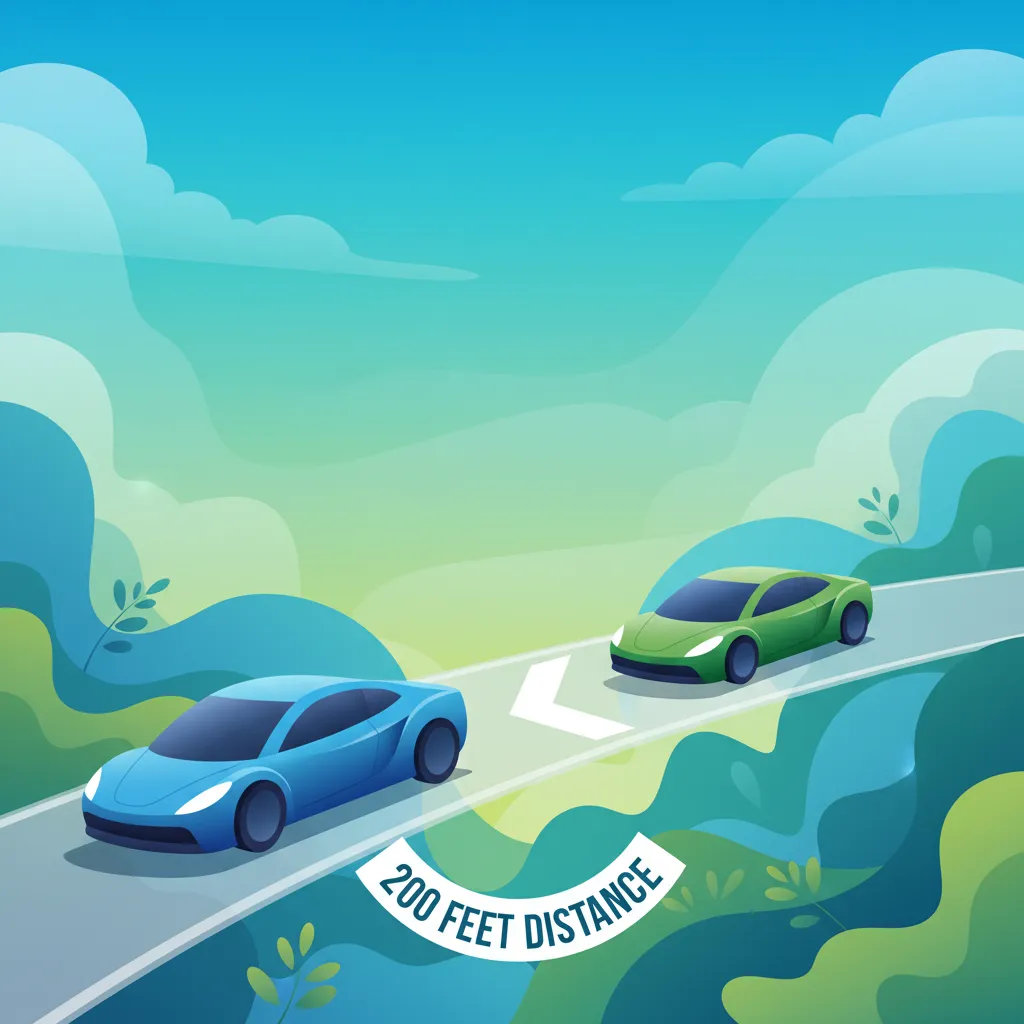
This lesson examines the calculation of safe following distances using the two-second rule and formulas that factor in vehicle speed and road conditions. The content explains how reaction time, weather conditions like ice or rain, and vehicle load affect braking zones. Students also learn specific techniques for stopping on hills and how to avoid tailgating, thereby maintaining sufficient safety margins under all Icelandic weather conditions.
This lesson addresses the challenges of driving in rain and fog, focusing on strategies to maintain visibility and vehicle control. Learners will explore the correct use of windshield wipers, defoggers, and appropriate headlight settings, including when to use fog lights. The content also covers the increased risk of hydroplaning, the importance of adjusting speed in wet conditions, and the need to extend following distances to account for longer stopping distances.
This lesson examines how strong winds and varying light conditions affect vehicle handling and safety, including techniques for maintaining stability under cross-winds and assessing gust intensity. The content also explains proper headlight usage during daylight, dusk, and nighttime, addressing glare reduction strategies and when to employ high-beam headlights. By mastering these concepts, drivers can navigate Icelandic weather and lighting challenges confidently and safely.
This lesson helps learners develop an understanding of how drivers perceive and assess risks on Icelandic roads, particularly under variable weather and lighting conditions. The content discusses mental models used to anticipate the actions of other road users and the importance of identifying subtle hazards. By analysing environmental cues and applying systematic hazard perception strategies, students learn to enhance their situational awareness and make safer driving decisions.
This lesson focuses on the regulations governing highland travel and off-road restrictions, including environmental protections that prohibit off-road driving in certain zones. The lesson details how to interpret highland road signage, understand restrictions related to wildlife crossings like reindeer and sheep, and adhere to road width management guidelines. Learners are also instructed on using emergency contact points in sparsely populated regions.
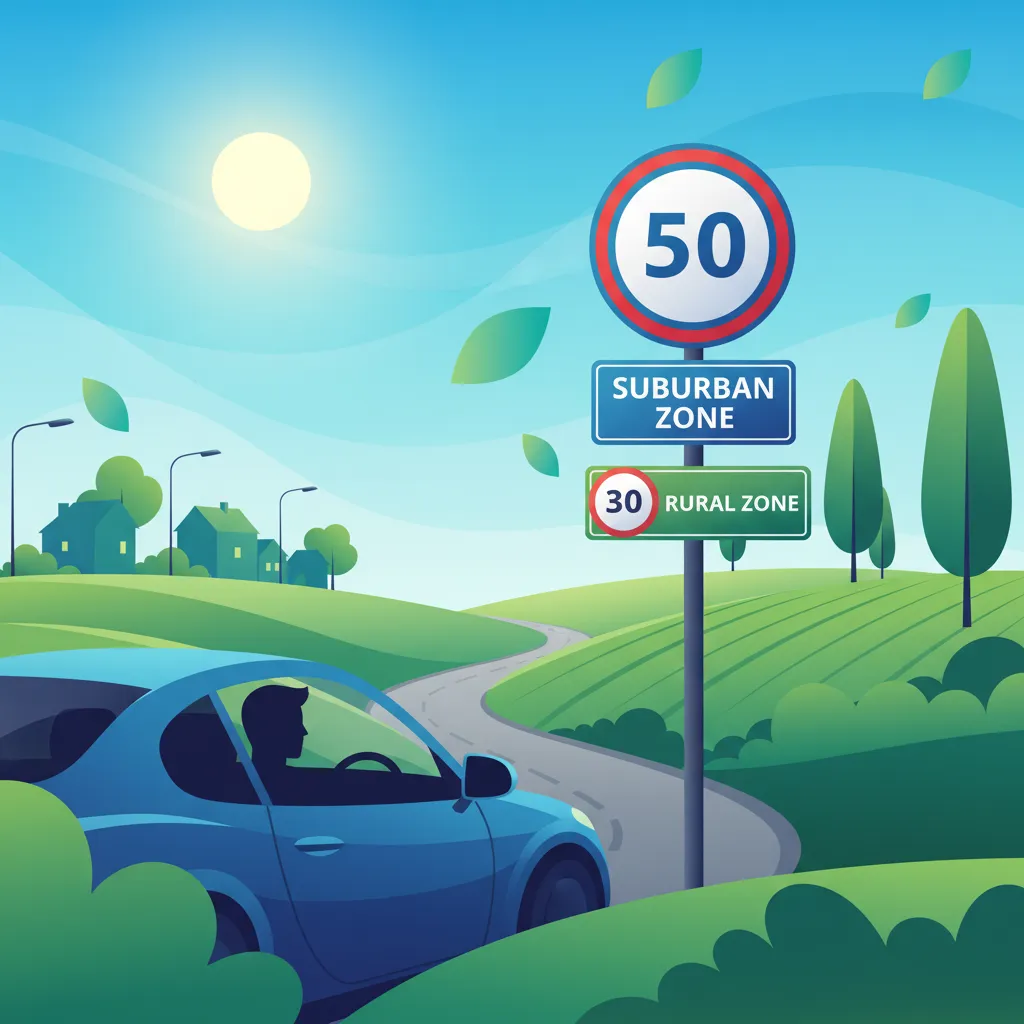
This lesson outlines the speed limits applicable to various road types in Iceland, from urban streets to rural highways and special zones like tunnels. Learners will interpret speed sign markings, understand variable speed limits that adjust for weather, and recognize when temporary speed reductions are enforced. The content also covers speed monitoring devices and the legal consequences of exceeding limits, emphasizing speed awareness in all driving contexts.
This lesson explores the proper use of lane markings to maintain correct vehicle centering and adherence to the prescribed traffic flow direction in Iceland. The content describes how to interpret solid and broken lines, maintain safe following distances within a lane, and avoid unintended lane departures. Learners also examine the legal prohibitions on using the road shoulder for general travel, ensuring compliance with lane discipline rules for overall traffic safety.
This lesson focuses on the routine maintenance tasks essential for preserving vehicle safety and compliance in Iceland, including how to check tire pressure, assess brake wear, and monitor fluid levels. The content also outlines the periodic vehicle inspection process, the requirement for emissions testing, and the steps needed to renew vehicle registration. Understanding these procedures ensures the vehicle remains roadworthy and legally compliant.
Learn essential theory for navigating Iceland's gravel roads safely. This includes adapting speed, maintaining safe following distances, understanding uphill priority, and proper etiquette for passing and lane sharing. Crucial for rural Icelandic driving.
This lesson focuses on the specific challenges of riding on gravel and uneven rural roads. It teaches techniques for maintaining stability and traction on loose surfaces, including speed management, body positioning, and gentle control inputs. Understanding how to handle these conditions is essential for safely exploring areas outside of main urban centers in Iceland.
This lesson focuses on the regulations governing highland travel and off-road restrictions, including environmental protections that prohibit off-road driving in certain zones. The lesson details how to interpret highland road signage, understand restrictions related to wildlife crossings like reindeer and sheep, and adhere to road width management guidelines. Learners are also instructed on using emergency contact points in sparsely populated regions.
This lesson examines the calculation of safe following distances using the two-second rule and formulas that factor in vehicle speed and road conditions. The content explains how reaction time, weather conditions like ice or rain, and vehicle load affect braking zones. Students also learn specific techniques for stopping on hills and how to avoid tailgating, thereby maintaining sufficient safety margins under all Icelandic weather conditions.
This lesson outlines the speed limits applicable to various road types in Iceland, from urban streets to rural highways and special zones like tunnels. Learners will interpret speed sign markings, understand variable speed limits that adjust for weather, and recognize when temporary speed reductions are enforced. The content also covers speed monitoring devices and the legal consequences of exceeding limits, emphasizing speed awareness in all driving contexts.
This lesson explores the proper use of lane markings to maintain correct vehicle centering and adherence to the prescribed traffic flow direction in Iceland. The content describes how to interpret solid and broken lines, maintain safe following distances within a lane, and avoid unintended lane departures. Learners also examine the legal prohibitions on using the road shoulder for general travel, ensuring compliance with lane discipline rules for overall traffic safety.
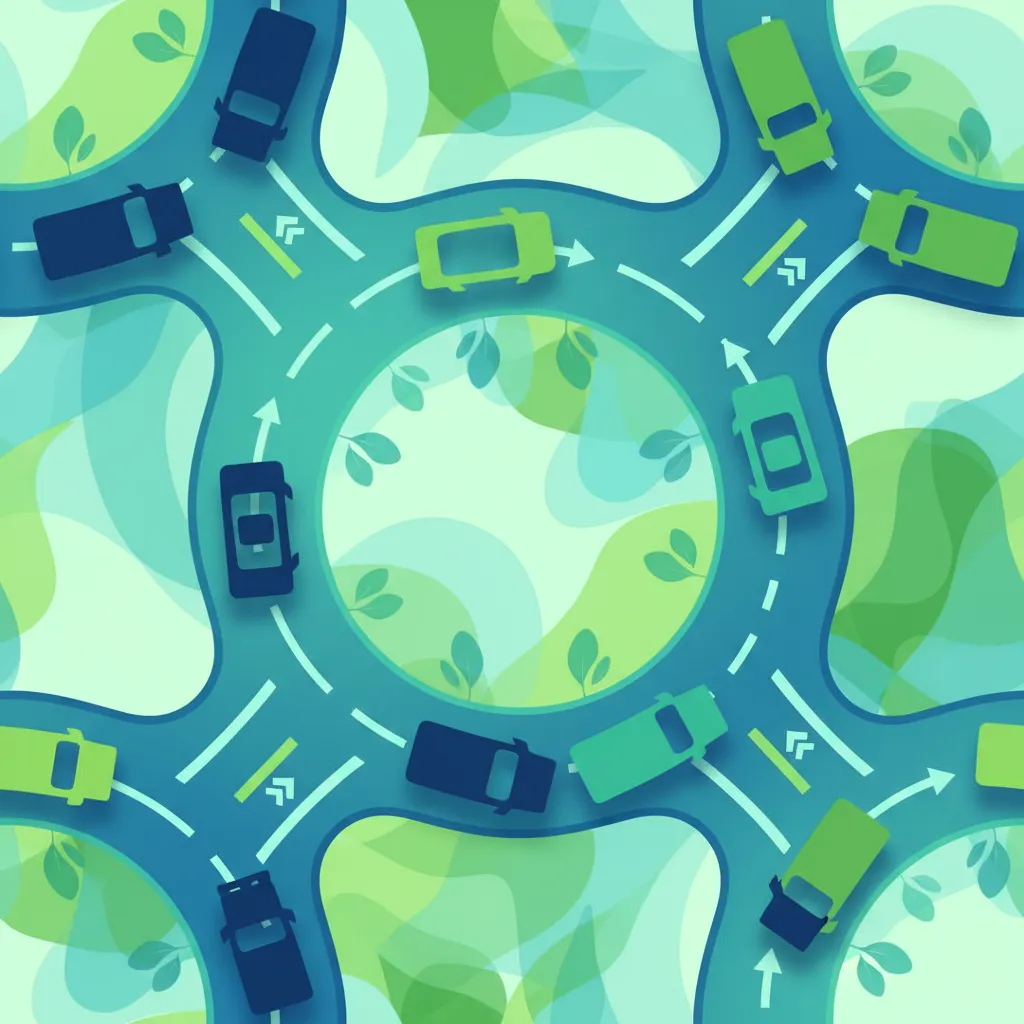
This lesson focuses on the operation of roundabouts, which are common in Icelandic towns and rural areas, and explains how drivers must yield to circulating traffic upon entry. The content covers how to interpret roundabout signage and follow lane markings to maintain correct positioning. Students also learn strategies for safe exit, handling multi-lane roundabouts, and recognizing deceptive entries that require heightened vigilance for smooth navigation.
This lesson examines the specific techniques required for safe driving on snow-covered or icy roads in Iceland, covering the mandatory use of winter tires and the operation of anti-lock braking systems. Learners will study optimal low-speed cornering, proper braking distances on ice, and how to recover from a skid safely. By mastering these techniques, drivers can maintain control in challenging winter conditions and significantly reduce the risk of accidents on slippery surfaces.
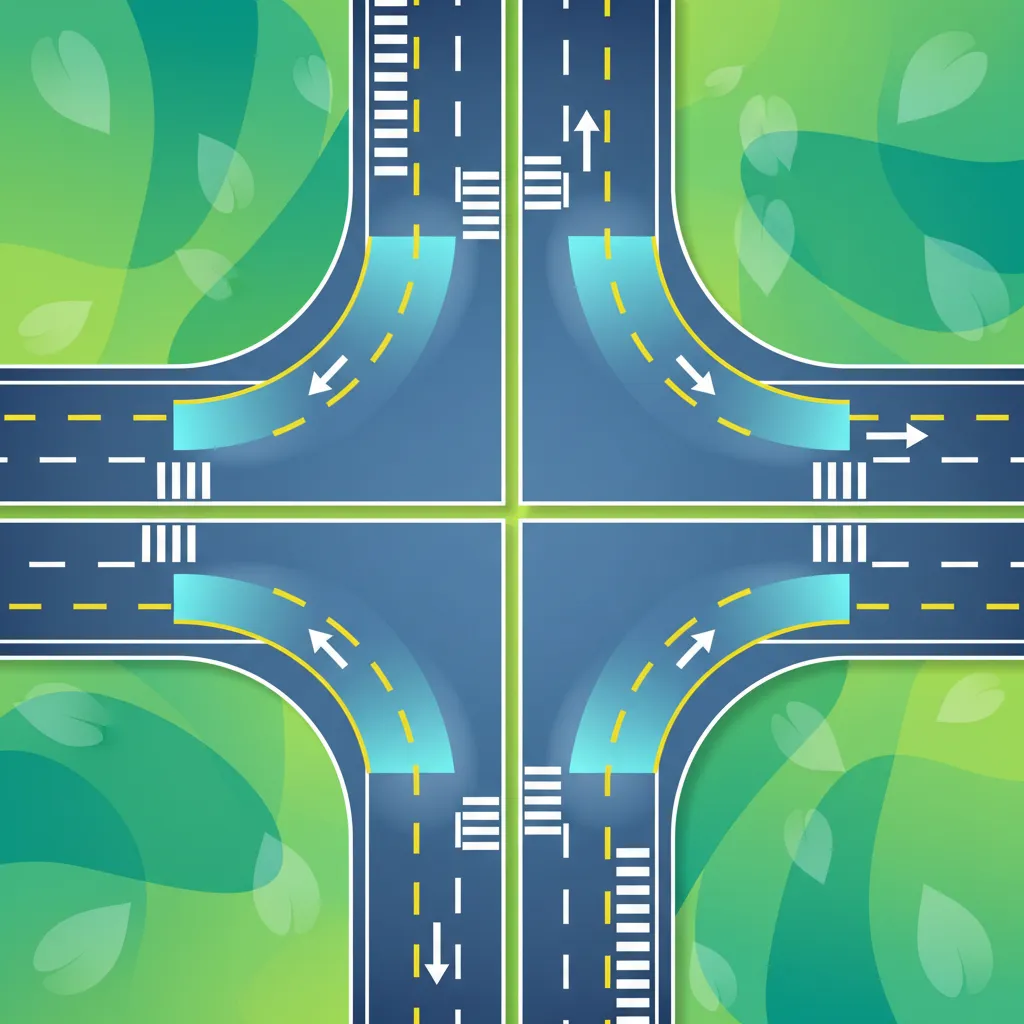
This lesson provides a comprehensive overview of the road markings found on Icelandic roads, from solid and broken lane lines to symbols indicating turning lanes and pedestrian crossings. The content details the visual meanings of each marking, such as solid lines indicating no crossing and broken lines permitting lane changes. Additionally, the lesson addresses the purpose of reflective markers and surface textures used in low-visibility or icy conditions, providing a framework for interpreting pavement cues.
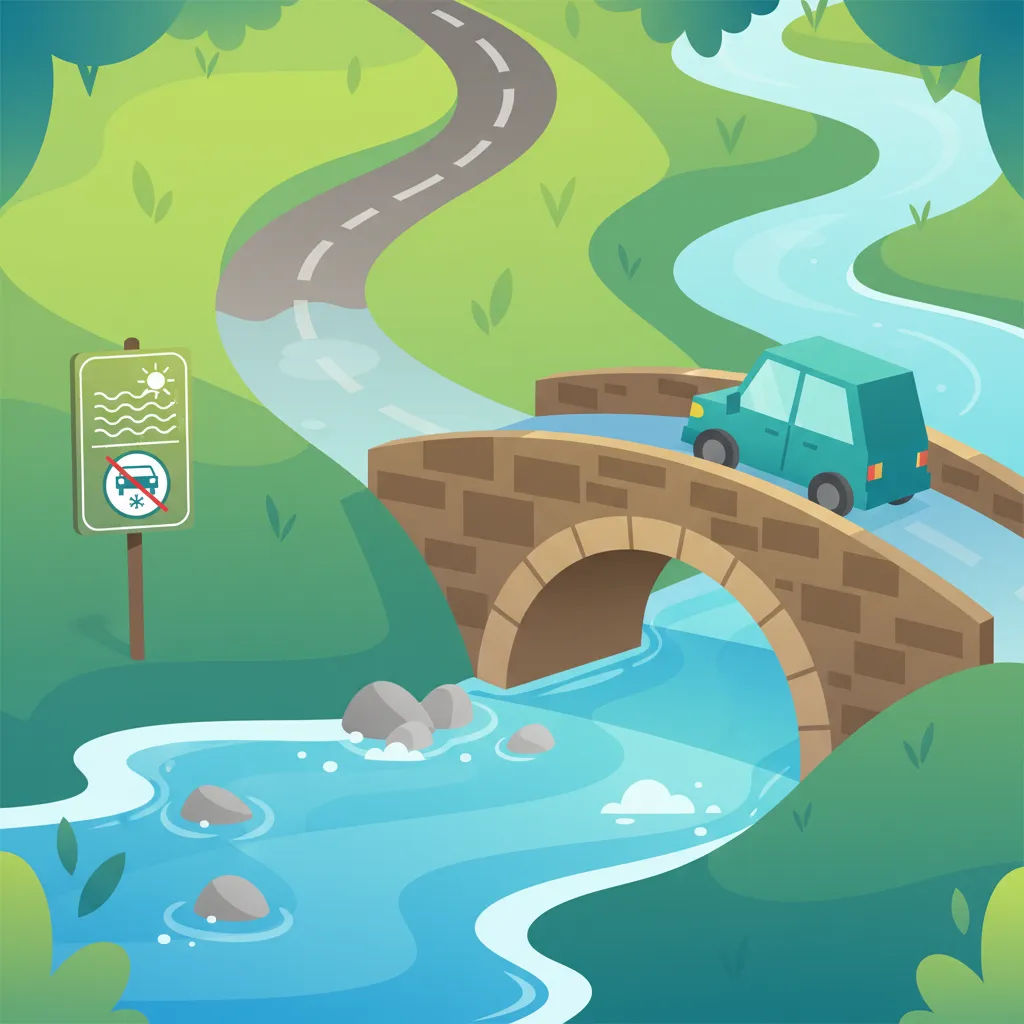
This lesson examines procedures for crossing single-lane bridges and water fords, paying particular attention to right-of-way rules and appropriate vehicle positioning. Learners will learn how to assess water depth before fording, understand seasonal restrictions that may affect access, and recognize signage indicating temporary closures. The lesson also covers the need for highland travel permits on certain routes and weight limits for bridges.
This lesson addresses the challenges of driving in rain and fog, focusing on strategies to maintain visibility and vehicle control. Learners will explore the correct use of windshield wipers, defoggers, and appropriate headlight settings, including when to use fog lights. The content also covers the increased risk of hydroplaning, the importance of adjusting speed in wet conditions, and the need to extend following distances to account for longer stopping distances.
Find clear answers to common questions learners have about Gravel Road Etiquette and Vehicle Control. Learn how the lesson is structured, which driving theory objectives it supports, and how it fits into the overall learning path of units and curriculum progression in Iceland. These explanations help you understand key concepts, lesson flow, and exam focused study goals.
Gravel roads have significantly less traction than asphalt surfaces due to the loose stones. This means your vehicle's tires can slip more easily, affecting acceleration, braking, and steering. You need to drive slower, brake earlier and more gently, and steer smoothly to maintain control.
On gravel, always brake gently and progressively. Avoid slamming on the brakes, as this can cause the wheels to lock up and the car to skid. If your car has ABS, you'll feel it engage, but smooth, controlled braking is key. Brake well in advance of where you need to stop.
Slow down significantly and move as far to the side of your lane as is safe without driving into ditches or soft shoulders. If necessary, pull over completely to let the other vehicle pass. Be aware that the other vehicle might also be kicking up stones.
Passing on a gravel road carries a higher risk of damage from thrown stones, especially from the vehicle you are passing or oncoming traffic. Ensure you have ample space, good visibility, and that the other vehicle is aware of your intention to pass. Proceed with caution and be ready to react to unexpected movements or debris.
Yes, the Icelandic theory exam includes questions on safe driving practices for various road types, including gravel roads. You'll be tested on your knowledge of appropriate speed, vehicle control, hazard perception, and safe interactions with other road users in these conditions.
Utilize our advanced practice set search to pinpoint the exact Icelandic driving theory topics you need to review. Filter by subject, difficulty, or question type to create a highly effective study plan and ensure you are fully prepared for your official driving licence test in Iceland.