
This lesson focuses on uncontrolled crossings, a key topic for the Icelandic Category AM moped license theory exam. We'll cover the right-hand rule, essential techniques for assessing hazards, and safe procedures when other road users are present, helping you gain confidence in diverse traffic scenarios.

Lesson content overview
Navigating uncontrolled crossings is a fundamental skill for all moped riders in Iceland, especially given the diverse road environments ranging from bustling residential areas to quiet rural routes. These crossings, which lack traffic lights, signs, or road markings to dictate priority, demand heightened awareness, reduced speed, and clear communication. Mastering the principles of managing these junctions ensures not only compliance with Icelandic traffic law but also significantly enhances road safety for yourself and other road users.
This lesson is designed to equip you with the knowledge and techniques required to safely and confidently manage uncontrolled crossings. It builds upon foundational concepts of priority rules and vehicle control, preparing you for complex real-world scenarios you will encounter while riding your Category AM moped.
An uncontrolled crossing, also known as an unregulated junction, is any intersection where there are no traffic signals, stop signs, yield signs, or painted road markings (like a stop line or yield line) to explicitly assign right of way. In such situations, drivers and riders must rely on general traffic rules, observational skills, and effective communication to negotiate passage safely. These types of crossings are common in residential zones, smaller urban side streets, and rural areas across Iceland.
The core challenge at uncontrolled crossings is the absence of external direction. This necessitates a proactive approach where riders must anticipate potential conflicts, assess the situation continuously, and respond appropriately based on established traffic norms. Understanding the underlying safety logic—that reducing speed increases reaction time and clear signals minimize uncertainty—is crucial for preventing collisions.
Proper handling of uncontrolled crossings is vital for safety, particularly in areas where traffic signals are absent. Incorrectly assessing priority can lead to serious accidents involving other vehicles, cyclists, and pedestrians.
This lesson connects directly to your understanding of general priority rules and lays the groundwork for advanced defensive riding techniques. It is an essential component of the Icelandic Moped (Category AM) Driving License Theory Course, ensuring you are prepared for Iceland's unique driving conditions.
At the heart of managing uncontrolled crossings in Iceland is the right-hand rule. This principle dictates that, in the absence of any other traffic controls, the vehicle approaching from the right-hand side has priority. This rule provides a clear and consistent method for determining who should yield, thereby ensuring orderly traffic flow at junctions that would otherwise be chaotic.
The right-hand rule applies to all uncontrolled junctions where the roads are considered to be of equal hierarchy. If you are approaching an uncontrolled intersection and another vehicle is simultaneously approaching from your right, you must yield to that vehicle. This means you must slow down or stop completely to allow the vehicle on your right to proceed first.
The application of the right-hand rule is legally mandated under Icelandic Road Traffic Law. Specifically, §54 of the Icelandic Road Traffic Law stipulates right-hand priority at uncontrolled junctions. Adhering to this regulation is not just a matter of safety but also a legal obligation for all road users, including moped riders.
While the right-hand rule is generally robust, there are specific exceptions:
A frequent mistake is assuming that the vehicle coming from the left has priority, which is incorrect. Another error is misinterpreting the rule at T-junctions, leading to confusion and potential conflict. Always remember to look to your right first and be prepared to yield.
Appropriate speed reduction is one of the most critical aspects of managing uncontrolled crossings safely. As you approach any junction without clear traffic controls, you must decelerate to a speed that allows you to react to unexpected situations and stop safely if necessary. This proactive reduction in speed is not merely a recommendation; it is a legal requirement under Icelandic traffic law.
Reducing your speed significantly impacts your ability to navigate crossings safely:
§55 of the Icelandic Road Traffic Law explicitly mandates reduced speed when approaching crossings that lack signalisation or other traffic controls. This provision emphasizes that riders must adjust their speed to a level that ensures they can stop within the visible distance, especially when visibility is limited by weather or obstacles.
The optimal approach speed for an uncontrolled crossing is not a fixed number but rather a dynamic assessment based on several factors:
Always assume you may need to stop completely at an uncontrolled crossing, especially when your view is obstructed. Approach every such junction with your braking hand ready.
At uncontrolled crossings, where there are no explicit signals to guide traffic, communication of intent becomes paramount. Moped riders must actively use visual and auditory signals to convey their planned maneuvers to other road users, thereby reducing ambiguity and preventing misunderstandings that could lead to accidents. Effective communication fosters a predictable and safer driving environment for everyone.
Your moped is equipped with various tools to communicate your intentions:
§57 of the Icelandic Road Traffic Law requires all road users to give audible or visual signals before making any maneuver that changes their trajectory, including entering or turning at crossings. For moped riders, this means indicating your turn well in advance, and being prepared to use additional signals if necessary.
To communicate effectively at uncontrolled crossings, consider these techniques:
Before entering any uncontrolled crossing, a situational assessment is not just good practice; it is a critical safety measure. This involves a continuous and comprehensive evaluation of all dynamic factors—traffic flow, visibility, road surface, weather conditions, and potential hazards—to ensure that your decision to proceed is based on current, real-time information rather than assumptions. This process is essential for preventing accidents and ensuring smooth traffic flow.
Your situational assessment should encompass both static and dynamic elements:
§58 of the Icelandic Road Traffic Law underscores the rider's responsibility to ensure that a crossing is clear before entering it. This legal requirement highlights that merely observing other traffic is not enough; you must be certain that your path is safe and clear before proceeding. Failure to conduct a thorough assessment can result in legal penalties and, more importantly, put yourself and others at risk.
A crucial part of situational assessment for moped riders is checking for blind spots. These are areas around your moped that are not visible in your mirrors. Before making any turn or entering a crossing, you must perform a shoulder check (a quick turn of your head) to physically look into these blind spots. This is vital to detect smaller vehicles, cyclists, or pedestrians who might be hidden from your mirror view.
Also, be vigilant for hidden hazards that might not be immediately apparent:
Yielding means giving way to another road user who has the right of way by slowing down or stopping. At uncontrolled crossings, correctly yielding and stopping is critical to prevent collisions and maintain orderly traffic flow. This action demonstrates respect for priority rules and helps ensure safety for everyone.
You must yield when:
When you are required to give way, §59 of the Icelandic Road Traffic Law mandates that you must stop completely before the crossing line (if one exists) or, in its absence, at a point where you have a clear view of intersecting traffic without encroaching on the main flow. A full stop means your wheels are completely stationary, allowing you to thoroughly assess the situation before proceeding safely.
A rolling stop, or sliding stop, occurs when a rider only slows down but does not come to a complete halt before proceeding. This is an unsafe and illegal practice for several reasons:
Always prioritize vulnerable road users, such as pedestrians and cyclists, especially at uncontrolled crossings. If a pedestrian has already entered the crossing path, or is clearly intending to do so, you must stop and allow them to cross safely, regardless of other priority rules. Similarly, be extra cautious around cyclists, as they can be less predictable and harder to see.
Understanding the specific legal framework governing uncontrolled crossings in Iceland is crucial for safe and responsible moped riding. These regulations are designed to ensure predictable behaviour and minimize risks where no automated traffic controls exist.
| Rule | Applicability | Legal Status | Rationale | Example (Correct) | Example (Incorrect) |
|---|---|---|---|---|---|
| Right-hand priority at uncontrolled intersections | All uncontrolled junctions, unless overridden by signage or road hierarchy. | Mandatory (Icelandic Road Traffic Law §54) | Ensures orderly flow where no external control exists. | Rider yields to vehicle approaching from the right. | Rider proceeds despite a vehicle on the right, causing a collision risk. |
| Reduced speed when approaching uncontrolled crossings | Any uncontrolled crossing; especially applicable in residential zones and poor visibility. | Mandatory (Icelandic Road Traffic Law §55) | Provides sufficient reaction time and stopping distance. | Rider slows to 30 km/h before entering a rural crossroad. | Rider maintains 50 km/h and cannot stop in time if a hazard appears. |
| Signal intent before crossing or changing trajectory | Mandatory before any maneuver that changes trajectory at a crossing (e.g., turning). | Mandatory (Icelandic Road Traffic Law §57) | Alerts other users, reducing uncertainty and preventing misinterpretations. | Rider flashes low beams and uses a hand signal before turning left. | Rider proceeds without any signal, surprising other road users. |
| Yield to pedestrians at uncontrolled pedestrian crossings | Wherever a pedestrian has already entered the crossing path or clearly intends to. | Mandatory (Icelandic Road Traffic Law §58) | Prioritizes vulnerable users, ensuring their safety above vehicular traffic. | Rider stops when a child steps onto a pedestrian crossing. | Rider accelerates past a child, creating a dangerous situation. |
| Stop fully before crossing line when yielding | When required to give way to another vehicle or pedestrian. | Mandatory (Icelandic Road Traffic Law §59) | Prevents encroachment into the intersection and reduces collision risk. | Rider stops completely before the white line until the crossing is clear. | Rider performs a "rolling stop," slowing but not fully halting, risking a side-impact. |
Navigating uncontrolled crossings safely requires constant vigilance and adherence to established rules. However, certain common errors can increase the risk of accidents. Being aware of these pitfalls and understanding the correct behaviour is crucial for any moped rider.
Safe navigation of uncontrolled crossings is not a one-size-fits-all skill. The principles remain constant, but their application must be dynamically adjusted based on prevailing environmental conditions and the specific context of the road. Moped riders must develop a keen sense of situational awareness to adapt their approach accordingly.
Adverse weather significantly impacts stopping distances, visibility, and control:
The amount of available light affects your ability to see and be seen:
Different road surfaces and environments present unique challenges:
Your moped's condition and the presence of other road users also influence your actions:
Understanding theory is essential, but applying it in real-world situations is paramount. These scenarios illustrate how the principles of managing uncontrolled crossings come into play for moped riders in Iceland.
The rules and guidelines for managing uncontrolled crossings are not arbitrary; they are deeply rooted in principles of physics, human psychology, and legal precedent, all aimed at enhancing road safety. Understanding the "why" behind these rules reinforces their importance for every moped rider.
Human factors play a significant role in road safety. Drivers and riders naturally tend to overestimate others' intentions or assume they have been seen. Explicit communication, through signals like headlight flashes, hand gestures, and even eye contact, dramatically reduces this ambiguity. When you clearly signal your intent, you help other road users anticipate your actions, thereby preventing misinterpretations and unexpected maneuvers that could lead to collisions.
Beyond the immediate safety risks, non-compliance with Icelandic traffic laws at uncontrolled crossings carries legal penalties. Violations, such as failing to yield, making a rolling stop, or excessive speed, are punishable by fines and may result in demerit points on your driving record. These legal sanctions reflect the societal importance placed on adhering to traffic rules to maintain public safety on Icelandic roads. Adhering to the law is a non-negotiable aspect of responsible moped riding.
Mastering uncontrolled crossings is a cornerstone of safe moped riding in Iceland. By consistently applying these principles, you contribute to a safer road environment for everyone:
By internalizing and consistently applying these concepts, you will navigate uncontrolled crossings safely and confidently, upholding your responsibilities as a moped rider in the Icelandic traffic system.
Uncontrolled crossings are intersections lacking traffic lights, signs, or road markings, where priority must be determined through general rules rather than explicit signals. The Icelandic right-hand rule dictates that you must yield to vehicles approaching from your right at all uncontrolled junctions, including T-junctions, unless overridden by emergency vehicles or signage. Speed must be substantially reduced before entering any uncontrolled crossing to ensure you can stop within your visible range—a legal requirement under Icelandic Road Traffic Law. Proper communication of intent through indicators, headlight flashes, or hand signals is essential, and a full situational assessment including blind spot checks must be completed before proceeding. When required to yield, you must stop completely; a rolling stop is both unsafe and illegal.
A short set of high-value points that capture the most important learning from this lesson.
The right-hand rule at uncontrolled crossings means yielding to any vehicle approaching from your right, regardless of road type or appearance.
You must reduce speed before entering any uncontrolled crossing to ensure you can stop within your visible range—this is legally mandated under §55.
Always signal your intentions using indicators, headlight flashes, or hand signals before entering or turning at an uncontrolled crossing, per §57.
Perform a full situational assessment (static and dynamic evaluation) before entering—scan all directions, check blind spots, and confirm the path is clear.
A rolling stop is unsafe and illegal; you must come to a complete halt before the crossing line when required to yield.
Explore all units and lessons included in this driving theory course.
The right-hand rule applies at all uncontrolled junctions, including T-junctions—apply it consistently regardless of road hierarchy.
Speed reduction dramatically increases safety: halving your speed cuts stopping distance by approximately 75% due to physics of kinetic energy.
Emergency vehicles with active sirens and lights always have priority, overriding the right-hand rule.
When yielding, stop completely behind any crossing line (or at a safe visible point) before proceeding—never perform a rolling stop.
Always prioritize pedestrians and cyclists who have already entered or clearly intend to enter the crossing path.
Assuming the left vehicle has priority or misapplying the rule at T-junctions—the right-hand rule still applies at uncontrolled T-junctions.
Continuing to roll through a crossing without stopping completely, reducing visibility and increasing collision risk.
Failing to use indicators, headlight flashes, or hand signals, leaving other road users uncertain about your intentions.
Maintaining cruising speed in poor visibility (fog, heavy rain, darkness), not accounting for reduced stopping distances.
Neglecting to check blind spots with a shoulder check before entering or turning, potentially missing cyclists or pedestrians.
Lesson content overview
A short set of high-value points that capture the most important learning from this lesson.
The right-hand rule at uncontrolled crossings means yielding to any vehicle approaching from your right, regardless of road type or appearance.
You must reduce speed before entering any uncontrolled crossing to ensure you can stop within your visible range—this is legally mandated under §55.
Always signal your intentions using indicators, headlight flashes, or hand signals before entering or turning at an uncontrolled crossing, per §57.
Perform a full situational assessment (static and dynamic evaluation) before entering—scan all directions, check blind spots, and confirm the path is clear.
A rolling stop is unsafe and illegal; you must come to a complete halt before the crossing line when required to yield.
Explore all units and lessons included in this driving theory course.
The right-hand rule applies at all uncontrolled junctions, including T-junctions—apply it consistently regardless of road hierarchy.
Speed reduction dramatically increases safety: halving your speed cuts stopping distance by approximately 75% due to physics of kinetic energy.
Emergency vehicles with active sirens and lights always have priority, overriding the right-hand rule.
When yielding, stop completely behind any crossing line (or at a safe visible point) before proceeding—never perform a rolling stop.
Always prioritize pedestrians and cyclists who have already entered or clearly intend to enter the crossing path.
Assuming the left vehicle has priority or misapplying the rule at T-junctions—the right-hand rule still applies at uncontrolled T-junctions.
Continuing to roll through a crossing without stopping completely, reducing visibility and increasing collision risk.
Failing to use indicators, headlight flashes, or hand signals, leaving other road users uncertain about your intentions.
Maintaining cruising speed in poor visibility (fog, heavy rain, darkness), not accounting for reduced stopping distances.
Neglecting to check blind spots with a shoulder check before entering or turning, potentially missing cyclists or pedestrians.
Explore search topics learners often look for when studying Managing Uncontrolled Crossings. These topics reflect common questions about road rules, driving situations, safety guidance, and lesson level theory preparation for learners in Iceland.
Browse additional driving theory lessons that cover connected traffic rules, road signs, and common driving situations related to this topic. Improve your understanding of how different rules interact across everyday traffic scenarios.
Deepen your understanding of complex priority situations at uncontrolled T-junctions and other unregulated intersections. Learn to navigate challenging scenarios and avoid common mistakes in Icelandic driving theory.
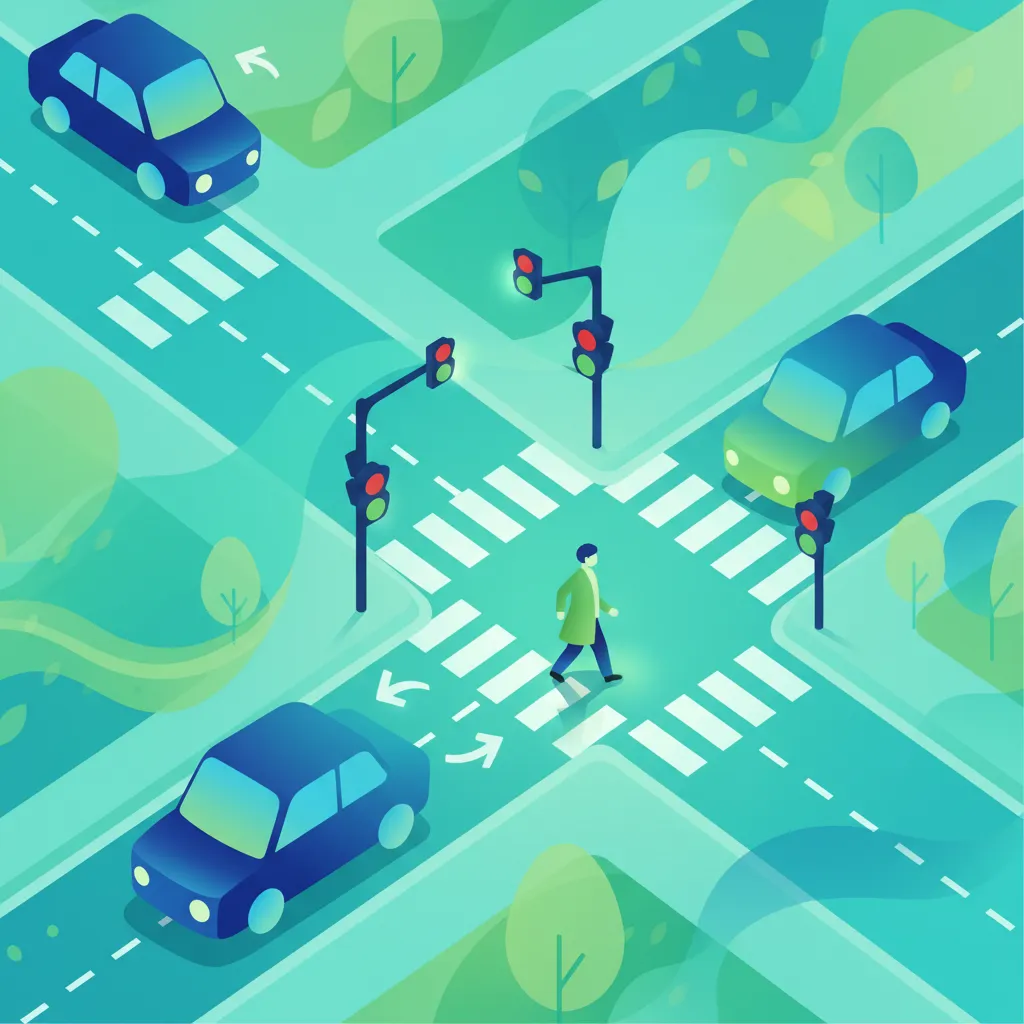
This lesson examines various intersection configurations in Iceland, including those controlled by traffic lights, four-way stops, and uncontrolled intersections without signals. Learners study how priority is determined in each scenario through signage, road markings, and the relative position of vehicles. The lesson also covers specific turning regulations and highlights the importance of assessing sight lines to ensure safe passage through complex junctions.
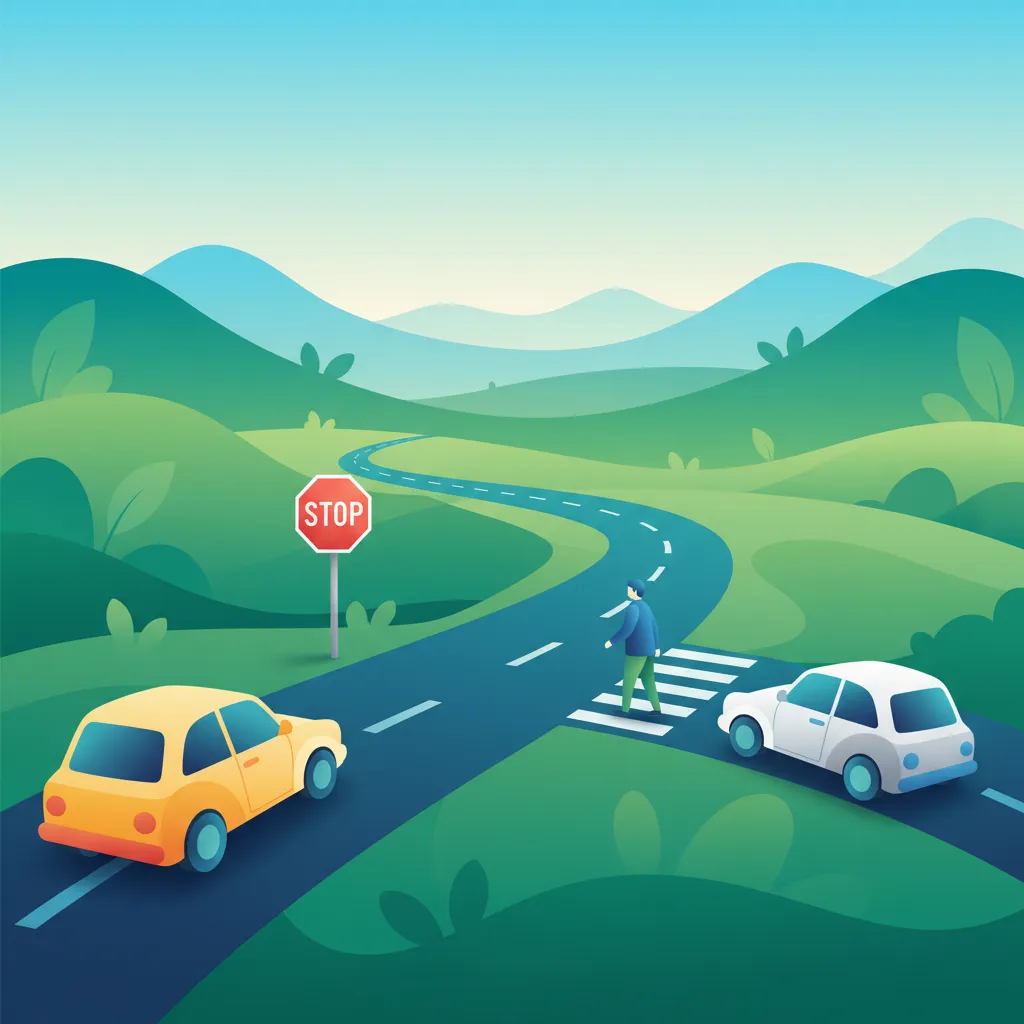
This lesson introduces the fundamental concepts of right-of-way in Iceland, explaining the priority hierarchy that dictates when a driver must yield to others. Learners study the meaning of give-way and yield signs, the distinction between main and side roads, and how stop signs and markings affect vehicle positioning. By understanding these legal obligations, students will be able to determine correct actions at any junction, reducing the risk of collisions.
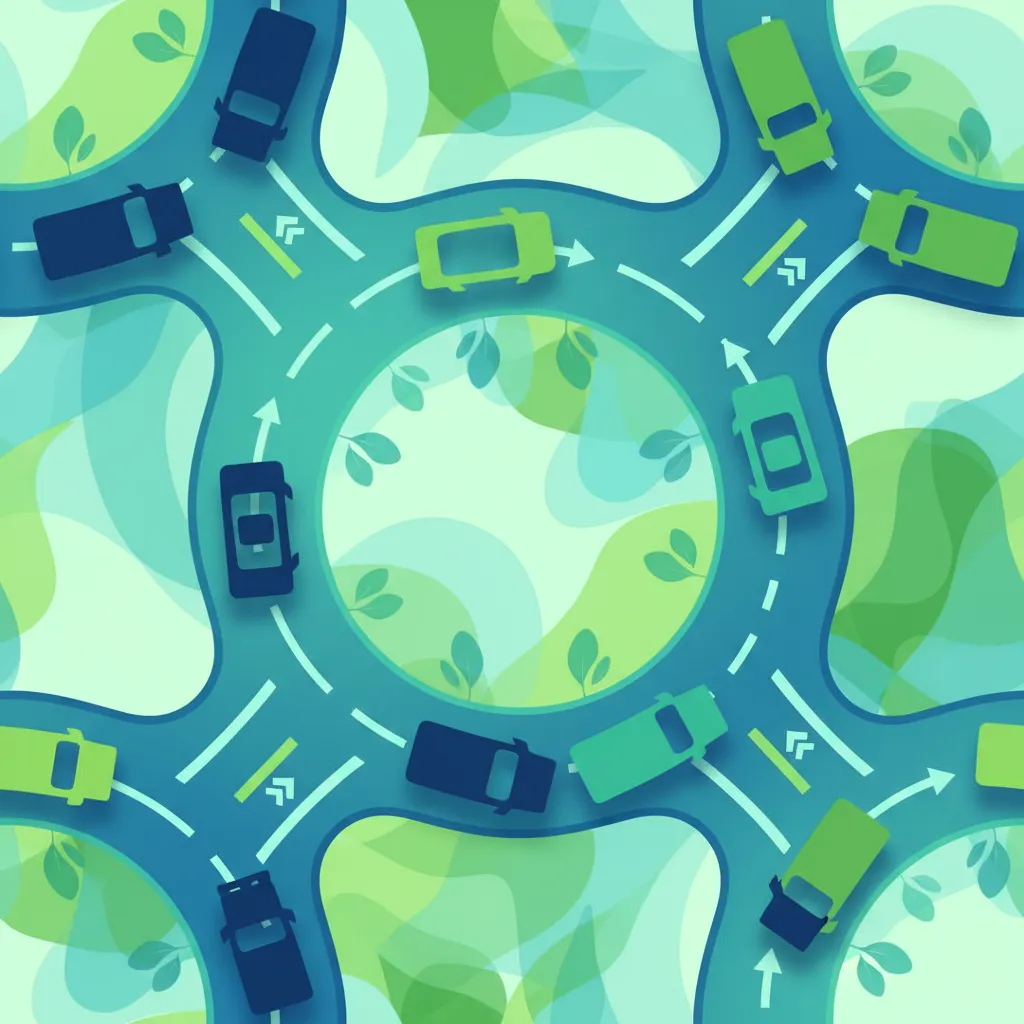
This lesson focuses on the operation of roundabouts, which are common in Icelandic towns and rural areas, and explains how drivers must yield to circulating traffic upon entry. The content covers how to interpret roundabout signage and follow lane markings to maintain correct positioning. Students also learn strategies for safe exit, handling multi-lane roundabouts, and recognizing deceptive entries that require heightened vigilance for smooth navigation.
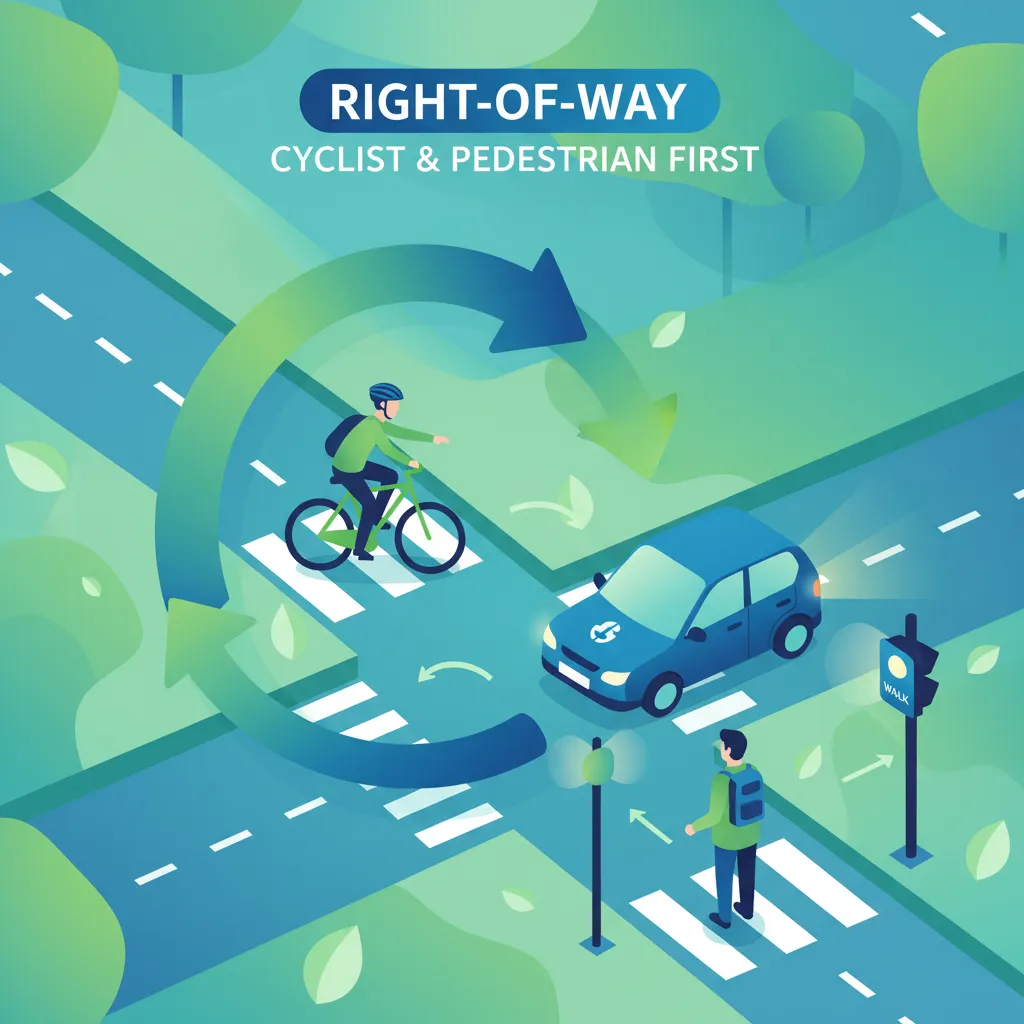
This lesson examines the legal framework defining right-of-way, distinguishing between priority and secondary roads, and detailing yielding responsibilities. It teaches riders how to assess intersections and approach safely based on Icelandic traffic law. Understanding these principles is critical for preventing collisions and ensuring smooth traffic flow at all types of junctions.
This lesson focuses on the operation of traffic lights in Iceland, describing standard three-phase cycles (red, amber, green) and variations such as flashing amber for yielding. Learners will also explore dedicated signals for pedestrians, cyclists, and turning movements, including arrow indications. The lesson explains how signal timing integrates with right-of-way rules at intersections, ensuring drivers can interpret and respond to each light state to maintain safety.
This lesson examines the broader dynamics of urban traffic flow, focusing on interactions with public transport, pedestrian islands, and traffic calming measures. Content includes the rules for navigating bus priority lanes, yielding to trams, and handling congested intersections safely. Learners also study speed restrictions in school zones and the use of pedestrian islands to manage cross-traffic, emphasizing the importance of anticipation in complex urban settings.
This lesson outlines the regulations governing pedestrian crossings, including zebra crossings, pedestrian traffic lights, and the driver’s obligations to yield. Learners will study how to identify crosswalk markings, interpret pedestrian signal phases, and understand the enhanced caution required in school zones and areas with high foot traffic. The content also emphasizes the need for drivers to anticipate vulnerable pedestrians and provide additional yielding in low-visibility conditions.

This lesson dissects the three-color traffic light system, detailing the meaning of red, amber, and green signals, including flashing lights and directional arrows. It explains how signal timing impacts moped riders and the legal requirement to obey all signals at intersections. Proper interpretation is crucial for navigating signalized junctions safely and avoiding conflicts with other traffic.
Explore practical examples and common errors encountered at uncontrolled crossings and intersections in Iceland. Understand how to apply right-hand rules and defensive techniques in varied weather and road conditions.
This lesson examines various intersection configurations in Iceland, including those controlled by traffic lights, four-way stops, and uncontrolled intersections without signals. Learners study how priority is determined in each scenario through signage, road markings, and the relative position of vehicles. The lesson also covers specific turning regulations and highlights the importance of assessing sight lines to ensure safe passage through complex junctions.
This lesson focuses on the operation of traffic lights in Iceland, describing standard three-phase cycles (red, amber, green) and variations such as flashing amber for yielding. Learners will also explore dedicated signals for pedestrians, cyclists, and turning movements, including arrow indications. The lesson explains how signal timing integrates with right-of-way rules at intersections, ensuring drivers can interpret and respond to each light state to maintain safety.
This lesson examines procedures for crossing single-lane bridges and water fords, paying particular attention to right-of-way rules and appropriate vehicle positioning. Learners will learn how to assess water depth before fording, understand seasonal restrictions that may affect access, and recognize signage indicating temporary closures. The lesson also covers the need for highland travel permits on certain routes and weight limits for bridges.
This lesson focuses on the operation of roundabouts, which are common in Icelandic towns and rural areas, and explains how drivers must yield to circulating traffic upon entry. The content covers how to interpret roundabout signage and follow lane markings to maintain correct positioning. Students also learn strategies for safe exit, handling multi-lane roundabouts, and recognizing deceptive entries that require heightened vigilance for smooth navigation.
This lesson outlines the regulations governing pedestrian crossings, including zebra crossings, pedestrian traffic lights, and the driver’s obligations to yield. Learners will study how to identify crosswalk markings, interpret pedestrian signal phases, and understand the enhanced caution required in school zones and areas with high foot traffic. The content also emphasizes the need for drivers to anticipate vulnerable pedestrians and provide additional yielding in low-visibility conditions.
This lesson focuses on the regulations governing highland travel and off-road restrictions, including environmental protections that prohibit off-road driving in certain zones. The lesson details how to interpret highland road signage, understand restrictions related to wildlife crossings like reindeer and sheep, and adhere to road width management guidelines. Learners are also instructed on using emergency contact points in sparsely populated regions.
This lesson helps learners develop an understanding of how drivers perceive and assess risks on Icelandic roads, particularly under variable weather and lighting conditions. The content discusses mental models used to anticipate the actions of other road users and the importance of identifying subtle hazards. By analysing environmental cues and applying systematic hazard perception strategies, students learn to enhance their situational awareness and make safer driving decisions.
This lesson details the essential actions to take immediately after a collision, focusing on securing the accident scene and contacting emergency services using the universal number 112. The content explains how to use hazard lights, position vehicles to avoid secondary collisions, and assess the situation for immediate dangers. Learners also review their legal duty to report accidents and the appropriate information to provide to the police to ensure the scene remains safe.
This lesson covers the conditions under which U-turns and three-point turns are permitted in Iceland, focusing on road width, visibility, and legal restrictions. The content outlines the step-by-step procedure for safely performing a three-point turn in confined spaces, including correct mirror usage and blind spot checks. Learners also explore scenarios where U-turns are prohibited, such as on narrow gravel roads or where signage explicitly bans such manoeuvres.

This lesson explores the specific challenges of driving on Icelandic gravel roads, focusing on the reduced traction and vehicle dynamics associated with loose surfaces. The content explains how to adapt speed appropriately, maintain safe following distances, and use gentle braking to avoid skidding. Learners also study proper lane sharing etiquette, including how to safely pass other vehicles and manage loose stones that may be thrown, ensuring vehicle stability.
Find clear answers to common questions learners have about Managing Uncontrolled Crossings. Learn how the lesson is structured, which driving theory objectives it supports, and how it fits into the overall learning path of units and curriculum progression in Iceland. These explanations help you understand key concepts, lesson flow, and exam focused study goals.
In Iceland, at uncontrolled crossings where no specific signs or signals dictate otherwise, the vehicle approaching from the right generally has priority. This means you must yield to mopeds or other vehicles to your right that are entering the intersection at the same time as you. Always reduce speed and be ready to stop.
Approach an uncontrolled crossing with caution by reducing your speed significantly. Scan left and right for approaching traffic, cyclists, and pedestrians, especially those on your right. Be prepared to stop if necessary. Ensure you can see clearly past any obstructions before proceeding.
If pedestrians are present or appear to be intending to cross at an uncontrolled crossing, you must be prepared to stop and give way to them. Their safety is paramount. Always maintain a safe distance and ensure they have fully cleared the roadway before you proceed.
If multiple vehicles arrive at an uncontrolled crossing simultaneously, the right-hand rule applies. If you are unsure or if the situation is complex, it's safest to make eye contact with other drivers if possible, and only proceed when you are certain it is safe and your path is clear. Never assume others will yield.
While the 'uncontrolled crossing' implies a lack of explicit traffic control, Iceland uses standard priority signs like 'Give Way' (Bíð skyldu) and 'Stop' (Stöðvaskylda) to manage intersections. If none of these signs are present, the general right-hand rule applies. Always be vigilant for any signage.
Utilize our advanced practice set search to pinpoint the exact Icelandic driving theory topics you need to review. Filter by subject, difficulty, or question type to create a highly effective study plan and ensure you are fully prepared for your official driving licence test in Iceland.