
Welcome to the 'Alcohol, Drugs, Fatigue, Penalties & Legal Responsibility' unit. This crucial lesson dives into Iceland's strict blood alcohol concentration (BAC) limits and the procedures police use to enforce them. Understanding these rules is vital for both passing your theory exam and ensuring your safety and the safety of others on Icelandic roads.
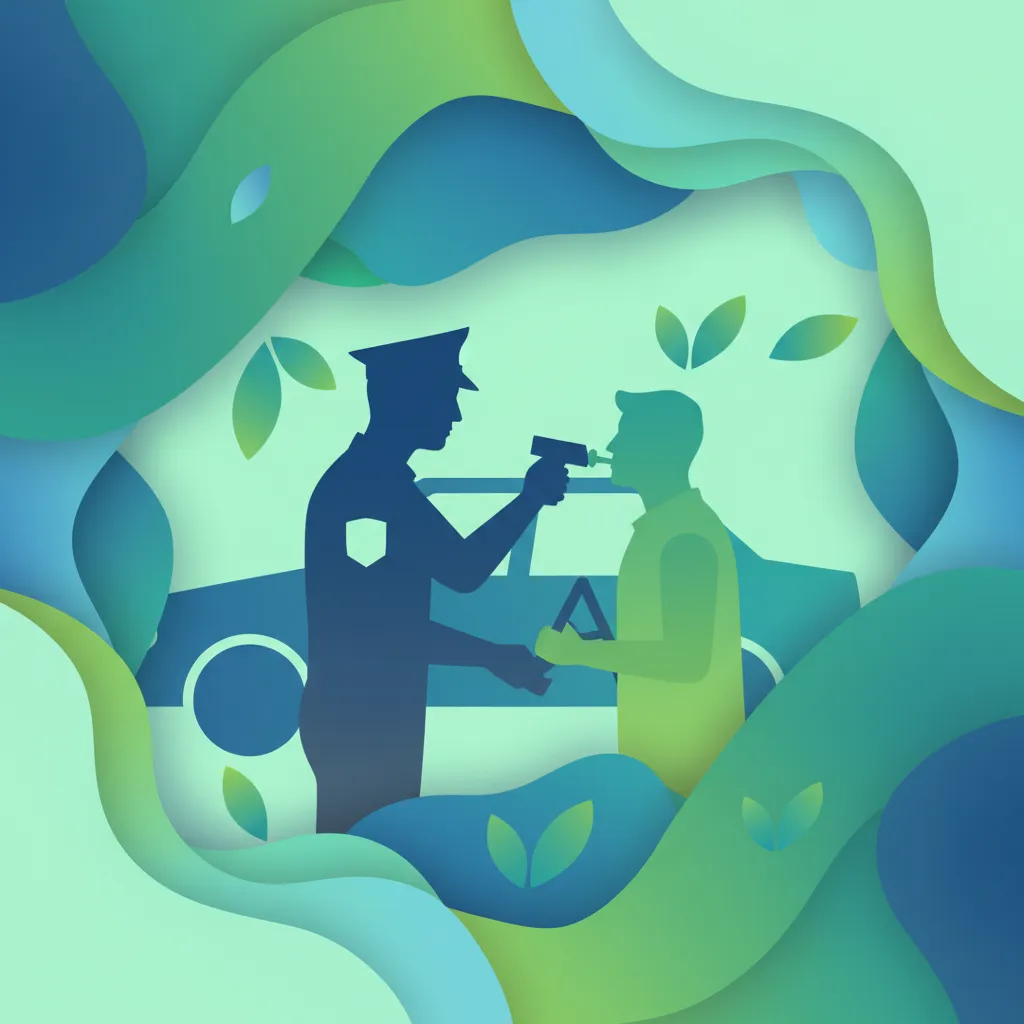
Lesson content overview
Driving is a privilege that comes with significant responsibilities, particularly regarding safety and adherence to the law. In Iceland, as in many countries, operating a vehicle under the influence of alcohol is a serious offense with severe consequences. This lesson, part of your Official Icelandic Driving License B Theory Course, will provide a comprehensive understanding of the legal Blood Alcohol Concentration (BAC) limits, the physiological effects of alcohol on your driving ability, the procedures police use for testing, and the penalties for non-compliance.
Understanding these regulations is not just about avoiding punishment; it's about safeguarding lives, including your own, by making informed and responsible decisions before getting behind the wheel. The principles and rules discussed here are crucial for all drivers in Iceland, ensuring public safety and maintaining the integrity of the road network.
Blood Alcohol Concentration (BAC), often expressed as a percentage (%) or per mille (‰), is a measure of the amount of alcohol present in your bloodstream. Specifically, a BAC of 0.05% (or 0.5‰) means there are 0.05 grams of alcohol for every 100 milliliters of blood. This precise measurement serves as an objective indicator of intoxication, allowing legal systems to set clear, quantifiable thresholds for impaired driving.
BAC levels are not fixed per drink; they are influenced by numerous factors unique to each individual. These include your body weight, metabolism rate, the amount and type of alcohol consumed, the duration of consumption, and whether you've eaten recently. Due to these variables, it's virtually impossible to accurately guess your BAC without a test, making any "safe" self-assessment unreliable.
The proportion of alcohol in a person’s blood, expressed as a percentage (%) or per mille (‰), used to measure the level of intoxication.
Alcohol is a central nervous system depressant. Even at low concentrations, it significantly impairs the cognitive and motor skills essential for safe driving. These impairments manifest progressively as BAC increases:
Drivers under the influence often overestimate their capabilities, believing they can still drive safely despite clear impairment. This is a dangerous misconception that contributes to the high incidence of alcohol-related accidents. The legal limits are set precisely because scientific research and accident statistics consistently link specific BAC levels to a significantly increased risk of crashes.
Icelandic law establishes strict Blood Alcohol Concentration (BAC) limits to ensure road safety. These limits differ based on a driver's experience level, reflecting a commitment to protecting all road users, especially those with less driving experience.
It is crucial for all drivers in Iceland to know and adhere to these legal limits. Ignorance of the law is not an excuse and will not prevent severe penalties.
For fully licensed drivers operating vehicles on public roads in Iceland, the maximum permissible Blood Alcohol Concentration is 0.05% (0.5‰). This threshold is based on extensive research demonstrating that driving performance is significantly impaired beyond this level, leading to a higher risk of accidents. Even a seemingly small amount of alcohol can push a driver over this limit, especially depending on body weight, metabolism, and consumption rate.
Iceland applies a stricter "zero-tolerance" policy for learner drivers and those who have held their full license for less than two years. For this group, the legal BAC limit is significantly lower at 0.02% (0.2‰). This stricter limit recognizes that inexperienced drivers have less skill and fewer ingrained habits to compensate for the impairments caused by alcohol. They are statistically more vulnerable to accidents, and even minimal alcohol can disproportionately increase their risk. This policy aims to foster responsible driving habits from the very beginning of a driver's journey.
A legal framework that applies stricter, lower Blood Alcohol Concentration (BAC) limits to novice and learner drivers, acknowledging their reduced ability to compensate for alcohol impairment.
Many drivers attempt to estimate their BAC based on the number of drinks consumed. However, this is highly unreliable. Factors such as:
Given these variables, the only way to know your precise BAC is through a scientific test. The safest approach is to never drink any alcohol if you plan to drive.
To enforce the legal alcohol limits and ensure road safety, Icelandic police are authorized to conduct tests for alcohol impairment. These procedures are designed to be objective, reliable, and legally sound. Drivers have a legal obligation to cooperate with these requests.
The most common initial method for testing alcohol levels at a roadside stop is the breathalyzer, known in Iceland as an Alkomet. This portable electronic device estimates a driver's BAC by analyzing the alcohol content in their exhaled breath.
Initial Stop and Suspicion: Police may stop a vehicle based on suspicious driving behavior (e.g., erratic movements, speeding, weaving), involvement in an accident, or as part of a routine sobriety checkpoint.
Request for Breath Sample: If an officer suspects alcohol impairment (e.g., smell of alcohol, slurred speech, impaired coordination, red eyes), they will ask the driver to blow into the breathalyzer.
Pre-screening vs. Evidential Devices:
Calibration and Accuracy: For the results of an evidential breathalyzer to be admissible in court, the device must be properly calibrated according to national standards and checked regularly. This ensures the accuracy and reliability of the reading.
Result and Next Steps: If the breathalyzer reading indicates a BAC at or above the legal limit, the driver will be detained, and further legal procedures will commence, including potential arrest and a more definitive blood test.
While breath tests are convenient for roadside screening, blood sample testing provides the most accurate and definitive measure of a person's Blood Alcohol Concentration.
When is it Used? Blood tests are typically requested in several situations:
Collection by Medical Professional: A blood sample must be drawn by a qualified medical professional (e.g., a doctor or nurse) to ensure proper procedure and hygiene.
Timing Requirements: For the results to be legally admissible, the blood sample must generally be taken within a specific timeframe after the driver's arrest or the suspected time of the offense. In Iceland, this is typically within 24 hours. The exact timing is critical because alcohol content in the blood diminishes over time as the body metabolizes it.
Laboratory Analysis: The collected blood sample is then sent to a specialized laboratory for analysis, where the exact alcohol concentration is determined. These lab results are highly accurate and hold significant weight as evidence in court.
Driving under the influence of alcohol in Iceland carries severe legal and personal consequences. The Icelandic Road Traffic Regulations (RvT) outline a progressive penalty structure designed to deter drunk driving and punish offenders effectively.
The penalties for driving with a BAC above the legal limit escalate with the degree of intoxication and whether it is a repeat offense. These typically include:
In Iceland, refusal to submit to a breathalyzer or blood test when lawfully requested by police is a separate criminal offense, distinct from the drunk driving charge itself. This refusal carries its own set of immediate and severe penalties, designed to ensure law enforcement's ability to maintain public safety.
The rationale behind these strict penalties for refusal is clear: to prevent drivers from evading justice and to protect other road users. By refusing a test, you are obstructing the legal process and are treated as if you were impaired.
The only truly safe and legal approach when it comes to alcohol and driving is to avoid consuming any alcohol if you plan to drive. This simple rule eliminates all doubt and risk.
Consider these responsible choices:
Remember that alcohol can impair your driving ability long before you "feel" drunk. Your judgment is compromised, and your reaction time slows, increasing the risk of an accident for yourself and others.
Understanding Iceland's blood alcohol limits and testing procedures is fundamental to safe and legal driving. The 0.05% BAC limit for fully licensed drivers and the 0.02% zero-tolerance policy for novice drivers are designed to protect everyone on the road. Cooperation with police during testing is mandatory, and refusal carries severe, immediate penalties.
The consequences of driving under the influence – including hefty fines, licence suspension, potential imprisonment, and a criminal record – are significant and life-altering. Beyond the legal ramifications, the greatest risk is the potential to cause injury or death. By consistently making the responsible choice to drive sober, you contribute to a safer environment for yourself and all road users in Iceland.
This lesson covers Iceland's strict blood alcohol laws, establishing a 0.05% BAC limit for fully licensed drivers and a 0.02% zero-tolerance limit for learner and novice drivers. It explains how police enforce these limits through roadside breathalyzer (Alkomet) testing and blood sample procedures, emphasizing that evidential devices must be calibrated and blood tests conducted within 24 hours for legal validity. The consequences for exceeding limits or refusing testing include substantial fines, licence suspension, potential imprisonment, and a criminal record. Understanding these rules is essential for both passing the theory test and making life-saving decisions on Icelandic roads.
A short set of high-value points that capture the most important learning from this lesson.
Iceland's legal BAC limit for fully licensed drivers is 0.05% (0.5‰), while learner and novice drivers (with licence less than 2 years) face a stricter zero-tolerance limit of 0.02% (0.2‰)
Alcohol impairment progresses from subtle coordination issues at low BAC levels to severe motor dysfunction and fatal accident risk at high levels
Roadside breathalyzer (Alkomet) testing involves pre-screening devices and evidential analyzers that must be calibrated to national standards for court admissibility
Blood sample testing provides the most accurate BAC measurement and is used when breath testing is refused, contested, or unavailable
The only reliable way to know your BAC is through a scientific test; self-estimation based on drink count is highly unreliable due to individual factors
Explore all units and lessons included in this driving theory course.
BAC is measured as percentage (%) or per mille (‰) - 0.5‰ equals 0.05% and represents the standard legal limit
Novice drivers in Iceland have a zero-tolerance policy with a 0.02% (0.2‰) maximum - any alcohol above this is an offense
Evidential breath analyzers must be properly calibrated and certified to be accepted as primary evidence in court proceedings
Blood samples must be taken within 24 hours of arrest or suspected offense for results to be legally admissible
Refusing a breathalyzer or blood test is a separate criminal offense in Iceland, treated as equivalent to being impaired
Assuming drink count alone can determine if you're under the limit - individual factors like metabolism, weight, and food intake make this unreliable
Believing coffee, cold showers, or waiting a short time will significantly lower BAC - alcohol metabolizes at only about 0.01-0.02% per hour
Novice drivers not realizing they face stricter limits than fully licensed drivers and are already over the limit at BAC levels legal for experienced drivers
Thinking you can refuse a test without consequences if you believe you're under the limit - refusal itself is a criminal offense with automatic penalties
Assuming 'feeling sober' the morning after drinking means your BAC is safe - alcohol can remain in your system for many hours
Lesson content overview
A short set of high-value points that capture the most important learning from this lesson.
Iceland's legal BAC limit for fully licensed drivers is 0.05% (0.5‰), while learner and novice drivers (with licence less than 2 years) face a stricter zero-tolerance limit of 0.02% (0.2‰)
Alcohol impairment progresses from subtle coordination issues at low BAC levels to severe motor dysfunction and fatal accident risk at high levels
Roadside breathalyzer (Alkomet) testing involves pre-screening devices and evidential analyzers that must be calibrated to national standards for court admissibility
Blood sample testing provides the most accurate BAC measurement and is used when breath testing is refused, contested, or unavailable
The only reliable way to know your BAC is through a scientific test; self-estimation based on drink count is highly unreliable due to individual factors
Explore all units and lessons included in this driving theory course.
BAC is measured as percentage (%) or per mille (‰) - 0.5‰ equals 0.05% and represents the standard legal limit
Novice drivers in Iceland have a zero-tolerance policy with a 0.02% (0.2‰) maximum - any alcohol above this is an offense
Evidential breath analyzers must be properly calibrated and certified to be accepted as primary evidence in court proceedings
Blood samples must be taken within 24 hours of arrest or suspected offense for results to be legally admissible
Refusing a breathalyzer or blood test is a separate criminal offense in Iceland, treated as equivalent to being impaired
Assuming drink count alone can determine if you're under the limit - individual factors like metabolism, weight, and food intake make this unreliable
Believing coffee, cold showers, or waiting a short time will significantly lower BAC - alcohol metabolizes at only about 0.01-0.02% per hour
Novice drivers not realizing they face stricter limits than fully licensed drivers and are already over the limit at BAC levels legal for experienced drivers
Thinking you can refuse a test without consequences if you believe you're under the limit - refusal itself is a criminal offense with automatic penalties
Assuming 'feeling sober' the morning after drinking means your BAC is safe - alcohol can remain in your system for many hours
Explore search topics learners often look for when studying Blood Alcohol Limits and Testing Procedures. These topics reflect common questions about road rules, driving situations, safety guidance, and lesson level theory preparation for learners in Iceland.
Browse additional driving theory lessons that cover connected traffic rules, road signs, and common driving situations related to this topic. Improve your understanding of how different rules interact across everyday traffic scenarios.
Understand Iceland's legal blood alcohol concentration (BAC) limits for drivers, including zero-tolerance for novices. Learn about testing procedures, penalties for exceeding limits, and the severe legal implications of refusal to test for your driving theory knowledge.
This lesson explores the regulations surrounding drug use and its impact on driver capability, examining prohibited substances, testing methods, and specific detection thresholds. Learners also study how prescription medications may affect driving and the legal penalties for drug-impaired driving, including licence revocation. The content emphasizes the importance of medical certification when using legally prescribed drugs that may impair performance.
This lesson outlines the speed limits applicable to various road types in Iceland, from urban streets to rural highways and special zones like tunnels. Learners will interpret speed sign markings, understand variable speed limits that adjust for weather, and recognize when temporary speed reductions are enforced. The content also covers speed monitoring devices and the legal consequences of exceeding limits, emphasizing speed awareness in all driving contexts.
This lesson addresses the dangers of fatigue and drowsiness while driving, focusing on how these factors impair judgment and reaction times. Learners will understand the physiological basis of fatigue, recommended rest periods, and the legal responsibilities to avoid drowsy driving. The lesson also highlights observable signs of drowsiness, strategies for driver self-assessment, and the legal consequences of causing an accident due to fatigue.
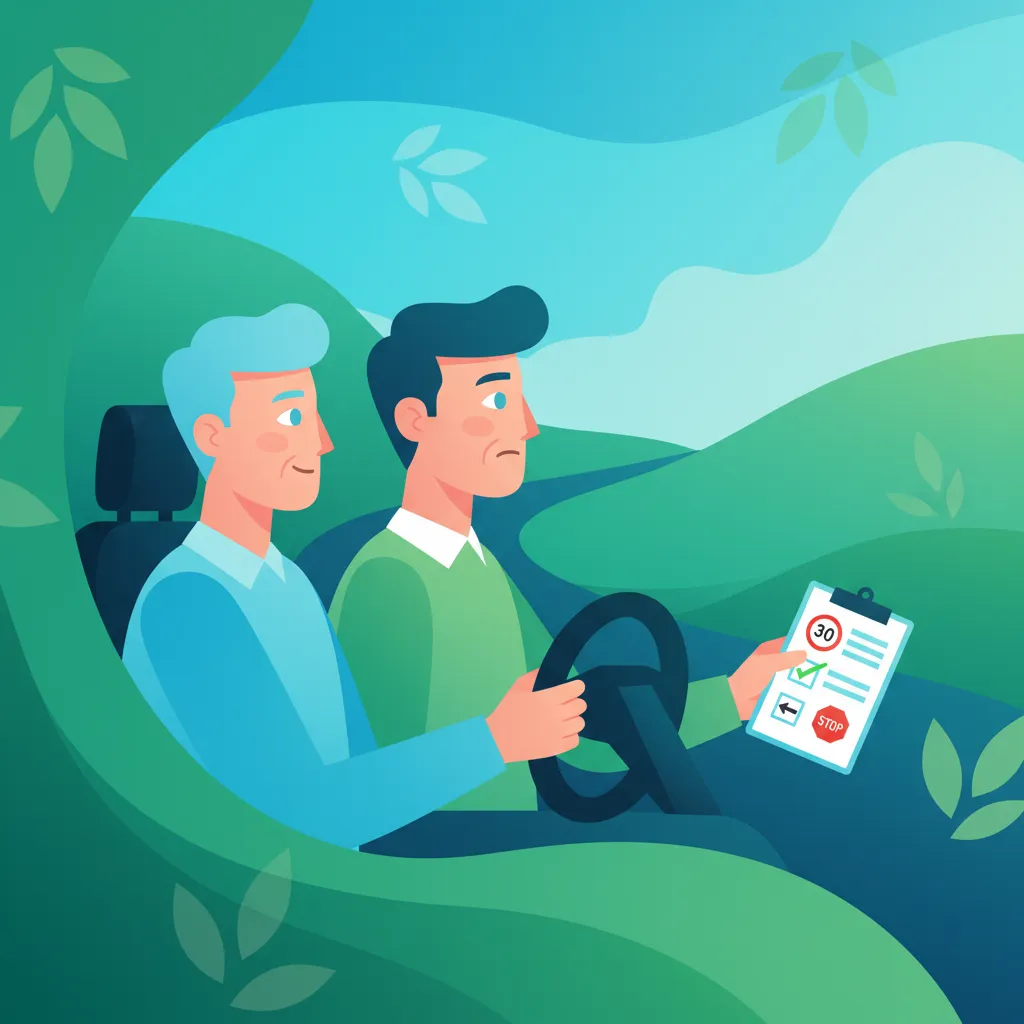
This lesson outlines the specific duties and limitations placed on learner drivers in Iceland, from the mandatory display of L-plates to the requirement for a qualified supervisor. Learners will study night-driving prohibitions, passenger rules for newly licensed drivers, and the legal limits on alcohol consumption during the learning phase. The content also covers the necessity of maintaining a training log and ensuring appropriate insurance coverage for the vehicle.
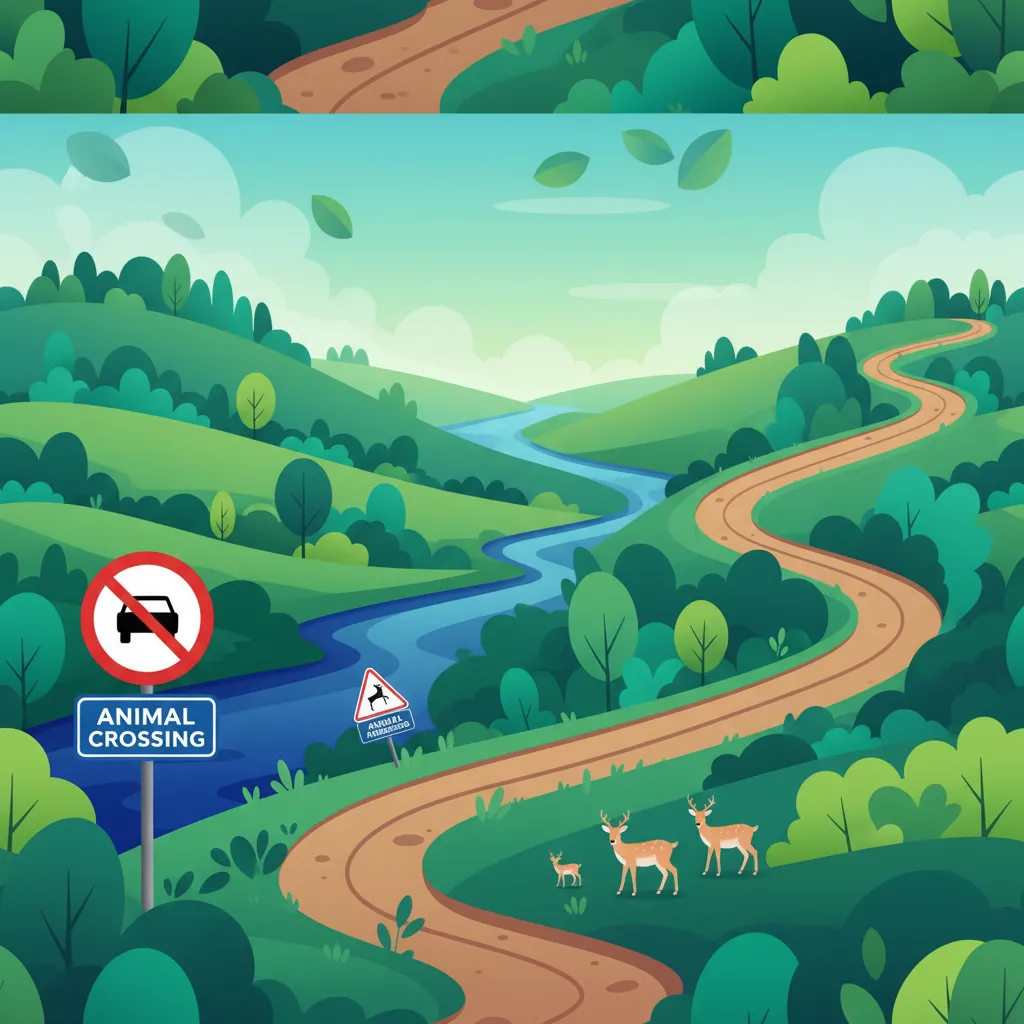
This lesson focuses on the regulations governing highland travel and off-road restrictions, including environmental protections that prohibit off-road driving in certain zones. The lesson details how to interpret highland road signage, understand restrictions related to wildlife crossings like reindeer and sheep, and adhere to road width management guidelines. Learners are also instructed on using emergency contact points in sparsely populated regions.
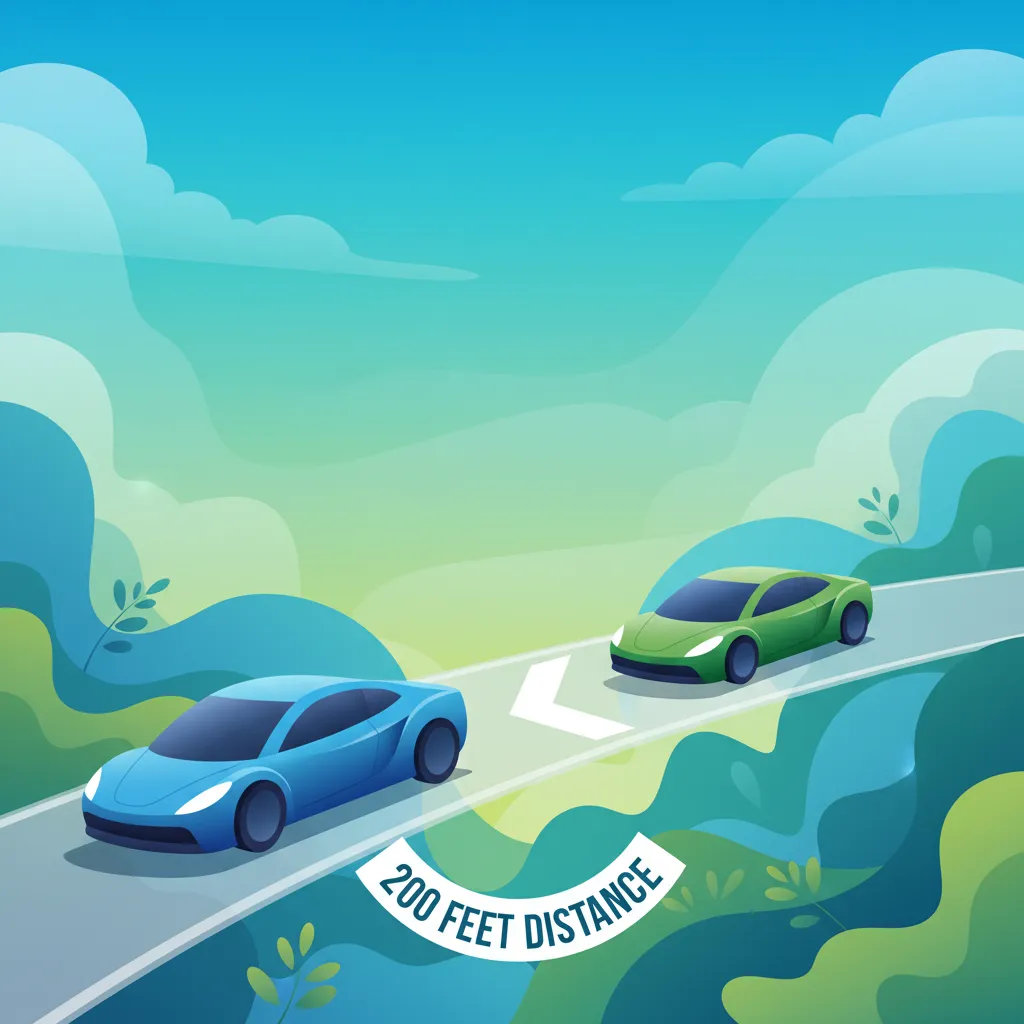
This lesson examines the calculation of safe following distances using the two-second rule and formulas that factor in vehicle speed and road conditions. The content explains how reaction time, weather conditions like ice or rain, and vehicle load affect braking zones. Students also learn specific techniques for stopping on hills and how to avoid tailgating, thereby maintaining sufficient safety margins under all Icelandic weather conditions.
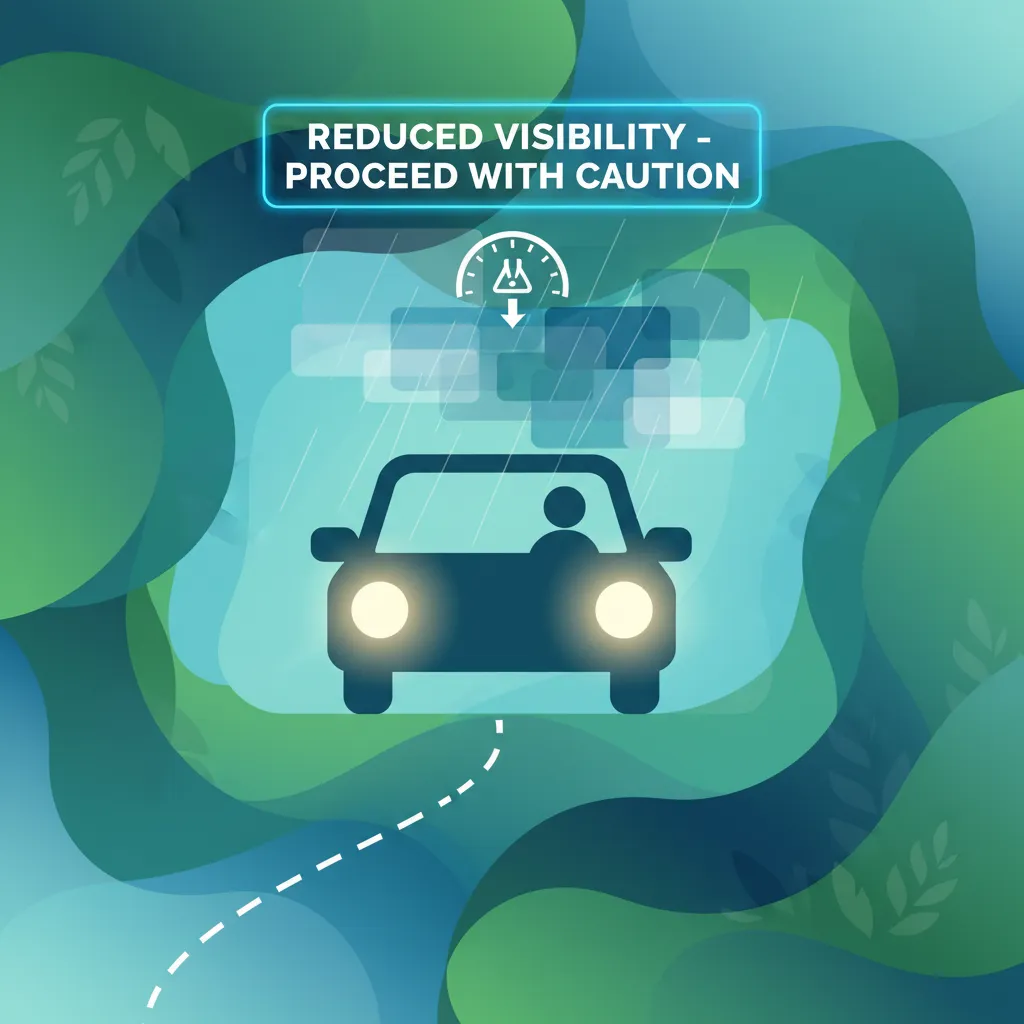
This lesson addresses the challenges of driving in rain and fog, focusing on strategies to maintain visibility and vehicle control. Learners will explore the correct use of windshield wipers, defoggers, and appropriate headlight settings, including when to use fog lights. The content also covers the increased risk of hydroplaning, the importance of adjusting speed in wet conditions, and the need to extend following distances to account for longer stopping distances.
This lesson explores the health criteria mandated by Icelandic law for operating a vehicle, focusing on visual and auditory acuity, as well as overall physical capability. Students will study required medical certifications and understand acceptable vision levels and hearing standards necessary for safe driving. The lesson also outlines how chronic illnesses, medication side-effects, and mental health conditions can influence driver fitness and legal compliance.
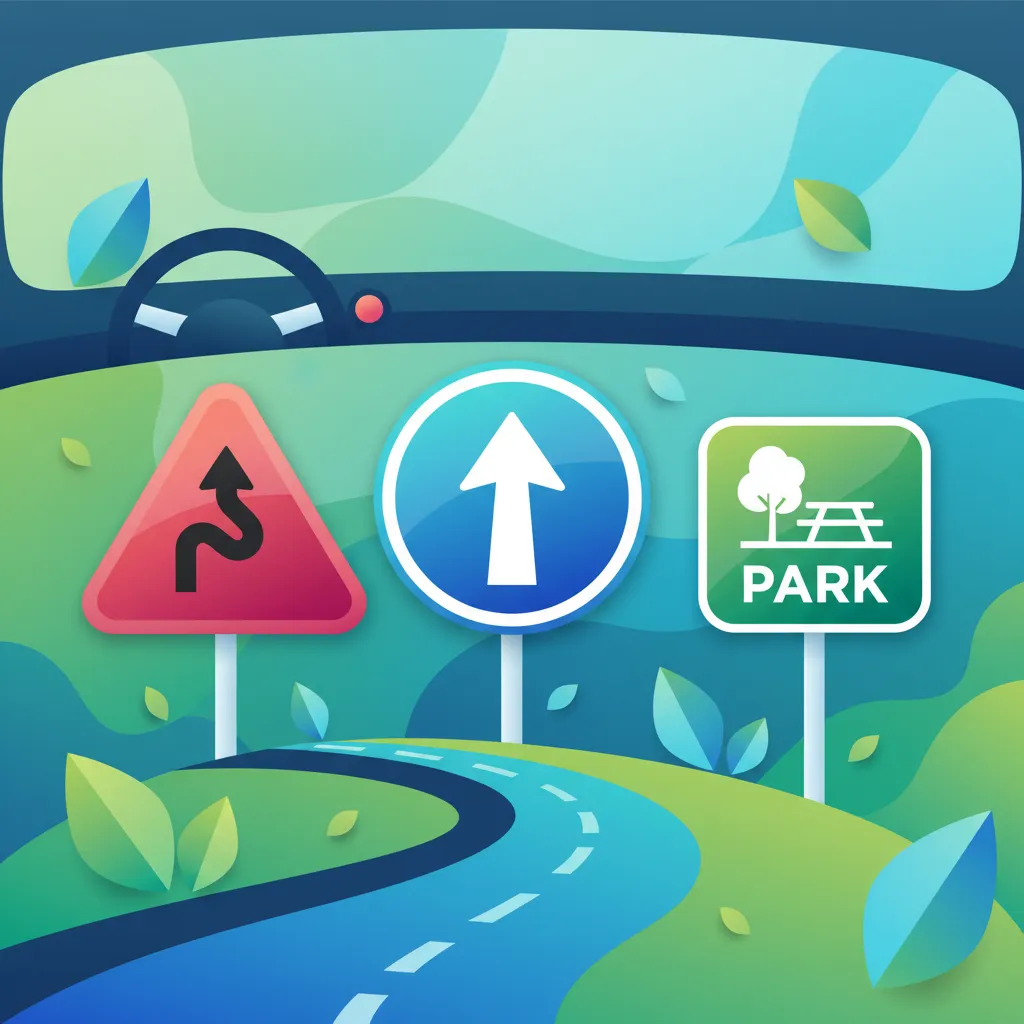
This lesson categorizes Icelandic road signs into regulatory signs that dictate mandatory actions, warning signs that alert drivers to hazards, and informational signs that provide guidance. It explains the distinctive shapes and colour schemes for each category, such as circles for prohibitions and triangles for warnings. By mastering these conventions, students will be able to interpret sign intent instantly and adapt their driving behaviour accordingly to comply with legal obligations.
This lesson explores the insurance landscape required for operating a vehicle in Iceland, emphasizing compulsory liability insurance and options for comprehensive coverage. The content explains the distinctions between third-party liability and full coverage policies, the documentation needed for proof of insurance, and the procedural steps for filing an accident claim. Learners also study the legal responsibilities associated with insurance renewal and risk assessment factors.
Find clear answers to common questions learners have about Blood Alcohol Limits and Testing Procedures. Learn how the lesson is structured, which driving theory objectives it supports, and how it fits into the overall learning path of units and curriculum progression in Iceland. These explanations help you understand key concepts, lesson flow, and exam focused study goals.
In Iceland, the legal blood alcohol concentration (BAC) limit for drivers is 0.5 grams per litre of blood (or 0.25 milligrams per litre of breath). For novice drivers with less than two years of experience, the limit is even stricter, effectively zero tolerance.
Police officers can request a breathalyzer test if they suspect a driver is under the influence of alcohol. The driver will be asked to blow into a device that measures their BAC. If the initial test indicates a positive result or the driver refuses, a further evidential breath test or a blood sample may be taken.
Police observe various signs such as erratic driving, swerving, speeding or slow driving, difficulty responding to instructions, slurred speech, the smell of alcohol, red or bloodshot eyes, and poor coordination.
Penalties for exceeding the BAC limit are severe and can include significant fines, mandatory licence suspension for a period, and in serious cases, imprisonment. The exact penalty depends on the BAC level and any prior offences.
Refusing to take a breathalyzer or drug test when lawfully requested by the police is a serious offence in Iceland. It carries penalties similar to or even more severe than those for a high BAC reading, typically resulting in licence suspension and substantial fines.
Yes, Iceland has a stricter policy for drivers with less than two years of driving experience. For these novice drivers, the legal limit is effectively zero tolerance, meaning any detectable amount of alcohol in their system while driving is illegal.
Utilize our advanced practice set search to pinpoint the exact Icelandic driving theory topics you need to review. Filter by subject, difficulty, or question type to create a highly effective study plan and ensure you are fully prepared for your official driving licence test in Iceland.