
Driving safely in Iceland requires adapting to challenging weather conditions. This lesson in Unit 8 focuses on rain, fog, and reduced visibility, building on your understanding of basic road rules. You'll learn essential strategies to maintain clear vision and control your vehicle, crucial for both passing your Category B theory exam and navigating Icelandic roads safely throughout the year.
Lesson content overview
Driving in conditions of reduced visibility, such as heavy rain or dense fog, presents unique challenges that demand heightened awareness and specific driving strategies. In Iceland, where weather can change rapidly and dramatically, mastering these techniques is essential for safety and for passing your Category B driving theory exam. This chapter will guide you through understanding the hazards, utilizing your vehicle's safety features, adapting your driving behavior, and adhering to Icelandic traffic laws to maintain control and prevent accidents when visibility is compromised.
Reduced visibility directly impacts a driver's ability to perceive the road ahead, identify potential hazards, and react in a timely manner. Whether it's the scattering of light by raindrops or the obscuring effect of fog droplets, any condition that limits how far you can see significantly increases the risk of a collision. This impairment lengthens the time it takes to process information and make decisions, while also reducing the effective range of your headlights. Understanding these fundamental challenges is the first step towards managing them effectively.
The main theme throughout this lesson is managing the critical interaction between environmental visibility reduction and vehicle control. When visibility drops, your perception-reaction loop slows down, and the road-tire interaction can change dramatically (e.g., hydroplaning). Icelandic law mandates specific adjustments to speed, lighting, and following distance to compensate for these heightened risks, ensuring you can stop safely within the distance you can see.
Maintaining a clear view of the road is paramount in adverse weather. Your vehicle is equipped with several systems designed to ensure your windshield and windows remain free of obstructions. Proper and timely use of these controls is critical for safe driving in rain and fog.
Windshield wipers are mechanical devices that use moving blades to clear rain, snow, sleet, or road spray from your windshield. Most modern vehicles offer variable speed settings (intermittent, low, high) to match the intensity of precipitation. Many also have rear window wipers for enhanced visibility through the back window. Some advanced systems even feature automatic rain-sensing wipers that adjust their speed based on sensor input, although a driver should still be prepared to override these if necessary.
The practical meaning of these systems is the continuous removal of water, which is vital for maintaining your direct view of the road. Effective wipers also improve the effectiveness of your headlamps by preventing light from scattering off water droplets on the glass. Under Icelandic Road Traffic Regulation §12, drivers must keep their wipers operational, and it is illegal to drive with functional wipers disabled under rainy conditions if visibility is impaired. Regular inspection and replacement of worn wiper blades are crucial for optimal performance.
In a heavy downpour, selecting the high-speed wiper setting and activating windshield washer fluid can help prevent your windshield from fogging up due to sudden temperature changes, in addition to clearing external water.
Defoggers and climate control systems are designed to remove moisture from the interior glass surfaces and regulate cabin temperature. This prevents condensation from building up and obscuring the driver's view, a common issue when outside temperatures are low and humidity is high. These systems include various modes, such as ventilation (using outside air), recirculation (using cabin air), and often a heated front or rear glass option.
It is critical to prevent condensation from building up, especially during cold, rainy, or foggy weather. Icelandic law, specifically §16, states that failure to maintain clear visibility may be deemed "driving without due care." To effectively clear interior fog, you usually need to direct warm air towards the windshield, often using the dedicated defrost setting on your climate control. Simply blowing air without temperature control may not be sufficient.
Turn on the defrost/defogger setting for your windshield.
Select warm air and direct the airflow towards the windshield.
If your vehicle has a heated windshield or mirrors, activate them.
Consider turning on the air conditioning, even with warm air, as it helps to dry the air inside the cabin more quickly.
Proper use of your vehicle's lighting system is fundamental for seeing and being seen in reduced visibility. Different light settings are designed for specific conditions and must be used according to legal requirements to ensure optimal illumination without causing glare to other road users.
Low beam headlights provide a standard range of illumination that is designed not to cause glare to oncoming traffic. In Iceland, low beam headlights are mandatory from sunset to sunrise and during any period of reduced visibility, regardless of whether it's day or night. This ensures that your vehicle is visible to others and that you can adequately see the road directly ahead.
High beam headlights offer a much longer range of illumination and are intended for use on unlit roads when there is no risk of dazzling other drivers. However, using high beams in fog, heavy rain, or snow is counterproductive and dangerous. The light from high beams reflects off the tiny water droplets or snow particles in the air, creating a wall of glare that significantly reduces your own visibility. High beams are prohibited when following another vehicle or when approaching an oncoming vehicle within 150 metres.
Fog lights are specialized auxiliary lamps designed for use in truly low-visibility conditions. They are mounted low on the vehicle and emit a wide, shallow beam that helps illuminate the road surface directly ahead, cutting under the fog or heavy rain layer rather than reflecting off it. This reduces glare and provides better illumination of the immediate road.
In Iceland, fog lights may only be used when visibility is reduced to less than 100 metres due to weather conditions like fog, heavy rain, or snow. Furthermore, when using fog lights, your speed should be below 80 km/h. It is illegal to use fog lights in clear conditions or when visibility is not severely impaired, as they can cause unnecessary glare for other drivers. Always ensure your low beams are also active when using fog lights.
Never use high beams in fog. The light reflects off the fog particles, creating a bright glare that significantly reduces your visibility, making the situation more dangerous.
The most critical adjustments you can make in rain and fog relate to your speed and the distance you maintain from other vehicles. These adjustments are directly tied to the fundamental principle that your stopping distance must always be less than or equal to your visible distance.
Adjusting your travel speed according to road surface wetness, water depth, and reduced tire traction is paramount. The posted speed limit indicates the maximum safe speed under ideal conditions. In adverse weather, the "safe speed" will be much lower. The driver must maintain a speed that allows for safe stopping within the visible distance, as stipulated by Icelandic Road Safety Act §15. This means if you can only see 50 metres ahead, you must be able to stop your vehicle completely within that 50-metre distance. This principle requires significant speed reduction, especially during acceleration, cornering, or emergency braking, to reduce the likelihood of losing control.
Reduced visibility, combined with wet road surfaces, increases both your reaction time and your vehicle's braking distance. Therefore, the longitudinal gap between your vehicle and the one ahead must be significantly increased. While a typical safe following distance in clear conditions is about 2 to 2.5 seconds, this should be extended to 3 to 4 seconds, or even more (5 seconds), when visibility is reduced. Icelandic Traffic Regulation §22 explicitly requires drivers to keep a distance that enables safe stopping within the visible range. This larger safety margin is crucial on curves, bends, or any situation where reduced friction lengthens braking distances.
For example, if you are driving in fog with visibility of only 50 metres, you need to ensure you maintain a following distance that allows you to stop safely. At 50 km/h, your stopping distance (reaction + braking) is already considerable, making a 4-5 second gap essential.
Hydroplaning is a dangerous phenomenon that occurs when a thin film of water builds up between your tires and the road surface, causing your tires to ride on top of the water instead of maintaining direct contact with the asphalt. This results in a complete loss of steering, braking, and acceleration control.
Hydroplaning can happen suddenly, often in areas with standing water or during heavy rainfall. Factors influencing hydroplaning include vehicle speed, tire tread depth and pressure, and the depth of water on the road. The faster you drive into standing water, the higher the risk. Tires with worn tread patterns cannot effectively displace water, significantly increasing the likelihood of hydroplaning.
To prevent hydroplaning:
It is a common misunderstanding that Anti-lock Braking Systems (ABS) can prevent hydroplaning. ABS only assists during braking after traction has been lost, by preventing wheel lock-up. It cannot restore traction itself. Drivers are legally required to reduce speed to avoid conditions that could cause hydroplaning, particularly on wet or newly resurfaced roads.
Adhering to Icelandic traffic regulations is not merely a legal obligation but a fundamental aspect of safe driving. Specific rules govern lighting, speed, and following distance in adverse weather conditions.
| Regulation Area | Rule Statement | Applicability | Legal Status | Rationale |
|---|---|---|---|---|
| Headlamp Use | Low beams must be used from sunset to sunrise and during reduced visibility. Fog lights may be used when visibility is less than 100 metres and speed is below 80 km/h. | All road conditions, night, fog, rain. | Mandatory | Ensures the driver can see and be seen without causing glare. |
| Wiper Operation | Functional windshield wipers must be used when precipitation impairs visibility. | Any rain, snow, sleet. | Mandatory | Prevents obstruction of the driver’s view. |
| Speed Adjustment | The driver must travel at a speed that allows safe stopping within the visible distance. This means never exceeding the speed at which you can come to a complete stop within the area you can clearly see ahead. | All adverse weather conditions. | Mandatory | Aligns speed with perception-reaction capabilities and stopping distances. |
| Following Distance | Adequate distance must be kept from the vehicle ahead to stop safely within the visible range. This typically means increasing your following time to 3-5 seconds or more. | Reduced visibility, wet roads. | Mandatory | Prevents rear-end collisions when braking distance increases. |
| Fog Light Use | Fog lights are permitted only when visibility is reduced to less than 100 metres due to fog, heavy rain, or snow, and speed is below 80 km/h. They must be switched off when visibility improves or when approaching other road users where they might cause dazzle. | Fog, heavy rain, snow, below 100m visibility | Mandatory | Provides surface illumination without distracting other drivers. |
| Hydroplaning Prevention | Drivers must reduce speed and avoid sudden steering or braking when the road is wet or has standing water. Maintaining proper tire pressure and adequate tread depth is also crucial. | Wet surfaces, standing water. | Recommended | Reduces the risk of loss of control and potential accidents. |
Common violations often include using high beams in fog, driving at posted speed limits on wet roads, neglecting interior defogging, following too closely, and improper use of fog lights (e.g., in clear weather). All these actions increase risk and can lead to legal penalties.
The necessary adjustments for driving in reduced visibility are not static; they vary depending on the specific weather conditions, the type of road, and your vehicle's state.
In conditions of reduced visibility, pedestrians and cyclists are considerably harder to see. Exercise extreme caution, maintain a safe distance, and be prepared to brake earlier. While fog lights help you see, they can also momentarily dazzle vulnerable road users, so switch them off when approaching them closely.
This lesson covers essential strategies for driving safely in rain and fog, focusing on Icelandic regulations and practices. Key topics include proper use of wipers and defoggers, correct headlight settings (low beams mandatory in reduced visibility, high beams prohibited in fog), and the specific legal requirements for fog lights (visibility below 100m, speed below 80 km/h). Learners must understand that speed and following distance must be adjusted so that stopping distance never exceeds visible distance, and that typical 2-3 second gaps should extend to 3-5 seconds. Hydroplaning risks require speed reduction, good tire tread, and smooth driving inputs; ABS cannot prevent hydroplaning itself.
A short set of high-value points that capture the most important learning from this lesson.
Your stopping distance must always be less than or equal to your visible distance, requiring significant speed reduction in rain and fog.
Fog lights are only permitted when visibility drops below 100 metres and your speed is below 80 km/h; they must not be used in clear conditions or at higher speeds.
Never use high beams in fog as the light reflects off fog particles to create blinding glare that worsens your visibility.
In reduced visibility, extend your following distance to at least 3-5 seconds to account for longer reaction and braking distances.
Hydroplaning occurs when water lifts your tires off the road surface, causing complete loss of steering and braking control.
Explore all units and lessons included in this driving theory course.
Fog lights may only be used when visibility is below 100m and speed is below 80 km/h; otherwise they are illegal and cause dangerous glare.
Low beam headlights are mandatory from sunset to sunrise and during any period of reduced visibility, regardless of time of day.
Functional windshield wipers must be used when precipitation impairs visibility; driving with disabled wipers is illegal under rainy conditions.
ABS does not prevent hydroplaning; it only assists during braking after traction has already been lost.
In dense fog, increase following distance to 4-5 seconds and reduce speed by 30% or more below the posted limit.
Using high beams in fog, which reflects light off fog particles to create glare and significantly reduces your own visibility.
Driving at the posted speed limit during wet or foggy conditions instead of adjusting speed to match visible distance.
Following too closely behind other vehicles, failing to maintain the required increased gap for safe stopping.
Using fog lights when visibility is adequate or conditions are clear, causing unnecessary glare to other drivers.
Believing that ABS prevents hydroplaning; ABS only prevents wheel lock-up during braking, it cannot restore lost traction.
Lesson content overview
A short set of high-value points that capture the most important learning from this lesson.
Your stopping distance must always be less than or equal to your visible distance, requiring significant speed reduction in rain and fog.
Fog lights are only permitted when visibility drops below 100 metres and your speed is below 80 km/h; they must not be used in clear conditions or at higher speeds.
Never use high beams in fog as the light reflects off fog particles to create blinding glare that worsens your visibility.
In reduced visibility, extend your following distance to at least 3-5 seconds to account for longer reaction and braking distances.
Hydroplaning occurs when water lifts your tires off the road surface, causing complete loss of steering and braking control.
Explore all units and lessons included in this driving theory course.
Fog lights may only be used when visibility is below 100m and speed is below 80 km/h; otherwise they are illegal and cause dangerous glare.
Low beam headlights are mandatory from sunset to sunrise and during any period of reduced visibility, regardless of time of day.
Functional windshield wipers must be used when precipitation impairs visibility; driving with disabled wipers is illegal under rainy conditions.
ABS does not prevent hydroplaning; it only assists during braking after traction has already been lost.
In dense fog, increase following distance to 4-5 seconds and reduce speed by 30% or more below the posted limit.
Using high beams in fog, which reflects light off fog particles to create glare and significantly reduces your own visibility.
Driving at the posted speed limit during wet or foggy conditions instead of adjusting speed to match visible distance.
Following too closely behind other vehicles, failing to maintain the required increased gap for safe stopping.
Using fog lights when visibility is adequate or conditions are clear, causing unnecessary glare to other drivers.
Believing that ABS prevents hydroplaning; ABS only prevents wheel lock-up during braking, it cannot restore lost traction.
Explore search topics learners often look for when studying Rain, Fog, and Reduced Visibility Strategies. These topics reflect common questions about road rules, driving situations, safety guidance, and lesson level theory preparation for learners in Iceland.
Browse additional driving theory lessons that cover connected traffic rules, road signs, and common driving situations related to this topic. Improve your understanding of how different rules interact across everyday traffic scenarios.
Learn essential Icelandic driving theory for navigating rain and fog. Understand how to use vehicle controls like wipers and defoggers, proper headlight usage, and adjust speed and following distance for safety.
This lesson examines how strong winds and varying light conditions affect vehicle handling and safety, including techniques for maintaining stability under cross-winds and assessing gust intensity. The content also explains proper headlight usage during daylight, dusk, and nighttime, addressing glare reduction strategies and when to employ high-beam headlights. By mastering these concepts, drivers can navigate Icelandic weather and lighting challenges confidently and safely.
This lesson examines the specific techniques required for safe driving on snow-covered or icy roads in Iceland, covering the mandatory use of winter tires and the operation of anti-lock braking systems. Learners will study optimal low-speed cornering, proper braking distances on ice, and how to recover from a skid safely. By mastering these techniques, drivers can maintain control in challenging winter conditions and significantly reduce the risk of accidents on slippery surfaces.
This lesson details how various weather conditions impact moped stability, traction, and visibility. It provides practical strategies for handling crosswinds, avoiding hydroplaning in rain, and maintaining grip on icy or snowy surfaces. Riders will learn to assess weather-related risks and adapt their speed and control inputs to navigate challenging conditions safely.
This lesson helps learners develop an understanding of how drivers perceive and assess risks on Icelandic roads, particularly under variable weather and lighting conditions. The content discusses mental models used to anticipate the actions of other road users and the importance of identifying subtle hazards. By analysing environmental cues and applying systematic hazard perception strategies, students learn to enhance their situational awareness and make safer driving decisions.
This lesson examines the calculation of safe following distances using the two-second rule and formulas that factor in vehicle speed and road conditions. The content explains how reaction time, weather conditions like ice or rain, and vehicle load affect braking zones. Students also learn specific techniques for stopping on hills and how to avoid tailgating, thereby maintaining sufficient safety margins under all Icelandic weather conditions.
This lesson focuses on the regulations governing highland travel and off-road restrictions, including environmental protections that prohibit off-road driving in certain zones. The lesson details how to interpret highland road signage, understand restrictions related to wildlife crossings like reindeer and sheep, and adhere to road width management guidelines. Learners are also instructed on using emergency contact points in sparsely populated regions.
This lesson explores the specific challenges of driving on Icelandic gravel roads, focusing on the reduced traction and vehicle dynamics associated with loose surfaces. The content explains how to adapt speed appropriately, maintain safe following distances, and use gentle braking to avoid skidding. Learners also study proper lane sharing etiquette, including how to safely pass other vehicles and manage loose stones that may be thrown, ensuring vehicle stability.
This lesson examines procedures for crossing single-lane bridges and water fords, paying particular attention to right-of-way rules and appropriate vehicle positioning. Learners will learn how to assess water depth before fording, understand seasonal restrictions that may affect access, and recognize signage indicating temporary closures. The lesson also covers the need for highland travel permits on certain routes and weight limits for bridges.
This lesson outlines the speed limits applicable to various road types in Iceland, from urban streets to rural highways and special zones like tunnels. Learners will interpret speed sign markings, understand variable speed limits that adjust for weather, and recognize when temporary speed reductions are enforced. The content also covers speed monitoring devices and the legal consequences of exceeding limits, emphasizing speed awareness in all driving contexts.

This lesson explores the health criteria mandated by Icelandic law for operating a vehicle, focusing on visual and auditory acuity, as well as overall physical capability. Students will study required medical certifications and understand acceptable vision levels and hearing standards necessary for safe driving. The lesson also outlines how chronic illnesses, medication side-effects, and mental health conditions can influence driver fitness and legal compliance.
Understand the science behind hydroplaning and learn practical strategies to maintain tire grip on wet Icelandic roads. This lesson covers tire maintenance, speed control, and avoiding sudden maneuvers to stay safe.
This lesson examines the calculation of safe following distances using the two-second rule and formulas that factor in vehicle speed and road conditions. The content explains how reaction time, weather conditions like ice or rain, and vehicle load affect braking zones. Students also learn specific techniques for stopping on hills and how to avoid tailgating, thereby maintaining sufficient safety margins under all Icelandic weather conditions.
This lesson examines the specific techniques required for safe driving on snow-covered or icy roads in Iceland, covering the mandatory use of winter tires and the operation of anti-lock braking systems. Learners will study optimal low-speed cornering, proper braking distances on ice, and how to recover from a skid safely. By mastering these techniques, drivers can maintain control in challenging winter conditions and significantly reduce the risk of accidents on slippery surfaces.
This lesson explores the specific challenges of driving on Icelandic gravel roads, focusing on the reduced traction and vehicle dynamics associated with loose surfaces. The content explains how to adapt speed appropriately, maintain safe following distances, and use gentle braking to avoid skidding. Learners also study proper lane sharing etiquette, including how to safely pass other vehicles and manage loose stones that may be thrown, ensuring vehicle stability.
This lesson helps learners develop an understanding of how drivers perceive and assess risks on Icelandic roads, particularly under variable weather and lighting conditions. The content discusses mental models used to anticipate the actions of other road users and the importance of identifying subtle hazards. By analysing environmental cues and applying systematic hazard perception strategies, students learn to enhance their situational awareness and make safer driving decisions.
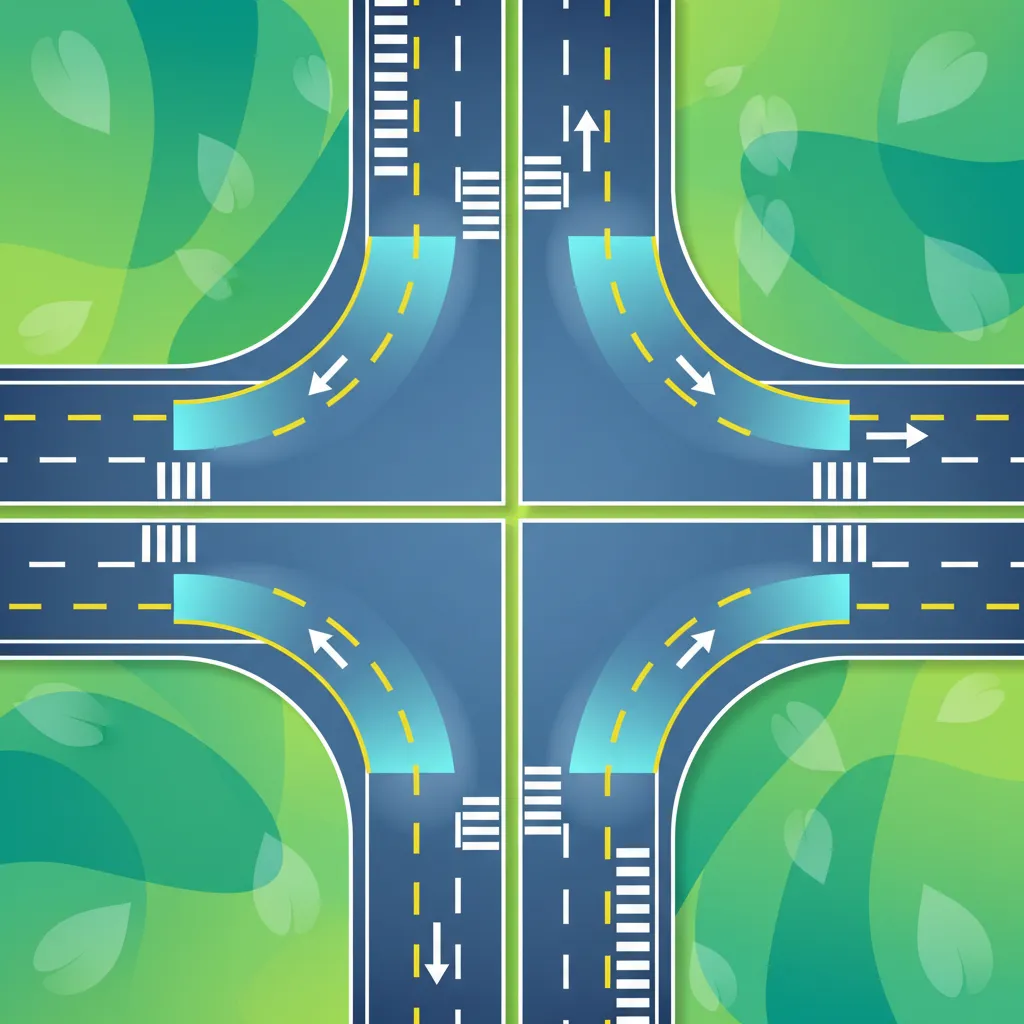
This lesson provides a comprehensive overview of the road markings found on Icelandic roads, from solid and broken lane lines to symbols indicating turning lanes and pedestrian crossings. The content details the visual meanings of each marking, such as solid lines indicating no crossing and broken lines permitting lane changes. Additionally, the lesson addresses the purpose of reflective markers and surface textures used in low-visibility or icy conditions, providing a framework for interpreting pavement cues.
This lesson examines how strong winds and varying light conditions affect vehicle handling and safety, including techniques for maintaining stability under cross-winds and assessing gust intensity. The content also explains proper headlight usage during daylight, dusk, and nighttime, addressing glare reduction strategies and when to employ high-beam headlights. By mastering these concepts, drivers can navigate Icelandic weather and lighting challenges confidently and safely.
This lesson explores the proper use of lane markings to maintain correct vehicle centering and adherence to the prescribed traffic flow direction in Iceland. The content describes how to interpret solid and broken lines, maintain safe following distances within a lane, and avoid unintended lane departures. Learners also examine the legal prohibitions on using the road shoulder for general travel, ensuring compliance with lane discipline rules for overall traffic safety.

This lesson details the fundamentals of effective braking, covering both controlled deceleration and emergency stops. Learners will understand how factors like speed, road surface, and reaction time collectively determine total stopping distance. It also explains how to balance front and rear brake application to maximize stopping power without losing control.
This lesson focuses on the regulations governing highland travel and off-road restrictions, including environmental protections that prohibit off-road driving in certain zones. The lesson details how to interpret highland road signage, understand restrictions related to wildlife crossings like reindeer and sheep, and adhere to road width management guidelines. Learners are also instructed on using emergency contact points in sparsely populated regions.
Find clear answers to common questions learners have about Rain, Fog, and Reduced Visibility Strategies. Learn how the lesson is structured, which driving theory objectives it supports, and how it fits into the overall learning path of units and curriculum progression in Iceland. These explanations help you understand key concepts, lesson flow, and exam focused study goals.
In Iceland, front and rear fog lights should only be used when visibility is seriously reduced, typically less than 50 meters, due to fog, heavy rain, or snow. Using them unnecessarily can dazzle other drivers and is an offence. Always turn them off once visibility improves.
Hydroplaning occurs when a layer of water builds up between your tires and the road surface, causing you to lose steering and braking control. To avoid it, reduce your speed significantly in wet conditions, ensure your tires have adequate tread depth, and avoid driving in deep puddles. If you do hydroplane, ease off the accelerator gently and steer in the direction you want to go, avoiding sudden braking or steering.
In rainy or foggy conditions, you should significantly increase your following distance. While a minimum of 2 seconds is standard, in poor visibility or wet conditions, aim for at least 4 seconds or more. This provides crucial extra time to react and brake safely, as stopping distances are considerably longer.
In both rain and fog, you must reduce speed. The exact speed depends on the severity of the conditions and your ability to see and be seen. In dense fog, visibility might be limited to only a few meters, requiring a much slower speed than heavy rain, where road conditions might be slick but visibility could be better. Always prioritize visibility and road grip.
While you don't need special equipment beyond what's standard on a car, ensuring your car's existing equipment is functional is vital. This includes properly working windshield wipers, washers, defrosters, and headlights (including fog lights if fitted). Your tires must also have adequate tread. The theory test will assess your knowledge of using these systems correctly.
Utilize our advanced practice set search to pinpoint the exact Icelandic driving theory topics you need to review. Filter by subject, difficulty, or question type to create a highly effective study plan and ensure you are fully prepared for your official driving licence test in Iceland.