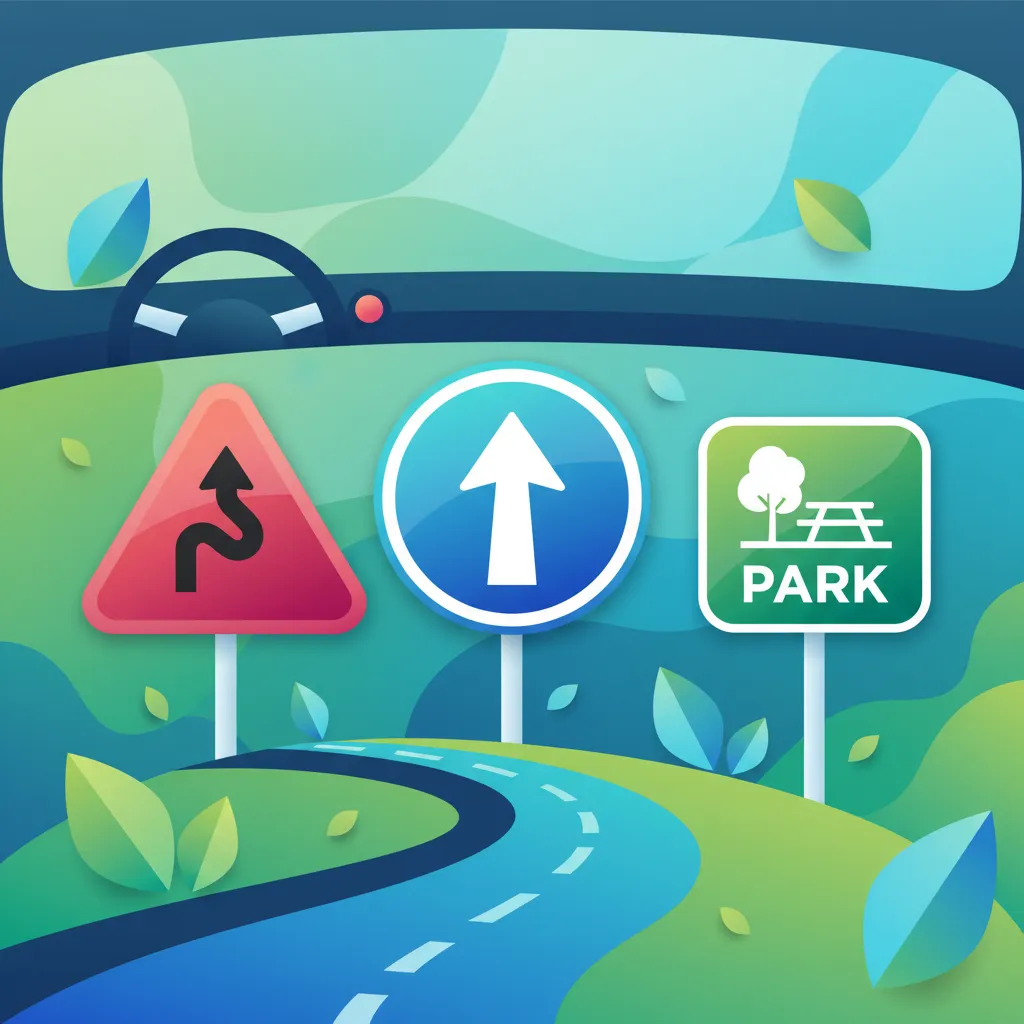
This lesson provides an essential guide to the Icelandic road sign system, a core component of your Category B theory preparation. You will learn to categorize and interpret signs by shape and colour, ensuring you can make split-second decisions safely on the road.
Lesson content overview
Welcome to the Official Icelandic Driving License B Theory Course, where mastering road signs is fundamental to safe and legal driving. This lesson delves into the critical classification system used in Iceland for road signs, categorizing them into Regulatory, Warning, and Information signs. Each category serves a distinct purpose, dictating mandatory actions, alerting drivers to potential hazards, or providing essential guidance. By understanding these classifications, their unique shapes, and colour schemes, you will be able to interpret the intent of any sign instantly and adjust your driving behaviour accordingly. This foundational knowledge is crucial for complying with legal obligations, enhancing road safety, and ensuring efficient navigation across Iceland's diverse road network.
Road signs are the universal language of the road, communicating vital information to drivers through visual cues. In Iceland, these visual communication tools are prescribed by the Icelandic Transport Authority (Samgöngustofa) to ensure uniformity and clarity. The ability to quickly and accurately interpret these signs is not just a matter of convenience; it is a core requirement for road safety and legal compliance. This lesson provides a comprehensive overview of how Icelandic road signs are grouped, helping you develop the intuitive understanding necessary for effective driving.
Understanding sign categories enables instant interpretation of sign intent, ensuring compliance with legal obligations, promoting safety, and facilitating appropriate driving behaviours. This skill is paramount in dynamic driving environments where rapid decision-making can prevent accidents and ensure smooth traffic flow.
The system of road signs in Iceland is built upon several core principles designed for clarity, safety, and legal enforceability. Grasping these foundational ideas will greatly enhance your ability to interpret and react to signs correctly.
Road signs are not randomly designed; they are systematically grouped by their primary function. This principle categorizes signs into Regulatory, Warning, and Information types. The purpose of this classification is to enable drivers to instantly infer the sign’s required response. For example, a regulatory sign demands immediate compliance, while a warning sign prompts increased vigilance. Different categories carry different legal weight, with regulatory signs imposing mandatory obligations, warnings serving as critical advisories for hazard anticipation, and information signs offering non-binding guidance.
Beyond their classification, signs adhere to a strict shape and colour convention. This principle dictates that specific shapes and colour schemes correspond to each sign category, allowing for quick visual identification regardless of language barriers or specific symbols. For instance, circular signs often denote regulatory commands, while triangular signs universally signal a warning. Misreading the shape can lead to a fundamental misinterpretation of the sign's legal requirements or advisory nature. These conventions are chosen for optimal visibility under various lighting and challenging Icelandic weather conditions.
When multiple signs are present, or when road conditions change, the legal hierarchy principle clarifies which signs take precedence. Regulatory signs hold the highest legal authority, imposing mandatory obligations that drivers must obey without exception. Warning signs follow, carrying significant advisory weight that demands a proactive adjustment in driving behaviour, though they are not legally binding in the same way as regulatory signs. Finally, information signs are generally advisory and non-binding, used for guidance and navigation. Drivers must prioritize compliance with regulatory signs over other categories, ensuring safety and adherence to the law.
Regulatory signs are the backbone of traffic control, designed to enforce specific laws and direct driver actions. These signs are legally binding, and non-compliance can result in penalties.
Regulatory signs are those that prescribe mandatory actions or prohibit certain behaviours on the road. They directly communicate legal requirements that drivers must obey without exception. Examples include speed limits, stop signs, yield signs, and restrictions like 'no entry' or 'no overtaking'. The primary goal of these signs is to ensure consistent traffic flow, prevent conflicts, and maintain safety by standardizing driver conduct.
Most regulatory signs in Iceland are circular. Prohibitory signs typically feature a red border with a white or blue background, often with a black symbol and a red diagonal line through it to indicate what is forbidden. Mandatory signs are generally circular with a blue background and a white symbol, indicating an action that must be taken or a direction that must be followed. Some prescriptive signs, like the stop sign, have unique shapes, such as the octagonal red design, making them instantly recognizable and universally understood as a command to stop.
Drivers are legally required to obey all regulatory signs. Violations are subject to penalties, which can include fines, penalty points on a driving licence, or even licence suspension, as defined by Icelandic traffic law. For instance, exceeding a posted speed limit or failing to stop at a stop sign are direct violations with clear legal consequences. It is crucial never to mistake an advisory sign for a regulatory one or vice-versa, as the legal implications are vastly different.
This sign indicates that the maximum permissible speed is 50 km/h. Drivers must adjust their speed accordingly and not exceed this limit.
This sign prohibits all vehicles from entering the road from the direction it is facing. It is often found at the end of one-way streets or controlled access points.
A stop sign requires drivers to bring their vehicle to a complete stop before the stop line, or before the intersection if no line is present. Drivers must then yield to any cross-traffic or pedestrians before proceeding when safe.
Warning signs are designed to give drivers advance notice of potential hazards or unusual conditions on the road ahead. While not imposing legal obligations directly, they demand increased vigilance and appropriate adjustments to driving behaviour.
The primary purpose of warning signs is to alert drivers to upcoming dangers or changes in road conditions that may require them to slow down, be extra cautious, or prepare for specific maneuvers. By providing early notice, these signs allow drivers sufficient time to react safely, thus preventing accidents and improving overall road safety. They encourage anticipatory driving, which is a cornerstone of defensive driving.
In Iceland, almost all warning signs are equilateral triangles with a red border and a white background, containing a black symbol that visually represents the hazard. This distinctive shape makes them easily recognizable from a distance, even before the specific symbol can be discerned.
Common types of warning signs include:
While warning signs do not impose legal obligations like regulatory signs, failure to heed them can be considered negligence under the "reasonable driver" standard, especially if an accident occurs. Drivers should adjust their speed, position, or vigilance according to the nature of the warning. For example, a "Slippery Road" sign should prompt a reduction in speed and smoother steering inputs, particularly in adverse weather. Ignoring subtle warnings, such as those indicating a potentially slippery surface after rain, can lead to loss of control and dangerous situations.
Upon seeing this sign, drivers should reduce their speed and prepare to navigate the curve safely, especially if visibility is limited or the road surface is wet.
This sign demands extreme caution and reduced speed, as children may unexpectedly enter the roadway. Drivers should be prepared to stop.
Drivers should exercise extreme caution and significantly reduce speed when this sign is present, particularly during or after rainfall, snowfall, or freezing temperatures.
Information signs provide non-mandatory guidance and useful details to assist drivers with navigation, route planning, and awareness of services or local points of interest.
Information signs primarily serve to provide non-mandatory details such as directions, distances to destinations, locations of services (like fuel or food), or tourist attractions. They are designed to aid drivers in route planning and enhance their overall driving experience by offering helpful context about the road environment. While compliance with their instructions is optional, ignoring them may lead to inefficient navigation or missed opportunities.
Information signs are typically rectangular (horizontal or vertical) or square. For services, they often use a blue background with white symbols or text, sometimes circular for specific service types. Tourist information signs often feature a brown background.
Common types include:
Drivers use information signs for efficient navigation and to make informed decisions about their journey. For example, a service sign can help locate a petrol station when fuel is low, or a direction sign can confirm the correct route to a desired destination. While generally not legally enforceable, it's important to note that some information signs might include crucial regulatory details, such as height or weight restrictions, which then become mandatory. Ignoring these specific restrictions could lead to violations or vehicle damage.
These signs are crucial for navigating highways and ensuring you take the correct exit or stay on the intended route.
While blue circles typically signify mandatory actions, this sign, when classified as informational, points to a service or area related to tow-trucks, rather than a mandatory lane usage.
These signs help drivers locate places to take a break, offering amenities like parking, restrooms, or picnic facilities, which are essential for long journeys.
Adhering to road signs is not merely a suggestion but a legal requirement under Icelandic traffic law. Understanding the specific regulations associated with each sign category is vital for every driver.
Drivers are legally obligated to obey all regulatory signs unless explicitly exempted by law, such as in the case of emergency vehicles. This rule applies uniformly across all public roads in Iceland, covering permanent, temporary, and provisional signs. The rationale behind this stringent requirement is to ensure consistent traffic flow, minimize confusion, and, most importantly, prevent accidents. Failure to comply with a regulatory sign, such as ignoring a 'No Overtaking' sign, can lead to severe consequences, including fines and increased collision risk.
Always assume a regulatory sign is legally binding. Ignorance of a sign's meaning is not a valid defence for non-compliance.
The speed limit displayed on a regulatory sign is the maximum speed permitted on that section of the road. Exceeding this limit is a punishable offence in Iceland, applicable to all vehicle categories unless a lower limit is specifically signposted for certain types of vehicles. These limits are set to reduce the severity of crashes and align with road design and environmental conditions. Driving 90 km/h where a '90 km/h' sign is posted is correct, whereas driving 100 km/h would be a violation.
Although warning signs are advisory and not legally binding in the same way as regulatory signs, drivers have a responsibility to interpret them correctly and adjust their behaviour to avoid dangerous situations. The intent of a warning sign is to encourage precautionary driving. For example, reducing speed upon seeing a 'Slippery Road' sign is a correct and responsible action that prevents potential loss of control. Ignoring such warnings, like maintaining speed despite a 'Sharp Curve Ahead' sign, significantly increases the risk of accidents.
Information signs provide guidance and details but generally do not impose legal obligations. However, this rule has an important caveat: if an information sign contains mandatory restrictions, such as a 'Maximum Height 3.5 m' for a tunnel, then that specific restriction becomes legally binding. Ignoring such a restriction can lead to vehicle damage, road infrastructure damage, and legal penalties. Otherwise, information signs, such as those for 'Rest Area' or 'Tourist Attraction', offer optional guidance to help drivers make informed choices about their route and stops.
Misinterpreting road signs is a frequent cause of traffic violations and accidents. Here are some common pitfalls and how to avoid them:
The effectiveness and interpretation of road signs are significantly influenced by various external factors. Drivers must learn to integrate these conditions into their decision-making process, alongside the signs themselves.
Adverse weather conditions like heavy rain, fog, snow, or strong winds can dramatically reduce visibility, making it harder to spot and interpret road signs. In such conditions, warning signs related to reduced traction (e.g., 'Slippery Road', 'Loose Gravel') become even more critical, and drivers must anticipate longer stopping distances and adjust their speed and driving style accordingly. Nighttime driving also reduces sign visibility; reflective overlays on signs and proper use of vehicle headlights are essential for detecting them in time. Information signs, especially, may be less legible in poor light, requiring extra caution.
The type of road you are driving on greatly influences the density and types of signs encountered:
The type and condition of your vehicle can also impact how you interact with road signs.
Temporary situations, such as construction zones, road works, or special events, often involve temporary signs. These signs, typically orange or yellow, temporarily override permanent regulatory signs until the situation resolves and the temporary signage is removed. Drivers must always prioritize temporary signs when they are present, as they reflect immediate, specific hazards or altered traffic flow.
The consistent application and clear interpretation of road signs play a vital role in shaping driver behaviour and enhancing overall road safety.
Correct interpretation of regulatory signs directly leads to legal compliance, significantly reducing the risk of penalties, fines, and—most importantly—accidents. Conversely, ignoring regulatory signs constitutes a legal violation, often resulting in fines, penalty points, possible license suspension, and a heightened likelihood of collisions due to unexpected driver actions.
Heeding warning signs promotes anticipatory driving, allowing drivers to adjust their speed, lane choice, or level of vigilance in advance of potential hazards, thereby taking preventive safety measures. Disregarding warning signs leaves drivers unprepared for unforeseen hazards, leading to delayed reactions and an increased potential for collisions.
Effectively utilizing information signs contributes to efficient route planning, reduces driver stress, and improves traffic flow by helping drivers navigate confidently. Misusing or misunderstanding information signs, however, can lead to inefficient navigation, possible dangerous detours, or even increased congestion as drivers become lost or confused.
Understanding road signs is not an isolated skill but forms a fundamental component of broader traffic knowledge. This lesson builds upon foundational knowledge from earlier stages of the Official Icelandic Driving License B Theory Course, such as understanding general legal obligations and the limits of driver perception.
The principles discussed here seamlessly integrate with subsequent lessons. For instance, the knowledge of regulatory signs is crucial for interpreting speed limits, priority rules at intersections, and correct lane usage, topics covered in depth in units on Priority Rules, Intersections & Roundabouts, and Speed, Following Distance, Stopping & Parking. Understanding how warning signs prepare you for varied road conditions is essential for lessons like Driving in Icelandic Weather and Rural Roads, Gravel Roads, Water, Highlands & Off‑Road Restrictions. This interconnectedness underscores why mastering road sign categories is a cornerstone of becoming a safe and competent driver in Iceland.
To solidify your understanding, let's consider how these sign categories apply in practical Icelandic driving scenarios.
The design of Icelandic road signs prioritizes visibility and rapid comprehension to enhance safety. Shapes and colours are chosen to maximize contrast, especially under challenging Icelandic lighting conditions, such as prolonged twilight, low sun angles, or the glare from snow. This thoughtful design aids in pattern recognition, reducing the cognitive load on drivers and allowing for quicker decision-making in critical situations.
Studies, including those conducted in Iceland, consistently show that compliance with regulatory signs, particularly speed limit signs, plays a significant role in reducing the incidence and severity of fatal crashes on rural roads. By understanding the psychology behind consistent sign design, drivers can leverage these visual cues to anticipate conditions, react appropriately, and contribute to smoother, safer traffic flow for everyone. Your mastery of these sign categories is a direct investment in your safety and the safety of others on Icelandic roads.
This lesson has provided a comprehensive overview of the three primary categories of road signs in Iceland: Regulatory, Warning, and Information signs. We have explored their distinctive shapes, colours, and the specific functions they serve in guiding and controlling traffic. Remember that regulatory signs impose mandatory legal obligations, warning signs alert you to critical hazards requiring a cautious response, and information signs provide valuable, albeit non-binding, guidance.
Understanding the legal weight of each sign category and how to interpret them in various contexts—including different weather conditions, road types, and vehicle states—is fundamental to passing your driving theory test and, more importantly, becoming a responsible and safe driver. By continually applying these principles, you will be well-equipped to navigate Iceland's roads with confidence and compliance.
Icelandic road signs are classified into three main categories: regulatory signs that impose mandatory legal obligations (circular shapes with red borders or blue backgrounds), warning signs that alert drivers to potential hazards (red-bordered triangles with white backgrounds), and information signs that provide non-binding guidance (rectangular or square shapes typically in blue, green, or brown). Regulatory signs carry the highest legal authority and non-compliance results in penalties, while warning signs require anticipatory driving adjustments despite lacking direct legal enforcement. Understanding these categories, their distinctive shapes and colors, and how they interact with contextual factors like weather and road type is essential for safe and legal driving in Iceland.
A short set of high-value points that capture the most important learning from this lesson.
Regulatory signs impose mandatory legal obligations and must be obeyed without exception, with penalties for non-compliance including fines and licence suspension.
Warning signs use red-bordered triangular shapes to alert drivers to hazards ahead, requiring proactive adjustments in speed and vigilance.
Information signs provide non-binding guidance through rectangular or square shapes, typically using blue or green backgrounds, to assist with navigation and services.
Shape and color conventions are consistent across categories: circles denote regulatory commands, triangles signal warnings, and rectangles indicate informational content.
The legal hierarchy places regulatory signs at highest authority, followed by warning signs, then information signs, with temporary signs overriding permanent ones when present.
Explore all units and lessons included in this driving theory course.
Circular signs with red borders or blue backgrounds are legally binding regulatory signs, while red-bordered triangles are advisory warnings requiring caution.
A stop sign (octagonal red) requires a complete halt, whereas a yield sign (inverted red triangle) requires slowing and giving way without necessarily stopping.
Information signs are generally non-binding but become mandatory if they contain specific restrictions like height or weight limits.
Temporary construction signs (typically orange or yellow) temporarily override permanent speed limits and other restrictions.
Weather conditions like fog, snow, or rain reduce sign visibility and amplify the importance of heeding warning signs related to road surface conditions.
Performing a 'rolling stop' at a stop sign instead of coming to a complete halt before proceeding safely.
Failing to adjust speed when encountering 'Slippery When Wet' warning signs during or after rainfall, increasing hydroplaning risk.
Assuming temporary construction zone speed limits no longer apply once the works appear finished, without looking for removed temporary signage.
Treating optional information signs (like rest area or parking guidance) as prohibitions, leading to unnecessary confusion or illegal parking elsewhere.
Misinterpreting the yield sign as permitting continued movement without slowing or preparing to stop for cross-traffic.
Lesson content overview
A short set of high-value points that capture the most important learning from this lesson.
Regulatory signs impose mandatory legal obligations and must be obeyed without exception, with penalties for non-compliance including fines and licence suspension.
Warning signs use red-bordered triangular shapes to alert drivers to hazards ahead, requiring proactive adjustments in speed and vigilance.
Information signs provide non-binding guidance through rectangular or square shapes, typically using blue or green backgrounds, to assist with navigation and services.
Shape and color conventions are consistent across categories: circles denote regulatory commands, triangles signal warnings, and rectangles indicate informational content.
The legal hierarchy places regulatory signs at highest authority, followed by warning signs, then information signs, with temporary signs overriding permanent ones when present.
Explore all units and lessons included in this driving theory course.
Circular signs with red borders or blue backgrounds are legally binding regulatory signs, while red-bordered triangles are advisory warnings requiring caution.
A stop sign (octagonal red) requires a complete halt, whereas a yield sign (inverted red triangle) requires slowing and giving way without necessarily stopping.
Information signs are generally non-binding but become mandatory if they contain specific restrictions like height or weight limits.
Temporary construction signs (typically orange or yellow) temporarily override permanent speed limits and other restrictions.
Weather conditions like fog, snow, or rain reduce sign visibility and amplify the importance of heeding warning signs related to road surface conditions.
Performing a 'rolling stop' at a stop sign instead of coming to a complete halt before proceeding safely.
Failing to adjust speed when encountering 'Slippery When Wet' warning signs during or after rainfall, increasing hydroplaning risk.
Assuming temporary construction zone speed limits no longer apply once the works appear finished, without looking for removed temporary signage.
Treating optional information signs (like rest area or parking guidance) as prohibitions, leading to unnecessary confusion or illegal parking elsewhere.
Misinterpreting the yield sign as permitting continued movement without slowing or preparing to stop for cross-traffic.
Explore search topics learners often look for when studying Regulatory, Warning and Information Signs. These topics reflect common questions about road rules, driving situations, safety guidance, and lesson level theory preparation for learners in Iceland.
Browse additional driving theory lessons that cover connected traffic rules, road signs, and common driving situations related to this topic. Improve your understanding of how different rules interact across everyday traffic scenarios.
Explore complex scenarios and nuanced meanings of Icelandic road signs. Understand how regulatory, warning, and information signs interact with traffic law for safer driving decisions.
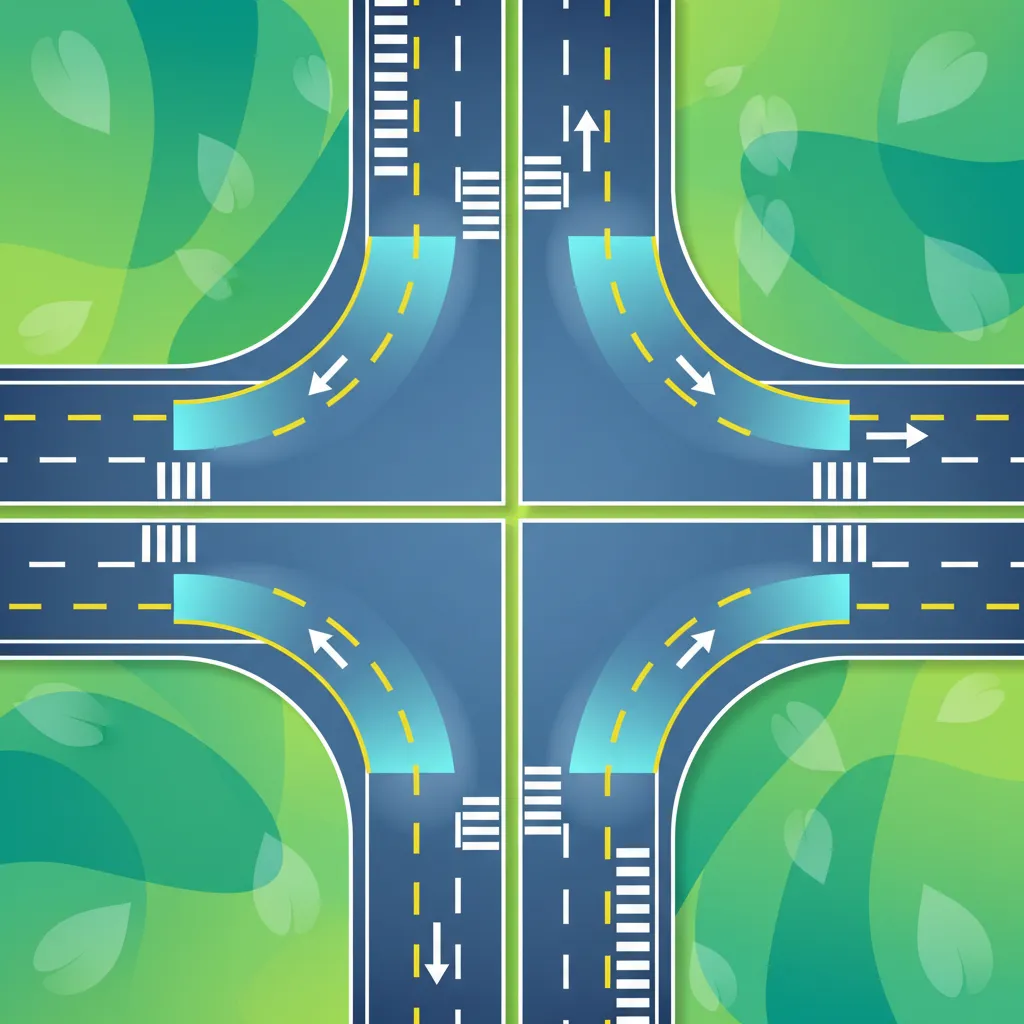
This lesson provides a comprehensive overview of the road markings found on Icelandic roads, from solid and broken lane lines to symbols indicating turning lanes and pedestrian crossings. The content details the visual meanings of each marking, such as solid lines indicating no crossing and broken lines permitting lane changes. Additionally, the lesson addresses the purpose of reflective markers and surface textures used in low-visibility or icy conditions, providing a framework for interpreting pavement cues.
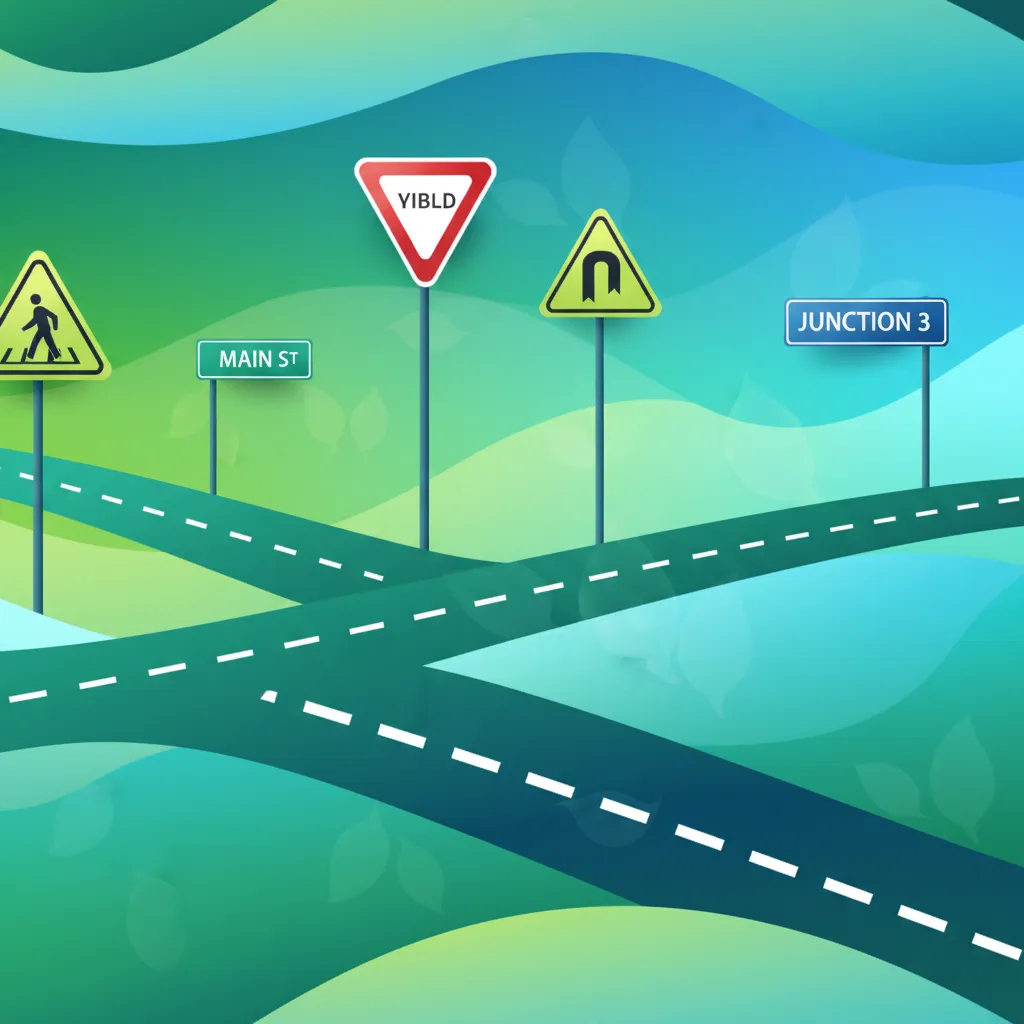
This lesson familiarizes learners with signs that warn of upcoming hazards, such as sharp curves, slippery surfaces, or animal crossings. It emphasizes the importance of early hazard recognition and response, which is especially critical for vulnerable moped riders. Understanding these signs allows riders to anticipate road conditions and adjust their riding strategy accordingly for increased safety.
This lesson focuses on interpreting road surface markings, including solid and broken lines that govern lane changes and positioning. Learners will understand the rules associated with turning arrows, pedestrian crossings, and markings for dedicated lanes. Correctly reading these markings is essential for maintaining proper lane discipline and navigating complex road layouts safely.
This lesson dissects the three-color traffic light system, detailing the meaning of red, amber, and green signals, including flashing lights and directional arrows. It explains how signal timing impacts moped riders and the legal requirement to obey all signals at intersections. Proper interpretation is crucial for navigating signalized junctions safely and avoiding conflicts with other traffic.
This lesson examines regulatory signs that impose legal obligations, focusing on those most relevant to moped riders like speed limits and mandatory direction signs. Learners will understand how sign shapes and colors convey specific commands or prohibitions. Attention is given to signs with vehicle-specific restrictions, ensuring riders know when rules apply directly to them.
This lesson focuses on the regulations governing highland travel and off-road restrictions, including environmental protections that prohibit off-road driving in certain zones. The lesson details how to interpret highland road signage, understand restrictions related to wildlife crossings like reindeer and sheep, and adhere to road width management guidelines. Learners are also instructed on using emergency contact points in sparsely populated regions.
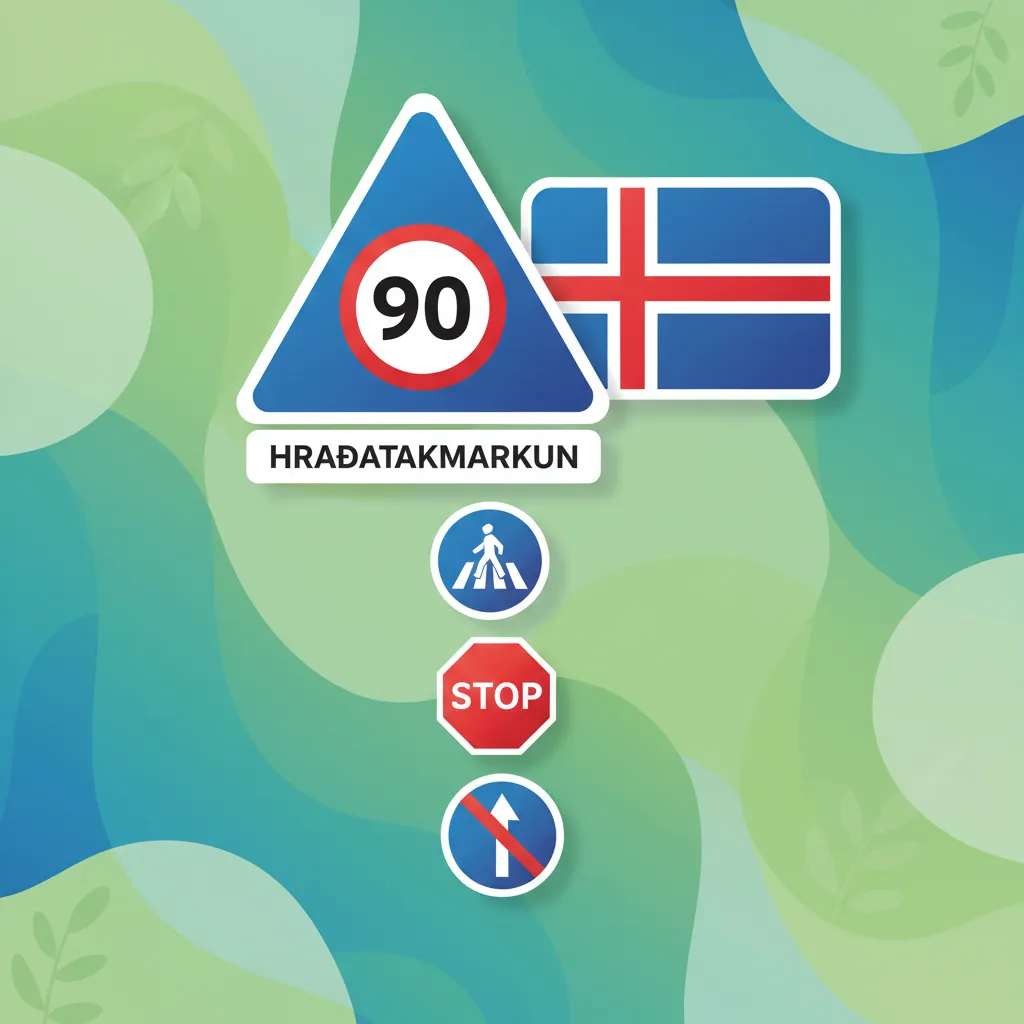
This lesson provides a contextual overview of Iceland's traffic law hierarchy, explaining how national statutes, road codes, and local rules interact. Learners will understand the precedence of national laws and how to interpret regulations in different jurisdictions. This knowledge ensures riders can correctly apply the relevant rules in any driving scenario, ensuring consistent legal compliance.
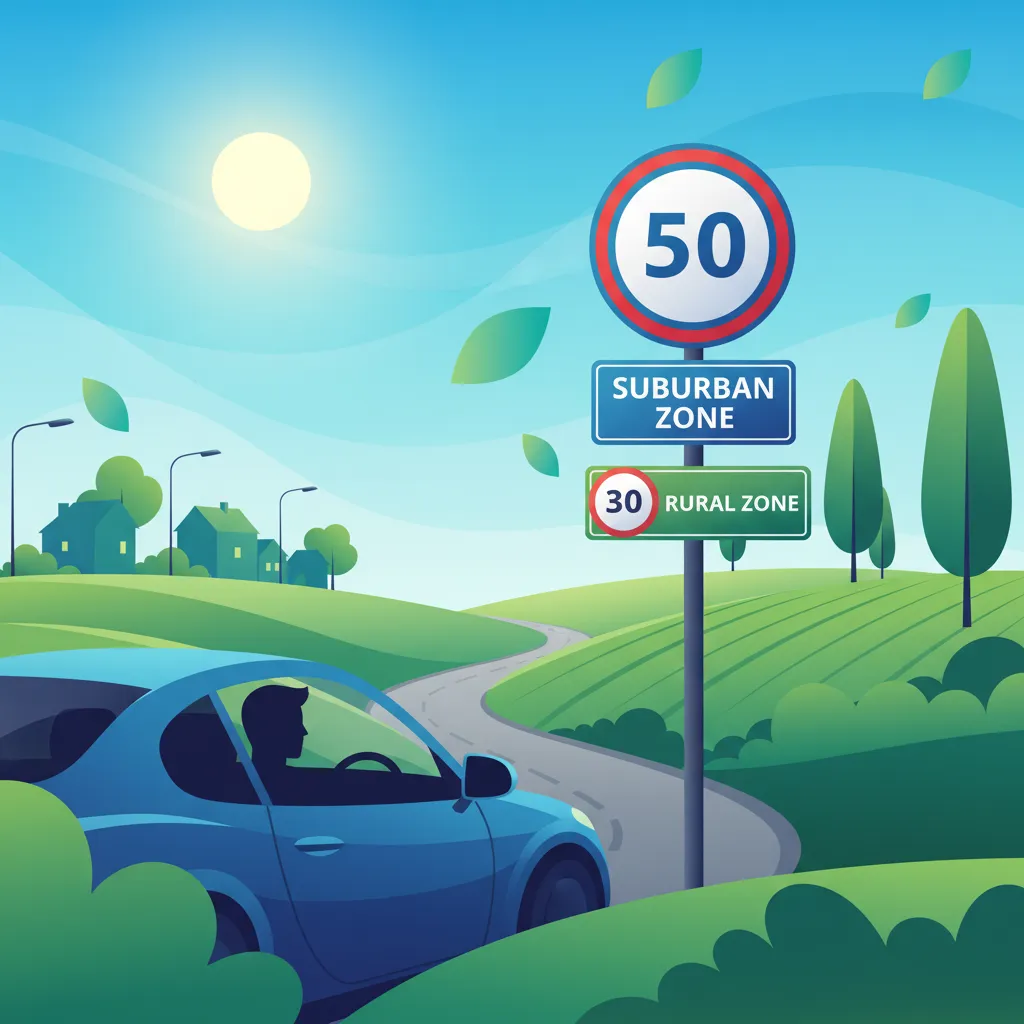
This lesson outlines the speed limits applicable to various road types in Iceland, from urban streets to rural highways and special zones like tunnels. Learners will interpret speed sign markings, understand variable speed limits that adjust for weather, and recognize when temporary speed reductions are enforced. The content also covers speed monitoring devices and the legal consequences of exceeding limits, emphasizing speed awareness in all driving contexts.
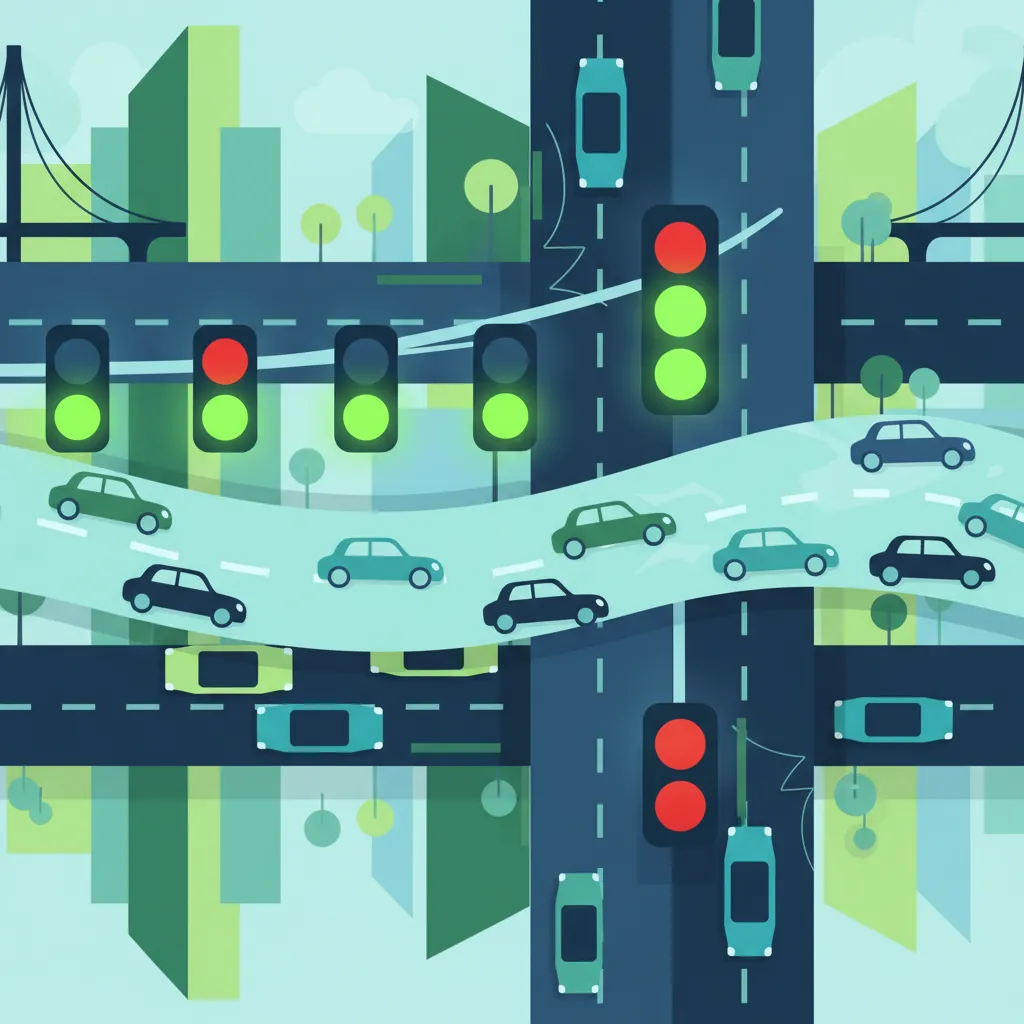
This lesson focuses on the operation of traffic lights in Iceland, describing standard three-phase cycles (red, amber, green) and variations such as flashing amber for yielding. Learners will also explore dedicated signals for pedestrians, cyclists, and turning movements, including arrow indications. The lesson explains how signal timing integrates with right-of-way rules at intersections, ensuring drivers can interpret and respond to each light state to maintain safety.
This lesson explores the proper use of lane markings to maintain correct vehicle centering and adherence to the prescribed traffic flow direction in Iceland. The content describes how to interpret solid and broken lines, maintain safe following distances within a lane, and avoid unintended lane departures. Learners also examine the legal prohibitions on using the road shoulder for general travel, ensuring compliance with lane discipline rules for overall traffic safety.
Analyze practical driving situations involving various Icelandic road signs. Learn from common misinterpretations and errors to improve your understanding and application of sign meanings.
This lesson provides a comprehensive overview of the road markings found on Icelandic roads, from solid and broken lane lines to symbols indicating turning lanes and pedestrian crossings. The content details the visual meanings of each marking, such as solid lines indicating no crossing and broken lines permitting lane changes. Additionally, the lesson addresses the purpose of reflective markers and surface textures used in low-visibility or icy conditions, providing a framework for interpreting pavement cues.
This lesson focuses on the regulations governing highland travel and off-road restrictions, including environmental protections that prohibit off-road driving in certain zones. The lesson details how to interpret highland road signage, understand restrictions related to wildlife crossings like reindeer and sheep, and adhere to road width management guidelines. Learners are also instructed on using emergency contact points in sparsely populated regions.
This lesson helps learners develop an understanding of how drivers perceive and assess risks on Icelandic roads, particularly under variable weather and lighting conditions. The content discusses mental models used to anticipate the actions of other road users and the importance of identifying subtle hazards. By analysing environmental cues and applying systematic hazard perception strategies, students learn to enhance their situational awareness and make safer driving decisions.
This lesson familiarizes learners with signs that warn of upcoming hazards, such as sharp curves, slippery surfaces, or animal crossings. It emphasizes the importance of early hazard recognition and response, which is especially critical for vulnerable moped riders. Understanding these signs allows riders to anticipate road conditions and adjust their riding strategy accordingly for increased safety.
This lesson focuses on the operation of roundabouts, which are common in Icelandic towns and rural areas, and explains how drivers must yield to circulating traffic upon entry. The content covers how to interpret roundabout signage and follow lane markings to maintain correct positioning. Students also learn strategies for safe exit, handling multi-lane roundabouts, and recognizing deceptive entries that require heightened vigilance for smooth navigation.
This lesson explores the proper use of lane markings to maintain correct vehicle centering and adherence to the prescribed traffic flow direction in Iceland. The content describes how to interpret solid and broken lines, maintain safe following distances within a lane, and avoid unintended lane departures. Learners also examine the legal prohibitions on using the road shoulder for general travel, ensuring compliance with lane discipline rules for overall traffic safety.

This lesson explores the specific challenges of driving on Icelandic gravel roads, focusing on the reduced traction and vehicle dynamics associated with loose surfaces. The content explains how to adapt speed appropriately, maintain safe following distances, and use gentle braking to avoid skidding. Learners also study proper lane sharing etiquette, including how to safely pass other vehicles and manage loose stones that may be thrown, ensuring vehicle stability.
This lesson outlines the speed limits applicable to various road types in Iceland, from urban streets to rural highways and special zones like tunnels. Learners will interpret speed sign markings, understand variable speed limits that adjust for weather, and recognize when temporary speed reductions are enforced. The content also covers speed monitoring devices and the legal consequences of exceeding limits, emphasizing speed awareness in all driving contexts.
This lesson focuses on the operation of traffic lights in Iceland, describing standard three-phase cycles (red, amber, green) and variations such as flashing amber for yielding. Learners will also explore dedicated signals for pedestrians, cyclists, and turning movements, including arrow indications. The lesson explains how signal timing integrates with right-of-way rules at intersections, ensuring drivers can interpret and respond to each light state to maintain safety.
This lesson focuses on the principles of executing safe turns, highlighting the correct use of turn signals and lane positioning before initiating a turn. Learners examine the timing required for signaling, the rules governing right-turns and left-turn yields, and the importance of checking blind spots and cyclist lanes. The lesson also addresses the concept of turning radius to ensure drivers can complete turns without compromising the safety of others on the road.
Find clear answers to common questions learners have about Regulatory, Warning and Information Signs. Learn how the lesson is structured, which driving theory objectives it supports, and how it fits into the overall learning path of units and curriculum progression in Iceland. These explanations help you understand key concepts, lesson flow, and exam focused study goals.
The shape of a sign in Iceland is standardized to convey information instantly. For example, circles typically represent regulatory mandates or prohibitions, while triangles serve as warnings of upcoming hazards. Knowing this allows you to categorize a sign's intent even from a distance.
Focus on the secondary visual cues such as border colour and internal symbols. Many signs share a base shape but have different meanings based on the colour of the frame or the specific icon inside, which is a frequent area of focus for tricky exam questions.
While you don't need to memorize every obscure sign, you must understand the categories and the logic behind them. The exam tests your ability to apply the correct rules to the signs you see, rather than just raw rote memorisation.
Yes, Iceland uses specific signage for unique conditions such as single-lane bridges, gravel roads, and animal crossings. These are frequently featured on the theory exam to ensure you are prepared for rural and wilderness driving.
Utilize our advanced practice set search to pinpoint the exact Icelandic driving theory topics you need to review. Filter by subject, difficulty, or question type to create a highly effective study plan and ensure you are fully prepared for your official driving licence test in Iceland.