
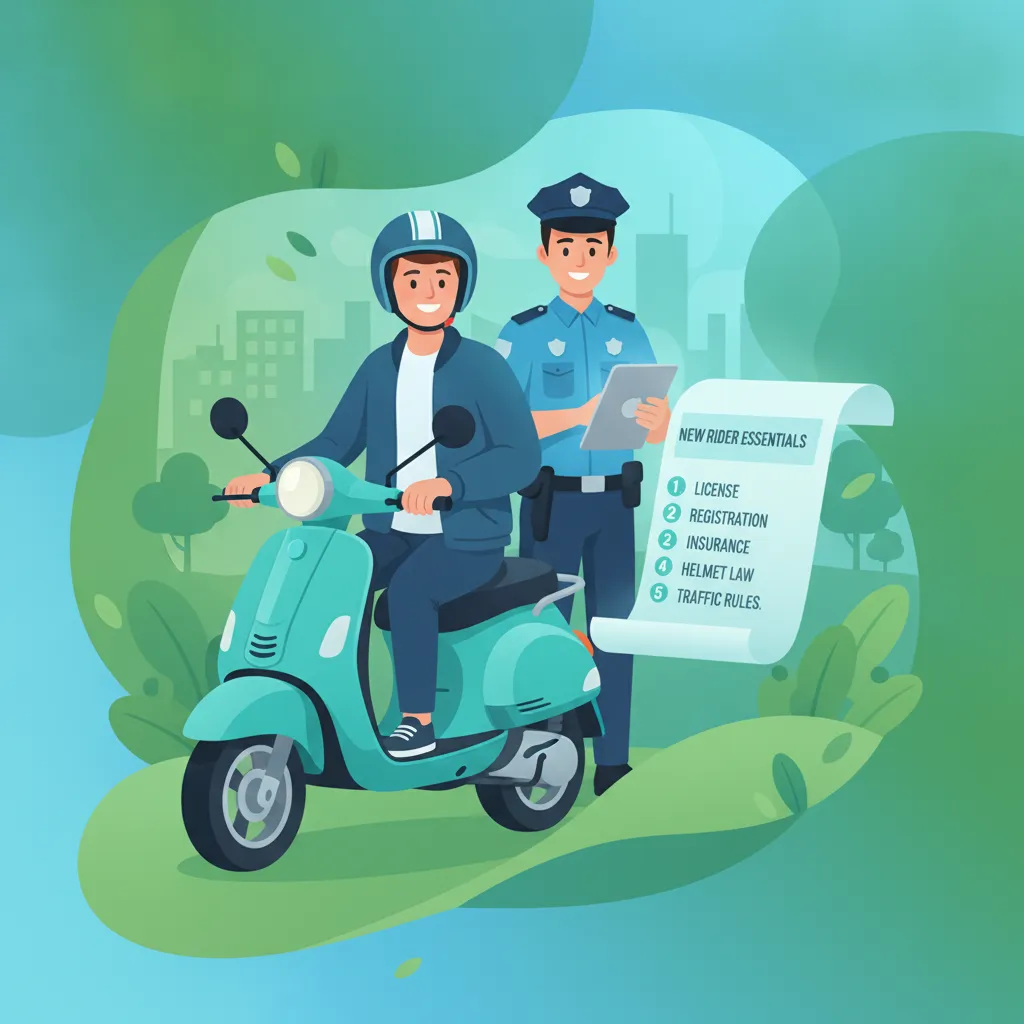
This lesson details the essential legal obligations for first-time Patente AM license holders in Italy. You will learn about mandatory safety equipment, rider responsibilities, and the legal consequences of traffic violations to ensure you are fully prepared for the road and the theory exam.
Lesson content overview
Navigating the roads of Italy on a moped or light quadricycle requires more than just knowing how to operate the vehicle; it demands a thorough understanding of the legal framework governing these vehicles. This lesson, part of the Italian Driving License Theory – Patente AM Specialization, focuses on the essential legal requirements that first-time riders must meet. Adhering to these regulations is crucial not only for compliance with the Codice della Strada (Italian Traffic Code) but also for ensuring your safety and the safety of other road users.
Understanding these foundational rules will help you operate an AM category vehicle legally, reduce the risk of accidents, and foster responsible riding habits from the outset. We will delve into everything from the specifics of the Patente AM license itself to mandatory protective gear, core traffic laws, and the significant legal consequences of non-compliance.
The Patente AM is your gateway to operating certain light vehicles on Italian roads. It is a specific driving license category tailored for younger riders and those who wish to operate less powerful motor vehicles. Grasping its exact definition, associated vehicle types, and limitations is the first step towards legal and safe riding.
The Patente AM is a driving license category that permits the operation of light two-wheeled vehicles such as mopeds and scooters, as well as light three-wheeled and four-wheeled vehicles. These vehicles are characterized by an engine capacity no greater than 50 cm³ (or an equivalent electric motor power output) and a maximum design speed that does not exceed 45 km/h. This classification is vital for understanding the limits and capabilities of your permitted vehicle.
While it is a single license class, the Patente AM covers a range of vehicle types including motor-driven mopeds, electric scooters, and light quadricycles (often referred to as 'microcars'). Each of these vehicles, regardless of its specific design, must conform to the strict engine capacity and speed limitations to fall under the AM category. This ensures a consistent level of safety and performance for all vehicles operated with this license.
To obtain a Patente AM license in Italy, specific age requirements must be met, which vary slightly depending on the vehicle type. For mopeds (two-wheeled vehicles), the minimum age is 14 years old. For motor-driven scooters (three-wheeled) and light quadricycles, the minimum age is 16 years old. These age distinctions reflect the varying complexities and stability characteristics of the different AM vehicle types.
The licensing process involves both a theory exam, covering fundamental traffic laws and safety principles, and a practical riding exam, demonstrating your ability to operate the vehicle safely and competently. Successful completion of both exams is mandatory before a Patente AM is issued, ensuring that all new riders possess the necessary knowledge and skills.
Many first-time riders, and even some experienced ones, hold common misunderstandings regarding the Patente AM. A frequent misconception is that this license permits the operation of vehicles with higher engine capacities or speeds beyond the 50 cm³ and 45 km/h limits. It is crucial to remember that these are strict legal boundaries, and operating a vehicle outside these specifications with only a Patente AM is a serious offense.
Another misunderstanding can be about the types of roads permissible for AM vehicles. While they are allowed on most public roads, certain high-speed roads, motorways, and expressways are strictly prohibited for AM category vehicles due to their speed limitations. Always verify the road signage, as specific signs will indicate restrictions for mopeds or other light vehicles.
Beyond understanding your license, ensuring your personal safety is paramount, and Italian law mandates specific personal protective equipment (PPE) for all riders. This equipment is not merely a recommendation; it is a legal requirement designed to significantly reduce the severity of injuries in the event of an accident.
The most critical piece of protective equipment for any Patente AM rider is a helmet. Italian law strictly requires that all riders of AM vehicles wear a certified helmet that meets the UNI EN 1078 European safety standards. This certification ensures the helmet has undergone rigorous testing to provide adequate protection against head injuries during impacts.
A European standard that specifies safety requirements and test methods for helmets worn by cyclists, users of skateboards and roller skates, and also applicable to helmets for mopeds.
A helmet must be worn correctly and securely fastened at all times while riding. It should fit snugly without being uncomfortably tight, and the chin strap must be fastened to prevent the helmet from coming off during a collision. Whether you choose a full-face, open-face, or modular helmet, it must bear the UNI EN 1078 mark to be considered legal. Failure to wear a certified helmet, or wearing one incorrectly, can lead to significant fines and penalty points on your license. Helmets absorb impact forces, reducing head injury risk by a substantial margin.
While helmet use is universally mandatory and strictly enforced, Italian regulations also specify requirements for protective clothing, emphasizing safety through coverage and durability. The legal minimum attire includes a jacket, trousers, gloves, a long-sleeved shirt, and closed shoes. This clothing is designed to protect the rider's body from abrasions and impact injuries in the event of a fall or collision.
For enhanced safety, especially in low-light conditions or adverse weather, consider wearing clothing with reflective elements. This significantly increases your visibility to other road users, reducing the risk of being unseen.
Protective clothing should be durable and cover all exposed body parts. Riding without appropriate gear, such as wearing shorts and sandals, leaves skin vulnerable to severe abrasion injuries (known as 'road rash') and can compound the severity of other injuries. While not always leading to immediate fines for non-compliance with the same strictness as helmets, wearing inadequate gear undeniably increases personal injury risk and can be considered insufficient under certain circumstances by authorities.
Operating an AM vehicle means you are a full participant in road traffic, and as such, you are subject to the same fundamental traffic laws as other drivers. These rules ensure orderly flow, predictabilty, and safety for everyone sharing the road.
A primary restriction for Patente AM vehicles is their maximum speed limit. Regardless of the posted speed limit for other vehicles, AM vehicles are legally prohibited from exceeding 45 km/h on any road. In urban areas, this limit may be even lower, often 30 km/h in built-up zones, which applies to all vehicles, including AM ones. It is crucial to be aware of and adhere to these limits, not only to avoid legal consequences but also because the vehicle's design is optimized for safe operation within this speed range.
Exceeding the 45 km/h limit is a serious violation that can result in substantial fines and even the confiscation of the vehicle, particularly if caught on roads where mopeds are not permitted, such as highways or motorways. Always check the local signage for specific urban speed restrictions.
Understanding and respecting right-of-way (precedenza) and priority rules is fundamental to preventing collisions, especially at intersections and roundabouts. As an AM rider, you must obey all standard priority signs and rules outlined in the Codice della Strada. This means:
Ignoring these rules, whether at a marked intersection or an unmarked one where the general right-of-way rule (give way to the right) applies, is a common cause of accidents. AM riders must apply these laws diligently to ensure smooth and safe traffic flow.
Predictability is a cornerstone of road safety. Riders are legally required to use appropriate signals before making any turn, changing lanes, or performing other maneuvers that alter their direction or position on the road. While many AM vehicles are equipped with turn signals, hand signals are mandatory and often preferred, especially if vehicle signals are not clearly visible or inoperative.
A hand gesture used by riders to indicate their intended direction of travel when vehicle signals are unavailable or unclear. For a left turn, the left arm is extended horizontally; for a right turn, the left arm is extended and bent upwards at the elbow.
Proper signaling alerts other road users to your intentions, allowing them to anticipate your actions and react accordingly. Failing to signal or signaling improperly increases the risk of collisions, as other drivers may not expect your sudden change of direction. Always ensure your signals are clear and given well in advance of your maneuver.
Parking an AM vehicle correctly is just as important as riding it safely. You must adhere to all local and national parking regulations. This generally means parking in designated areas specifically marked for motorcycles, mopeds, or scooters. Improper parking can obstruct pedestrian traffic, block access, or create hazards, leading to fines and potential removal of your vehicle.
Avoid parking on pedestrian sidewalks, at crosswalks, in front of building entrances, or in spaces clearly marked for other vehicle types. Always look for signs indicating permissible parking zones for your type of vehicle. Respecting these rules contributes to urban order and pedestrian safety.
Compliance with traffic laws and safety regulations is not merely a suggestion; it is enforced through a system of legal consequences. For Patente AM riders in Italy, these consequences primarily involve fines and the accrual of penalty points on their driving record.
Italy operates a penalty point system for all driving license categories, including Patente AM. When a rider commits a traffic violation, a certain number of points are deducted from their initial pool of points. Accumulating too many penalty points can lead to the suspension or even revocation of the driving license. Points are typically reset after a specific period of compliant driving.
This system serves as a powerful deterrent, encouraging riders to maintain a high standard of road behavior and legal adherence. It's not just about paying a fine; it's about safeguarding your privilege to ride.
Several common violations can result in immediate fines and the deduction of penalty points:
Beyond common violations, there are more severe infractions with particularly harsh penalties. Riding an AM vehicle under the influence of alcohol or drugs is strictly prohibited, with Italy maintaining a zero-tolerance policy for new drivers and minors. Such an offense carries extremely severe penalties, including very high fines, immediate license suspension, vehicle confiscation, and potentially criminal charges.
Similarly, riding in zones specifically prohibited for AM vehicles, such as certain tunnels, expressways, or motorways, is a serious violation. These areas are dangerous for low-speed vehicles, and non-compliance can lead to significant fines and immediate removal from the prohibited zone, alongside penalty points. Always be attentive to road signs that restrict access for mopeds or motorcycles.
Legal compliance forms the bedrock of safe riding, but true safety also involves adapting your behavior to various contextual factors. Responsible riders continually assess and adjust to environmental conditions, road characteristics, and the presence of other road users.
Weather conditions can dramatically affect riding safety for AM vehicles. In rain, fog, or icy conditions, visibility is reduced, and road surfaces become slippery. During such times, it is crucial to:
Similarly, at night or in low-light conditions (dawn, dusk, tunnels), headlight use is mandatory. Riders should ensure their vehicle's lighting system is fully functional and consider additional reflective gear for enhanced conspicuity.
The type of road you are on will also dictate appropriate riding behavior. Urban areas, with lower speed limits, denser traffic, and more frequent intersections, demand constant vigilance. Rural roads, while sometimes less congested, may have uneven surfaces, sharp turns, or unexpected hazards, requiring careful speed and cornering control.
Interaction with vulnerable road users, such as pedestrians and cyclists, requires heightened caution. At crosswalks, you must always stop and yield to pedestrians. When encountering cyclists, provide ample space, and avoid sudden maneuvers. Remembering that AM vehicles are relatively small and less visible means taking extra responsibility to protect those more vulnerable than yourself.
Maintaining your AM vehicle in good working order is a legal requirement and a critical safety factor. Regularly check your tires for proper inflation and tread depth, test your brakes, and ensure all lights and signals are functioning correctly. Riding with defective lighting, especially at night, is a violation and highly dangerous.
Carrying passengers or loads also requires attention. An unsecured or excessively heavy load can affect the scooter's stability and handling, making it more difficult to control. Always secure any luggage properly and ensure it does not obstruct your view or interfere with the vehicle's operation. If carrying a passenger, ensure they also wear a certified helmet and understand basic passenger safety protocols.
Every action you take as a Patente AM rider has a direct consequence, whether positive or negative. Understanding these cause-and-effect relationships reinforces the importance of responsible riding behaviors.
This lesson forms a fundamental part of the Italian Driving License Theory – Patente AM Specialization, laying the groundwork for safe and legal riding. By internalizing these legal requirements and safety principles, you are not just preparing for an exam; you are equipping yourself with the knowledge to be a responsible and protected rider on Italy's roads.
This lesson covers the legal framework for Patente AM riders in Italy, detailing the specific vehicle parameters (50 cm³ engine limit, 45 km/h maximum speed) and age requirements that define this license category. It emphasizes mandatory safety equipment, particularly the UNI EN 1078 certified helmet requirement and protective clothing standards, which are enforced through fines and penalty points. The content explains core traffic rules including speed limits, right-of-way obligations at intersections, and proper signaling procedures, while outlining the consequences of violations from minor fines to serious infractions like DUI or riding in prohibited zones. Understanding these regulations is essential for both passing the theory exam and developing responsible riding habits on Italian roads.
A short set of high-value points that capture the most important learning from this lesson.
Patente AM permits operation of vehicles with engines up to 50 cm³ and a maximum speed of 45 km/h, with age minimums of 14 for mopeds and 16 for scooters and quadricycles.
Certified helmets meeting UNI EN 1078 European safety standards are legally mandatory for all AM riders at all times.
AM vehicles must not exceed 45 km/h and are prohibited from motorways, expressways, and certain restricted zones.
The Italian penalty point system applies to Patente AM holders, with violations like helmet non-use and speeding carrying significant fines and point deductions.
Protective clothing (jacket, trousers, gloves, long-sleeved shirt, closed shoes) legally required alongside helmets to prevent abrasion injuries.
Explore all units and lessons included in this driving theory course.
UNI EN 1078 is the required helmet certification standard; helmets must bear this mark to be legal in Italy.
Age distinction: 14 years old for two-wheeled mopeds, 16 years old for three-wheeled scooters and light quadricycles.
Stop signs and yield signs carry full legal force for AM riders at intersections, including applying the 'give way to the right' rule at unmarked intersections.
Hand signals serve as mandatory backup when vehicle turn signals are unclear or inoperative.
Zero-tolerance policy for alcohol and drug use applies to new and minor Patente AM riders.
Assuming the Patente AM license allows operation of vehicles exceeding 50 cm³ or 45 km/h, which it does not.
Believing that AM vehicles can legally use motorways or expressways, when they are specifically prohibited.
Wearing a helmet without ensuring it is UNI EN 1078 certified or without proper fastening, which fails the legal requirement.
Neglecting to signal before turns or lane changes, reducing predictability for other road users and risking collisions.
Parking in pedestrian zones, at crosswalks, or in spaces marked for other vehicle types, leading to fines and vehicle removal.
Lesson content overview
A short set of high-value points that capture the most important learning from this lesson.
Patente AM permits operation of vehicles with engines up to 50 cm³ and a maximum speed of 45 km/h, with age minimums of 14 for mopeds and 16 for scooters and quadricycles.
Certified helmets meeting UNI EN 1078 European safety standards are legally mandatory for all AM riders at all times.
AM vehicles must not exceed 45 km/h and are prohibited from motorways, expressways, and certain restricted zones.
The Italian penalty point system applies to Patente AM holders, with violations like helmet non-use and speeding carrying significant fines and point deductions.
Protective clothing (jacket, trousers, gloves, long-sleeved shirt, closed shoes) legally required alongside helmets to prevent abrasion injuries.
Explore all units and lessons included in this driving theory course.
UNI EN 1078 is the required helmet certification standard; helmets must bear this mark to be legal in Italy.
Age distinction: 14 years old for two-wheeled mopeds, 16 years old for three-wheeled scooters and light quadricycles.
Stop signs and yield signs carry full legal force for AM riders at intersections, including applying the 'give way to the right' rule at unmarked intersections.
Hand signals serve as mandatory backup when vehicle turn signals are unclear or inoperative.
Zero-tolerance policy for alcohol and drug use applies to new and minor Patente AM riders.
Assuming the Patente AM license allows operation of vehicles exceeding 50 cm³ or 45 km/h, which it does not.
Believing that AM vehicles can legally use motorways or expressways, when they are specifically prohibited.
Wearing a helmet without ensuring it is UNI EN 1078 certified or without proper fastening, which fails the legal requirement.
Neglecting to signal before turns or lane changes, reducing predictability for other road users and risking collisions.
Parking in pedestrian zones, at crosswalks, or in spaces marked for other vehicle types, leading to fines and vehicle removal.
Explore search topics learners often look for when studying Legal Requirements for First-Time Riders. These topics reflect common questions about road rules, driving situations, safety guidance, and lesson level theory preparation for learners in Italy.
Browse additional driving theory lessons that cover connected traffic rules, road signs, and common driving situations related to this topic. Improve your understanding of how different rules interact across everyday traffic scenarios.
Understand the Italian penalty point system and the specific repercussions for Patente AM violations. Learn about fines, license suspension, and serious infractions like riding under the influence.

This lesson provides a clear overview of the legal penalties for traffic violations in Italy. It explains the structure of fines and the penalty point system that can lead to license suspension or revocation. The content also touches on more severe consequences, including criminal liability for incidents causing injury, to emphasize the importance of lawful riding.
This lesson focuses on the specific regulatory and warning signs that Patente AM riders must understand and obey. It details signs related to speed limits, no-entry zones, and mandatory directions that directly impact moped operation. You will also learn to recognize warning signs for potential hazards like sharp curves, slippery surfaces, and pedestrian areas.

This lesson provides a comprehensive review of the legal consequences for violating traffic laws in Italy. It reinforces the workings of the points system, explaining how different offenses lead to deductions and how a total loss of points results in license revocation. The content also covers the scale of monetary fines for various infractions and the conditions under which a driver's license may be temporarily suspended.
This lesson details the essential protective equipment required for legal and safe moped operation in Italy. It covers legal standards for helmets, the benefits of wearing protective gloves and boots, and the importance of high-visibility clothing. You will also learn the correct use of your vehicle's lighting system for visibility during both day and night.
This lesson provides a detailed breakdown of the vehicle types authorized under the Patente AM license. You will learn to distinguish between ciclomotori, scooters, three-wheeled mopeds, and light quadricycles by their specific characteristics. Key topics include engine displacement limits, power output, and mandatory equipment like lights, mirrors, and brakes as required by Italian law.
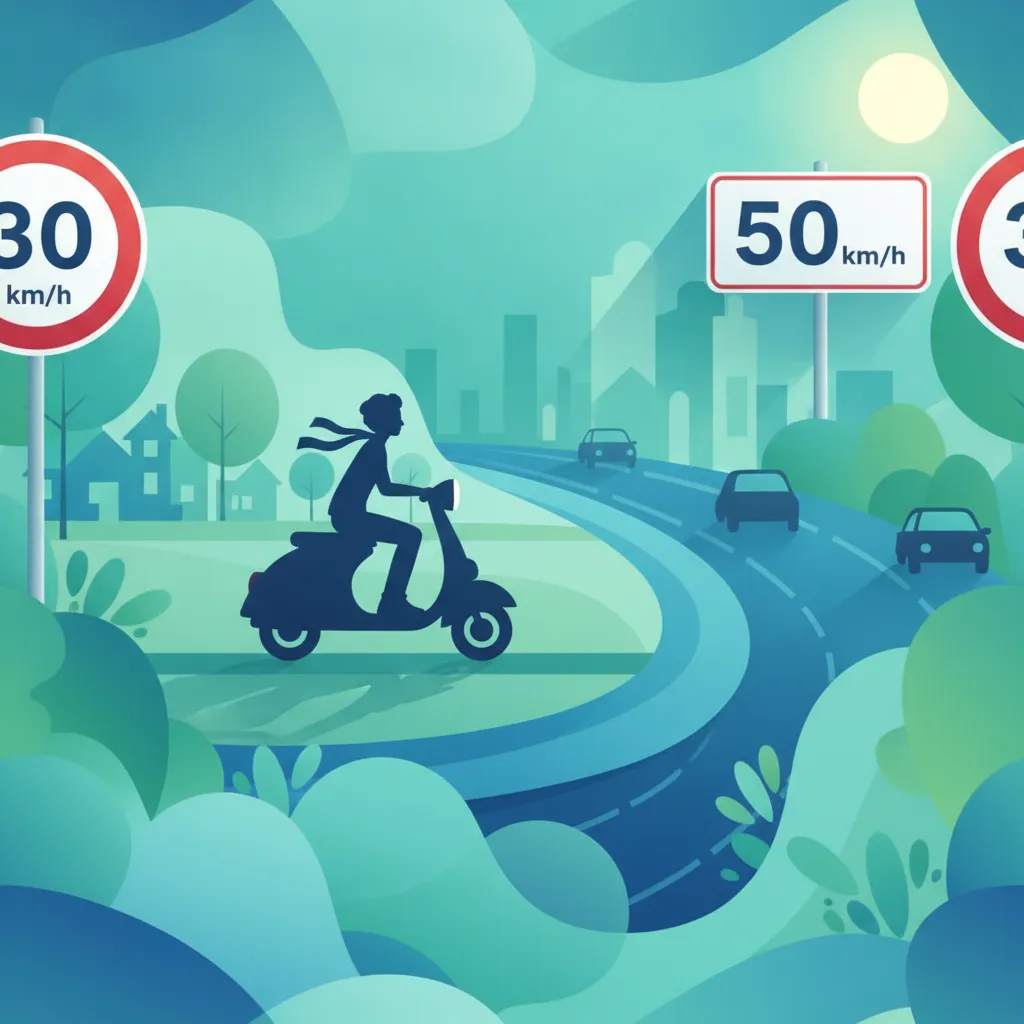
This lesson explores the specific speed limits applicable to AM vehicles across various zones, including urban, residential, and rural roads. Emphasis is placed on understanding the signage that indicates both permanent and temporary speed restrictions. Learners will also examine the rationale behind these limits and the importance of adapting speed to road conditions and traffic density.
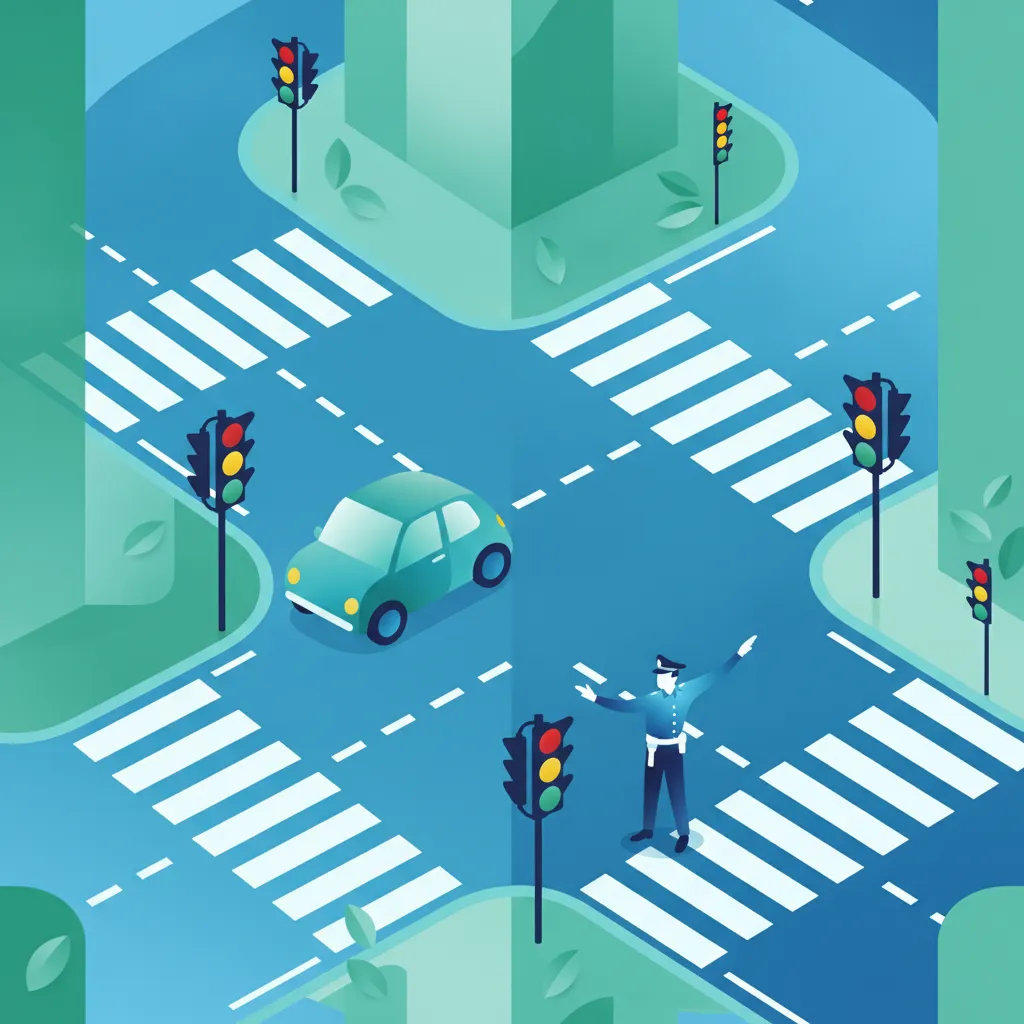
This lesson explains the function of Italian traffic light systems and the meaning of various road markings. You will learn the rules for red, amber, and green signals, including flashing lights and directional arrows. It also covers how to interpret lane lines, stop lines, and other surface markings that dictate correct vehicle positioning and movement.

This lesson details the continuous duties of a Patente AM license holder beyond passing the exam. It covers the importance of regular vehicle maintenance, including checks on tires, brakes, and lights. The lesson also reinforces the legal obligation to maintain valid insurance and registration while adhering to all traffic laws for personal and public safety.
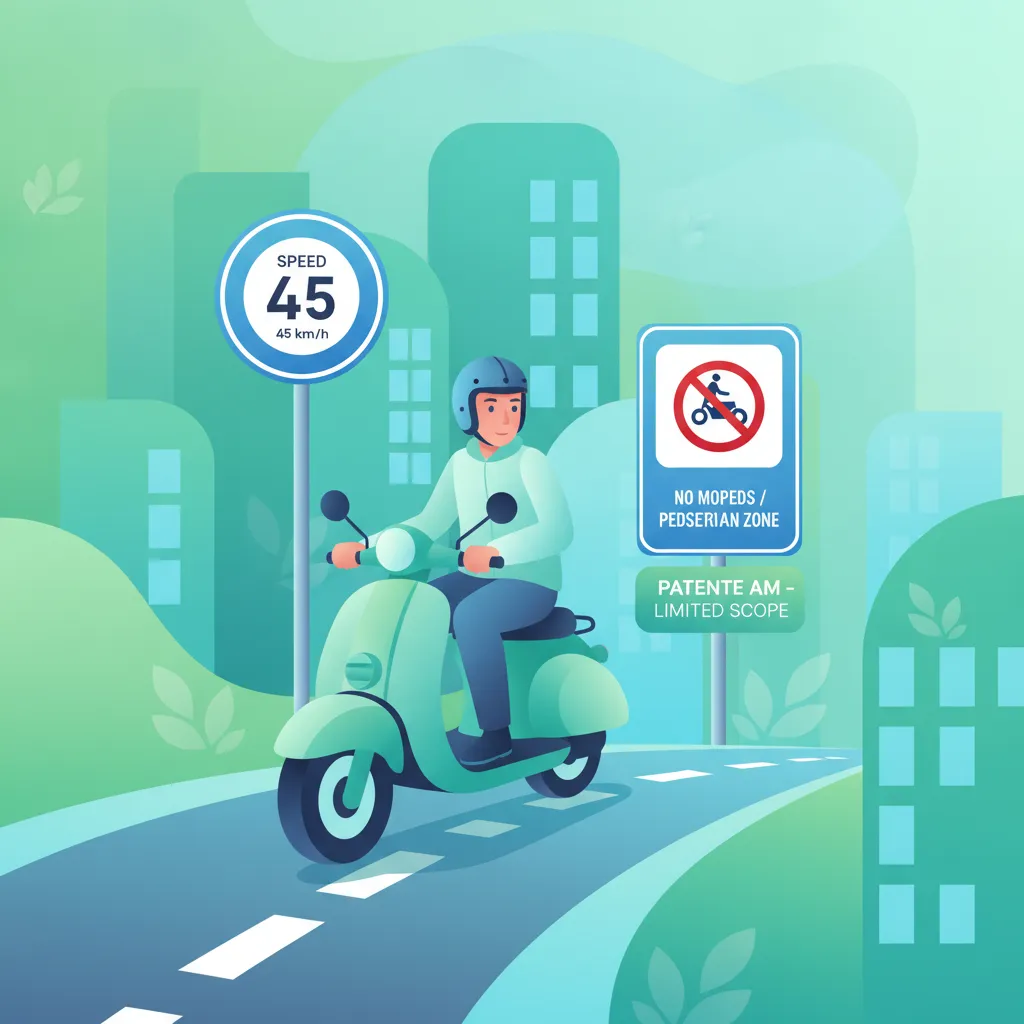
This lesson clarifies the precise scope of the Patente AM license, defining the vehicle categories it permits based on technical specifications. It details the legal limits on power, engine displacement, and maximum speed for mopeds and similar vehicles. You will also learn about the minimum age, registration process, and mandatory insurance needed to operate on public roads.
Explore the full scope of legal duties for first-time AM license holders in Italy, including mandatory helmet use, protective clothing, and fundamental traffic laws. Ensure safe and legal operation of your moped.
This lesson details the essential protective equipment required for legal and safe moped operation in Italy. It covers legal standards for helmets, the benefits of wearing protective gloves and boots, and the importance of high-visibility clothing. You will also learn the correct use of your vehicle's lighting system for visibility during both day and night.
This lesson details the continuous duties of a Patente AM license holder beyond passing the exam. It covers the importance of regular vehicle maintenance, including checks on tires, brakes, and lights. The lesson also reinforces the legal obligation to maintain valid insurance and registration while adhering to all traffic laws for personal and public safety.
This lesson focuses on the specific regulatory and warning signs that Patente AM riders must understand and obey. It details signs related to speed limits, no-entry zones, and mandatory directions that directly impact moped operation. You will also learn to recognize warning signs for potential hazards like sharp curves, slippery surfaces, and pedestrian areas.
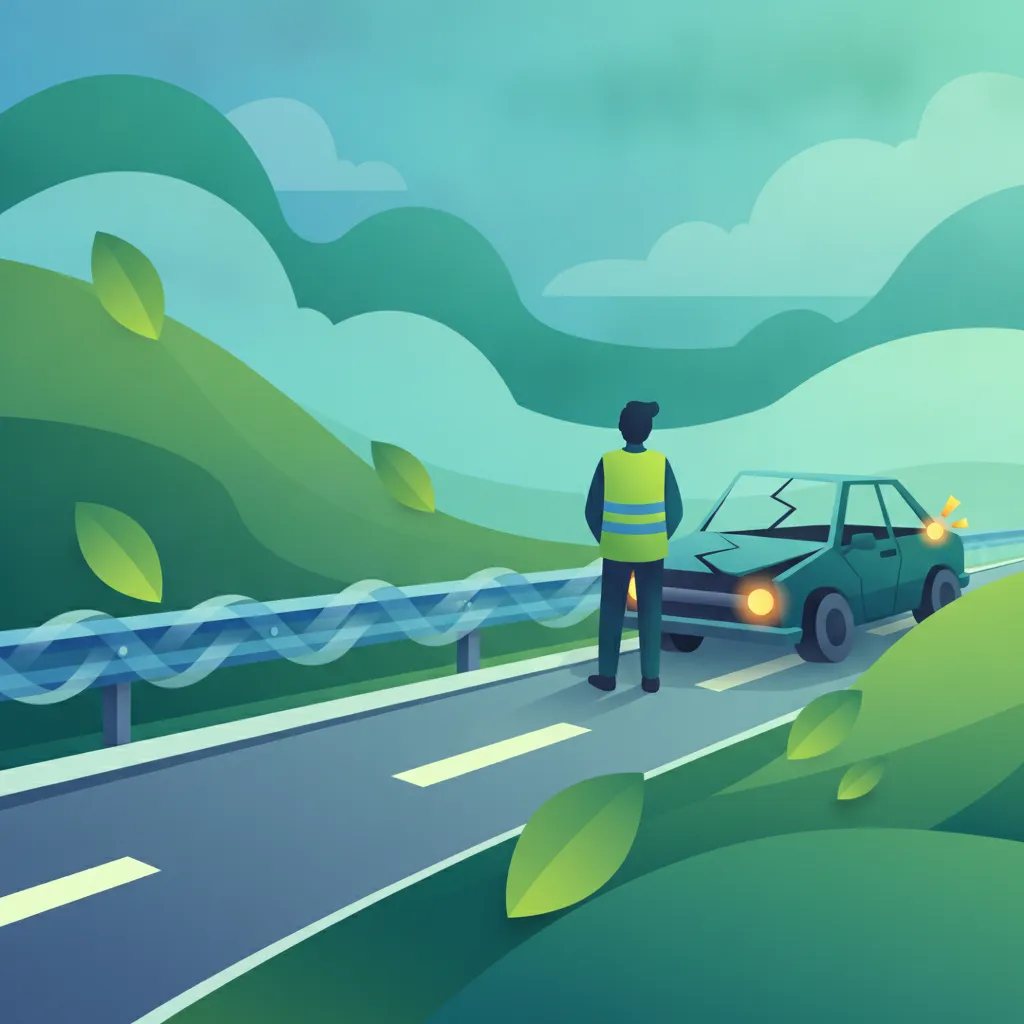
This lesson equips riders with the correct procedures to follow in the event of a breakdown or accident. It covers how to move the vehicle to a safe location, alert other traffic, and contact emergency services using the universal 112 number. You will also learn the basics of accident scene management and the necessary steps for reporting the incident to police and insurance.
This lesson provides a clear overview of the legal penalties for traffic violations in Italy. It explains the structure of fines and the penalty point system that can lead to license suspension or revocation. The content also touches on more severe consequences, including criminal liability for incidents causing injury, to emphasize the importance of lawful riding.
This lesson explains the function of Italian traffic light systems and the meaning of various road markings. You will learn the rules for red, amber, and green signals, including flashing lights and directional arrows. It also covers how to interpret lane lines, stop lines, and other surface markings that dictate correct vehicle positioning and movement.
This lesson clarifies the precise scope of the Patente AM license, defining the vehicle categories it permits based on technical specifications. It details the legal limits on power, engine displacement, and maximum speed for mopeds and similar vehicles. You will also learn about the minimum age, registration process, and mandatory insurance needed to operate on public roads.
This lesson provides a detailed breakdown of the vehicle types authorized under the Patente AM license. You will learn to distinguish between ciclomotori, scooters, three-wheeled mopeds, and light quadricycles by their specific characteristics. Key topics include engine displacement limits, power output, and mandatory equipment like lights, mirrors, and brakes as required by Italian law.
This lesson focuses on the comprehensive duties of a motorcyclist, from ensuring vehicle and equipment legality to following traffic regulations. It covers key obligations mandated by the Codice della Strada, such as mandatory insurance coverage and adherence to environmental rules. The material reinforces the importance of responsible road conduct and the legal consequences of non-compliance.
This lesson addresses high-risk behaviors often associated with young and inexperienced riders. It highlights the dangers of distractions like mobile phone use, the influence of peer pressure, and the severe consequences of speeding or riding under the influence of substances. Understanding these risks is the first step toward developing a mature and responsible approach to riding.
Find clear answers to common questions learners have about Legal Requirements for First-Time Riders. Learn how the lesson is structured, which driving theory objectives it supports, and how it fits into the overall learning path of units and curriculum progression in Italy. These explanations help you understand key concepts, lesson flow, and exam focused study goals.
All Patente AM riders must wear an approved, homologated helmet that is correctly fastened. While other protective clothing is highly recommended for safety, the helmet is the primary legal requirement under Italian road traffic law.
Yes, even for the Patente AM, riders are subject to the penalty point system. Violating traffic laws can result in the loss of points, which may lead to mandatory training or license suspension if the total reaches zero.
The ability to carry a passenger depends on the specific type of vehicle and whether it is homologated for two people, provided the driver is at least 16 years old. Always check the vehicle's registration document (carta di circolazione).
Modifying a moped to exceed the legal speed or power limits for the AM category is a serious violation. It can lead to heavy fines, impoundment of the vehicle, and severe legal consequences, as it invalidates your insurance and license compliance.
Start searching now to pinpoint exactly which Italian driving theory topics, road signs, or traffic rules you need to master. Use our advanced filters to build a custom practice session and ensure you're fully prepared for every aspect of your official driving licence exam.