
This lesson establishes the legal foundation for your Patente AM licence in Italy by defining the vehicles you are permitted to operate. You will learn the specific technical limitations regarding power and speed that differentiate AM vehicles from other categories, preparing you for initial exam questions.
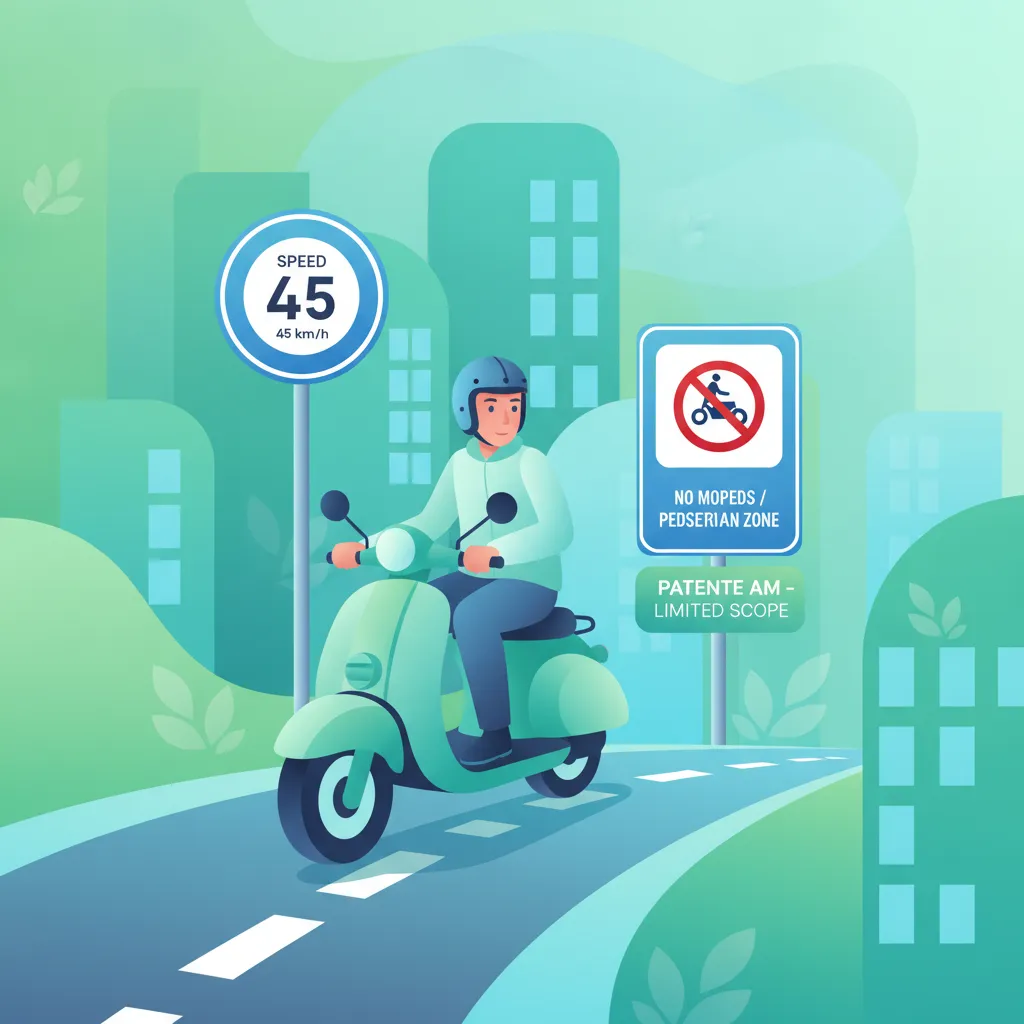
Lesson content overview
Welcome to the Italian Driving License Theory – Patente AM Specialization curriculum. This lesson provides an in-depth exploration of the Patente AM driving license, a crucial entry point for young riders in Italy. We will thoroughly examine the precise scope of this license, defining the exact vehicle categories it permits based on technical specifications, and detailing the legal limits on power, engine displacement, and maximum speed. Furthermore, you will learn about the essential requirements such as minimum age, the mandatory registration process, and the necessary insurance needed to legally operate these vehicles on public roads.
Understanding these details is not just about passing an exam; it is fundamental for complying with the Italian Codice della Strada (Highway Code), ensuring your safety and the safety of others, and avoiding serious penalties. This knowledge forms the bedrock for subsequent topics on vehicle handling, rider responsibilities, and general road safety.
The Patente AM is a specific category of Italian driving license that authorizes its holder to operate light two-wheeled vehicles, commonly referred to as mopeds or motor scooters, subject to clearly defined technical and legal constraints. It represents the introductory tier in the Italian licensing system for powered vehicles, designed to provide a regulated and safe entry point for individuals as young as 14 years old to begin their journey as road users.
The primary purpose of the Patente AM is to allow young riders to develop essential vehicle control skills and road awareness without the added complexities and risks associated with high-speed traffic. By limiting the performance capabilities of the vehicles permitted, the legal framework aims to mitigate risks, reduce the severity of potential accidents, and ensure a graduated approach to driving responsibility. Any deviation from the defined technical specifications or usage conditions constitutes a violation of the Codice della Strada, leading to fines and other legal consequences.
The Patente AM strictly covers vehicles classified under the AM category. This classification is based on precise technical specifications, ensuring that only low-power, low-speed vehicles are accessible to holders of this license. These specifications apply to both internal combustion engine vehicles (mopeds) and electric vehicles (electric scooters or light electric quadricycles).
An AM category vehicle is legally defined by several key characteristics:
These precise definitions ensure that vehicles driven by Patente AM holders are consistently within a performance range considered appropriate for less experienced riders and compatible with certain road types.
The heart of an AM category vehicle's classification lies in its power unit. For traditional gasoline-powered mopeds, the engine displacement is the critical factor. It must be less than or equal to 50 cm³. This limit has been a long-standing standard for what is colloquially known as a "cinquantino" (a 50cc vehicle) in Italy.
For electric scooters and other electric AM vehicles, the equivalent measure is continuous rated power, which must not exceed 4 kW. This ensures that electric vehicles, while offering instant torque, do not provide excessive acceleration or top speed. Vehicles exceeding these power or displacement limits fall into higher license categories, such as A1, A2, or A, and require more advanced licenses.
Crucially, an AM category vehicle's maximum design speed cannot exceed 45 km/h. This is a hard technical limit determined by the vehicle's manufacturer and confirmed through homologation. It means that even if a rider physically attempts to exceed this speed, the vehicle is designed not to be capable of it under normal operating conditions. This limitation is a fundamental safety measure, preventing these low-speed vehicles from being used in environments where higher speeds are common, thus reducing collision risks.
For light quadricycles, which also fall under the Patente AM, there is an additional consideration: the power-to-weight ratio. This ratio must not exceed 0.1 kW/kg. This specification is particularly relevant for electric light quadricycles, ensuring that their performance remains suitable for the Patente AM category, even with potentially heavier battery packs. This metric helps prevent disproportionately powerful vehicles from being classified as AM, thereby maintaining a consistent safety profile for the license category.
The Patente AM is unique in that it allows individuals to start riding at a younger age than other license categories. However, this early access comes with specific supervision requirements to ensure safety and responsible learning.
The minimum age to obtain the Patente AM in Italy is 14 years old. This early access is designed to integrate young people into the road user community, allowing them to gain experience with motorized vehicles under a controlled framework. At this age, applicants can begin the process of theoretical study and practical training necessary to pass the Patente AM exam.
A significant limitation for young Patente AM holders is the "first rider" (accompagnatore) rule. For any rider aged between 14 and 17 years old, the Patente AM is considered "unaccompanied" until they turn 18. During this period, when operating an AM category vehicle, the minor must be accompanied by a responsible adult who acts as a "first rider."
The accompanying adult must meet specific criteria: they must hold a valid driving license of category B or higher (e.g., A, A1, A2, B) and must have held that license for at least three years. This ensures the adult has sufficient driving experience to provide effective supervision and intervention if necessary. The adult must be present on the vehicle, usually seated on the passenger seat, throughout the ride.
The "first rider" has critical responsibilities. They are not merely a passenger but an active supervisor, legally accountable for the minor's adherence to traffic laws and safe riding practices. This includes ensuring the minor maintains appropriate speeds, understands road signs, and navigates traffic safely. The adult must carry their own valid driving license during the ride. Misunderstandings often arise regarding the placement of the first rider; they must be seated appropriately on the passenger seat, typically behind the minor, not just following in another vehicle.
Operating an AM vehicle alone before the age of 18, without a qualified "first rider," is a serious violation of the Codice della Strada and can lead to significant fines and potential suspension of the Patente AM.
Operating any motorized vehicle on public roads in Italy, including those in the Patente AM category, comes with strict legal obligations regarding registration, insurance, and taxation. These requirements are in place to ensure public safety, enable vehicle traceability, and establish financial responsibility for potential damages.
Before an AM category vehicle can be legally used on public roads, it must be registered with the Motorizzazione Civile, which is the Italian Department of Motor Vehicles. This process assigns a unique registration plate (targa) to the vehicle and generates the Carta di Circolazione (Vehicle Registration Certificate). The Carta di Circolazione contains all essential technical information about the vehicle, including its engine displacement, power, and maximum design speed, confirming its classification as an AM vehicle.
Purchase an AM category vehicle (new or used).
Gather all necessary documents, including proof of ownership and technical specifications.
Submit the application for registration to the Motorizzazione Civile.
Pay the required fees.
Receive the registration plate (targa) and the Carta di Circolazione.
Ensure the Carta di Circolazione is always carried on board the vehicle.
Another non-negotiable requirement is the acquisition of a valid third-party liability insurance policy, known as RC Auto (Responsabilità Civile Auto). This insurance is compulsory for all motorized vehicles operating on public roads in Italy. It provides financial coverage for damages (to property or persons) that the insured vehicle might cause to third parties in an accident. Without an active RC Auto policy, operating an AM vehicle is strictly illegal and can result in severe penalties, including hefty fines and the seizure of the vehicle, regardless of whether an accident occurs.
In addition to registration and insurance, all motorized vehicles in Italy are subject to an annual road tax, known as "bollo" or "tassa di circolazione." This tax contributes to the maintenance and development of the national road infrastructure. The payment of the bollo must be kept up-to-date. Operating an AM vehicle with an expired bollo is an administrative offense and can result in fines.
It is a legal requirement to carry the Carta di Circolazione (Vehicle Registration Certificate) on board your AM vehicle at all times when driving on public roads. This document serves as official proof of the vehicle's registration and contains critical technical data that verifies its compliance with the AM category. Traffic police can request to see this document at any time.
The low-speed nature of AM category vehicles necessitates specific restrictions on the types of roads they can legally use. These rules are crucial for preventing dangerous speed differentials and ensuring the safety of both AM riders and other road users.
A fundamental limitation for Patente AM holders is the prohibition from using highways (autostrade), motorways, and expressways (raccordi autostradali). These roads are designed for high-speed traffic, and the maximum speed of 45 km/h for AM vehicles makes them inherently unsafe in such environments. The speed mismatch between a moped and faster vehicles on these roads creates a significant risk of collisions. This restriction applies regardless of whether the AM rider is accompanied by a "first rider" or not.
Riding an AM vehicle on an autostrada or similar high-speed road is a serious traffic violation, incurring significant fines, points on the license, and potentially the immediate impoundment of the vehicle.
Patente AM vehicles are generally permitted on:
It is vital to understand that even on a road where a higher speed limit is posted, an AM vehicle must never exceed its own maximum design speed of 45 km/h.
While an AM vehicle has a maximum design speed of 45 km/h, riders must always adhere to any lower posted speed limits on the roads they are using. For example, if a city street has a 30 km/h zone, the AM rider must not exceed 30 km/h, even though their vehicle could technically reach 45 km/h. Failure to respect posted speed limits is a common violation and can result in fines and points on the license.
The operational framework for the Patente AM and AM category vehicles is meticulously detailed within the Codice della Strada (Italian Highway Code). Familiarity with these specific articles is crucial for all Patente AM holders.
This article, or related sections within the Codice della Strada and its implementing regulations, defines the technical characteristics that classify a vehicle as belonging to the AM category. It covers the maximum design speed (45 km/h), engine displacement (up to 50 cm³ for internal combustion), and maximum power (up to 4 kW for electric motors), along with unladen mass limits for light quadricycles. This is the legal basis for determining which vehicles can be driven with a Patente AM.
Article 61, or relevant provisions, outlines the minimum age requirements for obtaining a Patente AM and establishes the "first rider" rule. It mandates that individuals under the age of 18 who hold a Patente AM must be accompanied by a qualified adult (holding a B or higher category license for at least three years) when operating an AM category vehicle. This rule underscores the graduated approach to licensing in Italy, prioritizing safety for young, inexperienced drivers.
This article, alongside other relevant regulations, establishes the compulsory nature of vehicle registration and the payment of the annual road tax (bollo) for all motorized vehicles intended for use on public roads. It ensures that all AM vehicles are officially recognized, traceable, and contribute to public infrastructure funding. Failure to comply with registration and tax obligations results in administrative penalties and potential vehicle seizure.
Article 702, or its corresponding legislative text, enforces the absolute requirement for all motorized vehicles, including AM category mopeds and scooters, to possess a valid third-party liability insurance policy (RC Auto). This legal mandate is critical for protecting third parties who may suffer damage or injury due to an accident caused by the insured vehicle. Driving without valid RC Auto is a severe offense with substantial fines and criminal liability.
This regulation specifically outlines the types of roads from which AM category vehicles are prohibited. It explicitly bars mopeds and scooters from using highways (autostrade), motorways, and expressways (raccordi autostradali). The rationale is safety, preventing low-speed vehicles from being on roads where high-speed traffic would create an unacceptable risk. Violations lead to fines and, in some cases, vehicle confiscation.
Article 849, or similar provisions, makes the wearing of an approved protective helmet mandatory for both the rider and any passenger of an AM category vehicle. This rule is a critical safety measure, significantly reducing the risk of severe head injuries in the event of an accident. Helmets must be homologated (approved) according to European standards. Failure to wear a helmet is a finable offense.
In the Italian Driving License Theory – Patente AM Specialization, understanding common mistakes and violations is as important as knowing the rules. Many riders, particularly new ones, unknowingly fall into traps that can lead to significant penalties.
One of the most frequent violations is operating a vehicle that technically exceeds the Patente AM limits. This might involve a scooter with an engine displacement greater than 50 cm³ (e.g., a 125 cm³ scooter) or an electric model with continuous power above 4 kW, even if it looks similar to an AM-compliant vehicle.
Despite the clear "first rider" rule, some minors (14-17 years old) attempt to ride alone without a qualified adult.
Riding an AM vehicle on a highway (autostrada), motorway, or high-speed expressway is strictly forbidden.
Some riders mistakenly believe they can use a newly purchased scooter before completing registration or without an active RC Auto policy. Others might neglect to renew their annual bollo or insurance.
Failing to wear an approved helmet, or carrying a passenger who is not wearing one, is a direct violation of safety regulations.
Modifying an AM category vehicle to increase its performance (e.g., increasing its top speed beyond 45 km/h, or boosting engine power) is illegal. Such modifications can reclassify the vehicle out of the AM category, making it illegal to drive with a Patente AM.
Beyond the explicit rules, safe riding with a Patente AM also involves understanding how various contextual factors can affect vehicle operation and rider safety.
Adverse weather conditions significantly impact the safe operation of an AM vehicle.
Being seen by other road users is paramount for safety, especially for smaller vehicles like mopeds.
Overloading an AM vehicle can compromise its handling, braking, and overall performance.
AM riders are themselves vulnerable road users, but they also share the road with pedestrians, cyclists, and other motorcyclists who are even more exposed.
The Italian Patente AM driving license serves as a gateway to motorized two-wheeled mobility, but it is accompanied by a stringent set of rules designed to ensure safety and compliance.
Adhering to these limitations ensures not only legal compliance but also promotes a safe and responsible riding experience, laying a solid foundation for your journey as a driver on Italy's roads.
The Patente AM is Italy's entry-level driving license for mopeds and light vehicles, obtainable at 14 years old with strict technical limits of 45 km/h maximum speed, 50 cm³ engine displacement, or 4 kW electric power. Riders under 18 must always be accompanied by a qualified 'first rider' meeting specific license and experience criteria. Legally operating an AM vehicle requires registration with the Motorizzazione Civile, mandatory third-party liability insurance (RC Auto), and annual road tax payment. These vehicles are banned from high-speed roads like autostrade, and all riders must wear approved helmets. Violations including unaccompanied minor riding, unregistered operation, or using prohibited roads result in significant fines, license points, and potential vehicle impoundment.
A short set of high-value points that capture the most important learning from this lesson.
Patente AM permits mopeds with maximum design speed of 45 km/h, engine displacement up to 50 cm³ (combustion) or 4 kW continuous power (electric)
The license can be obtained at age 14, but riders aged 14-17 must be accompanied by a qualified adult 'first rider' holding category B or higher for at least three years
All AM vehicles must be registered with the Motorizzazione Civile, carry valid RC Auto insurance, and pay annual road tax (bollo)
AM vehicles are prohibited from highways (autostrade), motorways, and expressways regardless of rider age or accompaniment
Light quadricycles under Patente AM have additional limits including unladen mass not exceeding 350 kg and power-to-weight ratio not exceeding 0.1 kW/kg
Explore all units and lessons included in this driving theory course.
50 cm³ for combustion engines and 4 kW for electric motors are the hard technical limits defining AM category vehicles
The first rider must be seated on the passenger vehicle, not following in another car
The Carta di Circolazione must always be carried on board the vehicle as official proof of registration
Maximum design speed of 45 km/h is a manufacturer-determined technical limit, not a situational one
RC Auto insurance is absolutely mandatory before operating any AM vehicle on public roads
Assuming a 125 cm³ scooter is AM-compliant just because it looks like a moped; vehicles exceeding 50 cm³ require A1 or higher license
Believing the first rider rule only applies until the minor passes their test rather than until age 18
Thinking that riding without insurance is acceptable for short trips or in low-traffic areas
Confusing the maximum design speed (45 km/h) with a situational limit that can be exceeded on faster roads
Overlooking that modifying a vehicle to increase speed or power reclassifies it and invalidates both the AM license and insurance coverage
Lesson content overview
A short set of high-value points that capture the most important learning from this lesson.
Patente AM permits mopeds with maximum design speed of 45 km/h, engine displacement up to 50 cm³ (combustion) or 4 kW continuous power (electric)
The license can be obtained at age 14, but riders aged 14-17 must be accompanied by a qualified adult 'first rider' holding category B or higher for at least three years
All AM vehicles must be registered with the Motorizzazione Civile, carry valid RC Auto insurance, and pay annual road tax (bollo)
AM vehicles are prohibited from highways (autostrade), motorways, and expressways regardless of rider age or accompaniment
Light quadricycles under Patente AM have additional limits including unladen mass not exceeding 350 kg and power-to-weight ratio not exceeding 0.1 kW/kg
Explore all units and lessons included in this driving theory course.
50 cm³ for combustion engines and 4 kW for electric motors are the hard technical limits defining AM category vehicles
The first rider must be seated on the passenger vehicle, not following in another car
The Carta di Circolazione must always be carried on board the vehicle as official proof of registration
Maximum design speed of 45 km/h is a manufacturer-determined technical limit, not a situational one
RC Auto insurance is absolutely mandatory before operating any AM vehicle on public roads
Assuming a 125 cm³ scooter is AM-compliant just because it looks like a moped; vehicles exceeding 50 cm³ require A1 or higher license
Believing the first rider rule only applies until the minor passes their test rather than until age 18
Thinking that riding without insurance is acceptable for short trips or in low-traffic areas
Confusing the maximum design speed (45 km/h) with a situational limit that can be exceeded on faster roads
Overlooking that modifying a vehicle to increase speed or power reclassifies it and invalidates both the AM license and insurance coverage
Explore search topics learners often look for when studying Scope and Limitations of Patente AM. These topics reflect common questions about road rules, driving situations, safety guidance, and lesson level theory preparation for learners in Italy.
Browse additional driving theory lessons that cover connected traffic rules, road signs, and common driving situations related to this topic. Improve your understanding of how different rules interact across everyday traffic scenarios.
Understand the precise technical specifications, including engine displacement, power, and maximum speed, that define vehicles eligible for the Italian Patente AM license. Learn about all legal requirements for registration, insurance, and age.
This lesson provides a detailed breakdown of the vehicle types authorized under the Patente AM license. You will learn to distinguish between ciclomotori, scooters, three-wheeled mopeds, and light quadricycles by their specific characteristics. Key topics include engine displacement limits, power output, and mandatory equipment like lights, mirrors, and brakes as required by Italian law.
This lesson explores the specific speed limits applicable to AM vehicles across various zones, including urban, residential, and rural roads. Emphasis is placed on understanding the signage that indicates both permanent and temporary speed restrictions. Learners will also examine the rationale behind these limits and the importance of adapting speed to road conditions and traffic density.
This lesson defines the scope of the Italian Patente B license according to the Codice della Strada. It clarifies the specific types of vehicles, including maximum weight and passenger capacity, that can be operated. The content also details the official requirements for applicants, such as minimum age, necessary health certifications, and vision standards needed to qualify for the license.
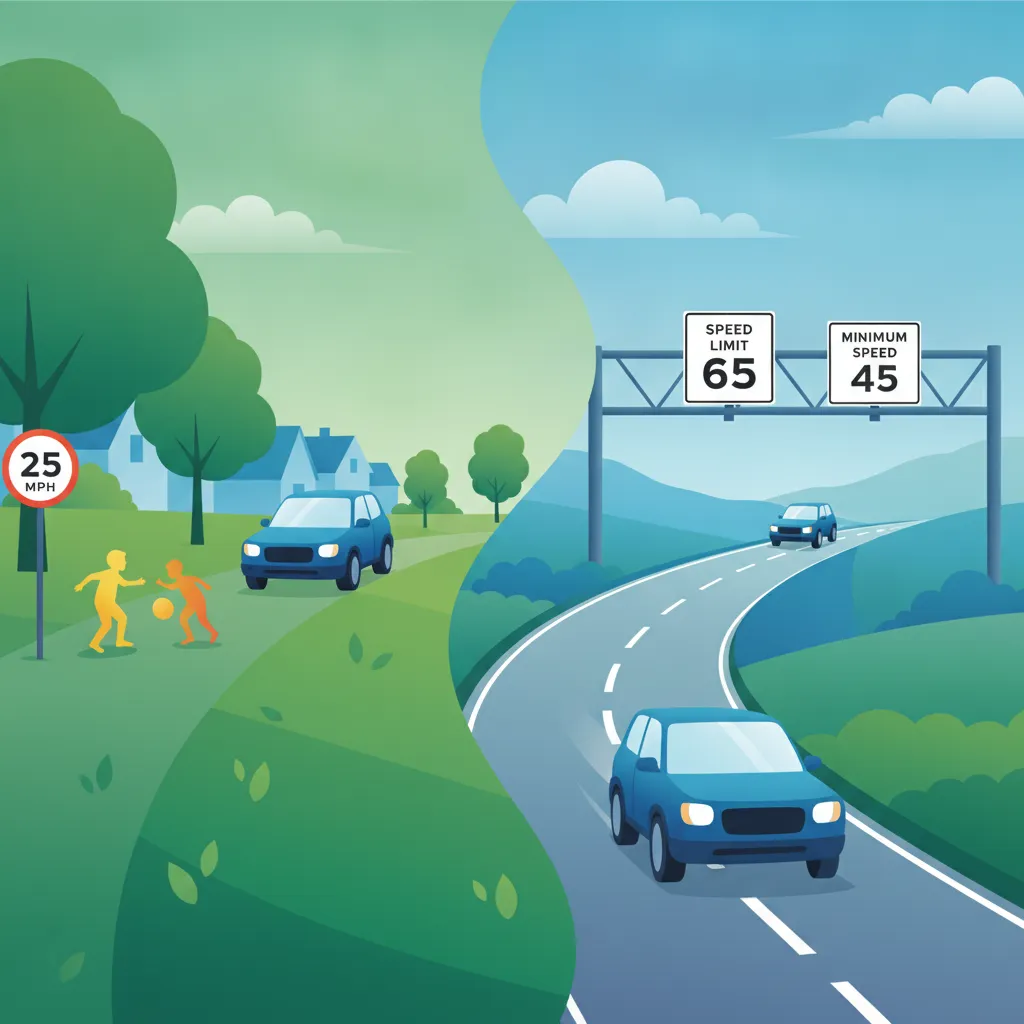
This lesson details the legal speed limits applicable to different road classifications in Italy. It covers the standard limits for urban centers, extra-urban secondary roads, main extra-urban roads, and motorways (autostrade). The content also highlights the lower speed limits that apply to beginner drivers and in specific conditions such as adverse weather or road construction zones.

This lesson explains the function of Italian traffic light systems and the meaning of various road markings. You will learn the rules for red, amber, and green signals, including flashing lights and directional arrows. It also covers how to interpret lane lines, stop lines, and other surface markings that dictate correct vehicle positioning and movement.
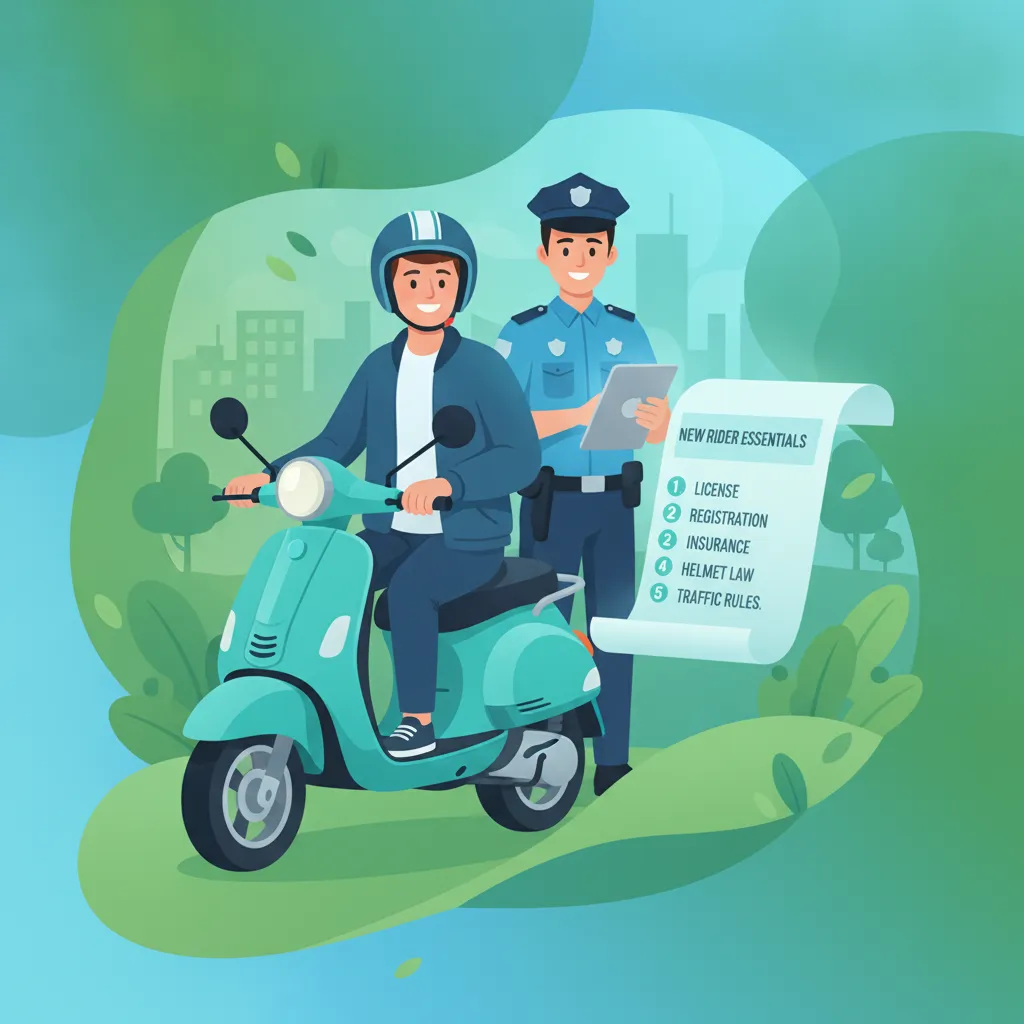
This lesson focuses on the legal obligations that first-time riders must meet to operate an AM vehicle safely and legally. It details the mandatory use of certified helmets and appropriate protective clothing. Furthermore, it outlines fundamental traffic laws new riders must know and the legal repercussions of non-compliance, such as fines and penalty points.
This lesson details the essential protective equipment required for legal and safe moped operation in Italy. It covers legal standards for helmets, the benefits of wearing protective gloves and boots, and the importance of high-visibility clothing. You will also learn the correct use of your vehicle's lighting system for visibility during both day and night.
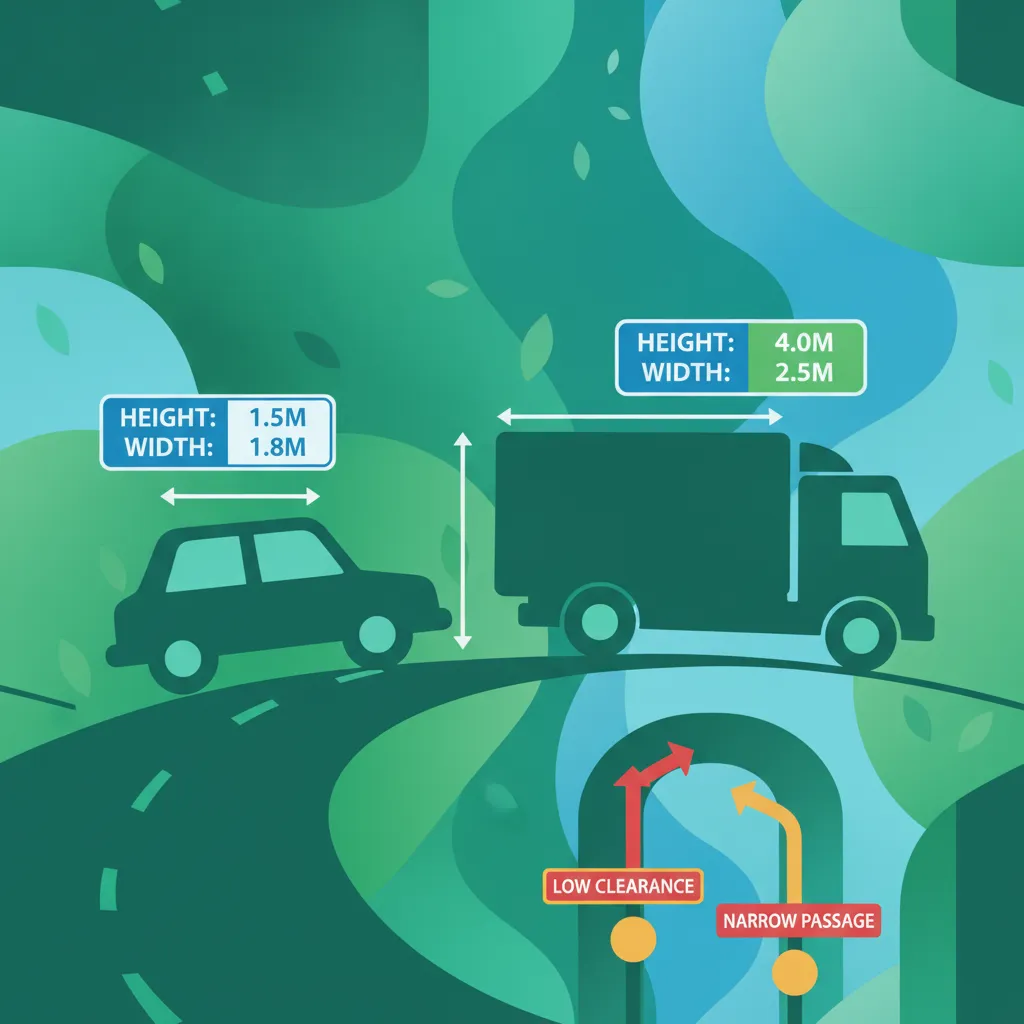
This lesson focuses on the specific dimensional limits that heavy goods vehicles must adhere to on Italian roads, as stipulated by the Codice della Strada. It covers the maximum permissible length, width, and height, explaining how these restrictions impact navigation through tunnels, under bridges, and within urban environments. Learners will also understand the conditions under which special permits for exceptional or oversized transport are required.
This lesson focuses on the specific regulations applicable to beginner drivers (neopatentati) during their first three years of holding a Patente B. It outlines the stricter speed limits on motorways and main roads, as well as the restrictions on vehicle power-to-weight ratios. Furthermore, it details the absolute zero-tolerance policy for alcohol consumption and the increased penalties for traffic violations during this probationary period.

This lesson teaches riders how to maintain a safe following distance using the two-second rule, which accounts for reaction time and braking distance. It covers grip management, explaining how tire condition and road surfaces like wet asphalt affect traction. Mastering these concepts is essential for anticipating hazards and preventing rear-end collisions.
Explore the specific age restrictions and mandatory 'first rider' rules for Patente AM license holders under 18 in Italy. Learn about permitted road types, prohibited highways, and consequences of violations for safe driving.
This lesson focuses on the legal obligations that first-time riders must meet to operate an AM vehicle safely and legally. It details the mandatory use of certified helmets and appropriate protective clothing. Furthermore, it outlines fundamental traffic laws new riders must know and the legal repercussions of non-compliance, such as fines and penalty points.
This lesson provides a detailed breakdown of the vehicle types authorized under the Patente AM license. You will learn to distinguish between ciclomotori, scooters, three-wheeled mopeds, and light quadricycles by their specific characteristics. Key topics include engine displacement limits, power output, and mandatory equipment like lights, mirrors, and brakes as required by Italian law.
This lesson explores the specific speed limits applicable to AM vehicles across various zones, including urban, residential, and rural roads. Emphasis is placed on understanding the signage that indicates both permanent and temporary speed restrictions. Learners will also examine the rationale behind these limits and the importance of adapting speed to road conditions and traffic density.
This lesson explains the function of Italian traffic light systems and the meaning of various road markings. You will learn the rules for red, amber, and green signals, including flashing lights and directional arrows. It also covers how to interpret lane lines, stop lines, and other surface markings that dictate correct vehicle positioning and movement.
This lesson defines the scope of the Italian Patente B license according to the Codice della Strada. It clarifies the specific types of vehicles, including maximum weight and passenger capacity, that can be operated. The content also details the official requirements for applicants, such as minimum age, necessary health certifications, and vision standards needed to qualify for the license.
This lesson focuses on the specific regulations applicable to beginner drivers (neopatentati) during their first three years of holding a Patente B. It outlines the stricter speed limits on motorways and main roads, as well as the restrictions on vehicle power-to-weight ratios. Furthermore, it details the absolute zero-tolerance policy for alcohol consumption and the increased penalties for traffic violations during this probationary period.

This lesson details the continuous duties of a Patente AM license holder beyond passing the exam. It covers the importance of regular vehicle maintenance, including checks on tires, brakes, and lights. The lesson also reinforces the legal obligation to maintain valid insurance and registration while adhering to all traffic laws for personal and public safety.
This lesson teaches riders how to maintain a safe following distance using the two-second rule, which accounts for reaction time and braking distance. It covers grip management, explaining how tire condition and road surfaces like wet asphalt affect traction. Mastering these concepts is essential for anticipating hazards and preventing rear-end collisions.
This lesson focuses on the specific regulatory and warning signs that Patente AM riders must understand and obey. It details signs related to speed limits, no-entry zones, and mandatory directions that directly impact moped operation. You will also learn to recognize warning signs for potential hazards like sharp curves, slippery surfaces, and pedestrian areas.

This lesson explains how to execute left turns, right turns, and U-turns safely while maintaining correct lane discipline. It covers interpreting road markings and arrows, selecting the proper vehicle position, and using signals in a timely manner. Performing shoulder checks to monitor blind spots before and during a turn is a key focus for preventing collisions.
Find clear answers to common questions learners have about Scope and Limitations of Patente AM. Learn how the lesson is structured, which driving theory objectives it supports, and how it fits into the overall learning path of units and curriculum progression in Italy. These explanations help you understand key concepts, lesson flow, and exam focused study goals.
For mopeds (two-wheeled vehicles), the maximum engine displacement is 50 cubic centimetres (cc) for internal combustion engines, or a maximum power output of 4 kW for electric motors.
Yes, the Patente AM license covers light quadricycles (microcars) provided they meet specific criteria, such as a maximum power of 6 kW and mass under 350 kg.
The minimum age to obtain the Patente AM license in Italy is 14 years old.
Yes, mandatory civil liability insurance (RC Auto) is required for all vehicles authorized under the AM category before they can be operated on public roads.
Start searching now to pinpoint exactly which Italian driving theory topics, road signs, or traffic rules you need to master. Use our advanced filters to build a custom practice session and ensure you're fully prepared for every aspect of your official driving licence exam.