
This lesson explores the psychological and physical factors behind risky riding behaviours frequently seen in young moped and scooter users. Understanding these hazards is essential for your Patente AM theory exam and your future safety on Italian roads. We will examine how to build a responsible mindset to navigate mixed traffic effectively.
Lesson content overview
Becoming a new rider for the Patente AM category in Italy brings freedom and responsibility. While the allure of riding a moped or scooter is strong, it is crucial to recognize and avoid common risky behaviors that can lead to serious accidents and legal consequences. This lesson provides a detailed overview of these dangers, helping you develop a mature and responsible approach to riding. Understanding these risks is not just about passing an exam; it is about ensuring your safety and the safety of others on Italian roads.
Young and inexperienced riders, particularly those new to Patente AM vehicles, often face unique psychological challenges that can contribute to risky behaviors. Their stage of cognitive development means that while they might understand rules, their ability to assess risks and predict consequences is still maturing.
A significant factor is the combination of inexperience and overconfidence. New riders may overestimate their riding skills and underestimate the inherent dangers of road environments. This can lead to them taking unnecessary risks, such as attempting maneuvers beyond their capability or failing to recognize developing hazards. They might believe they can react faster or control the vehicle better than they actually can, leading to dangerous situations.
Effective risk perception involves accurately gauging speed, distance, and the time needed to react to changing road conditions or other traffic. For young riders, this skill takes time and practice to develop. They might struggle to anticipate potential conflicts, such as a car pulling out unexpectedly, or misjudge the stopping distance required in an emergency. Developing strong risk perception requires conscious effort, observation, and a willingness to learn from every riding experience. It is a critical component of safe riding, especially for lighter, less stable AM category vehicles.
Distractions divert a rider's attention from the critical task of operating a vehicle safely. For moped and scooter riders, who require constant balance and vigilance, distractions are particularly dangerous. They can be categorized into visual (eyes off the road), manual (hands off the handlebars), and cognitive (mind off the task).
One of the most pervasive and dangerous distractions is mobile phone use. Interacting with a phone – whether checking messages, making calls, or browsing – takes your eyes, hands, and mind away from the road. This significantly increases reaction times and reduces awareness of your surroundings. Even a brief glance at a screen can mean missing a critical traffic sign, a pedestrian stepping into the road, or a sudden change in traffic flow.
Italian law, specifically Article 173 of the Codice della Strada, strictly prohibits the use of handheld mobile phones while driving or riding. This applies to all vehicles, including AM category mopeds and scooters. The rationale is clear: ensuring the rider maintains full control of the vehicle and maximum attention to the road. Violation of this rule carries significant penalties, including fines and points deducted from your license.
Using a handheld mobile phone while riding an AM vehicle is illegal and severely compromises your safety, increasing the risk of accidents.
While handheld phone use is illegal, some hands-free devices, such as Bluetooth headsets or integrated helmet communication systems, are permissible for making calls. However, it is crucial to understand that even hands-free communication can be a cognitive distraction. Engaging in a complex conversation still diverts mental attention from the road, potentially slowing your reaction time and reducing your ability to process critical information. Always prioritize riding and only use communication devices when absolutely necessary, keeping conversations brief and simple.
Beyond mobile phones, other distractions can compromise safety:
Peer pressure is a powerful social force, particularly among young people. When riding in groups, the desire to fit in, impress friends, or avoid being seen as cautious can lead to risky and illegal behaviors. This can manifest in several dangerous ways.
In a group setting, riders might feel pressured to exceed speed limits, perform dangerous stunts (like wheelies or riding without hands), or weave in and out of traffic aggressively to show off. These actions are extremely hazardous, dramatically increasing the risk of losing control, colliding with other vehicles, or injuring pedestrians. Public roads are not venues for stunt riding; such activities are illegal and punishable.
When riding with friends, encourage safe and responsible behavior. A true friend respects your decision to ride safely.
Another common issue linked to peer pressure is violating passenger regulations. Article 157 of the Codice della Strada specifies that AM category vehicles may only carry one passenger, and only if the vehicle is explicitly designed and approved for two people. Attempting to carry two or more passengers on a scooter designed for one, or even exceeding the maximum weight limit, severely compromises the vehicle's stability, handling, and braking capability. This makes the moped significantly harder to control, especially during turns or emergency stops.
Resisting peer pressure requires confidence and a clear understanding of your safety priorities.
Speeding is a leading cause of road accidents and fatalities. For AM category vehicles, which are lighter and offer less protection than cars, the consequences of speeding are particularly severe.
The relationship between speed and safety is governed by fundamental physics:
In Italy, AM category vehicles (mopeds and scooters up to 50cc) have a maximum legal speed limit of 45 km/h. This limit is defined in Article 142 of the Codice della Strada. However, it is crucial to remember that this is an absolute maximum. Riders must always adjust their speed to be appropriate for the prevailing conditions, which may be significantly lower than the posted limit. For instance, in urban areas, residential zones, or near schools, lower local speed limits will apply, often 30 km/h or less.
Exceeding the 45 km/h limit for Patente AM vehicles, or any lower posted limit, carries severe penalties under Article 142 of the Codice della Strada, including significant fines and potential license suspension.
Simply adhering to the numerical speed limit is not always enough. Inappropriate speed means traveling faster than is safe for the current road conditions, even if you are below the legal maximum. Factors requiring a reduction in speed include:
Operating any vehicle under the influence of alcohol or drugs is profoundly dangerous and strictly illegal. For Patente AM riders, Italy enforces particularly stringent rules regarding substance impairment.
In Italy, for new drivers (including Patente AM holders) and those under 21, a zero Blood Alcohol Concentration (BAC) limit applies. This means that if you have consumed any detectable amount of alcohol and are found riding an AM vehicle, you are in violation of Article 186 of the Codice della Strada. Even a "small beer" or a single glass of wine can put you over this zero-tolerance limit.
Alcohol impairs your cognitive and motor functions in several critical ways:
The zero-tolerance BAC limit for Patente AM riders means that even a minimal amount of alcohol in your system can lead to severe legal penalties. Always choose not to drink if you plan to ride.
The use of illegal drugs, including cannabis, cocaine, or ecstasy, before or while riding is unequivocally prohibited and poses extreme dangers. These substances can cause:
Unlike alcohol, there is no "safe" limit for drugs in your system when driving. Any detectable presence can lead to severe legal consequences.
Even legal, over-the-counter, or prescription medications can impair your ability to ride safely. Many drugs, especially those for allergies, pain, or anxiety, can cause drowsiness, dizziness, blurred vision, or slow reaction times. Always read the warning labels on medications and consult your doctor or pharmacist about their potential effects on driving. If a medication advises against operating heavy machinery, it most certainly applies to riding an AM vehicle.
Wearing a certified protective helmet is arguably the most critical safety measure for any two-wheeled rider. Its importance cannot be overstated.
In Italy, Article 173 bis of the Codice della Strada makes it mandatory for both the rider and any passenger on an AM category vehicle to wear an approved protective helmet. This rule is absolute, regardless of speed, road type, or journey length. Non-compliance results in significant fines and potential administrative sanctions.
Not just any helmet will do. Your helmet must be:
Always ensure your helmet is certified, fits properly, and the chin strap is securely fastened before every ride. This single action can be the difference between life and death in a crash.
While the helmet is paramount, other protective gear significantly reduces injury severity:
Lighter vehicles like mopeds offer no structural protection, making personal protective equipment your only line of defense.
A well-maintained vehicle is a safe vehicle. Neglecting maintenance or improper load management can compromise the stability and control of your AM category moped or scooter, turning a minor issue into a major hazard.
Regular maintenance is crucial:
Every vehicle has a maximum permissible load specified by the manufacturer. Exceeding this limit can critically affect:
Distribute weight evenly and securely. Heavy items should be placed as low and as close to the center of the vehicle as possible. Never carry loads that obstruct your vision or interfere with the vehicle's controls.
Engaging in risky behaviors on Italian roads for Patente AM riders does not only increase accident risk; it also carries a range of legal penalties under the Codice della Strada. These sanctions are designed to deter unsafe practices and ensure road safety.
Italy operates a point-based license system (Patente a Punti). All new drivers, including Patente AM holders, start with 20 points. Each traffic violation results in a deduction of points. Accumulating too many deductions can lead to mandatory retraining courses, or eventually, the suspension or revocation of your license.
Violations and accidents, especially those involving risky behaviors, create a permanent record. This can affect future insurance premiums, employment opportunities (especially for jobs requiring driving), and the ability to obtain higher categories of driving licenses. A clean driving record is a testament to responsible riding and offers benefits beyond simply avoiding fines.
To ensure a safe and enjoyable riding experience with your Patente AM vehicle, cultivate these responsible habits:
By adopting these principles, you contribute not only to your own safety but also to the safety of everyone on Italy's roads.
This lesson addresses the main high-risk behaviors for young Patente AM riders in Italy, covering distraction (especially mobile phones under Article 173), peer pressure effects, speeding dangers governed by Article 142, and the strict zero-BAC rule under Article 186. It also covers mandatory helmet requirements under Article 173 bis, passenger and load regulations, vehicle maintenance essentials, and the penalty point system (Patente a Punti). Understanding these behavioral and legal aspects is essential for both passing the Italian theory exam and developing the responsible riding mindset needed for real-world safety on Italian roads.
A short set of high-value points that capture the most important learning from this lesson.
Mobile phone use while riding an AM vehicle is strictly prohibited under Article 173 of the Codice della Strada, regardless of whether it is handheld or hands-free.
Italy enforces a zero Blood Alcohol Concentration (BAC) limit for all Patente AM riders under Article 186, meaning any detectable alcohol is a violation.
The maximum legal speed for AM category vehicles is 45 km/h as defined by Article 142, but riders must always adjust speed to match road and weather conditions.
Wearing a certified helmet (ECE 22.05 or ECE 22.06) is mandatory for both rider and passenger under Article 173 bis, with chin strap properly fastened.
Young riders are psychologically vulnerable to overconfidence and underestimating hazards because their risk perception skills are still developing.
Explore all units and lessons included in this driving theory course.
Article 173: Handheld phones illegal while riding; hands-free devices reduce but do not eliminate cognitive distraction.
Article 186: Zero BAC limit for new Patente AM riders means any alcohol consumption before riding is prohibited.
Article 142: 45 km/h maximum speed limit for AM vehicles; local limits in urban zones are often 30 km/h or lower.
Article 173 bis: Helmet must be certified, properly fitted, and chin strap fastened every time you ride.
Vehicle load limits exist; overloading a scooter or carrying more passengers than designed severely compromises stability and braking.
Assuming hands-free phone use is completely safe; cognitive distraction from any phone conversation impairs reaction time.
Believing a small amount of alcohol will not matter; the zero-tolerance BAC rule means any detectable amount is a violation for AM riders.
Thinking that staying below the 45 km/h speed limit is always safe; conditions like rain, fog, or heavy traffic require significantly lower speeds.
Wearing a helmet without fastening the chin strap; an unfastened helmet offers virtually no protection in a crash.
Underestimating braking distance; doubling speed roughly quadruples stopping distance due to basic physics.
Lesson content overview
A short set of high-value points that capture the most important learning from this lesson.
Mobile phone use while riding an AM vehicle is strictly prohibited under Article 173 of the Codice della Strada, regardless of whether it is handheld or hands-free.
Italy enforces a zero Blood Alcohol Concentration (BAC) limit for all Patente AM riders under Article 186, meaning any detectable alcohol is a violation.
The maximum legal speed for AM category vehicles is 45 km/h as defined by Article 142, but riders must always adjust speed to match road and weather conditions.
Wearing a certified helmet (ECE 22.05 or ECE 22.06) is mandatory for both rider and passenger under Article 173 bis, with chin strap properly fastened.
Young riders are psychologically vulnerable to overconfidence and underestimating hazards because their risk perception skills are still developing.
Explore all units and lessons included in this driving theory course.
Article 173: Handheld phones illegal while riding; hands-free devices reduce but do not eliminate cognitive distraction.
Article 186: Zero BAC limit for new Patente AM riders means any alcohol consumption before riding is prohibited.
Article 142: 45 km/h maximum speed limit for AM vehicles; local limits in urban zones are often 30 km/h or lower.
Article 173 bis: Helmet must be certified, properly fitted, and chin strap fastened every time you ride.
Vehicle load limits exist; overloading a scooter or carrying more passengers than designed severely compromises stability and braking.
Assuming hands-free phone use is completely safe; cognitive distraction from any phone conversation impairs reaction time.
Believing a small amount of alcohol will not matter; the zero-tolerance BAC rule means any detectable amount is a violation for AM riders.
Thinking that staying below the 45 km/h speed limit is always safe; conditions like rain, fog, or heavy traffic require significantly lower speeds.
Wearing a helmet without fastening the chin strap; an unfastened helmet offers virtually no protection in a crash.
Underestimating braking distance; doubling speed roughly quadruples stopping distance due to basic physics.
Explore search topics learners often look for when studying Common Risky Behaviours Among Young Riders. These topics reflect common questions about road rules, driving situations, safety guidance, and lesson level theory preparation for learners in Italy.
Browse additional driving theory lessons that cover connected traffic rules, road signs, and common driving situations related to this topic. Improve your understanding of how different rules interact across everyday traffic scenarios.
Understand the legal repercussions of risky riding habits such as speeding, distraction, and riding under the influence. Covers fines, points, and license suspension under the Italian Codice della Strada for AM category vehicles.

This lesson provides a clear overview of the legal penalties for traffic violations in Italy. It explains the structure of fines and the penalty point system that can lead to license suspension or revocation. The content also touches on more severe consequences, including criminal liability for incidents causing injury, to emphasize the importance of lawful riding.
This lesson clarifies the precise scope of the Patente AM license, defining the vehicle categories it permits based on technical specifications. It details the legal limits on power, engine displacement, and maximum speed for mopeds and similar vehicles. You will also learn about the minimum age, registration process, and mandatory insurance needed to operate on public roads.
This lesson provides a comprehensive review of the legal consequences for violating traffic laws in Italy. It reinforces the workings of the points system, explaining how different offenses lead to deductions and how a total loss of points results in license revocation. The content also covers the scale of monetary fines for various infractions and the conditions under which a driver's license may be temporarily suspended.
This lesson explores the specific speed limits applicable to AM vehicles across various zones, including urban, residential, and rural roads. Emphasis is placed on understanding the signage that indicates both permanent and temporary speed restrictions. Learners will also examine the rationale behind these limits and the importance of adapting speed to road conditions and traffic density.
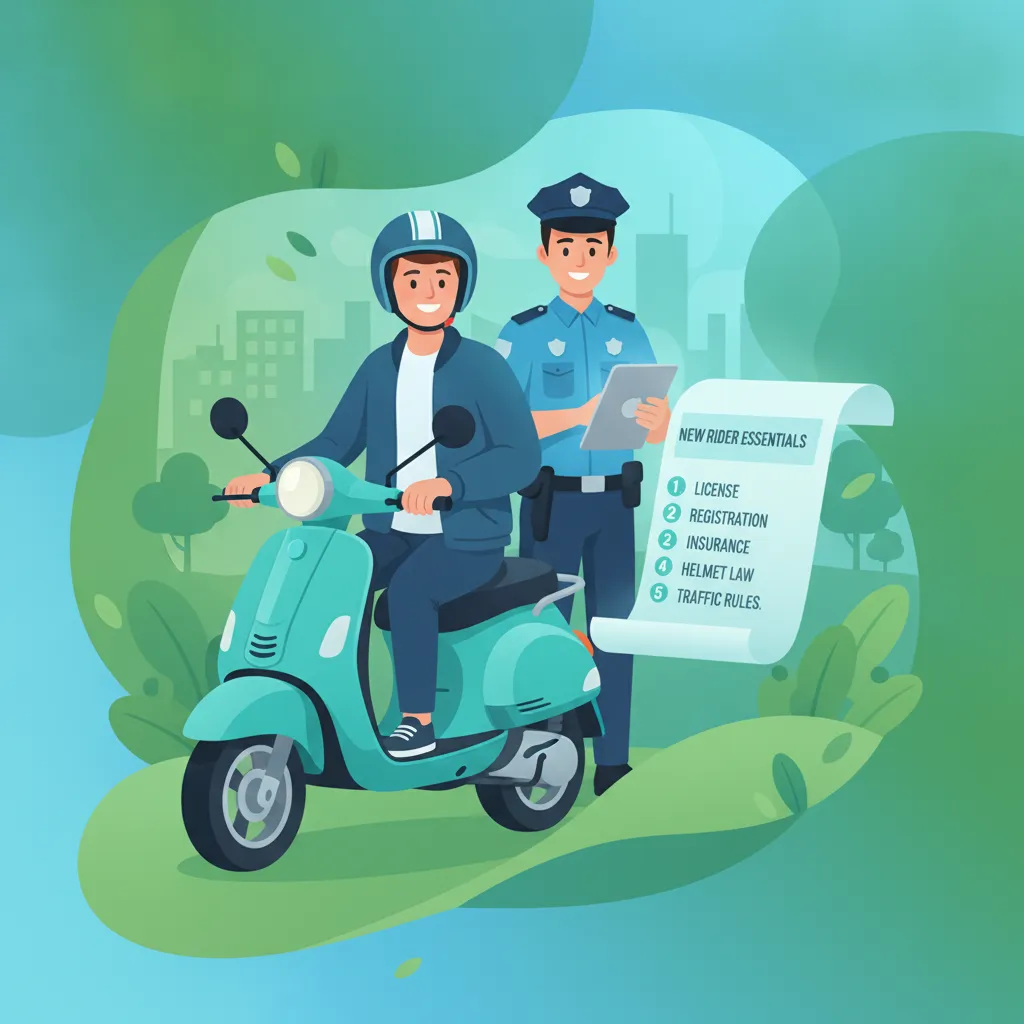
This lesson focuses on the legal obligations that first-time riders must meet to operate an AM vehicle safely and legally. It details the mandatory use of certified helmets and appropriate protective clothing. Furthermore, it outlines fundamental traffic laws new riders must know and the legal repercussions of non-compliance, such as fines and penalty points.
This lesson focuses on the specific regulatory and warning signs that Patente AM riders must understand and obey. It details signs related to speed limits, no-entry zones, and mandatory directions that directly impact moped operation. You will also learn to recognize warning signs for potential hazards like sharp curves, slippery surfaces, and pedestrian areas.
This lesson provides a detailed breakdown of the vehicle types authorized under the Patente AM license. You will learn to distinguish between ciclomotori, scooters, three-wheeled mopeds, and light quadricycles by their specific characteristics. Key topics include engine displacement limits, power output, and mandatory equipment like lights, mirrors, and brakes as required by Italian law.
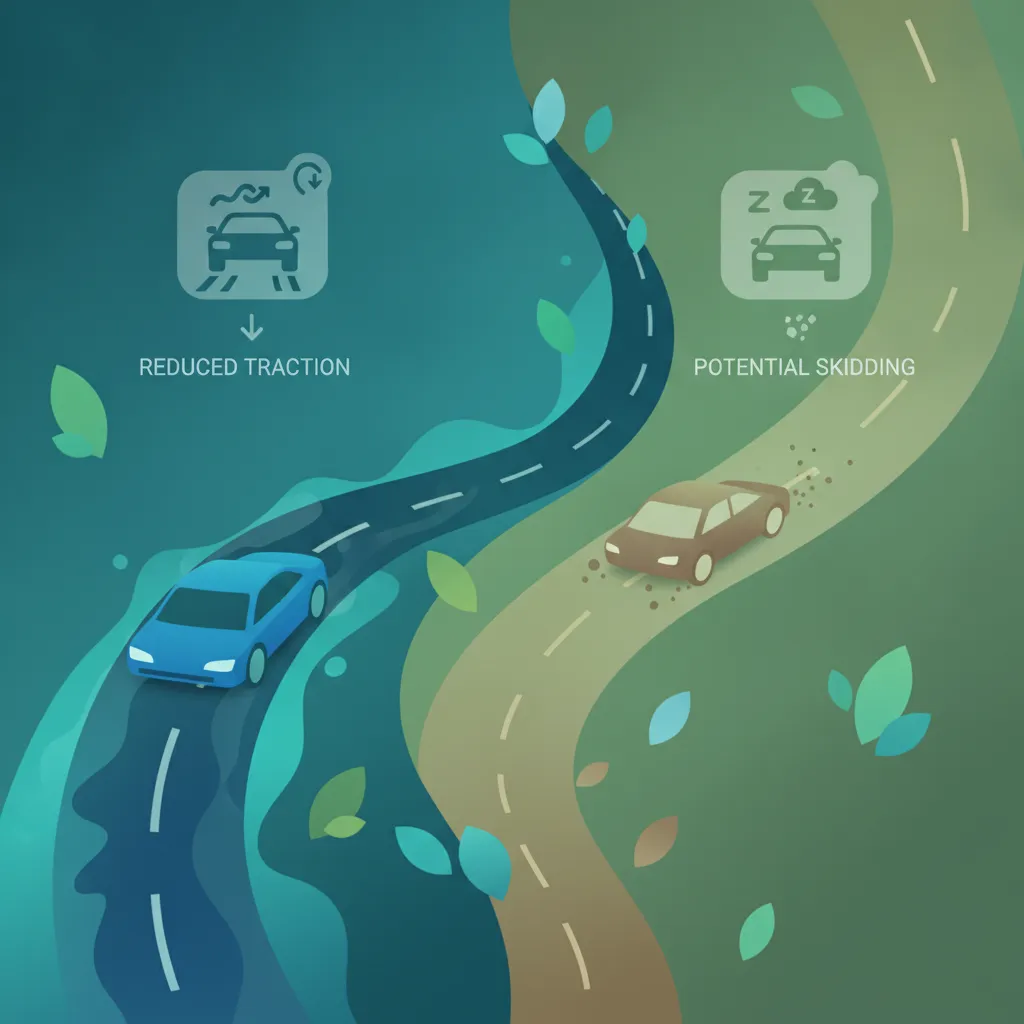
This lesson teaches riders to recognize and adapt to various road surfaces and their inherent risks. It covers the specific challenges posed by surfaces like gravel, sand, and metal tram tracks, which can significantly reduce traction. You will learn to adjust your speed, braking, and cornering techniques to safely navigate these and other hazards like potholes.
Explore the severe dangers and strict legal framework for riding under the influence of alcohol or drugs. Details Italy's zero BAC tolerance for new riders and the impact of medications on AM category vehicle safety.
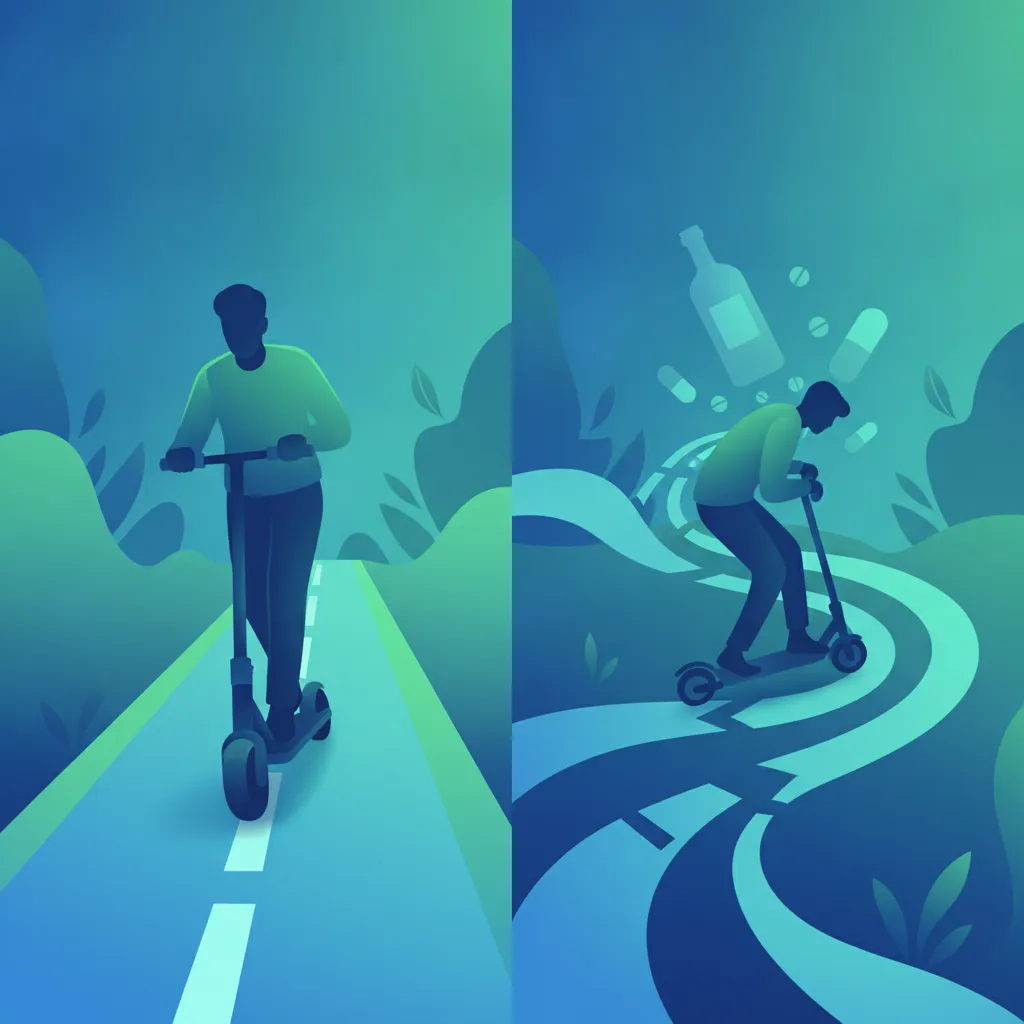
This lesson details the dangerous effects of alcohol, illegal drugs, and some prescription or over-the-counter medications on a rider's ability to operate a motorcycle safely. It explains how these substances impair coordination, judgment, vision, and reaction time. The content covers the strict legal blood alcohol concentration (BAC) limits in Italy and the severe legal penalties for riding under the influence.
This lesson details the profound and dangerous effects of alcohol and drugs on driving ability, including impaired coordination, slowed reaction time, and poor judgment. It specifies the legal blood alcohol concentration (BAC) limits in Italy, including the strict zero-tolerance policy for beginner drivers. The content also outlines the severe legal consequences of a DUI conviction, which can include heavy fines, license revocation, and imprisonment.
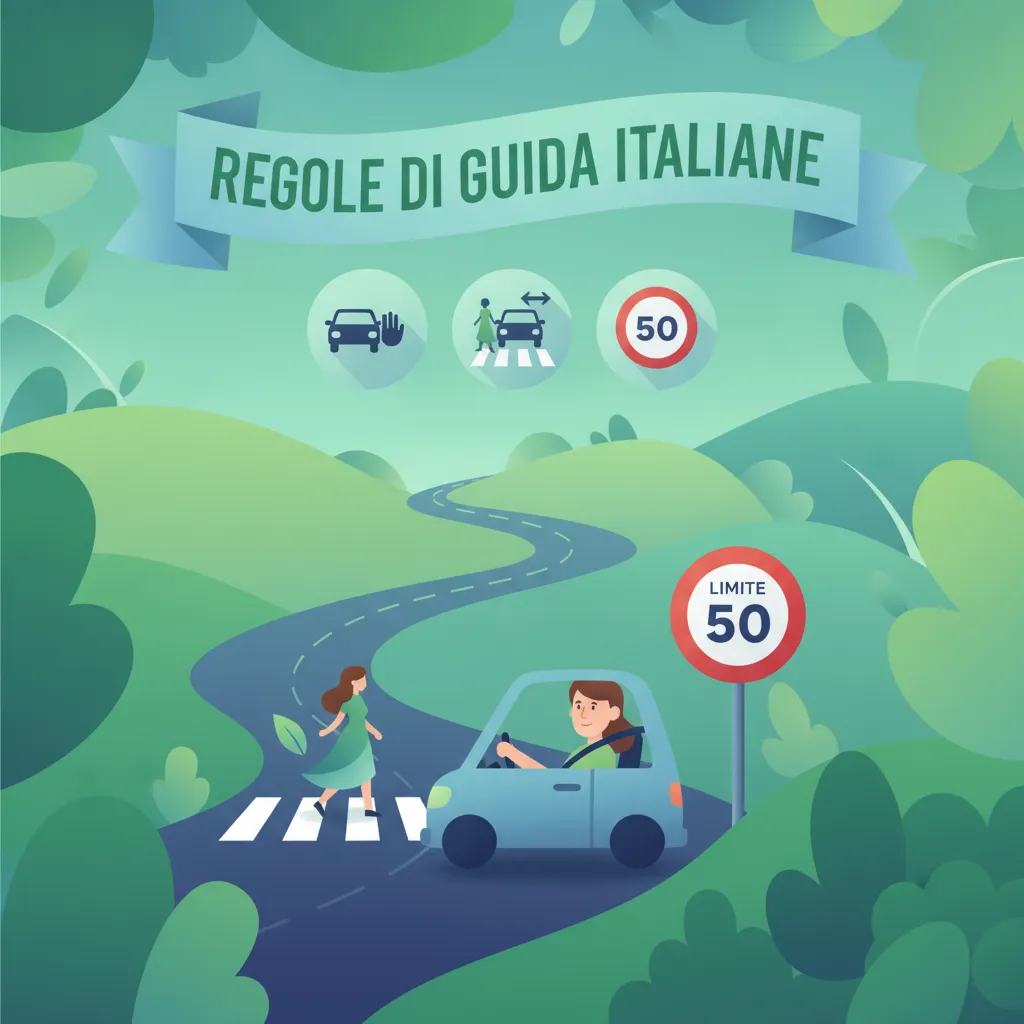
This lesson focuses on the specific regulations applicable to beginner drivers (neopatentati) during their first three years of holding a Patente B. It outlines the stricter speed limits on motorways and main roads, as well as the restrictions on vehicle power-to-weight ratios. Furthermore, it details the absolute zero-tolerance policy for alcohol consumption and the increased penalties for traffic violations during this probationary period.

This lesson explains how adverse weather conditions directly affect moped safety by reducing both tire grip and rider visibility. It covers the dangers of riding on wet roads, including the risk of hydroplaning, and provides strategies for managing these conditions. You will also learn techniques for enhancing your visibility to others during fog, rain, and nighttime riding.

This lesson explores the significant dangers of rider fatigue and dehydration, which can severely degrade concentration and slow reaction times. It teaches riders to recognize the early warning signs and implement proactive strategies to stay alert, such as taking regular breaks and maintaining proper hydration. The content stresses that managing one's physical and mental condition is a critical aspect of road safety.

This lesson teaches riders how to maintain a safe following distance using the two-second rule, which accounts for reaction time and braking distance. It covers grip management, explaining how tire condition and road surfaces like wet asphalt affect traction. Mastering these concepts is essential for anticipating hazards and preventing rear-end collisions.
This lesson clarifies the precise scope of the Patente AM license, defining the vehicle categories it permits based on technical specifications. It details the legal limits on power, engine displacement, and maximum speed for mopeds and similar vehicles. You will also learn about the minimum age, registration process, and mandatory insurance needed to operate on public roads.
Find clear answers to common questions learners have about Common Risky Behaviours Among Young Riders. Learn how the lesson is structured, which driving theory objectives it supports, and how it fits into the overall learning path of units and curriculum progression in Italy. These explanations help you understand key concepts, lesson flow, and exam focused study goals.
The exam aims to ensure that new riders not only know the rules of the road but also possess the mental maturity to handle a vehicle safely. By identifying risks early, you are less likely to be involved in accidents caused by inexperience or poor decision-making.
Using a phone significantly reduces your observation and reaction time, making you blind to hazards like sudden braking or crossing pedestrians. It is a major factor in traffic accidents and is strictly prohibited under the Italian Codice della Strada.
The exam tests your ability to prioritize safety over social expectations. Succumbing to peer pressure, such as speeding or riding in restricted areas, is seen as a sign of irresponsible behaviour that leads to legal penalties and dangerous road conditions.
Yes, you may encounter questions about the impact of alcohol and drugs on riding capability. These questions are designed to reinforce that any impairment drastically reduces your physical control and cognitive ability, leading to severe legal consequences and licence revocation.
Start searching now to pinpoint exactly which Italian driving theory topics, road signs, or traffic rules you need to master. Use our advanced filters to build a custom practice session and ensure you're fully prepared for every aspect of your official driving licence exam.