
This lesson details your ongoing responsibilities as a Patente AM holder in Italy, covering everything from essential vehicle maintenance to legal compliance. By mastering these duties, you ensure your safety on the road and meet the rigorous requirements of the official Italian theory exam.

Lesson content overview
Obtaining your Patente AM license is a significant milestone, granting you the freedom to navigate Italy's roads on a moped or light quadricycle. However, the responsibilities of a rider extend far beyond passing the theoretical and practical exams. This lesson delves into the crucial ongoing obligations that every Patente AM holder must uphold, focusing on continuous legal compliance, diligent vehicle maintenance, and unwavering adherence to traffic laws. Understanding and fulfilling these duties are paramount not only for your personal safety but also for the safety of other road users and for avoiding severe legal penalties.
The Italian Driving License Theory – Patente AM Specialization curriculum emphasizes that responsible riding is a lifelong commitment. By embracing these post-licensing duties, you contribute to a safer road environment and ensure your vehicle remains in optimal, legal operating condition. This foundational knowledge is essential before delving into more complex road scenarios and emergency procedures.
Every Patente AM holder in Italy is bound by a set of legal requirements that ensure proper identification, financial accountability, and roadworthiness of their vehicle. These are not one-time checks but continuous responsibilities that must be managed throughout the vehicle's lifespan and your ownership.
In Italy, every vehicle, including mopeds and light quadricycles under the Patente AM category, must be officially registered. This process creates a legal record of the vehicle and its owner, crucial for identification and legal accountability. The primary document proving this registration is the Libretto di circolazione (Registration Certificate).
The official vehicle registration document in Italy, containing all technical data about the vehicle (e.g., make, model, engine capacity, chassis number) and the details of its legal owner.
The Libretto di circolazione must always be carried with you while riding. It serves as proof that your vehicle is legally allowed on public roads and helps authorities identify both the vehicle and its responsible owner. Alongside this, your vehicle must display a valid targa (number plate) both at the front and rear, if specified for the vehicle type. These plates must be clearly visible, kept clean, and properly illuminated at night to ensure readability. Failure to display a proper number plate or carry the Libretto can lead to significant fines and even vehicle impoundment.
When purchasing a used moped, it is your responsibility as the new owner to ensure the registration is transferred into your name within 60 days. Neglecting this step means the vehicle is still legally linked to the previous owner, causing complications in case of accidents or violations.
One of the most critical legal obligations for any vehicle owner in Italy is maintaining valid third-party liability insurance, known as RC Auto (Responsabilità Civile Auto). This insurance is not optional; it is a mandatory requirement under Italian law.
Mandatory third-party liability insurance in Italy that covers damages caused to other parties (people, vehicles, property) in an accident where you are at fault.
The primary purpose of RC Auto is to provide financial protection for victims of accidents caused by your vehicle. Without it, you would be personally liable for potentially enormous costs related to injuries, vehicle repairs, and other damages. This legal framework ensures that victims receive compensation, preventing financial hardship.
You must always carry proof of your active insurance policy, typically in the form of a physical or digital "green card" (Certificato di assicurazione), while riding. Riding without valid RC Auto is a severe offense, leading to substantial fines, immediate seizure of your vehicle, and full personal liability for any damages you cause.
Do not mistakenly believe that low-power mopeds are exempt from insurance requirements. All motorized vehicles on public roads in Italy must have valid RC Auto.
To ensure that vehicles remain safe and environmentally compliant throughout their operational life, Italy mandates Revisione (Periodic Technical Inspections). These inspections are crucial for identifying and rectifying potential safety defects before they can lead to accidents or breakdowns.
A mandatory periodic technical inspection in Italy that verifies a vehicle's roadworthiness, safety features (e.g., brakes, lights, steering), and compliance with emission standards.
For Patente AM category vehicles (mopeds and light quadricycles), the inspection schedule is as follows:
The first inspection is required within four years of the initial registration date.
Subsequent inspections must be performed every two years thereafter.
During a Revisione, trained technicians thoroughly check critical components such as brakes, tires, lighting systems, exhaust emissions, and steering. If your vehicle passes the inspection, you will receive a compliance decal or stamp on your Libretto di circolazione. If it fails, you are legally prohibited from using the vehicle on public roads until the identified defects are repaired and the vehicle successfully passes a re-inspection. Driving a vehicle with an expired or failed Revisione can result in hefty fines and potential vehicle impoundment.
Beyond legal compliance, proactive routine maintenance of your Patente AM vehicle is a fundamental responsibility. Regular checks and timely servicing are vital for ensuring your moped's optimal performance, reliability, and most importantly, your safety on the road. Neglecting maintenance can directly lead to mechanical failures, accidents, and even invalidate your insurance coverage in certain scenarios.
Your tires are the sole contact points between your moped and the road, making their condition paramount for grip, braking, and handling.
Tire Pressure: Check tire pressure weekly, using the manufacturer's recommended values (found in your vehicle manual or on a sticker near the tire valve). Incorrect pressure, either too high or too low, compromises stability, reduces grip, and accelerates wear.
Tread Depth: The legal minimum tread depth in Italy for motorcycles and mopeds is 1.0 mm. However, it is highly recommended to replace tires when tread depth falls below 1.6 mm for optimal safety, especially in wet conditions. Worn treads significantly increase the risk of hydroplaning and reduce braking effectiveness.
Wear Pattern: Inspect your tires for uneven wear, cracks, bulges, or embedded objects. Uneven wear can indicate issues with suspension or wheel alignment, while cracks suggest aging and potential structural weakness.
Effective brakes are non-negotiable for safe riding. A malfunctioning brake system dramatically increases your stopping distance and collision risk.
Brake Pads/Shoes: Regularly inspect the thickness of your brake pads or shoes. Replace them before they reach their wear limit to maintain optimal braking performance. Squealing noises often indicate worn pads.
Brake Fluid: For hydraulic brake systems, check the brake fluid level in the reservoir. Low fluid can indicate a leak or severely worn pads. Brake fluid also needs periodic replacement (typically every 1-2 years) as it absorbs moisture, reducing its effectiveness.
Brake Levers/Pedals: Ensure brake levers and pedals operate smoothly without excessive free play and provide a firm, consistent feel.
A fully functional lighting system ensures you can see the road ahead and, crucially, that other road users can see you. This is especially vital for smaller vehicles like mopeds.
Headlights: Verify both low beam and high beam (if equipped) are working, providing adequate illumination.
Brake Lights: Confirm that your brake light illuminates brightly when either the front or rear brake is applied. This alerts following traffic to your deceleration.
Turn Signals: Check that all four turn signals (two front, two rear) flash correctly and are clearly visible.
Tail Light/License Plate Light: Ensure your tail light is always on and that your license plate light properly illuminates your rear targa at night.
While Patente AM vehicles are typically lower power, their engines still require proper lubrication and filtration for longevity and performance. Consult your owner's manual for recommended engine oil types and change intervals. Regular oil changes prevent premature engine wear, while clean air and fuel filters ensure efficient combustion.
Compliance with the Codice della Strada (Italian Highway Code) is a continuous and mandatory obligation for every rider. These laws are designed to maintain order on the roads, prevent accidents, and protect all road users, particularly the more vulnerable ones.
Patente AM vehicles (mopeds with engine capacity up to 50 cc or electric equivalent up to 4 kW) have specific speed limitations in Italy. Regardless of what speed a modified vehicle might be able to achieve, the legal maximum speed for Patente AM vehicles is 45 km/h.
Riding a 50 cc scooter on motorways (autostrade) or main extra-urban roads (superstrade) is strictly prohibited, even if the general speed limit of the road is low. These roads are typically designed for higher-speed traffic and are dangerous for mopeds.
Always adhere to posted speed limits and adjust your speed further based on road conditions, weather, and visibility. Exceeding the 45 km/h limit for mopeds is a violation that can lead to fines and points deducted from your license.
You must diligently observe all traffic signs, road markings, and priority rules at intersections, roundabouts, and other junctions. This includes:
Wearing an approved helmet is not just a recommendation; it is a strict legal requirement for all riders of Patente AM vehicles in Italy, regardless of road type, time of day, or weather conditions.
Protective headgear designed to mitigate head injuries in the event of an impact. In Italy, helmets must comply with specific European safety standards (e.g., ECE R22.05 or ECE R22.06) and must be securely fastened.
Your helmet must be approved (look for ECE R22.05 or ECE R22.06 certification), correctly sized, and fastened securely under your chin. Riding without an approved helmet or with an unfastened helmet is a serious offense, incurring fines and potentially leading to vehicle seizure. The protective capabilities of a helmet are scientifically proven to significantly reduce the risk of severe head trauma in a crash.
Proper use of your vehicle's lighting system is critical for both seeing and being seen.
Low Beam (Faro basso): Your low beam headlight must be used from sunset to sunrise and during any period of reduced visibility, such as fog, heavy rain, or inside tunnels. It is also advisable to keep your low beam on during daylight hours for increased visibility.
High Beam (Faro abbagliante): High beam headlights are generally prohibited in urban areas and when there is oncoming traffic or you are following another vehicle closely. They are reserved for unlit rural roads where no other traffic is present.
Daytime Running Lights (DRL): Some newer mopeds may have dedicated DRLs. If so, they can be used during the day instead of low beam, but low beam must still be activated in low visibility or at night.
Ignorance of the law is not an excuse. Failing to uphold your responsibilities as a Patente AM holder can lead to a range of legal and financial penalties, as well as significantly increasing your risk of an accident.
| Violation | Why It's Wrong | Correct Behavior | Consequence |
|---|---|---|---|
| Riding without valid RC Auto insurance | No financial coverage for third-party damages; illegal and puts victims at risk. | Ensure your policy is active and always carry proof of insurance. | Fine (up to €500), vehicle seizure, and personal liability for damages. |
| Operating a scooter without a visible registration plate (targa) | Vehicle cannot be identified by authorities or other road users; breach of law. | Ensure front and rear plates (if applicable) are securely attached, clean, and properly illuminated. | Fine (€165) and possible impoundment. |
| Neglecting tire tread wear or riding on worn tires | Reduced grip, increased risk of hydroplaning, blowouts, and longer stopping distances. | Check tread depth monthly; replace tires when they fall below legal limits or show signs of damage. | Higher accident risk; fines if involved in a crash due to unsafe tires. |
| Driving a vehicle with an expired or failed technical inspection (Revisione) | The vehicle may have unaddressed safety defects, making it dangerous and illegal to operate. | Repair any identified faults, re-inspect, and obtain the compliance decal before riding. | Fine, vehicle impoundment, and potential liability in accidents. |
| Exceeding the moped speed limit (45 km/h) in urban areas | Increases collision risk, exceeds the vehicle's design capabilities, and reduces reaction time. | Adhere strictly to the 45 km/h limit for mopeds and adjust speed for conditions. | Fine (€173) and points deducted from your license. |
| Not wearing an approved and fastened helmet | Significantly increases the risk and severity of head injuries in a crash. | Always wear a DOT/ECE-approved helmet, correctly sized and securely fastened. | Fine (€165), potential vehicle seizure, and increased personal injury risk. |
| Carrying a passenger on a moped not designed for two occupants | Illegal and unsafe; compromises vehicle handling, braking, and stability. | Only transport passengers if your moped is specifically rated for two seats, and ensure both riders wear helmets. | Fine and liability for accidents. |
| Riding under the influence of alcohol or drugs | Severely impairs judgment, reaction time, and coordination, leading to a very high risk of serious accidents. | Never consume alcohol or drugs before or while riding. | Very severe fines, license suspension or revocation, and potential criminal charges. |
Your responsibilities as a Patente AM rider are not static; they change dynamically based on prevailing conditions. Adapting your riding behavior is crucial for maintaining safety and compliance.
As a rider of a Patente AM vehicle, you are generally more vulnerable than those in cars, but still more protected and faster than pedestrians and cyclists. You have a heightened responsibility to protect them.
Every rule and maintenance recommendation discussed in this lesson is rooted in principles of safety, legal accountability, and risk prevention.
Understanding these underlying reasons solidifies the importance of these obligations beyond mere legal compliance. They are critical elements of responsible and safe riding practices that protect yourself and everyone else on the road.
This lesson covers the essential ongoing duties of Patente AM license holders in Italy, including mandatory vehicle registration (Libretto di circolazione), compulsory third-party liability insurance (RC Auto), and periodic technical inspections (Revisione) on a 4-year then 2-year schedule. It emphasizes that regular maintenance of tires, brakes, and lights are legal requirements, with specific tire tread depth minimums and weekly pressure checks. The lesson reinforces that mopeds are limited to 45 km/h, helmets are mandatory, and violations such as riding without insurance or expired inspection result in significant fines and vehicle impoundment. Additionally, it covers contextual responsibilities including proper headlight use and speed adjustment for weather and visibility conditions.
A short set of high-value points that capture the most important learning from this lesson.
Patente AM holders must continuously maintain valid RC Auto insurance, Libretto di circolazione registration, and pass periodic Revisione inspections.
Regular maintenance checks on tires, brakes, and lighting systems are both legal requirements and essential safety practices for safe riding.
Mopeds are legally limited to 45 km/h and wearing an approved, securely fastened helmet is mandatory at all times in Italy.
Driving without valid insurance, expired inspection, or proper documentation can result in fines up to €500, vehicle seizure, and full personal liability.
Riding responsibilities adapt dynamically to conditions—speed, following distance, and lighting must be adjusted for weather, visibility, and road type.
Explore all units and lessons included in this driving theory course.
RC Auto (Responsabilità Civile Auto) is mandatory third-party liability insurance covering damages to other road users caused by your vehicle.
Revisione schedule for AM vehicles: first inspection at 4 years from registration, then every 2 years thereafter.
Minimum tire tread depth is 1.0 mm legally, but 1.6 mm is recommended for safety; check pressure weekly.
Low beam headlights (Faro basso) must be used from sunset to sunrise and during any reduced visibility, including tunnels.
Helmet must meet ECE R22.05 or R22.06 standards and be correctly sized and fastened under the chin.
Believing that low-power mopeds are exempt from the mandatory RC Auto insurance requirement.
Forgetting that low beam headlights are required when entering tunnels regardless of the time of day.
Neglecting to transfer vehicle registration within 60 days when purchasing a used moped.
Assuming tires are acceptable if above the 1.0 mm legal minimum without checking for cracks, bulges, or uneven wear.
Wearing a helmet without verifying it has proper ECE approval certification.
Lesson content overview
A short set of high-value points that capture the most important learning from this lesson.
Patente AM holders must continuously maintain valid RC Auto insurance, Libretto di circolazione registration, and pass periodic Revisione inspections.
Regular maintenance checks on tires, brakes, and lighting systems are both legal requirements and essential safety practices for safe riding.
Mopeds are legally limited to 45 km/h and wearing an approved, securely fastened helmet is mandatory at all times in Italy.
Driving without valid insurance, expired inspection, or proper documentation can result in fines up to €500, vehicle seizure, and full personal liability.
Riding responsibilities adapt dynamically to conditions—speed, following distance, and lighting must be adjusted for weather, visibility, and road type.
Explore all units and lessons included in this driving theory course.
RC Auto (Responsabilità Civile Auto) is mandatory third-party liability insurance covering damages to other road users caused by your vehicle.
Revisione schedule for AM vehicles: first inspection at 4 years from registration, then every 2 years thereafter.
Minimum tire tread depth is 1.0 mm legally, but 1.6 mm is recommended for safety; check pressure weekly.
Low beam headlights (Faro basso) must be used from sunset to sunrise and during any reduced visibility, including tunnels.
Helmet must meet ECE R22.05 or R22.06 standards and be correctly sized and fastened under the chin.
Believing that low-power mopeds are exempt from the mandatory RC Auto insurance requirement.
Forgetting that low beam headlights are required when entering tunnels regardless of the time of day.
Neglecting to transfer vehicle registration within 60 days when purchasing a used moped.
Assuming tires are acceptable if above the 1.0 mm legal minimum without checking for cracks, bulges, or uneven wear.
Wearing a helmet without verifying it has proper ECE approval certification.
Explore search topics learners often look for when studying Responsibilities and Obligations of AM License Holders. These topics reflect common questions about road rules, driving situations, safety guidance, and lesson level theory preparation for learners in Italy.
Browse additional driving theory lessons that cover connected traffic rules, road signs, and common driving situations related to this topic. Improve your understanding of how different rules interact across everyday traffic scenarios.
Understand the continuous legal duties and essential vehicle maintenance requirements for Patente AM license holders. Learn about insurance, registration, and safety checks mandated by Italian traffic law.

This lesson examines the set of legal obligations for all drivers holding a Patente B license under the Codice della Strada. It covers mandatory responsibilities such as maintaining valid vehicle insurance, ensuring proper registration, and adhering to periodic technical inspection (revisione) schedules. The content also emphasizes the legal requirement to carry necessary documents while driving and the penalties for non-compliance.
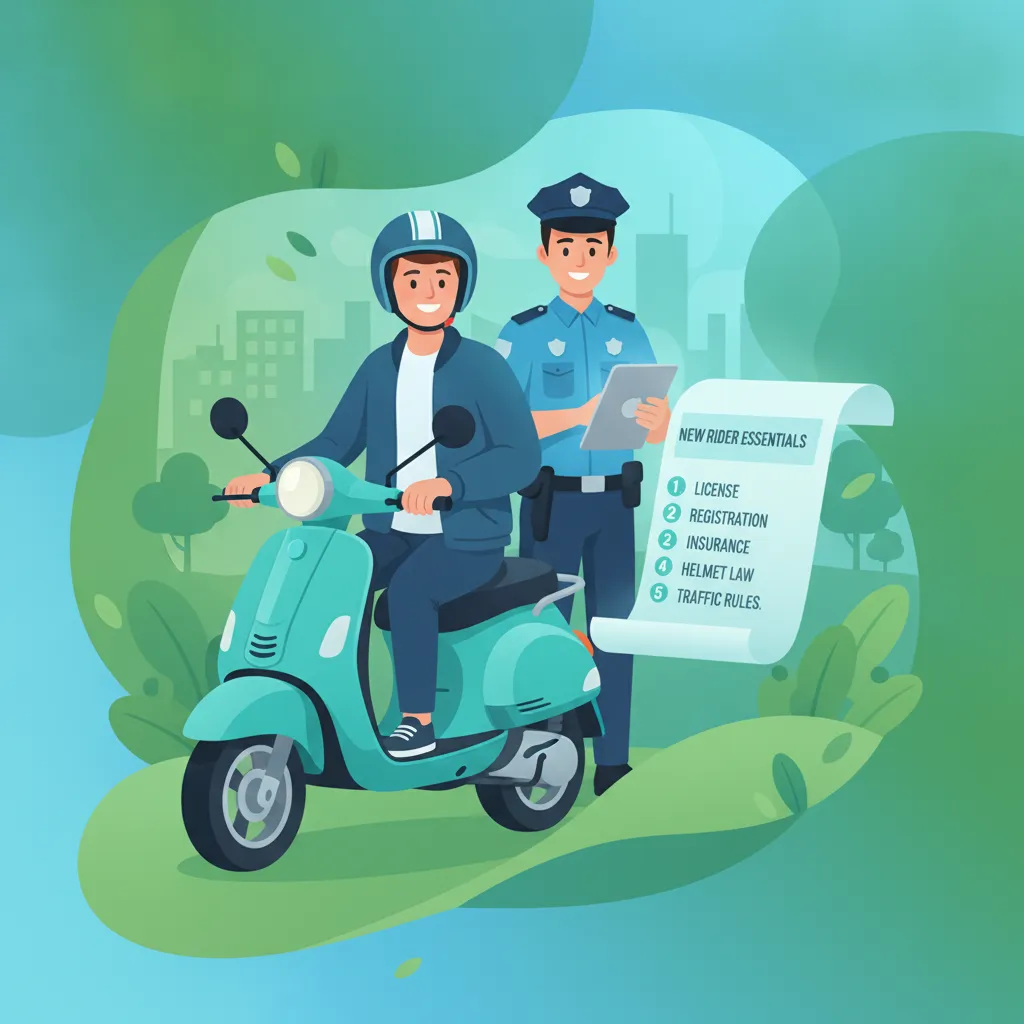
This lesson focuses on the legal obligations that first-time riders must meet to operate an AM vehicle safely and legally. It details the mandatory use of certified helmets and appropriate protective clothing. Furthermore, it outlines fundamental traffic laws new riders must know and the legal repercussions of non-compliance, such as fines and penalty points.
This lesson defines the scope of the Italian Patente B license according to the Codice della Strada. It clarifies the specific types of vehicles, including maximum weight and passenger capacity, that can be operated. The content also details the official requirements for applicants, such as minimum age, necessary health certifications, and vision standards needed to qualify for the license.

This lesson provides a clear overview of the legal penalties for traffic violations in Italy. It explains the structure of fines and the penalty point system that can lead to license suspension or revocation. The content also touches on more severe consequences, including criminal liability for incidents causing injury, to emphasize the importance of lawful riding.
This lesson provides a detailed breakdown of the vehicle types authorized under the Patente AM license. You will learn to distinguish between ciclomotori, scooters, three-wheeled mopeds, and light quadricycles by their specific characteristics. Key topics include engine displacement limits, power output, and mandatory equipment like lights, mirrors, and brakes as required by Italian law.
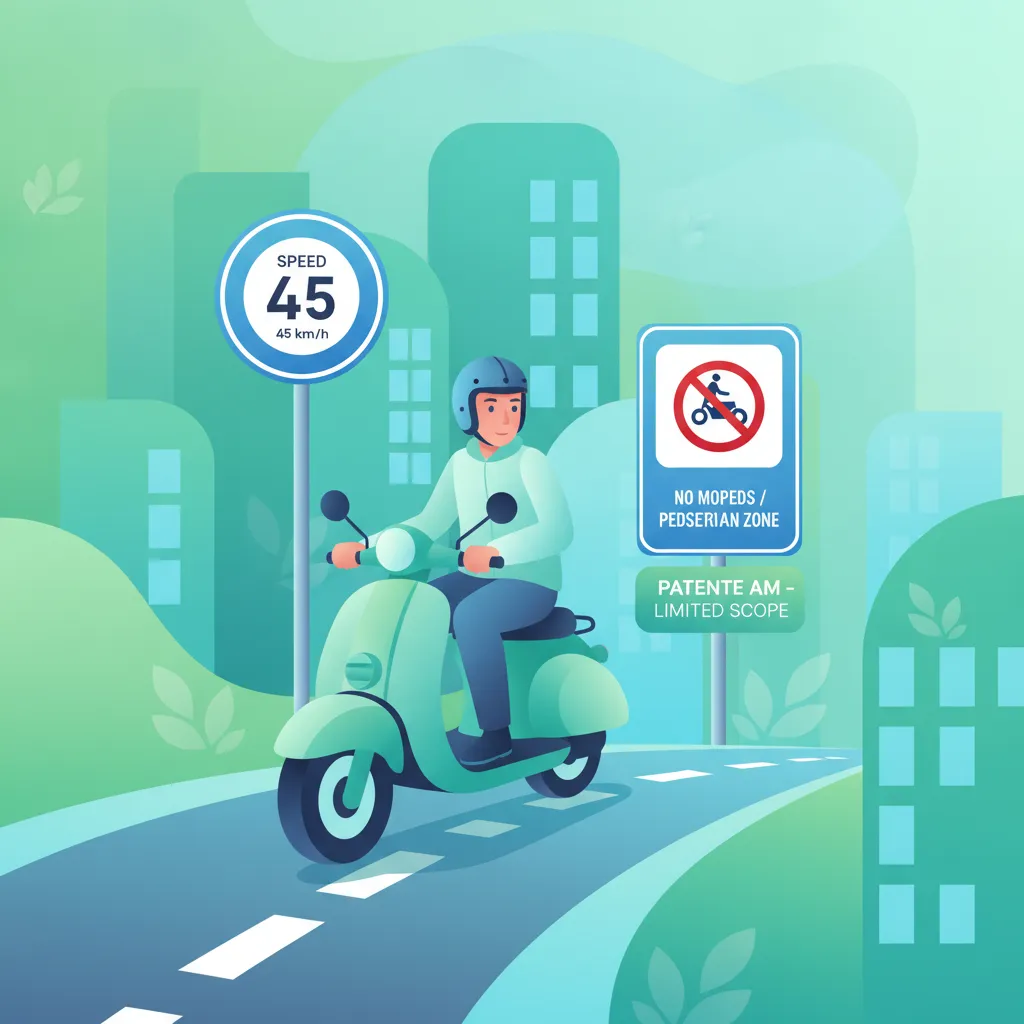
This lesson clarifies the precise scope of the Patente AM license, defining the vehicle categories it permits based on technical specifications. It details the legal limits on power, engine displacement, and maximum speed for mopeds and similar vehicles. You will also learn about the minimum age, registration process, and mandatory insurance needed to operate on public roads.
This lesson details the essential protective equipment required for legal and safe moped operation in Italy. It covers legal standards for helmets, the benefits of wearing protective gloves and boots, and the importance of high-visibility clothing. You will also learn the correct use of your vehicle's lighting system for visibility during both day and night.

This lesson provides a comprehensive overview of the essential documentation required for both the driver and the vehicle. It covers the driver's license (patente), CQC card, vehicle registration (carta di circolazione), insurance certificate, and transport-specific documents like the cargo manifest. Learners will understand the importance of ensuring all documents are valid and readily available for inspection by authorities to avoid legal penalties and operational delays.
This lesson explains the difference between daily checks and long-term scheduled maintenance. It covers the legal requirement for periodic technical inspections ('revisione') to certify a vehicle's roadworthiness and the importance of adhering to manufacturer-recommended service intervals. Learners will understand their crucial role in reporting any mechanical defects promptly to ensure issues are rectified, maintaining the vehicle's safety and reliability over its service life.
This lesson emphasizes the rider's responsibility to ensure their vehicle is in safe, working order through regular maintenance and pre-ride checks. It outlines a simple yet effective routine for inspecting critical components like tires, brakes, lights, and mirrors. Performing these checks helps prevent mechanical failures and ensures the vehicle is always compliant and roadworthy.
Explore the fundamental principles of the Italian Codice della Strada as they apply to Patente AM license holders. This lesson covers the core traffic rules and the responsibilities of all road users.
This lesson explains the function of Italian traffic light systems and the meaning of various road markings. You will learn the rules for red, amber, and green signals, including flashing lights and directional arrows. It also covers how to interpret lane lines, stop lines, and other surface markings that dictate correct vehicle positioning and movement.
This lesson focuses on the legal obligations that first-time riders must meet to operate an AM vehicle safely and legally. It details the mandatory use of certified helmets and appropriate protective clothing. Furthermore, it outlines fundamental traffic laws new riders must know and the legal repercussions of non-compliance, such as fines and penalty points.

This lesson provides an in-depth focus on sharing the road with the most vulnerable users. It teaches drivers to be acutely aware of pedestrians at crossings, cyclists filtering through traffic, and motorcyclists who may be in blind spots. The lesson emphasizes the importance of leaving extra space, signaling intentions clearly, and exercising extreme caution at junctions, where the majority of serious incidents occur.

This lesson explains how to execute left turns, right turns, and U-turns safely while maintaining correct lane discipline. It covers interpreting road markings and arrows, selecting the proper vehicle position, and using signals in a timely manner. Performing shoulder checks to monitor blind spots before and during a turn is a key focus for preventing collisions.
This lesson emphasizes the importance of clear communication and cooperative behavior among all road users to prevent conflicts and enhance safety. It details the proper and legal use of vehicle signals, such as turn indicators and hazard lights, as well as the appropriate use of the horn. The content also explores the role of non-verbal cues like eye contact and courtesy gestures in creating a predictable and safe driving environment.
This lesson provides essential rules and techniques for driving on Italian motorways (autostrade) and major extra-urban roads. It explains how to safely merge onto the motorway from an entry ramp, the strict lane discipline required (drive right, overtake left), and how to exit correctly. The content also covers speed regulations, maintaining a safe following distance at high speed, and procedures for using service areas and handling emergencies.
This lesson focuses on the comprehensive duties of a motorcyclist, from ensuring vehicle and equipment legality to following traffic regulations. It covers key obligations mandated by the Codice della Strada, such as mandatory insurance coverage and adherence to environmental rules. The material reinforces the importance of responsible road conduct and the legal consequences of non-compliance.
This lesson provides a clear overview of the legal penalties for traffic violations in Italy. It explains the structure of fines and the penalty point system that can lead to license suspension or revocation. The content also touches on more severe consequences, including criminal liability for incidents causing injury, to emphasize the importance of lawful riding.
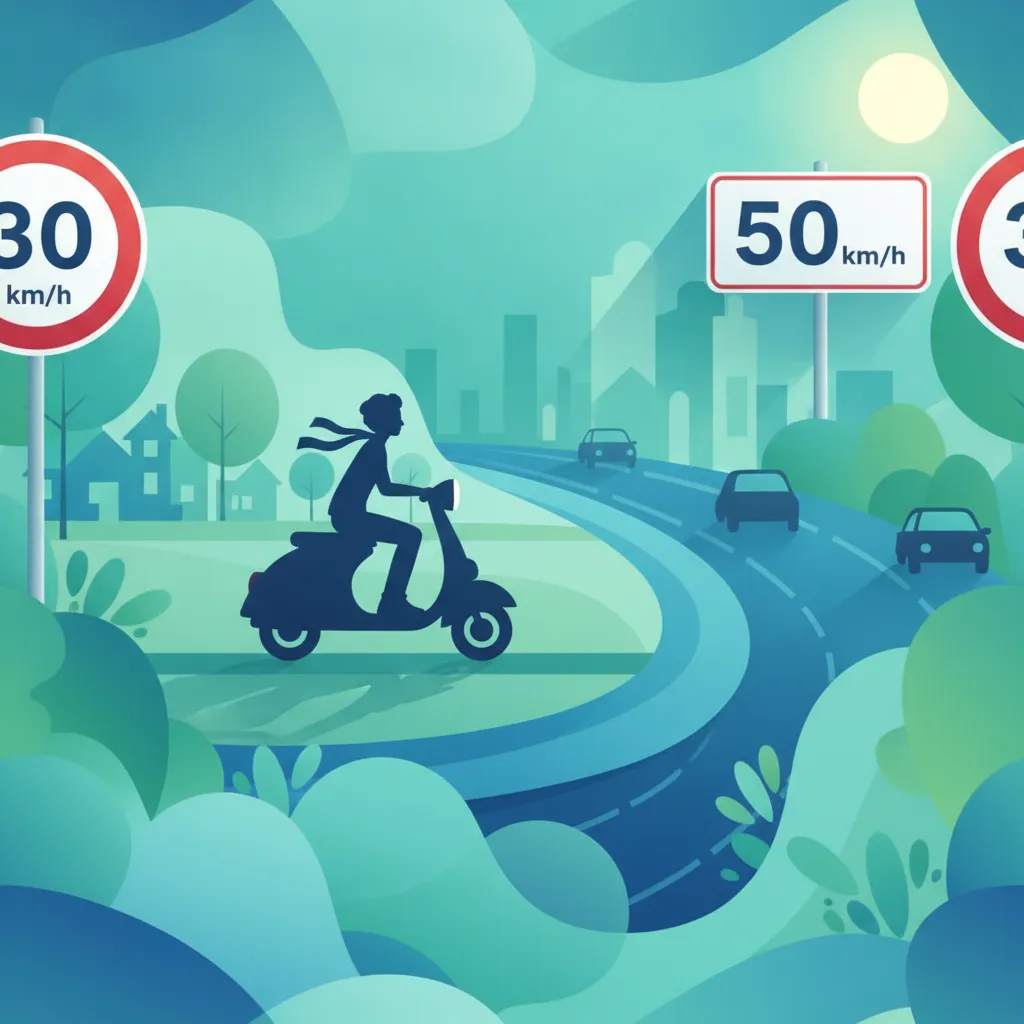
This lesson explores the specific speed limits applicable to AM vehicles across various zones, including urban, residential, and rural roads. Emphasis is placed on understanding the signage that indicates both permanent and temporary speed restrictions. Learners will also examine the rationale behind these limits and the importance of adapting speed to road conditions and traffic density.

This lesson focuses on the specific regulations and techniques for operating a heavy vehicle on high-speed motorways. It covers mandatory lane discipline for trucks, the rules governing overtaking other heavy vehicles, and the specific speed limits that apply. Best practices for merging onto and exiting the motorway, maintaining safe following distances, and using the hard shoulder only in genuine emergencies are also detailed.
Find clear answers to common questions learners have about Responsibilities and Obligations of AM License Holders. Learn how the lesson is structured, which driving theory objectives it supports, and how it fits into the overall learning path of units and curriculum progression in Italy. These explanations help you understand key concepts, lesson flow, and exam focused study goals.
You must regularly check your tire pressure and tread depth, verify that all indicators and headlights are functioning, and ensure your brakes respond effectively. These are not just legal requirements but vital safety steps for every Patente AM rider.
Yes, all vehicles in the AM category must have valid third-party liability insurance (RC Auto) to circulate on Italian public roads. Driving without valid insurance is a serious violation with heavy legal and financial consequences.
Ignoring faults like broken lights or worn tires can result in fines, the impounding of your vehicle, and increased risk of accidents. The theory exam often highlights that vehicle safety is a legal, continuous duty for all drivers.
Yes, when operating a moped in Italy, you must carry the vehicle registration document (carta di circolazione) and your valid driving license at all times for police checks.
Start searching now to pinpoint exactly which Italian driving theory topics, road signs, or traffic rules you need to master. Use our advanced filters to build a custom practice session and ensure you're fully prepared for every aspect of your official driving licence exam.