
This lesson details the mandatory safety equipment and lighting regulations for Patente AM riders in Italy. You will learn the legal requirements for helmets and clothing, as well as the correct use of lights to ensure maximum visibility and compliance with the Codice della Strada.
Lesson content overview
Riding a moped or scooter (categorized as AM vehicles in Italy) offers freedom and efficiency, but it also carries inherent risks that require specific safety measures. This lesson, part of the Italian Driving License Theory – Patente AM Specialization, focuses on two critical aspects of rider safety: the mandatory and recommended protective equipment, and the correct use of your vehicle's lighting system. Adhering to these guidelines not only ensures compliance with the Codice della Strada (Italian Road Code) but, more importantly, significantly reduces the severity of injuries in case of an accident and enhances your visibility to other road users, preventing collisions.
Understanding and implementing these safety practices is fundamental for every Patente AM rider. It complements your knowledge of vehicle control, positioning, and how external factors like weather impact riding conditions, ultimately contributing to a safer journey for everyone on the road.
Protective gear is your first line of defense against injuries in the event of a fall or collision. While some items are legally mandatory, others are strongly recommended based on established safety best practices. Every piece of equipment serves a specific purpose, designed to absorb impact, resist abrasion, and keep you secure.
The helmet is, without doubt, the most crucial piece of protective equipment for any moped rider. In Italy, the law is unequivocal: you must wear a helmet that meets European safety standards (EN 1078) at all times when your vehicle is in motion. This applies to 100% of riders. The helmet must also be securely fastened to provide effective protection.
A compliant helmet is specifically designed to absorb the kinetic energy of an impact, distributing forces across a larger area and preventing direct trauma to the head and brain. Look for the CE mark, which indicates that the helmet complies with European safety requirements. Helmets come in various designs, including:
Regardless of the type, the fit must be snug but comfortable, and the strap securely fastened under your chin. Wearing an unmarked, non-compliant, or improperly fastened helmet is not only illegal (Art. 171 Codice della Strada) but significantly increases your risk of severe head injury.
While not legally mandatory for Patente AM riders in all conditions, protective gloves and boots are highly recommended for your safety. They offer essential protection against abrasions, impacts, and provide better grip and control.
Your hands are often the first part of your body to hit the ground in a fall. Protective gloves, made from materials like leather or durable synthetics, offer crucial abrasion resistance. They also improve your grip on the handlebars, especially in wet or cold conditions, which is vital for precise control of the throttle and brakes. Look for full-finger gloves that cover your palm, backhand, and fingers, possibly with reinforced knuckles. Assuming gloves are unnecessary for low-speed travel is a common misconception; even minor falls can cause painful hand injuries.
Similar to gloves, protective boots shield your feet and ankles from impact and road rash. They also provide better foot positioning and control on the floorboard or footrests, contributing to overall vehicle stability. High-cut boots that cover the ankle are ideal, as they protect a vulnerable joint. Regular sneakers or open-toed shoes offer minimal to no protection and should be avoided when riding. Ensuring your footwear does not impair your ability to operate pedals or maintain a stable foot position is also important.
Being seen by other road users is paramount to your safety. High-visibility clothing significantly increases your conspicuity, allowing other drivers to detect you sooner and react accordingly.
This type of clothing combines fluorescent materials (which are bright and stand out during the day, especially in twilight or overcast conditions) with retroreflective materials (which bounce light directly back to its source, making you highly visible when illuminated by headlights at night).
While generally recommended for daytime riding, high-visibility or reflective clothing becomes mandatory for nighttime riding in certain conditions (Art. 174 Codice della Strada). For instance, if you are stopped on the roadway at night or in conditions of poor visibility, wearing a reflective vest is often required when you dismount the vehicle. Believing that bright colours alone are sufficient without retroreflective material for nighttime is a common misunderstanding. For maximum safety, especially when light conditions are poor, always ensure your clothing includes retroreflective elements.
Your moped's lighting system is not just for you to see the road; it's primarily for other road users to see you and understand your intentions. Correct use of all lights is a fundamental aspect of safe and legal moped operation.
The headlamp is your primary source of illumination and visibility on the road. It has different settings for varying conditions.
The low beam is mandatory whenever natural light is insufficient. This means from sunset to sunrise and during any conditions that reduce visibility, such as rain, fog, heavy cloud cover, or when riding through tunnels (Art. 172 Codice della Strada). Its purpose is twofold: to allow you to see the road and potential hazards, and crucially, to make your moped visible to other drivers without blinding them. Many modern mopeds have automatic daytime running lights, but it's essential to know how to manually switch to low beam when required.
The high beam offers significantly better illumination of the road far ahead. You may use the high beam on rural, unlit roads when there is no oncoming traffic and you are not following another vehicle closely. However, it is imperative to switch back to low beam immediately when you encounter oncoming traffic or approach a vehicle from behind, to avoid dazzling other drivers. Dazzling can temporarily blind other road users, leading to dangerous situations.
Also known as parking or side lights, position lamps are designed to make your vehicle visible when it is not actively being driven. Position lamps must be illuminated when your moped is parked on a public road at night or in conditions of reduced visibility (Art. 173 Codice della Strada). This is especially important if your vehicle is parked where it might obstruct traffic or be less visible. Forgetting to use them can lead to your moped being hit by other vehicles, as they may not perceive its presence until it's too late. It is a common misunderstanding to assume that if the engine is off, no lights are needed.
Your indicator lights, or turn signals, are your primary means of communicating your intentions to other road users.
It is mandatory to activate your turn indicators before any change of direction or lane change (Art. 149 Codice della Strada). As a general rule, activate them at least 3 seconds before making a turn at an intersection and at least 5 seconds before changing lanes. This provides sufficient time for other drivers to notice your signal, understand your intent, and adjust their speed or position accordingly.
Hazard warning lights are specifically for emergency situations. They must be activated when your vehicle is stopped on the roadway due to a breakdown, an accident, or an obstruction (Art. 149 Codice della Strada). Their purpose is to alert approaching traffic that your vehicle is a potential hazard and requires caution.
It is crucial to understand that hazard lights are generally not permitted while the vehicle is moving, except in very specific, rare situations of extreme congestion where traffic is moving at exceptionally slow speeds. Using hazard lights while driving in heavy traffic, for instance, is prohibited and can confuse other drivers, who might assume your vehicle is stopped or experiencing an emergency when it is not. This misuse can lead to rear-end collisions.
Compliance with the Codice della Strada is not just about avoiding fines; it's about ensuring your safety and the safety of others. Here's a summary of key legal requirements for protective gear and lighting in Italy for AM category vehicles.
Effective safety isn't a one-size-fits-all approach; it requires adapting your equipment and lighting usage to the specific conditions you encounter on the road.
When riding at night or in low-light conditions (dusk, dawn, heavy cloud), visibility is naturally reduced. This is when your vehicle's lighting system becomes critical.
The goal is to be as conspicuous as possible to other road users, who may have reduced depth perception and reaction times in the dark.
Rain, fog, and even heavy cloud cover significantly reduce visibility for all road users.
In these conditions, drivers' reaction times are slower, and stopping distances are longer. Maximizing your visibility is paramount.
The type of road also dictates appropriate lighting use.
If your moped breaks down or you are involved in an incident, your actions with lighting are crucial for your safety and that of others.
Safely pull over: Move your vehicle to the safest possible location, ideally off the main carriageway onto a hard shoulder or pavement.
Activate Hazard Warning Lights: Immediately switch on your hazard warning lights to signal a stationary obstruction to other traffic. This is mandatory (Art. 149 Codice della Strada).
Ensure Position Lamps are on: If it's dark or visibility is poor, ensure your position lamps are also active.
Wear a Reflective Vest: If you need to exit your vehicle onto the roadway, especially at night or in poor visibility, wear a reflective vest if you have one. This is highly recommended and can be mandatory in certain situations (Art. 174 Codice della Strada).
These steps help to alert other road users to your presence, reducing the risk of further incidents.
Awareness of common violations helps prevent them. Misusing gear or lighting can have serious safety and legal repercussions.
Mastering the use of protective gear and vehicle lighting is fundamental for every Patente AM rider in Italy. It is a proactive approach to safety that significantly reduces risks associated with moped riding.
By integrating these practices into your daily riding habits, you not only comply with the Codice della Strada but also enhance your safety and the safety of everyone else sharing the road. This knowledge is interconnected with other essential driving theory units, such as observation skills, vehicle control, and understanding risk behavior, all contributing to responsible moped operation.
This lesson covers the essential protective equipment and lighting requirements for Patente AM moped riders in Italy under the Codice della Strada. The mandatory helmet must meet EN 1078 standards and be CE-marked and securely fastened, while protective gloves, boots, and high-visibility retroreflective clothing are strongly recommended. Lighting rules require low beam from sunset to sunrise and in reduced visibility, with high beam reserved for unlit roads without traffic. Turn indicators must be used 3-5 seconds before maneuvers and cancelled after, while hazard lights are strictly for stationary emergency situations. Non-compliance carries fines and increased liability in accidents.
A short set of high-value points that capture the most important learning from this lesson.
All AM vehicle riders must wear a CE-marked helmet meeting EN 1078 standard, properly fastened at all times while the vehicle is in motion
Low beam (dipped beam) is mandatory from sunset to sunrise and in any reduced visibility conditions including tunnels, rain, fog, and heavy cloud cover
Turn indicators must be activated at least 3 seconds before turning and 5 seconds before changing lanes, then cancelled after completing the maneuver
High-visibility clothing with retroreflective elements is essential for nighttime visibility and legally required when dismounted on the roadway at night
Hazard warning lights are reserved exclusively for stationary vehicles due to breakdown or accident, and are generally prohibited while driving
Explore all units and lessons included in this driving theory course.
Helmet non-compliance or improper fastening is treated the same as not wearing one under Art. 171 Codice della Strada
High beam may only be used on unlit rural roads with no oncoming traffic or vehicle ahead
Position lamps are mandatory when parked on a public road at night or in reduced visibility, regardless of whether the engine is running
Gloves and boots, while not legally mandatory, provide crucial protection against abrasions and improve grip and control
Fluorescent colors alone are insufficient for nighttime visibility without retroreflective materials
Riding without a helmet or with a non-compliant, unmarked, or unfastened helmet
Using high beam headlights when oncoming traffic is present, which can temporarily blind other drivers
Using hazard warning lights while the vehicle is moving, misleading other drivers into thinking the vehicle is stationary
Neglecting to activate position lamps when parked on a public road at night or in poor visibility
Forgetting to cancel turn indicators after completing a turn or lane change, confusing other road users
Lesson content overview
A short set of high-value points that capture the most important learning from this lesson.
All AM vehicle riders must wear a CE-marked helmet meeting EN 1078 standard, properly fastened at all times while the vehicle is in motion
Low beam (dipped beam) is mandatory from sunset to sunrise and in any reduced visibility conditions including tunnels, rain, fog, and heavy cloud cover
Turn indicators must be activated at least 3 seconds before turning and 5 seconds before changing lanes, then cancelled after completing the maneuver
High-visibility clothing with retroreflective elements is essential for nighttime visibility and legally required when dismounted on the roadway at night
Hazard warning lights are reserved exclusively for stationary vehicles due to breakdown or accident, and are generally prohibited while driving
Explore all units and lessons included in this driving theory course.
Helmet non-compliance or improper fastening is treated the same as not wearing one under Art. 171 Codice della Strada
High beam may only be used on unlit rural roads with no oncoming traffic or vehicle ahead
Position lamps are mandatory when parked on a public road at night or in reduced visibility, regardless of whether the engine is running
Gloves and boots, while not legally mandatory, provide crucial protection against abrasions and improve grip and control
Fluorescent colors alone are insufficient for nighttime visibility without retroreflective materials
Riding without a helmet or with a non-compliant, unmarked, or unfastened helmet
Using high beam headlights when oncoming traffic is present, which can temporarily blind other drivers
Using hazard warning lights while the vehicle is moving, misleading other drivers into thinking the vehicle is stationary
Neglecting to activate position lamps when parked on a public road at night or in poor visibility
Forgetting to cancel turn indicators after completing a turn or lane change, confusing other road users
Explore search topics learners often look for when studying Protective Gear and Lighting Requirements. These topics reflect common questions about road rules, driving situations, safety guidance, and lesson level theory preparation for learners in Italy.
Browse additional driving theory lessons that cover connected traffic rules, road signs, and common driving situations related to this topic. Improve your understanding of how different rules interact across everyday traffic scenarios.
Understand the mandatory helmet standards, recommended safety clothing, and correct usage of headlights, indicators, and hazard lights for Patente AM vehicles in Italy. Learn legal requirements from the Codice della Strada to ensure rider safety and visibility.
This lesson provides a comprehensive guide to a vehicle's lighting systems and their correct use according to the Codice della Strada. It explains the functions of low beams, high beams, fog lights, and daytime running lights, detailing when each should be used to ensure visibility for the driver and by other road users. Proper use of lighting is critical for safety during night driving and in conditions of poor visibility.
This lesson covers the complete set of lighting, reflective equipment, and protective guards mandated for heavy vehicles. It explains the function of each light, from headlights to side markers, and the importance of keeping them clean and operational to ensure the vehicle is visible to others. The lesson also details the legal requirements and safety purpose of side guards and rear underrun protection, which are designed to protect vulnerable road users in a collision.
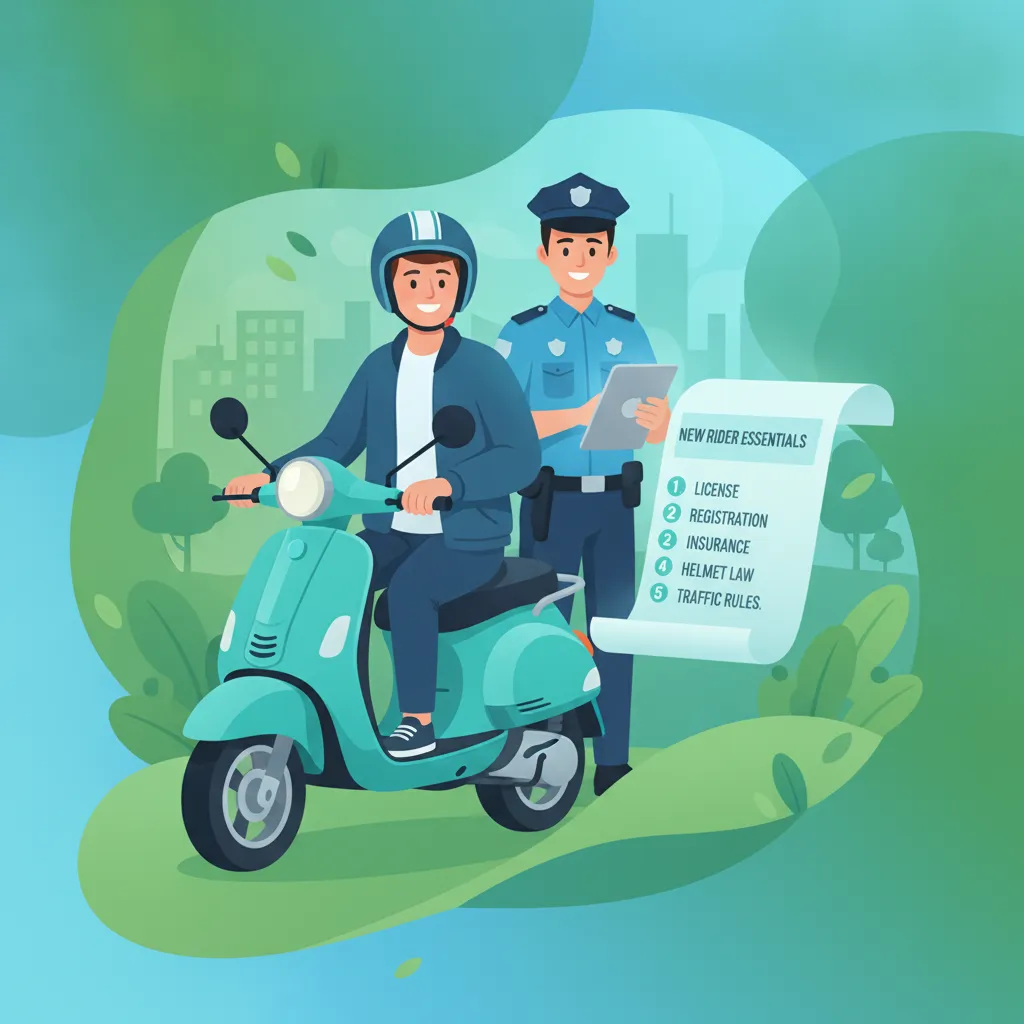
This lesson focuses on the legal obligations that first-time riders must meet to operate an AM vehicle safely and legally. It details the mandatory use of certified helmets and appropriate protective clothing. Furthermore, it outlines fundamental traffic laws new riders must know and the legal repercussions of non-compliance, such as fines and penalty points.
This lesson focuses on the vital systems for visibility and communication: mirrors, lighting, and signals. It provides instruction on the proper adjustment of mirrors to minimize blind spots and the correct use of headlamps, indicators, and brake lights as per Italian regulations. The content underscores how maintaining these systems in full working order is crucial for being seen and signalling intentions clearly in traffic.
This lesson explains the function of Italian traffic light systems and the meaning of various road markings. You will learn the rules for red, amber, and green signals, including flashing lights and directional arrows. It also covers how to interpret lane lines, stop lines, and other surface markings that dictate correct vehicle positioning and movement.
This lesson focuses on the specific regulatory and warning signs that Patente AM riders must understand and obey. It details signs related to speed limits, no-entry zones, and mandatory directions that directly impact moped operation. You will also learn to recognize warning signs for potential hazards like sharp curves, slippery surfaces, and pedestrian areas.
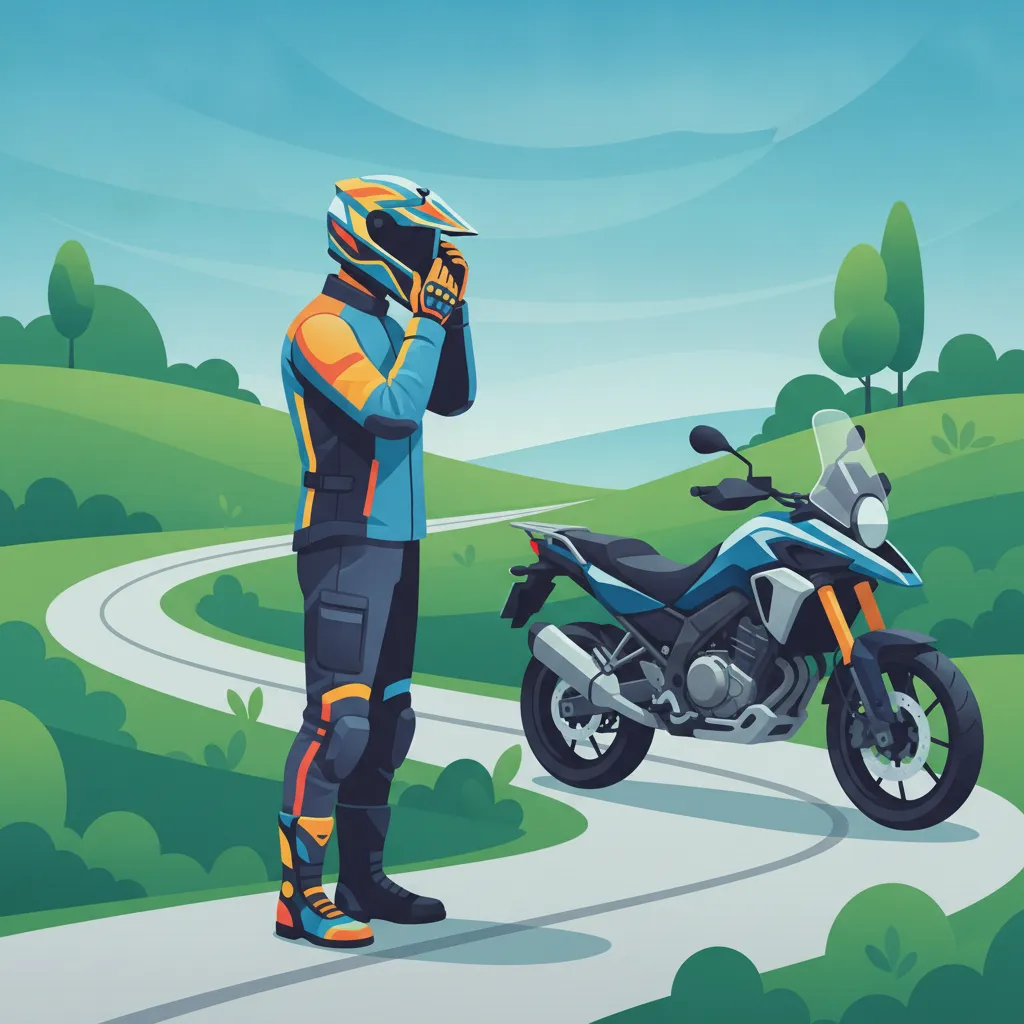
This lesson details the functions of specialized protective clothing designed for motorcyclists. It covers the essential qualities of jackets, pants, gloves, and boots, focusing on abrasion resistance and impact protection provided by CE-rated armor. The content explains the differences between materials like leather and textile and how they contribute to rider safety in the event of a fall or collision.
This lesson provides a detailed breakdown of the vehicle types authorized under the Patente AM license. You will learn to distinguish between ciclomotori, scooters, three-wheeled mopeds, and light quadricycles by their specific characteristics. Key topics include engine displacement limits, power output, and mandatory equipment like lights, mirrors, and brakes as required by Italian law.
This lesson details the continuous duties of a Patente AM license holder beyond passing the exam. It covers the importance of regular vehicle maintenance, including checks on tires, brakes, and lights. The lesson also reinforces the legal obligation to maintain valid insurance and registration while adhering to all traffic laws for personal and public safety.
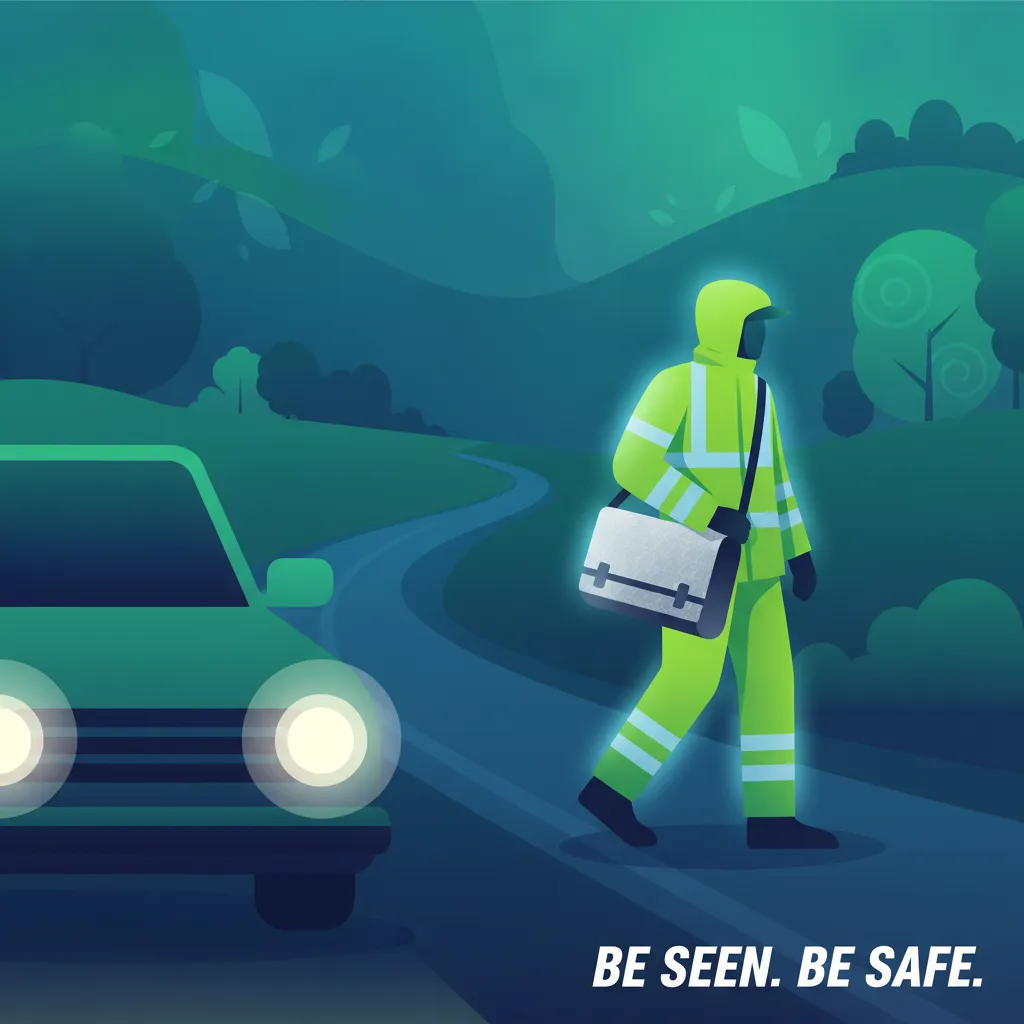
This lesson is focused on strategies to increase a motorcyclist's conspicuity in traffic. It explains the benefits of using high-visibility clothing in fluorescent colors for daytime riding and the critical role of reflective materials at night. The content also covers how proper use of lighting, including daytime running lights, can significantly reduce the risk of accidents by making the rider more noticeable to others.
Learn how to maximize your visibility on Italian roads. This lesson covers the importance of high-visibility clothing, the correct use of vehicle lighting in various conditions, and strategies to be seen by other road users, crucial for preventing accidents.
This lesson is focused on strategies to increase a motorcyclist's conspicuity in traffic. It explains the benefits of using high-visibility clothing in fluorescent colors for daytime riding and the critical role of reflective materials at night. The content also covers how proper use of lighting, including daytime running lights, can significantly reduce the risk of accidents by making the rider more noticeable to others.
This lesson teaches riders how to strategically position their vehicle within a lane for maximum visibility to others. It explains how to avoid riding in the blind spots of larger vehicles and how to maintain a safe buffer zone. Proper positioning enhances a rider's presence on the road and is a key component of defensive driving in mixed traffic.
This lesson explains how adverse weather conditions directly affect moped safety by reducing both tire grip and rider visibility. It covers the dangers of riding on wet roads, including the risk of hydroplaning, and provides strategies for managing these conditions. You will also learn techniques for enhancing your visibility to others during fog, rain, and nighttime riding.
This lesson focuses on the vital systems for visibility and communication: mirrors, lighting, and signals. It provides instruction on the proper adjustment of mirrors to minimize blind spots and the correct use of headlamps, indicators, and brake lights as per Italian regulations. The content underscores how maintaining these systems in full working order is crucial for being seen and signalling intentions clearly in traffic.
This lesson provides a comprehensive guide to a vehicle's lighting systems and their correct use according to the Codice della Strada. It explains the functions of low beams, high beams, fog lights, and daytime running lights, detailing when each should be used to ensure visibility for the driver and by other road users. Proper use of lighting is critical for safety during night driving and in conditions of poor visibility.
This lesson focuses on the specific regulatory and warning signs that Patente AM riders must understand and obey. It details signs related to speed limits, no-entry zones, and mandatory directions that directly impact moped operation. You will also learn to recognize warning signs for potential hazards like sharp curves, slippery surfaces, and pedestrian areas.

This lesson addresses the specific challenges of sharing the road with two-wheeled motor vehicles like motorcycles and scooters. It highlights their reduced visibility and stability compared to cars, requiring drivers to double-check blind spots and maintain a greater following distance. The content also discusses common behaviors like lane filtering and the need for drivers to be predictable and signal intentions clearly.

This lesson provides an in-depth focus on sharing the road with the most vulnerable users. It teaches drivers to be acutely aware of pedestrians at crossings, cyclists filtering through traffic, and motorcyclists who may be in blind spots. The lesson emphasizes the importance of leaving extra space, signaling intentions clearly, and exercising extreme caution at junctions, where the majority of serious incidents occur.

This lesson teaches riders how to maintain a safe following distance using the two-second rule, which accounts for reaction time and braking distance. It covers grip management, explaining how tire condition and road surfaces like wet asphalt affect traction. Mastering these concepts is essential for anticipating hazards and preventing rear-end collisions.
This lesson focuses on the correct use of mirrors to maintain situational awareness and the techniques required to manage blind spots. It explains how to adjust mirrors for the best possible view of surrounding traffic. You will also learn why shoulder checks are critical before changing lanes or turning to detect vehicles hidden in blind zones.
Find clear answers to common questions learners have about Protective Gear and Lighting Requirements. Learn how the lesson is structured, which driving theory objectives it supports, and how it fits into the overall learning path of units and curriculum progression in Italy. These explanations help you understand key concepts, lesson flow, and exam focused study goals.
Yes, a homologated, securely fastened helmet is mandatory for all riders and passengers on mopeds, scooters, and light quadricycles in Italy, regardless of speed or road type.
In Italy, the low-beam headlights (anabbaglianti) must be switched on during the day while riding a moped or scooter to ensure you are clearly visible to other road users.
While the law primarily mandates the helmet, wearing protective clothing such as gloves, boots, and high-visibility jackets is highly recommended to mitigate injuries in the event of a fall or collision.
Exam questions often present scenarios about low-visibility conditions, such as driving at night or in rain, asking you to identify the correct lighting configuration required by law.
Start searching now to pinpoint exactly which Italian driving theory topics, road signs, or traffic rules you need to master. Use our advanced filters to build a custom practice session and ensure you're fully prepared for every aspect of your official driving licence exam.