
This lesson guides you through the crucial road signs you must recognize to pass the Italian Patente AM theory exam. By mastering these regulatory and warning signals, you will develop the foundational knowledge required to navigate public roads safely and legally on your moped or scooter.
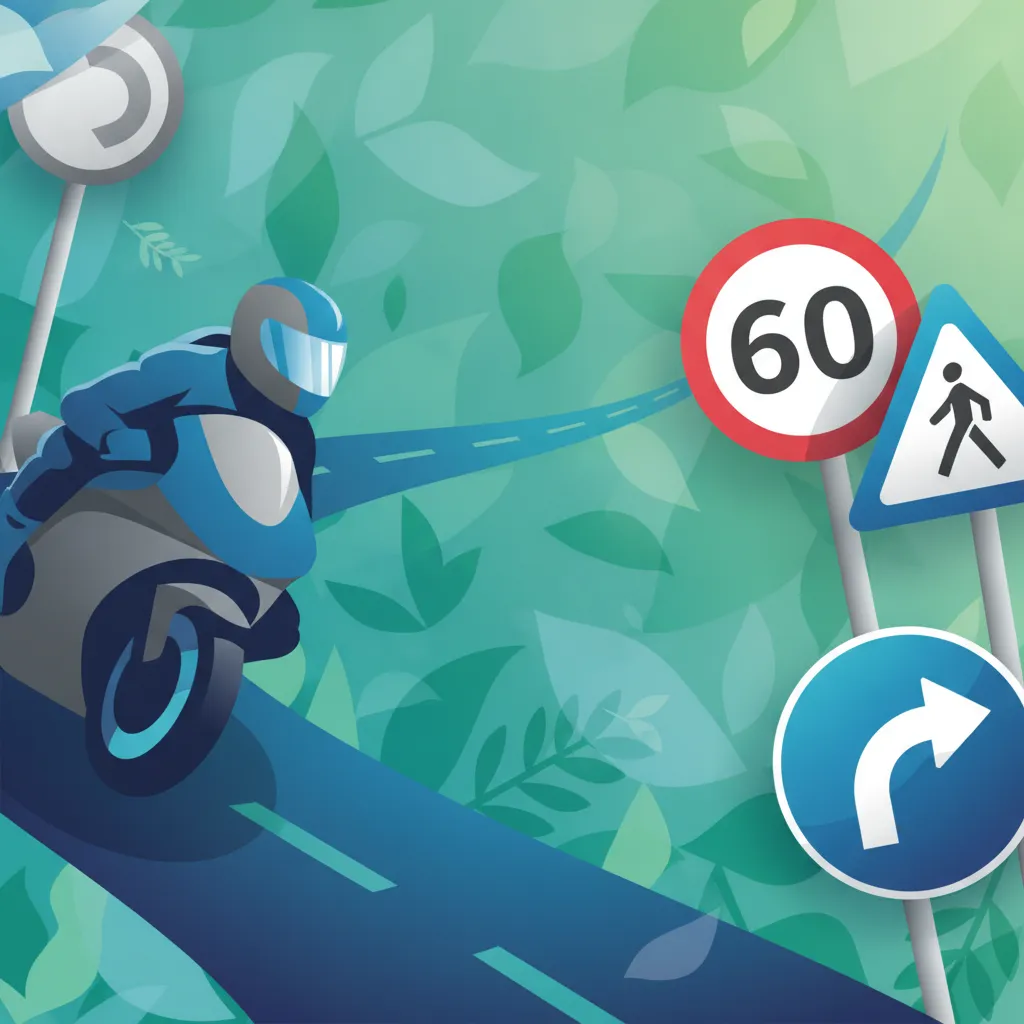
Lesson content overview
Navigating Italy's roads with a Patente AM requires a thorough understanding of traffic signs, especially those that pertain specifically to mopeds, scooters, and other light motor vehicles. This lesson delves into the regulatory and warning signs that Patente AM riders must interpret and obey to ensure safety, legal compliance, and a smooth driving experience within the Italian road network. Mastering these signs is not just about passing an exam; it's about making informed decisions on the road that protect you and other road users.
Traffic signs in Italy, as defined by the Codice della Strada (Highway Code), are categorized based on their primary function. Distinguishing between these categories is crucial for Patente AM riders, as they dictate the nature of your response.
Regulatory signs are the most authoritative type of traffic sign. They issue direct commands, prohibitions, or obligations that all drivers, including Patente AM riders, must follow. Disobeying a regulatory sign is a direct violation of traffic law and can lead to fines, demerit points, and increased accident risk. These signs are typically circular. Prohibitions are often indicated by a red border, while mandatory instructions are usually depicted with a blue background.
Warning signs serve to alert drivers to potential dangers, obstacles, or special road conditions ahead. These signs are advisory rather than mandatory in terms of direct obedience, but ignoring them can be considered imprudent driving under Article 140 of the Codice della Strada, especially if it leads to dangerous situations or accidents. Warning signs are typically triangular with a red border and a white or yellow background. For Patente AM riders, these signs are particularly important as they highlight hazards that might pose a greater risk to smaller, lighter, and less powerful vehicles.
Speed limits are among the most critical regulatory signs, directly influencing safety and compliance for Patente AM riders. Understanding how general speed limits interact with AM-specific restrictions is paramount.
General speed limit signs apply to all vehicles on a given stretch of road unless otherwise specified for particular vehicle categories. These are circular signs with a red border, indicating the maximum permissible speed in kilometers per hour (km/h).
However, certain areas, especially residential zones, school vicinities, or roads with specific environmental concerns, may feature speed limit signs that include an AM symbol. When an AM-specific speed limit sign is present, Patente AM riders must strictly adhere to that lower speed, even if the general speed limit for other vehicles is higher. This is because these zones are deemed to pose a greater risk to or from low-speed vehicles. For example, a street might have a general speed limit of 50 km/h, but if an AM-specific sign shows "30 km/h," AM riders must not exceed 30 km/h.
The legal basis for observing speed limits is found in Article 142 of the Codice della Strada, which mandates strict adherence to posted speed limits for all vehicle categories. Failure to comply can result in significant fines and demerit points.
Always assume the lower of any two applicable speed limits. If a general sign indicates 50 km/h, but an AM-specific sign indicates 30 km/h, your maximum speed as an AM rider is 30 km/h.
Adhering to speed restrictions is not merely about avoiding penalties; it is a fundamental aspect of road safety. For Patente AM vehicles, which have limited acceleration, braking capabilities, and smaller dimensions, managing speed effectively is even more critical.
Prohibitory signs indicate actions or entries that are not allowed. For Patente AM riders, specific prohibitory signs ensure that mopeds and scooters are directed away from areas where their presence might pose a hazard or disrupt traffic flow.
One of the most common prohibitory signs is the "No Entry" sign. Generally, this is a circular sign with a red border and a white horizontal bar, signifying that entry is forbidden for all vehicles from that direction.
However, some "No Entry" signs may specifically include an AM symbol, explicitly prohibiting Patente AM vehicles from entering a particular road or zone. This is common in pedestrian zones, certain historic city centers, or areas with specific environmental restrictions.
It is critical for Patente AM riders to recognize and obey these AM-specific "No Entry" signs. Even if other vehicle categories are permitted to enter, the sign with the AM symbol makes the prohibition definitive for mopeds and scooters. Article 146 of the Codice della Strada outlines the mandatory compliance with these denied access signs. Ignoring such a sign is a serious traffic offense.
Beyond "No Entry," other prohibitory signs can affect Patente AM riders. These might include signs prohibiting turning in a certain direction, restricting access based on vehicle weight or dimensions (though less common for AM vehicles), or forbidding specific actions like overtaking (though overtaking rules for mopeds are often covered by general regulations or specific road markings). Always be vigilant for any sign that restricts your movement, especially those featuring a moped symbol.
Do not assume that an absence of a general "No Entry" sign means you are allowed to enter. An AM-specific "No Entry" sign is sufficient to prohibit your access.
Mandatory direction signs are circular blue signs with white symbols that dictate a specific direction or maneuver that drivers must follow. These signs are crucial for maintaining orderly traffic flow, especially at intersections, roundabouts, and complex road configurations.
A general mandatory direction sign, such as one indicating "Turn Left Ahead" or "Go Straight," applies to all vehicles.
For Patente AM riders, there might be specific mandatory direction signs featuring an AM symbol. These signs explicitly require mopeds and scooters to follow the indicated direction. This could be to guide AM vehicles onto a dedicated lane, a specific route through a complex intersection, or to direct them away from high-speed traffic flows where they might be vulnerable. For instance, a mandatory right turn sign with an AM symbol might be placed before a busy junction to direct mopeds onto a safer, alternative route.
Article 152 of the Codice della Strada specifies the obligations imposed by mandatory signs, making their compliance legally binding. Failing to follow an AM-specific mandatory direction sign can lead to traffic offenses and create dangerous situations, especially at intersections where other drivers expect vehicles to follow the posted directions.
Ignoring mandatory direction signs can have several negative consequences:
Warning signs are triangular with a red border and serve to alert all road users to potential dangers ahead. While they are advisory, for Patente AM riders, these signs demand particular attention due to the inherent vulnerabilities of mopeds and scooters.
Many general warning signs apply to Patente AM riders, such as those indicating curves, slippery roads, or pedestrian crossings.
However, some warning signs may incorporate an AM symbol to highlight hazards that are particularly relevant or more dangerous for Patente AM vehicles. These could include:
When encountering such an AM-specific warning sign, Patente AM riders must exercise extra caution, reduce speed, and be prepared to take evasive action or adjust their riding technique. Although warning signs are not directly enforceable by law, ignoring them can lead to charges of imprudent driving under Article 140 of the Codice della Strada if an incident occurs.
The presence of an AM symbol on a warning sign should be interpreted as a directive for heightened vigilance. It means that the hazard ahead is not just a general risk, but one where the characteristics of your Patente AM vehicle (such as lower stability, smaller tires, less powerful brakes, or reduced visibility to others) make you particularly vulnerable. This calls for a more defensive and proactive approach to riding.
Consider AM-specific warning signs as a personal alert. They indicate situations where your moped's capabilities might be tested, requiring you to slow down, increase following distance, and scan for potential dangers more intensely.
Priority signs govern the right-of-way at intersections and are fundamental to preventing collisions. For Patente AM riders, strict adherence to these signs is crucial, as their smaller size and lower acceleration can affect how they are perceived by other drivers.
The two primary priority signs are the "Yield" sign and the "Stop" sign.
When these signs are present, Patente AM riders must comply fully. At a "Yield" sign, you must slow down and be prepared to stop if necessary, giving priority to all vehicles on the intersecting road. At a "Stop" sign, you must bring your vehicle to a complete halt before the stop line, even if no traffic is visible, and then proceed only when it is safe to do so.
Sometimes, a "Yield" or "Stop" sign may be accompanied by an AM symbol. This does not change the fundamental obligation to yield or stop but serves as an additional reminder to Patente AM riders to be especially vigilant. Your limited acceleration might mean it takes longer to clear an intersection, requiring a greater gap in traffic before proceeding safely. Article 149 of the Codice della Strada precisely defines these obligations.
Navigating intersections as a Patente AM rider requires extra caution, especially when dealing with priority rules.
The Italian Highway Code, the Codice della Strada, is the authoritative legal document governing all road usage, including the interpretation and enforcement of traffic signs. For Patente AM riders, specific articles are particularly relevant.
Violating regulatory traffic signs (speed limits, entry prohibitions, mandatory directions, stop/yield signs) results in legal penalties. These typically include:
Understanding these legal consequences underscores the importance of not just knowing the signs but consistently obeying them.
Even experienced riders can sometimes misinterpret traffic signs, especially when they are specific to certain vehicle categories. For new Patente AM riders, clarifying these points is essential for safe and legal riding.
A common misunderstanding is assuming that a general traffic sign (e.g., a 50 km/h speed limit) always applies to all vehicles, even when an AM-specific sign (e.g., a 30 km/h AM speed limit) is also present. This is incorrect. Whenever an AM-specific sign is present, its instruction or prohibition overrides the general rule for Patente AM vehicles if it is more restrictive. The AM symbol explicitly singles out your vehicle category for a particular rule.
Another point of confusion can be regarding warning signs. While they are not enforceable, they are not optional. Ignoring a warning sign that highlights a specific hazard for mopeds, like a steep descent, could lead to a loss of control and an accident, which would be considered imprudent driving.
Traffic signs provide general guidance, but Patente AM riders must always consider contextual variations that might require even stricter adherence or more cautious driving:
Always scan ahead for traffic signs and road markings, identifying both general and AM-specific instructions.
Prioritize regulatory signs (speed limits, prohibitions, mandatory directions) as they are legally binding.
Pay close attention to warning signs, especially those with an AM symbol, and adjust your speed and riding style proactively to mitigate hazards.
At intersections with yield or stop signs, make a full stop or yield completely, ensuring you have a safe gap to proceed given your vehicle's performance.
Continually assess environmental factors (weather, road conditions, traffic density) and adjust your driving behavior to be even safer than the signs explicitly require.
Mastering the regulatory and warning signs specific to Patente AM riders is a cornerstone of safe and lawful riding in Italy. By understanding the nuances of speed limits, entry prohibitions, mandatory directions, and hazard warnings—especially when an AM symbol is present—you equip yourself with the knowledge to navigate the roads confidently. Remember that these signs are designed not only to regulate traffic but also to protect vulnerable road users like yourself. Consistent compliance, combined with prudent judgment and defensive riding techniques, will ensure your safety and adherence to the Codice della Strada.
This lesson teaches Patente AM riders to distinguish between regulatory signs (mandatory, legally enforceable) and warning signs (advisory, requiring proactive caution) as defined by the Codice della Strada. AM-specific signs—including speed limits, No Entry restrictions, and hazard warnings with moped symbols—take precedence over general signs for mopeds and scooters, reflecting the heightened risks these vehicles face. Key articles (142, 146, 149, 152, 140) establish legal obligations and penalties for non-compliance. For safe riding, AM riders must account for limited acceleration, reduced stability, and smaller dimensions when interpreting signs and assessing traffic situations.
A short set of high-value points that capture the most important learning from this lesson.
Regulatory signs (circular) are legally mandatory commands, while warning signs (triangular) are advisory alerts requiring proactive caution
AM-specific speed limit signs always override general speed limits for moped riders—you must obey the lower restriction
AM-specific No Entry signs prohibit moped access even when general signs would permit other vehicle categories
Warning signs with an AM symbol indicate hazards where your moped's smaller size, limited braking, and lower stability create heightened risk
Full compliance with Yield and Stop signs is essential because your limited acceleration requires larger traffic gaps to safely enter intersections
Explore all units and lessons included in this driving theory course.
Circular signs with red borders indicate prohibitions; circular blue signs indicate mandatory directions; triangular red-bordered signs indicate warnings
When an AM symbol appears on any sign, that restriction or warning applies specifically and heightened to your vehicle category
Ignoring warning signs can be considered imprudent driving under Article 140 of the Codice della Strada if an incident occurs
Speed violations carry fines and demerit points under Article 142; entry prohibition violations fall under Article 146
Always assess gaps larger than you would in a car due to slower moped acceleration and shorter stopping distances
Assuming a general speed limit always applies when an AM-specific speed limit is also posted—the AM restriction overrides for mopeds
Treating warning signs as optional advisories rather than critical alerts, especially AM-specific ones highlighting hazards like steep gradients or narrow passages
Failing to recognize that AM-specific No Entry signs prohibit your access even when no general prohibition exists for other vehicles
Not allowing sufficient stopping distance or gap size at intersections due to underestimating slower moped acceleration compared to cars
Assuming visibility is not an issue because you can see clearly, without considering that other drivers may misjudge your speed or fail to notice a smaller vehicle
Lesson content overview
A short set of high-value points that capture the most important learning from this lesson.
Regulatory signs (circular) are legally mandatory commands, while warning signs (triangular) are advisory alerts requiring proactive caution
AM-specific speed limit signs always override general speed limits for moped riders—you must obey the lower restriction
AM-specific No Entry signs prohibit moped access even when general signs would permit other vehicle categories
Warning signs with an AM symbol indicate hazards where your moped's smaller size, limited braking, and lower stability create heightened risk
Full compliance with Yield and Stop signs is essential because your limited acceleration requires larger traffic gaps to safely enter intersections
Explore all units and lessons included in this driving theory course.
Circular signs with red borders indicate prohibitions; circular blue signs indicate mandatory directions; triangular red-bordered signs indicate warnings
When an AM symbol appears on any sign, that restriction or warning applies specifically and heightened to your vehicle category
Ignoring warning signs can be considered imprudent driving under Article 140 of the Codice della Strada if an incident occurs
Speed violations carry fines and demerit points under Article 142; entry prohibition violations fall under Article 146
Always assess gaps larger than you would in a car due to slower moped acceleration and shorter stopping distances
Assuming a general speed limit always applies when an AM-specific speed limit is also posted—the AM restriction overrides for mopeds
Treating warning signs as optional advisories rather than critical alerts, especially AM-specific ones highlighting hazards like steep gradients or narrow passages
Failing to recognize that AM-specific No Entry signs prohibit your access even when no general prohibition exists for other vehicles
Not allowing sufficient stopping distance or gap size at intersections due to underestimating slower moped acceleration compared to cars
Assuming visibility is not an issue because you can see clearly, without considering that other drivers may misjudge your speed or fail to notice a smaller vehicle
Explore search topics learners often look for when studying Regulatory and Warning Signs Specific to AM Riders. These topics reflect common questions about road rules, driving situations, safety guidance, and lesson level theory preparation for learners in Italy.
Browse additional driving theory lessons that cover connected traffic rules, road signs, and common driving situations related to this topic. Improve your understanding of how different rules interact across everyday traffic scenarios.
Explore complex and less common traffic signs and road markings relevant to Italian Patente AM riders. Understand specific rules for zones, temporary signs, and advanced interpretations of road signals to enhance your driving theory knowledge.
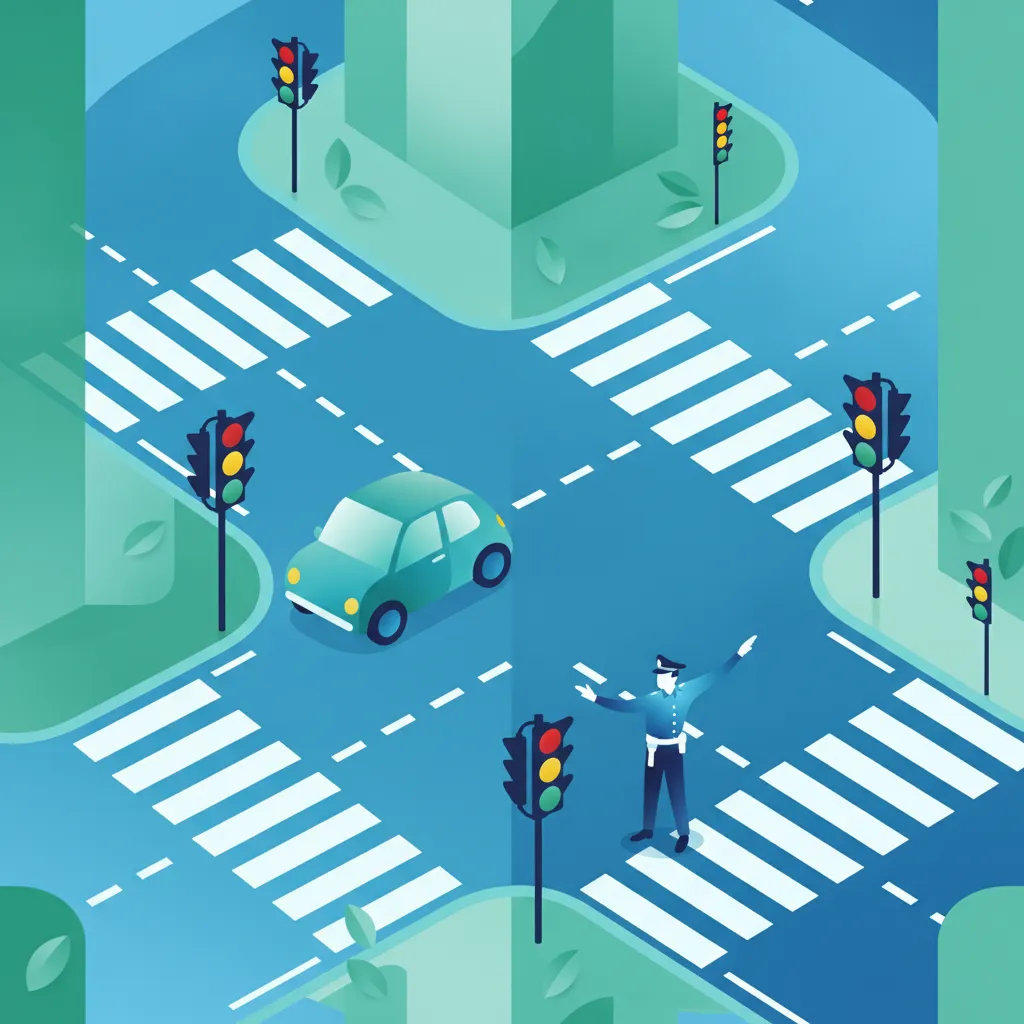
This lesson explains the function of Italian traffic light systems and the meaning of various road markings. You will learn the rules for red, amber, and green signals, including flashing lights and directional arrows. It also covers how to interpret lane lines, stop lines, and other surface markings that dictate correct vehicle positioning and movement.

This lesson provides a detailed guide to understanding road markings and pavement symbols in Italy. It explains the critical difference between continuous and broken lane lines regarding overtaking, the function of stop lines and yield markings at intersections, and the meaning of directional arrows painted in lanes. The content also covers markings for pedestrian crossings, bus lanes, and designated parking areas.
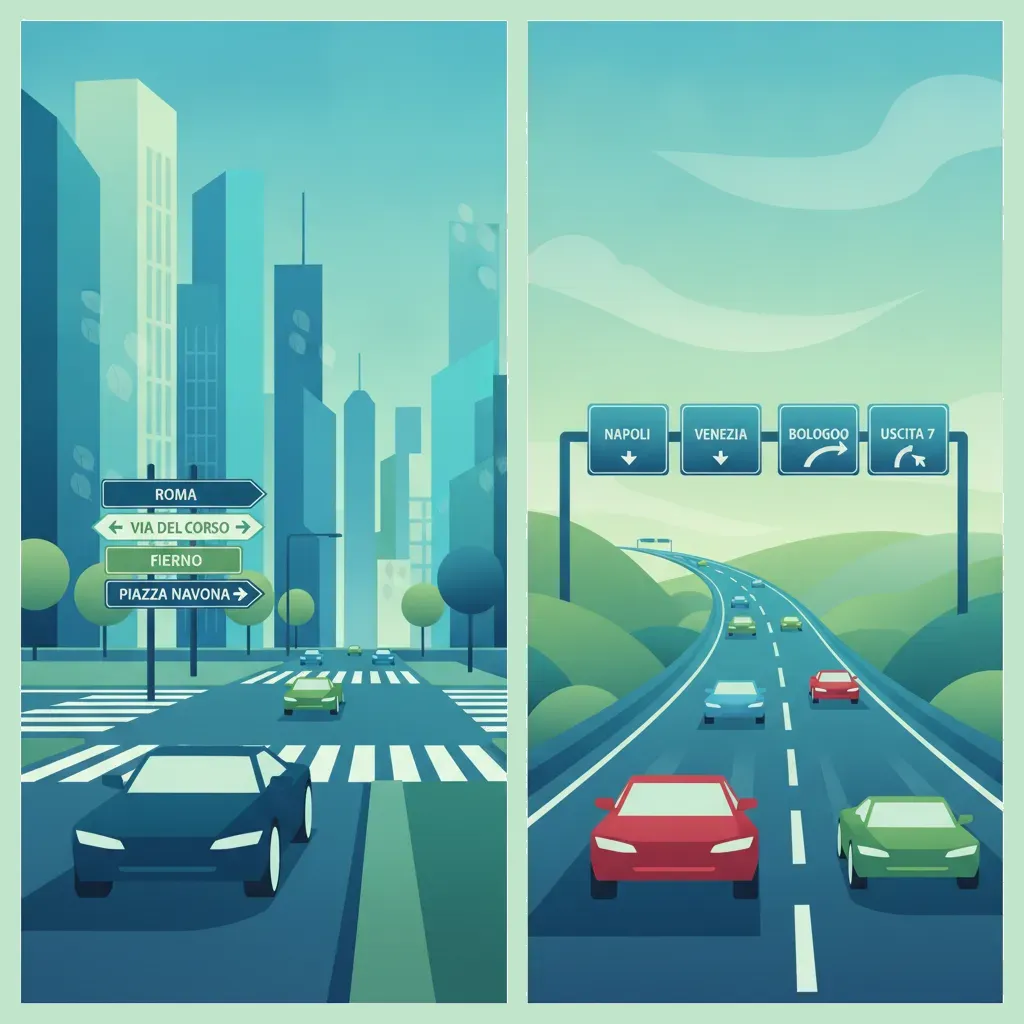
This lesson explains the function of informational and directional signs used for navigation and guidance on Italian roads. It covers how to read signs indicating upcoming cities, motorway exits, and the location of services like fuel stations, parking, and rest areas. The content also details the color-coding system used to differentiate between motorways (green), state roads (blue), and urban roads (white).

This lesson explains how to execute left turns, right turns, and U-turns safely while maintaining correct lane discipline. It covers interpreting road markings and arrows, selecting the proper vehicle position, and using signals in a timely manner. Performing shoulder checks to monitor blind spots before and during a turn is a key focus for preventing collisions.

This lesson provides detailed instruction on performing effective shoulder checks to supplement mirror use, ensuring a clear path before turning or changing lanes. It covers the proper and timely use of electronic indicators and hand signals to communicate your intentions to other drivers. Correct signaling is crucial for preventing misunderstandings and collisions on the road.
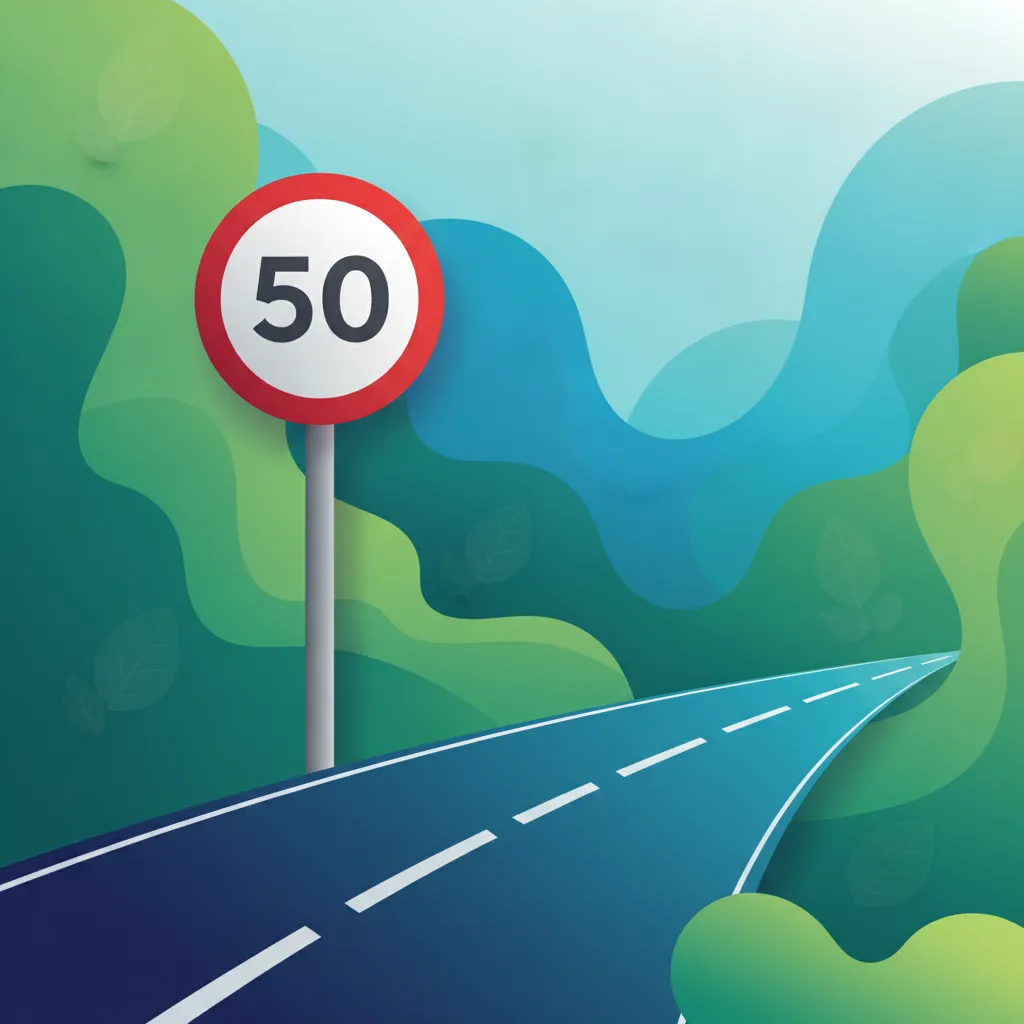
This lesson focuses on regulatory signs, which impose legal obligations and prohibitions on drivers. It explains the meaning of critical signs such as 'Stop', 'Yield' (dare la precedenza), and various speed limit signs. The content also covers signs that prohibit certain actions like overtaking, parking, or entry, as well as those that mandate a specific direction of travel or lane usage.
This lesson is dedicated to warning signs, which are designed to alert drivers to potential dangers or changes in road conditions ahead. It covers the interpretation of signs indicating sharp bends, steep inclines or declines, slippery surfaces, and the potential presence of animals or pedestrians. Understanding these signs allows drivers to anticipate hazards and adjust their speed and driving style accordingly for safety.
This lesson explores the specific speed limits applicable to AM vehicles across various zones, including urban, residential, and rural roads. Emphasis is placed on understanding the signage that indicates both permanent and temporary speed restrictions. Learners will also examine the rationale behind these limits and the importance of adapting speed to road conditions and traffic density.

This lesson details how to safely approach and enter intersections by correctly interpreting traffic lights, stop signs, and give-way rules. It emphasizes the importance of scanning for hazards, checking blind spots, and anticipating the actions of other road users. You will learn to adjust your speed and position your vehicle correctly to navigate crossings without incident.
This lesson emphasizes the importance of clear communication and cooperative behavior among all road users to prevent conflicts and enhance safety. It details the proper and legal use of vehicle signals, such as turn indicators and hazard lights, as well as the appropriate use of the horn. The content also explores the role of non-verbal cues like eye contact and courtesy gestures in creating a predictable and safe driving environment.
Learn the fundamental differences between regulatory signs (mandatory rules) and warning signs (hazard alerts) for Patente AM riders in Italy. Understand the legal implications and practical application of each sign type for safe riding.
This lesson focuses on regulatory signs, which impose legal obligations and prohibitions on drivers. It explains the meaning of critical signs such as 'Stop', 'Yield' (dare la precedenza), and various speed limit signs. The content also covers signs that prohibit certain actions like overtaking, parking, or entry, as well as those that mandate a specific direction of travel or lane usage.
This lesson explains the function of Italian traffic light systems and the meaning of various road markings. You will learn the rules for red, amber, and green signals, including flashing lights and directional arrows. It also covers how to interpret lane lines, stop lines, and other surface markings that dictate correct vehicle positioning and movement.
This lesson explains the function of informational and directional signs used for navigation and guidance on Italian roads. It covers how to read signs indicating upcoming cities, motorway exits, and the location of services like fuel stations, parking, and rest areas. The content also details the color-coding system used to differentiate between motorways (green), state roads (blue), and urban roads (white).
This lesson is dedicated to warning signs, which are designed to alert drivers to potential dangers or changes in road conditions ahead. It covers the interpretation of signs indicating sharp bends, steep inclines or declines, slippery surfaces, and the potential presence of animals or pedestrians. Understanding these signs allows drivers to anticipate hazards and adjust their speed and driving style accordingly for safety.
This lesson provides a detailed guide to understanding road markings and pavement symbols in Italy. It explains the critical difference between continuous and broken lane lines regarding overtaking, the function of stop lines and yield markings at intersections, and the meaning of directional arrows painted in lanes. The content also covers markings for pedestrian crossings, bus lanes, and designated parking areas.
This lesson explores the specific speed limits applicable to AM vehicles across various zones, including urban, residential, and rural roads. Emphasis is placed on understanding the signage that indicates both permanent and temporary speed restrictions. Learners will also examine the rationale behind these limits and the importance of adapting speed to road conditions and traffic density.

This lesson details the proper and legal application of a vehicle's horn, lights, and signals as primary communication tools. It explains the specific circumstances for using high beams, low beams, and fog lights to maximize visibility without dazzling other drivers. The content also clarifies the rules for using the horn, turn indicators, and hazard lights to signal intentions, warn of danger, or indicate an emergency situation.
This lesson emphasizes the importance of clear communication and cooperative behavior among all road users to prevent conflicts and enhance safety. It details the proper and legal use of vehicle signals, such as turn indicators and hazard lights, as well as the appropriate use of the horn. The content also explores the role of non-verbal cues like eye contact and courtesy gestures in creating a predictable and safe driving environment.
This lesson provides detailed instruction on performing effective shoulder checks to supplement mirror use, ensuring a clear path before turning or changing lanes. It covers the proper and timely use of electronic indicators and hand signals to communicate your intentions to other drivers. Correct signaling is crucial for preventing misunderstandings and collisions on the road.

This lesson introduces the philosophy and techniques of defensive driving, a proactive approach focused on anticipating and mitigating potential hazards. It teaches drivers to maintain constant situational awareness by scanning the road ahead, behind, and to the sides. The content covers how to manage the space around the vehicle, identify potential escape routes, and predict the actions of other road users to prevent dangerous situations from developing.
Find clear answers to common questions learners have about Regulatory and Warning Signs Specific to AM Riders. Learn how the lesson is structured, which driving theory objectives it supports, and how it fits into the overall learning path of units and curriculum progression in Italy. These explanations help you understand key concepts, lesson flow, and exam focused study goals.
Yes, as a road user in Italy, you must obey all regulatory and warning signs unless a specific sign explicitly excludes your vehicle category. Always pay attention to signs indicating prohibitions for specific engine displacements.
Regulatory signs are typically circular with red borders or blue backgrounds to indicate obligations or prohibitions. Warning signs are generally triangular with a white background and red border, alerting you to potential dangers ahead.
The official Italian exam can cover a wide range of signs found in the Codice della Strada. It is important to study both common and less frequent signs to ensure you are prepared for any question the exam might present.
Ignoring mandatory signs is a violation of the Codice della Strada. It can lead to traffic fines, penalty points on your licence, and significantly increased risk of accidents at intersections or restricted zones.
Start searching now to pinpoint exactly which Italian driving theory topics, road signs, or traffic rules you need to master. Use our advanced filters to build a custom practice session and ensure you're fully prepared for every aspect of your official driving licence exam.