
This lesson guides professional drivers through the critical techniques for executing controlled emergency stops in heavy goods vehicles. You will learn to leverage modern safety systems like ABS to maintain stability and steering control, ensuring you are prepared for both the Italian theory exam and real-world hazards.

Lesson content overview
Mastering emergency braking is a fundamental skill for every professional driver of heavy goods vehicles (HGVs). In critical situations, the ability to execute a controlled emergency stop can be the difference between avoiding a collision and facing severe consequences. This lesson delves into the techniques and technologies essential for safely bringing a heavy vehicle to a halt under maximum deceleration demands, focusing on the specific challenges and systems relevant to the Italian Goods Vehicle License Theory Course (C, C1, C1E, CE).
We will explore how modern braking systems, particularly Anti-lock Braking Systems (ABS), function to maintain vehicle stability and steering control during intense braking. Understanding the physics of weight transfer, the implications of load shifts, and the proper use of auxiliary braking systems like engine brakes and retarders are crucial for effective emergency response.
Maximum Braking Effort (MBE) refers to the highest possible braking torque that can be applied to a wheel without causing it to lock up. Achieving MBE is paramount during an emergency stop because it ensures optimal deceleration while allowing the driver to maintain steering control. For heavy vehicles, this requires a firm, continuous application of the service brake pedal, rather than a hesitant or pumping action.
The objective is to utilize the full friction capability between the tires and the road surface. Over-aggressive braking can exceed this limit, leading to wheel lock-up, which dramatically reduces stopping effectiveness and eliminates steering ability. Therefore, drivers must learn to apply sufficient but not excessive pressure to achieve the greatest possible stopping force.
Modern heavy goods vehicles are equipped with sophisticated braking technologies designed to enhance safety, especially during emergency situations. The Anti-lock Braking System (ABS) is perhaps the most crucial of these for emergency braking, working in conjunction with Electronic Stability Programs (ESP) and other active safety features.
ABS is an electronic system that continuously monitors the speed of each wheel during braking. When it detects that a wheel is about to lock up – meaning its rotational speed is significantly slower than the vehicle's speed – ABS rapidly modulates the brake pressure to that specific wheel. It does this by quickly releasing, then re-applying, the brake pressure in a pulsating action, typically many times per second.
This pulsating action prevents the wheel from completely locking, thereby maintaining traction and allowing the driver to steer the vehicle around obstacles even under maximum braking. Without ABS, a driver pressing the brake pedal too hard would cause the wheels to lock, resulting in the vehicle skidding uncontrollably and losing all steering capability.
While all ABS systems share the same fundamental goal, their design can vary:
Many drivers hold misconceptions about ABS:
When ABS activates, you will typically feel a pulsation or vibration through the brake pedal and might hear a grinding or buzzing noise. This is normal and indicates the system is working. Do not release pressure; maintain firm, continuous pedal application.
An emergency stop is a critical maneuver that requires decisive action. Knowing the correct sequence can significantly improve outcomes. For heavy goods vehicles, the procedure must account for vehicle mass, potential load shifts, and the capabilities of modern braking systems.
The first and most crucial step is to quickly recognize a situation demanding an emergency stop. This could be a sudden obstruction, a vehicle ahead braking sharply, or an unexpected hazard. Rapid assessment of the situation and immediate decision-making are vital. Hesitation can dramatically increase the required stopping distance.
Recognise the emergency: Identify the need for an immediate and maximum deceleration. Time is critical.
Depress the clutch pedal: If driving a manual transmission, depress the clutch pedal simultaneously with the brake to prevent stalling the engine as the vehicle slows.
Apply maximum brake pressure: Firmly and continuously depress the service brake pedal with maximum force. Do not pump the pedal if your vehicle has ABS. Expect and allow the ABS system to activate.
Maintain steering control: While maintaining maximum brake pressure, steer to avoid any obstacles if necessary and safe to do so. The ABS will allow you to steer effectively by preventing wheel lock-up.
Utilise auxiliary brakes (if applicable and time permits): If you have an engine brake or retarder and it is safe and there is enough time, engage these systems to supplement the service brakes and reduce their workload. This is especially relevant on descents.
Anticipate load shift: Be aware that heavy loads will shift forward during rapid deceleration. Proper load securing is critical to prevent instability or damage.
Gradually release brakes upon stopping: Once the vehicle has come to a complete stop, gradually ease off the brake pedal. An abrupt release can cause the vehicle to lurch or, with heavy loads, lead to a dangerous rearward load shift.
Assess surroundings: After stopping, check mirrors for following traffic and assess the situation to determine the next safe course of action.
In the presence of a "Stop" sign, or when instructed by police, a controlled emergency stop is a legal requirement to ensure safety at conflict points.
The immense mass of heavy goods vehicles introduces unique challenges during braking, especially concerning weight transfer and load shift.
During any deceleration, the vehicle's mass shifts from the rear axles towards the front axles. This phenomenon, known as weight transfer, significantly impacts tire adhesion. The front wheels gain load, increasing their traction and braking potential. Conversely, the rear wheels lose load, reducing their adhesion to the road and making them more susceptible to lock-up if braking force is not appropriately distributed.
In HGVs, this effect is amplified by the vehicle's higher centre of gravity and the sheer weight of the cargo. Extreme weight transfer can lead to the front tires being overloaded or, more commonly, the rear wheels locking up even under moderate braking if the system isn't balanced or the load isn't managed correctly.
For loaded HGVs, the cargo itself represents a significant portion of the vehicle's total mass. Therefore, load shift – the movement of cargo within the vehicle during braking – poses a substantial risk. A sudden, uncontrolled shift of a poorly secured load can drastically alter the vehicle's centre of gravity, leading to:
Proper load distribution and securing are not merely about preventing cargo damage; they are critical safety measures that directly influence the vehicle's stability and braking performance. Drivers must ensure cargo is evenly distributed and firmly secured according to regulations before every journey.
Effective emergency braking also requires an understanding of the inherent limitations and characteristics of heavy vehicle braking systems, specifically brake lag and brake fade.
Brake lag refers to the delay between the moment the driver depresses the brake pedal and when the full braking force is actually applied to the wheels. This delay is more pronounced in heavy vehicles, especially those with air-operated braking systems. Air needs to travel through lines to reach the brake chambers, and then the mechanical components need to react.
While this lag might be a fraction of a second, at high speeds, even a short delay can translate into many meters of increased stopping distance. Drivers of HGVs must account for this lag by anticipating braking needs earlier and initiating braking actions sooner than they might in a lighter vehicle. Regular maintenance ensures brake system components operate efficiently, minimizing unnecessary lag.
Brake fade is the reduction in braking performance due to excessive heat build-up in the brake components (pads, drums, or discs). When brakes are used continuously or too aggressively, the friction material can overheat, losing its ability to generate sufficient friction. This results in significantly reduced braking power, requiring more pedal effort to achieve less deceleration, and dramatically increasing stopping distances.
Brake fade is particularly dangerous on long, steep descents where constant braking is often required to maintain a safe speed. To prevent fade, drivers must avoid continuous heavy foot braking. Instead, they should rely on auxiliary braking systems and proper gear selection, reserving the service brakes for intermittent, firm applications.
Riding the service brakes on long downgrades is a common and dangerous mistake that almost inevitably leads to brake fade and potential loss of control.
To mitigate the risks of brake fade and manage speed effectively, particularly on descents, heavy goods vehicles are equipped with or can be retrofitted with auxiliary braking systems: engine brakes and retarders.
These systems are designed to slow the vehicle without relying on the friction brakes. This dramatically reduces the workload on the service brakes, preventing them from overheating and preserving their effectiveness for emergency situations. They are indispensable for maintaining control and ensuring safety, especially when operating on mountainous terrain or with heavy loads.
Using these systems correctly is a hallmark of a skilled professional driver. On steep grades, the Italian Codice della Strada and local regulations often recommend or even mandate their use to prevent brake overheating.
Compliance with the Italian Codice della Strada is paramount for heavy goods vehicle drivers. Several regulations directly impact emergency braking strategies and the use of vehicle safety systems.
Regulation from the Codice della Strada (e.g., Article 73 bis) mandates that heavy goods vehicles above a certain weight threshold (typically over 3.5 tonnes) registered after specific dates (e.g., 2008) must be equipped with ABS. This legal requirement underscores the importance of these systems in enhancing road safety by preventing wheel lock-up and maintaining steering control. Drivers are also legally obliged not to deactivate safety systems like ABS or ESP (Codice della Strada Article 140) as they are integral to vehicle safety.
Codice della Strada Article 138 requires drivers to maintain a safe distance from the vehicle ahead, ensuring sufficient stopping distance under all conditions. This distance must be increased on wet, slippery, or otherwise adverse road surfaces. This regulation directly enables a driver to have the necessary space and time to execute an emergency stop safely without colliding with the vehicle in front.
Furthermore, Article 149 of the Codice della Strada specifies that drivers must perform a controlled stop in the presence of a "stop" sign or when instructed by police. This emphasizes the mandatory nature of specific stopping points and the need for preparedness.
Codice della Strada Article 144, paragraph 2, advises or, under specific local conditions, mandates that during emergency braking or prolonged descents, drivers must use engine braking and/or retarders in addition to service brakes. This is crucial for preventing brake overheating and subsequent brake fade, which could lead to a catastrophic loss of control on steep gradients.
Always verify the specific weight thresholds for mandatory ABS and ESP installation for HGVs in Italian law, as these can be updated.
Even experienced drivers can make mistakes when faced with emergency braking situations or in their daily driving habits. Understanding these common errors is key to preventing them.
Effective emergency braking is not a one-size-fits-all procedure. Drivers must constantly adapt their technique and anticipation based on prevailing conditions.
In conditions of low visibility (fog, heavy rain, darkness), drivers must anticipate possible obstacles much earlier and begin braking sooner. This extended reaction time allows the ABS to act effectively and provides a greater margin of safety for bringing the heavy vehicle to a controlled stop.
Mastering emergency braking for heavy goods vehicles involves a comprehensive understanding of vehicle physics, advanced braking technologies, and legal obligations. It is a critical component of professional driving that demands both theoretical knowledge and practical skill.
Key takeaways include:
By internalizing these principles and regularly practicing these techniques, HGV drivers can significantly enhance their ability to respond safely and effectively to critical situations on the road, ensuring the safety of themselves, their cargo, and other road users.
This lesson covers emergency braking techniques specific to heavy goods vehicles, emphasising that ABS prevents wheel lock-up through rapid pressure modulation, allowing steering during maximum braking. Maximum Braking Effort (MBE) requires firm, continuous pedal pressure without pumping. The physics of weight transfer mean rear wheels lose adhesion during braking, making proper load securing critical to prevent dangerous load shifts. Auxiliary braking systems like retarders and engine brakes must be used on descents to prevent brake fade. Italian law (Codice della Strada) mandates ABS on HGVs over 3.5 tonnes and requires safe following distances, with specific regulations on downhill braking practices.
A short set of high-value points that capture the most important learning from this lesson.
ABS prevents wheel lock-up during emergency braking, allowing you to maintain steering control while applying maximum brake force
Maximum Braking Effort (MBE) is achieved through firm, continuous brake pressure without pumping—the optimal deceleration point before wheel lock-up
Heavy vehicles experience significant weight transfer during braking, shifting load from rear to front axles and affecting tire adhesion
Engine brakes and retarders prevent brake fade on long descents by reducing service brake workload through compression resistance or dedicated auxiliary devices
The Codice della Strada mandates ABS on HGVs over 3.5 tonnes and prohibits deactivating safety systems like ABS or ESP
Explore all units and lessons included in this driving theory course.
With ABS, apply firm continuous pressure to the brake pedal—pumping interferes with the system's modulation and increases stopping distance
Weight transfer during braking reduces rear wheel load, making rear wheels more susceptible to lock-up than front wheels
Brake lag is the delay between pedal input and full braking force in air brake systems; account for this by initiating braking earlier
Brake fade occurs when overheated brakes lose friction capability—prevent it by using engine braking and retarders on descents, not continuous service braking
Load shift during emergency braking can alter a vehicle's centre of gravity and cause rollover or loss of control if cargo is improperly secured
Pumping the brake pedal with ABS equipped, reducing system efficiency and extending stopping distance unnecessarily
Relying solely on service brakes on long downgrades, causing brake fade and potential loss of braking capability
Assuming ABS automatically stops the vehicle—it only prevents lock-up and maintains steering; the driver must still apply brakes
Disabling ABS or ESP systems, which is illegal under Codice della Strada and compromises vehicle stability
Insufficient following distance on wet or slippery surfaces where even ABS-equipped vehicles require longer stopping space
Lesson content overview
A short set of high-value points that capture the most important learning from this lesson.
ABS prevents wheel lock-up during emergency braking, allowing you to maintain steering control while applying maximum brake force
Maximum Braking Effort (MBE) is achieved through firm, continuous brake pressure without pumping—the optimal deceleration point before wheel lock-up
Heavy vehicles experience significant weight transfer during braking, shifting load from rear to front axles and affecting tire adhesion
Engine brakes and retarders prevent brake fade on long descents by reducing service brake workload through compression resistance or dedicated auxiliary devices
The Codice della Strada mandates ABS on HGVs over 3.5 tonnes and prohibits deactivating safety systems like ABS or ESP
Explore all units and lessons included in this driving theory course.
With ABS, apply firm continuous pressure to the brake pedal—pumping interferes with the system's modulation and increases stopping distance
Weight transfer during braking reduces rear wheel load, making rear wheels more susceptible to lock-up than front wheels
Brake lag is the delay between pedal input and full braking force in air brake systems; account for this by initiating braking earlier
Brake fade occurs when overheated brakes lose friction capability—prevent it by using engine braking and retarders on descents, not continuous service braking
Load shift during emergency braking can alter a vehicle's centre of gravity and cause rollover or loss of control if cargo is improperly secured
Pumping the brake pedal with ABS equipped, reducing system efficiency and extending stopping distance unnecessarily
Relying solely on service brakes on long downgrades, causing brake fade and potential loss of braking capability
Assuming ABS automatically stops the vehicle—it only prevents lock-up and maintains steering; the driver must still apply brakes
Disabling ABS or ESP systems, which is illegal under Codice della Strada and compromises vehicle stability
Insufficient following distance on wet or slippery surfaces where even ABS-equipped vehicles require longer stopping space
Explore search topics learners often look for when studying Emergency Braking Strategies. These topics reflect common questions about road rules, driving situations, safety guidance, and lesson level theory preparation for learners in Italy.
Browse additional driving theory lessons that cover connected traffic rules, road signs, and common driving situations related to this topic. Improve your understanding of how different rules interact across everyday traffic scenarios.
Understand how the Anti-lock Braking System (ABS) works to prevent wheel lock-up during emergency stops in heavy vehicles. Learn essential techniques for maintaining steering control and achieving maximum braking effort safely according to Italian traffic law.

This lesson explains the function of the vehicle's braking system and key active safety technologies. It details how the Anti-lock Braking System (ABS) prevents wheels from locking during hard braking, allowing the driver to maintain steering control. The content also covers Electronic Stability Control (ESC), which helps prevent skidding by automatically applying brakes to individual wheels to stabilize the vehicle.

This lesson focuses on auxiliary or 'endurance' braking systems designed to manage vehicle speed on long downgrades, reducing the risk of service brake overheating. It explains the operating principles of engine brakes (compression release brakes), hydrodynamic retarders, and exhaust brakes. Learners will understand when and how to use these powerful tools to maintain a safe, controlled speed and preserve the service brakes for when they are most needed.

This lesson teaches the critical skill of executing a rapid and controlled stop in an emergency. It covers the technique of applying firm, progressive pressure to the brakes to achieve maximum deceleration without locking the wheels, both in a straight line and while cornering. The content also explains how Anti-lock Braking Systems (ABS) function in these scenarios and the correct body posture to maintain stability.

This lesson provides an in-depth analysis of motorcycle braking systems, clearly defining the distinct roles of the front and rear brakes. It covers the mechanics of hydraulic disc brakes and explains the function and benefits of an Anti-lock Braking System (ABS). Learners will understand the principles of brake balance for achieving maximum stopping power and the importance of routine maintenance on pads, discs, and fluid.

This lesson introduces the three distinct categories of braking systems on a heavy vehicle. It explains the role of the service brake for normal stopping, the parking brake for securing the vehicle when stationary, and endurance brakes for sustained speed control. Understanding the purpose and correct application of each system is fundamental to safe and efficient vehicle operation, as well as minimizing wear on the primary service brakes.

This lesson covers three critical risks associated with heavy vehicle braking systems. It explains 'brake lag' in air brake systems, the delay between pedal application and brake activation, and 'brake fade', the loss of braking efficiency due to overheating. Learners will be taught to recognize the warning signs and, more importantly, to use correct driving techniques, such as utilizing endurance brakes, to prevent these potentially catastrophic failures.

This lesson provides a step-by-step guide for managing a vehicle breakdown safely. It reinforces the procedure for stopping on the hard shoulder, activating hazard lights, and placing a warning triangle at the correct distance. The lesson emphasizes the importance of wearing high-visibility clothing, exiting the vehicle from the side away from traffic, and waiting in a safe location before contacting a roadside assistance service.

This lesson prepares drivers for incidents beyond a simple breakdown, such as losing part of the load onto the roadway or dealing with a spillage. It outlines the immediate priorities: ensuring personal safety, warning other traffic of the hazard, and notifying the authorities. The lesson also covers the fundamental principles of managing an accident scene, including protecting the area, assessing for casualties, and providing essential information to emergency services.
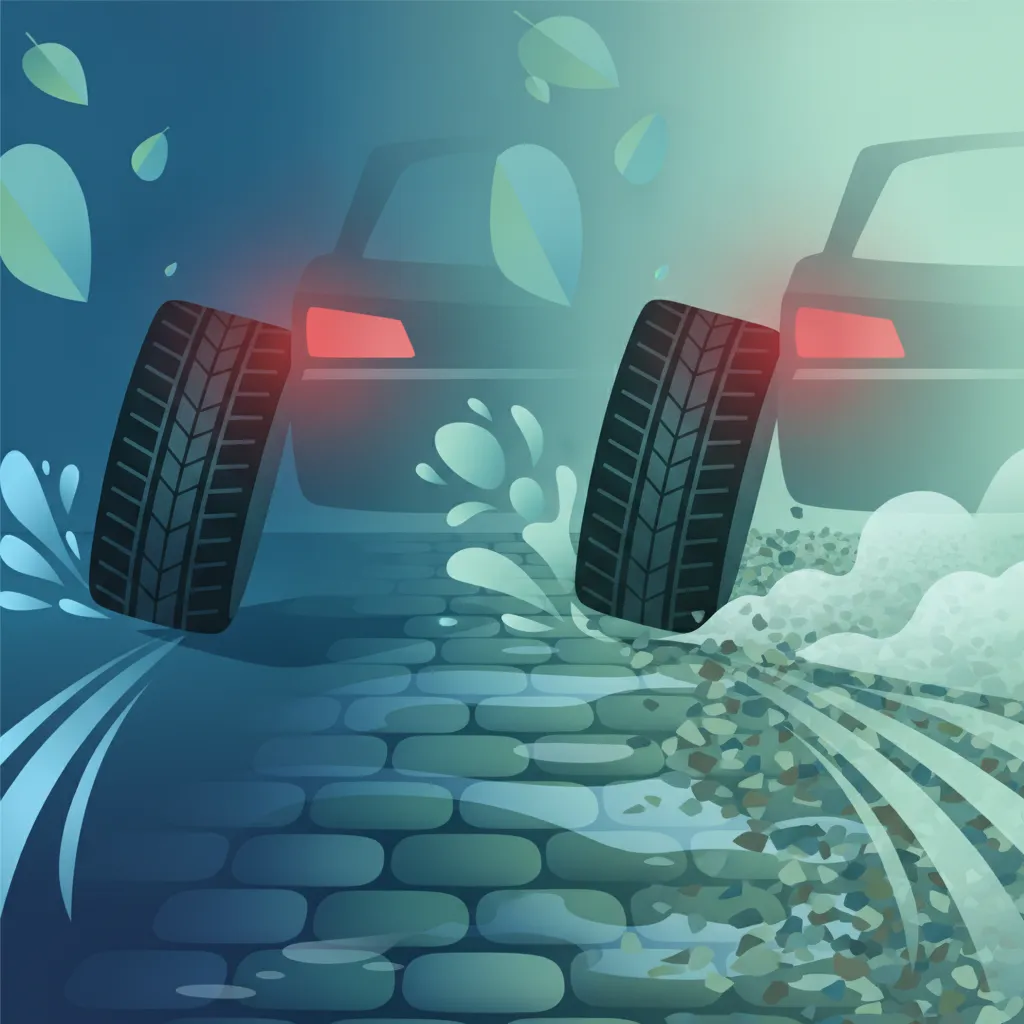
This lesson details correct braking techniques, emphasizing progressive application of both front and rear brakes for optimal stopping power. It explains the function of ABS in preventing wheel lock-up on slippery surfaces like wet roads or gravel. You will learn how different surfaces affect braking distance and how to adjust braking force to maintain control.
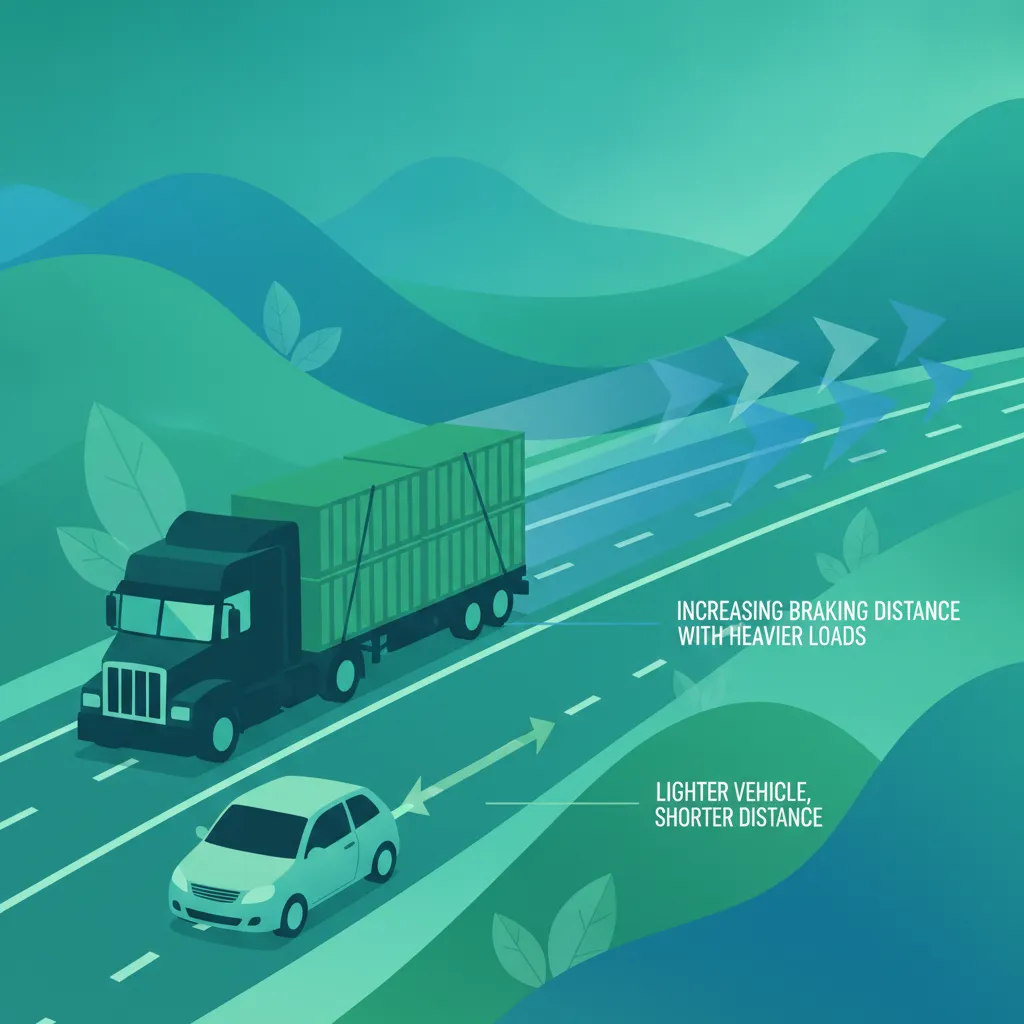
This lesson explores the critical physics behind stopping a heavy vehicle. It breaks down the components of total stopping distance—thinking distance and braking distance—and explains how this is significantly increased by vehicle mass and speed. Learners will understand the necessity of maintaining a much greater following distance than a car to allow enough space to stop safely in all conditions.
Explore the physics of weight transfer and load shift during heavy vehicle braking. Learn how to manage risks like brake fade and understand the importance of auxiliary braking systems for safe driving according to Italian regulations.

This lesson vividly illustrates the dangers of a load that moves during transit. It explains how a sudden load shift during braking can increase stopping distance or cause a jack-knife, while a shift during cornering can easily lead to a rollover. By understanding these dynamic forces, learners will appreciate the absolute necessity of ensuring every piece of cargo is properly and robustly secured before starting a journey.

This lesson focuses on the practical skill of distributing the load's weight evenly across the vehicle's axles. It explains how improper placement can overload one axle while underloading another, leading to legal violations and poor vehicle handling, steering, and braking performance. Learners will understand how to create a balanced load plan that respects legal axle limits and ensures the vehicle remains stable and controllable.
This lesson explores the critical physics behind stopping a heavy vehicle. It breaks down the components of total stopping distance—thinking distance and braking distance—and explains how this is significantly increased by vehicle mass and speed. Learners will understand the necessity of maintaining a much greater following distance than a car to allow enough space to stop safely in all conditions.
This lesson prepares drivers for incidents beyond a simple breakdown, such as losing part of the load onto the roadway or dealing with a spillage. It outlines the immediate priorities: ensuring personal safety, warning other traffic of the hazard, and notifying the authorities. The lesson also covers the fundamental principles of managing an accident scene, including protecting the area, assessing for casualties, and providing essential information to emergency services.
This lesson covers three critical risks associated with heavy vehicle braking systems. It explains 'brake lag' in air brake systems, the delay between pedal application and brake activation, and 'brake fade', the loss of braking efficiency due to overheating. Learners will be taught to recognize the warning signs and, more importantly, to use correct driving techniques, such as utilizing endurance brakes, to prevent these potentially catastrophic failures.
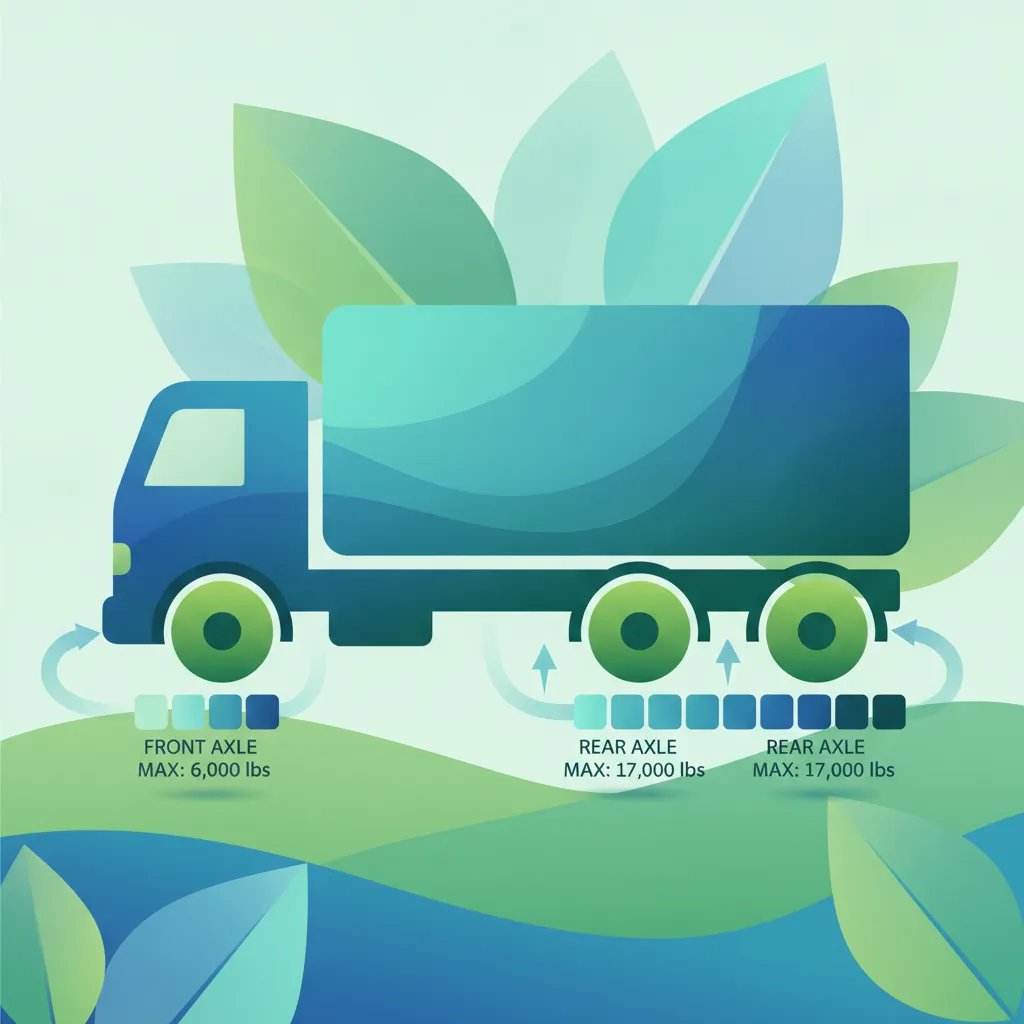
This lesson details the legal restrictions on the weight that can be supported by a single axle or a group of axles. It explains the importance of distributing the load correctly across the vehicle's length to prevent exceeding these limits, which can cause significant road damage and compromise vehicle safety. Learners will understand the relationship between load placement, axle pressure, and overall stability, particularly during braking and cornering.

This lesson focuses on the specific regulations and techniques for operating a heavy vehicle on high-speed motorways. It covers mandatory lane discipline for trucks, the rules governing overtaking other heavy vehicles, and the specific speed limits that apply. Best practices for merging onto and exiting the motorway, maintaining safe following distances, and using the hard shoulder only in genuine emergencies are also detailed.

This lesson bridges the gap between general traffic laws and their specific application to heavy goods vehicles. It examines how rules regarding speed limits, lane discipline, overtaking, and priority are modified or have special considerations for trucks due to their size, weight, and reduced maneuverability. Drivers will learn to correctly interpret road signs and signals within the context of operating a large vehicle, ensuring safe and compliant integration with other traffic.
This lesson provides a step-by-step guide for managing a vehicle breakdown safely. It reinforces the procedure for stopping on the hard shoulder, activating hazard lights, and placing a warning triangle at the correct distance. The lesson emphasizes the importance of wearing high-visibility clothing, exiting the vehicle from the side away from traffic, and waiting in a safe location before contacting a roadside assistance service.

This lesson outlines the correct protocols for stopping to make a delivery in a public area. It covers the legal use of designated loading bays, the importance of making the vehicle highly visible with hazard lights, and ensuring that the parking brake is securely applied. The lesson stresses the need to conduct loading and unloading activities efficiently and safely, without causing undue obstruction or danger to other road users and pedestrians.
Find clear answers to common questions learners have about Emergency Braking Strategies. Learn how the lesson is structured, which driving theory objectives it supports, and how it fits into the overall learning path of units and curriculum progression in Italy. These explanations help you understand key concepts, lesson flow, and exam focused study goals.
ABS prevents the wheels from locking up during a hard stop, which allows the driver to maintain steering control. For a heavy vehicle, keeping the vehicle on its intended path while braking is essential to prevent skidding and potential collisions.
A heavy load increases the vehicle's momentum significantly, lengthening the required stopping distance. Improperly secured loads can shift forward during heavy braking, which can alter the vehicle's center of gravity and cause instability or even force the load to break through the cabin.
The driver must maintain a firm grip on the steering wheel and remain braced for rapid deceleration. Even with ABS, the driver must be aware that heavy vehicles require significantly longer distances to stop than passenger cars and must anticipate potential shifts in the cargo.
Yes, understanding brake lag is important for C and CE license candidates. It refers to the slight delay between the moment the driver hits the pedal and the moment the braking force is fully applied at the wheels due to the pneumatic system.
Start searching now to pinpoint exactly which Italian driving theory topics, road signs, or traffic rules you need to master. Use our advanced filters to build a custom practice session and ensure you're fully prepared for every aspect of your official driving licence exam.