
This lesson details the three primary braking systems required for operating heavy vehicles safely on Italian roads. You will learn how to distinguish between service, parking, and endurance brakes, ensuring you understand their specific roles in vehicle stability and speed management. Mastering these systems is vital for the C, C1, C1E, and CE theory exams and essential for professional driving.

Lesson content overview
Operating heavy goods vehicles (HGVs) in Italy requires a profound understanding of their complex braking systems. Unlike passenger cars, HGVs are equipped with multiple, distinct braking systems, each designed for specific purposes and operational conditions. This lesson, a vital part of your Italian Goods Vehicle License Theory Course (C, C1, C1E, CE), will delve into the three primary categories: the service brake, the parking brake, and endurance brakes.
Understanding the function, appropriate application, and limitations of each system is not only crucial for safe vehicle operation but also for complying with Italian road law (Codice della Strada) and extending the lifespan of your vehicle's components. Mastery of these systems ensures that you can manage vehicle speed and stability effectively, regardless of the load, terrain, or traffic conditions.
Heavy vehicles, due to their immense mass, require sophisticated braking mechanisms to safely manage kinetic energy and bring the vehicle to a controlled stop. This lesson differentiates between the primary braking system used for active deceleration, the secondary system for vehicle immobilization, and supplemental systems designed for long-term speed control. Each system plays a critical role in preventing accidents, reducing component wear, and ensuring overall vehicle stability under various driving scenarios.
The sheer weight and momentum of a fully laden heavy vehicle mean that a single braking system, such as those found in cars, would quickly overheat and become ineffective, especially on prolonged descents. By distributing the braking load across different systems, professional drivers can maintain optimal control, prevent dangerous brake fade, and significantly enhance safety margins. This multi-system approach is a cornerstone of heavy vehicle engineering and operation.
The service brake is the primary friction-based braking system engaged by the driver's foot pedal for normal stopping during regular traffic conditions. It is your most immediate and frequently used means of deceleration, vital for bringing the vehicle to a halt when required by traffic signs, signals, or sudden events.
This system is engineered to provide reliable and rapid deceleration, enabling controlled stops from operational speeds. Regular and proper use of the service brake is fundamental for maintaining vehicle control and achieving the shortest possible stopping distances when necessary.
Most heavy goods vehicles in Italy and across Europe utilize air service brakes. This system operates using compressed air, which is generated by an on-board compressor and stored in reservoirs. When the driver presses the brake pedal, air pressure is sent through a system of valves and lines to activate brake chambers at each wheel. These chambers then use diaphragms to convert air pressure into mechanical force, applying brake shoes against drums or pads against discs to create friction and slow the vehicle.
The service brake is engaged for all routine stops, obstacle avoidance, and emergency braking situations. Correct modulation of the brake pedal is essential; it involves applying progressive pressure to achieve smooth deceleration without locking the wheels, which could lead to a loss of control. In emergencies, the pedal should be pressed firmly and quickly, possibly activating anti-lock braking systems (ABS) if fitted.
Progressive Braking: Always apply service brakes with a progressive, increasing pressure. This allows for smooth deceleration, prevents sudden jolts to the load, and reduces wear on the tires and brake components.
According to the Codice della Strada (Article 149), the service brake must be fully functional at all times. It must be capable of stopping the vehicle within legally prescribed distances for its maximum laden weight. Drivers are required to perform mandatory checks of the service brake's effectiveness before each trip to ensure it meets safety standards. Any reduction in braking performance must be addressed immediately.
The parking brake, often referred to as the handbrake or emergency brake, is a crucial secondary system designed exclusively to keep a stationary vehicle immobilized. Its primary purpose is to prevent unintended vehicle movement due to gravity or external forces, especially when the vehicle is parked on slopes or left unattended.
It is distinct from the service brake in its function: while the service brake is for dynamic stopping, the parking brake provides a static hold. Engaging it correctly ensures the vehicle remains stable and secure after coming to a complete stop.
Parking brakes on heavy vehicles can operate through different mechanisms:
The parking brake must always be engaged after the service brake has brought the vehicle to a complete halt and the service brake pedal is fully released. It does not replace the service brake for slowing or stopping a moving vehicle. Misusing the parking brake while the vehicle is in motion can lead to severe brake wear, loss of control, and dangerous skidding, especially on wet or slippery surfaces.
Never use the parking brake to slow down a moving vehicle. The parking brake is not designed for dynamic braking and can cause dangerous loss of control, particularly if only one axle is braked.
Codice della Strada (Article 141) explicitly states that when a vehicle is stationary, the driver must engage the parking brake, particularly if the vehicle is on a slope or will be left unattended. This rule is mandatory for all HGVs, regardless of their load, to prevent uncontrolled rolling and potential accidents. Failing to comply can result in fines and significant safety risks.
Endurance brakes, also known as auxiliary brakes, are supplemental braking systems specifically designed for controlling vehicle speed over extended periods, particularly on declines, without excessive use of the service brakes. Their crucial role is to reduce the risk of service brake overheating and fade, thereby preserving the service brakes' full performance for emergency situations.
On long, steep descents, continuous use of friction-based service brakes generates immense heat. This heat can lead to brake fade, a significant reduction in braking effectiveness, potentially resulting in a complete loss of braking ability. Endurance brakes combat this by using non-friction mechanisms to slow the vehicle.
There are several common types of endurance brakes found in heavy vehicles:
Compression Release Engine Brake (Jake Brake):
Hydraulic Retarder:
Exhaust Brake:
The Codice della Strada (Article 304) recommends the use of endurance brakes on prolonged descents to assist with speed control and prevent service brake overheating. Drivers must engage the endurance brake before entering a significant downgrade. This involves selecting an appropriate low gear to keep engine RPMs within the effective range for the chosen endurance brake system. The service brakes should then only be used for supplementary speed adjustments or to bring the vehicle to a final stop.
Gear Selection is Key: For maximum effectiveness, endurance brakes (especially engine brakes) often require the engine to be in a higher RPM range. Select a lower gear that allows the engine to rev sufficiently without over-revving, providing optimal auxiliary braking force.
While powerful, endurance brakes do not replace the service brake for emergency stopping. They are primarily for speed control over extended periods. At very low speeds, some endurance brakes become ineffective, and the service brake must be used for the final stop. Drivers must always monitor their speed and be prepared to use the service brake if the endurance brake alone is insufficient to maintain a safe speed.
Adherence to Italian road laws regarding heavy vehicle braking systems is non-negotiable for professional drivers. These regulations are designed to ensure maximum safety for all road users and to preserve the operational integrity of your vehicle.
Violating these regulations can lead to serious consequences, including fines, points on your license, vehicle seizure, and, most importantly, severe accidents. Neglecting proper braking procedures jeopardizes not only the driver's safety but also the safety of other road users and the integrity of the transported goods.
Professional drivers must be acutely aware of common errors in braking technique to prevent accidents and extend the life of vehicle components.
Effective braking isn't just about knowing how each system works; it's about applying that knowledge intelligently based on current conditions.
In areas with pedestrians or cyclists, drivers must be prepared for sudden stops. While endurance brakes help maintain a controlled speed, the service brake must always be immediately available for rapid, decisive action to prevent collisions with vulnerable road users. Smooth, predictable braking also helps avoid startling others.
Understanding the fundamental principles behind braking illuminates why different systems are necessary and how to use them effectively.
Kinetic energy is the energy of motion, and it is directly proportional to the vehicle's mass and the square of its speed (KE = 0.5 * mv²). This means that a small increase in speed dramatically increases the energy that the braking systems must dissipate. For instance, doubling the speed quadruples the kinetic energy.
When you brake, this kinetic energy must be converted into another form, primarily heat, through friction in the service brakes or through mechanical/fluid resistance in endurance brakes. The challenge with heavy vehicles is the immense amount of energy involved. Continuous friction braking on a long descent can overwhelm the service brakes' ability to dissipate this heat, leading to brake fade.
Endurance brakes are a clever solution to this problem. They convert kinetic energy into heat through internal engine resistance or fluid dynamics, dissipating it through the engine's cooling system or a dedicated retarder cooling system, thereby preserving the service brakes for when maximum stopping power is truly needed.
Drivers often underestimate the increased stopping distances required for heavy, laden vehicles, especially at higher speeds or on declines. Knowledge of each braking system, coupled with situational awareness, improves reaction time and decision-making. Anticipating the need to slow down or stop, and selecting the appropriate braking system proactively, are hallmarks of a skilled professional driver. This reduces stress on both the driver and the vehicle's components.
Applying theoretical knowledge to real-world situations is crucial for developing safe driving habits.
Scenario: Descending a Long Mountain Pass with a Fully Laden Truck.
Scenario: Parking on a Busy City Street with a Slight Uphill Gradient.
Scenario: Emergency Stop for a Child Running into the Road in a Residential Area.
Scenario: Driving in Heavy Rain on a Motorway, Needing to Decelerate for Congestion.
Mastering the distinct applications of the service, parking, and endurance brakes is an indispensable skill for every professional heavy goods vehicle driver. This comprehensive understanding forms the bedrock of safe and efficient vehicle operation, directly impacting road safety, vehicle longevity, and adherence to legal requirements under the Italian Goods Vehicle License Theory Course (C, C1, C1E, CE) curriculum.
Remember these core principles:
By integrating these systems effectively, adapting your braking strategy to varying road, weather, and load conditions, and always prioritizing safety, you will demonstrate the competence expected of a professional driver.
This lesson covers the three distinct braking systems essential for heavy goods vehicles in Italy: the service brake for primary deceleration, the parking brake for vehicle immobilization, and endurance brakes for sustained speed control on descents. Understanding when and how to use each system is critical for preventing brake fade, ensuring road safety, and complying with the Codice della Strada. The lesson emphasizes that endurance brakes must be engaged before long downgrades to preserve service brake effectiveness, that the parking brake is strictly for stationary vehicles only, and that proper gear selection maximizes endurance brake performance. Italian law mandates functional service brakes and parking brake use on slopes, with specific consequences for non-compliance.
A short set of high-value points that capture the most important learning from this lesson.
The service brake is the primary friction-based system for all active deceleration and emergency stops
The parking brake serves exclusively to immobilize a stationary vehicle and must never be used while the vehicle is moving
Endurance brakes (engine brake, retarder, exhaust brake) provide sustained speed control on descents without generating friction heat
Heavy vehicles require multiple braking systems because their immense mass would quickly overheat a single friction brake on long downgrades
Service brake functionality must be verified before each trip according to Italian road law
Explore all units and lessons included in this driving theory course.
Air brakes are standard on Italian HGVs, using compressed air stored in reservoirs to activate brake chambers at each wheel
Codice della Strada Article 141 mandates parking brake engagement whenever the vehicle is stationary on a slope or left unattended
Endurance brakes become less effective at low speeds; the service brake is always required for the final stop
Kinetic energy increases with the square of speed, meaning doubling speed quadruples the braking energy required
Brake fade occurs when friction materials overheat and lose effectiveness, a serious risk on long descents without endurance brake use
Using the parking brake to slow or stop a moving vehicle, which can lock wheels and cause dangerous skidding
Entering a long descent without engaging the endurance brake first, leading to service brake overheating and fade
Relying solely on light, constant service brake pressure on downgrades ('riding the brakes'), which builds heat without adequate braking force
Failing to engage the parking brake on even slight inclines, risking unintended vehicle roll
Operating in too high a gear when using engine brakes, which reduces engine resistance and limits braking effectiveness
Lesson content overview
A short set of high-value points that capture the most important learning from this lesson.
The service brake is the primary friction-based system for all active deceleration and emergency stops
The parking brake serves exclusively to immobilize a stationary vehicle and must never be used while the vehicle is moving
Endurance brakes (engine brake, retarder, exhaust brake) provide sustained speed control on descents without generating friction heat
Heavy vehicles require multiple braking systems because their immense mass would quickly overheat a single friction brake on long downgrades
Service brake functionality must be verified before each trip according to Italian road law
Explore all units and lessons included in this driving theory course.
Air brakes are standard on Italian HGVs, using compressed air stored in reservoirs to activate brake chambers at each wheel
Codice della Strada Article 141 mandates parking brake engagement whenever the vehicle is stationary on a slope or left unattended
Endurance brakes become less effective at low speeds; the service brake is always required for the final stop
Kinetic energy increases with the square of speed, meaning doubling speed quadruples the braking energy required
Brake fade occurs when friction materials overheat and lose effectiveness, a serious risk on long descents without endurance brake use
Using the parking brake to slow or stop a moving vehicle, which can lock wheels and cause dangerous skidding
Entering a long descent without engaging the endurance brake first, leading to service brake overheating and fade
Relying solely on light, constant service brake pressure on downgrades ('riding the brakes'), which builds heat without adequate braking force
Failing to engage the parking brake on even slight inclines, risking unintended vehicle roll
Operating in too high a gear when using engine brakes, which reduces engine resistance and limits braking effectiveness
Explore search topics learners often look for when studying Service, Parking, and Endurance Brakes. These topics reflect common questions about road rules, driving situations, safety guidance, and lesson level theory preparation for learners in Italy.
Browse additional driving theory lessons that cover connected traffic rules, road signs, and common driving situations related to this topic. Improve your understanding of how different rules interact across everyday traffic scenarios.
Learn the theory behind engine brakes, retarders, and exhaust brakes. Essential knowledge for heavy vehicle drivers on Italian roads, focusing on their role in speed control and preventing brake fade on descents.

This lesson focuses on auxiliary or 'endurance' braking systems designed to manage vehicle speed on long downgrades, reducing the risk of service brake overheating. It explains the operating principles of engine brakes (compression release brakes), hydrodynamic retarders, and exhaust brakes. Learners will understand when and how to use these powerful tools to maintain a safe, controlled speed and preserve the service brakes for when they are most needed.
This lesson covers the techniques for executing a controlled emergency stop in a heavy goods vehicle. It explains the function of Anti-lock Braking Systems (ABS) in preventing wheel lock-up and maintaining steering control during maximum braking effort. Learners will understand how to brace for the effects of rapid deceleration and anticipate potential load shifts, focusing on bringing the vehicle to a stop as quickly and safely as possible.
Explore frequent errors in using service, parking, and endurance brakes. Understand the legal implications according to the Codice della Strada and how to avoid dangerous situations for professional drivers.

This lesson covers three critical risks associated with heavy vehicle braking systems. It explains 'brake lag' in air brake systems, the delay between pedal application and brake activation, and 'brake fade', the loss of braking efficiency due to overheating. Learners will be taught to recognize the warning signs and, more importantly, to use correct driving techniques, such as utilizing endurance brakes, to prevent these potentially catastrophic failures.
This lesson provides a clear overview of the legal consequences for failing to comply with road transport regulations in Italy. It covers the system of fines for common offenses like speeding, overloading, and violations of driving hours. The lesson also explains the penalty point system that can lead to license suspension and touches upon the responsibilities and potential liability of the transport company.

This lesson delves into the specific articles of the Italian Codice della Strada that apply to heavy goods vehicles. It outlines the core legal and professional obligations of a driver, including the heightened duty of care owed to other road users and the responsibility for the vehicle's roadworthiness and load. Learners will understand the legal consequences of non-compliance, such as fines and sanctions, reinforcing the importance of adhering to all traffic regulations.
This lesson provides a step-by-step guide for managing a vehicle breakdown safely. It reinforces the procedure for stopping on the hard shoulder, activating hazard lights, and placing a warning triangle at the correct distance. The lesson emphasizes the importance of wearing high-visibility clothing, exiting the vehicle from the side away from traffic, and waiting in a safe location before contacting a roadside assistance service.

This lesson provides a clear overview of the legal penalties for traffic violations in Italy. It explains the structure of fines and the penalty point system that can lead to license suspension or revocation. The content also touches on more severe consequences, including criminal liability for incidents causing injury, to emphasize the importance of lawful riding.
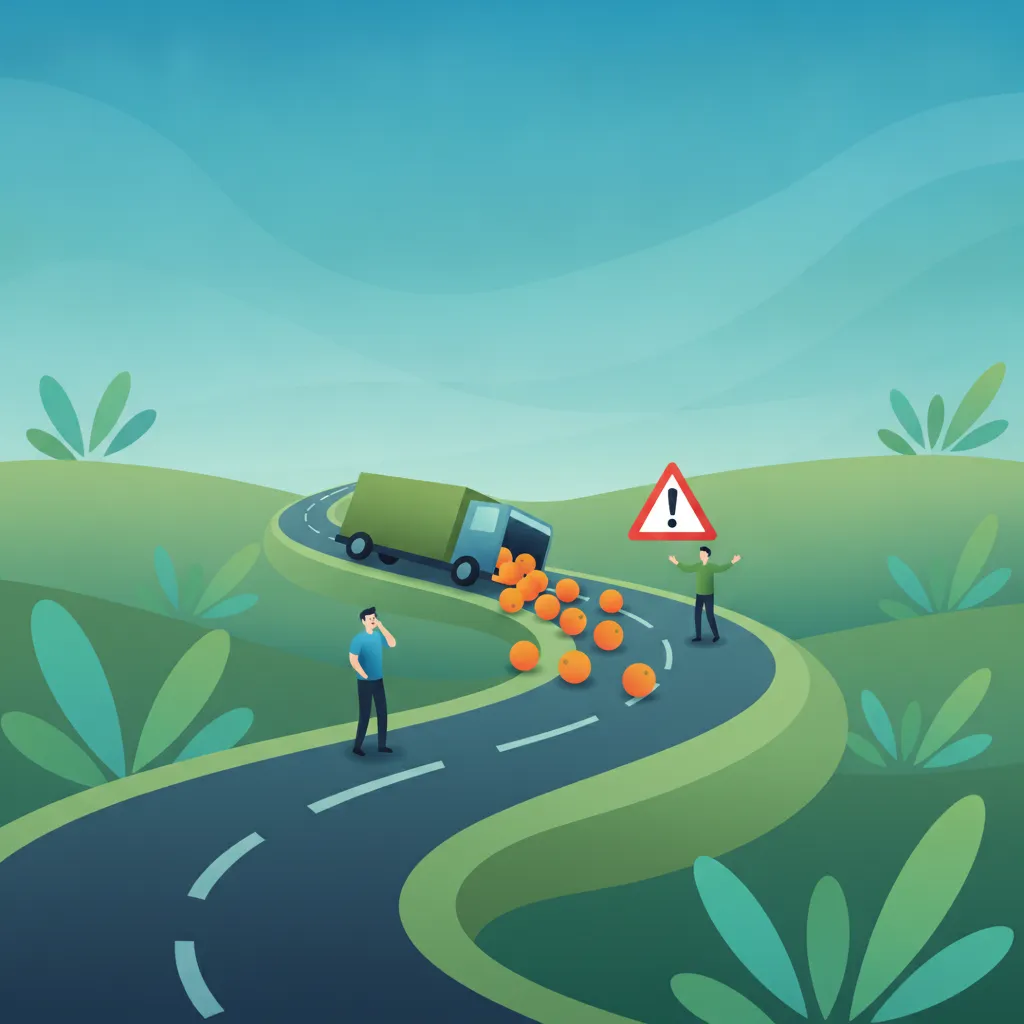
This lesson prepares drivers for incidents beyond a simple breakdown, such as losing part of the load onto the roadway or dealing with a spillage. It outlines the immediate priorities: ensuring personal safety, warning other traffic of the hazard, and notifying the authorities. The lesson also covers the fundamental principles of managing an accident scene, including protecting the area, assessing for casualties, and providing essential information to emergency services.
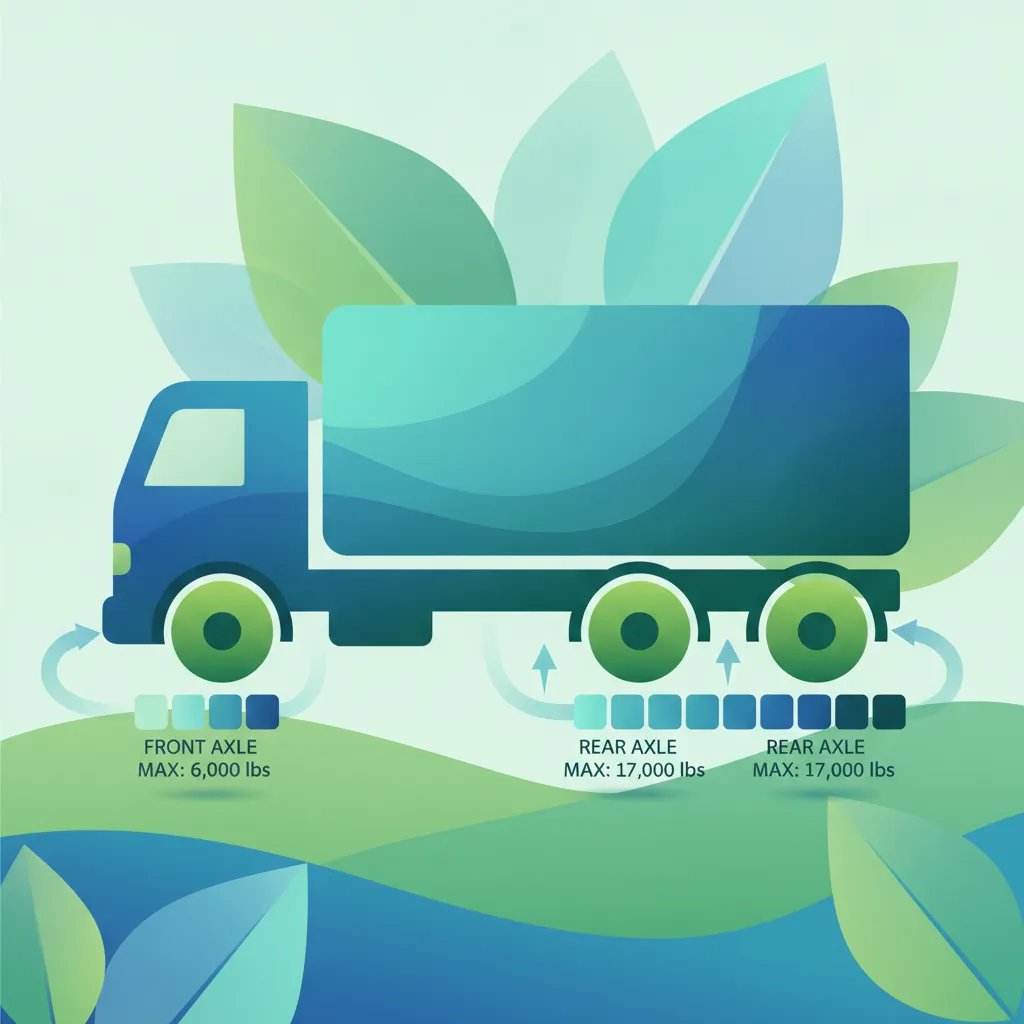
This lesson details the legal restrictions on the weight that can be supported by a single axle or a group of axles. It explains the importance of distributing the load correctly across the vehicle's length to prevent exceeding these limits, which can cause significant road damage and compromise vehicle safety. Learners will understand the relationship between load placement, axle pressure, and overall stability, particularly during braking and cornering.
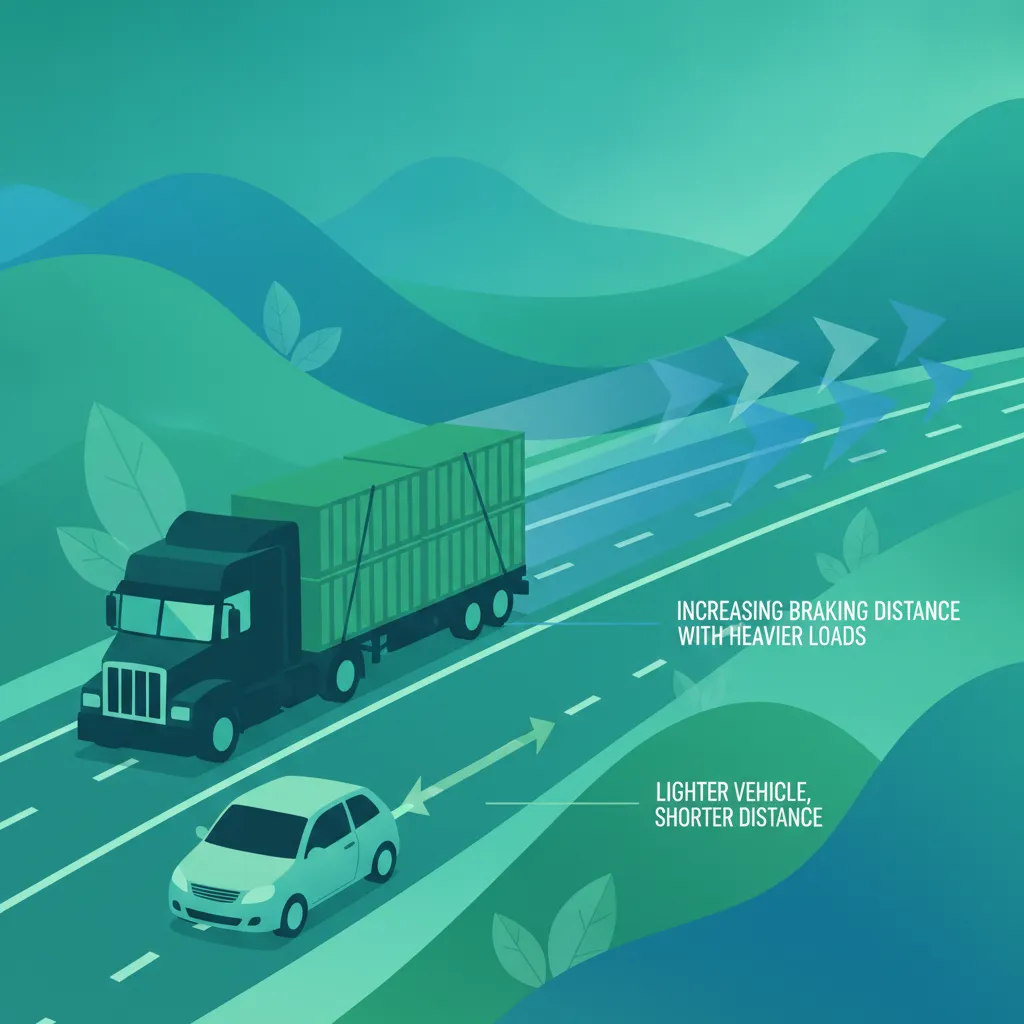
This lesson explores the critical physics behind stopping a heavy vehicle. It breaks down the components of total stopping distance—thinking distance and braking distance—and explains how this is significantly increased by vehicle mass and speed. Learners will understand the necessity of maintaining a much greater following distance than a car to allow enough space to stop safely in all conditions.

This lesson outlines the correct protocols for stopping to make a delivery in a public area. It covers the legal use of designated loading bays, the importance of making the vehicle highly visible with hazard lights, and ensuring that the parking brake is securely applied. The lesson stresses the need to conduct loading and unloading activities efficiently and safely, without causing undue obstruction or danger to other road users and pedestrians.
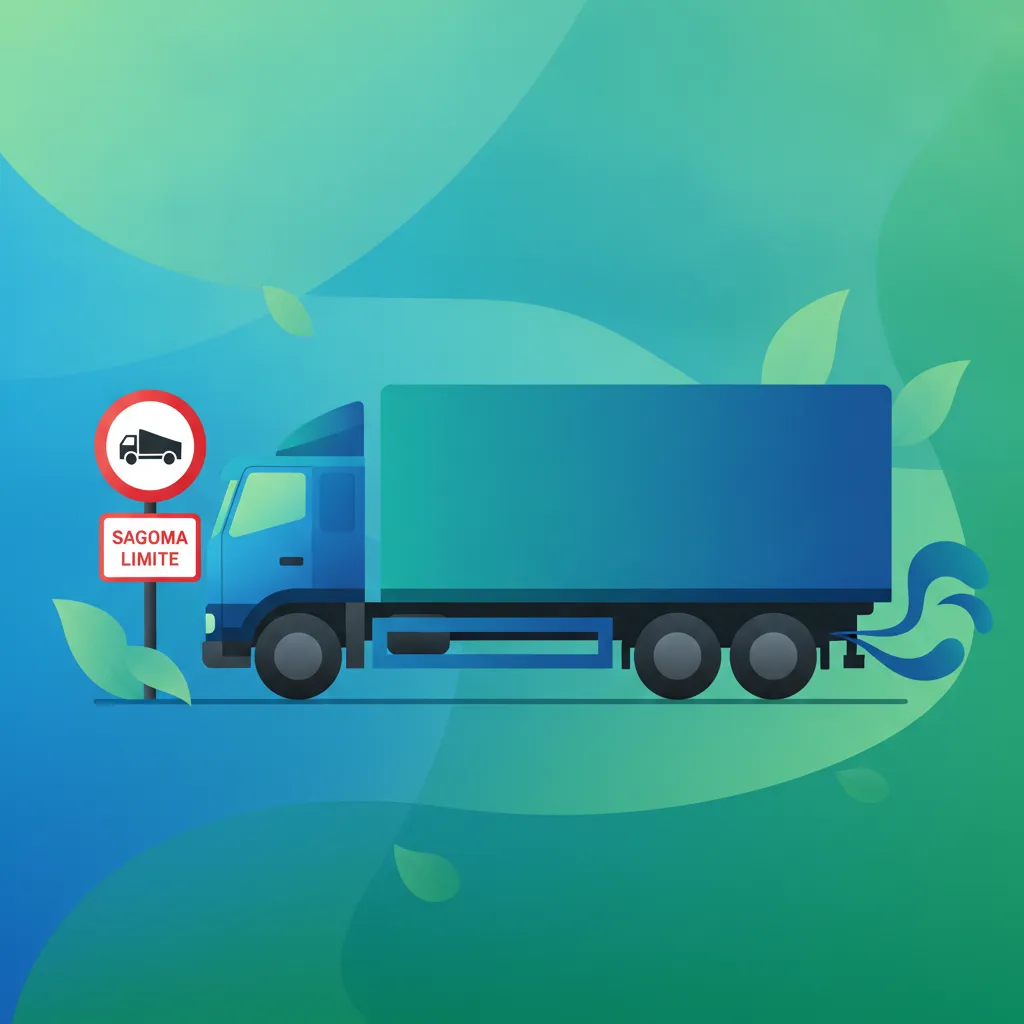
This lesson defines 'sagoma limite', which refers to the maximum outline or silhouette a vehicle and its load can occupy. It then explores the serious repercussions of overloading, which include substantial legal fines, increased stress on vehicle components like brakes and suspension, and dangerously compromised handling and stability. Learners will understand that overloading is not just a legal issue but a critical safety hazard for the driver and all other road users.
Find clear answers to common questions learners have about Service, Parking, and Endurance Brakes. Learn how the lesson is structured, which driving theory objectives it supports, and how it fits into the overall learning path of units and curriculum progression in Italy. These explanations help you understand key concepts, lesson flow, and exam focused study goals.
Endurance brakes, such as retarders or engine brakes, are designed to maintain a steady speed on long downhill stretches without overheating the primary service brakes, thereby preventing brake fade.
Brake fade occurs when constant, intense use of service brakes causes them to overheat and lose effectiveness. This is a major safety hazard for heavy vehicles that can lead to a complete loss of stopping power on steep roads.
The parking brake is strictly designed to secure a stationary vehicle. Using it while moving is dangerous and generally ineffective for emergency stopping compared to the primary service brake system.
Brake lag is the slight delay between pressing the pedal and the full force being applied to the wheels, common in air-braking systems. Drivers must account for this by anticipating stops earlier than they would in a passenger car.
Start searching now to pinpoint exactly which Italian driving theory topics, road signs, or traffic rules you need to master. Use our advanced filters to build a custom practice session and ensure you're fully prepared for every aspect of your official driving licence exam.