
This lesson explores the critical techniques for managing vehicle speed on long, steep descents in heavy goods vehicles. You will learn how to properly use your engine and auxiliary braking systems to maintain safe control and prevent brake fade, ensuring you are fully prepared for your C, C1, C1E, or CE theory exam.
Lesson content overview
Navigating long, steep downgrades presents one of the most significant challenges for drivers of heavy goods vehicles. Proper speed management and intelligent gear selection are paramount to ensuring safety, preventing mechanical failure, and complying with stringent road regulations. This lesson provides essential strategies for controlling vehicle speed effectively on descents, a critical skill for any professional driver seeking an Italian Goods Vehicle License (C, C1, C1E, CE).
Effective downhill control relies on a deep understanding of how to harness the vehicle's inherent resistance and supplementary braking systems, rather than solely depending on the service brakes. Mastering these techniques not only preserves the braking system but also enhances overall vehicle stability and driver confidence.
Heavy goods vehicles, due to their significant mass and momentum, gain speed rapidly on downgrades. Uncontrolled speed can quickly lead to dangerous situations, particularly if the primary braking system, known as service brakes, becomes compromised. The core objective of downhill speed management is to maintain a steady, safe speed without over-relying on the service brakes, thus keeping them cool and fully operational for emergencies.
Continuous or heavy application of service brakes on a long, steep descent generates immense friction and, consequently, extreme heat. This excessive heat can lead to two critical and dangerous phenomena:
Both brake fade and brake lag severely compromise the vehicle's ability to slow down or stop, dramatically increasing the risk of an accident. Therefore, the strategy for downhill speed management focuses on alternative methods to control speed, reserving the service brakes for critical situations.
The fundamental principle of downhill speed control is to use the engine's natural resistance to slow the vehicle. This technique, commonly known as engine braking or engine drag, leverages the engine's compression to resist the vehicle's forward momentum.
When a vehicle is descending a slope, and the accelerator pedal is released while a gear is engaged, the wheels continue to turn the engine. However, with no fuel being injected, the engine's pistons still move up and down, compressing air. This compression creates resistance, effectively acting as a braking force that helps to slow the vehicle down. The lower the gear selected, the higher the engine's revolutions per minute (RPM) for a given road speed, and consequently, the greater the engine's resistance or braking effect.
The most crucial step in effective engine braking is selecting the appropriate low gear before the downhill section begins. This anticipatory action allows the engine to immediately contribute to speed control from the start of the descent.
Anticipate the Descent: As you approach a long or steep downgrade, look ahead to assess its severity and length.
Reduce Speed Gradually: Begin to slow the vehicle using light service brake applications if necessary, bringing it down to a speed suitable for the intended low gear.
Select a Low Gear: Shift into a gear that would allow the vehicle to climb the same hill without excessive accelerator input. For heavy goods vehicles, this often means 2nd or 3rd gear, depending on the gradient and vehicle load.
Release Accelerator: Once in the correct gear, release the accelerator pedal. The engine's resistance should now be sufficient to maintain a steady, safe speed or at least prevent rapid acceleration.
Why is pre-descent gear selection critical? Attempting to downshift while already on a steep descent, especially if the vehicle has gained significant speed, can be dangerous. The sudden increase in engine RPM can shock the drivetrain, potentially leading to a temporary loss of control or unwanted acceleration if the engine braking effect is not immediate or sufficient ("jogging" effect). The goal is to let the engine do the work proactively.
While engine braking is highly effective, many modern heavy goods vehicles are equipped with supplementary braking systems known as retarders. These systems provide additional braking torque independent of the service brakes, further enhancing speed control and preserving the primary braking system. Retarders are designed to convert kinetic energy into heat, which is then dissipated through the vehicle's cooling system, avoiding heat buildup in the service brakes.
There are several types of retarder systems commonly found on heavy goods vehicles:
Engine Retarder (Exhaust Brake / Compression Release Brake):
Hydraulic Retarder:
Electric Retarder (Electromagnetic Retarder):
Retarders are designed to supplement, not replace, engine braking. The most effective downhill speed management combines both techniques. After selecting the appropriate low gear to initiate engine braking, the driver can then engage the retarder system to achieve further speed control, adjusting its setting as needed to match the gradient and load.
Always engage the retarder system gradually, especially on slippery surfaces or with sensitive loads. Sudden, strong retardation can potentially lead to loss of traction or load shift.
The primary goal of using engine braking and retarders is to preserve the service brakes. These brakes are designed for stopping, not for prolonged speed control on descents. By minimizing their use, you ensure they remain cool, efficient, and ready for emergencies.
As discussed, brake fade and lag are direct consequences of overheating. On a long downhill, a driver might initially feel the brakes working effectively. However, with continuous application, the brake pedal may feel "spongy" or require more force to achieve the same braking effect. This is a clear indicator that the brakes are overheating and losing efficiency. In extreme cases, the brakes can become almost completely ineffective, making it impossible to control the vehicle's speed.
While most heavy goods vehicles don't have a direct brake temperature gauge visible to the driver, experienced drivers learn to recognize the signs of overheating:
If you notice any signs of overheating, it is imperative to stop the vehicle at the nearest safe location and allow the brakes to cool down completely before continuing your journey. Continuing with overheated brakes risks complete brake failure.
The Italian Codice della Strada (Highway Code) and specific regulations for heavy goods vehicles emphasize safe operating practices, including downhill speed management. While exact numerical fines or article numbers might require verification, the principles are clear and mandatory for all professional drivers.
Effective downhill speed management is not a one-size-fits-all approach. Drivers must adapt their strategy based on various contextual factors:
Even experienced drivers can sometimes make errors in downhill speed management. Awareness of these common pitfalls is key to prevention:
Effective downhill speed management for heavy goods vehicles is a critical skill that integrates anticipation, knowledge of vehicle systems, and adherence to best practices. By prioritizing engine braking and the judicious use of retarders, drivers can maintain control, prevent dangerous brake overheating and fade, and ensure their service brakes are always ready for emergencies. This comprehensive approach not only enhances safety for the driver and other road users but also contributes to the longevity and reliability of the vehicle's braking components. Mastering these techniques is fundamental to obtaining and maintaining a professional Italian Goods Vehicle License.
This lesson covers the critical skills needed for safely managing heavy goods vehicles on steep descents in Italy. The core principle is using engine braking and retarders as primary speed control mechanisms, rather than relying on service brakes which can overheat and fade. Pre-descent gear selection is essential to ensure the engine's resistance begins working immediately upon starting the descent. Heavy vehicles may be equipped with various retarder types (engine/exhaust brake, compression release brake, hydraulic, or electric), each operating on different principles but serving the same purpose of preserving service brakes. Drivers must monitor for signs of brake overheating and stop immediately if effectiveness is reduced, as continuing with hot brakes risks catastrophic failure.
A short set of high-value points that capture the most important learning from this lesson.
Engine braking uses the engine's natural compression resistance to control vehicle speed on descents, preserving service brakes for emergencies.
Low gear selection must be completed BEFORE starting a steep descent to avoid drivetrain shock and ensure immediate speed control.
Retarders (engine, hydraulic, and electric) supplement engine braking by converting kinetic energy into heat dissipated through the cooling system.
Brake fade and brake lag result from overheating during prolonged service brake use, causing loss of braking effectiveness and increased stopping distances.
Italian regulations mandate low gear selection and retarder use on heavy goods vehicles to ensure service brakes remain functional.
Explore all units and lessons included in this driving theory course.
Low gear selection must be done proactively before the descent begins, not during the descent at speed.
Retarders supplement but do not replace engine braking; the most effective strategy combines both techniques.
Signs of brake overheating include reduced effectiveness, burning smell, and visible smoke from wheels.
A fully loaded vehicle requires lower gear selection and higher retarder settings than an empty vehicle on the same descent.
On slippery surfaces, retarders must be applied gradually to prevent wheel lock-up or loss of traction.
Shifting into a lower gear while already descending at speed, which can shock the drivetrain and cause sudden deceleration or brief loss of control.
Relying solely on service brakes for speed control on long descents, inevitably leading to brake fade and potential failure.
Applying retarder at excessively high settings on mild slopes or slippery roads, risking sudden deceleration and traction loss.
Failing to downshift before reaching a steep hill, forcing excessive use of service brakes from the start of the descent.
Continuing to drive with hot brakes when signs of overheating are present, risking complete brake failure.
Lesson content overview
A short set of high-value points that capture the most important learning from this lesson.
Engine braking uses the engine's natural compression resistance to control vehicle speed on descents, preserving service brakes for emergencies.
Low gear selection must be completed BEFORE starting a steep descent to avoid drivetrain shock and ensure immediate speed control.
Retarders (engine, hydraulic, and electric) supplement engine braking by converting kinetic energy into heat dissipated through the cooling system.
Brake fade and brake lag result from overheating during prolonged service brake use, causing loss of braking effectiveness and increased stopping distances.
Italian regulations mandate low gear selection and retarder use on heavy goods vehicles to ensure service brakes remain functional.
Explore all units and lessons included in this driving theory course.
Low gear selection must be done proactively before the descent begins, not during the descent at speed.
Retarders supplement but do not replace engine braking; the most effective strategy combines both techniques.
Signs of brake overheating include reduced effectiveness, burning smell, and visible smoke from wheels.
A fully loaded vehicle requires lower gear selection and higher retarder settings than an empty vehicle on the same descent.
On slippery surfaces, retarders must be applied gradually to prevent wheel lock-up or loss of traction.
Shifting into a lower gear while already descending at speed, which can shock the drivetrain and cause sudden deceleration or brief loss of control.
Relying solely on service brakes for speed control on long descents, inevitably leading to brake fade and potential failure.
Applying retarder at excessively high settings on mild slopes or slippery roads, risking sudden deceleration and traction loss.
Failing to downshift before reaching a steep hill, forcing excessive use of service brakes from the start of the descent.
Continuing to drive with hot brakes when signs of overheating are present, risking complete brake failure.
Explore search topics learners often look for when studying Downhill Speed Management and Gear Selection. These topics reflect common questions about road rules, driving situations, safety guidance, and lesson level theory preparation for learners in Italy.
Browse additional driving theory lessons that cover connected traffic rules, road signs, and common driving situations related to this topic. Improve your understanding of how different rules interact across everyday traffic scenarios.
Explore the technical details of service brakes, engine brakes, and retarders for heavy vehicles. Understand how each system works and their role in maintaining safe speeds on Italian roads, crucial for C license theory.

This lesson focuses on auxiliary or 'endurance' braking systems designed to manage vehicle speed on long downgrades, reducing the risk of service brake overheating. It explains the operating principles of engine brakes (compression release brakes), hydrodynamic retarders, and exhaust brakes. Learners will understand when and how to use these powerful tools to maintain a safe, controlled speed and preserve the service brakes for when they are most needed.
This lesson introduces the three distinct categories of braking systems on a heavy vehicle. It explains the role of the service brake for normal stopping, the parking brake for securing the vehicle when stationary, and endurance brakes for sustained speed control. Understanding the purpose and correct application of each system is fundamental to safe and efficient vehicle operation, as well as minimizing wear on the primary service brakes.

This lesson covers three critical risks associated with heavy vehicle braking systems. It explains 'brake lag' in air brake systems, the delay between pedal application and brake activation, and 'brake fade', the loss of braking efficiency due to overheating. Learners will be taught to recognize the warning signs and, more importantly, to use correct driving techniques, such as utilizing endurance brakes, to prevent these potentially catastrophic failures.

This lesson provides an in-depth analysis of motorcycle braking systems, clearly defining the distinct roles of the front and rear brakes. It covers the mechanics of hydraulic disc brakes and explains the function and benefits of an Anti-lock Braking System (ABS). Learners will understand the principles of brake balance for achieving maximum stopping power and the importance of routine maintenance on pads, discs, and fluid.
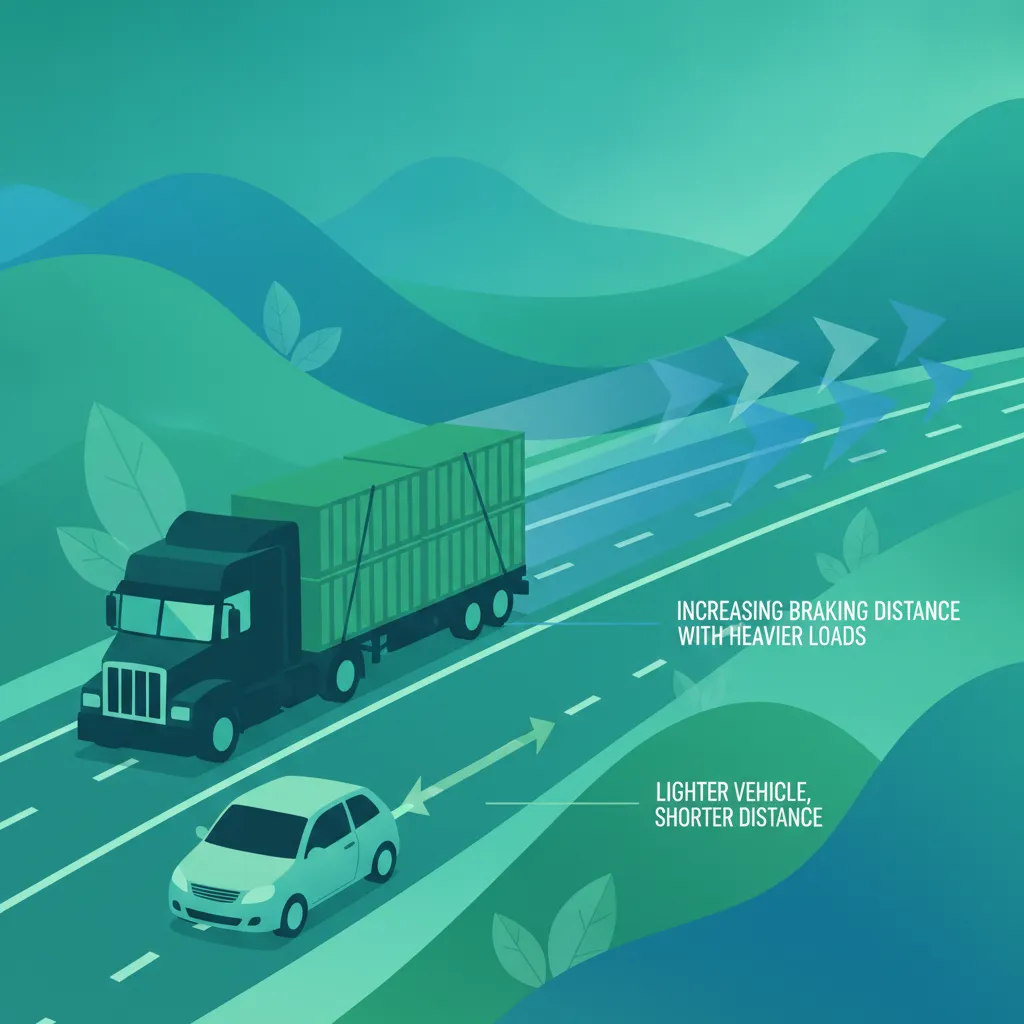
This lesson explores the critical physics behind stopping a heavy vehicle. It breaks down the components of total stopping distance—thinking distance and braking distance—and explains how this is significantly increased by vehicle mass and speed. Learners will understand the necessity of maintaining a much greater following distance than a car to allow enough space to stop safely in all conditions.
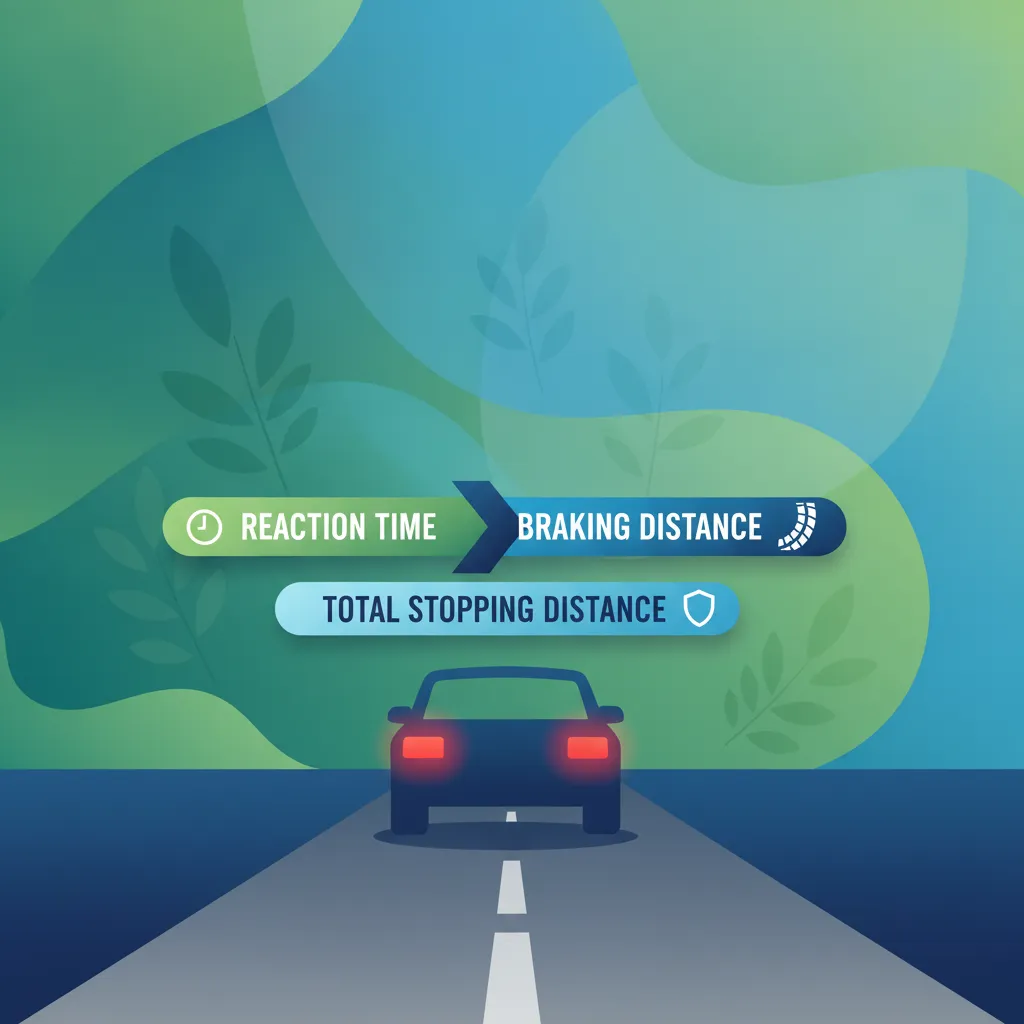
This lesson provides a technical breakdown of the total stopping distance, explaining its two key components: reaction distance and braking distance. It details how factors like driver alertness affect reaction time, while speed, vehicle weight, and road grip influence braking distance. Understanding this relationship is fundamental to managing speed and maintaining a safe distance from other road users.

This lesson covers the techniques for executing a controlled emergency stop in a heavy goods vehicle. It explains the function of Anti-lock Braking Systems (ABS) in preventing wheel lock-up and maintaining steering control during maximum braking effort. Learners will understand how to brace for the effects of rapid deceleration and anticipate potential load shifts, focusing on bringing the vehicle to a stop as quickly and safely as possible.

This lesson explains the function of the vehicle's braking system and key active safety technologies. It details how the Anti-lock Braking System (ABS) prevents wheels from locking during hard braking, allowing the driver to maintain steering control. The content also covers Electronic Stability Control (ESC), which helps prevent skidding by automatically applying brakes to individual wheels to stabilize the vehicle.
This lesson focuses on the factors that determine a motorcycle's total stopping distance: perception time, reaction time, and braking distance. It provides a clear understanding of how speed exponentially increases the distance required to come to a complete stop. Learners will be able to apply principles like the two-second rule to maintain a safe and appropriate following distance in various traffic situations.
This lesson details correct braking techniques, emphasizing progressive application of both front and rear brakes for optimal stopping power. It explains the function of ABS in preventing wheel lock-up on slippery surfaces like wet roads or gravel. You will learn how different surfaces affect braking distance and how to adjust braking force to maintain control.
Learn about frequent errors drivers make on descents and how to avoid them. This lesson focuses on the theory behind effective speed control, gear selection, and retarder use to prevent dangerous situations on steep Italian gradients.
This lesson provides specialized instruction for driving in mountainous terrain. It teaches drivers how to select the correct gear for both climbing steep inclines to prevent engine strain and descending to maintain control without overheating the brakes. Techniques for navigating sharp hairpin bends, using passing places on narrow roads, and anticipating the effects of altitude on vehicle performance are also covered.
This lesson provides a step-by-step guide for managing a vehicle breakdown safely. It reinforces the procedure for stopping on the hard shoulder, activating hazard lights, and placing a warning triangle at the correct distance. The lesson emphasizes the importance of wearing high-visibility clothing, exiting the vehicle from the side away from traffic, and waiting in a safe location before contacting a roadside assistance service.

This lesson focuses on the specific regulations and techniques for operating a heavy vehicle on high-speed motorways. It covers mandatory lane discipline for trucks, the rules governing overtaking other heavy vehicles, and the specific speed limits that apply. Best practices for merging onto and exiting the motorway, maintaining safe following distances, and using the hard shoulder only in genuine emergencies are also detailed.
This lesson details the specific rules and safety considerations for driving through the extensive tunnels and high viaducts common in Italy. It covers pre-entry checks, maintaining a safe following distance, and the correct procedures to follow in case of a breakdown or fire inside a tunnel. The lesson also addresses the hazard of strong crosswinds on exposed viaducts and how to maintain vehicle control.
This lesson focuses on the unique demands of mountain riding, from handling steep inclines and declines to understanding the impact of altitude on the motorcycle's engine performance. It covers the effective use of engine braking on descents to prevent brake overheating. The content also prepares riders for the rapidly changing weather conditions, such as wind and fog, that are common at higher elevations.
This lesson covers three critical risks associated with heavy vehicle braking systems. It explains 'brake lag' in air brake systems, the delay between pedal application and brake activation, and 'brake fade', the loss of braking efficiency due to overheating. Learners will be taught to recognize the warning signs and, more importantly, to use correct driving techniques, such as utilizing endurance brakes, to prevent these potentially catastrophic failures.

This lesson focuses on the unique characteristics and challenges of driving on rural and mountain roads. It covers how to safely navigate sharp curves, steep inclines, and narrow lanes with limited visibility, often requiring the use of the horn to signal presence. The content also prepares drivers for potential hazards such as slow-moving agricultural vehicles, unexpected animal crossings, and variable road surface quality.

This lesson provides an in-depth focus on sharing the road with the most vulnerable users. It teaches drivers to be acutely aware of pedestrians at crossings, cyclists filtering through traffic, and motorcyclists who may be in blind spots. The lesson emphasizes the importance of leaving extra space, signaling intentions clearly, and exercising extreme caution at junctions, where the majority of serious incidents occur.
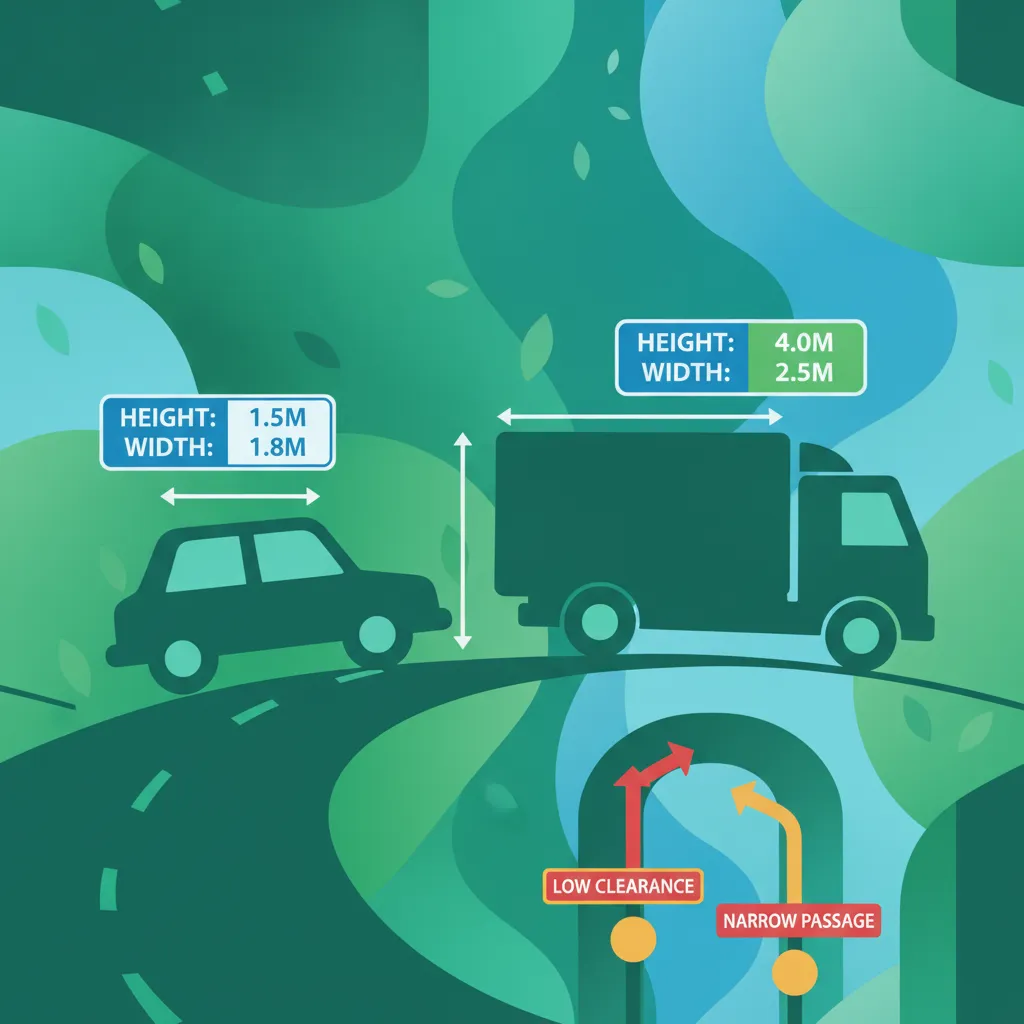
This lesson focuses on the specific dimensional limits that heavy goods vehicles must adhere to on Italian roads, as stipulated by the Codice della Strada. It covers the maximum permissible length, width, and height, explaining how these restrictions impact navigation through tunnels, under bridges, and within urban environments. Learners will also understand the conditions under which special permits for exceptional or oversized transport are required.
This lesson provides essential rules and techniques for driving on Italian motorways (autostrade) and major extra-urban roads. It explains how to safely merge onto the motorway from an entry ramp, the strict lane discipline required (drive right, overtake left), and how to exit correctly. The content also covers speed regulations, maintaining a safe following distance at high speed, and procedures for using service areas and handling emergencies.
Find clear answers to common questions learners have about Downhill Speed Management and Gear Selection. Learn how the lesson is structured, which driving theory objectives it supports, and how it fits into the overall learning path of units and curriculum progression in Italy. These explanations help you understand key concepts, lesson flow, and exam focused study goals.
Using only service brakes on a long descent can lead to 'brake fade'. This occurs when the brake linings overheat, significantly reducing their effectiveness, which can result in a total loss of braking power.
The engine brake assists in controlling the vehicle's speed by increasing engine resistance without using the service brakes. This keeps the main braking system cool and ready for emergencies.
No, you should select the appropriate low gear before beginning the descent. Changing gears mid-descent can lead to a dangerous momentary loss of control or drivetrain connection.
A retarder is an auxiliary endurance system, often hydraulic or electromagnetic, designed to provide continuous braking force without physical wear on the brake components, making it ideal for steep descents.
Start searching now to pinpoint exactly which Italian driving theory topics, road signs, or traffic rules you need to master. Use our advanced filters to build a custom practice session and ensure you're fully prepared for every aspect of your official driving licence exam.