
This lesson explores the critical mechanics of heavy-vehicle braking systems, focusing on the dangers of brake lag, fade, and overheating. You will learn to identify these risks and apply professional driving techniques to ensure safety during demanding transit, preparing you for the technical questions on your Italian C, C1, C1E, or CE license exam.

Lesson content overview
Operating heavy goods vehicles (HGVs) in Italy, especially those requiring a C, C1, C1E, or CE license, demands a profound understanding of their unique braking characteristics. Unlike passenger cars, HGVs utilize complex air brake systems and carry substantial loads, which introduces specific challenges and risks. This lesson delves into three critical hazards: brake lag, brake fade, and brake overheating. We will explore their causes, the severe implications they pose for safety, and, crucially, the correct driving techniques professional drivers must employ to prevent them. Mastering these concepts is fundamental for safe navigation, particularly on challenging terrains like mountain roads and with heavy loads.
Successful management of these braking risks relies on a solid understanding of different brake types, including service, parking, and endurance brakes, and the supplementary power of engine brakes and retarders. These systems, when used correctly, form a comprehensive safety net designed to maintain control and prevent potentially catastrophic failures on Italian roads.
Brake lag refers to the inherent time delay between when a driver presses the brake pedal and when the braking action actually begins to take effect at the wheels. This delay is a unique characteristic of air brake systems, common in heavy goods vehicles. Unlike hydraulic systems, which transmit pressure almost instantaneously through fluid, air brake systems rely on compressed air to activate the brake components.
The primary cause of brake lag is the time required for compressed air to travel through the brake lines and fill the brake chambers, building sufficient pressure to push the brake shoes against the drums or pads against the discs. This process, while seemingly quick, introduces a measurable delay. Factors contributing to this lag include:
The typical brake lag in a heavy goods vehicle can range from 0.5 to 2 seconds. While this might seem minimal, at highway speeds, a vehicle can travel many metres during this period before any deceleration begins.
The most significant implication of brake lag is its direct impact on a vehicle's overall stopping distance. Stopping distance is comprised of reaction distance (the distance travelled from the driver recognising a hazard to applying the brakes) and braking distance (the distance travelled from brake application to the vehicle coming to a complete stop). Brake lag adds an additional component to this total, effectively extending the reaction distance.
For example, a vehicle travelling at 90 km/h covers approximately 25 metres per second. Even a 1-second brake lag means the vehicle travels an additional 25 metres before the brakes even start to work. This can be critical in emergency situations, increasing the risk of collision.
Recognizing and compensating for brake lag is a crucial skill for every heavy vehicle driver. Effective strategies include:
A braking technique where the driver applies the brake pedal smoothly and gradually, increasing pressure as needed, rather than abruptly pressing the pedal. This allows the air brake system to engage more effectively and prevents sudden deceleration.
Brake fade is a dangerous reduction in braking effectiveness caused by the overheating of brake components. It is a critical concern for heavy goods vehicles due to their mass and the significant energy converted to heat during braking. When brake components reach excessive temperatures, their ability to generate friction is severely compromised, leading to longer stopping distances and a sensation of a "soft" or unresponsive brake pedal.
Braking works by converting kinetic energy (the energy of motion) into thermal energy (heat) through friction. When a vehicle brakes, the brake pads or shoes press against the brake discs or drums, creating friction. This friction generates heat. Under normal conditions, the brake system is designed to dissipate this heat into the surrounding air. However, under prolonged or repeated heavy braking, such as during a long descent with a heavy load, the heat can build up faster than it can dissipate.
There are generally two main types of brake fade that drivers of heavy goods vehicles should be aware of:
Recognizing the onset of brake fade is vital for preventing a complete loss of braking control. Drivers should be alert to the following warning signs:
If you experience any signs of brake fade, it is critical to immediately reduce speed, activate supplementary braking systems, and allow the service brakes to cool down. Continuing to use overheated brakes can lead to complete brake failure.
Brake overheating is the underlying condition that leads to brake fade and potential mechanical failures. It is defined as an excessive rise in the temperature of brake components due to prolonged or repeated heavy braking. For heavy goods vehicles, managing brake temperature is paramount for maintaining safety and operational efficiency.
The primary cause of brake overheating is the continuous and excessive use of the service brakes (foot pedal brakes) on long downgrades or when attempting to slow a heavily loaded vehicle from high speeds. Service brakes are designed for routine speed reduction and stopping, but they have a finite capacity to absorb and dissipate heat.
When a driver "rides" the service brakes down a long hill, the friction materials are constantly engaged, generating continuous heat. The airflow around the components may not be sufficient to cool them, leading to a rapid temperature increase. This thermal overload then triggers brake fade.
Beyond brake fade, sustained overheating can cause severe mechanical damage to the brake system components, leading to critical failures:
The most effective way to prevent brake overheating and fade is to minimize the reliance on service brakes, especially on long descents. This is achieved through the strategic use of endurance brakes and engine braking.
Endurance brakes are supplementary braking systems specifically designed to handle prolonged or heavy use without overheating. They are a critical safety feature for heavy goods vehicles, particularly when managing speed on extended downgrades. These systems differ from standard friction brakes as they typically do not rely on friction between pads and discs/drums to generate braking force.
Common types of endurance brakes include:
Anticipate the Descent: Before starting a long or steep downgrade, assess the gradient and length.
Select Appropriate Gear: Shift into a lower gear that allows the engine to rev sufficiently high to provide effective engine braking. The goal is to select a gear that prevents the vehicle from accelerating without constant service brake application.
Engage Endurance Brake: Activate the endurance brake (retarder, exhaust brake, or engine brake) at the top of the descent or before speed builds up. Adjust its intensity as needed to maintain a safe, controlled speed.
Reserve Service Brakes: Use the service brakes only for short, sharp reductions in speed or to bring the vehicle to a complete stop. Avoid continuous application.
Monitor Speed: Continuously monitor your speed and adjust your gear and endurance brake settings to prevent over-speeding.
Effective use of engine brakes and retarders is a cornerstone of safe heavy vehicle operation, particularly on mountain roads or long declines, which are common in many parts of Italy.
Using these systems correctly allows the service brakes to remain cool and ready for emergency situations, preserving their full effectiveness.
Gear selection plays a critical role in downhill speed management. When descending a long or steep hill, the general rule is to select a gear lower than the gear you would use to ascend that same hill. This strategy ensures that:
Adherence to national and European regulations regarding heavy vehicle braking systems is mandatory for all professional drivers in Italy. These rules are designed to prevent accidents caused by braking system failures.
The Italian Codice della Strada and associated regulations mandate specific requirements for the operation and maintenance of heavy vehicle braking systems. Key principles include:
For air brake systems, maintaining sufficient air pressure is paramount.
The parking brake (or retention brake, freno di stazionamento in Italian) is designed solely to hold a stationary vehicle. It is not intended for dynamic braking or slowing a moving vehicle, especially on descents.
Understanding theoretical concepts is crucial, but applying them in real-world driving situations is what truly defines a skilled heavy vehicle driver.
Imagine driving a fully loaded articulated truck (CE license category) down a long, 12% grade mountain pass in the Alps. The road signs warn of a steep descent for the next 10 kilometres.
You are driving a heavy rigid truck (C license category) through a busy Italian city centre. Traffic is stop-and-go, and suddenly, a pedestrian steps out from between parked cars, requiring an immediate emergency stop.
You are about to start a long journey with your heavy goods vehicle. During your pre-trip inspection, you notice the air pressure gauge is showing only 4 bar.
Beyond the core principles, several environmental and operational factors influence braking performance and demand specific driver adjustments.
Adverse weather and road conditions significantly impact a heavy vehicle's braking capability:
The load carried by a heavy goods vehicle is a paramount factor in braking:
In urban environments or near pedestrians and cyclists, heavy vehicle drivers must exercise extreme caution:
Mastering heavy vehicle braking is a cornerstone of professional driving safety. It requires a blend of mechanical understanding, anticipatory driving techniques, and strict adherence to regulations.
By diligently applying these principles, professional drivers can significantly enhance road safety for themselves and all other road users.
Heavy vehicle braking systems face three critical challenges: brake lag (the inherent delay in air brake activation), brake fade (loss of braking due to overheating), and brake overheating (which causes fade and mechanical failures). Unlike passenger cars, heavy goods vehicles require supplementary endurance braking systems such as retarders, exhaust brakes, and engine brakes to manage speed on descents without overheating service brakes. Drivers must recognize warning signs of fade and immediately switch to endurance braking techniques. Italian regulations mandate endurance brake use on long downgrades, require minimum 5 bar air pressure for safe operation, and prohibit continuous service brake application on steep declines to prevent catastrophic failures.
A short set of high-value points that capture the most important learning from this lesson.
Brake lag is the inherent 0.5-2 second delay in air brake systems between pedal application and brake activation, requiring drivers to brake earlier than in passenger cars.
Brake fade is the dangerous reduction in braking effectiveness caused by overheating of brake components, leading to longer stopping distances and a soft pedal feel.
Continuous use of service brakes on descents causes overheating, which leads to fade and potentially catastrophic mechanical failures.
Endurance brakes (retarders, exhaust brakes, engine brakes) are essential supplementary systems designed for sustained braking without overheating on long descents.
Minimum operating air pressure of 5 bar is critical; below this threshold, braking effectiveness is severely compromised and brake lag increases significantly.
Explore all units and lessons included in this driving theory course.
At 90 km/h, even a 1-second brake lag means the vehicle travels approximately 25 additional metres before brakes engage.
Warning signs of brake fade include increased pedal travel (soft pedal), reduced braking force, burning smell, and smoke from wheels.
The parking brake (freno di stazionamento) is for stationary holding only and must never be used to slow a moving vehicle.
Select a lower gear on descents than you would use to ascend, maximizing engine braking effectiveness.
Italian regulations mandate endurance brake use on long downgrades and prohibit continuous service brake application to prevent overheating.
Continuously pressing the service brake on downgrades instead of engaging endurance brakes, leading to overheating and fade.
Ignoring early warning signs of brake fade (soft pedal, burning smell) and continuing to drive, risking complete brake failure.
Using the parking brake to slow or control a moving vehicle, causing severe overheating and component damage.
Attempting to drive with insufficient air pressure below 5 bar, severely reducing braking effectiveness.
Selecting too high a gear when descending steep hills, minimizing engine braking and forcing reliance on service brakes.
Lesson content overview
A short set of high-value points that capture the most important learning from this lesson.
Brake lag is the inherent 0.5-2 second delay in air brake systems between pedal application and brake activation, requiring drivers to brake earlier than in passenger cars.
Brake fade is the dangerous reduction in braking effectiveness caused by overheating of brake components, leading to longer stopping distances and a soft pedal feel.
Continuous use of service brakes on descents causes overheating, which leads to fade and potentially catastrophic mechanical failures.
Endurance brakes (retarders, exhaust brakes, engine brakes) are essential supplementary systems designed for sustained braking without overheating on long descents.
Minimum operating air pressure of 5 bar is critical; below this threshold, braking effectiveness is severely compromised and brake lag increases significantly.
Explore all units and lessons included in this driving theory course.
At 90 km/h, even a 1-second brake lag means the vehicle travels approximately 25 additional metres before brakes engage.
Warning signs of brake fade include increased pedal travel (soft pedal), reduced braking force, burning smell, and smoke from wheels.
The parking brake (freno di stazionamento) is for stationary holding only and must never be used to slow a moving vehicle.
Select a lower gear on descents than you would use to ascend, maximizing engine braking effectiveness.
Italian regulations mandate endurance brake use on long downgrades and prohibit continuous service brake application to prevent overheating.
Continuously pressing the service brake on downgrades instead of engaging endurance brakes, leading to overheating and fade.
Ignoring early warning signs of brake fade (soft pedal, burning smell) and continuing to drive, risking complete brake failure.
Using the parking brake to slow or control a moving vehicle, causing severe overheating and component damage.
Attempting to drive with insufficient air pressure below 5 bar, severely reducing braking effectiveness.
Selecting too high a gear when descending steep hills, minimizing engine braking and forcing reliance on service brakes.
Explore search topics learners often look for when studying Brake Lag, Fade, and Overheating. These topics reflect common questions about road rules, driving situations, safety guidance, and lesson level theory preparation for learners in Italy.
Browse additional driving theory lessons that cover connected traffic rules, road signs, and common driving situations related to this topic. Improve your understanding of how different rules interact across everyday traffic scenarios.
Understand the critical role of engine brakes, retarders, and proper gear selection in preventing service brake overheating and fade on long descents. Essential techniques for safe heavy vehicle operation in Italy.
This lesson provides essential strategies for safely navigating long, steep downgrades. It teaches the principle of selecting a low gear before starting the descent, allowing the engine's natural resistance to help control the vehicle's speed. Learners will understand how to combine correct gear selection with the judicious use of engine brakes and retarders to maintain a steady, safe speed and keep the service brakes cool and ready for emergency use.

This lesson focuses on auxiliary or 'endurance' braking systems designed to manage vehicle speed on long downgrades, reducing the risk of service brake overheating. It explains the operating principles of engine brakes (compression release brakes), hydrodynamic retarders, and exhaust brakes. Learners will understand when and how to use these powerful tools to maintain a safe, controlled speed and preserve the service brakes for when they are most needed.
This lesson provides specialized instruction for driving in mountainous terrain. It teaches drivers how to select the correct gear for both climbing steep inclines to prevent engine strain and descending to maintain control without overheating the brakes. Techniques for navigating sharp hairpin bends, using passing places on narrow roads, and anticipating the effects of altitude on vehicle performance are also covered.
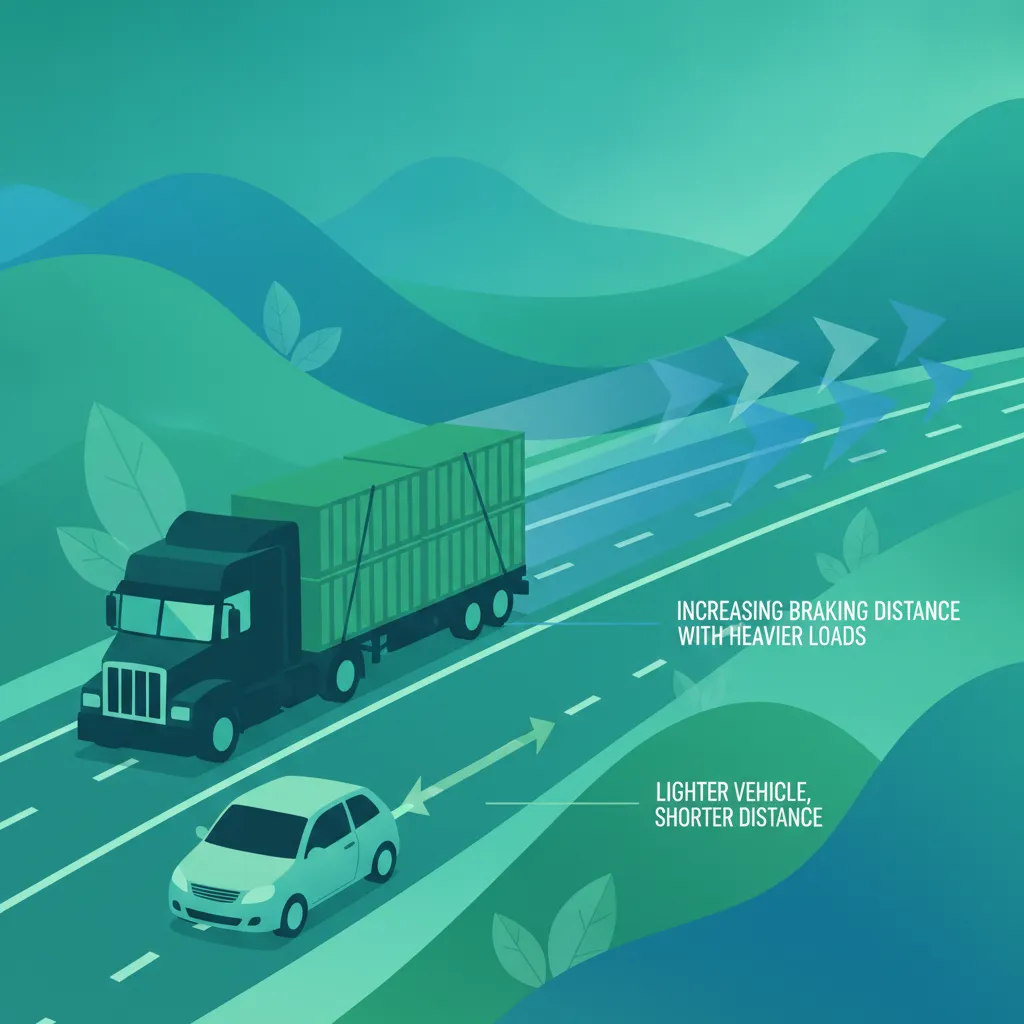
This lesson explores the critical physics behind stopping a heavy vehicle. It breaks down the components of total stopping distance—thinking distance and braking distance—and explains how this is significantly increased by vehicle mass and speed. Learners will understand the necessity of maintaining a much greater following distance than a car to allow enough space to stop safely in all conditions.
This lesson introduces the three distinct categories of braking systems on a heavy vehicle. It explains the role of the service brake for normal stopping, the parking brake for securing the vehicle when stationary, and endurance brakes for sustained speed control. Understanding the purpose and correct application of each system is fundamental to safe and efficient vehicle operation, as well as minimizing wear on the primary service brakes.
This lesson covers the techniques for executing a controlled emergency stop in a heavy goods vehicle. It explains the function of Anti-lock Braking Systems (ABS) in preventing wheel lock-up and maintaining steering control during maximum braking effort. Learners will understand how to brace for the effects of rapid deceleration and anticipate potential load shifts, focusing on bringing the vehicle to a stop as quickly and safely as possible.

This lesson focuses on the specific regulations and techniques for operating a heavy vehicle on high-speed motorways. It covers mandatory lane discipline for trucks, the rules governing overtaking other heavy vehicles, and the specific speed limits that apply. Best practices for merging onto and exiting the motorway, maintaining safe following distances, and using the hard shoulder only in genuine emergencies are also detailed.
Explore advanced concepts of brake lag, fade, and overheating in heavy vehicle air brake systems. Learn crucial preventative driving techniques and understand their impact on stopping distances and road safety under Italian traffic law.
This lesson focuses on auxiliary or 'endurance' braking systems designed to manage vehicle speed on long downgrades, reducing the risk of service brake overheating. It explains the operating principles of engine brakes (compression release brakes), hydrodynamic retarders, and exhaust brakes. Learners will understand when and how to use these powerful tools to maintain a safe, controlled speed and preserve the service brakes for when they are most needed.
This lesson introduces the three distinct categories of braking systems on a heavy vehicle. It explains the role of the service brake for normal stopping, the parking brake for securing the vehicle when stationary, and endurance brakes for sustained speed control. Understanding the purpose and correct application of each system is fundamental to safe and efficient vehicle operation, as well as minimizing wear on the primary service brakes.
This lesson explores the critical physics behind stopping a heavy vehicle. It breaks down the components of total stopping distance—thinking distance and braking distance—and explains how this is significantly increased by vehicle mass and speed. Learners will understand the necessity of maintaining a much greater following distance than a car to allow enough space to stop safely in all conditions.
This lesson covers the techniques for executing a controlled emergency stop in a heavy goods vehicle. It explains the function of Anti-lock Braking Systems (ABS) in preventing wheel lock-up and maintaining steering control during maximum braking effort. Learners will understand how to brace for the effects of rapid deceleration and anticipate potential load shifts, focusing on bringing the vehicle to a stop as quickly and safely as possible.
This lesson provides essential strategies for safely navigating long, steep downgrades. It teaches the principle of selecting a low gear before starting the descent, allowing the engine's natural resistance to help control the vehicle's speed. Learners will understand how to combine correct gear selection with the judicious use of engine brakes and retarders to maintain a steady, safe speed and keep the service brakes cool and ready for emergency use.

This lesson provides an in-depth analysis of motorcycle braking systems, clearly defining the distinct roles of the front and rear brakes. It covers the mechanics of hydraulic disc brakes and explains the function and benefits of an Anti-lock Braking System (ABS). Learners will understand the principles of brake balance for achieving maximum stopping power and the importance of routine maintenance on pads, discs, and fluid.

This lesson explains how the braking, lighting, and ABS systems of a trailer are powered and controlled by the tractor unit. It details the purpose of the red (emergency) and yellow (service) air lines and the multi-pin electrical connector, providing a clear procedure for connecting them in the correct sequence. Learners will understand the importance of these connections for safe braking and legal lighting operation.
This lesson covers the complete set of lighting, reflective equipment, and protective guards mandated for heavy vehicles. It explains the function of each light, from headlights to side markers, and the importance of keeping them clean and operational to ensure the vehicle is visible to others. The lesson also details the legal requirements and safety purpose of side guards and rear underrun protection, which are designed to protect vulnerable road users in a collision.
This lesson provides essential guidance on how to adjust driving techniques for a range of hazardous weather conditions. It covers reducing speed and increasing following distances in rain to prevent aquaplaning, using lights correctly in fog, and understanding the vehicle's reduced traction on snow and ice. It also explains how to anticipate and counteract the effects of strong crosswinds on high-sided vehicles.
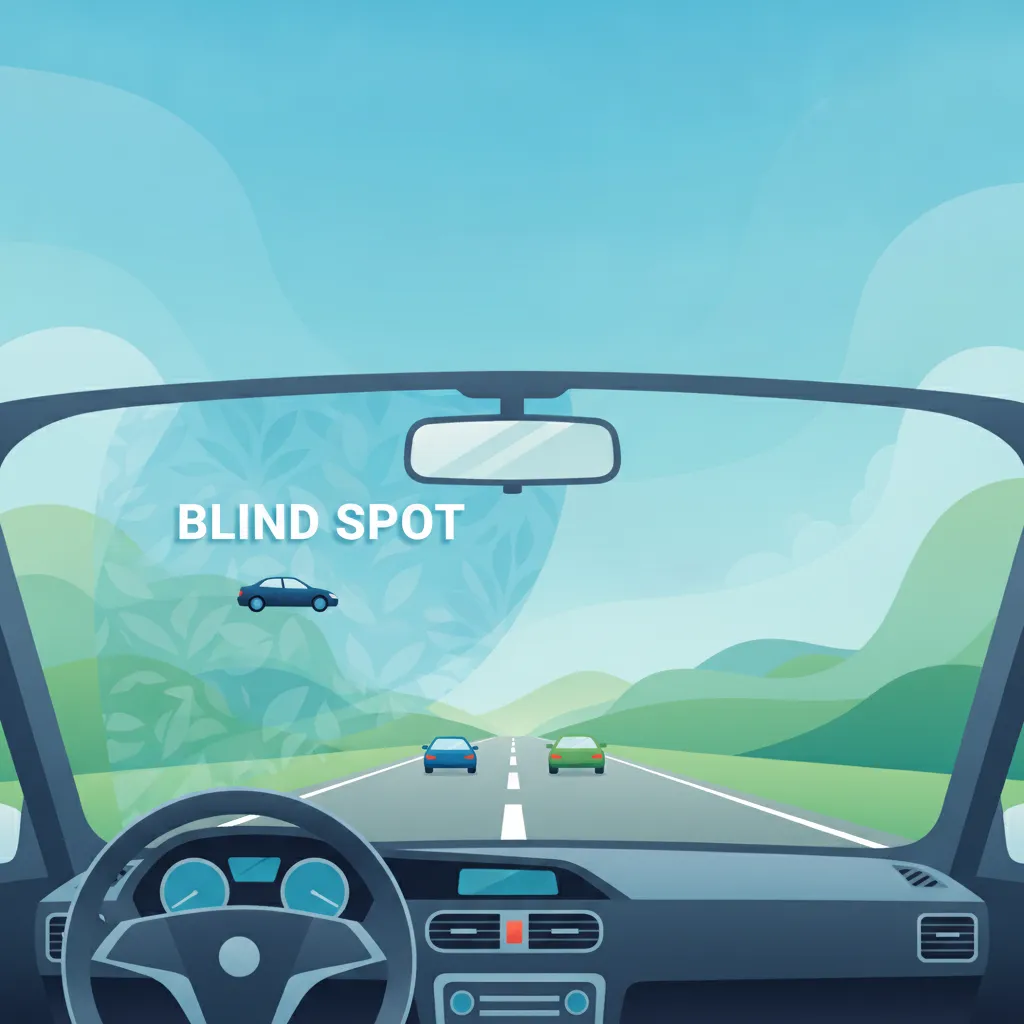
This lesson highlights the large blind spots—or 'no-zones'—that exist to the front, back, and sides of a heavy vehicle, where smaller vehicles, cyclists, and pedestrians can disappear from view. It teaches proactive scanning techniques, the importance of anticipating hazards, and how to use mirrors and direct vision effectively to manage these high-risk areas. Awareness and mitigation of blind spots are crucial for preventing collisions, especially in urban traffic.
Find clear answers to common questions learners have about Brake Lag, Fade, and Overheating. Learn how the lesson is structured, which driving theory objectives it supports, and how it fits into the overall learning path of units and curriculum progression in Italy. These explanations help you understand key concepts, lesson flow, and exam focused study goals.
Brake lag is the time delay between the driver pressing the pedal and the compressed air reaching the brake actuators. It is a inherent characteristic of pneumatic systems, requiring drivers to anticipate stopping distances earlier than in passenger cars.
Brake fade is caused by overheating during prolonged use. To prevent it, use auxiliary systems like the engine brake or retarder to manage speed, and shift to a lower gear before beginning a descent to let the engine assist in controlling the vehicle speed.
While not every single component is mandatory for all sub-categories, understanding the use of auxiliary systems is a core requirement for the C and CE theory exams because these systems are vital for road safety on Italy's diverse terrain, including mountain routes.
Heavier loads require more kinetic energy to be dissipated by the braking system. The more weight you carry, the more heat is generated during braking, which significantly increases the risk of reaching the thermal limit of your brake linings faster than when empty.
Start searching now to pinpoint exactly which Italian driving theory topics, road signs, or traffic rules you need to master. Use our advanced filters to build a custom practice session and ensure you're fully prepared for every aspect of your official driving licence exam.