
This lesson details the critical documentation required for professional heavy goods vehicle drivers in Italy. Understanding these requirements is essential for ensuring full legal compliance during vehicle operation and is a key topic for your C, C1, C1E, or CE theory exam.

Lesson content overview
Operating heavy goods vehicles within Italy, whether for local deliveries or international transport, requires meticulous attention to a range of mandatory documentation. For aspiring professional drivers pursuing their C, C1, C1E, or CE license in Italy, understanding these requirements is not merely a formality but a fundamental aspect of legal compliance, operational safety, and professional responsibility. This lesson provides a comprehensive overview of the essential documents required for both the driver and the vehicle, ensuring full adherence to the Codice della Strada (Italian Highway Code) and preventing legal penalties and operational delays.
Proper documentation serves as the bedrock of legal and safe transport operations. It provides irrefutable proof of a driver's qualifications, a vehicle's roadworthiness, and the legitimacy of the goods being transported. Without these essential papers, drivers and transport companies face significant risks, including hefty fines, vehicle impoundment, suspension of operations, and even criminal charges in severe cases. This lesson will detail each critical document, explaining its purpose, practical implications, and the rules governing its use.
Always ensure all required documents are valid, original or certified copies, and readily accessible within the vehicle during any transport operation. This proactive approach is key to avoiding issues during routine inspections.
Adhering to specific principles regarding documentation is crucial for all professional drivers. These principles underpin the legal framework designed to ensure safety and accountability on the roads.
All legally required documents must be carried on board the vehicle at all times and immediately available for inspection by law enforcement authorities.
This principle ensures that the validity of the driver, vehicle, and transport operation can be instantly verified. Failure to present documents often results in immediate fines and operational interruption.
Every document, from driver's license to insurance, must be current, unexpired, and accurately reflect the present status of the driver, vehicle, and cargo.
Expired documents are considered invalid and can lead to the same penalties as having no documents at all. Regular checks and timely renewals are therefore indispensable.
Each document is issued for a defined purpose and category. For example, a driver's license for a specific vehicle category only applies to that vehicle type, and certain professional qualifications are tied to particular transport activities.
Misusing or misapplying documents can lead to administrative sanctions. Drivers must ensure their qualifications match the vehicle and type of transport being undertaken.
Documents presented must be original or legally recognized certified copies, free from any alteration or tampering.
Forged or altered documents constitute a serious criminal offense, leading to severe legal repercussions beyond administrative fines.
Documents must contain clear identifying numbers or codes (e.g., registration plate, chassis number, policy number) that allow authorities to cross-reference and verify information with official databases.
This ensures transparency and accountability, allowing quick confirmation of legal status and preventing fraudulent operations.
The driver is the primary responsible party during any transport operation, and as such, their personal qualifications and certifications must be flawlessly maintained and presented.
The Patente di Guida is the fundamental document proving a driver's legal authorization to operate specific categories of vehicles. For heavy goods vehicle drivers in Italy, this typically involves the C, C1, C1E, or CE categories.
It is a common misunderstanding to assume that a standard Patente B (car license) permits the transport of goods in vehicles over 3.5 tonnes. This is strictly not the case; dedicated professional licenses are mandatory.
Drivers must always carry their original Patente di Guida and ensure it is valid for the specific vehicle combination they are operating. Expired licenses must be renewed promptly to avoid significant penalties.
The Carta di Qualificazione del Conducente (CQC) is a separate professional qualification, distinct from the driver's license, that certifies a driver has undergone specific periodic training required for professional transport activities.
The Carta di Qualificazione del Conducente (CQC) is a certificate proving that a professional driver has completed mandatory initial qualification and periodic training courses, necessary for the professional transport of goods or passengers.
For goods vehicle drivers, the CQC Merci (Goods CQC) is mandatory for driving vehicles requiring a C1, C1E, C, or CE license in a professional capacity (i.e., for remuneration). The CQC card must be presented alongside the driver's license during inspections. It is valid for five years and requires periodic renewal through specific training courses.
Do not confuse the CQC card with the driver's license. They are independent requirements. While the Patente allows you to drive the vehicle, the CQC allows you to drive it professionally for gain.
If a driver is operating a vehicle requiring a C category license for professional goods transport, they must possess both the appropriate Patente di Guida (e.g., C or CE) and a valid CQC Merci card.
Just as the driver must be qualified, the vehicle itself must be legally registered, insured, and certified as roadworthy. These documents are directly tied to the vehicle and must accompany it.
The Carta di Circolazione, often referred to as the vehicle's "ID card," is an official document issued by the Motorizzazione Civile (Department of Motor Vehicles) that details the technical specifications, identification numbers, and ownership of the vehicle.
The Carta di Circolazione is the official vehicle registration certificate in Italy, detailing the vehicle's technical data (e.g., maximum permissible mass, dimensions, engine type), identification numbers (chassis number, license plate), and registered ownership.
This document must always be present in the vehicle, typically in its original form or a legally certified copy. It contains crucial information such as:
Any modification made to the vehicle that alters its technical characteristics (e.g., adding a trailer coupling that changes the combined MAM, changing the vehicle's dimensions, modifying the engine) requires an update to the Carta di Circolazione. Failure to update the document means the vehicle is operating outside its registered specifications, leading to fines and potential insurance invalidation.
All motor vehicles operating on public roads in Italy must have valid compulsory third-party liability insurance, known as Responsabilità Civile Auto (RC Auto). This insurance covers damages caused to third parties (other vehicles, property, or individuals) by the insured vehicle's operation.
Responsabilità Civile Auto (RC Auto) is Italy's mandatory civil liability insurance, providing coverage for bodily injury, property damage, and environmental damage caused to third parties by the operation of a motor vehicle.
Proof of this insurance (the policy certificate) must be kept in the vehicle and presented upon request by law enforcement or in the event of an accident. For commercial transport, it is vital to ensure the RC Auto policy specifically covers the vehicle's commercial use. Furthermore, for the goods being transported, separate cargo insurance may be required, depending on the contract and value of the freight, as RC Auto typically only covers damage caused by the vehicle, not damage to the cargo itself.
Vehicles must undergo regular technical inspections, known as revisione, to ensure they meet safety and environmental standards and remain roadworthy. This is a crucial aspect of preventing accidents caused by mechanical failures.
Revisione is the mandatory periodic technical inspection in Italy, certifying that a vehicle meets all safety, mechanical, and emission standards required for roadworthiness.
For goods vehicles (categories C, C1, C1E, CE), the inspection frequency is generally annual once the vehicle is put into service. The certificate or sticker indicating the validity of the revisione must be present in the vehicle and displayed where required (e.g., on the windshield).
Operating a vehicle with an expired revisione certificate can lead to significant fines, vehicle impoundment, and an increased liability in the event of an accident, as the vehicle's roadworthiness cannot be guaranteed.
Drivers should always verify the revisione expiry date before commencing a journey and schedule the inspection well in advance.
Beyond the driver's and vehicle's inherent legal documents, the specific nature of the transport operation itself often necessitates additional paperwork, particularly when carrying commercial goods.
For any commercial transport of goods, a formal Documento di Trasporto (DDT), or cargo manifest/consignment note, is indispensable. This document provides a detailed record of the freight being carried.
The Documento di Trasporto (DDT) is an official cargo manifest required for commercial goods transport in Italy, detailing the nature, quantity, weight, origin, destination, and parties involved (consignor, carrier, consignee) of the cargo.
The DDT serves multiple purposes:
The driver must carry the DDT in the vehicle's cab for every shipment. Any discrepancies between the cargo and the DDT, or the absence of a DDT, can lead to severe fines and the potential seizure of the goods.
Certain types of cargo or specific transport operations require additional permits and documentation due to their inherent risks or legal complexities.
Failure to possess the correct specialized permits and documentation for such operations can lead to extremely heavy fines, vehicle impoundment, and severe criminal liabilities, especially in cases involving hazardous materials.
Non-compliance with documentation requirements can have immediate and severe consequences for professional drivers and transport companies. Understanding these risks is crucial for mitigating them.
The Codice della Strada outlines specific penalties for various documentation-related infractions:
Beyond fines, documentation lapses have broader implications:
Maintaining continuous compliance with documentation requirements is an ongoing responsibility that requires diligence.
Understanding and rigorously adhering to the documentation and certification requirements is an indispensable aspect of being a professional goods vehicle driver in Italy. From the correct driver's license category and professional qualification (CQC) to the vehicle's registration (Carta di Circolazione), insurance, technical inspection (Revisione), and specific cargo documents (DDT, ADR), each piece of paper plays a vital role in ensuring legal operation, public safety, and professional accountability. By diligently managing and presenting these documents, drivers not only avoid penalties but also contribute to the efficiency and integrity of the entire transport sector. This forms a critical foundation for responsible driving, directly linking to vehicle dimensions, load securing, and emergency protocols covered in other parts of the Italian Goods Vehicle License Theory Course.
This lesson covers the mandatory documentation requirements for professional goods vehicle drivers in Italy, including driver credentials (Patente di Guida categories C/C1/C1E/CE and CQC Card), vehicle documents (Carta di Circolazione, RC Auto insurance, and Revisione inspection), and transport-specific paperwork (DDT cargo manifest and ADR endorsement for hazardous goods). Understanding the distinct purpose of each document and ensuring they are valid and present is essential for legal compliance, avoiding fines and vehicle impoundment, and passing theory examinations for C, C1, C1E, and CE licences. Regular document checks and timely renewals are critical habits for any professional driver operating in Italy.
A short set of high-value points that capture the most important learning from this lesson.
The Patente di Guida and CQC Card are separate, independent documents: the license permits driving, while the CQC permits professional driving for remuneration.
The Carta di Circolazione is the vehicle's official identity document issued by the Motorizzazione Civile, containing technical specs, identification numbers, and MAM data.
All mandatory documents must be original or legally certified copies and be immediately available during any roadside inspection by authorities.
The Documento di Trasporto (DDT) is required for all commercial goods transport, providing traceability, customs documentation, and liability evidence.
Transporting hazardous goods without an ADR endorsement is a serious criminal offense with severe penalties beyond standard documentation violations.
Explore all units and lessons included in this driving theory course.
C1 covers vehicles 3.5–7.5 tonnes MAM; C covers over 3.5 tonnes; C1E allows trailers over 750 kg with combined MAM up to 12 tonnes; CE permits articulated vehicles with trailers over 750 kg.
The CQC Merci is valid for five years and must be renewed through periodic training courses separate from license renewal.
Expired documents carry the same penalties as missing documents; regular checks and timely renewals are essential.
RC Auto covers damages caused to third parties but does not cover damage to the cargo itself; separate cargo insurance may be required.
Any vehicle modification affecting technical characteristics requires updating the Carta di Circolazione to avoid fines and insurance invalidation.
Assuming a standard Patente B covers goods vehicles over 3.5 tonnes; only C, C1, C1E, or CE categories do.
Confusing the CQC card with the driver's license; they are independent requirements and both must be valid and present.
Carrying only photocopies of documents instead of originals or legally certified copies, which are generally not accepted.
Transporting commercial goods without a DDT or with inaccurate cargo manifest information, risking fines and goods seizure.
Overlooking the expiry date of the Revisione (technical inspection) before long journeys, leading to vehicle immobilisation.
Lesson content overview
A short set of high-value points that capture the most important learning from this lesson.
The Patente di Guida and CQC Card are separate, independent documents: the license permits driving, while the CQC permits professional driving for remuneration.
The Carta di Circolazione is the vehicle's official identity document issued by the Motorizzazione Civile, containing technical specs, identification numbers, and MAM data.
All mandatory documents must be original or legally certified copies and be immediately available during any roadside inspection by authorities.
The Documento di Trasporto (DDT) is required for all commercial goods transport, providing traceability, customs documentation, and liability evidence.
Transporting hazardous goods without an ADR endorsement is a serious criminal offense with severe penalties beyond standard documentation violations.
Explore all units and lessons included in this driving theory course.
C1 covers vehicles 3.5–7.5 tonnes MAM; C covers over 3.5 tonnes; C1E allows trailers over 750 kg with combined MAM up to 12 tonnes; CE permits articulated vehicles with trailers over 750 kg.
The CQC Merci is valid for five years and must be renewed through periodic training courses separate from license renewal.
Expired documents carry the same penalties as missing documents; regular checks and timely renewals are essential.
RC Auto covers damages caused to third parties but does not cover damage to the cargo itself; separate cargo insurance may be required.
Any vehicle modification affecting technical characteristics requires updating the Carta di Circolazione to avoid fines and insurance invalidation.
Assuming a standard Patente B covers goods vehicles over 3.5 tonnes; only C, C1, C1E, or CE categories do.
Confusing the CQC card with the driver's license; they are independent requirements and both must be valid and present.
Carrying only photocopies of documents instead of originals or legally certified copies, which are generally not accepted.
Transporting commercial goods without a DDT or with inaccurate cargo manifest information, risking fines and goods seizure.
Overlooking the expiry date of the Revisione (technical inspection) before long journeys, leading to vehicle immobilisation.
Explore search topics learners often look for when studying Documentation and Certification Requirements. These topics reflect common questions about road rules, driving situations, safety guidance, and lesson level theory preparation for learners in Italy.
Browse additional driving theory lessons that cover connected traffic rules, road signs, and common driving situations related to this topic. Improve your understanding of how different rules interact across everyday traffic scenarios.
Understand the essential documents required for operating heavy goods vehicles in Italy, including licenses (Patente C, CE), CQC, vehicle registration (Carta di Circolazione), insurance, and transport documents (DDT). Ensure legal compliance and avoid penalties.

This lesson delves into the specific articles of the Italian Codice della Strada that apply to heavy goods vehicles. It outlines the core legal and professional obligations of a driver, including the heightened duty of care owed to other road users and the responsibility for the vehicle's roadworthiness and load. Learners will understand the legal consequences of non-compliance, such as fines and sanctions, reinforcing the importance of adhering to all traffic regulations.
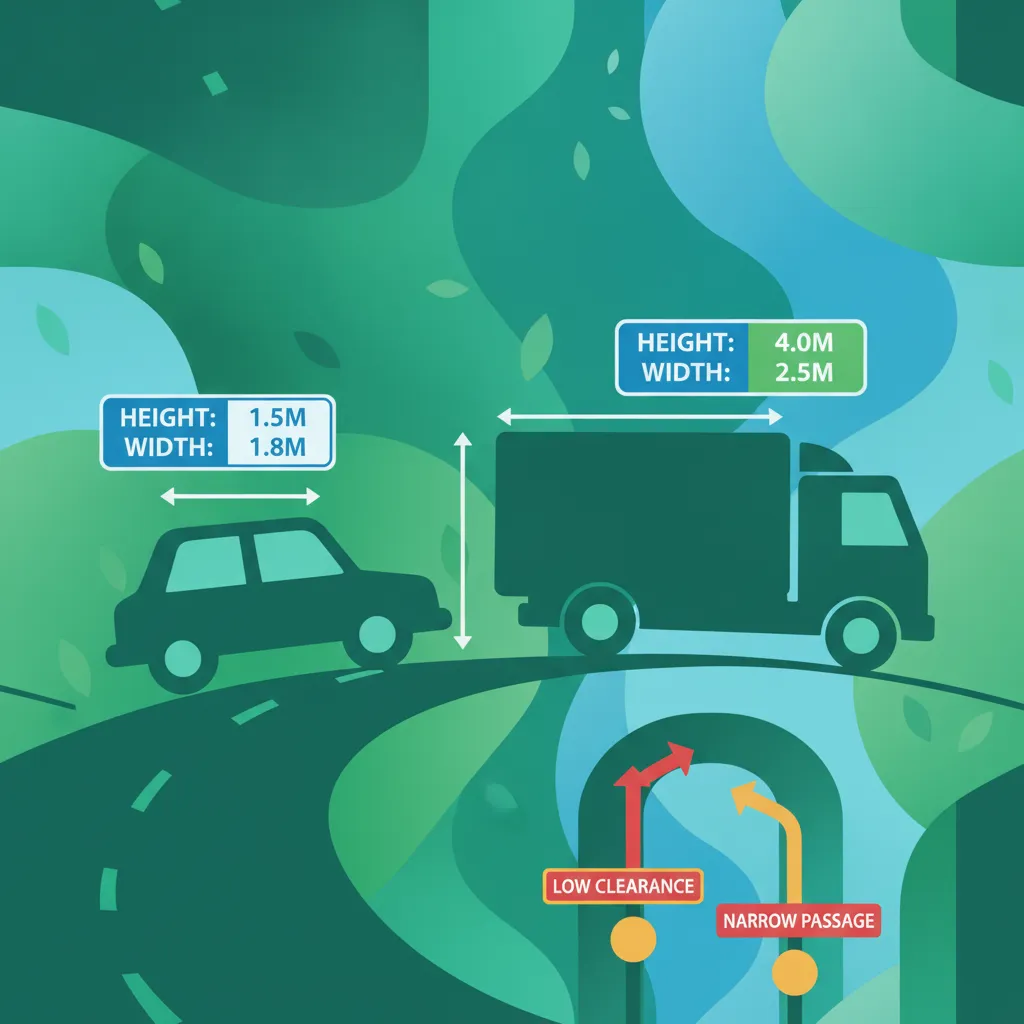
This lesson focuses on the specific dimensional limits that heavy goods vehicles must adhere to on Italian roads, as stipulated by the Codice della Strada. It covers the maximum permissible length, width, and height, explaining how these restrictions impact navigation through tunnels, under bridges, and within urban environments. Learners will also understand the conditions under which special permits for exceptional or oversized transport are required.
This lesson provides a structured, step-by-step guide to conducting a thorough pre-drive inspection. It outlines a systematic walk-around procedure, covering critical checks of tyres, wheels, lights, brakes, fluid levels, mirrors, and load security before starting any journey. Emphasizing this daily routine helps instill the professional habit of verifying vehicle roadworthiness and identifying potential issues before they become dangerous on the road.

This lesson provides a detailed overview of the legal framework for load securing in Italy, focusing on the relevant articles of the Codice della Strada. It outlines the driver's legal responsibility for ensuring the load is secure and covers the standards that securing equipment must meet. Learners will be made aware of the significant fines and other penalties that can be imposed for violations, reinforcing the importance of diligent compliance.

This lesson focuses on the specific regulations and techniques for operating a heavy vehicle on high-speed motorways. It covers mandatory lane discipline for trucks, the rules governing overtaking other heavy vehicles, and the specific speed limits that apply. Best practices for merging onto and exiting the motorway, maintaining safe following distances, and using the hard shoulder only in genuine emergencies are also detailed.

This lesson bridges the gap between general traffic laws and their specific application to heavy goods vehicles. It examines how rules regarding speed limits, lane discipline, overtaking, and priority are modified or have special considerations for trucks due to their size, weight, and reduced maneuverability. Drivers will learn to correctly interpret road signs and signals within the context of operating a large vehicle, ensuring safe and compliant integration with other traffic.
This lesson provides a clear overview of the legal consequences for failing to comply with road transport regulations in Italy. It covers the system of fines for common offenses like speeding, overloading, and violations of driving hours. The lesson also explains the penalty point system that can lead to license suspension and touches upon the responsibilities and potential liability of the transport company.

This lesson outlines the correct protocols for stopping to make a delivery in a public area. It covers the legal use of designated loading bays, the importance of making the vehicle highly visible with hazard lights, and ensuring that the parking brake is securely applied. The lesson stresses the need to conduct loading and unloading activities efficiently and safely, without causing undue obstruction or danger to other road users and pedestrians.

This lesson covers the complete set of lighting, reflective equipment, and protective guards mandated for heavy vehicles. It explains the function of each light, from headlights to side markers, and the importance of keeping them clean and operational to ensure the vehicle is visible to others. The lesson also details the legal requirements and safety purpose of side guards and rear underrun protection, which are designed to protect vulnerable road users in a collision.

This lesson provides a step-by-step guide for managing a vehicle breakdown safely. It reinforces the procedure for stopping on the hard shoulder, activating hazard lights, and placing a warning triangle at the correct distance. The lesson emphasizes the importance of wearing high-visibility clothing, exiting the vehicle from the side away from traffic, and waiting in a safe location before contacting a roadside assistance service.
Learn about specific permits required for transporting hazardous materials (ADR), oversize/overweight loads, and waste in Italy. Understand the associated driver endorsements and vehicle documentation needed for these specialized operations.
This lesson focuses on the specific dimensional limits that heavy goods vehicles must adhere to on Italian roads, as stipulated by the Codice della Strada. It covers the maximum permissible length, width, and height, explaining how these restrictions impact navigation through tunnels, under bridges, and within urban environments. Learners will also understand the conditions under which special permits for exceptional or oversized transport are required.
This lesson bridges the gap between general traffic laws and their specific application to heavy goods vehicles. It examines how rules regarding speed limits, lane discipline, overtaking, and priority are modified or have special considerations for trucks due to their size, weight, and reduced maneuverability. Drivers will learn to correctly interpret road signs and signals within the context of operating a large vehicle, ensuring safe and compliant integration with other traffic.
This lesson outlines the correct protocols for stopping to make a delivery in a public area. It covers the legal use of designated loading bays, the importance of making the vehicle highly visible with hazard lights, and ensuring that the parking brake is securely applied. The lesson stresses the need to conduct loading and unloading activities efficiently and safely, without causing undue obstruction or danger to other road users and pedestrians.
This lesson provides a clear overview of the legal consequences for failing to comply with road transport regulations in Italy. It covers the system of fines for common offenses like speeding, overloading, and violations of driving hours. The lesson also explains the penalty point system that can lead to license suspension and touches upon the responsibilities and potential liability of the transport company.
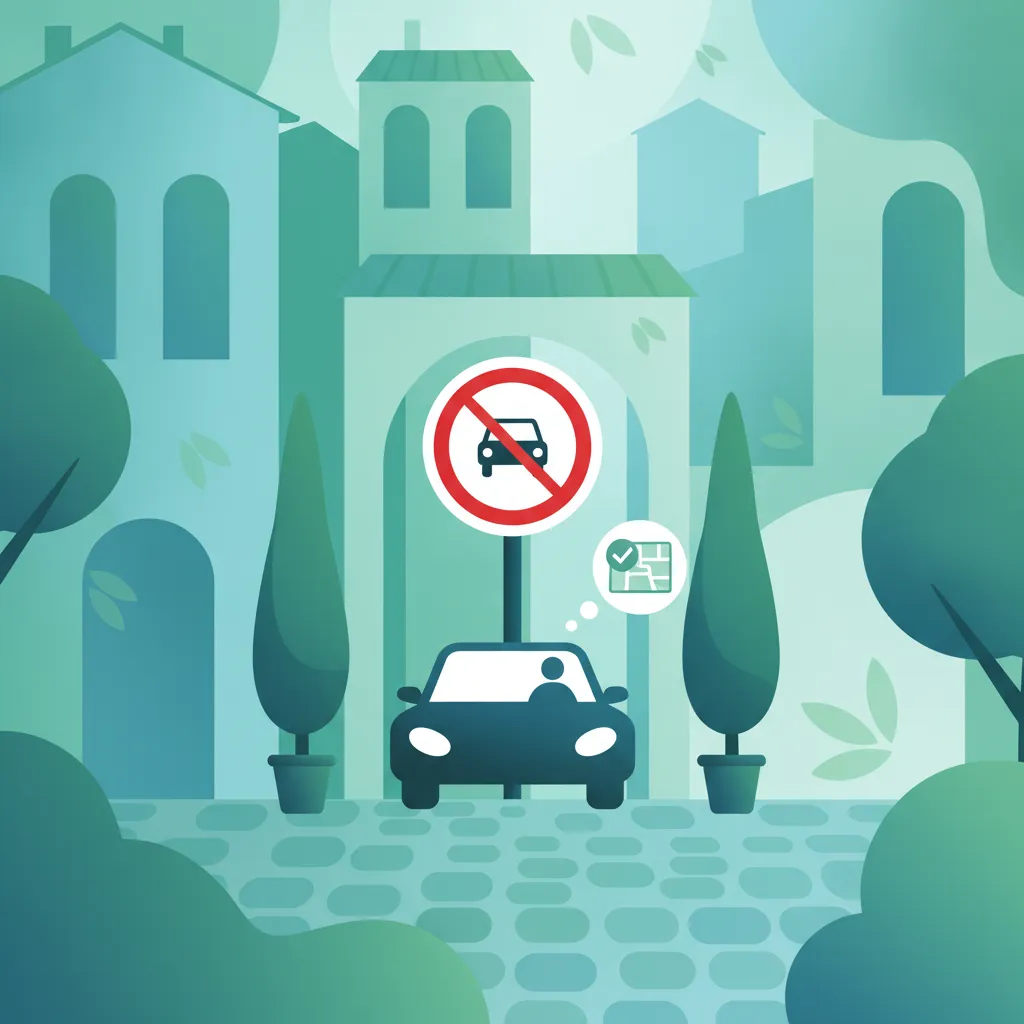
This lesson explains the concept of 'Zone a Traffico Limitato' (ZTL), common in Italian city centers, which restricts vehicle access at certain times. It covers how to identify ZTL boundaries, understand the operating hours, and the procedures for obtaining permits for commercial deliveries. The lesson also touches on environmental zones that may restrict access based on a vehicle's emission standards.
This lesson focuses on the specific regulations and techniques for operating a heavy vehicle on high-speed motorways. It covers mandatory lane discipline for trucks, the rules governing overtaking other heavy vehicles, and the specific speed limits that apply. Best practices for merging onto and exiting the motorway, maintaining safe following distances, and using the hard shoulder only in genuine emergencies are also detailed.
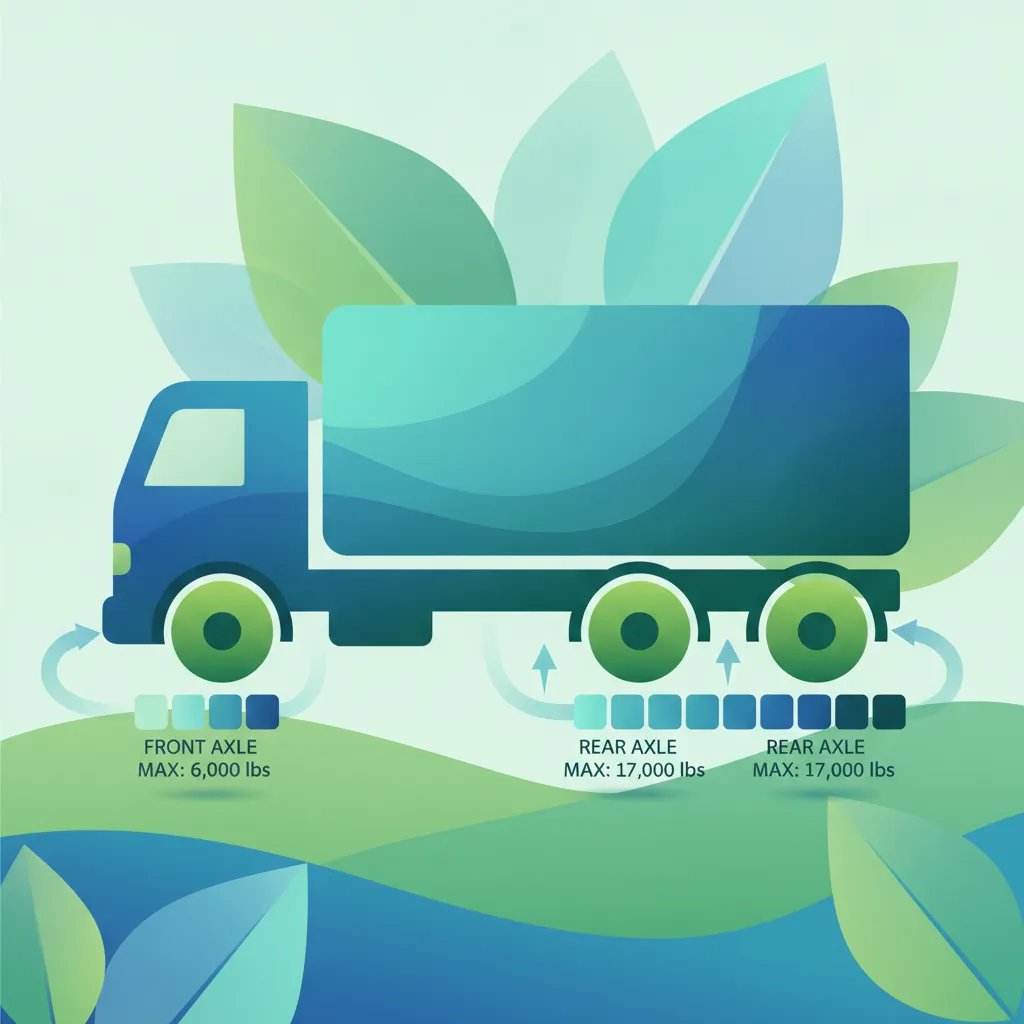
This lesson details the legal restrictions on the weight that can be supported by a single axle or a group of axles. It explains the importance of distributing the load correctly across the vehicle's length to prevent exceeding these limits, which can cause significant road damage and compromise vehicle safety. Learners will understand the relationship between load placement, axle pressure, and overall stability, particularly during braking and cornering.
This lesson provides a detailed overview of the legal framework for load securing in Italy, focusing on the relevant articles of the Codice della Strada. It outlines the driver's legal responsibility for ensuring the load is secure and covers the standards that securing equipment must meet. Learners will be made aware of the significant fines and other penalties that can be imposed for violations, reinforcing the importance of diligent compliance.
This lesson delves into the specific articles of the Italian Codice della Strada that apply to heavy goods vehicles. It outlines the core legal and professional obligations of a driver, including the heightened duty of care owed to other road users and the responsibility for the vehicle's roadworthiness and load. Learners will understand the legal consequences of non-compliance, such as fines and sanctions, reinforcing the importance of adhering to all traffic regulations.

This lesson focuses on the importance of meticulous pre-journey planning for urban deliveries. It teaches drivers how to use maps and digital tools to plan routes that avoid physical restrictions (low bridges, narrow streets), legal restrictions (ZTLs, weight limits), and temporary disruptions. Effective route planning saves time, reduces stress, and ensures that all deliveries can be made legally and safely.
Find clear answers to common questions learners have about Documentation and Certification Requirements. Learn how the lesson is structured, which driving theory objectives it supports, and how it fits into the overall learning path of units and curriculum progression in Italy. These explanations help you understand key concepts, lesson flow, and exam focused study goals.
You must carry your valid driving licence (patente), the CQC card (if applicable), the vehicle registration (carta di circolazione), the certificate of insurance, and any specific transport documents like the cargo manifest or transport permits.
The Carta di Circolazione acts as the vehicle registration document. It confirms that the vehicle is authorised to circulate on public roads and contains essential technical data, including maximum mass and dimensions, which you must know to operate the vehicle legally.
The Carta di Qualificazione del Conducente (CQC) is mandatory for professional drivers who transport goods for hire or reward. It signifies that you have completed the necessary professional training and qualification process required by the Codice della Strada.
Failing to produce mandatory documents during an inspection by authorities can result in significant administrative fines and may lead to the suspension of the journey until the correct documentation is provided or verified.
Start searching now to pinpoint exactly which Italian driving theory topics, road signs, or traffic rules you need to master. Use our advanced filters to build a custom practice session and ensure you're fully prepared for every aspect of your official driving licence exam.