
This lesson guides professional drivers through critical safety procedures to follow when encountering emergencies on long journeys. As part of your C and CE license preparation, you will learn the legal and practical steps to secure your heavy goods vehicle, ensure your safety, and respond correctly to incidents on motorways and rural roads.
Lesson content overview
Long journeys for professional drivers of heavy goods vehicles inherently carry a higher risk of unexpected incidents occurring far from familiar support systems. Whether it's a mechanical breakdown, a vehicle fire, or being the first on the scene of a road accident, knowing how to react swiftly and correctly is paramount. This lesson outlines the essential emergency procedures for such situations, focusing on prioritizing personal safety, ensuring vehicle visibility, and effective communication with emergency services, all within the framework of the Italian Codice della Strada.
Understanding these protocols is crucial for all professional drivers obtaining their C, C1, C1E, or CE license in Italy, as they integrate with general motorway rules, load management, and vehicle mechanics previously covered in this Italian Goods Vehicle License Theory Course. Proper execution of these procedures can significantly mitigate risks to the driver, passengers, other road users, and the cargo.
Every emergency situation on the road demands a structured and cautious approach. Three fundamental principles guide all appropriate actions: Safety First, Visibility, and Communication. Adhering to these principles ensures that incidents are managed effectively, minimizing danger and facilitating timely assistance.
The Safety First Principle dictates that the driver must prioritize their own safety and the safety of any passengers or other individuals before attempting any action related to vehicle recovery or repair. This means assessing the immediate environment for hazards such as moving traffic, potential fire risks, or unstable terrain. If conditions are unsafe, the driver must immediately evacuate to a secure location and await professional assistance rather than attempting improvised solutions that could escalate the danger. This principle is fundamental to preventing secondary accidents or injuries.
The Visibility Principle states that any stationary vehicle, especially a heavy goods vehicle, must be made as visible as possible to other road users to prevent collisions. Heavy vehicles can pose a significant obstruction and hazard, particularly on high-speed roads like motorways or in poor visibility conditions. Failure to make a stationary vehicle visible can lead to severe accidents. This principle necessitates the immediate activation of hazard warning lights and the correct deployment of reflective warning triangles, along with the use of high-visibility clothing if the driver needs to leave the vehicle in traffic.
The Communication Principle emphasizes the importance of promptly informing emergency services and providing precise, clear details about the location and nature of the incident. This enables rapid deployment of appropriate assistance teams, whether it's roadside recovery, fire services, or medical aid. Incomplete or inaccurate information can cause significant delays in response, potentially compromising safety and worsening the situation. Drivers must be prepared to state their exact location (e.g., motorway name, kilometre marker), the type of vehicle, and a concise description of the emergency.
A breakdown on a motorway, especially for a heavy goods vehicle, requires immediate and decisive action to ensure safety. The high speeds of motorway traffic make proper procedure critical.
Should your heavy vehicle experience a breakdown on an Italian motorway (Autostrada), your immediate priority is to move the vehicle safely off the main carriageway. The hard shoulder (corsia di emergenza) is specifically designated for such emergencies.
Signal and Move Safely: As soon as you detect a problem, switch on your hazard warning lights (quattro frecce) immediately. Carefully steer your vehicle to the far left onto the hard shoulder, gradually reducing speed.
Stop as Far Left as Possible: Position your vehicle as close to the guardrail or embankment as safely possible, maximizing the clearance from the active traffic lanes. This reduces the risk of being struck by passing traffic.
Engage Parking Brake and Secure Vehicle: Once stopped, fully engage the parking brake (freno di stazionamento). If on a slope, consider using chocks (zeppe) if available, especially for heavy vehicles, to prevent unintended movement.
Switch Off Engine and Remove Key: Turn off the engine to prevent accidental starting or further damage, and remove the key to ensure the vehicle remains stationary and to prevent unauthorized access.
Evacuate Safely: All occupants should exit the vehicle from the side furthest from traffic (e.g., the passenger side if on the right-hand hard shoulder) and move to a safe distance behind the guardrail or embankment.
Wear High-Visibility Clothing: Before leaving the vehicle, put on a high-visibility vest (giubbotto retroriflettente). This is legally mandatory for anyone exiting a vehicle on the hard shoulder or carriageway outside built-up areas.
Deploy Reflective Warning Triangles: Place the reflective warning triangles (triangolo di segnalazione mobile) at appropriate distances behind your vehicle to warn approaching traffic.
Contact Emergency Services: From a safe location, call for assistance using the designated emergency numbers.
Never attempt to stop on the main carriageway unless it is absolutely impossible to reach the hard shoulder. Stopping in an active lane significantly increases the risk of a high-speed collision.
Hazard warning lights, often referred to as "quattro frecce" in Italy, are designed to signal to other road users that your vehicle is stationary, has broken down, or is otherwise posing an obstruction or hazard. They activate all indicator lights simultaneously.
A vehicle lighting function that simultaneously flashes all turn signal indicators (left and right) to warn other road users of a stationary or hazardous situation.
These lights must be activated immediately upon recognizing an emergency and before moving to the hard shoulder. They should remain active until the vehicle is recovered or the situation is resolved. Using hazard lights while the vehicle is still moving, outside of a very specific emergency braking scenario, is a common misunderstanding that can confuse other drivers and should be avoided.
Reflective warning triangles are a critical component for enhancing the visibility of a stopped vehicle, especially on high-speed roads or in poor light. The Italian Codice della Strada mandates their use in emergency situations.
Red, reflective, collapsible triangles placed at specific distances behind a stopped vehicle to warn approaching traffic of a hazard.
Motorways and High-Speed Roads: For vehicles stopped on a motorway or a high-speed extra-urban road, the triangle must be placed at least 100 meters behind the vehicle. This distance allows drivers approaching at high speeds sufficient time to react.
Other Roads: On other roads outside built-up areas, the triangle must be placed at least 50 meters behind the vehicle.
Visibility Considerations: In conditions of reduced visibility (fog, heavy rain, darkness), or on winding roads, consider placing additional triangles or increasing the distance if it can be done safely, ensuring they are always visible.
It is mandatory for all vehicles, including heavy goods vehicles, to carry at least one reflective warning triangle. Failure to use it correctly or at all in an emergency is a violation of the Codice della Strada and significantly increases accident risk.
Once personal safety is ensured and the vehicle is made visible, the next critical step is to contact emergency services. Italy uses a unified emergency number and specific numbers for certain services.
Primary Emergency Number (112): Dial 112 for the single European emergency number. This centralizes calls for police, medical, and fire services. Operators can dispatch the appropriate service.
Direct Fire Brigade (115): For vehicle fires or other fire emergencies, you can also dial 115 directly to reach the Vigili del Fuoco (Fire Brigade).
Direct Police (113): For police assistance, you can dial 113 directly (Polizia di Stato).
Roadside Assistance: If the breakdown is not an immediate danger, you might contact your breakdown assistance provider directly. On motorways, emergency telephones (SOS columns) are usually available every 2 km; these connect directly to the motorway operator.
Provide Essential Information: Clearly state your exact location (motorway name and kilometre marker, nearest town or exit), the type of vehicle (e.g., heavy goods vehicle, articulated lorry), the nature of the incident (breakdown, fire, accident), and any immediate dangers (e.g., fuel leak, smoke, injuries).
Stay on the Line: Remain on the line until the operator instructs you to hang up. They may need further details or to provide instructions.
Always have your phone fully charged when embarking on a long journey. Consider carrying an in-vehicle charger or power bank.
A vehicle fire, particularly involving a heavy goods vehicle carrying potentially flammable cargo, is one of the most dangerous emergencies. Prompt and correct action can prevent catastrophic outcomes.
The primary concern in a vehicle fire is the safety of occupants and preventing the fire from spreading or causing an explosion.
Stop Safely and Immediately: As soon as you detect a fire or smoke, pull over to the safest available location, away from buildings, vegetation, or other vehicles. If possible, avoid stopping in tunnels or under bridges. Turn off the engine.
Evacuate All Occupants: Ensure all occupants, including yourself, evacuate the vehicle immediately and move to a safe distance (at least 50-100 meters away), preferably upwind from the smoke. Do not delay.
Assess the Fire (Only if Safe): If the fire is small, clearly visible, and localized (e.g., a small engine fire, a burning wire), and you have a fire extinguisher on board, you may attempt to extinguish it.
Use Fire Extinguisher (If Capable and Safe): Aim the extinguisher at the base of the flames, sweeping from side to side. Do not put yourself at risk. If the fire is spreading rapidly, involves fuel, or you are unsure, do NOT attempt to fight it.
Alert Emergency Services: Immediately call 115 (Vigili del Fuoco) or 112, clearly stating that there is a vehicle fire, its location, the type of vehicle, and if any hazardous materials are involved.
Warn Other Traffic: If safe to do so, activate hazard lights and deploy warning triangles to alert approaching traffic to the danger.
A portable device containing extinguishing agents, designed to put out small, localized fires before they spread. Heavy goods vehicles are often required to carry specific types and sizes of extinguishers.
Never attempt to drive away with an active fire, as this will only spread the flames and endanger more people. Your life and the lives of others are more valuable than the vehicle or its cargo.
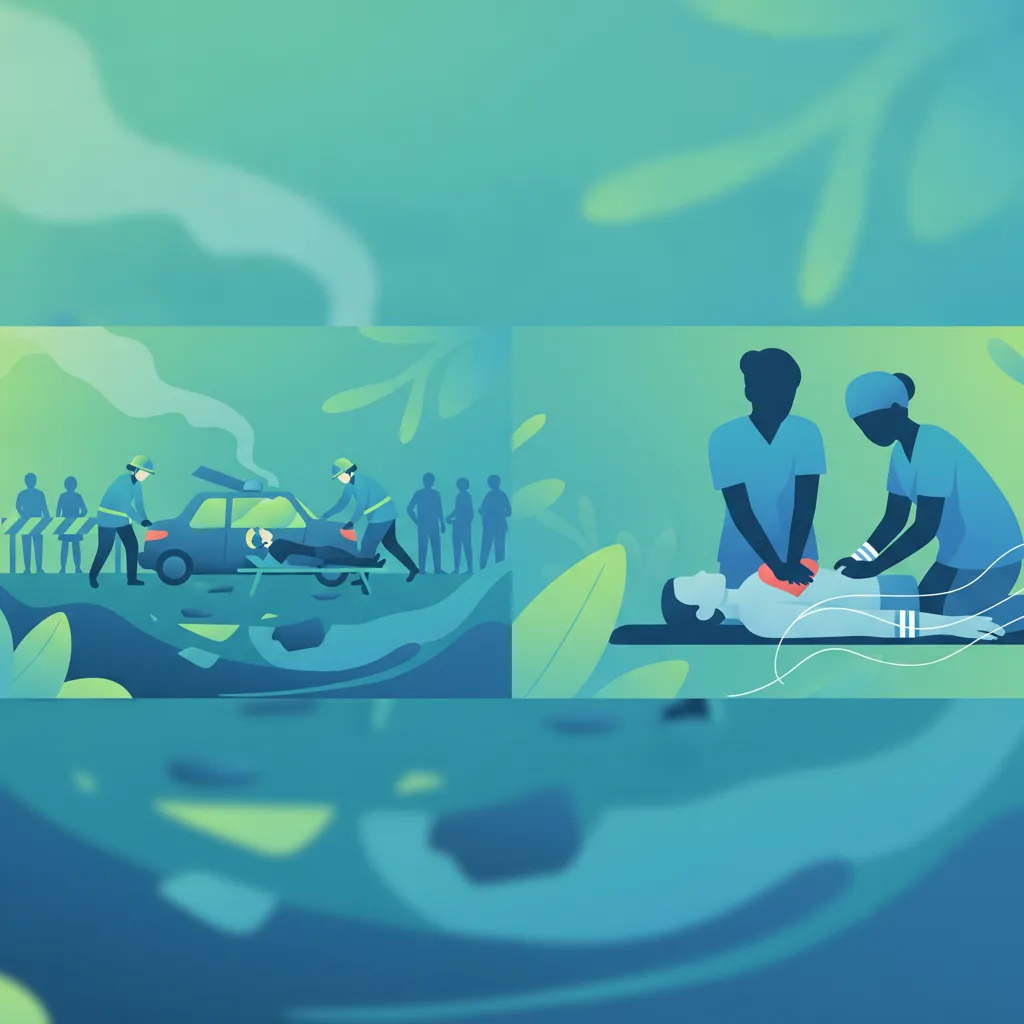
Arriving first at the scene of an accident places a significant responsibility on the driver to manage the situation until professional help arrives. Your actions can be crucial in preventing further harm and aiding victims.
The priority when arriving at an accident scene is to secure the area to prevent additional collisions and protect those involved.
Stop Safely: Park your vehicle in a safe location that does not obstruct emergency services or create further hazards. If on a motorway, pull onto the hard shoulder beyond the accident scene if possible, or well before it.
Activate Hazard Lights: Immediately turn on your hazard warning lights to alert approaching traffic.
Deploy Warning Triangles: Place reflective warning triangles at appropriate distances before the accident scene to warn oncoming drivers, giving them ample time to slow down. If safe and necessary, place another triangle after the scene as well.
Assess Dangers: Quickly assess the scene for immediate dangers such as fire, spilled fuel, live electrical wires, or unstable vehicles. Do not approach if it is unsafe.
Call Emergency Services (112): Immediately call 112. Provide the exact location, the number and type of vehicles involved, the estimated number of injured persons, and any visible dangers (e.g., fire, smoke, hazardous spills).
Provide Basic First Aid (If Trained and Safe): If you are trained in first aid and it is safe to do so, offer basic assistance to the injured.
Do NOT Move Injured Persons: Unless there is an immediate and life-threatening danger (e.g., fire, collapsing structure), do NOT move injured individuals. Incorrect movement can worsen spinal or internal injuries. Keep them warm and comfortable.
Control the Scene: Try to keep onlookers away from the immediate danger zone and prevent unnecessary movement of vehicles or debris until the authorities arrive.
A collection of basic medical supplies for the initial treatment of minor injuries. Carrying a first aid kit is mandatory for heavy goods vehicles in Italy.
The Codice della Strada specifies various rules and mandatory equipment for heavy goods vehicles to ensure safety during emergencies.
VerifyLocally above).Regularly check that all mandatory emergency equipment, such as the fire extinguisher, warning triangles, and first aid kit, are present, in good condition, and easily accessible in your heavy goods vehicle.
Understanding common errors can help drivers avoid them and improve emergency preparedness.
Emergency procedures must be adapted to the specific conditions under which an incident occurs. Factors like weather, lighting, road type, and vehicle state can significantly influence the appropriate response.
Effective emergency procedures on long journeys for heavy vehicle drivers in Italy are built upon three core pillars: Safety First, Visibility, and Communication. Drivers must be prepared to:
By internalizing these procedures and regularly checking mandatory equipment, professional drivers ensure their own safety and contribute to the overall safety of Italian roads.
This lesson covers emergency procedures for heavy goods vehicles on Italian roads, focusing on three principles: Safety First, Visibility, and Communication. For motorway breakdowns, drivers must activate hazard lights immediately, move to the hard shoulder, engage the parking brake, evacuate away from traffic wearing high-visibility vests, and deploy reflective triangles at 100 meters (or 50 meters on other roads) before calling emergency services via 112, 115, or 113. Vehicle fire procedures prioritize immediate evacuation followed by fire extinguisher use only if safe, while first responder duties at accident scenes include securing the area, warning traffic, calling for help, and providing basic aid without moving injured persons. Italian Codice della Strada mandates specific equipment including triangles, vests, first aid kits, and extinguishers, with procedures adapting to weather, road type, and vehicle load conditions.
A short set of high-value points that capture the most important learning from this lesson.
The three core emergency principles—Safety First, Visibility, and Communication—must guide every action during roadside emergencies
On Italian motorways, hazard lights must be activated immediately, the hard shoulder reached safely, and triangles placed at least 100 meters behind the vehicle
Heavy goods vehicles must carry and use high-visibility vests, reflective triangles, a first aid kit, and a fire extinguisher in emergencies
Emergency calls to 112 must include precise location (motorway name and kilometre marker), vehicle type, incident description, and any immediate dangers
Pre-journey inspections, load security, and fatigue management are essential preventive measures for long-distance heavy vehicle drivers
Explore all units and lessons included in this driving theory course.
Hazard warning lights (quattro frecce) signal a stationary or hazardous vehicle and must be activated immediately upon detecting an emergency
Reflective warning triangle distances are 100 meters on motorways and high-speed roads, 50 meters on other extra-urban roads
Italian emergency numbers: 112 (pan-European), 115 (Vigili del Fuoco for fires), 113 (Polizia di Stato)
Vehicle fires require immediate evacuation to 50-100 meters upwind; only attempt extinguisher use if the fire is small, localized, and you are safe
Unless there is imminent danger (fire or collapse), never move injured persons from an accident scene
Stopping in an active traffic lane instead of reaching the hard shoulder, creating severe high-speed collision risk
Placing warning triangles too close to the vehicle or not at all, depriving approaching drivers of adequate reaction time
Delaying the emergency call or providing vague location information, causing critical response delays
Attempting to drive the vehicle when a fire is present, which accelerates fire spread and endangers more people
Moving injured accident victims without professional assessment, potentially worsening spinal or internal injuries
Lesson content overview
A short set of high-value points that capture the most important learning from this lesson.
The three core emergency principles—Safety First, Visibility, and Communication—must guide every action during roadside emergencies
On Italian motorways, hazard lights must be activated immediately, the hard shoulder reached safely, and triangles placed at least 100 meters behind the vehicle
Heavy goods vehicles must carry and use high-visibility vests, reflective triangles, a first aid kit, and a fire extinguisher in emergencies
Emergency calls to 112 must include precise location (motorway name and kilometre marker), vehicle type, incident description, and any immediate dangers
Pre-journey inspections, load security, and fatigue management are essential preventive measures for long-distance heavy vehicle drivers
Explore all units and lessons included in this driving theory course.
Hazard warning lights (quattro frecce) signal a stationary or hazardous vehicle and must be activated immediately upon detecting an emergency
Reflective warning triangle distances are 100 meters on motorways and high-speed roads, 50 meters on other extra-urban roads
Italian emergency numbers: 112 (pan-European), 115 (Vigili del Fuoco for fires), 113 (Polizia di Stato)
Vehicle fires require immediate evacuation to 50-100 meters upwind; only attempt extinguisher use if the fire is small, localized, and you are safe
Unless there is imminent danger (fire or collapse), never move injured persons from an accident scene
Stopping in an active traffic lane instead of reaching the hard shoulder, creating severe high-speed collision risk
Placing warning triangles too close to the vehicle or not at all, depriving approaching drivers of adequate reaction time
Delaying the emergency call or providing vague location information, causing critical response delays
Attempting to drive the vehicle when a fire is present, which accelerates fire spread and endangers more people
Moving injured accident victims without professional assessment, potentially worsening spinal or internal injuries
Explore search topics learners often look for when studying Emergency Procedures on Long Journeys. These topics reflect common questions about road rules, driving situations, safety guidance, and lesson level theory preparation for learners in Italy.
Browse additional driving theory lessons that cover connected traffic rules, road signs, and common driving situations related to this topic. Improve your understanding of how different rules interact across everyday traffic scenarios.
Learn essential steps for handling breakdowns, accidents, or fires on Italian motorways and rural roads. This lesson covers securing the scene, using safety equipment, and contacting emergency services for heavy goods vehicles.
This lesson provides a step-by-step guide for managing a vehicle breakdown safely. It reinforces the procedure for stopping on the hard shoulder, activating hazard lights, and placing a warning triangle at the correct distance. The lesson emphasizes the importance of wearing high-visibility clothing, exiting the vehicle from the side away from traffic, and waiting in a safe location before contacting a roadside assistance service.
This lesson prepares drivers for incidents beyond a simple breakdown, such as losing part of the load onto the roadway or dealing with a spillage. It outlines the immediate priorities: ensuring personal safety, warning other traffic of the hazard, and notifying the authorities. The lesson also covers the fundamental principles of managing an accident scene, including protecting the area, assessing for casualties, and providing essential information to emergency services.

This lesson focuses on the specific regulations and techniques for operating a heavy vehicle on high-speed motorways. It covers mandatory lane discipline for trucks, the rules governing overtaking other heavy vehicles, and the specific speed limits that apply. Best practices for merging onto and exiting the motorway, maintaining safe following distances, and using the hard shoulder only in genuine emergencies are also detailed.
This lesson details the specific rules and safety considerations for driving through the extensive tunnels and high viaducts common in Italy. It covers pre-entry checks, maintaining a safe following distance, and the correct procedures to follow in case of a breakdown or fire inside a tunnel. The lesson also addresses the hazard of strong crosswinds on exposed viaducts and how to maintain vehicle control.
This lesson bridges the gap between general traffic laws and their specific application to heavy goods vehicles. It examines how rules regarding speed limits, lane discipline, overtaking, and priority are modified or have special considerations for trucks due to their size, weight, and reduced maneuverability. Drivers will learn to correctly interpret road signs and signals within the context of operating a large vehicle, ensuring safe and compliant integration with other traffic.

This lesson covers the specific environment of logistics hubs and distribution centers. It explains common site layouts, traffic flow systems, and the safety protocols drivers must follow when on private property. Key skills addressed include safely maneuvering in busy yards, reversing accurately into loading bays, and communicating effectively with warehouse staff to ensure a safe and efficient loading or unloading process.
This lesson covers the complete set of lighting, reflective equipment, and protective guards mandated for heavy vehicles. It explains the function of each light, from headlights to side markers, and the importance of keeping them clean and operational to ensure the vehicle is visible to others. The lesson also details the legal requirements and safety purpose of side guards and rear underrun protection, which are designed to protect vulnerable road users in a collision.
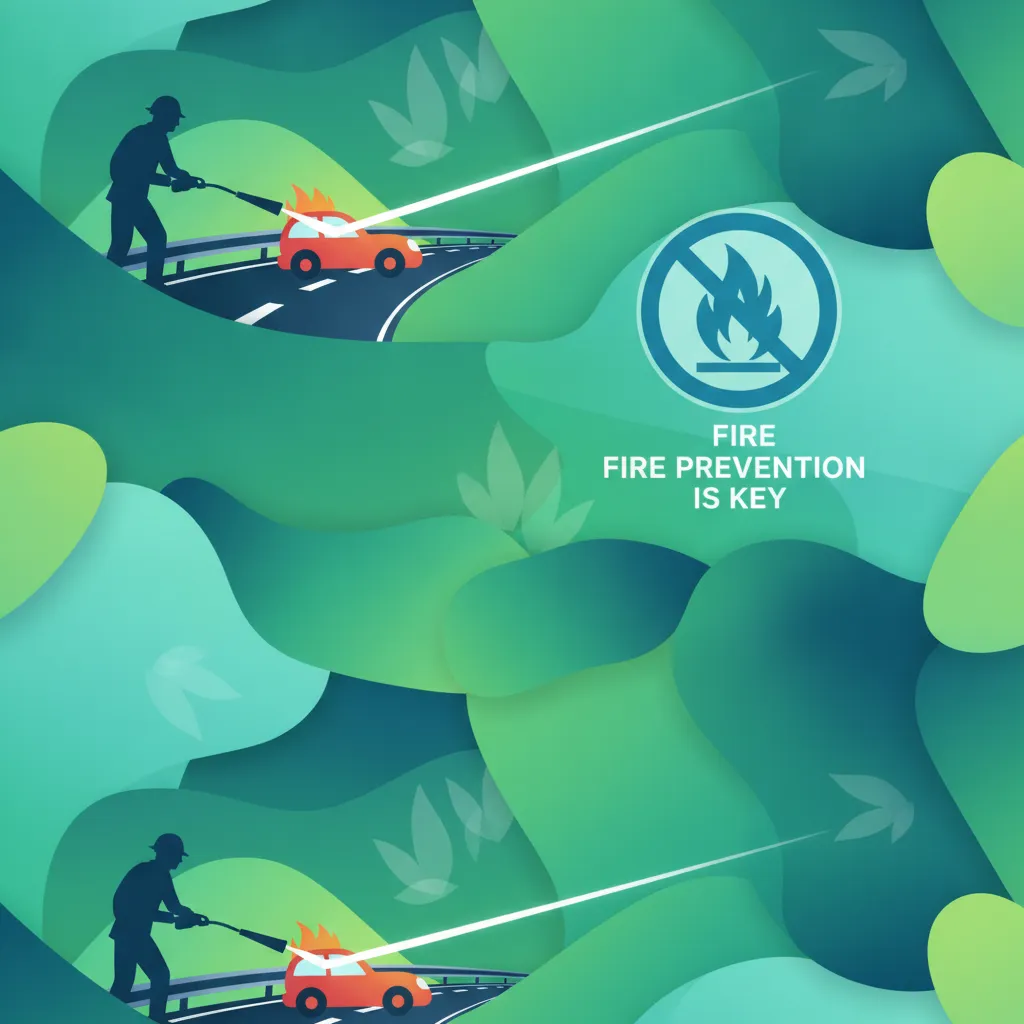
This lesson covers the critical topic of vehicle fires, explaining common causes such as electrical faults, fuel leaks, or overheating components. It highlights key prevention measures that can be incorporated into daily checks and details the immediate actions to take if a fire is discovered: stop safely, evacuate the vehicle, and call the emergency services. The lesson also provides basic instruction on how and when it might be safe to attempt to tackle a small fire with the vehicle's extinguisher.

This lesson provides an in-depth focus on sharing the road with the most vulnerable users. It teaches drivers to be acutely aware of pedestrians at crossings, cyclists filtering through traffic, and motorcyclists who may be in blind spots. The lesson emphasizes the importance of leaving extra space, signaling intentions clearly, and exercising extreme caution at junctions, where the majority of serious incidents occur.
This lesson equips riders with the correct procedures to follow in the event of a breakdown or accident. It covers how to move the vehicle to a safe location, alert other traffic, and contact emergency services using the universal 112 number. You will also learn the basics of accident scene management and the necessary steps for reporting the incident to police and insurance.
Understand critical procedures for vehicle fires and acting as a first responder at accident scenes. This lesson focuses on safety, assessment, and immediate actions required by heavy vehicle drivers in Italy.
This lesson covers the critical topic of vehicle fires, explaining common causes such as electrical faults, fuel leaks, or overheating components. It highlights key prevention measures that can be incorporated into daily checks and details the immediate actions to take if a fire is discovered: stop safely, evacuate the vehicle, and call the emergency services. The lesson also provides basic instruction on how and when it might be safe to attempt to tackle a small fire with the vehicle's extinguisher.
This lesson prepares drivers for incidents beyond a simple breakdown, such as losing part of the load onto the roadway or dealing with a spillage. It outlines the immediate priorities: ensuring personal safety, warning other traffic of the hazard, and notifying the authorities. The lesson also covers the fundamental principles of managing an accident scene, including protecting the area, assessing for casualties, and providing essential information to emergency services.
This lesson provides a step-by-step guide for managing a vehicle breakdown safely. It reinforces the procedure for stopping on the hard shoulder, activating hazard lights, and placing a warning triangle at the correct distance. The lesson emphasizes the importance of wearing high-visibility clothing, exiting the vehicle from the side away from traffic, and waiting in a safe location before contacting a roadside assistance service.
This lesson provides critical guidance on how to respond in the event of a traffic accident. It outlines the immediate steps to take, such as securing the scene with a warning triangle and hazard lights, and calling the emergency services. The content also covers the legal obligation to assist the injured and provides an introduction to basic first aid principles that can be applied until professional help arrives.
This lesson details the specific rules and safety considerations for driving through the extensive tunnels and high viaducts common in Italy. It covers pre-entry checks, maintaining a safe following distance, and the correct procedures to follow in case of a breakdown or fire inside a tunnel. The lesson also addresses the hazard of strong crosswinds on exposed viaducts and how to maintain vehicle control.

This lesson outlines the correct protocols for stopping to make a delivery in a public area. It covers the legal use of designated loading bays, the importance of making the vehicle highly visible with hazard lights, and ensuring that the parking brake is securely applied. The lesson stresses the need to conduct loading and unloading activities efficiently and safely, without causing undue obstruction or danger to other road users and pedestrians.
This lesson covers the complete set of lighting, reflective equipment, and protective guards mandated for heavy vehicles. It explains the function of each light, from headlights to side markers, and the importance of keeping them clean and operational to ensure the vehicle is visible to others. The lesson also details the legal requirements and safety purpose of side guards and rear underrun protection, which are designed to protect vulnerable road users in a collision.

This lesson reinforces the correct procedures for interacting with emergency vehicles that are responding to a call with sirens and lights active. It explains the legal obligation to yield the right-of-way by safely moving to the side of the road and stopping if necessary. The content emphasizes making smooth, predictable movements to create a clear path, allowing emergency responders to proceed without delay.
This lesson covers the specific environment of logistics hubs and distribution centers. It explains common site layouts, traffic flow systems, and the safety protocols drivers must follow when on private property. Key skills addressed include safely maneuvering in busy yards, reversing accurately into loading bays, and communicating effectively with warehouse staff to ensure a safe and efficient loading or unloading process.

This lesson provides a comprehensive overview of the essential documentation required for both the driver and the vehicle. It covers the driver's license (patente), CQC card, vehicle registration (carta di circolazione), insurance certificate, and transport-specific documents like the cargo manifest. Learners will understand the importance of ensuring all documents are valid and readily available for inspection by authorities to avoid legal penalties and operational delays.
Find clear answers to common questions learners have about Emergency Procedures on Long Journeys. Learn how the lesson is structured, which driving theory objectives it supports, and how it fits into the overall learning path of units and curriculum progression in Italy. These explanations help you understand key concepts, lesson flow, and exam focused study goals.
You must move your vehicle onto the hard shoulder if possible, turn on your hazard warning lights, and wear your reflective high-visibility vest before exiting the vehicle. Then, place your warning triangle at an appropriate distance behind the vehicle to alert approaching traffic.
On motorways and extra-urban roads, the warning triangle must be placed at a distance that ensures approaching drivers have sufficient time to see it and slow down, typically at least 50 meters behind the vehicle, ensuring it is clearly visible to oncoming traffic.
You are legally required to stop and provide assistance as far as you are able, ensuring that you do not put yourself or others in further danger. Your primary duty is to call emergency services (112), secure the scene, and provide accurate information to authorities.
Immediately pull over to a safe area away from vegetation or other vehicles, turn off the engine to stop fuel flow, and evacuate all occupants to a safe distance. Do not attempt to fight a large fire yourself; call the fire department immediately and stay upwind.
Start searching now to pinpoint exactly which Italian driving theory topics, road signs, or traffic rules you need to master. Use our advanced filters to build a custom practice session and ensure you're fully prepared for every aspect of your official driving licence exam.