
This lesson details the mandatory lighting, reflective equipment, and protective side guard systems required for heavy goods vehicles in Italy. By mastering these components, you ensure your vehicle complies with the Codice della Strada and is clearly visible to other road users. This knowledge is crucial for your professional qualification and is a core requirement for your C and CE theory examination.
Lesson content overview
Operating heavy goods vehicles (HGVs) in Italy, whether holding a C, C1, C1E, or CE license, demands a thorough understanding of their unique safety equipment. This lesson provides a comprehensive guide to all mandated lighting, reflective devices, and structural guards designed to enhance visibility and protect road users. By mastering these components and their associated regulations, professional drivers ensure both compliance with the Italian Codice della Strada and paramount road safety.
The primary goal of these systems is to make the heavy vehicle visible to others under all conditions, from bright daylight to the darkest night, and through adverse weather. This significantly reduces the risk of collisions. Additionally, specialized protective structures are in place to safeguard vulnerable road users in the event of an impact, minimizing severe injuries. This lesson ties directly into broader vehicle construction principles and the essential pre-drive inspection procedures you will learn in other parts of this Italian Goods Vehicle License Theory Course.
Visibility is the cornerstone of road safety, especially for large vehicles like trucks and lorries. Due to their size and mass, HGVs require extensive lighting and reflective equipment to ensure they are detected, recognized, and their dimensions understood by other road users. This early detection allows other drivers, cyclists, and pedestrians more time to react, preventing accidents.
Conspicuity is achieved through a combination of high-intensity lights, appropriately colored reflectors, and meticulously clean surfaces. Beyond visibility, the physical protection offered by side guards and rear underrun protection is equally vital. These structural components are specifically designed to prevent smaller vehicles or vulnerable road users from sliding underneath an HGV in a collision, drastically reducing the severity of potential injuries.
Heavy goods vehicles are equipped with a complex array of lights, each serving a distinct purpose under specific conditions. Proper knowledge and use of these systems are mandatory for safe operation and legal compliance.
Headlamps are the primary forward-facing illumination devices, essential for the driver to see the road ahead and for other road users to identify the vehicle. They are generally categorized into low beam and high beam.
Low beam headlights are designed for normal driving conditions, particularly when other vehicles are present or when following another vehicle. They provide sufficient forward visibility while minimizing glare for others. In Italy, low beams must be activated from sunset to sunrise, during adverse weather, and whenever visibility is reduced. They are also mandatory in tunnels, even during daytime.
High beam headlights offer a much longer sight distance, ideal for driving on unlit roads with minimal traffic. However, their powerful illumination can temporarily blind other drivers. Consequently, high beams must be dimmed to low beams when approaching oncoming traffic within 300 meters or when following a vehicle within 150 meters. Correct judgment of these distances is crucial for preventing dangerous dazzling.
Using high beams inappropriately can lead to severe accidents due to temporary blindness caused to other drivers. Always dim your lights in time.
These continuous white lights are visible from the front and help other road users determine the vehicle's width and orientation, especially in low light or at night. They must be operational from sunset to sunrise or whenever low beams are in use. Unlike daytime running lights, position lights are often lower intensity and indicate vehicle presence rather than actively enhancing daytime conspicuity.
Front fog lights are specifically designed to illuminate the road directly in front of the vehicle when visibility is severely reduced. Their low mounting position and unique beam pattern help to minimize glare that can be caused by regular headlights reflecting off water droplets or snow. In Italy, these lights are only permitted when visibility drops below 100 meters due to fog, heavy rain, or snow. They must be turned off as soon as visibility improves to avoid dazzling other drivers.
Daytime Running Lights automatically switch on when the vehicle is in motion during daylight hours. Their primary purpose is to increase the vehicle's conspicuity, making it more visible to other road users during the day. While not universally mandatory on older vehicles, many newer heavy vehicles are equipped with DRLs, and they are required on newly registered models in some jurisdictions, including within the European Union.
The rear of a heavy vehicle also features several crucial lighting components to communicate its presence, actions, and dimensions to following traffic.
Tail lights are continuous red lights visible from the rear, indicating the vehicle's presence. They must be illuminated whenever the vehicle's engine is running or when parking lights are activated, typically in conjunction with the front position lights. They serve as a basic warning to following vehicles.
Brake lights illuminate when the driver presses the brake pedal, signaling deceleration or that the vehicle is stopping. They must be significantly brighter than the tail lights to ensure their warning is immediately noticeable. A rapid rise time (how quickly they reach full brightness) is also a regulatory requirement to give following drivers maximum reaction time.
Similar to front position lights, rear position lights are red lights visible from the rear that indicate the vehicle's width and presence. They operate in conjunction with the front position lights and tail lights, forming a complete circuit that outlines the vehicle's dimensions.
Rear fog lights are intensely bright red lights, typically positioned higher than standard tail lights, used to enhance the visibility of the vehicle's rear in severe adverse weather conditions such as dense fog, heavy rain, or blizzards. Like front fog lights, they are only to be used when visibility is significantly reduced and must be switched off once visibility improves to prevent confusion or dazzling following drivers. Incorrect use of rear fog lights is a common violation.
Side marker lights are small lights mounted along the sides of the heavy vehicle and its trailer, visible from both the front and rear of the vehicle's side. They help other road users, particularly those approaching from the side or when overtaking, to accurately judge the overall length and width of the vehicle and combination. They are usually white towards the front and amber along the middle and rear.
Reverse lights are white lights located at the rear of the vehicle that automatically illuminate when reverse gear is engaged. Their purpose is twofold: to alert pedestrians, cyclists, and other drivers that the vehicle is backing up, and to provide some illumination for the driver's rear view during maneuvering.
Hazard warning lights, also known as hazard flashers, are flashing amber lights that activate simultaneously on all corners of the vehicle. They are used to indicate that the vehicle is stationary and poses a hazard, or that it is moving extremely slowly (typically less than 5 km/h) due to a breakdown or obstruction. This alerts other road users to a potential danger or an unusual situation. Misuse, such as driving at normal speeds with hazard lights on, can cause confusion and is illegal.
Beyond active lighting, heavy goods vehicles rely on passive reflective devices to enhance their visibility, especially when their lights are off or when they are stationary. These devices reflect light from other vehicles' headlamps, making the HGV stand out in low light.
Tyre reflectors are small, reflective devices typically attached to the wheels or wheel hubs. They serve to indicate the position of the tyres and, by extension, the overall width and movement of the vehicle when illuminated by other vehicles' headlights. This is particularly useful for judging the vehicle's outline in darkness or poor visibility.
Fixed reflectors are strategically placed on the front, rear, and sides of the heavy vehicle, often integrated into the vehicle's framework or alongside lighting units. Front reflectors are usually white, side reflectors amber, and rear reflectors red. They provide crucial passive visibility, outlining the vehicle's dimensions and presence even when its active lights are off, such as when parked.
Beyond visibility, heavy vehicles are mandated to have specific structural guards designed to protect vulnerable road users in certain types of collisions. These guards are critical safety features for any vehicle operating under the Italian Goods Vehicle License Theory Course categories (C, C1, C1E, CE).
Side guards are a vital safety feature for heavy goods vehicles, particularly in urban environments where cyclists and motorcyclists are common. Their purpose is to prevent a vulnerable road user, or even another smaller vehicle, from being run over or trapped underneath the side of the truck in a side-impact collision or during a turn. These guards must be robust, meet minimum height and rigidity standards, and typically extend along the vehicle's side between the axles. In Italy, these are mandatory for all HGVs.
Rear underrun protection is a horizontal bar or structure located at the rear of the vehicle, often integrated into the rear bumper or chassis. Its critical function is to prevent smaller vehicles (cars, motorcycles, bicycles) from sliding underneath the heavy vehicle during a rear-end collision. Without this protection, a smaller vehicle could "underrun" the truck, causing severe damage to its passenger compartment and potentially fatal injuries to its occupants. Regulations mandate minimum dimensions and strength for these guards, typically requiring them to be no more than 30 cm above the ground.
When a heavy goods vehicle operates with a trailer or semitrailer, the towed unit must also be equipped with a full complement of functional lighting and reflective devices. These lights mirror those on the towing vehicle and must be correctly wired to operate in sync.
Trailers and semitrailers require:
All these components must be correctly connected to the towing vehicle's electrical system and verified as fully functional during pre-drive inspections. A faulty connection can render an entire trailer lighting system inoperative, posing a severe safety risk and leading to legal penalties.
Compliance with the Italian Codice della Strada (Traffic Code) and relevant European Union regulations is not merely a bureaucratic formality; it is fundamental to road safety. Drivers of vehicles requiring C, C1, C1E, or CE licenses must rigorously adhere to these rules.
Headlamp Usage: All vehicles must use headlamps from sunset to sunrise and during any period of reduced visibility (fog, heavy rain, snow, tunnels). Failure to do so is a direct violation.
High Beam Etiquette: High beams are for unlit roads with minimal traffic. They must be switched to low beam when approaching another vehicle within 300 meters or when following a vehicle within 150 meters to prevent dazzling.
Fog Light Conditions: Front fog lights are strictly for conditions where visibility is less than 100 meters. Rear fog lights are for similarly poor visibility but are typically brighter and should be used with even greater caution, switching them off immediately when visibility improves.
Side Guard Mandate: All heavy goods vehicles in Italy must be equipped with side guards that meet specific height, length, and durability standards, extending from the front to the rear wheel arches. These are critical for the protection of vulnerable road users.
Rear Underrun Protection: Mandatory on all HGVs and trailers, this protection must comply with minimum dimensions and be robust enough to prevent smaller vehicles from sliding underneath in a rear-end collision. A common minimum height is 30 cm from the ground.
Cleanliness of Visibility Equipment: All lights and reflectors must be kept clean from dirt, mud, snow, ice, or any obstruction. Obscured lights or reflectors compromise safety and are subject to fines.
Hazard Warning Lights: These are strictly for emergencies: when the vehicle is stopped on the carriageway, or moving at less than 5 km/h due to a breakdown or obstruction. Their misuse can confuse other drivers.
Reverse Light Functionality: Reverse lights must illuminate automatically when the reverse gear is engaged, signaling the vehicle's intended movement.
Approved Lighting: All installed lights must be of an approved type, correctly mounted, and functioning according to legal specifications. The use of unauthorized or improperly modified lighting is prohibited.
Violation of lighting and protection regulations can result in significant fines, points on your license, and can lead to severe liability in the event of an accident.
Regular maintenance and diligent pre-drive inspections are not just good practice; they are legal obligations for professional drivers. Ensuring all lights, reflectors, and protective guards are operational and correctly positioned is a daily safety ritual.
Before every journey, a driver holding a C, C1, C1E, or CE license must perform a comprehensive check:
Always carry spare bulbs for critical lighting components, especially on long journeys.
Ignoring or improperly using lighting and protective equipment is a common cause of accidents and regulatory penalties. Professional drivers must be acutely aware of these pitfalls.
The correct use of lighting changes dynamically based on the driving environment and prevailing conditions. A professional driver must be able to adapt instantaneously.
The extensive array of lighting, reflective devices, and protective guards on heavy goods vehicles is fundamental to safety for both the driver and all other road users. From ensuring clear forward visibility with headlamps to preventing severe injuries with robust side guards and rear underrun protection, each component plays a critical role. For those pursuing an Italian Goods Vehicle License (C, C1, C1E, CE), understanding these systems, their legal requirements, and the importance of diligent maintenance and correct usage is non-negotiable. Continuous vigilance and adherence to regulations are the hallmarks of a responsible professional driver.
This lesson covers the complete mandatory lighting, reflective equipment, and protective guard systems required for heavy goods vehicles in Italy under the Codice della Strada. Heavy vehicles require multiple light types including headlamps (low and high beam), position lights, fog lights, brake lights, reverse lights, side markers, and hazard flashers, each with specific usage conditions and distances. Reflective devices provide passive visibility even when lights are off, while side guards and rear underrun protection are structural safety features mandated to protect vulnerable road users like cyclists from being crushed underneath. Professional drivers holding C, C1, C1E, or CE licenses must perform thorough pre-drive inspections of all lighting and protective equipment, ensuring compliance with Italian and EU regulations to avoid penalties and prevent accidents.
A short set of high-value points that capture the most important learning from this lesson.
Heavy vehicle lighting systems serve two essential purposes: making the vehicle visible to others and protecting vulnerable road users in collisions.
Headlights must be switched from high beam to low beam when approaching oncoming traffic within 300 meters or following another vehicle within 150 meters.
Side guards and rear underrun protection are mandatory structural features designed to prevent smaller vehicles, cyclists, and pedestrians from being crushed underneath an HGV.
Fog lights are strictly regulated for use only when visibility drops below 100 meters due to fog, heavy rain, or snow.
All trailer lighting must be correctly wired to the towing vehicle and verified functional before every journey.
Explore all units and lessons included in this driving theory course.
Low beam headlights are mandatory from sunset to sunrise and whenever visibility is reduced, including in tunnels even during daytime.
Front fog lights have a wide, flat beam pattern and must only be used when visibility is below 100 meters; rear fog lights are brighter and must be switched off immediately once visibility improves.
Rear underrun protection must be positioned no higher than 30 centimeters above the ground to effectively prevent smaller vehicles from sliding underneath.
Side guards on HGVs must extend from the front to the rear wheel arch to protect cyclists and motorcyclists from being dragged under the vehicle.
Hazard warning lights are reserved exclusively for stationary vehicles or those moving below 5 km/h due to breakdown or obstruction.
Using high beams when approaching oncoming traffic within 300 meters or following another vehicle within 150 meters, causing dangerous temporary blindness to other drivers.
Operating fog lights in clear weather or when visibility is only slightly reduced, creating unnecessary glare that endangers other road users.
Failing to clean lights, reflectors, and lenses regularly, which can reduce headlight output by half and make the vehicle nearly invisible.
Driving with a trailer whose brake lights, tail lights, or indicators are non-functional due to faulty electrical connections, removing critical warnings for following traffic.
Using hazard warning lights while driving at normal speeds, which confuses other drivers about the vehicle's intentions and can cause accidents.
Lesson content overview
A short set of high-value points that capture the most important learning from this lesson.
Heavy vehicle lighting systems serve two essential purposes: making the vehicle visible to others and protecting vulnerable road users in collisions.
Headlights must be switched from high beam to low beam when approaching oncoming traffic within 300 meters or following another vehicle within 150 meters.
Side guards and rear underrun protection are mandatory structural features designed to prevent smaller vehicles, cyclists, and pedestrians from being crushed underneath an HGV.
Fog lights are strictly regulated for use only when visibility drops below 100 meters due to fog, heavy rain, or snow.
All trailer lighting must be correctly wired to the towing vehicle and verified functional before every journey.
Explore all units and lessons included in this driving theory course.
Low beam headlights are mandatory from sunset to sunrise and whenever visibility is reduced, including in tunnels even during daytime.
Front fog lights have a wide, flat beam pattern and must only be used when visibility is below 100 meters; rear fog lights are brighter and must be switched off immediately once visibility improves.
Rear underrun protection must be positioned no higher than 30 centimeters above the ground to effectively prevent smaller vehicles from sliding underneath.
Side guards on HGVs must extend from the front to the rear wheel arch to protect cyclists and motorcyclists from being dragged under the vehicle.
Hazard warning lights are reserved exclusively for stationary vehicles or those moving below 5 km/h due to breakdown or obstruction.
Using high beams when approaching oncoming traffic within 300 meters or following another vehicle within 150 meters, causing dangerous temporary blindness to other drivers.
Operating fog lights in clear weather or when visibility is only slightly reduced, creating unnecessary glare that endangers other road users.
Failing to clean lights, reflectors, and lenses regularly, which can reduce headlight output by half and make the vehicle nearly invisible.
Driving with a trailer whose brake lights, tail lights, or indicators are non-functional due to faulty electrical connections, removing critical warnings for following traffic.
Using hazard warning lights while driving at normal speeds, which confuses other drivers about the vehicle's intentions and can cause accidents.
Explore search topics learners often look for when studying Lights, Reflectors, and Side Guards. These topics reflect common questions about road rules, driving situations, safety guidance, and lesson level theory preparation for learners in Italy.
Browse additional driving theory lessons that cover connected traffic rules, road signs, and common driving situations related to this topic. Improve your understanding of how different rules interact across everyday traffic scenarios.
Understand the mandatory lighting, reflector, and side guard requirements for HGVs in Italy. This lesson details legal compliance for C and CE license holders, focusing on visibility and vulnerable road user protection.

This lesson provides a comprehensive guide to a vehicle's lighting systems and their correct use according to the Codice della Strada. It explains the functions of low beams, high beams, fog lights, and daytime running lights, detailing when each should be used to ensure visibility for the driver and by other road users. Proper use of lighting is critical for safety during night driving and in conditions of poor visibility.
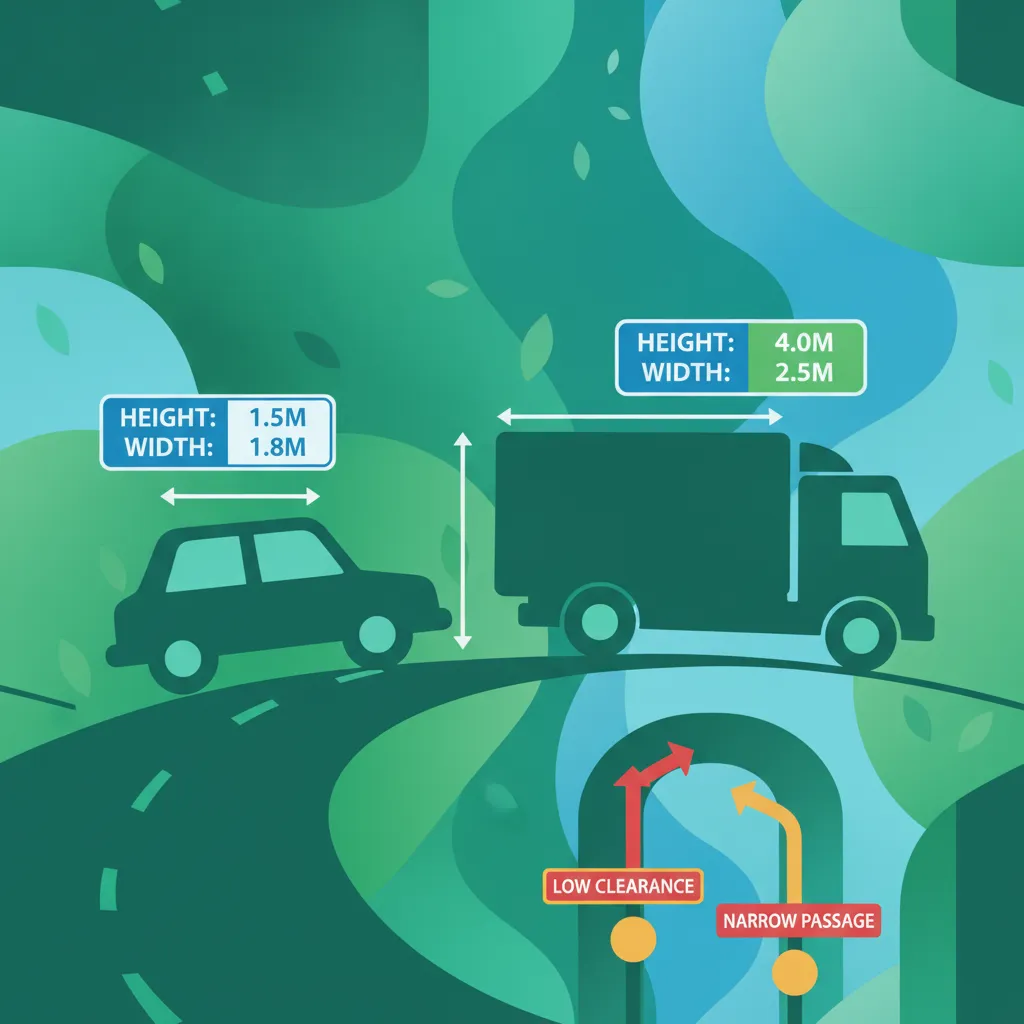
This lesson focuses on the specific dimensional limits that heavy goods vehicles must adhere to on Italian roads, as stipulated by the Codice della Strada. It covers the maximum permissible length, width, and height, explaining how these restrictions impact navigation through tunnels, under bridges, and within urban environments. Learners will also understand the conditions under which special permits for exceptional or oversized transport are required.

This lesson provides a comprehensive overview of the essential documentation required for both the driver and the vehicle. It covers the driver's license (patente), CQC card, vehicle registration (carta di circolazione), insurance certificate, and transport-specific documents like the cargo manifest. Learners will understand the importance of ensuring all documents are valid and readily available for inspection by authorities to avoid legal penalties and operational delays.

This lesson explains the function of the different classes of mirrors required on a heavy goods vehicle, including the main, wide-angle, and close-proximity (kerb) mirrors. It provides a systematic method for adjusting each mirror correctly from the driver's seating position to create the widest possible field of vision and minimize blind spots. Proper mirror setup is the foundation of safe observation and maneuvering.
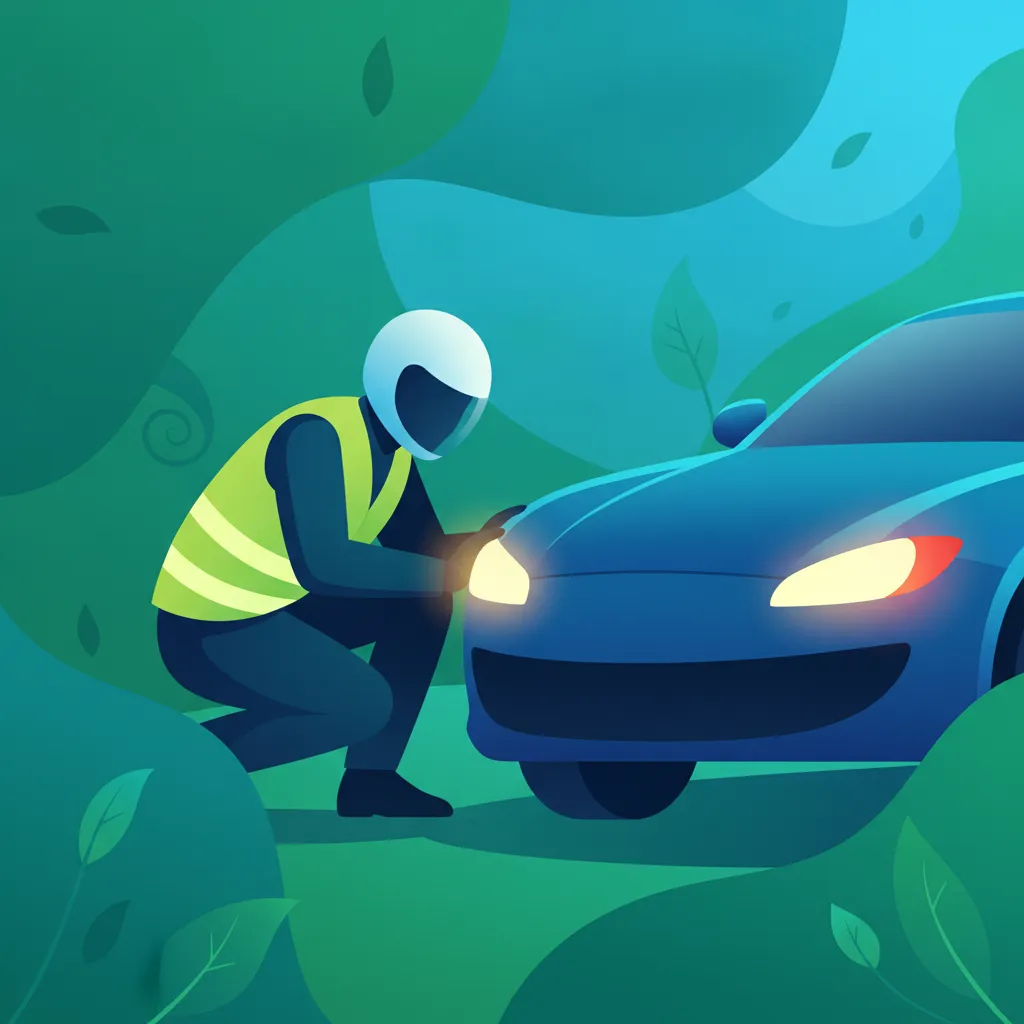
This lesson details the essential protective equipment required for legal and safe moped operation in Italy. It covers legal standards for helmets, the benefits of wearing protective gloves and boots, and the importance of high-visibility clothing. You will also learn the correct use of your vehicle's lighting system for visibility during both day and night.

This lesson focuses on the specific regulations and techniques for operating a heavy vehicle on high-speed motorways. It covers mandatory lane discipline for trucks, the rules governing overtaking other heavy vehicles, and the specific speed limits that apply. Best practices for merging onto and exiting the motorway, maintaining safe following distances, and using the hard shoulder only in genuine emergencies are also detailed.
This lesson bridges the gap between general traffic laws and their specific application to heavy goods vehicles. It examines how rules regarding speed limits, lane discipline, overtaking, and priority are modified or have special considerations for trucks due to their size, weight, and reduced maneuverability. Drivers will learn to correctly interpret road signs and signals within the context of operating a large vehicle, ensuring safe and compliant integration with other traffic.

This lesson provides a detailed overview of the legal framework for load securing in Italy, focusing on the relevant articles of the Codice della Strada. It outlines the driver's legal responsibility for ensuring the load is secure and covers the standards that securing equipment must meet. Learners will be made aware of the significant fines and other penalties that can be imposed for violations, reinforcing the importance of diligent compliance.
This lesson provides a detailed breakdown of the Italian goods vehicle licence categories, explaining the criteria that define each one. It covers the maximum authorized mass (MAM), vehicle configurations such as rigid trucks and articulated combinations, and the specific permissions granted by the C1, C1E, C, and CE licenses. Understanding these distinctions is fundamental to ensuring legal operation and choosing the correct qualification for specific transport tasks and vehicle types.

This lesson delves into the specific articles of the Italian Codice della Strada that apply to heavy goods vehicles. It outlines the core legal and professional obligations of a driver, including the heightened duty of care owed to other road users and the responsibility for the vehicle's roadworthiness and load. Learners will understand the legal consequences of non-compliance, such as fines and sanctions, reinforcing the importance of adhering to all traffic regulations.
Learn essential pre-drive checks and maintenance procedures for all vehicle lights, reflectors, and protective guards. Ensure your heavy vehicle is compliant and safe for Italian roads, covering common violations.
This lesson provides a structured, step-by-step guide to conducting a thorough pre-drive inspection. It outlines a systematic walk-around procedure, covering critical checks of tyres, wheels, lights, brakes, fluid levels, mirrors, and load security before starting any journey. Emphasizing this daily routine helps instill the professional habit of verifying vehicle roadworthiness and identifying potential issues before they become dangerous on the road.
This lesson provides a comprehensive overview of the essential documentation required for both the driver and the vehicle. It covers the driver's license (patente), CQC card, vehicle registration (carta di circolazione), insurance certificate, and transport-specific documents like the cargo manifest. Learners will understand the importance of ensuring all documents are valid and readily available for inspection by authorities to avoid legal penalties and operational delays.
This lesson provides a comprehensive guide to a vehicle's lighting systems and their correct use according to the Codice della Strada. It explains the functions of low beams, high beams, fog lights, and daytime running lights, detailing when each should be used to ensure visibility for the driver and by other road users. Proper use of lighting is critical for safety during night driving and in conditions of poor visibility.
This lesson explains the function of the different classes of mirrors required on a heavy goods vehicle, including the main, wide-angle, and close-proximity (kerb) mirrors. It provides a systematic method for adjusting each mirror correctly from the driver's seating position to create the widest possible field of vision and minimize blind spots. Proper mirror setup is the foundation of safe observation and maneuvering.
This lesson explains the difference between daily checks and long-term scheduled maintenance. It covers the legal requirement for periodic technical inspections ('revisione') to certify a vehicle's roadworthiness and the importance of adhering to manufacturer-recommended service intervals. Learners will understand their crucial role in reporting any mechanical defects promptly to ensure issues are rectified, maintaining the vehicle's safety and reliability over its service life.

This lesson provides a step-by-step guide for managing a vehicle breakdown safely. It reinforces the procedure for stopping on the hard shoulder, activating hazard lights, and placing a warning triangle at the correct distance. The lesson emphasizes the importance of wearing high-visibility clothing, exiting the vehicle from the side away from traffic, and waiting in a safe location before contacting a roadside assistance service.
This lesson focuses on the vital systems for visibility and communication: mirrors, lighting, and signals. It provides instruction on the proper adjustment of mirrors to minimize blind spots and the correct use of headlamps, indicators, and brake lights as per Italian regulations. The content underscores how maintaining these systems in full working order is crucial for being seen and signalling intentions clearly in traffic.
This lesson provides a detailed overview of the legal framework for load securing in Italy, focusing on the relevant articles of the Codice della Strada. It outlines the driver's legal responsibility for ensuring the load is secure and covers the standards that securing equipment must meet. Learners will be made aware of the significant fines and other penalties that can be imposed for violations, reinforcing the importance of diligent compliance.
This lesson details three interconnected and critical safety areas: tyres, suspension, and wheels. It teaches drivers how to conduct thorough visual inspections of tyres for correct inflation, sufficient tread depth, and any signs of damage. The lesson also explains the function of different suspension types and emphasizes the absolute importance of checking that all wheel fastenings are secure to prevent catastrophic failure.

This lesson establishes a crucial routine for every rider: the pre-ride technical inspection. It presents a systematic checklist, often remembered by acronyms, to verify the condition of essential components before starting a journey. Learners will understand how to check tyre pressures, brake function, fluid levels, lights, and final drive systems to prevent mechanical issues and enhance safety on the road.
Find clear answers to common questions learners have about Lights, Reflectors, and Side Guards. Learn how the lesson is structured, which driving theory objectives it supports, and how it fits into the overall learning path of units and curriculum progression in Italy. These explanations help you understand key concepts, lesson flow, and exam focused study goals.
Side guards are designed to prevent pedestrians, cyclists, and motorcyclists from falling under the wheels of a large vehicle in the event of a side-impact collision. They significantly increase road safety in urban environments.
Yes, combination vehicles must ensure that all lighting and reflective signals are clearly visible on both the tractor unit and the trailer. You must ensure electrical connections are secure so that all trailer lights function in sync with the tractor.
Keeping lights and reflectors clean is a legal obligation under the Codice della Strada. Failing to maintain them can lead to significant fines, points on your professional license, or the vehicle being declared temporarily unroadworthy.
Exam questions often present scenarios about pre-drive checks or the purpose of specific safety devices. You may be asked to identify which safety systems are required to protect vulnerable users or how to verify the functionality of rear lighting.
Start searching now to pinpoint exactly which Italian driving theory topics, road signs, or traffic rules you need to master. Use our advanced filters to build a custom practice session and ensure you're fully prepared for every aspect of your official driving licence exam.