
Mastering the rules for personal transport devices is a critical part of modern driving theory in Poland. This guide clarifies the priority order for scooter riders, ranging from mandatory bike paths to the strict conditions required for sidewalk usage. By understanding these legal boundaries and upcoming legislative updates, you will be prepared to answer exam questions accurately and navigate Polish roads safely.
Article content overview
As personal mobility devices like electric scooters become a staple of urban transport in Poland, understanding the legal framework governing their use is essential for both daily commuters and students preparing for their driving theory exam. The Polish Highway Code (Prawo o ruchu drogowym) provides specific regulations that categorize electric scooters as unique vehicles, requiring riders to follow strict hierarchy rules when choosing where to travel. Mastering these rules is not only vital for your safety but is frequently tested in the official driving theory exam to ensure road users understand how to interact with these devices.
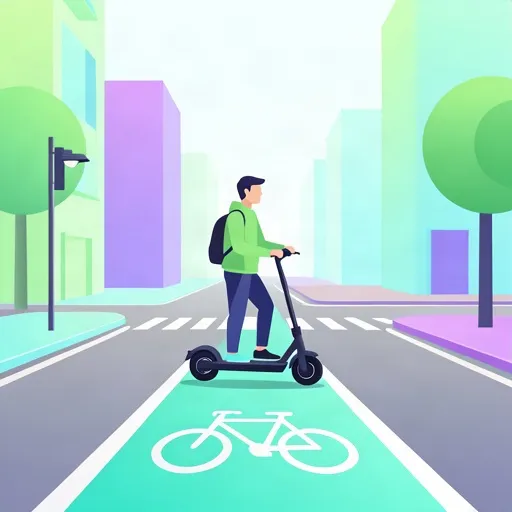
When riding an electric scooter in Poland, you must follow a clear priority order regarding which part of the road infrastructure you are permitted to use. The fundamental rule is to prioritize safety and dedicated infrastructure over shared spaces.
If you choose to ride on the sidewalk, the law places a heavy responsibility on you as the operator. You must drive at a speed similar to that of a pedestrian, do not obstruct traffic, and at all times, you must yield to pedestrians, who always hold the right-of-way on sidewalks.
Beyond positioning, the Polish authorities mandate certain technical and behavioral standards. It is a common misconception that electric scooters are simply "toys"; however, the law treats them as vehicles, meaning they are subject to strict prohibitions.
Remember that it is strictly forbidden to tow another electric scooter or any other vehicle while riding your device. Additionally, do not carry other people, animals, or cargo that would impede your control of the scooter.
For the purpose of your theory exam, it is important to remember that when passing an electric scooter, you are not legally obliged to maintain a 1-meter lateral distance as you would with a bicycle, though practicing a safe distance is always recommended for collision avoidance. Furthermore, the maximum design speed permitted for an electric scooter is 20 km/h. If a device can exceed this speed through factory settings or illegal modifications, it may be reclassified as a moped, which carries significantly heavier legal consequences, including the requirement for registration, insurance, and a valid driving license.
The regulatory landscape for personal mobility devices in Poland is evolving to increase road safety for younger users. Starting March 3, 2026, new age requirements will be enforced, establishing a minimum age of 13 years for individuals to ride an electric scooter on public roads. Additionally, from June 3, 2026, riders under the age of 16 will be required to wear a protective helmet, a measure designed to mitigate the severity of potential head injuries in urban traffic.
These changes are significant for anyone studying for their driving license, as future theory exams may include situational questions regarding the responsibilities of car drivers when interacting with younger, vulnerable road users on scooters.
Understanding these rules is only half the battle. Practical application through sample questions is the most effective way to identify gaps in your knowledge and prepare for the nuances of the exam.
This article covers the Polish legal framework for electric scooters under the Polish Highway Code, emphasizing a strict three-tier priority system for where riders may travel. Key rules include mandatory use of bicycle lanes, the 30 km/h road threshold for carriageway use, and pedestrian-speed requirements for sidewalk riding. The content clarifies that e-scooters have a maximum design speed of 20 km/h and that exceeding this through modifications can reclassify the device as a moped. Upcoming 2026 regulations will introduce age restrictions (13+ minimum) and helmet requirements for riders under 16, changes that may appear in future theory exams.
A short set of high-value points that capture the most important ideas from this article.
E-scooters must follow a strict priority: use a bicycle lane when available, then the road if the speed limit is 30 km/h or less, and only use sidewalks as a last resort when the road speed limit exceeds 30 km/h
On sidewalks, e-scooter riders must drive at pedestrian speed, never obstruct traffic, and always yield right-of-way to pedestrians
The maximum permitted design speed for an e-scooter is 20 km/h; devices that can exceed this speed may be legally reclassified as mopeds with registration, insurance, and license requirements
No mandatory 1-meter lateral distance applies when passing e-scooters, unlike the rule for bicycles, though safe passing distance is still recommended
New legislation effective March 2026 introduces a minimum age of 13 for e-scooter riders, and June 2026 mandates helmets for riders under 16
Bicycle lane first, road if speed limit ≤30 km/h, sidewalk only if road speed exceeds 30 km/h
Pedestrians always hold unconditional right-of-way on sidewalks regardless of e-scooter presence
Towing other vehicles, carrying passengers, animals, or impeding cargo is strictly prohibited
Exceeding the 20 km/h design speed can transform legal status from e-scooter to moped with heavier penalties
Helmet requirement for under-16s starts June 2026; minimum riding age of 13 starts March 2026
Assuming e-scooters always have the same passing distance rules as bicycles—they do not; the 1-meter lateral distance rule does not apply
Believing any speed modification is harmless—illegal modifications can reclassify the device as a moped requiring registration and a license
Riding on sidewalks whenever convenient rather than only when the road speed limit exceeds 30 km/h and no bike path exists
Carrying a second person on the e-scooter, which is prohibited regardless of the device's capabilities
Assuming e-scooters are exempt from safety regulations—they are treated as vehicles under Polish law
Article content overview
A short set of high-value points that capture the most important ideas from this article.
E-scooters must follow a strict priority: use a bicycle lane when available, then the road if the speed limit is 30 km/h or less, and only use sidewalks as a last resort when the road speed limit exceeds 30 km/h
On sidewalks, e-scooter riders must drive at pedestrian speed, never obstruct traffic, and always yield right-of-way to pedestrians
The maximum permitted design speed for an e-scooter is 20 km/h; devices that can exceed this speed may be legally reclassified as mopeds with registration, insurance, and license requirements
No mandatory 1-meter lateral distance applies when passing e-scooters, unlike the rule for bicycles, though safe passing distance is still recommended
New legislation effective March 2026 introduces a minimum age of 13 for e-scooter riders, and June 2026 mandates helmets for riders under 16
Bicycle lane first, road if speed limit ≤30 km/h, sidewalk only if road speed exceeds 30 km/h
Pedestrians always hold unconditional right-of-way on sidewalks regardless of e-scooter presence
Towing other vehicles, carrying passengers, animals, or impeding cargo is strictly prohibited
Exceeding the 20 km/h design speed can transform legal status from e-scooter to moped with heavier penalties
Helmet requirement for under-16s starts June 2026; minimum riding age of 13 starts March 2026
Assuming e-scooters always have the same passing distance rules as bicycles—they do not; the 1-meter lateral distance rule does not apply
Believing any speed modification is harmless—illegal modifications can reclassify the device as a moped requiring registration and a license
Riding on sidewalks whenever convenient rather than only when the road speed limit exceeds 30 km/h and no bike path exists
Carrying a second person on the e-scooter, which is prohibited regardless of the device's capabilities
Assuming e-scooters are exempt from safety regulations—they are treated as vehicles under Polish law
Explore related topics, search based questions, and concepts that learners often look up when studying Electric Scooter Traffic Rules. These themes reflect real search intent and help you understand how this topic connects to wider driving theory knowledge in Poland.
Find clear and practical answers to common questions learners often have about Electric Scooter Traffic Rules. This section helps explain difficult points, remove confusion, and reinforce the key driving theory concepts that matter for learners in Poland.
If no bicycle path is available, you must use the road, provided the speed limit for motor vehicles on that road does not exceed 30 km/h.
You may use the sidewalk only when there is no bike path available and the road's speed limit exceeds 30 km/h. You must ride at a pedestrian speed, yield to pedestrians, and not obstruct them.
The maximum permitted speed for an electric scooter in Poland is 20 km/h.
Yes, legislative updates starting in 2026 will introduce a minimum age of 13 for riding on public roads and a mandatory helmet requirement for riders under 16.
After finding your specific article, continue your targeted learning by exploring related topics or diving deeper into practice questions. Our extensive library ensures you have all the resources needed to confidently prepare for your Polish driving license theory exam. Discover more guides and solidify your understanding of Polish road rules.