
Learners and vehicle owners will gain a clear understanding of why direct injection engines require specific LPG technology compared to traditional systems. We break down the technical necessity of 'dotrysk' (petrol injection) for engine safety and the critical importance of professional diagnostics to avoid costly damage. This guide provides the essential knowledge needed to make informed decisions about vehicle maintenance and long-term fuel savings within the Polish automotive market.
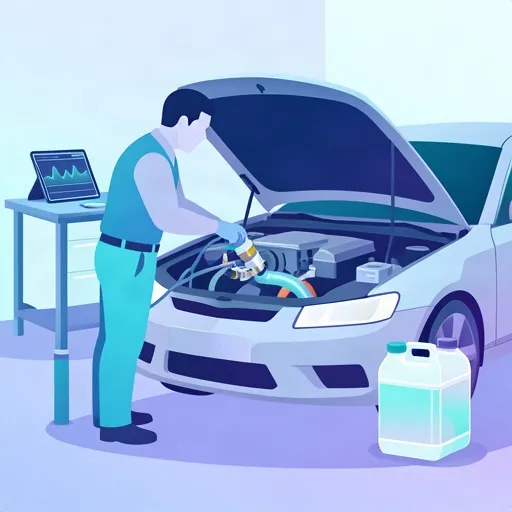
Article content overview
For many drivers in Poland, the rising cost of petrol is a primary motivator for considering alternative fuel sources. Liquefied Petroleum Gas (LPG) has long been a popular choice for cost-conscious vehicle owners, yet the transition to modern TSI (Turbocharged Stratified Injection) direct injection engines introduces significant technical complexities. Unlike traditional indirect injection engines, where fuel is mixed with air before entering the combustion chamber, TSI engines inject fuel directly into the cylinder at very high pressure. This engineering difference means that standard LPG kits are often incompatible, and improper installation can lead to severe engine damage.
The primary reason why TSI engines require specialized LPG technology is the location of the fuel injectors. In a direct injection engine, the petrol injectors are positioned directly inside the combustion chamber, where they are exposed to extreme heat and pressure. When a car runs solely on LPG, the petrol injectors stop functioning, which can lead to overheating and irreparable damage to the injector tips.
To protect these components, modern LPG systems for direct injection engines are programmed to perform a "dotrysk," or a small, continuous injection of petrol while the engine is running on gas. This ensures that the petrol injectors remain cooled and lubricated throughout the combustion process. Because of this necessity, a vehicle converted to LPG will never run on 100% gas; it will always consume a small percentage of petrol, which must be factored into your long-term savings projections.
Never attempt to install a standard indirect injection LPG kit into a TSI engine. Doing so will bypass necessary safety protocols, lead to premature engine failure, and likely cause the vehicle to fail its mandatory periodic technical inspection.
Installing an LPG system for a direct injection engine is a significant investment, typically ranging from 5,000 PLN to 8,000 PLN. This is substantially higher than the cost of a traditional system, which usually fluctuates around 4,000 PLN. Because the installation cost is higher and the engine continues to consume some petrol, the "break-even" point—the moment your fuel savings actually cover the cost of the hardware—will take longer to reach.
Before committing to the conversion, you should calculate your annual mileage. If you drive fewer than 15,000 kilometers per year, the recovery period may span several years, potentially outlasting the timeframe during which you plan to own the vehicle. Conversely, for high-mileage drivers, the cumulative savings from lower LPG fuel costs can make the installation a financially sound decision.
| Factor | Standard Indirect Injection | TSI Direct Injection |
|---|---|---|
| System Cost | ~4,000 PLN | 5,000–8,000 PLN |
| Petrol Usage | Negligible (start-up only) | Required (constant dotrysk) |
| Compatibility | Universal | Engine-code specific |
| Diagnostic Need | Moderate | Very High |
Compatibility with TSI engines is not defined by the model or engine capacity alone; it is defined by the specific engine code of your vehicle. Professional workshops must utilize systems explicitly tested and calibrated for your exact engine variant. Before any installation, a thorough diagnostic assessment of the engine’s condition is mandatory. If the engine already suffers from poor compression, worn valves, or ignition issues, adding an LPG system will only exacerbate these problems, leading to expensive repairs.
After installation, regular maintenance is more critical than for standard petrol vehicles. You must strictly adhere to the service intervals specified by the LPG manufacturer, particularly concerning the filters and the calibration of the petrol-to-gas injection ratio. Failing to maintain the system correctly can trigger "check engine" lights and compromise the long-term longevity of your vehicle’s power plant.
Article content overview
Explore related topics, search based questions, and concepts that learners often look up when studying LPG for TSI Engines. These themes reflect real search intent and help you understand how this topic connects to wider driving theory knowledge in Poland.
Find clear and practical answers to common questions learners often have about LPG for TSI Engines. This section helps explain difficult points, remove confusion, and reinforce the key driving theory concepts that matter for learners in Poland.
No, direct injection engines like TSI require specialized, engine-code-specific LPG systems that differ significantly from standard indirect injection installations.
Direct injection engines require a small amount of petrol injection, known as 'dotrysk', during LPG operation to cool the petrol injectors and maintain optimal combustion chamber conditions.
Profitability depends on your average annual mileage; typically, you must drive between 15,000 and 20,000 kilometers per year to offset the higher installation costs of TSI-compatible systems.
Improperly matched or installed systems can lead to severe damage to the engine's fuel injectors and cylinders, necessitating professional diagnostics and compliance checks.
After finding your specific article, continue your targeted learning by exploring related topics or diving deeper into practice questions. Our extensive library ensures you have all the resources needed to confidently prepare for your Polish driving license theory exam. Discover more guides and solidify your understanding of Polish road rules.