Drivers in Poland must be aware that recent amendments to traffic law have tightened the rules surrounding penalty points and re-education courses. This guide explains which specific violations are now ineligible for point reduction, helping learners and experienced drivers understand the long-term impact of serious road traffic infractions.
Article content overview
For any aspiring driver in Poland, understanding the consequences of traffic violations is as vital as knowing road signs and priority rules. Since June 3, 2026, the Polish traffic law system has undergone significant changes aimed at improving road safety. One of the most impactful updates involves the restriction of penalty point reduction through state-run re-education courses at Regional Road Traffic Centers (WORD).
These reforms were introduced to ensure that drivers who commit serious offenses cannot easily "clean" their records. If you are preparing for your theory exam, it is essential to recognize that not all violations are treated equally. Certain dangerous behaviors now result in points that will remain on your record until they expire naturally, regardless of your willingness to attend a paid training session.
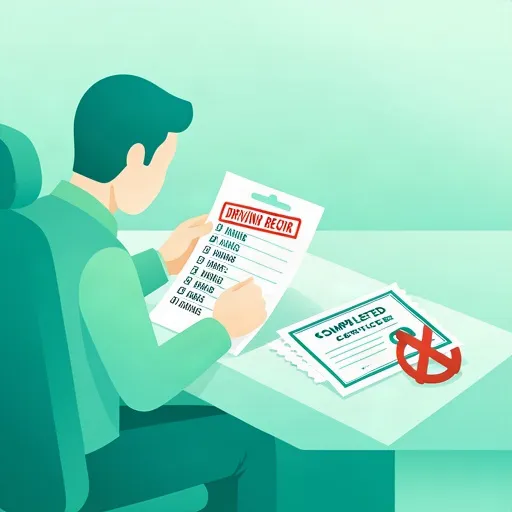
Before the 2026 reform, drivers could periodically clear a portion of their penalty points by completing a simple re-education course at a local WORD center. While these courses remain available, the scope of what they can "erase" has been strictly curtailed. The legislative intent is clear: to prevent repeat offenders from avoiding the long-term consequences of reckless driving.
By limiting the ability to reduce points for the most severe infractions, authorities aim to force a change in driving behavior. If you accumulate too many points—a limit which is strictly enforced—you risk losing your driving privileges and having to retake your state exam. For students, this reinforces the importance of defensive driving and strictly adhering to speed limits and signaling requirements from the very first day you get behind the wheel.
The new regulations explicitly list categories of violations for which you cannot use a re-education course to reduce your point total. This list includes some of the most common but dangerous road behaviors. Notably, the use of a mobile phone while driving—which carries a heavy penalty of 12 points—is now among the offenses for which points cannot be removed through a course.
| Violation Category | Examples | Point Impact |
|---|---|---|
| Serious Road Hazards | Causing an accident with injury | 12+ pts |
| Impaired Driving | Alcohol or similar substance influence | 15 pts |
| Dangerous Speeding | Exceeding limit by > 30 km/h | Varies |
| Distracted Driving | Holding a phone while driving | 12 pts |
| Right-of-Way Violations | Failure to yield to a pedestrian | High |
Be aware that the list of non-reducible offenses is extensive. Always check the current legal status of any violation, as the 2026 amendments specifically target maneuvers that pose an immediate threat to other road users, including pedestrians and cyclists.
In the Polish driving theory exam, you may encounter questions regarding the legal consequences of your actions. Examiners expect you to understand not just the rules of the road, but also the severity of the penalties associated with breaking them. When you see a question about speed limits or mobile phone usage, remember that these aren't just "traffic fines"; they represent serious breaches of safety that carry long-lasting record implications.
If you are asked about the consequences of speeding on a single-carriageway road outside a built-up area, remember that the law has been tightened. Exceeding the speed limit by more than 50 km/h now leads to an automatic three-month suspension of your driving license, a measure designed to curb high-speed accidents on rural roads.
For new drivers, the path to maintaining a clean license is built on consistency. Every violation, from illegal overtaking to failing to stop at a red light, adds to your point tally. If you find yourself approaching the threshold, remember that the "safety net" of a re-education course is no longer reliable for the most dangerous infractions.
A system of administrative measures in Poland where points are assigned for specific traffic violations, leading to license suspension or mandatory re-examination if a threshold is exceeded.
The 2026 Polish traffic law reforms have significantly restricted the ability to reduce penalty points for serious offenses through WORD re-education courses. Offenses such as mobile phone use (12 points), impaired driving (15 points), and dangerous speeding now result in permanent point records. The system now forces drivers who commit severe infractions to face long-term consequences without the option of course-based reduction. For theory exam preparation, understanding the specific point values and which violations are non-reducible is essential for both exam success and maintaining a valid Polish driving license.
A short set of high-value points that capture the most important ideas from this article.
Since June 2026, serious traffic offenses in Poland can no longer have their penalty points reduced through WORD re-education courses.
Using a mobile phone while driving (12 points) and driving under the influence (15 points) are permanently blocked from point reduction.
Drivers exceeding speed limits by more than 50 km/h on single-carriageway roads face automatic three-month license suspension.
The reformed system aims to prevent repeat offenders from easily clearing their records after dangerous driving.
New drivers must treat defensive driving as essential from day one, as the safety net of re-education courses no longer covers severe infractions.
Penalty points for serious violations remain on your record until they expire naturally under the new 2026 rules.
WORD (Wojewódzki Ośrodek Ruchu Drogowego) manages both exams and re-education courses in Poland.
Exceeding speed limits by more than 30 km/h falls into the dangerous speeding category with non-reducible points.
The point accumulation threshold in Poland can result in license suspension and mandatory state exam retake.
Recidivism (repeating the same offense) leads to doubled fines under the tightened regulations.
Assuming all penalty points can be cleared by attending a paid re-education course—this no longer applies to serious offenses.
Underestimating the severity of mobile phone use while driving, which now carries 12 non-reducible points.
Believing that high-speed driving on rural roads carries only moderate consequences, when exceeding limits by >50 km/h triggers automatic three-month suspension.
Confusing the new 2026 restrictions with the previous system where periodic course completion could erase a portion of points.
Overlooking that failure to yield to pedestrians carries high point values that cannot be reduced through courses.
Article content overview
A short set of high-value points that capture the most important ideas from this article.
Since June 2026, serious traffic offenses in Poland can no longer have their penalty points reduced through WORD re-education courses.
Using a mobile phone while driving (12 points) and driving under the influence (15 points) are permanently blocked from point reduction.
Drivers exceeding speed limits by more than 50 km/h on single-carriageway roads face automatic three-month license suspension.
The reformed system aims to prevent repeat offenders from easily clearing their records after dangerous driving.
New drivers must treat defensive driving as essential from day one, as the safety net of re-education courses no longer covers severe infractions.
Penalty points for serious violations remain on your record until they expire naturally under the new 2026 rules.
WORD (Wojewódzki Ośrodek Ruchu Drogowego) manages both exams and re-education courses in Poland.
Exceeding speed limits by more than 30 km/h falls into the dangerous speeding category with non-reducible points.
The point accumulation threshold in Poland can result in license suspension and mandatory state exam retake.
Recidivism (repeating the same offense) leads to doubled fines under the tightened regulations.
Assuming all penalty points can be cleared by attending a paid re-education course—this no longer applies to serious offenses.
Underestimating the severity of mobile phone use while driving, which now carries 12 non-reducible points.
Believing that high-speed driving on rural roads carries only moderate consequences, when exceeding limits by >50 km/h triggers automatic three-month suspension.
Confusing the new 2026 restrictions with the previous system where periodic course completion could erase a portion of points.
Overlooking that failure to yield to pedestrians carries high point values that cannot be reduced through courses.
Explore related topics, search based questions, and concepts that learners often look up when studying Penalty Point Reduction Rules. These themes reflect real search intent and help you understand how this topic connects to wider driving theory knowledge in Poland.
Find clear and practical answers to common questions learners often have about Penalty Point Reduction Rules. This section helps explain difficult points, remove confusion, and reinforce the key driving theory concepts that matter for learners in Poland.
No. Under the current regulations, many serious traffic offenses—such as using a mobile phone while driving or dangerous speeding—are strictly excluded from point reduction through these courses.
Eligible drivers may participate in a re-education course at a Provincial Road Traffic Center (WORD) once every six months, which allows for the reduction of six points for non-excluded offenses.
No. Using a mobile phone in a way that requires holding the device while driving is considered a serious violation that results in 12 penalty points, which cannot be reduced through a re-education course.
The list of offenses is defined by the Ministry of Interior and Administration and published in the Dziennik Ustaw, which specifies which violations carry permanent penalty points.
After finding your specific article, continue your targeted learning by exploring related topics or diving deeper into practice questions. Our extensive library ensures you have all the resources needed to confidently prepare for your Polish driving license theory exam. Discover more guides and solidify your understanding of Polish road rules.