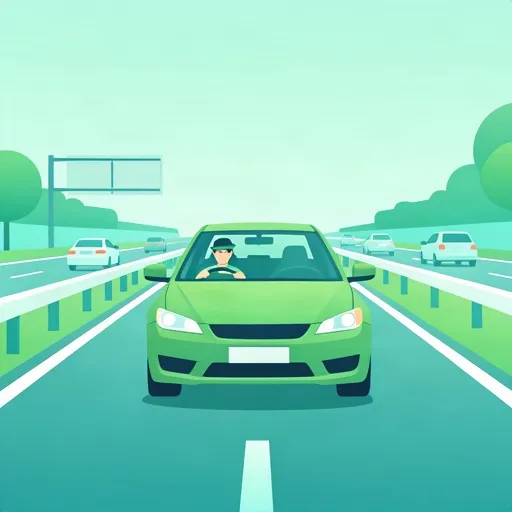
Merging onto a highway is a high-stakes maneuver that requires precise speed management and adherence to Polish traffic regulations. This guide breaks down the legal requirements for using acceleration lanes and explains why improper merging is a major cause of traffic incidents and failed driving tests. You will learn how to safely join the traffic flow while respecting the priority rights of vehicles already on the main carriageway.
Article content overview
Entering a high-speed motorway or expressway is one of the most stressful maneuvers for learner drivers in Poland. While it seems straightforward in theory, the practical reality of adjusting your vehicle's speed to match the heavy traffic flow requires precision, confidence, and a deep understanding of Polish traffic law. Many students fail their practical exams or create dangerous road situations simply because they misunderstand how to use the acceleration lane (pas rozbiegowy) effectively.
A common misconception among new drivers is that traffic already on the motorway must "make room" for those entering, similar to a zipper merge in slow-moving city traffic. According to Polish Road Traffic Law (Prawo o ruchu drogowym), specifically Article 22, the driver changing lanes or entering a road is responsible for ensuring the maneuver is safe and for yielding to those already in the target lane.
When you enter a motorway, you are joining a stream of vehicles often traveling at 120–140 km/h. If you enter at 60 km/h, you force other drivers to brake abruptly, which not only causes a "phantom traffic jam" but is a frequent cause of failed driving tests. You must utilize the entire length of the acceleration lane to build up sufficient speed before attempting to move into the main carriageway.
A dedicated lane designed for vehicles to increase their speed to match the traffic flow on the main carriageway before merging. It is legally considered part of the motorway, meaning stopping here is strictly prohibited unless there is an emergency.
The most dangerous errors occur when drivers treat the acceleration lane as an extension of an intersection or a place to stop and wait for a "gap." Here are the three most frequent mistakes that lead to exam failures and accidents:
While the acceleration lane helps you join the traffic, it is supported by specific traffic signs that dictate how you approach the motorway entry. Understanding these signs is critical for both your theory exam and your safety on Polish roads.
During the Polish driving theory exam, you will likely encounter questions about motorway etiquette and the specific responsibilities of drivers at entry points. Examiners look for drivers who understand that they are guests in the main traffic stream and that they must adapt to it, not the other way around.
Never use the emergency lane (pas awaryjny) to bypass traffic or as an extension of the acceleration lane. The emergency lane is reserved strictly for broken-down vehicles or emergency services. Driving on it is a severe traffic violation.
Entering a Polish motorway requires using the entire acceleration lane to reach the 120-140 km/h speed of main traffic before safely merging, as the merging driver bears full responsibility under Article 22 of the Polish Road Traffic Law. Stopping on the acceleration lane is prohibited and using the emergency lane for anything other than breakdowns is a severe violation. The Give Way (A-7) sign indicates you must yield to existing traffic - it does not give you the right to wait for a gap. Key Polish terminology to master includes pas rozbiegowy (acceleration lane), pas ruchu (travel lane), and pas awaryjny (emergency lane).
A short set of high-value points that capture the most important ideas from this article.
The merging driver bears full responsibility for safe entry and must yield to traffic already on the motorway under Polish Road Traffic Law Article 22
The entire acceleration lane (pas rozbiegowy) must be used to build speed to match the 120-140 km/h traffic flow before merging
Stopping on the acceleration lane is strictly prohibited unless there is an emergency
The A-7 Give Way sign applies to the junction entry, but the acceleration lane itself is your tool to reach merge speed, not a waiting area
Emergency lane (pas awaryjny) is reserved exclusively for breakdowns and emergency services
You must match traffic speed before merging - entering at 60 km/h when traffic flows at 120+ km/h creates dangerous situations and causes exam failures
The acceleration lane is legally part of the motorway, so stopping here is a traffic violation
Key terms: pas rozbiegowy (acceleration lane), pas ruchu (travel lane), włączenie się do ruchu (joining traffic), pas awaryjny (emergency lane)
Traffic on the main carriageway has priority - you must adapt your speed and timing to fit into an existing gap
Always signal your intention clearly and in advance when merging
Stopping at the beginning of the acceleration lane instead of using its full length to build speed
Merging at significantly lower speed than main traffic, forcing other drivers to brake abruptly
Misinterpreting the A-7 sign as permission to wait for a gap rather than yielding at the junction
Using the emergency lane (pas awaryjny) to bypass slow traffic or as an extension of the acceleration lane
Failing to properly observe mirrors and blind spots before initiating the merge maneuver
Article content overview
A short set of high-value points that capture the most important ideas from this article.
The merging driver bears full responsibility for safe entry and must yield to traffic already on the motorway under Polish Road Traffic Law Article 22
The entire acceleration lane (pas rozbiegowy) must be used to build speed to match the 120-140 km/h traffic flow before merging
Stopping on the acceleration lane is strictly prohibited unless there is an emergency
The A-7 Give Way sign applies to the junction entry, but the acceleration lane itself is your tool to reach merge speed, not a waiting area
Emergency lane (pas awaryjny) is reserved exclusively for breakdowns and emergency services
You must match traffic speed before merging - entering at 60 km/h when traffic flows at 120+ km/h creates dangerous situations and causes exam failures
The acceleration lane is legally part of the motorway, so stopping here is a traffic violation
Key terms: pas rozbiegowy (acceleration lane), pas ruchu (travel lane), włączenie się do ruchu (joining traffic), pas awaryjny (emergency lane)
Traffic on the main carriageway has priority - you must adapt your speed and timing to fit into an existing gap
Always signal your intention clearly and in advance when merging
Stopping at the beginning of the acceleration lane instead of using its full length to build speed
Merging at significantly lower speed than main traffic, forcing other drivers to brake abruptly
Misinterpreting the A-7 sign as permission to wait for a gap rather than yielding at the junction
Using the emergency lane (pas awaryjny) to bypass slow traffic or as an extension of the acceleration lane
Failing to properly observe mirrors and blind spots before initiating the merge maneuver
Explore related topics, search based questions, and concepts that learners often look up when studying Highway Merging Guide. These themes reflect real search intent and help you understand how this topic connects to wider driving theory knowledge in Poland.
Find clear and practical answers to common questions learners often have about Highway Merging Guide. This section helps explain difficult points, remove confusion, and reinforce the key driving theory concepts that matter for learners in Poland.
No. According to Polish traffic law, the driver entering the highway must yield to vehicles already present on the main carriageway. The acceleration lane is not a zipper merge zone.
Stopping on the acceleration lane is highly dangerous and illegal. It is considered part of the highway system; you must adjust your speed to the flow of traffic to merge without forcing others to brake.
The Yield sign (A-7) typically applies to the junction entry point. The acceleration lane itself is a specialized traffic lane intended for you to reach the highway's speed, allowing for a smooth and safe transition into the lane.
If you merge at a significantly lower speed than vehicles on the main carriageway, you force other drivers to brake abruptly or change lanes, creating a high risk of collisions and potentially failing your driving exam.
After finding your specific article, continue your targeted learning by exploring related topics or diving deeper into practice questions. Our extensive library ensures you have all the resources needed to confidently prepare for your Polish driving license theory exam. Discover more guides and solidify your understanding of Polish road rules.