
This lesson dives into the specific road signs and markings essential for Category D bus drivers in Poland. You'll learn to correctly identify and interpret signs for bus lanes (buspas), access restrictions, and temporary diversions, crucial for safe and compliant operation. Understanding these signs is vital for your Polish driving theory exam and for navigating urban and interurban routes effectively while managing passenger expectations. It builds on fundamental traffic law and prepares you for real-world bus maneuvers.
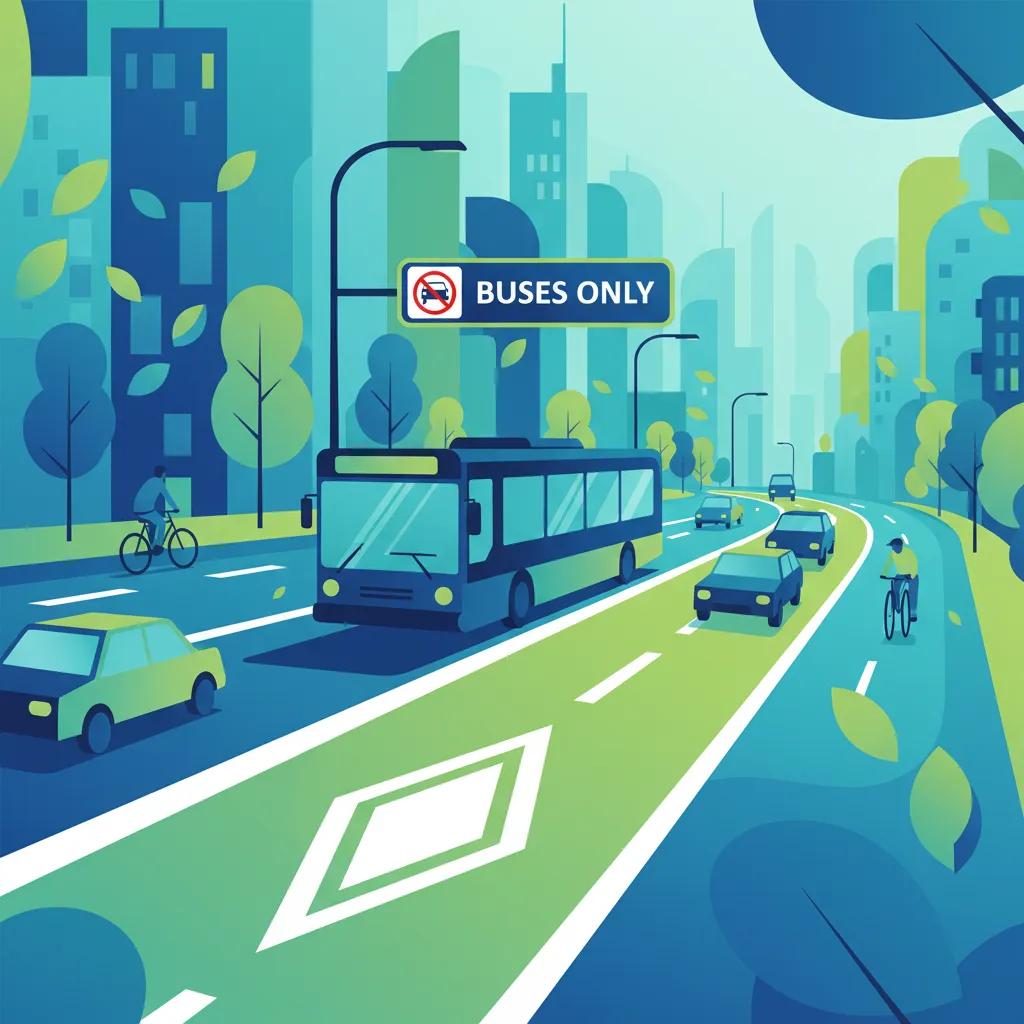
Lesson content overview
Operating a bus safely and efficiently in various traffic environments requires a deep understanding of road signs, especially those that govern public transport. This lesson, part of the Polish Category D Driving Licence Theory Course for Bus Drivers, focuses on traffic signs specifically tailored to bus operations, including dedicated bus lanes, priority rules, and temporary restrictions. Mastering these signs is not merely about compliance; it is fundamental to ensuring passenger safety, adhering to schedules, and upholding the integrity of public transport services.
Road signs specific to bus operations play a pivotal role in managing urban and inter-urban traffic flow. They are designed to create dedicated routes for buses, enhance their punctuality, and reduce conflicts with general traffic. For professional bus drivers, the ability to quickly and accurately identify, interpret, and react to these signs is paramount. Misinterpretation or non-compliance can lead to delays, traffic violations, and, most critically, dangerous situations.
The underlying logic behind these specialized signs is multifaceted. Firstly, safety is enhanced by segregating buses from faster or more maneuverable vehicles, which reduces the potential for collisions involving high-capacity vehicles. Secondly, efficiency is significantly improved through dedicated bus lanes (often referred to as Buspas in Poland), allowing public transport to bypass congestion and maintain reliable schedules. Finally, these signs form the basis for legal enforcement under the Polish Road Traffic Act (Prawo o ruchu drogowym), ensuring accountability and deterring violations.
This lesson builds upon your foundational knowledge of general Polish road sign categories and prepares you for complex urban operations, where lane discipline and interaction with various road users are critical for professional bus drivers.
Dedicated bus lanes are crucial elements of urban infrastructure, designed to give public transport a clear path through congested areas. These lanes are typically indicated by specific signage and often accompanied by distinct road markings.
Dedicated bus lanes are usually marked by a blue rectangular sign featuring a white bus silhouette and a white arrow indicating the lane direction. In Poland, these are commonly known as Buspas.
08:00-20:00. Outside these hours, the lane typically reverts to general traffic.BUS + TAXI.When a lane is designated as a Buspas, buses must travel within it during its operative periods. Conversely, other vehicles are prohibited from entering or using this lane.
The primary legal basis for bus lane rules in Poland is Article 91 §1 of the Polish Road Traffic Act, which explicitly prohibits non-bus vehicles from using a bus lane during its specified operative period. This ensures that buses can maintain their schedules without interference from private vehicles. Exceptions are typically made for emergency vehicles with flashing lights.
Illegal entry into a dedicated bus lane by an unauthorized vehicle can result in significant legal penalties, including fines and demerit points, under the Polish Road Traffic Act.
Despite clear signage, certain misunderstandings regarding bus lanes are common:
Beyond dedicated lanes, specific signs can grant buses priority at intersections or designate official stopping areas. These signs are crucial for efficient public transport operations, allowing buses to maintain flow and safety.
At complex intersections, signs may indicate exclusive turn lanes or grant buses priority over other traffic movements. An example is a sign indicating BUS TURN ONLY (often a blue sign with a white arrow indicating a turn direction and a bus pictogram).
When such a sign is present, the bus may proceed through the intersection in the indicated direction, potentially while other traffic waits. This ensures that large vehicles like buses can complete maneuvers without undue delay or conflict. However, professional drivers must still exercise caution and ensure safety, particularly when pedestrians or other road users might be affected. Article 42 of the Road Traffic Act generally stipulates that traffic signs defining priority must be strictly obeyed.
At designated bus stops, especially those integrated into traffic flow, specific signs may grant temporary priority. A BUS STOP sign, when accompanied by a stop line, may indicate situations where a bus can briefly occupy the intersection to pick up passengers, with other traffic expected to yield.
While a 'BUS STOP' sign may grant certain operational flexibilities, it does not exempt bus drivers from fundamental safety obligations, such as yielding to pedestrians at marked crossings.
A crucial point to remember is that while bus priority helps maintain schedules, it does not supersede all other traffic rules. For example, even with priority, a bus must always yield to pedestrians at marked crossings, as stipulated in Article 13 §1 of the Road Traffic Act. Failing to do so carries severe consequences for passenger safety and legal liability.
Road networks are dynamic, often undergoing construction, maintenance, or being temporarily rerouted for special events. Bus drivers must be adept at recognizing and complying with temporary restriction signs that alter normal bus routes or lane availability.
Temporary restriction signs often take the form of red triangular warning signs with a bus silhouette, sometimes accompanied by a slash (/) indicating a prohibition. Crucially, these signs are almost always supplemented by additional panels that specify the reason for the restriction (e.g., construction, event) and its duration or end date.
When a temporary restriction sign is encountered, bus drivers must immediately adapt their operations. This could involve:
BUS LANE CLOSED – DETOUR VIA STREET X, the driver must follow the alternative route until the normal lane or route is reinstated.It is critical to understand that temporary signs carry the same legal force as permanent signs until their displayed end date or until they are physically removed. This is established under Article 94 §2 of the Road Traffic Act. Ignoring a temporary closure can lead to fines, obstruct construction work, and create hazardous conditions.
Dedicated bus lanes are not simply continuous stretches of road; they have specific, designated entry and exit points where buses are permitted to merge into or leave the lane. These points are marked by small supplementary signs, typically white arrows on a blue background.
These designated points are crucial for maintaining orderly traffic flow and preventing dangerous lane changes. Attempting to enter or exit a bus lane at an unauthorized location can disrupt the flow of both bus traffic and general traffic, increasing the risk of collisions.
Violating entry or exit points can be penalized under Article 91 §2 of the Road Traffic Act, which addresses illegal lane changes within a bus lane. Such actions can lead to fines and demerit points. Beyond legal consequences, improper lane changes pose significant safety risks:
While many bus lanes are exclusive, some are designated for mixed-use, meaning they can be shared by buses and one or more other specific categories of vehicles. These require heightened awareness and careful driving.
In urban environments, it is increasingly common to find lanes that are shared by buses and cyclists. These are typically indicated by a blue lane with both a bus pictogram and a bicycle symbol, potentially with time restrictions.
When operating in a mixed bus and cyclist lane, bus drivers must be acutely aware of vulnerable road users. Cyclists can be unpredictable, have varying speeds, and require ample lateral clearance. Article 91 §3 of the Road Traffic Act permits mixed-use only if explicitly indicated by signs, and it is a bus driver's responsibility to ensure the safety of cyclists.
Similar to cyclist-shared lanes, some Buspas are also open to taxis, particularly during off-peak hours or in specific urban zones. The signage will explicitly show both the bus and taxi symbols.
In these mixed environments, bus drivers must anticipate the behaviors of other professional drivers, who may operate at different speeds or make more frequent stops. Maintaining safe following distances and being prepared for sudden braking or lane positioning changes is essential.
Operating in mixed-use lanes demands extra vigilance from bus drivers:
Professional bus drivers in Poland operate under a strict legal framework that combines national and European regulations. Understanding these rules is crucial for safe and compliant operation.
The Polish Road Traffic Act (Prawo o ruchu drogowym) is the cornerstone of traffic law in Poland. Several articles directly relate to bus operations and the signs discussed in this lesson:
Beyond national law, EU Regulation 101/2004 (concerning driver licensing) mandates that Category D licence holders must demonstrate comprehensive knowledge of bus-specific signs in their theory examinations. This highlights the European-wide importance of these regulations for professional drivers.
Non-compliance with bus-specific road signs and regulations carries significant penalties. These are typically defined in the Ustawa o kierujących pojazdami (Vehicle Drivers Act) and vary based on the severity and nature of the violation.
Fines for illegal bus lane use can be substantial (e.g., up to 200 PLN) and often come with demerit points that accumulate on a driver's license. Repeated violations can lead to licence suspension.
These penalties serve to deter non-compliance, reinforce public transport reliability, and ensure the safety of all road users. For a professional bus driver, maintaining a clean driving record is paramount for continued employment and public trust.
The application of bus-specific road signs is not static; it changes with environmental factors and vehicle dynamics. Professional bus drivers must be prepared to adapt their interpretation and actions.
The characteristics of a bus, especially when fully loaded with passengers, profoundly impact its maneuverability:
The presence of vulnerable road users (pedestrians, cyclists) requires heightened caution, especially in urban bus lanes:
Always assume vulnerable road users may not have seen your bus. Proactive defensive driving, including reducing speed and being prepared to stop, is the safest approach.
Mastering bus-specific road signs is a continuous process that combines theoretical knowledge with practical experience. This lesson provides the foundational understanding required for safe and compliant bus operations. For aspiring professional drivers undergoing the Polish Category D Driving Licence Theory Course, reinforcing this knowledge through practice and real-world observation is essential.
This lesson covers Polish road signs specific to bus operations, focusing on dedicated bus lanes (Buspas), which may be permanent or time-controlled. Key legal provisions include Article 91 restrictions on unauthorized vehicle use and Article 94 establishing temporary sign validity. Buses must use designated entry/exit points and yield to pedestrians at crossings. Temporary restrictions and mixed-use lanes (with cyclists or taxis) require careful interpretation of supplementary signage and heightened awareness of vulnerable road users. Understanding these signs is essential for Category D theory exam preparation and safe professional bus operation in Polish urban environments.
A short set of high-value points that capture the most important learning from this lesson.
Dedicated bus lanes (Buspas) in Poland come in permanent and time-controlled variants, with operating hours shown on supplementary signs.
Unauthorized vehicles are prohibited from using bus lanes during operative periods under Polish traffic law, with significant penalties for violations.
Buses must use only designated entry and exit points when merging into or leaving dedicated bus lanes.
Temporary restriction signs carry the same legal force as permanent signs until their displayed end date.
Mixed-use lanes (bus + cyclist or bus + taxi) require heightened awareness and specific authorization indicated by combined signage.
Explore all units and lessons included in this driving theory course.
Article 91 of the Polish Road Traffic Act prohibits non-bus vehicles from using bus lanes during operative periods.
Temporary signs have identical legal weight to permanent signs until explicitly removed or expired.
Mixed-use of bus lanes with cyclists or taxis is only permitted when explicitly authorized by signage.
Buses must always yield to pedestrians at marked crossings, regardless of priority lane status.
Designated entry/exit points for bus lanes are marked with directional arrow signs (left for entry, right for exit).
Confusing time-controlled bus lanes with permanent ones, either entering illegally outside operating hours or avoiding the lane when it is legally open.
Assuming buses must exclusively use the bus lane at all times, when some configurations permit use of adjacent general lanes.
Attempting to enter or exit a bus lane at unauthorized locations rather than at designated entry/exit points.
Failing to yield to pedestrians at zebra crossings within bus lanes, not realizing lane priority does not override pedestrian rights.
Passing cyclists too closely in mixed-use lanes, without maintaining adequate lateral clearance of at least 1.5 meters.
Lesson content overview
A short set of high-value points that capture the most important learning from this lesson.
Dedicated bus lanes (Buspas) in Poland come in permanent and time-controlled variants, with operating hours shown on supplementary signs.
Unauthorized vehicles are prohibited from using bus lanes during operative periods under Polish traffic law, with significant penalties for violations.
Buses must use only designated entry and exit points when merging into or leaving dedicated bus lanes.
Temporary restriction signs carry the same legal force as permanent signs until their displayed end date.
Mixed-use lanes (bus + cyclist or bus + taxi) require heightened awareness and specific authorization indicated by combined signage.
Explore all units and lessons included in this driving theory course.
Article 91 of the Polish Road Traffic Act prohibits non-bus vehicles from using bus lanes during operative periods.
Temporary signs have identical legal weight to permanent signs until explicitly removed or expired.
Mixed-use of bus lanes with cyclists or taxis is only permitted when explicitly authorized by signage.
Buses must always yield to pedestrians at marked crossings, regardless of priority lane status.
Designated entry/exit points for bus lanes are marked with directional arrow signs (left for entry, right for exit).
Confusing time-controlled bus lanes with permanent ones, either entering illegally outside operating hours or avoiding the lane when it is legally open.
Assuming buses must exclusively use the bus lane at all times, when some configurations permit use of adjacent general lanes.
Attempting to enter or exit a bus lane at unauthorized locations rather than at designated entry/exit points.
Failing to yield to pedestrians at zebra crossings within bus lanes, not realizing lane priority does not override pedestrian rights.
Passing cyclists too closely in mixed-use lanes, without maintaining adequate lateral clearance of at least 1.5 meters.
Explore search topics learners often look for when studying Road Signs Specific to Bus Operations (bus lanes, restrictions). These topics reflect common questions about road rules, driving situations, safety guidance, and lesson level theory preparation for learners in Poland.
Browse additional driving theory lessons that cover connected traffic rules, road signs, and common driving situations related to this topic. Improve your understanding of how different rules interact across everyday traffic scenarios.
Explore the real-world context for Polish bus lanes and traffic restriction signs. Understand how these signs impact bus operations, passenger safety, and adherence to schedules in various urban and traffic scenarios. Essential for Category D theory.

This lesson details the speed limits applicable to buses in Poland across urban, rural, and motorway settings. It emphasizes how vehicle size and passenger load influence safe operating speeds and required stopping distances. The content also covers speed-control device usage and practical techniques for maintaining consistent speed while ensuring passenger comfort.

This lesson explores the priority hierarchy for buses at different intersections, roundabouts, and pedestrian crossings. Learners will understand how traffic signals and signs affect their approach and how to safely navigate roundabouts with correct lane discipline. Special attention is given to yielding to pedestrians, especially near bus stops.

This lesson provides a foundational understanding of the Polish road sign system, categorizing signs into three main types: warning, prohibitory/mandatory, and informational. It explains the significance of different shapes and color codes, enabling drivers to quickly interpret their meaning and legal obligation. By mastering the visual language of road signs, learners will be equipped to make correct and safe decisions in any traffic situation they encounter.
This lesson explains the function of circular prohibition signs, which impose legal restrictions on drivers. It details common prohibitions such as speed limits, 'no entry' signs, and restrictions on overtaking or parking. Compliance with these signs is mandatory, and this lesson ensures learners can correctly identify and obey them.
This lesson focuses on the key provisions of the Polish road traffic act relevant to public transport. It explains the legal classification of buses, mandatory safety equipment, and the hierarchy of road users. Learners will understand the specific obligations of bus drivers, potential penalties for non-compliance, and the required operational documentation.
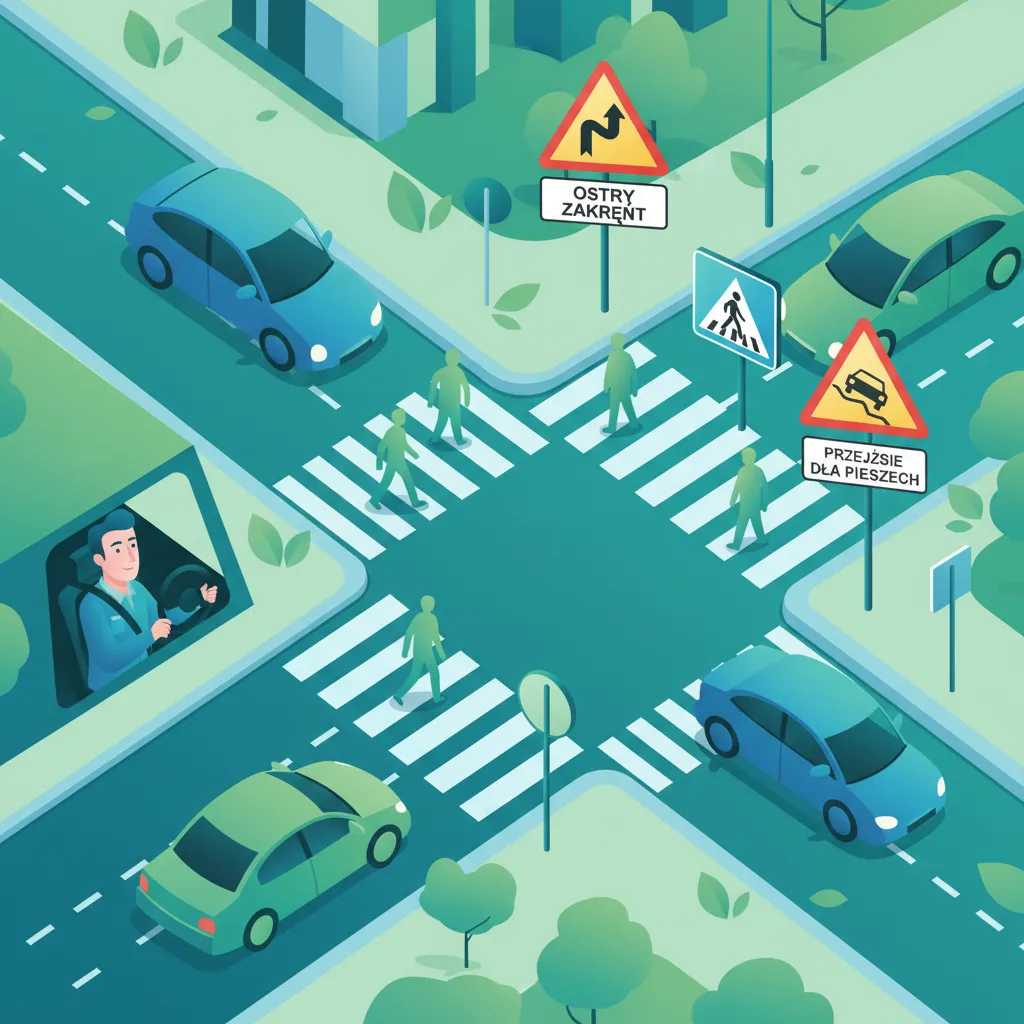
This lesson focuses on triangular warning signs, which are designed to alert drivers to upcoming hazards on the road. It covers the interpretation of various pictograms that indicate dangers like sharp turns, animal crossings, or road construction. Understanding these signs allows a driver to anticipate conditions and adjust their driving proactively.

This lesson outlines the precise steps for approaching a bus stop, ensuring correct positioning and safe deceleration. Learners will study the procedural aspects of door operation and managing passenger movement to prevent accidents. It also addresses coordination with traffic signals and pedestrians to maintain safety and schedule reliability.
This lesson introduces the various classes of passenger vehicles under Category D, detailing differences between standard, articulated, and minibuses. It covers key dimensional parameters like length, wheelbase, and turning circle that affect urban navigation. Learners will also understand passenger capacity calculations and weight distribution for safe, compliant operation.
This lesson outlines the statutory speed limits that professional drivers of Category C vehicles must adhere to on Polish roads. It clearly distinguishes the maximum permitted speeds in built-up areas, on single carriageways, and on motorways. The content also explains how to interpret road signs that may indicate temporary or vehicle-specific speed restrictions, ensuring drivers remain compliant with the law and avoid penalties from speed enforcement measures.
This lesson covers a wide range of signs and markings that provide information and guidance to drivers. It explains how to read destination signs, locate services, and interpret road markings like lane lines, stop lines, and pedestrian crossings. This knowledge is essential for navigation, lane discipline, and safe interaction with other road users.
Learn how road signs exclusive to bus operations interact with and sometimes supersede general Polish traffic rules. Understand the legal framework and common misconceptions regarding bus lanes, priority, and restrictions for Category D drivers.
This lesson details the speed limits applicable to buses in Poland across urban, rural, and motorway settings. It emphasizes how vehicle size and passenger load influence safe operating speeds and required stopping distances. The content also covers speed-control device usage and practical techniques for maintaining consistent speed while ensuring passenger comfort.
This lesson provides a foundational understanding of the Polish road sign system, categorizing signs into three main types: warning, prohibitory/mandatory, and informational. It explains the significance of different shapes and color codes, enabling drivers to quickly interpret their meaning and legal obligation. By mastering the visual language of road signs, learners will be equipped to make correct and safe decisions in any traffic situation they encounter.
This lesson explores the priority hierarchy for buses at different intersections, roundabouts, and pedestrian crossings. Learners will understand how traffic signals and signs affect their approach and how to safely navigate roundabouts with correct lane discipline. Special attention is given to yielding to pedestrians, especially near bus stops.
This lesson focuses on the key provisions of the Polish road traffic act relevant to public transport. It explains the legal classification of buses, mandatory safety equipment, and the hierarchy of road users. Learners will understand the specific obligations of bus drivers, potential penalties for non-compliance, and the required operational documentation.
This lesson outlines the statutory speed limits that professional drivers of Category C vehicles must adhere to on Polish roads. It clearly distinguishes the maximum permitted speeds in built-up areas, on single carriageways, and on motorways. The content also explains how to interpret road signs that may indicate temporary or vehicle-specific speed restrictions, ensuring drivers remain compliant with the law and avoid penalties from speed enforcement measures.
This lesson reviews the core set of regulatory and warning signs that all road users must obey, emphasizing those that affect agricultural tractors such as speed limits, stop, and give-way signs. It clarifies the colour and shape conventions used in Polish signage, enabling drivers to quickly recognize and react to sign information. The lesson also addresses the placement of signs in rural environments where visibility may be compromised.

This lesson focuses on the specific signage and on-vehicle markings used to indicate slow-moving vehicles, a critical element for tractors on public roads. Learners will understand the design and meaning of the triangular sign and the requirements for flashing amber lights. The content also discusses proper lane positioning and speed adjustments required when sharing the road with faster traffic.

This lesson details the exact requirements to qualify for a Category D driving licence. It covers the minimum age, the mandatory medical examinations for health fitness, and the hierarchy of prerequisite licences like Category B and C. You will also learn about the accredited training process and the necessary documentation for certification.
This lesson focuses on triangular warning signs, which are designed to alert drivers to upcoming hazards on the road. It covers the interpretation of various pictograms that indicate dangers like sharp turns, animal crossings, or road construction. Understanding these signs allows a driver to anticipate conditions and adjust their driving proactively.
This lesson outlines the precise steps for approaching a bus stop, ensuring correct positioning and safe deceleration. Learners will study the procedural aspects of door operation and managing passenger movement to prevent accidents. It also addresses coordination with traffic signals and pedestrians to maintain safety and schedule reliability.
Find clear answers to common questions learners have about Road Signs Specific to Bus Operations (bus lanes, restrictions). Learn how the lesson is structured, which driving theory objectives it supports, and how it fits into the overall learning path of units and curriculum progression in Poland. These explanations help you understand key concepts, lesson flow, and exam focused study goals.
The "buspas" sign (often a blue square sign with a white bus symbol, or a white 'BUS' marking on the road) indicates a dedicated bus lane. As a Category D driver, you are generally authorized to use these lanes. However, it's crucial to check for additional signs, such as time restrictions or exceptions for taxis or other public transport, to ensure you're using it legally.
Not necessarily at all times. While dedicated bus lanes are primarily for public transport, many have specific operational hours or additional regulations. Always look for supplementary signs below the "buspas" sign that indicate active hours (e.g., "7:00-18:00") or other vehicle types allowed. Outside these hours, they might be open to general traffic, or usage might be restricted.
In construction zones, temporary signs always take precedence over permanent signs. As a Category D driver, you must immediately adjust your driving according to these signs, which may include reduced speed limits, lane closures, or diversions. Prioritize safety, reduce speed, increase following distance, and look out for workers and temporary markings.
Yes, besides the "BUS" inscription in dedicated lanes, you might encounter specific markings for bus stops (e.g., yellow lines indicating no parking/stopping zones for other vehicles), or designated areas where buses are permitted to wait or turn. Understanding these ensures you position your vehicle correctly and safely for passenger boarding and alighting.
Build custom practice sessions tailored precisely to your needs. Focus on areas requiring improvement, review specific Polish road signs, or master complex traffic rules to ensure full preparation for your official driving license exam.