
This lesson is crucial for all aspiring Polish Category D bus drivers, diving deep into priority rules at complex traffic points. You'll learn how to safely navigate intersections, roundabouts, and pedestrian crossings, understanding traffic signals and lane discipline specific to larger vehicles. Mastering these rules is key to both passing your theory exam and ensuring passenger safety on the road. It builds upon foundational traffic law and prepares you for urban operations.
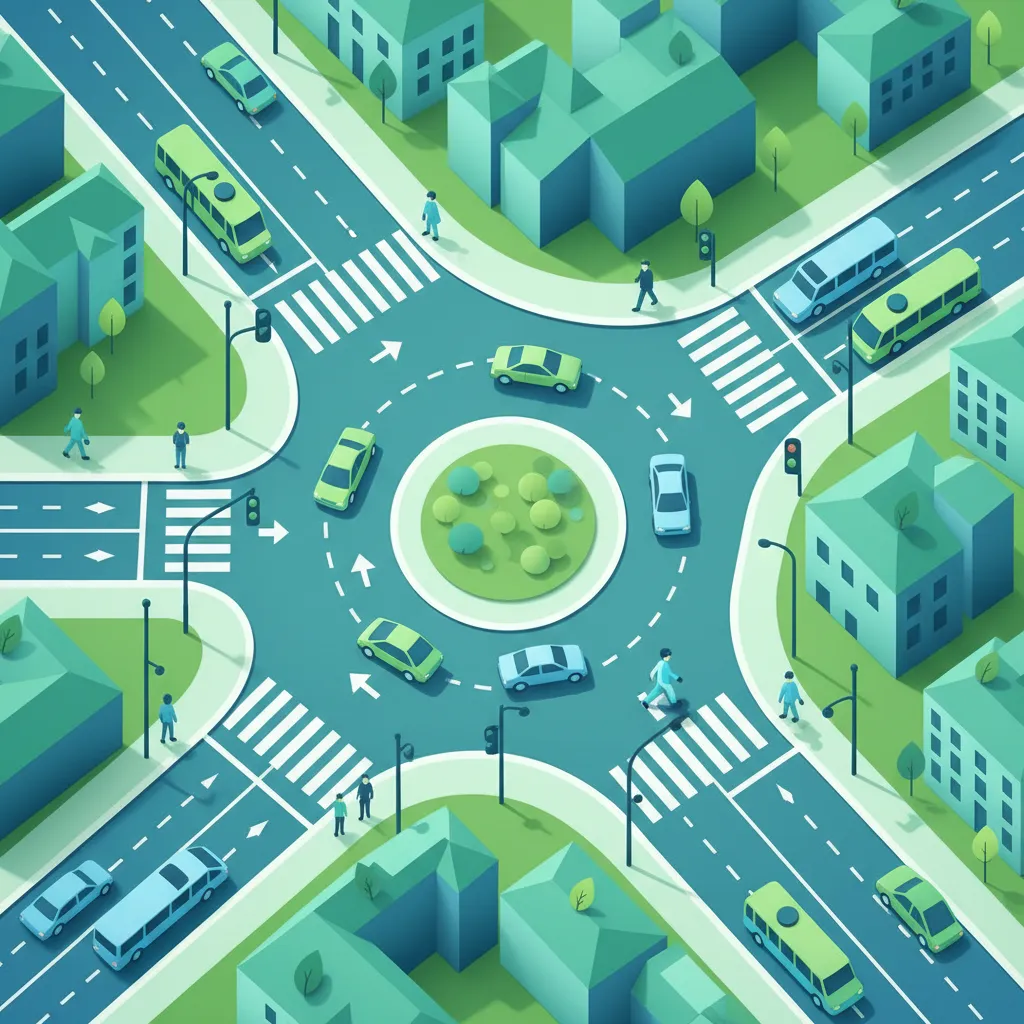
Lesson content overview
For professional bus drivers operating under the Polish Category D licence, mastering priority rules is fundamental to ensuring safety, maintaining efficient traffic flow, and complying with the law. This lesson provides a comprehensive overview of right-of-way regulations at various types of intersections and pedestrian crossings, specifically tailored to the unique considerations of operating a large passenger vehicle. Understanding these rules is not only crucial for daily operations but also a mandatory component of the Polish Category D theory exam.
The concept of "right-of-way" (or priority) is a legal framework that dictates which road user is entitled to proceed first in a given situation. This hierarchy prevents conflicts and promotes predictable movement, which is especially important for public transport vehicles like buses. For bus drivers, adhering to these rules is paramount due to the significant size and mass of their vehicles, the presence of passengers, and the need to operate within tight urban schedules. While the general rules of the Polish Road Traffic Act apply to all drivers, bus drivers must also factor in aspects such as dedicated bus lanes, longer stopping distances, and frequent interactions with pedestrians at bus stops.
The sheer size and weight of a city bus mean that errors in judgment, particularly regarding priority, can have severe consequences. A fully loaded bus requires a greater stopping distance than a passenger car and has larger blind spots. Any failure to yield or improper maneuvering can lead to serious collisions, passenger injury, and significant legal repercussions. Moreover, a bus driver's actions directly impact the safety and comfort of dozens of passengers, cyclists, and pedestrians. Correct priority handling ensures that the bus integrates smoothly into traffic, minimising delays and enhancing the public's confidence in public transport. It's a key element of defensive driving, anticipating potential hazards before they escalate.
Several core principles govern right-of-way in Poland, forming a hierarchical structure that drivers must understand and apply:
Signalised intersections are controlled by traffic lights, which dictate the right-of-way through a series of signal phases (green, amber, red) and sometimes auxiliary signs like green arrows. For bus drivers, navigating these intersections requires careful observation and adherence to both vehicle and pedestrian signals.
Standard traffic light sequences (green for go, amber for caution, red for stop) are universally understood. A green light permits a bus to proceed, assuming the path is clear. An amber light indicates that the signal is about to change to red, requiring drivers to prepare to stop unless they are so close to the stop line that stopping safely would be impossible. A red light strictly prohibits movement beyond the stop line.
When an amber light appears, a bus driver, considering the vehicle's weight and momentum, should aim to stop safely before the stop line. Only if emergency braking would be required should the driver proceed with extreme caution through the intersection.
Auxiliary signals, such as protected green turn arrows, indicate a dedicated phase for specific turning movements, where the turning vehicle typically has priority over conflicting traffic flows. However, even with a green arrow, bus drivers must remain vigilant for pedestrians, especially those who might start crossing against their signal.
A critical aspect of signalised intersections for bus drivers is the interaction with pedestrian signals. Even if a bus has a green light to proceed, it must yield to pedestrians if they have a green "walk" signal or are already in the process of crossing.
Polish Road Traffic Code Art. 53-1 explicitly grants pedestrians right-of-way at zebra crossings, which often run through signalised intersections. Ignoring a pedestrian's right-of-way while having a green vehicle light is a common mistake and a serious violation. Some intersections feature pedestrian countdown signals, which indicate how much time pedestrians have to cross. During the pedestrian green phase, vehicles must wait.
A green arrow signal indicating a dedicated, priority phase for a specific turning movement, free from conflicting vehicle traffic. However, pedestrians must still be considered.
Unsignalised intersections lack traffic lights and are instead governed by road signs, road markings, or default right-of-way rules. Bus drivers must accurately interpret these indicators to ensure safe passage.
A stop sign (B-20 in the Polish system) is a regulatory sign requiring a complete halt. Polish Road Traffic Code Art. 26-4 states that all vehicles must stop completely at a stop sign and give way to traffic already on the intersecting road or approaching from it. For a bus, this means:
Bring the bus to a complete stop before the stop line, or if no line, before the crosswalk. If neither is present, stop where visibility of the intersecting road is best.
Check for traffic in all directions on the intersecting road.
Yield to any vehicles approaching or already within the intersection.
Proceed only when the path is clear and safe, considering the bus's acceleration capabilities.
A common error, even when driving a bus in a dedicated lane, is to perform a "rolling stop" without coming to a full halt. This is illegal and compromises safety.
A yield sign (A-7) indicates that a driver must give way to traffic on the main road or priority road. Unlike a stop sign, a complete stop is not always mandatory if the way is clear. However, the driver must be prepared to stop and must not proceed if it would force other drivers to brake or change direction. Bus drivers must approach yield signs with sufficient caution, slowing down considerably to assess traffic flow on the priority road. Always ensure there is ample time and space to merge or cross safely, especially given the bus's length and acceleration.
In the absence of traffic lights or signs, the default rule in Poland (as in many European countries) is "priority to the right." Polish Road Traffic Code Art. 32-2 stipulates that at unmarked intersections, the vehicle approaching from the right has priority. This rule applies even if the bus is on what appears to be a larger or more important road, unless a road sign explicitly indicates otherwise. Bus drivers must be particularly attentive in residential or rural areas where unmarked intersections are more common. Always check both left and right, but be prepared to yield to any vehicle approaching from your right-hand side.
Roundabouts are circular intersections designed to improve traffic flow by allowing continuous movement rather than fixed stops. However, they are also frequent sites of confusion regarding priority.
The fundamental rule for roundabouts in Poland, as stated in Polish Road Traffic Code Art. 49-9, is that vehicles already circulating inside the roundabout have priority over entering traffic. This means that a bus approaching a roundabout must:
Slow down significantly upon approach and observe circulating traffic.
Look for a safe gap in traffic already within the roundabout.
Yield to all vehicles coming from your left (those already in the roundabout).
Enter the roundabout only when a safe gap allows, without forcing circulating vehicles to brake or swerve.
A common mistake is assuming that a clear entry lane or a bus lane grants automatic priority. The priority to circulating traffic remains paramount. Due to the bus's length, ensure the gap is sufficient not just for the front of the bus, but for the entire vehicle to enter and maneuver.
Multi-lane roundabouts require specific lane discipline depending on the driver's intended exit. While specific rules may vary slightly, general guidance for a multi-lane roundabout is:
Bus drivers must indicate their intentions early using turn signals. When exiting, signal right after passing the exit before yours. Due to the bus's wide turning radius, extra caution is needed to avoid encroaching on adjacent lanes or hitting kerbs, especially when navigating multi-lane roundabouts. Always check mirrors and blind spots for smaller vehicles, particularly cyclists, before changing lanes or exiting.
Many roundabouts have pedestrian crossings, often located just after an exit. Polish Road Traffic Code Art. 42-2 confirms that pedestrians have right-of-way at crosswalks within the roundabout area. This means that after exiting a roundabout, bus drivers must immediately be prepared to yield to pedestrians who are using the crosswalk. Do not assume that because you have exited the roundabout, you automatically have clear passage. Always scan for pedestrians before and during your exit maneuver.
Never assume a pedestrian sees your bus or will wait. Always be prepared to stop at crosswalks, regardless of your right-of-way elsewhere.
Pedestrian crossings, particularly "zebra crossings" (painted with parallel white bars), are areas where pedestrians always have priority. Their placement near bus stops introduces specific challenges and responsibilities for bus drivers.
A marked pedestrian crossing (typically with parallel white bars) where pedestrians have priority once they have stepped onto it.
Polish Road Traffic Code Art. 70-1 clearly states that pedestrians have priority once they have entered a marked crossing. This means a bus driver must stop before the crossing line if a pedestrian is on the crossing or is clearly about to enter it. It's not enough to slow down; a complete stop is mandatory. This rule is paramount for bus drivers, who frequently encounter pedestrians at bus stops and adjacent crossings.
When a bus stop is located immediately before or after a pedestrian crossing, safe positioning is critical.
Polish Road Traffic Code Art. 42-1 reinforces that vehicles must not obstruct the roadway for pedestrians, even temporarily. This means a bus cannot pull forward onto a crossing to pick up passengers if pedestrians are present or about to use it.
Dedicated bus lanes are designed to give public transport vehicles an advantage in urban traffic, improving efficiency and adherence to schedules. However, bus lane priority does not negate all other priority rules.
A dedicated lane reserved for buses (and often taxis or other authorised vehicles), indicated by specific road markings and signs, allowing them to bypass general traffic.
Polish Road Traffic Code Art. 86-2 mandates the use of designated bus lanes by authorised vehicles, typically indicated by a sign and diamond-shaped markings on the road. Within a bus lane, a bus may maintain its speed and is generally exempt from merging with general traffic. This provides a clear advantage in congested areas.
However, it is a significant misconception that being in a bus lane grants absolute priority. Bus drivers must still:
Polish Road Traffic Code Art. 93-4 prohibits overtaking other vehicles already positioned in a bus lane. Bus drivers must maintain a safe distance and avoid aggressive maneuvers. Common mistakes include:
Priority rules are absolute, but their safe application requires constant adaptation to varying conditions. A professional bus driver must always consider how external factors influence their ability to react and safely execute yielding maneuvers.
Adverse weather conditions significantly impact driving dynamics:
The weight of a bus, especially when fully loaded with passengers, directly affects its momentum and, consequently, its stopping distance. A heavier bus takes longer to stop. This physical reality must constantly influence a bus driver's judgment when approaching any point where yielding or stopping might be required. Early identification of hazards and proactive braking are key. Maintenance issues, such as worn brakes, further compound this risk, making regular vehicle checks vital.
Cyclists and pedestrians are highly vulnerable. Bus drivers must be acutely aware of their presence, especially around bus stops, intersections, and roundabouts.
Compliance with Polish Road Traffic Code (Prawo o Ruchu Drogowym) is non-negotiable for professional drivers. Several articles are particularly relevant to priority rules:
Violations of priority rules can lead to severe consequences, including:
Applying theoretical knowledge to real-world situations is crucial. Here are scenarios demonstrating correct and incorrect priority handling for bus drivers.
Setting: An urban four-way intersection. The bus has a green light for vehicles, but pedestrians simultaneously have a green "walk" signal on the crosswalk crossing the bus's path.
Decision Point: The bus approaches the intersection with a green vehicle light.
Correct Behavior: The bus driver, observing the green pedestrian signal (or pedestrians already crossing), slows down and stops completely before the crosswalk line, allowing all pedestrians to finish crossing safely. Only once the crossing is clear and the vehicle's green light is still active does the bus proceed.
Incorrect Behavior: The bus driver proceeds with the green vehicle light, assuming it grants absolute priority, and drives through the crosswalk while pedestrians are present. This is illegal, extremely dangerous, and risks collision and fines.
Setting: A bus is traveling in a dedicated bus lane, approaching an unsignalised intersection. The bus lane has a yield sign for traffic on the main road.
Decision Point: The bus approaches the intersection in its bus lane.
Correct Behavior: The bus driver slows down significantly, checks for traffic on the main road (both left and right), and yields to any vehicles already on the main road or approaching from it. Despite being in a dedicated lane, the yield sign's authority takes precedence. The bus proceeds only when the path is clear.
Incorrect Behavior: The bus driver assumes the bus lane grants automatic priority, enters the intersection without yielding, and cuts off a vehicle on the main road, causing a dangerous near-miss.
Setting: A multi-lane roundabout with moderate circulating traffic. The bus intends to take the second exit (straight ahead) and approaches in the appropriate entry lane.
Decision Point: The bus wants to enter the roundabout.
Correct Behavior: The bus driver slows down, activates the appropriate turn signal (if required by local rules for "straight through"), checks all mirrors and blind spots for circulating traffic, and carefully identifies a sufficient gap in traffic from the left. Considering the bus's length, the driver waits until the gap is large enough to enter safely without forcing circulating vehicles to adjust speed or direction. The bus then enters, maintains its lane, and prepares to exit.
Incorrect Behavior: The bus driver forces entry into the roundabout, cutting off a car already circulating. This creates an immediate conflict, potential for collision, and disruption to traffic flow.
Setting: A bus stop is located immediately before a zebra crossing. The bus arrives at the stop, and several passengers are waiting to board. Simultaneously, a pedestrian steps onto the zebra crossing.
Decision Point: The bus arrives to pick up passengers.
Correct Behavior: The bus driver stops the bus completely before the zebra crossing line, even if it means passengers have to walk slightly further back to board. The driver allows the pedestrian to finish crossing safely. Only once the crossing is clear does the bus pull forward to the stop area to allow passengers to board/alight.
Incorrect Behavior: The bus driver pulls forward, partially blocking the zebra crossing, to reach the exact stop position faster while the pedestrian is still on the crossing. This is a direct violation of pedestrian priority and dangerous.
Setting: A rural, unsignalised junction with a stop sign. The road surface is wet from recent rain. A bus is approaching the stop sign on the minor road.
Decision Point: The bus approaches the stop sign.
Correct Behavior: The bus driver, aware of the wet conditions, begins braking significantly earlier than usual. The bus comes to a complete, controlled stop before the stop line. The driver then carefully checks for traffic from both left and right on the main road, acknowledging that other vehicles might also have longer braking distances. The bus proceeds only when it is safe to do so.
Incorrect Behavior: The bus driver performs a "rolling stop" or brakes too late due to misjudgment of the longer stopping distance on the wet surface. This could cause the bus to overshoot the stop line, entering the main road dangerously.
This lesson covers Polish Category D priority rules for bus drivers at intersections, roundabouts, and pedestrian crossings. The core principle is the Lex Prioritatis hierarchy—traffic signals override road signs, which override default rules. Specific attention is given to bus lane limitations (no exemption from signals or pedestrian priority), stop sign procedures (complete halt required), roundabout yield rules (circulating traffic has priority), and the absolute pedestrian right-of-way at zebra crossings. Five detailed scenarios illustrate correct versus incorrect behavior, and six key Polish Road Traffic Code articles are referenced for exam preparation.
A short set of high-value points that capture the most important learning from this lesson.
Traffic signals override road signs, which override default rules like priority to the right—always identify the highest-ranking rule present.
Bus lanes grant efficiency but do not exempt buses from yielding to pedestrians or obeying traffic signals and stop/yield signs.
At roundabouts, vehicles already circulating have absolute priority over entering traffic, regardless of lane position.
A complete stop is mandatory at stop signs (B-20); a rolling stop is illegal regardless of how clear the road appears.
Pedestrians have priority at marked crossings once they have stepped onto it—even if your vehicle has a green light.
Explore all units and lessons included in this driving theory course.
Lex Prioritatis: signals > signs > default rules form the priority hierarchy.
At unmarked intersections, vehicles from the right have priority unless signs indicate otherwise.
The stopping distance for a loaded bus is significantly greater than for cars; begin braking earlier at all yield points.
When a bus stop is before a zebra crossing, the bus must stop behind the crossing line to allow passengers to alight while also yielding to pedestrians.
Overtaking other vehicles within a bus lane is prohibited under Polish Road Traffic Code Art. 93-4.
Assuming a green vehicle light grants priority over pedestrians who are already crossing or have a walk signal.
Performing a rolling stop at a stop sign, especially when driving in a bus lane, thinking the dedicated lane reduces the obligation.
Entering a roundabout without yielding because the entry lane appears clear, ignoring circulating traffic from the left.
Assuming bus lane priority means exemption from yielding at unsignalised intersections with yield or stop signs.
Failing to account for increased stopping distance on wet or icy roads when approaching intersections.
Lesson content overview
A short set of high-value points that capture the most important learning from this lesson.
Traffic signals override road signs, which override default rules like priority to the right—always identify the highest-ranking rule present.
Bus lanes grant efficiency but do not exempt buses from yielding to pedestrians or obeying traffic signals and stop/yield signs.
At roundabouts, vehicles already circulating have absolute priority over entering traffic, regardless of lane position.
A complete stop is mandatory at stop signs (B-20); a rolling stop is illegal regardless of how clear the road appears.
Pedestrians have priority at marked crossings once they have stepped onto it—even if your vehicle has a green light.
Explore all units and lessons included in this driving theory course.
Lex Prioritatis: signals > signs > default rules form the priority hierarchy.
At unmarked intersections, vehicles from the right have priority unless signs indicate otherwise.
The stopping distance for a loaded bus is significantly greater than for cars; begin braking earlier at all yield points.
When a bus stop is before a zebra crossing, the bus must stop behind the crossing line to allow passengers to alight while also yielding to pedestrians.
Overtaking other vehicles within a bus lane is prohibited under Polish Road Traffic Code Art. 93-4.
Assuming a green vehicle light grants priority over pedestrians who are already crossing or have a walk signal.
Performing a rolling stop at a stop sign, especially when driving in a bus lane, thinking the dedicated lane reduces the obligation.
Entering a roundabout without yielding because the entry lane appears clear, ignoring circulating traffic from the left.
Assuming bus lane priority means exemption from yielding at unsignalised intersections with yield or stop signs.
Failing to account for increased stopping distance on wet or icy roads when approaching intersections.
Explore search topics learners often look for when studying Priority Rules at Intersections, Roundabouts, and Pedestrian Crossings. These topics reflect common questions about road rules, driving situations, safety guidance, and lesson level theory preparation for learners in Poland.
Browse additional driving theory lessons that cover connected traffic rules, road signs, and common driving situations related to this topic. Improve your understanding of how different rules interact across everyday traffic scenarios.
Explore advanced applications of Polish priority rules in challenging intersection and roundabout scenarios. Understand how to handle less common situations and ensure safety as a professional bus driver, crucial for Category D exam preparation.
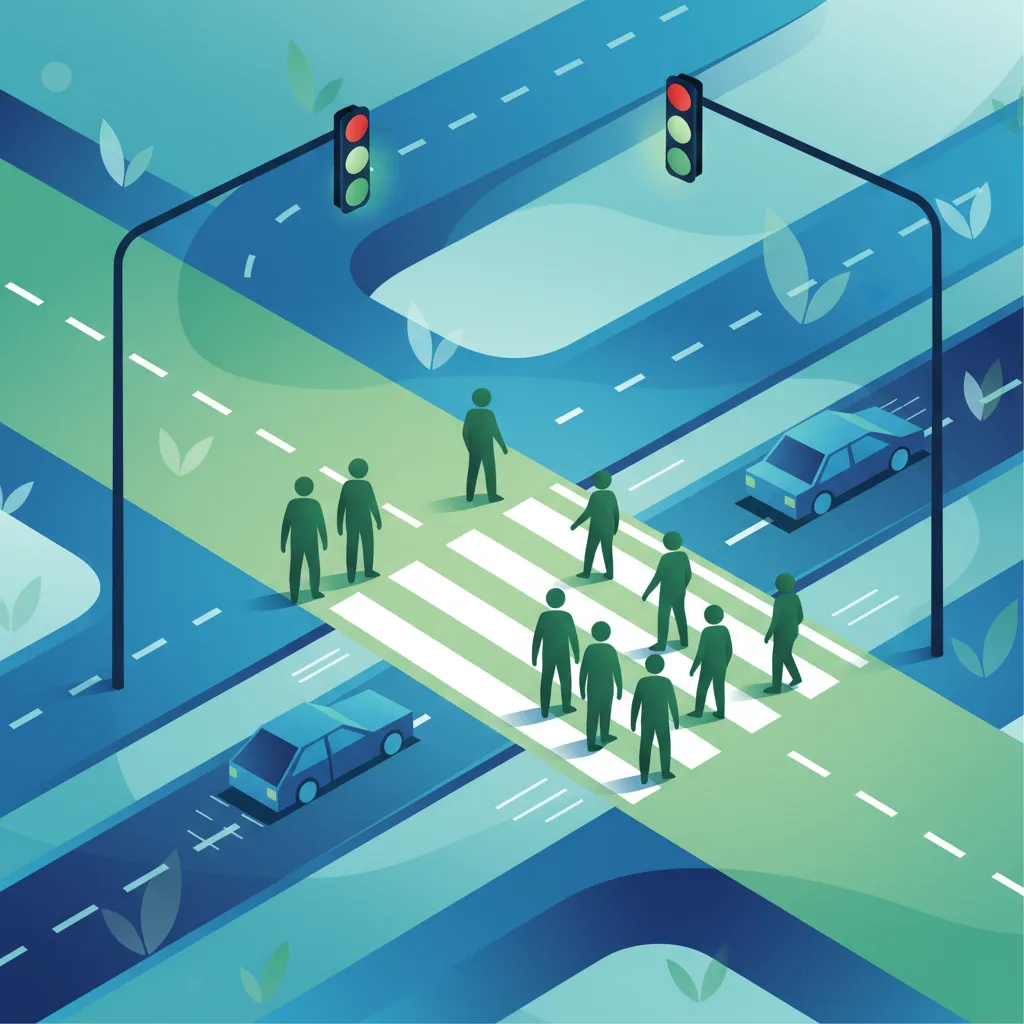
This lesson addresses advanced scenarios, including multi-lane intersections and interactions with vulnerable road users. It reinforces the legal obligation to give absolute priority to pedestrians at marked crossings (zebra crossings). The content also covers navigating around traffic islands and using dedicated turning lanes in complex urban environments.

This lesson teaches the fundamentals of safely reversing a bus using mirrors, cameras, and alarms. It covers low-speed control essential for depot navigation, where precise steering is required to avoid collisions. Specific techniques for handling articulated buses and coordinating with ground staff are also discussed to ensure safe maneuvers.
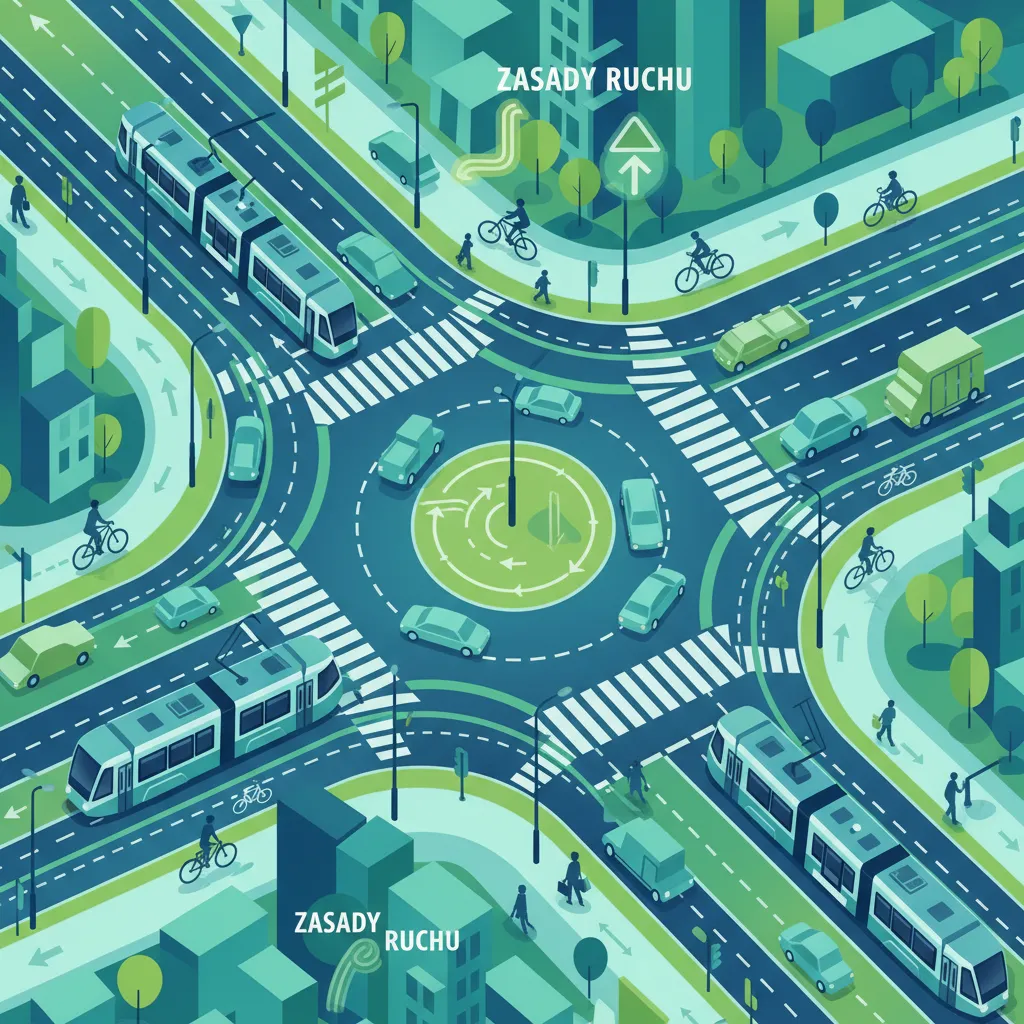
In this lesson, learners investigate complex junctions and intersections found across urban, rural, and highway environments, focusing on multi-lane configurations, traffic light coordination, and roundabout navigation. The content emphasizes priority rules, blind-spot assessment when merging, and safe lane selection for turning maneuvers. Learners will also consider interactions with cyclists and pedestrians, and the importance of adjusting approach speed for safe navigation.
This lesson provides strategies for safely navigating the numerous intersections typical of urban environments. It reinforces the application of priority rules in situations with limited visibility and high traffic volume. Techniques for making turns in narrow streets and being aware of pedestrians and cyclists at junctions are central to the instruction.
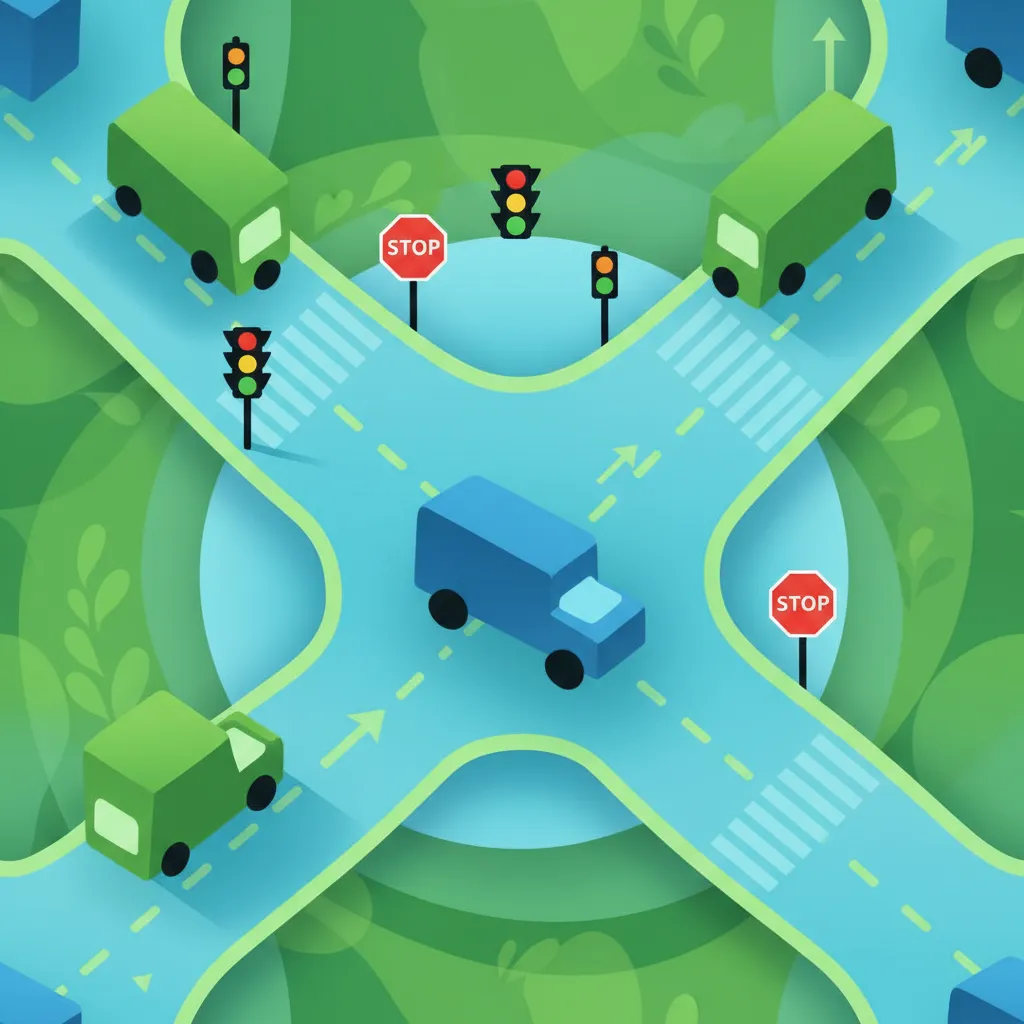
This lesson provides a comprehensive breakdown of the right-of-way rules that govern intersections. It explains the clear directives given by traffic lights, stop signs, and yield signs, and clarifies the procedures at unmarked or uncontrolled intersections, where the 'priority to the right' rule often applies. Learners will understand the legal hierarchy of these rules to make correct, safe, and predictable decisions when navigating through any junction, reducing the risk of conflict with other traffic.
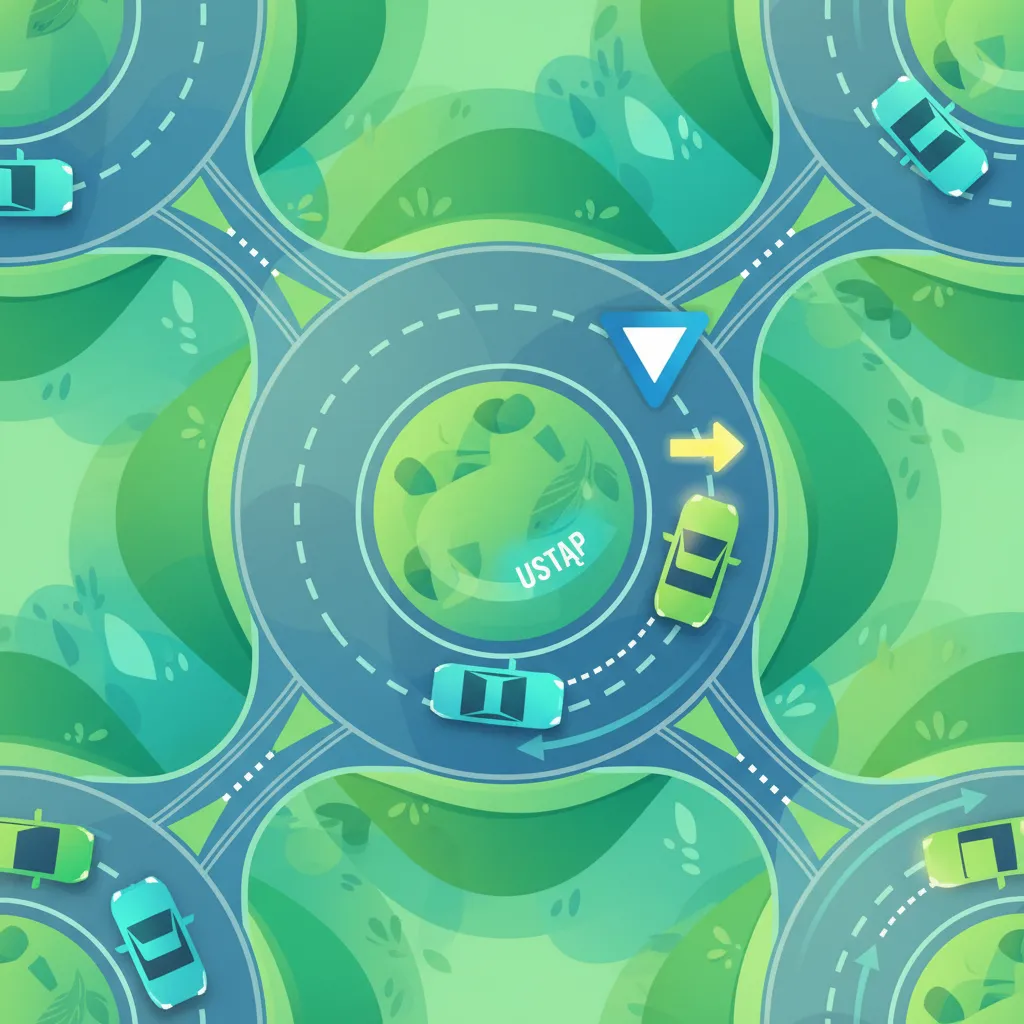
This lesson explains the specific rules for navigating roundabouts, a common feature on Polish roads. It emphasizes the primary rule of yielding to traffic already circulating within the roundabout before entering. The content also covers correct lane positioning for different exits and the proper use of indicators when exiting.

This lesson introduces defensive driving strategies tailored for bus operation, emphasizing hazard perception and risk management. Learners will study techniques for continuous situational awareness and maintaining safe following distances for adequate reaction time. The content covers emergency maneuvers and interaction with vulnerable road users to reduce accident likelihood.
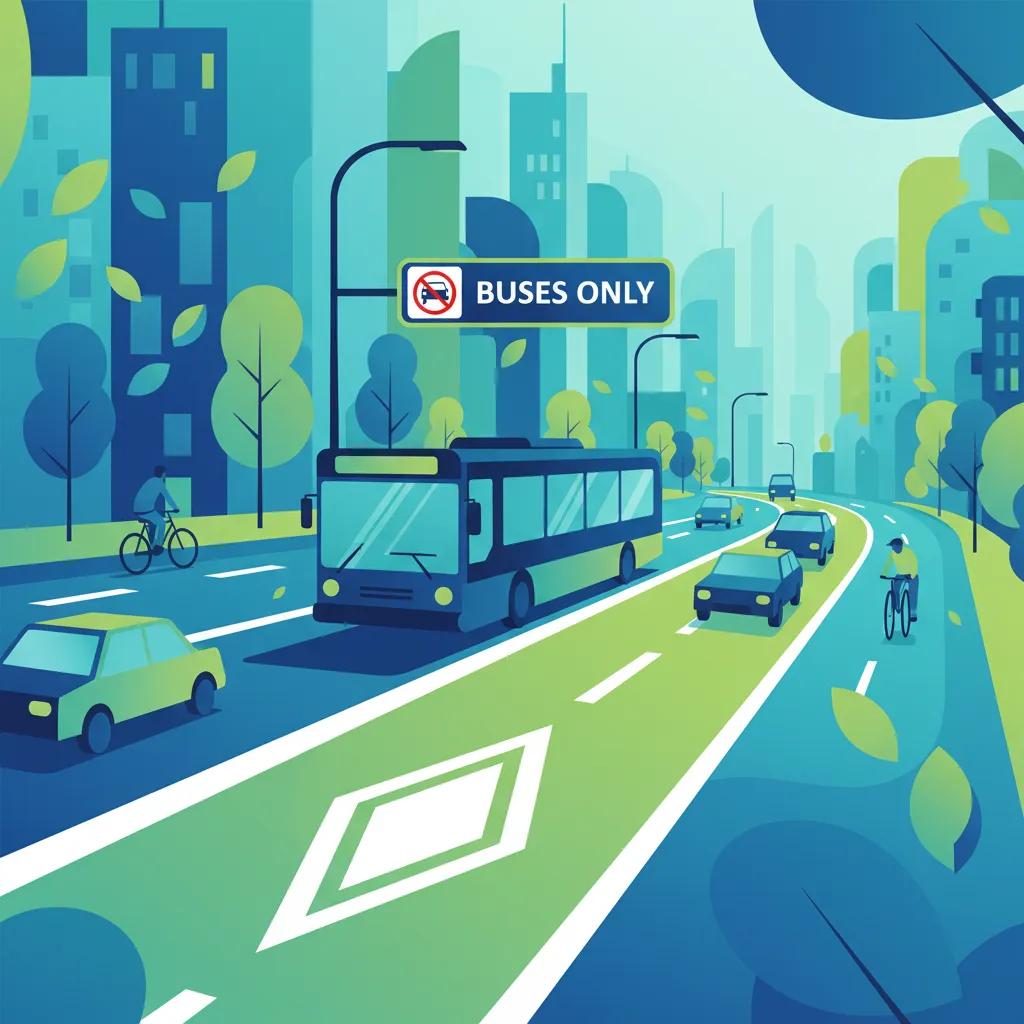
This lesson teaches learners to identify and understand road signs that govern bus movement, including dedicated bus lane (buspas) signs. It explains the visual characteristics, legal standing, and consequences of non-compliance. The content also covers how to adapt to temporary restrictions in construction zones while maintaining schedule and safety.
This lesson outlines the precise steps for approaching a bus stop, ensuring correct positioning and safe deceleration. Learners will study the procedural aspects of door operation and managing passenger movement to prevent accidents. It also addresses coordination with traffic signals and pedestrians to maintain safety and schedule reliability.
This lesson details the speed limits applicable to buses in Poland across urban, rural, and motorway settings. It emphasizes how vehicle size and passenger load influence safe operating speeds and required stopping distances. The content also covers speed-control device usage and practical techniques for maintaining consistent speed while ensuring passenger comfort.
Master the critical rules for bus drivers regarding pedestrian priority at crossings and near bus stops in Poland. This lesson focuses on ensuring the safety of pedestrians and complying with traffic law for Category D licence holders.
This lesson examines the responsibilities of motorcyclists when approaching pedestrian crossings and interacting with cyclists, emphasizing the marked right-of-way for pedestrians at zebra crossings. Learners will study how to determine safe passing distances, adjust speed, and use visual cues such as eye contact to ensure pedestrians have cleared the crossing. The content also covers interactions with cyclists sharing the road, highlighting the need for anticipation and adequate passing gaps.
This lesson addresses advanced scenarios, including multi-lane intersections and interactions with vulnerable road users. It reinforces the legal obligation to give absolute priority to pedestrians at marked crossings (zebra crossings). The content also covers navigating around traffic islands and using dedicated turning lanes in complex urban environments.
This lesson focuses on safe coexistence with cyclists and pedestrians, who are prevalent in urban areas. It covers the rules for driving alongside dedicated bicycle lanes and the legal requirement to yield to pedestrians at marked crossings. The content stresses the importance of constant awareness, especially when turning at intersections, to prevent conflicts with vulnerable road users.
This lesson focuses on areas with high pedestrian activity, requiring special caution. It covers the rules for 'living zones' (strefa zamieszkania), where pedestrians have priority and the speed limit is 20 km/h. The content also addresses regulations for school zones and other designated pedestrian areas to ensure the safety of the most vulnerable road users.
This lesson provides a comprehensive breakdown of the right-of-way rules that govern intersections. It explains the clear directives given by traffic lights, stop signs, and yield signs, and clarifies the procedures at unmarked or uncontrolled intersections, where the 'priority to the right' rule often applies. Learners will understand the legal hierarchy of these rules to make correct, safe, and predictable decisions when navigating through any junction, reducing the risk of conflict with other traffic.
This lesson introduces the fundamental principles of right-of-way on Polish roads, explaining how priority road signs determine the flow of traffic at intersections. Learners will explore the hierarchy of vehicle classes and the specific obligations that arise when approaching a yield line or a give-way sign. The content details the legal precedence of main road traffic over secondary road traffic, helping riders safely navigate intersections and avoid right-of-way infractions.
This lesson introduces defensive driving strategies tailored for bus operation, emphasizing hazard perception and risk management. Learners will study techniques for continuous situational awareness and maintaining safe following distances for adequate reaction time. The content covers emergency maneuvers and interaction with vulnerable road users to reduce accident likelihood.
This lesson highlights the professional driver's heightened responsibility to protect vulnerable road users. It focuses on the significant blind spots around a large truck, particularly during turns in urban areas where pedestrians and cyclists are common. The content teaches strategies for anticipating the unpredictable movements of these users, providing ample space when passing, and using warning signals to communicate intentions clearly, fostering a culture of shared road safety.
This lesson focuses on the key provisions of the Polish road traffic act relevant to public transport. It explains the legal classification of buses, mandatory safety equipment, and the hierarchy of road users. Learners will understand the specific obligations of bus drivers, potential penalties for non-compliance, and the required operational documentation.
This lesson outlines the precise steps for approaching a bus stop, ensuring correct positioning and safe deceleration. Learners will study the procedural aspects of door operation and managing passenger movement to prevent accidents. It also addresses coordination with traffic signals and pedestrians to maintain safety and schedule reliability.
Find clear answers to common questions learners have about Priority Rules at Intersections, Roundabouts, and Pedestrian Crossings. Learn how the lesson is structured, which driving theory objectives it supports, and how it fits into the overall learning path of units and curriculum progression in Poland. These explanations help you understand key concepts, lesson flow, and exam focused study goals.
Not automatically. While other drivers should show consideration, buses only have priority when rejoining traffic from a designated bus stop in a built-up area, provided they signal correctly and it's safe to do so. Outside built-up areas, or if it's not a designated stop, the general priority rules apply.
The fundamental priority rule (yield to traffic already in the roundabout) remains the same. However, bus drivers must account for their vehicle's size, turning radius, and articulation. This often requires wider approaches, careful lane selection, and increased vigilance for smaller vehicles in blind spots, particularly when exiting.
When approaching a pedestrian crossing near a bus stop, a bus driver must be extra vigilant. Passengers may rush to or from the bus, increasing the risk of pedestrians stepping into the road unexpectedly. Always be prepared to stop and yield to pedestrians who are on or about to enter the crossing.
If traffic lights are not working, drivers must revert to alternative priority rules. This usually means following road signs (like STOP or YIELD signs) first. If no signs are present, the general rule of 'right before left' applies, or if there's a priority road, drivers on the priority road have right-of-way.
Emergency vehicles using audible and visual signals (e.g., sirens and flashing blue lights) always have absolute priority in Poland. As a bus driver, you must safely yield the right-of-way immediately, even if it means momentarily breaking other traffic rules (e.g., carefully pulling over into a bus lane or onto a hard shoulder) to allow them to pass unimpeded.
Build custom practice sessions tailored precisely to your needs. Focus on areas requiring improvement, review specific Polish road signs, or master complex traffic rules to ensure full preparation for your official driving license exam.