This lesson delves into the crucial specific signage and markings for slow-moving vehicles, known as Pojazdy wolnobieżne, particularly relevant for Category T drivers in Poland. You will learn to identify the triangular slow-moving vehicle sign and understand the requirements for flashing amber lights. Mastering this content is vital for safe integration of agricultural machinery on public roads and for successfully navigating related questions on your Polish driving theory exam.

Lesson content overview
Operating agricultural vehicles, such as tractors and farm machinery, on public roads in Poland requires a thorough understanding of specific visual warnings designed to ensure safety. These warnings, collectively known as slow-moving vehicle symbols, are crucial for drivers of Category T vehicles and other road users alike. This lesson explores the design, purpose, and legal requirements surrounding the triangular sign, flashing amber beacons, and associated rules for lane positioning and speed. Mastering these concepts is fundamental for safe navigation and compliance with Polish traffic law (Prawo o ruchu drogowym).
Slow-moving vehicles, particularly agricultural machinery, present unique challenges on public roads due to their significantly lower speeds compared to other traffic. This speed differential can lead to dangerous situations, including rear-end collisions, if other drivers are not adequately alerted to the vehicle's presence and limited speed capability. The primary goal of slow-moving vehicle symbols is to enhance visibility and provide unambiguous warnings, allowing faster traffic to adjust their speed, plan overtaking maneuvers safely, and reduce the risk of accidents.
Understanding these symbols is not only a matter of legal compliance for Category T license holders but also a critical aspect of defensive driving and hazard perception for all road users. They form a vital part of the communication system on Polish roads, preventing unexpected encounters and fostering a safer environment for everyone.
The most distinctive and universally recognized symbol for a slow-moving vehicle in Poland is the triangular sign, officially designated as P-12. This sign provides an immediate visual cue that the vehicle it's attached to cannot travel at speeds typically expected on public roads.
The slow-moving vehicle sign is a white equilateral triangle with a prominent red border. Centered within the white field is a black silhouette of a tractor, clearly identifying its agricultural context. This specific design makes it easily distinguishable from other road signs, even at a distance. Its placement is always on the rear of the vehicle, ensuring maximum visibility to following traffic.
The display of the P-12 sign is not optional for all tractors; it is mandatory for any vehicle, including agricultural machinery, whose maximum construction speed is 40 km/h or less when operating on public roads. This rule is stipulated in § 86-2 of the Polish Prawo o ruchu drogowym. The sign serves as a legal declaration of the vehicle's speed limitation and signals to other drivers that they should anticipate a reduced speed. If a tractor is capable of exceeding 40 km/h, this sign should not be displayed, as it would be misleading and potentially illegal.
Drivers must ensure the sign is always clean, clearly visible, and free from any obstruction that might obscure its recognition. A dirty or damaged sign undermines its safety purpose and can lead to legal penalties.
Beyond the static P-12 sign, slow-moving vehicles are often required to use additional lighting to maximize their conspicuity, especially in challenging conditions. The flashing amber beacon is the primary active warning device, complemented by passive reflective triangles in certain circumstances.
An amber, flashing beacon, often mounted at roof height, is a crucial component of a slow-moving vehicle's warning system. This light must be electrically powered and emit a flashing signal at a frequency of 1 to 2 Hertz (Hz), meaning it flashes once or twice per second. This distinctive, intermittent light pattern attracts attention more effectively than a steady light, particularly at night or in adverse weather.
The beacon must be visible from at least 150 meters in daylight conditions to allow ample warning time for other drivers. Its primary role is to increase the vehicle's visibility from all directions, highlighting its presence and limited speed, especially when approaching from the rear.
In situations where a vehicle is not equipped with an active flashing amber beacon, a passive warning device in the form of a retro-reflective orange triangle may be used. This alternative must have a minimum diameter of 30 cm and be placed on the front of the vehicle. While not as effective as an active flashing beacon, it still provides a degree of visibility by reflecting light from other vehicles' headlights. However, the active flashing beacon is generally preferred and often mandatory when the vehicle is in motion.
The flashing amber beacon must be turned on whenever the vehicle is moving on public roads and the P-12 slow-moving vehicle sign is displayed. This means it is required 24 hours a day, regardless of ambient light conditions, weather, or road type. A common misunderstanding is that the beacon is only needed at night or in bad weather; however, its continuous use during operation on public roads is a legal requirement (§ 86-2 of Prawo o ruchu drogowym) to ensure consistent and maximum visibility.
Using a steady (non-flashing) amber light does not fulfill this requirement. The flashing nature is essential for attracting attention and signaling the unique characteristics of the vehicle.
The slow-moving vehicle sign (P-12) is intrinsically linked to a specific speed limit. Understanding and adhering to this limit is paramount for safety and legal compliance.
For any vehicle displaying the P-12 sign, the maximum permissible road speed is 40 km/h. This is a strict legal mandate under § 77-1 of the Polish Prawo o ruchu drogowym. It is not an advisory limit but an enforceable maximum speed that operators must not exceed. This rule is fundamental to preventing unsafe speed differentials, which are a major cause of collisions involving slow-moving machinery.
If a vehicle, such as a modern tractor, is capable of safely traveling at speeds greater than 40 km/h, then the P-12 sign must not be used. Displaying the sign implies adherence to the 40 km/h limit; conversely, if the vehicle exceeds this speed, the sign is being used improperly.
Exceeding the 40 km/h limit while displaying the P-12 sign constitutes a violation of traffic law. Even brief exceedances, for instance, when travelling downhill, are illegal. Such an action misrepresents the vehicle's capabilities to other road users, who are relying on the sign to anticipate a lower speed. This can lead to severe penalties, including fines, and significantly increases liability in the event of an accident.
Operators must actively manage their speed, using appropriate gears and braking techniques, to ensure they remain below 40 km/h at all times when displaying the slow-moving vehicle sign.
To minimize obstruction to faster traffic flow and facilitate safe overtaking, slow-moving vehicles must adhere to specific rules regarding their position on the road.
On multi-lane roads, slow-moving vehicles, including agricultural tractors, are generally required to remain in the rightmost available lane whenever possible. This rule helps to keep the left lanes clear for faster-moving traffic, improving overall road efficiency and reducing the need for other drivers to make unexpected maneuvers. Operators should only move out of the rightmost lane when it is necessary to overtake another vehicle (which should be done rarely and only if truly safe), to make a left turn, or when directed by specific road markings or signs.
The hard shoulder, or roadside verge, is designed for emergency stops, breakdowns, or specific uses by designated vehicles (e.g., emergency services). It is not to be used as a regular driving lane by slow-moving vehicles to allow faster traffic to pass. Using the hard shoulder as a driving lane is illegal and creates a dangerous situation by obstructing potential emergency routes and creating unpredictable traffic patterns. Operators should only pull onto the hard shoulder in genuine emergencies, such as a breakdown, or if explicitly directed by police.
By consistently adhering to the rightmost lane rule, operators of slow-moving vehicles create a predictable environment for other drivers. This predictability is crucial for safe overtaking. Faster traffic can then plan their maneuvers with confidence, knowing that the tractor will maintain its position. It's important for tractor drivers to be aware of traffic behind them and to avoid sudden lane changes that could surprise overtaking vehicles. In situations where an overtaking maneuver seems complex or risky, a responsible tractor driver might pull over safely (if possible) to allow a queue of vehicles to pass.
The effectiveness of slow-moving vehicle symbols relies entirely on their visibility and proper operation. Neglecting maintenance can negate their safety benefits and lead to legal repercussions.
All visual warning devices – the triangular P-12 sign, the flashing amber beacon, and any reflective triangles – must be kept clean and unobstructed at all times. Dirt, mud, dust, snow, or ice can significantly reduce the visibility and effectiveness of these symbols. Operators should implement a routine cleaning protocol, especially after working in fields or during adverse weather conditions, to ensure the markings are clearly visible from the required distances.
The flashing amber beacon must not only be clean but also fully operational. This includes verifying that it flashes at the correct frequency (1-2 Hz) and that its light output is strong enough to be visible from at least 150 meters in daylight, and even further at night. Regular functional checks are necessary, including inspecting electrical connections, bulb integrity (if applicable), and battery life for self-contained units. Any malfunction should be addressed immediately, and the vehicle should not be operated on public roads until the warning system is fully restored.
Failure to maintain the visibility and functionality of these mandatory markings is a legal offense and can significantly increase the operator's liability in the event of an accident.
The rules governing slow-moving vehicles in Poland are rooted in the Prawo o ruchu drogowym (Road Traffic Law) and its implementing regulations. Adherence to these legal provisions is not merely about avoiding fines; it's about adhering to the fundamental principles of road safety.
Several articles within the Polish Prawo o ruchu drogowym specifically address the requirements for slow-moving vehicles:
These regulations are designed to standardize expectations and ensure that all road users can anticipate the behavior and capabilities of slow-moving agricultural machinery, thus minimizing confusion and risk.
Violations of these regulations can lead to various penalties, including fines. For instance, failing to display the mandatory sign or use the flashing beacon, or exceeding the 40 km/h speed limit while displaying the sign, are all prosecutable offenses. Beyond legal penalties, non-compliance can have severe consequences in the event of an accident. If a slow-moving vehicle is involved in a collision and found to be operating without proper warnings, the operator's liability will likely increase significantly.
Operating a slow-moving vehicle requires adapting to various external factors. Environmental conditions, road infrastructure, and the vehicle's state (e.g., loaded with a trailer) all influence safe driving practices.
In conditions of reduced visibility, such as fog, heavy rain, or snowfall, the flashing amber beacon becomes even more critical. Operators must ensure it is functioning optimally and free from any obstruction that could diminish its light output. At night, while other vehicle lights (headlights, taillights) are active, the beacon provides an additional, highly effective warning specifically signaling the vehicle's limited speed. Drivers of Category T vehicles must be extra vigilant in these conditions, as the reaction time for other drivers is significantly reduced.
On single-lane rural roads, overtaking opportunities for faster vehicles may be limited. Slow-moving vehicle operators should be especially mindful of traffic building up behind them and, where safe and legally permissible, consider pulling over to allow others to pass. In urban environments or on multi-lane roads with mixed traffic, strict adherence to the rightmost lane rule becomes paramount. The predictable positioning of the tractor helps prevent sudden lane changes by faster traffic, reducing the risk of side-swipe or rear-end collisions.
A loaded agricultural tractor or a tractor towing a heavy trailer will naturally have reduced acceleration, longer braking distances, and potentially altered handling characteristics. While these factors don't change the 40 km/h speed limit, they emphasize the need for careful and defensive driving. Heavy loads can also sometimes obscure rear-mounted signs or lights; operators must ensure that all mandatory warning symbols remain clearly visible, potentially requiring repositioning or additional temporary markings if the load extends beyond the vehicle's silhouette.
Understanding the physics of perception and reaction time is key to appreciating why these symbols are so important.
On average, a driver needs approximately 1.5 seconds to perceive a hazard, process the information, decide on an action, and initiate a response. At common rural road speeds (e.g., 80 km/h), a vehicle travels about 33 meters during this reaction time alone, before any braking even begins. This illustrates why early and clear warning of a slow-moving vehicle is so crucial. A flashing amber light can extend the detection range up to 150 meters in daylight, providing vital extra seconds for other drivers to adjust their speed and maintain a safe following distance.
The entire system of slow-moving vehicle symbols is designed to mitigate the inherent risk created by large speed differentials. When these symbols are correctly used by Category T drivers, it significantly increases other drivers' awareness, prompting them to slow down, maintain a safe distance, and plan overtakes responsibly. Conversely, failure to use or maintain these symbols drastically increases the likelihood of rear-end or side-impact collisions, often with severe consequences due to the size and weight of agricultural machinery. Both the operator of the slow-moving vehicle and other road users share the responsibility for safe driving, but the initial burden of clear identification rests with the slow-moving vehicle itself.
To consolidate your understanding, here is a list of key terms related to slow-moving vehicle symbols and operations in Poland.
This lesson covers the mandatory identification and safety requirements for slow-moving vehicles (Pojazdy wolnobieżne) on Polish roads, essential for Category T drivers. The P-12 triangular sign must be displayed on any vehicle limited to 40 km/h or less, with a flashing amber beacon (1-2 Hz frequency, visible from 150m) used continuously during road operation regardless of conditions. Operators must strictly adhere to the 40 km/h speed limit, maintain the rightmost lane position, and keep all symbols clean and functional. Non-compliance risks fines and increased liability under Polish traffic law.
A short set of high-value points that capture the most important learning from this lesson.
The P-12 triangular sign (red border, white background, black tractor silhouette) is mandatory on the rear of any vehicle limited to 40 km/h or less on Polish public roads.
The flashing amber beacon must be used 24 hours a day whenever the P-12 sign is displayed, not just at night or in poor weather.
Vehicles displaying the P-12 sign must never exceed 40 km/h; if a vehicle can travel faster, it must not display this sign.
Slow-moving vehicles must stay in the rightmost lane and never use the hard shoulder as a regular driving lane.
All warning symbols and lights must be kept clean, unobstructed, and fully operational to maintain their safety function.
Explore all units and lessons included in this driving theory course.
The amber beacon must flash at 1 to 2 Hz and be visible from at least 150 metres in daylight.
As a passive alternative to a beacon, an orange reflective triangle (minimum 30 cm diameter) may be placed on the front of the vehicle.
Exceeding 40 km/h while displaying the P-12 sign is a violation of § 77-1 of Prawo o ruchu drogowym and increases liability in accidents.
Using the hard shoulder for normal driving to let faster traffic pass is illegal under Polish traffic law.
A dirty or damaged P-12 sign undermines safety and can result in legal penalties even if the vehicle is otherwise compliant.
Assuming the amber beacon is optional in good weather or daylight; it is mandatory at all times when the P-12 sign is displayed.
Displaying the P-12 sign on a vehicle capable of exceeding 40 km/h, which is misleading and potentially illegal.
Using a steady (non-flashing) amber light instead of the required flashing beacon.
Pulling onto the hard shoulder to let traffic pass, which is illegal and creates dangerous situations.
Failing to verify beacon operation and sign visibility before entering public roads, especially after working in fields.
Lesson content overview
A short set of high-value points that capture the most important learning from this lesson.
The P-12 triangular sign (red border, white background, black tractor silhouette) is mandatory on the rear of any vehicle limited to 40 km/h or less on Polish public roads.
The flashing amber beacon must be used 24 hours a day whenever the P-12 sign is displayed, not just at night or in poor weather.
Vehicles displaying the P-12 sign must never exceed 40 km/h; if a vehicle can travel faster, it must not display this sign.
Slow-moving vehicles must stay in the rightmost lane and never use the hard shoulder as a regular driving lane.
All warning symbols and lights must be kept clean, unobstructed, and fully operational to maintain their safety function.
Explore all units and lessons included in this driving theory course.
The amber beacon must flash at 1 to 2 Hz and be visible from at least 150 metres in daylight.
As a passive alternative to a beacon, an orange reflective triangle (minimum 30 cm diameter) may be placed on the front of the vehicle.
Exceeding 40 km/h while displaying the P-12 sign is a violation of § 77-1 of Prawo o ruchu drogowym and increases liability in accidents.
Using the hard shoulder for normal driving to let faster traffic pass is illegal under Polish traffic law.
A dirty or damaged P-12 sign undermines safety and can result in legal penalties even if the vehicle is otherwise compliant.
Assuming the amber beacon is optional in good weather or daylight; it is mandatory at all times when the P-12 sign is displayed.
Displaying the P-12 sign on a vehicle capable of exceeding 40 km/h, which is misleading and potentially illegal.
Using a steady (non-flashing) amber light instead of the required flashing beacon.
Pulling onto the hard shoulder to let traffic pass, which is illegal and creates dangerous situations.
Failing to verify beacon operation and sign visibility before entering public roads, especially after working in fields.
Explore search topics learners often look for when studying Slow-Moving Vehicle (Pojazdy wolnobieżne) Symbols. These topics reflect common questions about road rules, driving situations, safety guidance, and lesson level theory preparation for learners in Poland.
Browse additional driving theory lessons that cover connected traffic rules, road signs, and common driving situations related to this topic. Improve your understanding of how different rules interact across everyday traffic scenarios.
Understand Polish Category T theory regarding slow-moving vehicle symbols like the triangular P-12 sign and flashing amber lights. Learn safe road positioning, speed limits, and obligations for sharing roads with agricultural machinery.
This lesson reviews the core set of regulatory and warning signs that all road users must obey, emphasizing those that affect agricultural tractors such as speed limits, stop, and give-way signs. It clarifies the colour and shape conventions used in Polish signage, enabling drivers to quickly recognize and react to sign information. The lesson also addresses the placement of signs in rural environments where visibility may be compromised.
This lesson explores the correct lane and road positioning for tractors, emphasizing the use of the right-hand lane or shoulder where appropriate. It clarifies how speed limits differ between road types and provides guidelines for adjusting speed based on vehicle load, road condition, and traffic density. Proper positioning improves safety for both the tractor driver and other road users sharing the same space.
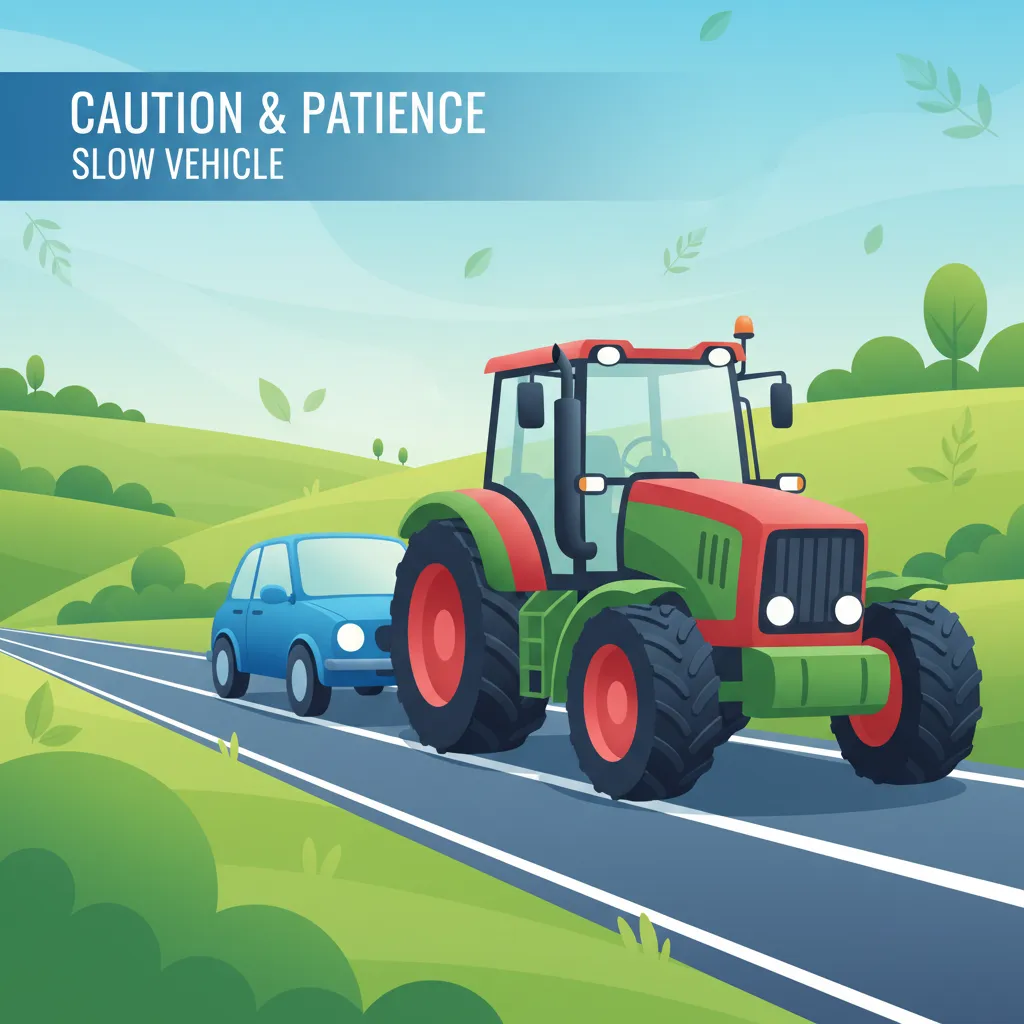
This lesson addresses encounters with slow-moving vehicles, such as tractors, which are common on rural roads. It teaches drivers to be patient, maintain a safe following distance, and only overtake when it is absolutely safe and legal to do so. Recognizing the large size and limited maneuverability of such vehicles is crucial for avoiding accidents.

This lesson examines the signs that convey dimensional and weight restrictions, which are vital for safe tractor and trailer operation. It outlines how to read width, height, and weight limit signs and the legal implications of exceeding these limits. The lesson provides guidance on planning loads to comply with bridge and road classification restrictions found across Polish rural networks.
This lesson outlines the statutory speed limits that professional drivers of Category C vehicles must adhere to on Polish roads. It clearly distinguishes the maximum permitted speeds in built-up areas, on single carriageways, and on motorways. The content also explains how to interpret road signs that may indicate temporary or vehicle-specific speed restrictions, ensuring drivers remain compliant with the law and avoid penalties from speed enforcement measures.
This lesson explains the scope of the Category T licence, distinguishing it from other categories and outlining the vehicles covered, such as agricultural and forestry vehicles. It details the legal basis for operating these vehicles on public roads, including specific provisions in the Prawo o ruchu drogowym. Learners will understand the regulatory environment defining where and how Category T vehicles may be driven within Poland.

This lesson examines how a tractor driver should interact with a variety of road users, focusing on right-of-way rules at intersections and with cars, trucks, cyclists, and pedestrians. It discusses safe overtaking practices, appropriate signaling to communicate intentions, and the importance of checking blind spots. The lesson highlights the need for heightened caution near schools, villages, and areas with high pedestrian activity.
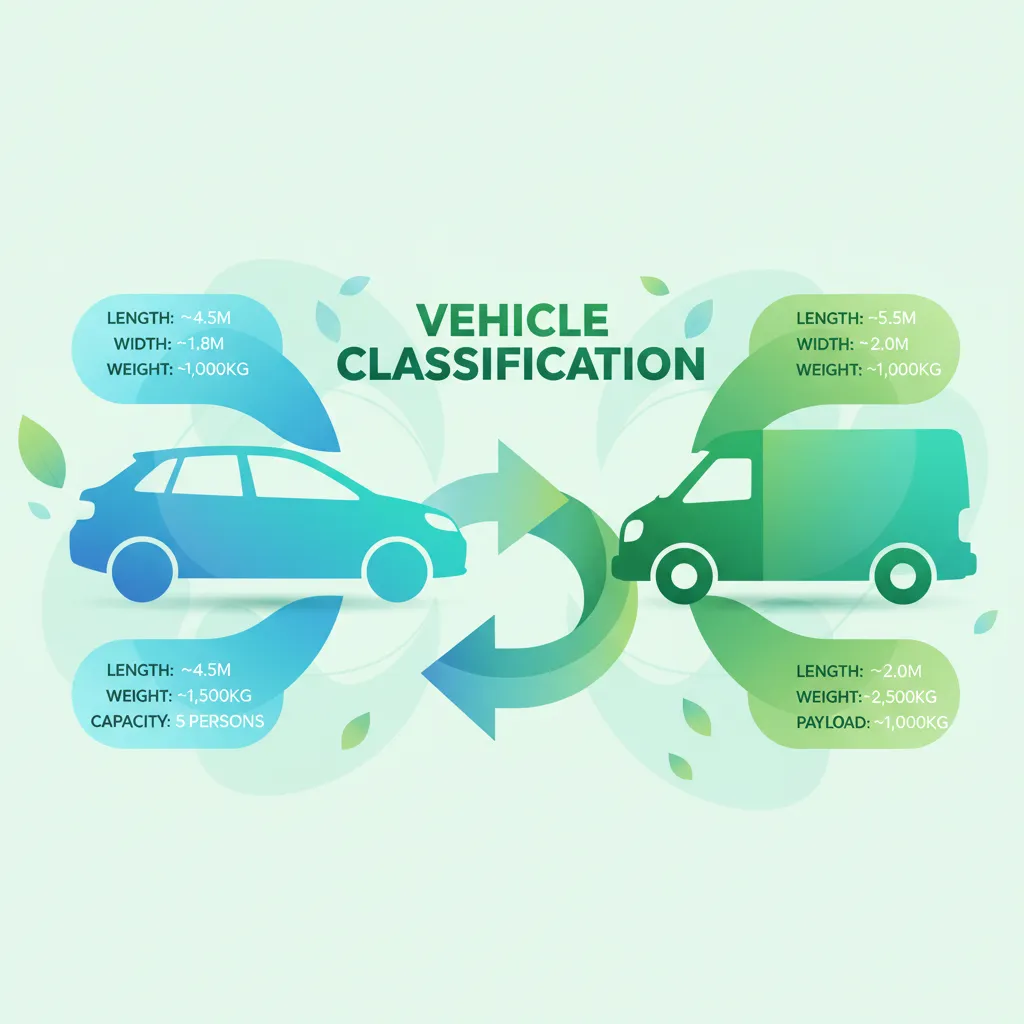
This lesson focuses on the precise classification of agricultural vehicles as defined by Polish law, differentiating between tractors, forestry machines, and trailers. It examines the legal parameters such as maximum permissible weight, width, height, and length that affect roadworthiness certifications. The lesson clarifies terminology used in official documents, ensuring learners can correctly identify the vehicles they are permitted to operate.

This lesson focuses on the specific hazards introduced by seasonal weather, such as mud, snow, ice, fog, and heavy rain. It explains how these conditions affect traction, braking, and driver visibility, and provides guidance on adjusting speed and using appropriate tires. The lesson also covers the proper use of lights and reflectors to improve visibility in low-light conditions.
This lesson introduces defensive driving principles for rural settings, teaching learners how to continually scan the environment and anticipate potential hazards. It discusses the unique challenges posed by slow-moving agricultural traffic, field entrances, and unpredictable farm equipment maneuvers. The lesson emphasizes proactive decision-making and early brake application to avoid collisions in mixed traffic.
Master Polish Category T driving theory on legal obligations for slow-moving vehicles, specifically the 40 km/h speed limit and mandatory P-12 triangular signs. Ensure compliance with Polish road traffic law for farm machinery.
This lesson addresses encounters with slow-moving vehicles, such as tractors, which are common on rural roads. It teaches drivers to be patient, maintain a safe following distance, and only overtake when it is absolutely safe and legal to do so. Recognizing the large size and limited maneuverability of such vehicles is crucial for avoiding accidents.
This lesson reviews the core set of regulatory and warning signs that all road users must obey, emphasizing those that affect agricultural tractors such as speed limits, stop, and give-way signs. It clarifies the colour and shape conventions used in Polish signage, enabling drivers to quickly recognize and react to sign information. The lesson also addresses the placement of signs in rural environments where visibility may be compromised.
This lesson explores the correct lane and road positioning for tractors, emphasizing the use of the right-hand lane or shoulder where appropriate. It clarifies how speed limits differ between road types and provides guidelines for adjusting speed based on vehicle load, road condition, and traffic density. Proper positioning improves safety for both the tractor driver and other road users sharing the same space.
This lesson outlines the legal responsibilities of tractor drivers as stipulated by Polish traffic law, emphasizing the duty to comply with all rules of the road. It discusses the liability framework for accidents involving agricultural vehicles, including the need for appropriate insurance and potential penalties. The lesson also explains the importance of maintaining accurate documentation, such as registration papers and a driver’s licence.
This lesson examines the signs that convey dimensional and weight restrictions, which are vital for safe tractor and trailer operation. It outlines how to read width, height, and weight limit signs and the legal implications of exceeding these limits. The lesson provides guidance on planning loads to comply with bridge and road classification restrictions found across Polish rural networks.

This lesson examines real-world case studies of harvest traffic, where multiple tractors and trailers share limited road space during peak agricultural periods. Learners explore strategies for coordinating speed, maintaining safe distances, and using signaling to communicate intentions. The content also addresses the challenges of field access points and the need for cooperation with other drivers.
This lesson outlines the statutory speed limits that professional drivers of Category C vehicles must adhere to on Polish roads. It clearly distinguishes the maximum permitted speeds in built-up areas, on single carriageways, and on motorways. The content also explains how to interpret road signs that may indicate temporary or vehicle-specific speed restrictions, ensuring drivers remain compliant with the law and avoid penalties from speed enforcement measures.

This lesson provides comprehensive guidelines for safely transporting agricultural equipment, focusing on proper load securing techniques and weight distribution calculations. It discusses route planning that accounts for road conditions, bridge weight capacities, and seasonal obstacles like mud or snow. The lesson also emphasizes the use of protective equipment and regular compliance verification for safe operations.
This lesson focuses on the precise classification of agricultural vehicles as defined by Polish law, differentiating between tractors, forestry machines, and trailers. It examines the legal parameters such as maximum permissible weight, width, height, and length that affect roadworthiness certifications. The lesson clarifies terminology used in official documents, ensuring learners can correctly identify the vehicles they are permitted to operate.
Find clear answers to common questions learners have about Slow-Moving Vehicle (Pojazdy wolnobieżne) Symbols. Learn how the lesson is structured, which driving theory objectives it supports, and how it fits into the overall learning path of units and curriculum progression in Poland. These explanations help you understand key concepts, lesson flow, and exam focused study goals.
This distinctive red triangle with a fluorescent yellow-orange border indicates that the vehicle, such as a tractor or other agricultural machinery, is designed for a maximum speed of 25 km/h. It warns other road users that they might encounter a vehicle operating significantly slower than standard traffic flow on Polish roads, requiring increased caution and safe overtaking maneuvers.
Flashing amber warning lights (światła ostrzegawcze migające) are mandatory for slow-moving vehicles, including tractors and their combinations, when their width exceeds 2.55 metres or their length exceeds 15 metres. They are also required in conditions of reduced visibility, such as fog or heavy rain, to enhance conspicuity for other road users, especially for Category T drivers.
When driving a slow-moving vehicle like a tractor on a public road, a Category T driver should generally keep as far to the right as safely possible. This allows faster traffic to overtake more easily and safely, especially on narrower rural roads. However, drivers must also be mindful of road conditions, verges, and potential hazards to ensure vehicle stability and safety, without risking an accident.
The triangular sign itself indicates a design speed of up to 25 km/h, meaning the vehicle is not constructed for higher speeds. While a Category T tractor might be capable of higher speeds, if it's classified as a Pojazd wolnobieżny and displaying the sign, its operation on public roads requires adherence to safe speeds appropriate for its characteristics and the traffic situation, often implying slower travel than other vehicles. Polish law dictates specific speed limits for different road types, which apply to all vehicles, but slow-moving vehicles must not exceed their design speed.
Failure to display the correct slow-moving vehicle sign or use mandatory flashing amber lights for agricultural vehicles on public roads can result in fines under Polish traffic law. More importantly, it significantly increases the risk of accidents by failing to adequately warn other drivers of the vehicle's reduced speed and size, endangering both the tractor driver and other road users.
Build custom practice sessions tailored precisely to your needs. Focus on areas requiring improvement, review specific Polish road signs, or master complex traffic rules to ensure full preparation for your official driving license exam.