
This lesson is the first step in understanding Polish road signs, focusing specifically on warning signs (znaki ostrzegawcze). You'll learn to recognize the distinctive triangular shape of these signs and interpret their various pictograms, which alert you to upcoming hazards. Mastering these signs is crucial for anticipating road conditions, adjusting your driving proactively, and successfully navigating relevant questions in your Polish Category B theory exam.
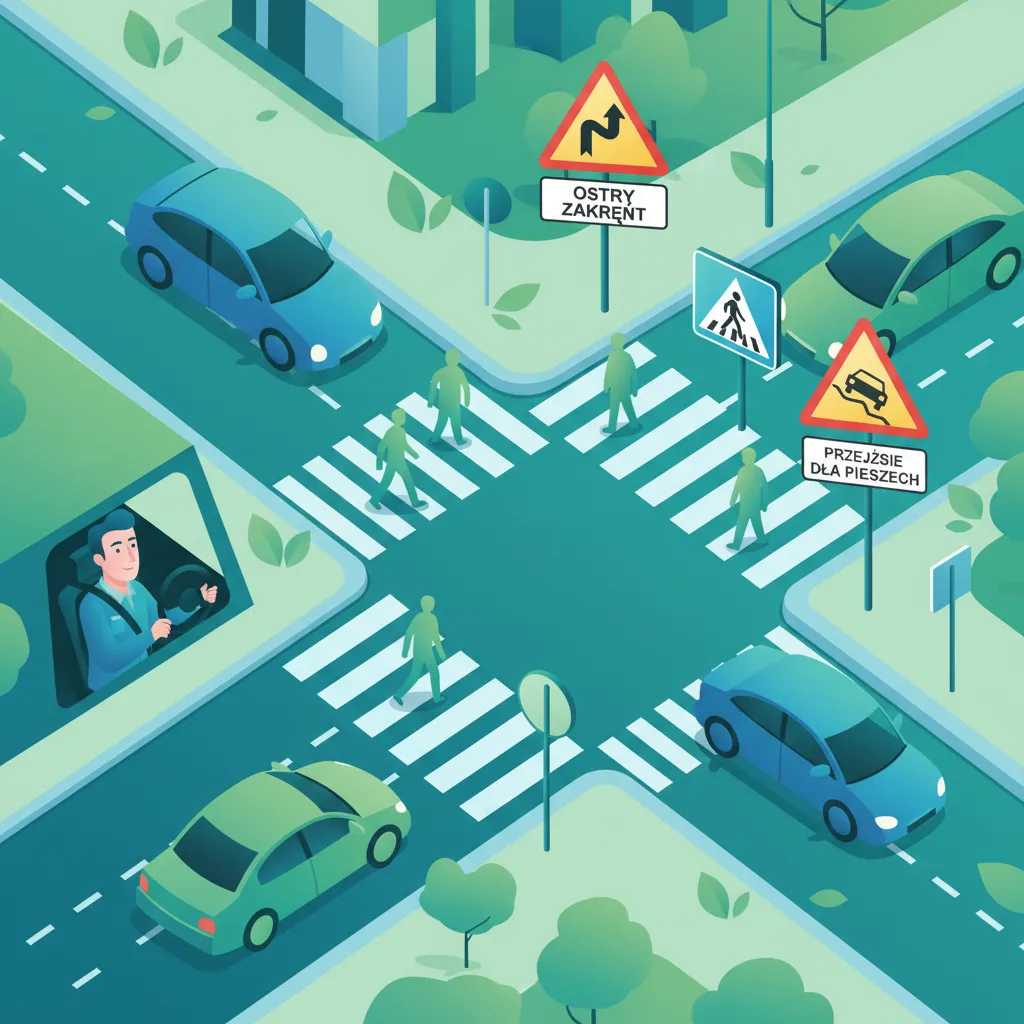
Lesson content overview
Understanding road signs is fundamental to safe and compliant driving. In the comprehensive Polish Driving Theory – Category B License Preparation curriculum, warning signs, known as znaki ostrzegawcze, play a crucial role in preparing drivers for potential hazards ahead. These distinctive triangular signs do not impose direct commands, but rather provide vital advance notice, allowing you to anticipate and adapt your driving behavior proactively. Mastering their interpretation is key to reducing accident risks and ensuring a smooth journey on Polish roads.
Warning signs are proactive safety tools designed to alert drivers to upcoming conditions that might require caution or a change in driving style. Unlike prohibitory or mandatory signs, which issue direct commands or restrictions, warning signs provide information about potential dangers. Their core purpose is to give you sufficient time to perceive a hazard, react appropriately, and adjust your speed, lane position, or other vehicle controls before you encounter the danger itself. This proactive approach significantly enhances road safety by preventing sudden, dangerous maneuvers.
These signs are an integral part of the Polish road traffic system, governed by the Rozporządzenie Ministra Infrastruktury (Road Traffic Act). By alerting drivers early, they contribute to a smoother flow of traffic and a reduction in collisions, directly linking to principles of effective speed management and vehicle control discussed in other lessons.
The design and placement of Polish warning signs adhere to specific principles that ensure their effectiveness and universal understanding among drivers. These foundational concepts are crucial for interpreting the signs correctly and responding appropriately.
All warning signs in Poland are easily identifiable by their consistent form: an isosceles triangle with a distinctive red outline, a white background, and a black pictogram. This uniform shape and colour scheme immediately signal to drivers that the sign conveys a warning of an upcoming hazard, regardless of language barriers or specific symbol. This instant recognition allows drivers to quickly categorize the sign's intent and mentally prepare for an upcoming situation requiring caution.
One of the most critical principles of warning signs is their placement. They are strategically positioned a sufficient distance ahead of the actual hazard. This distance is calculated to provide the driver with enough time to complete the perception-reaction-braking (PRB) cycle safely. The PRB cycle accounts for the time it takes to see the sign, understand its meaning, decide on an action, and then physically execute that action (e.g., applying brakes). Therefore, drivers are expected to process the information and make necessary adjustments before reaching the danger zone, not as they enter it.
Each warning sign employs a standardized black pictogram to symbolize a specific danger. Whether it's a curving arrow for a bend, a wavy line for an uneven road, or a silhouette of a deer for an animal crossing, these symbols are designed for universal comprehension. This approach transcends language barriers, ensuring that drivers from any background can quickly understand the nature of the upcoming hazard. The clarity and simplicity of these pictograms are essential for rapid decision-making on the road.
Within the hierarchy of Polish road signs, warning signs hold specific authority. They have lower authority than mandatory or prohibitory signs, which issue direct commands or prohibitions (e.g., speed limits, stop signs). However, warning signs generally have higher authority than road markings alone. This means that if a warning sign indicates a hazard that conflicts with a temporary road marking, the warning sign might take precedence, especially if backed by other signs. When a warning sign is accompanied by a prohibitory sign, the prohibitory sign must be obeyed first, with the warning sign providing context for that obedience.
Under Polish law, drivers are not merely advised to observe warning signs; they have a legal obligation to heed the information conveyed and adapt their driving accordingly. Failure to adjust speed, change lane position, or take other necessary preparatory actions when required by a warning sign can be considered negligence and may lead to legal penalties if it results in an accident or endangers other road users. This principle underpins the serious nature of these signs and their role in maintaining road safety.
Warning signs do not impose a specific speed limit unless accompanied by a supplementary speed limit plate. However, they strongly indicate the need to adjust your speed to safely navigate the indicated hazard.
Polish warning signs cover a broad range of potential hazards. Familiarizing yourself with the most common categories and their specific pictograms is crucial for preparing for your Category B license exam and for safe driving.
These signs alert drivers to upcoming changes in the road's direction, which may require a reduction in speed to maintain control.
When encountering a curve warning sign, it is essential to reduce your speed before entering the curve. This allows you to maintain control through the bend without needing to brake sharply within the turn, which can lead to loss of traction.
These signs inform drivers about changes in road elevation, specifically steep upward or downward slopes.
The percentage indicated on these signs (e.g., 5%, 10%) signifies the gradient's steepness. On steep descents, selecting a lower gear is a legal requirement in Poland to utilize engine braking, thus reducing reliance on friction brakes and preventing them from overheating, a dangerous condition known as brake fade. On steep ascents, be prepared for reduced engine performance and potentially increased fuel consumption.
These signs warn of specific conditions affecting the road surface or potential obstacles.
When encountering these signs, drivers should reduce speed, increase their following distance, and be prepared for sudden vehicle movements or obstacles. Loose gravel, in particular, demands gentle steering and braking to avoid skidding.
These signs warn drivers of areas where wild animals frequently cross the road, posing a collision risk.
Different pictograms may represent specific types of animals, such as deer or moose, but the general principle remains the same: exercise extreme caution. Animal crossings are particularly dangerous at dawn, dusk, and night when visibility is low and animals are most active. Reducing speed significantly and scanning the road edges for movement are crucial responses.
These signs indicate temporary changes to the road layout due to construction, maintenance, or repair work.
Construction zones often involve temporary speed limits, lane closures, diversions, and the presence of workers or heavy machinery. It is mandatory to obey all temporary signs and markings in these areas, as they supersede permanent regulations for the duration of the works. Failing to do so can endanger both yourself and the workers.
These signs warn of reduced traction, often under specific weather conditions.
This sign demands an immediate adjustment to driving behavior. Drivers must reduce speed, increase their following distance substantially, and avoid sudden braking, acceleration, or steering movements. The risk of hydroplaning or skidding is significantly higher on slippery surfaces, making smooth and controlled inputs vital.
These signs alert drivers to upcoming areas where pedestrians or cyclists may cross the road.
Upon seeing these signs, drivers must be prepared to slow down, cover their brakes, and be ready to stop to yield to pedestrians or cyclists as required by law (e.g., §27 of the Polish Road Traffic Act). Vigilance is particularly important in urban and residential areas where these crossings are more frequent.
Polish warning signs also cover a variety of other specific hazards:
The "Other Danger" sign is a versatile warning that requires careful attention, especially if accompanied by a text plate explaining the hazard (e.g., "Children," "Low Flying Aircraft").
Warning signs are often accompanied by supplementary plates (tabliczki), which provide additional information, clarify the nature of the hazard, or specify its distance. These plates are rectangular and typically placed directly beneath the triangular warning sign.
Perhaps the most common supplementary plate is the advisory speed plate.
This plate displays a recommended maximum speed (e.g., "30 km/h") that drivers should not exceed when navigating the hazard indicated by the primary warning sign. While not a legally enforced speed limit in the same way a regulatory speed limit sign is, ignoring an advisory speed can be considered negligence, especially if it contributes to an accident. It is a strong recommendation based on road engineering assessments of safe speeds.
Other supplementary plates can specify the distance to the hazard or its length. For example, a plate might indicate "200 m" meaning the hazard is 200 meters ahead, or "for 5 km" meaning the hazardous condition extends for 5 kilometers. These help drivers plan their approach and sustain appropriate caution.
In Polish traffic law, responding to warning signs is not merely a suggestion but a legal duty. Adhering to these rules ensures safety for all road users.
Rule 1: Observation and Response. The driver must adapt their speed and vehicle control when approaching a warning sign. This is a mandatory requirement under the Polish Road Traffic Act. The rationale is to provide sufficient reaction time to mitigate the indicated hazards. For instance, slowing to the advisory speed before a sharp curve is correct, whereas ignoring a "roadworks ahead" sign and maintaining high speed is incorrect and illegal.
Rule 2: Use of Appropriate Gear. When a "steep descent" sign (A-21) is displayed, the driver must select a lower gear to assist in speed control. This applies to descending grades, especially those exceeding 5%. This mandatory action prevents brake overheating and potential loss of control.
Rule 3: Yield to Vulnerable Users. Upon encountering a pedestrian or cyclist crossing warning sign (A-16, A-17), the driver must yield as required by law (§27 of the Road Traffic Act) if pedestrians or cyclists are present or clearly intending to cross. This is particularly crucial when the warning sign is combined with regulatory signs like a "yield" sign.
Rule 4: Advisory Speed Plates. Drivers should respect the advisory speed indicated on supplementary plates. While not a legally enforced speed limit, failure to do so, especially if it contributes to an accident, may constitute negligence. It represents the safe maximum speed for the given conditions.
Rule 5: Temporary Traffic Regulations. During roadworks, any temporary signs (e.g., temporary speed limits, lane closures, diversions) supersede permanent signs. This means drivers must obey the temporary regulations for the duration of the construction period, even if they contradict permanent signage.
Ignoring or misinterpreting warning signs can lead to dangerous situations and legal consequences. Here are some common violations and mistakes:
The effectiveness of warning signs and the appropriate driver response are not static; they are heavily influenced by various contextual factors.
The design and placement of warning signs are deeply rooted in human perception, reaction times, and the fundamental physics of vehicle dynamics.
a = v²/r (acceleration equals velocity squared divided by the radius of the curve) demonstrates that higher speeds (v) on tighter curves (smaller r) exponentially increase the required grip from the tires. Warning signs for curves (A-1a, A-1b, A-2) are placed to prompt drivers to reduce speed, thereby lowering lateral acceleration and maintaining tire grip to safely navigate the bend.Explore all units and lessons included in this driving theory course.
Lesson content overview
Explore all units and lessons included in this driving theory course.
Explore search topics learners often look for when studying Warning Signs (znaki ostrzegawcze). These topics reflect common questions about road rules, driving situations, safety guidance, and lesson level theory preparation for learners in Poland.
Browse additional driving theory lessons that cover connected traffic rules, road signs, and common driving situations related to this topic. Improve your understanding of how different rules interact across everyday traffic scenarios.
Learn to identify and interpret all Polish triangular warning signs (znaki ostrzegawcze). Understand what each hazard symbol means and how to proactively adjust your driving for road safety.
In this lesson, learners study warning signs that alert drivers to potential hazards, focusing on those that are particularly relevant to motorcyclists. The content includes signs indicating curves, slippery surfaces, animal crossings, tram tracks, and construction zones, each requiring specific riding adjustments. The lesson teaches riders how to interpret these signs to anticipate hazards, adjust speed appropriately, and maintain a safe distance from potential dangers.
This lesson provides a foundational understanding of the Polish road sign system, categorizing signs into three main types: warning, prohibitory/mandatory, and informational. It explains the significance of different shapes and color codes, enabling drivers to quickly interpret their meaning and legal obligation. By mastering the visual language of road signs, learners will be equipped to make correct and safe decisions in any traffic situation they encounter.

This lesson examines the variety of pavement markings that define lane structures, traffic flow, and special zones on Polish roads. Learners will study solid and broken lines, lane division markings, and the distinct symbols for bicycle lanes, bus lanes, and tram tracks, all of which affect motorcyclist positioning. The lesson also addresses surface texture indicators that signal changing road conditions, enabling riders to maintain correct lane discipline.
This lesson covers a wide range of signs and markings that provide information and guidance to drivers. It explains how to read destination signs, locate services, and interpret road markings like lane lines, stop lines, and pedestrian crossings. This knowledge is essential for navigation, lane discipline, and safe interaction with other road users.

This lesson focuses on traffic control signals, primarily traffic lights. It details the meaning of each color in the sequence—red, amber, and green—as well as flashing signals and arrows for specific turns. The content also covers lane control signals and pedestrian signals to ensure safe and compliant navigation through controlled intersections.

This lesson prepares drivers for the event of a vehicle breakdown on a motorway or expressway. It details the correct procedure: pulling over to the emergency lane, activating hazard lights, and placing the warning triangle at the legally required distance. The importance of wearing a reflective vest when outside the vehicle is also a key safety point.

This lesson focuses on the specific signage and on-vehicle markings used to indicate slow-moving vehicles, a critical element for tractors on public roads. Learners will understand the design and meaning of the triangular sign and the requirements for flashing amber lights. The content also discusses proper lane positioning and speed adjustments required when sharing the road with faster traffic.

This lesson focuses on informational signs that provide drivers with essential data for navigation and travel planning. Learners will explore signs indicating distances, highway exits, service areas, and speed zone changes, learning how these signs impact route selection and riding strategy. The lesson also addresses the interpretation of direction arrows and road number signs, enabling riders to integrate sign information into effective journey planning and maintain situational awareness.

This lesson focuses on blue, circular mandatory signs that direct drivers to perform a specific action. Examples include signs indicating a compulsory direction, a mandatory roundabout, or a minimum speed limit. Unlike advisory signs, these instructions are legally binding and crucial for maintaining orderly traffic flow.
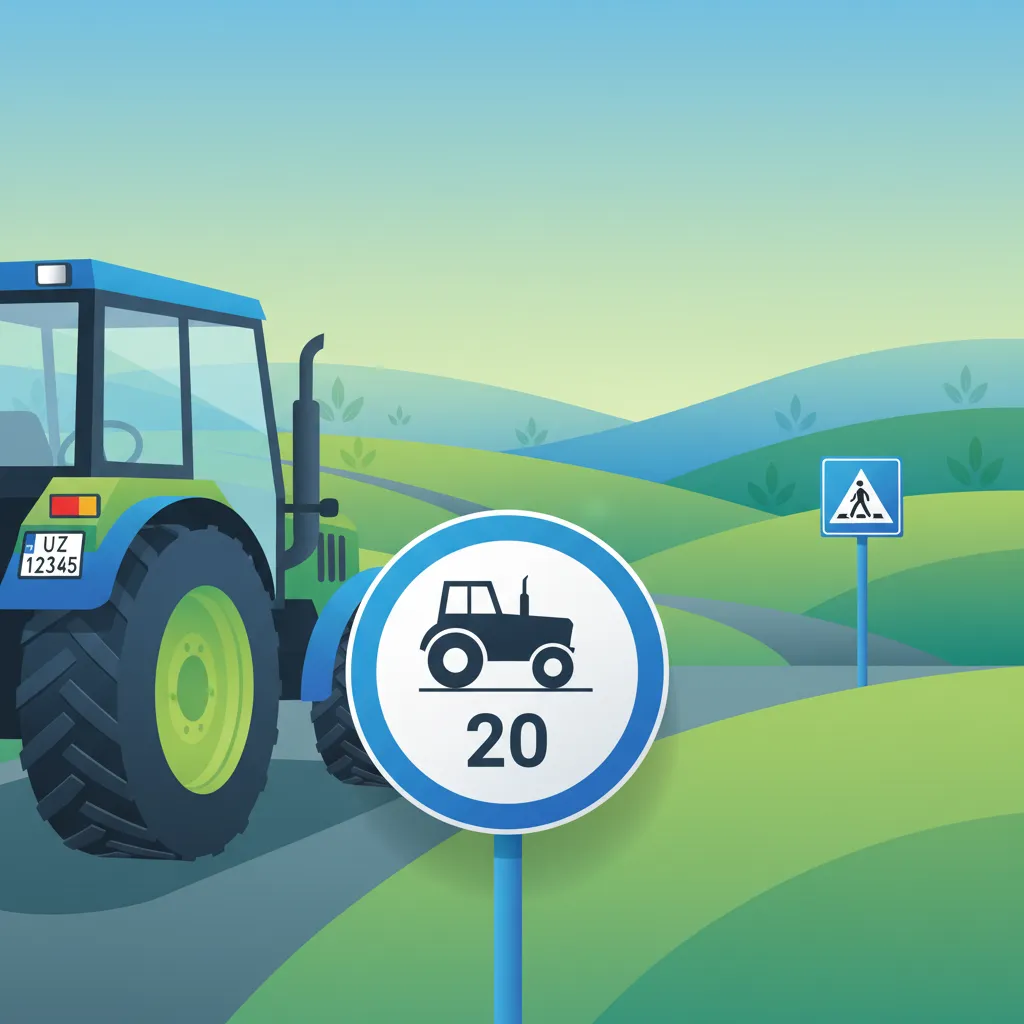
This lesson reviews the core set of regulatory and warning signs that all road users must obey, emphasizing those that affect agricultural tractors such as speed limits, stop, and give-way signs. It clarifies the colour and shape conventions used in Polish signage, enabling drivers to quickly recognize and react to sign information. The lesson also addresses the placement of signs in rural environments where visibility may be compromised.
Explore how warning signs fit into the broader system of Polish road signage. Learn about their authority relative to prohibitory, mandatory, and informational signs for better traffic rule comprehension.
This lesson provides a foundational understanding of the Polish road sign system, categorizing signs into three main types: warning, prohibitory/mandatory, and informational. It explains the significance of different shapes and color codes, enabling drivers to quickly interpret their meaning and legal obligation. By mastering the visual language of road signs, learners will be equipped to make correct and safe decisions in any traffic situation they encounter.
This lesson covers a wide range of signs and markings that provide information and guidance to drivers. It explains how to read destination signs, locate services, and interpret road markings like lane lines, stop lines, and pedestrian crossings. This knowledge is essential for navigation, lane discipline, and safe interaction with other road users.
This lesson focuses on informational signs that provide drivers with essential data for navigation and travel planning. Learners will explore signs indicating distances, highway exits, service areas, and speed zone changes, learning how these signs impact route selection and riding strategy. The lesson also addresses the interpretation of direction arrows and road number signs, enabling riders to integrate sign information into effective journey planning and maintain situational awareness.
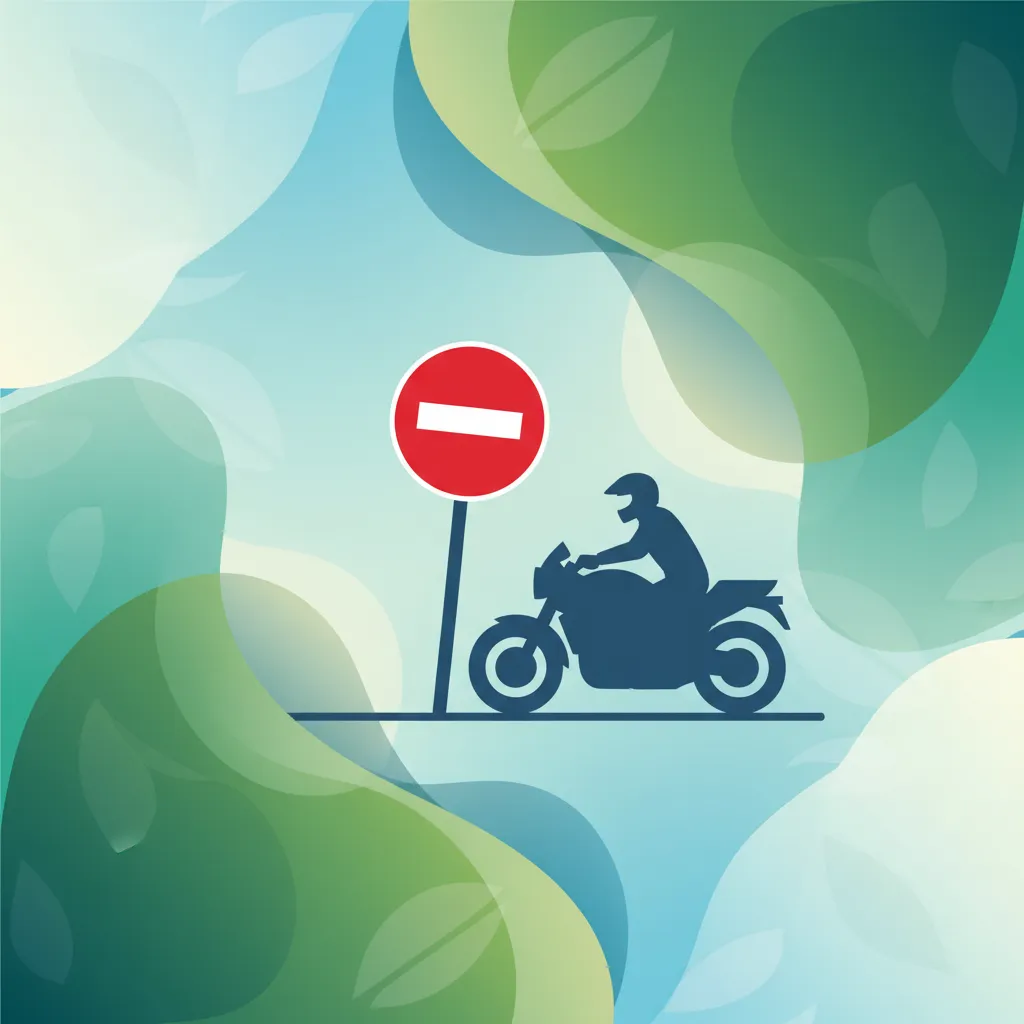
This lesson examines the family of regulatory signs that dictate mandatory actions and prohibitions on Polish roads, emphasizing how each sign influences motorcyclist behaviour. Learners will explore the stop, give way, speed limit, and no overtaking signs, understanding the legal obligations they impose. The lesson also highlights signs that specifically affect motorcycles, such as lane restrictions, ensuring riders recognize and obey regulations unique to two-wheel traffic.
This lesson reviews the core set of regulatory and warning signs that all road users must obey, emphasizing those that affect agricultural tractors such as speed limits, stop, and give-way signs. It clarifies the colour and shape conventions used in Polish signage, enabling drivers to quickly recognize and react to sign information. The lesson also addresses the placement of signs in rural environments where visibility may be compromised.
This lesson focuses on blue, circular mandatory signs that direct drivers to perform a specific action. Examples include signs indicating a compulsory direction, a mandatory roundabout, or a minimum speed limit. Unlike advisory signs, these instructions are legally binding and crucial for maintaining orderly traffic flow.
This lesson focuses on traffic control signals, primarily traffic lights. It details the meaning of each color in the sequence—red, amber, and green—as well as flashing signals and arrows for specific turns. The content also covers lane control signals and pedestrian signals to ensure safe and compliant navigation through controlled intersections.
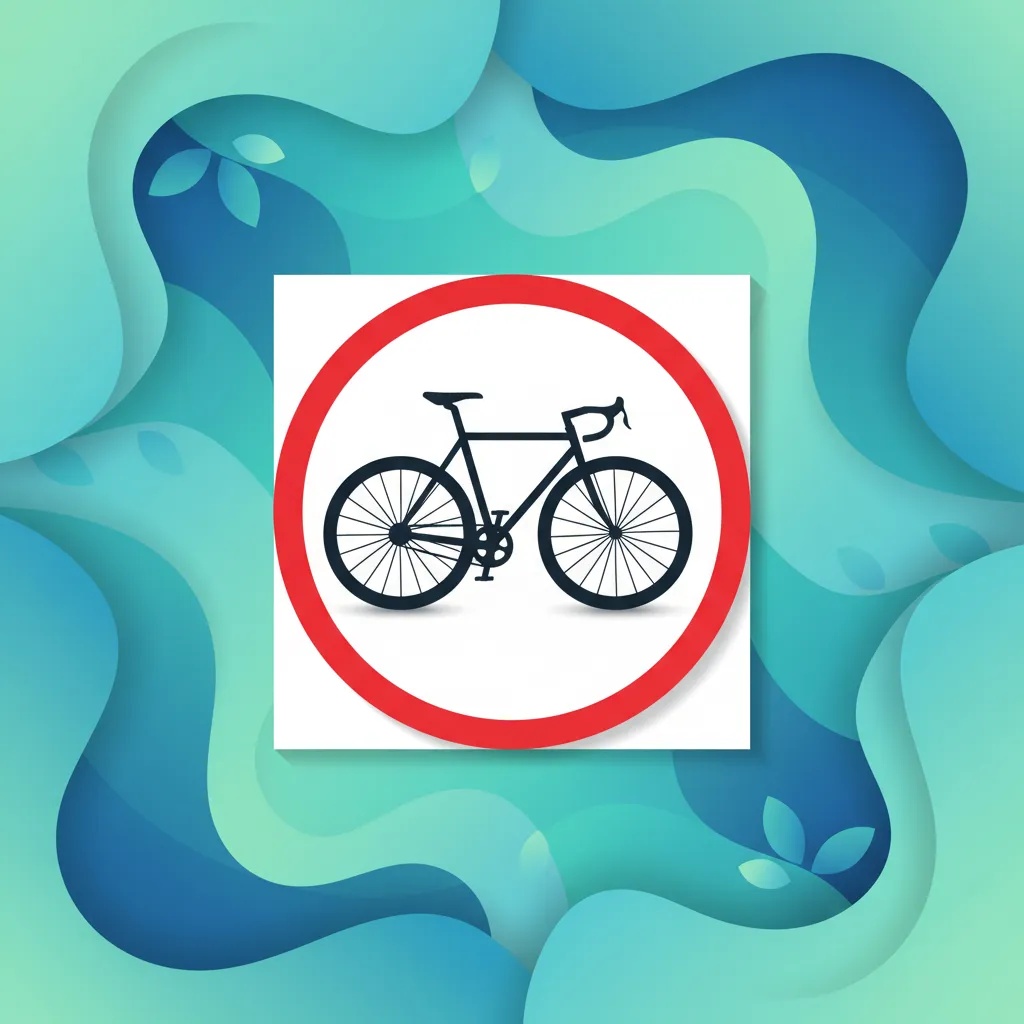
This lesson explains the function of circular prohibition signs, which impose legal restrictions on drivers. It details common prohibitions such as speed limits, 'no entry' signs, and restrictions on overtaking or parking. Compliance with these signs is mandatory, and this lesson ensures learners can correctly identify and obey them.
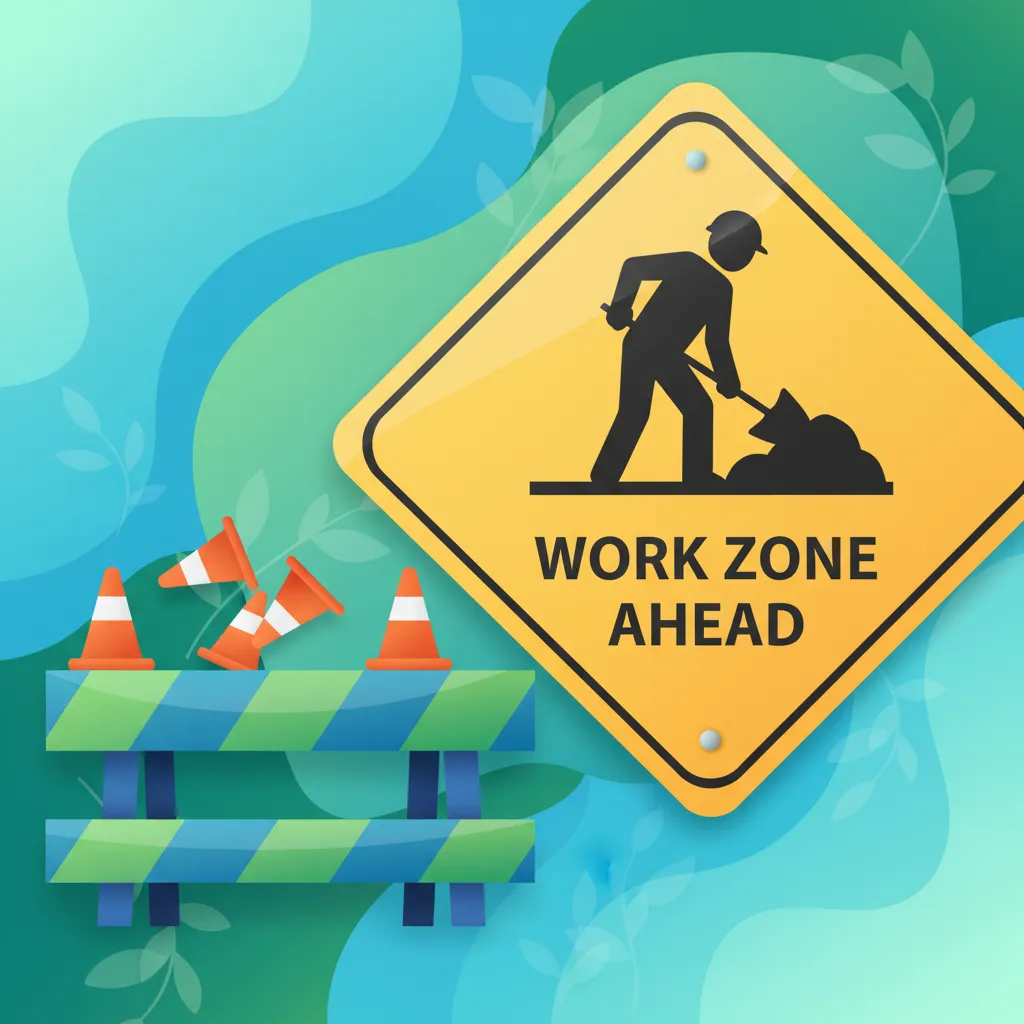
In this lesson, learners explore the temporary signs that appear during road construction or maintenance activities, focusing on how they alter normal traffic patterns. The content covers signs indicating lane shifts, temporary speed limits, detour routes, and equipment zones where workers are present. The lesson emphasizes the importance of slowing down, staying alert, and obeying temporary regulations to navigate safely through work zones while ensuring compliance.
This lesson examines the variety of pavement markings that define lane structures, traffic flow, and special zones on Polish roads. Learners will study solid and broken lines, lane division markings, and the distinct symbols for bicycle lanes, bus lanes, and tram tracks, all of which affect motorcyclist positioning. The lesson also addresses surface texture indicators that signal changing road conditions, enabling riders to maintain correct lane discipline.
Find clear answers to common questions learners have about Warning Signs (znaki ostrzegawcze). Learn how the lesson is structured, which driving theory objectives it supports, and how it fits into the overall learning path of units and curriculum progression in Poland. These explanations help you understand key concepts, lesson flow, and exam focused study goals.
Polish warning signs are distinctively triangular with a red border and black pictogram on a yellow or white background. This universal shape immediately signals to drivers that an upcoming hazard requires their attention and a potential adjustment in driving.
In built-up areas (obszar zabudowany), warning signs are typically placed 50-100 meters before the hazard. Outside built-up areas, they are usually 150-300 meters in advance. This distance allows drivers sufficient time to react safely.
Warning signs can indicate both permanent and temporary hazards. For instance, a 'Sharp Turn' sign usually indicates a permanent feature, while a 'Road Works' sign (roboty drogowe) is almost always temporary, indicating changing conditions.
Upon seeing a 'Slippery Road' sign, you should immediately reduce your speed, avoid sudden braking or steering, and increase your following distance. Be prepared for reduced traction due to weather or road conditions ahead.
While most warning signs are triangular, the 'Yield' (Ustąp pierwszeństwa) sign, which signals the need to give way, is an inverted triangle. This unique shape emphasizes its critical importance for right-of-way situations.
Build custom practice sessions tailored precisely to your needs. Focus on areas requiring improvement, review specific Polish road signs, or master complex traffic rules to ensure full preparation for your official driving license exam.