
Welcome to the lesson on Informational Signs and Road Markings, part of the 'Traffic Signs and Road Markings' unit in your Polish Category B license preparation. This lesson builds on your understanding of warning, prohibition, and mandatory signs by introducing signs and markings that guide and inform, which are crucial for safe navigation and adherence to traffic rules.
Lesson content overview
Navigating the roads of Poland safely and efficiently requires a thorough understanding of not just warning or mandatory signs, but also the vast array of informational signs and road markings. This comprehensive lesson, part of your Polish Driving Theory – Comprehensive Category B License Preparation, will equip you with the knowledge to interpret guidance that affects route planning, lane discipline, positioning at intersections, and safe interaction with pedestrians, cyclists, and other road users.
Unlike prohibitory or mandatory signs, informational signs and markings convey non-regulatory information. They don't impose a legal duty directly but provide essential context for safe maneuvering, aiding in navigation, decision-making, and situational awareness. Proper interpretation reduces confusion, prevents last-minute lane changes, and minimizes collision risk, ultimately improving traffic flow and safety for everyone on the road.
Familiarity with basic traffic sign categories (warning, prohibition, mandatory), understanding of right-of-way concepts, and foundational knowledge of Polish road traffic law (Prawo o ruchu drogowym) are crucial prerequisites for mastering this topic.
Informational signs, often characterized by their blue, green, or brown backgrounds, are designed to provide drivers with essential guidance without imposing strict legal obligations. They cover destinations, services, tourist attractions, and supplementary details, helping you make informed decisions on your route. In Poland, these fall under the general category of informational signs (symbol Y in Polish road regulations).
Destination signs are your primary tools for route planning, indicating the direction and distance to cities, towns, or specific places. They are vital for selecting the correct lane well in advance of an intersection or exit.
Do not assume distance panels are optional. Ignoring lane-specific arrows can lead to sudden, unsafe lane changes and potential collisions. Always prepare to switch lanes early and smoothly.
When a destination sign indicates a specific lane (e.g., "right lane for city A"), you must obey this guidance. Failing to do so can result in improper lane use, even if it doesn't directly violate a prohibition sign.
Service signs alert drivers to the availability and location of facilities crucial for travel comfort and safety, such as fuel stations, restaurants, hotels, and medical aid. These are typically blue with white symbols.
These signs allow you to plan your stops safely, avoiding abrupt maneuvers. While informational, remember that merging into a service area still requires adherence to standard lane markings and right-of-way rules.
Tourist and cultural signs are typically brown with white text or symbols. They direct drivers to points of interest like historical monuments, national parks, museums, or scenic routes.
These signs are purely informational and do not impose any legal obligation to stop or adjust your speed (unless combined with other regulatory signs). They serve to enhance your travel experience by highlighting cultural or natural attractions.
Supplementary panels (tablice dodatkowe) are rectangular plates placed beneath a main sign. They provide additional data that clarifies or extends the meaning of the primary sign, making information more precise.
An additional plate placed beneath a primary sign that provides extra details like distance, direction, or time-based restrictions, clarifying the scope of the main sign.
It is crucial to interpret the primary sign and its supplementary panel together for a complete understanding. Ignoring these panels can lead to misinterpretation, especially regarding temporary speed limits or parking restrictions.
Road surface markings are painted symbols, lines, and colors directly on the pavement. They provide continuous, location-specific instructions and guidance that are visible to all drivers, enhancing safety and order on the road.
Lane lines are fundamental for maintaining discipline and order on multi-lane roads, at intersections, and on curves.
Never cross a solid white line unless absolutely necessary for safety, such as avoiding an immediate obstacle. Intentional crossing is a traffic offense.
These crucial markings dictate where you must stop or yield before an intersection, pedestrian crossing, or traffic signal.
A wide white line located on the road surface before traffic signals, stop signs, or pedestrian crossings, marking the precise point where a vehicle must come to a complete halt.
Pedestrian crossings are designated areas where pedestrians have priority. Drivers have a strict legal obligation to yield to pedestrians within or entering these zones.
Failure to yield to pedestrians at a marked crossing is a serious offense, carrying significant fines and demerit points, and most importantly, poses a high risk of accident.
These lanes are specifically designated for certain types of traffic to improve flow and safety for public transport and vulnerable road users.
Road markings play a crucial role in regulating where you can and cannot park or stop, preventing obstruction and maintaining traffic flow.
Always check for both signs and road markings when parking. A sign indicating "no parking" might be reinforced by a yellow line, or a white line might denote a parking bay under specific rules.
At intersections, arrows painted on the road surface direct traffic into the correct lane for intended maneuvers, reducing confusion and potential conflicts.
You must follow the direction indicated by the arrow markings for the lane you are in. Changing lanes once within a dedicated turn lane is generally prohibited and highly dangerous.
Continuous white lines (sometimes yellow on motorways) mark the outer edge of the carriageway, separating it from the shoulder or emergency lane.
These lines provide a crucial visual reference for drivers, especially in poor visibility, helping to maintain proper lane positioning. Crossing them onto the shoulder is generally prohibited, except in emergencies or to avoid an obstacle. Using the shoulder as a regular travel lane is illegal and unsafe.
In certain zones, often temporary or specific areas like school zones, speed limits may be painted directly onto the road surface (e.g., a large "30" in white).
These painted limits are mandatory and override the default speed limit for that section of road. They often complement electronic signs and serve as an additional reminder for drivers to adjust their speed. You must adhere to this marked speed limit until you pass another sign or marking indicating a different limit.
Adhering to the information provided by signs and markings is fundamental for safe and lawful driving in Poland. While some directly imply legal duties, others are critical for preventing secondary infractions and maintaining traffic order.
Misinterpreting or ignoring informational signs and road markings is a frequent cause of traffic infractions and accidents. Understanding common mistakes can help you avoid them.
Ignoring Lane-Specific Destination Signs: Many drivers fail to get into the correct lane early enough, leading to sudden, dangerous lane changes or missing their turn.
Crossing Solid White Lines: This is a direct violation, often occurring when drivers impatiently try to overtake or change lanes where prohibited.
Parking on Yellow Lines: Drivers sometimes park for "just a minute" on solid yellow lines, especially in busy urban areas, causing obstruction and risking fines or towing.
Not Yielding at Pedestrian Crossings: A common and highly dangerous violation. Some drivers don't slow down or stop for pedestrians, especially at crossings without traffic lights.
Misusing Bus or Bicycle Lanes: Private car drivers sometimes enter these lanes, assuming they can use them during off-peak hours or in heavy traffic.
Disregarding Supplementary Panels: Overlooking the distance, time, or directional information on these panels can lead to misapplying a rule (e.g., speeding where a temporary limit is in effect).
The interpretation and adherence to informational signs and road markings can be influenced by various external factors. Drivers must adjust their behavior accordingly.
The design and placement of informational signs and road markings are carefully planned based on principles of safety, efficiency, and human psychology.
By understanding the underlying logic, drivers can appreciate the importance of these non-regulatory cues and integrate them effectively into their driving decisions, becoming safer and more responsible road users.
Understanding these signs and markings is best solidified through practical application. Here are a few scenarios to illustrate their importance.
Decision Point: A driver in the middle lane wants to go to the City Center. Correct Behavior: The driver observes the destination sign well in advance. Noticing the right-pointing arrow for 'City Center', they use their right turn signal and smoothly change into the rightmost lane before reaching the solid lane separation lines leading up to the intersection. Incorrect Behavior: The driver remains in the middle lane, misses the opportunity to change lanes, and then attempts a last-minute, abrupt lane change, or proceeds straight and misses their intended route.
Decision Point: The driver wants to overtake a slower vehicle. Correct Behavior: The driver recognizes the solid white line separating the traffic flows, indicating that crossing it is prohibited. They remain behind the slower vehicle, waiting patiently for a section of the road where a broken white line permits safe overtaking. Incorrect Behavior: The driver crosses the solid white line to overtake, risking a head-on collision with oncoming traffic or a fine for an illegal maneuver.
Decision Point: An approaching vehicle sees the zebra crossing and pedestrians. Correct Behavior: The driver reduces speed significantly upon seeing the crossing and the waiting pedestrians. They stop completely before the white stop line, allowing the pedestrians to cross safely. Incorrect Behavior: The driver continues through the crossing, assuming the pedestrians will wait, or fails to stop completely, endangering the pedestrians.
Decision Point: The driver approaches the painted '30' speed limit marking. Correct Behavior: Recognizing the mandatory nature of the painted speed limit, the driver immediately reduces their speed to 30 km/h before or exactly at the marking. They maintain this speed until a sign or further marking indicates otherwise, ensuring safety in the school zone. Incorrect Behavior: The driver ignores the painted '30' or dismisses it as merely advisory, maintaining a speed of 50 km/h. This risks a speeding fine and significantly increases the danger to children around the school.
This lesson covers the interpretation and application of Polish informational signs and road markings essential for safe driving and the Category B theory test. It distinguishes informational signs (providing navigation guidance, service locations, and tourist information) from regulatory markings, and details the specific rules governing lane lines, stop lines, pedestrian crossings, and dedicated lanes for buses and bicycles. Key focus areas include understanding when lane changes are permitted based on line types, yielding requirements at pedestrian crossings, parking restrictions indicated by yellow curb markings, and the binding nature of supplementary panels and painted speed limits. The lesson also addresses how weather, visibility, road type, and vehicle state affect marking interpretation, concluding with practical scenarios that reinforce correct decision-making.
A short set of high-value points that capture the most important learning from this lesson.
Informational signs (blue, green, brown backgrounds) provide non-regulatory guidance for navigation, services, and attractions, complementing mandatory and prohibition signs
Road markings communicate continuous, location-specific instructions that drivers must follow; solid white lines prohibit lane changes while broken white lines permit them when safe
Pedestrian crossings, whether zebra-striped or signal-controlled, require drivers to yield priority to pedestrians entering or already on the crossing
Bus lanes and bicycle lanes are reserved exclusively for their designated users during operational hours; private vehicles generally may not enter them
Supplementary panels beneath signs provide binding details about distance, direction, and time restrictions that clarify the main sign's application
Explore all units and lessons included in this driving theory course.
Solid yellow lines along the curb indicate no-stopping zones; dashed yellow lines may permit very brief stops for passenger drop-off
Stop lines (wide white lines) mark the precise stopping point at traffic signals, stop signs, and pedestrian crossings
Turn arrow markings on the road surface dictate the only permissible movement for each lane; changing lanes within a dedicated turn lane is prohibited and dangerous
Variable speed limits painted on the road surface (such as '30' in school zones) are mandatory and override default speed limits for that section
Double solid white lines prohibit crossing in either direction unless avoiding an immediate safety hazard
Failing to change lanes early when destination signs indicate lane-specific guidance, leading to sudden dangerous maneuvers near intersections
Parking on solid yellow lines for brief stops, assuming it won't cause obstruction or incur penalties
Entering bus or bicycle lanes during off-peak hours based on assumptions, without checking for explicit exceptions on accompanying signs
Ignoring supplementary panels that specify time-based restrictions or distance limitations, misapplying sign rules to the wrong context
Attempting to overtake by crossing solid white lines due to impatience, risking both legal penalties and head-on collisions
Lesson content overview
A short set of high-value points that capture the most important learning from this lesson.
Informational signs (blue, green, brown backgrounds) provide non-regulatory guidance for navigation, services, and attractions, complementing mandatory and prohibition signs
Road markings communicate continuous, location-specific instructions that drivers must follow; solid white lines prohibit lane changes while broken white lines permit them when safe
Pedestrian crossings, whether zebra-striped or signal-controlled, require drivers to yield priority to pedestrians entering or already on the crossing
Bus lanes and bicycle lanes are reserved exclusively for their designated users during operational hours; private vehicles generally may not enter them
Supplementary panels beneath signs provide binding details about distance, direction, and time restrictions that clarify the main sign's application
Explore all units and lessons included in this driving theory course.
Solid yellow lines along the curb indicate no-stopping zones; dashed yellow lines may permit very brief stops for passenger drop-off
Stop lines (wide white lines) mark the precise stopping point at traffic signals, stop signs, and pedestrian crossings
Turn arrow markings on the road surface dictate the only permissible movement for each lane; changing lanes within a dedicated turn lane is prohibited and dangerous
Variable speed limits painted on the road surface (such as '30' in school zones) are mandatory and override default speed limits for that section
Double solid white lines prohibit crossing in either direction unless avoiding an immediate safety hazard
Failing to change lanes early when destination signs indicate lane-specific guidance, leading to sudden dangerous maneuvers near intersections
Parking on solid yellow lines for brief stops, assuming it won't cause obstruction or incur penalties
Entering bus or bicycle lanes during off-peak hours based on assumptions, without checking for explicit exceptions on accompanying signs
Ignoring supplementary panels that specify time-based restrictions or distance limitations, misapplying sign rules to the wrong context
Attempting to overtake by crossing solid white lines due to impatience, risking both legal penalties and head-on collisions
Explore search topics learners often look for when studying Informational Signs and Road Markings. These topics reflect common questions about road rules, driving situations, safety guidance, and lesson level theory preparation for learners in Poland.
Browse additional driving theory lessons that cover connected traffic rules, road signs, and common driving situations related to this topic. Improve your understanding of how different rules interact across everyday traffic scenarios.
Learn to interpret Polish informational signs guiding you to essential services like fuel stations, restaurants, and hotels. Understand tourist signs and how they aid navigation and route planning for a smoother journey.

This lesson focuses on informational signs that provide drivers with essential data for navigation and travel planning. Learners will explore signs indicating distances, highway exits, service areas, and speed zone changes, learning how these signs impact route selection and riding strategy. The lesson also addresses the interpretation of direction arrows and road number signs, enabling riders to integrate sign information into effective journey planning and maintain situational awareness.
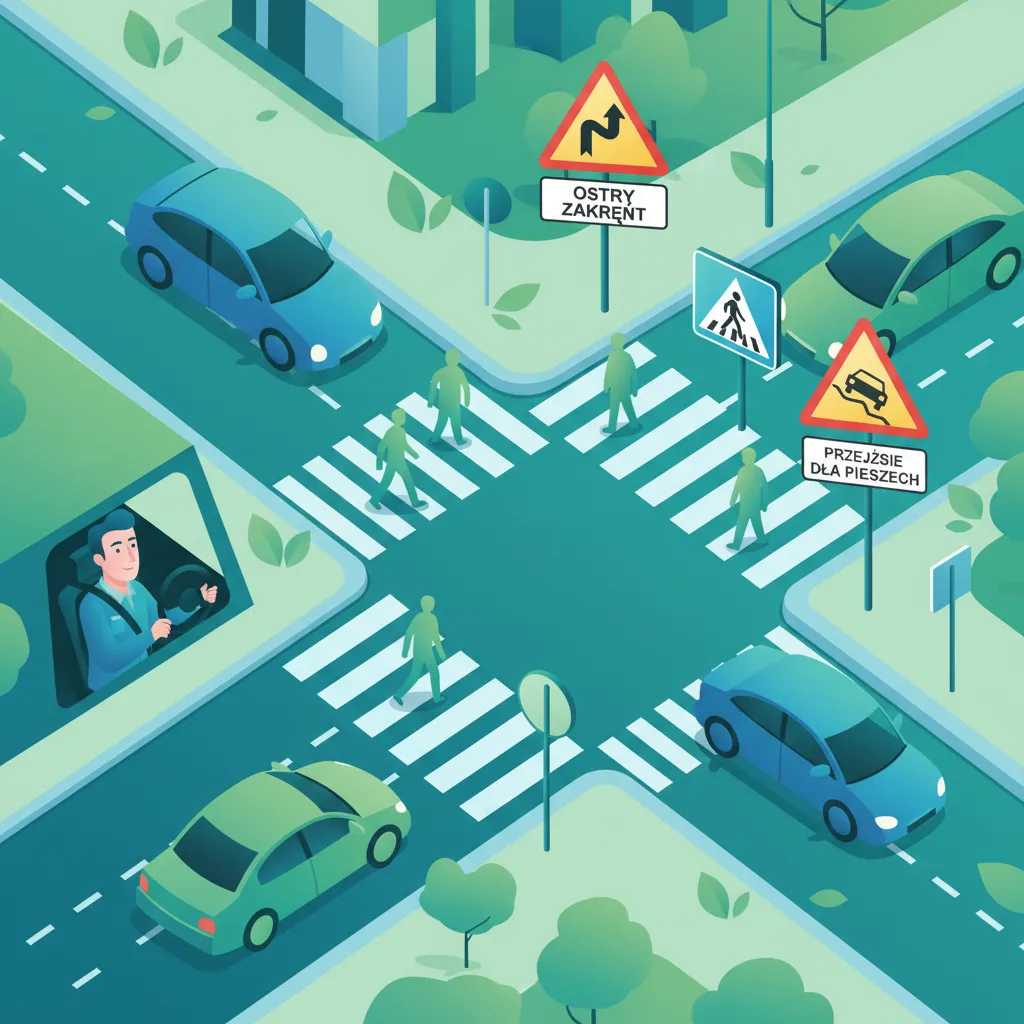
This lesson focuses on triangular warning signs, which are designed to alert drivers to upcoming hazards on the road. It covers the interpretation of various pictograms that indicate dangers like sharp turns, animal crossings, or road construction. Understanding these signs allows a driver to anticipate conditions and adjust their driving proactively.
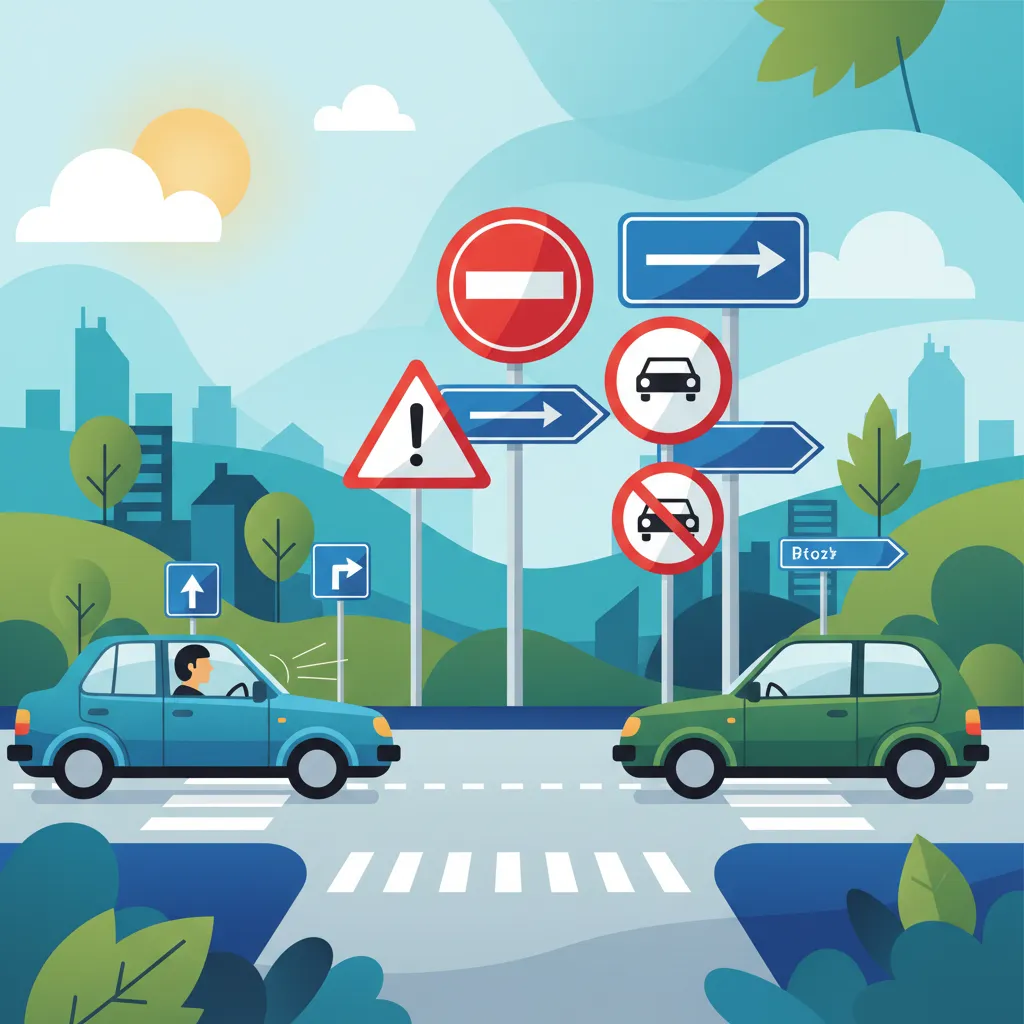
This lesson provides a foundational understanding of the Polish road sign system, categorizing signs into three main types: warning, prohibitory/mandatory, and informational. It explains the significance of different shapes and color codes, enabling drivers to quickly interpret their meaning and legal obligation. By mastering the visual language of road signs, learners will be equipped to make correct and safe decisions in any traffic situation they encounter.

This lesson focuses on traffic control signals, primarily traffic lights. It details the meaning of each color in the sequence—red, amber, and green—as well as flashing signals and arrows for specific turns. The content also covers lane control signals and pedestrian signals to ensure safe and compliant navigation through controlled intersections.
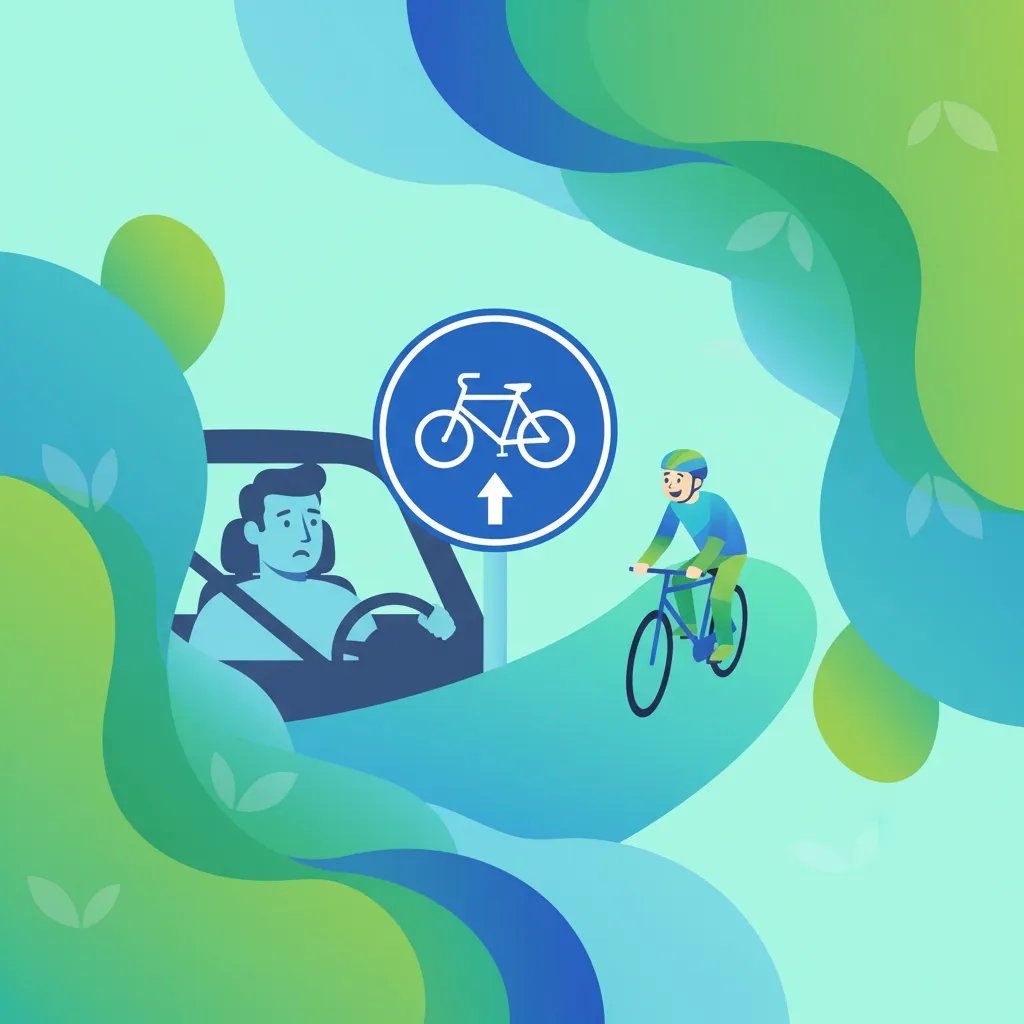
This lesson focuses on blue, circular mandatory signs that direct drivers to perform a specific action. Examples include signs indicating a compulsory direction, a mandatory roundabout, or a minimum speed limit. Unlike advisory signs, these instructions are legally binding and crucial for maintaining orderly traffic flow.
This lesson explains the function of circular prohibition signs, which impose legal restrictions on drivers. It details common prohibitions such as speed limits, 'no entry' signs, and restrictions on overtaking or parking. Compliance with these signs is mandatory, and this lesson ensures learners can correctly identify and obey them.
In this lesson, learners explore the temporary signs that appear during road construction or maintenance activities, focusing on how they alter normal traffic patterns. The content covers signs indicating lane shifts, temporary speed limits, detour routes, and equipment zones where workers are present. The lesson emphasizes the importance of slowing down, staying alert, and obeying temporary regulations to navigate safely through work zones while ensuring compliance.
This lesson reviews the core set of regulatory and warning signs that all road users must obey, emphasizing those that affect agricultural tractors such as speed limits, stop, and give-way signs. It clarifies the colour and shape conventions used in Polish signage, enabling drivers to quickly recognize and react to sign information. The lesson also addresses the placement of signs in rural environments where visibility may be compromised.
This lesson details the rules and best practices for driving on Poland's fastest roads. It covers the higher speed limits, the strict lane discipline of keeping right except to overtake, and prohibitions on stopping. The aim is to ensure drivers can handle the demands of sustained high-speed travel safely and efficiently.
This lesson provides a detailed breakdown of traffic light operations in Poland. It explains the sequence of red, amber, and green lights, and the specific rules for turning when a green arrow signal is displayed. The meaning of a flashing amber light and the rules for pedestrian crossings at signalized intersections are also covered.
Master the interpretation of Polish road markings, including lane lines, stop lines, and pedestrian crossings. Learn how these markings ensure lane discipline, safe stopping, and vital protection for pedestrians.

This lesson focuses on the rules of lane usage for maintaining safe and efficient traffic flow. It covers the meaning of different lane markings, such as solid versus broken lines, and the general principle of keeping to the rightmost lane unless overtaking. Proper lane discipline is crucial for predictability and preventing conflicts on multi-lane roads.
This lesson focuses on traffic control signals, primarily traffic lights. It details the meaning of each color in the sequence—red, amber, and green—as well as flashing signals and arrows for specific turns. The content also covers lane control signals and pedestrian signals to ensure safe and compliant navigation through controlled intersections.

This lesson examines the variety of pavement markings that define lane structures, traffic flow, and special zones on Polish roads. Learners will study solid and broken lines, lane division markings, and the distinct symbols for bicycle lanes, bus lanes, and tram tracks, all of which affect motorcyclist positioning. The lesson also addresses surface texture indicators that signal changing road conditions, enabling riders to maintain correct lane discipline.
This lesson provides a detailed breakdown of traffic light operations in Poland. It explains the sequence of red, amber, and green lights, and the specific rules for turning when a green arrow signal is displayed. The meaning of a flashing amber light and the rules for pedestrian crossings at signalized intersections are also covered.
This lesson provides a foundational understanding of the Polish road sign system, categorizing signs into three main types: warning, prohibitory/mandatory, and informational. It explains the significance of different shapes and color codes, enabling drivers to quickly interpret their meaning and legal obligation. By mastering the visual language of road signs, learners will be equipped to make correct and safe decisions in any traffic situation they encounter.

This lesson addresses advanced scenarios, including multi-lane intersections and interactions with vulnerable road users. It reinforces the legal obligation to give absolute priority to pedestrians at marked crossings (zebra crossings). The content also covers navigating around traffic islands and using dedicated turning lanes in complex urban environments.
This lesson focuses on triangular warning signs, which are designed to alert drivers to upcoming hazards on the road. It covers the interpretation of various pictograms that indicate dangers like sharp turns, animal crossings, or road construction. Understanding these signs allows a driver to anticipate conditions and adjust their driving proactively.
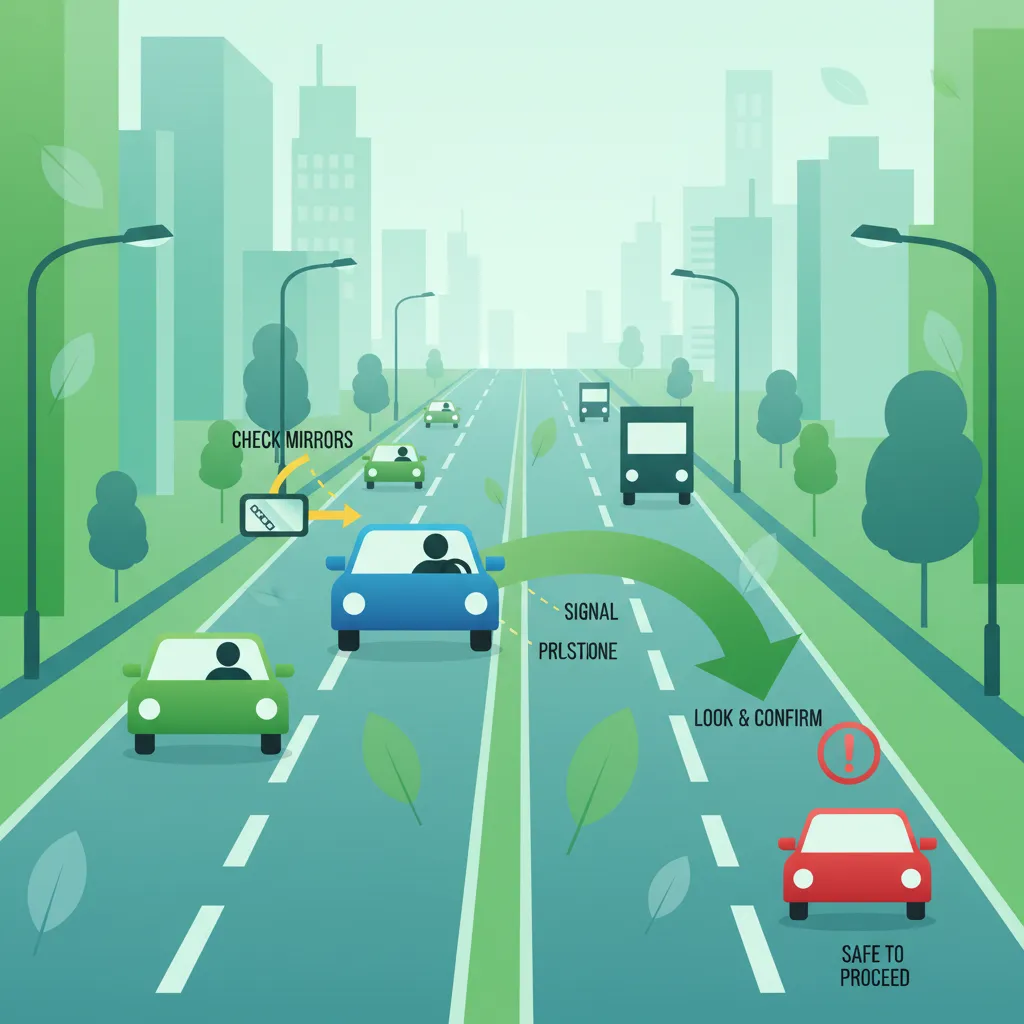
This lesson adapts lane-changing principles for the challenging environment of dense city traffic. It reinforces the critical 'mirror, signal, maneuver' sequence, with a strong focus on checking blind spots immediately before moving. The content advises on judging gaps in traffic and executing the lane change smoothly and decisively.
This lesson details the rules and best practices for driving on Poland's fastest roads. It covers the higher speed limits, the strict lane discipline of keeping right except to overtake, and prohibitions on stopping. The aim is to ensure drivers can handle the demands of sustained high-speed travel safely and efficiently.
This lesson provides a focused guide on the techniques for entering and exiting high-speed roads. It explains the purpose of acceleration lanes for getting up to speed and deceleration lanes for slowing down safely away from the main traffic flow. Correct observation, signaling, and speed adjustment are emphasized for seamless transitions.
Find clear answers to common questions learners have about Informational Signs and Road Markings. Learn how the lesson is structured, which driving theory objectives it supports, and how it fits into the overall learning path of units and curriculum progression in Poland. These explanations help you understand key concepts, lesson flow, and exam focused study goals.
Mandatory signs dictate actions you MUST take (e.g., turn left only), indicated by blue circles or red borders. Informational signs, however, simply provide guidance or information about destinations, services, road layouts, or specific zones, using various shapes and colours like blue rectangles for services or green/white signs for destinations. Understanding this distinction is key for the theory exam.
Road markings provide crucial instructions. Solid white lines typically separate lanes or indicate the edge of the carriageway and generally should not be crossed. Broken white lines usually separate traffic lanes going in the same direction and can be crossed when safe. Different markings indicate pedestrian crossings, cycle paths, or priority at junctions, all of which require careful observation and adherence to prevent accidents.
While general speed limits apply based on road type (built-up area, non-built-up, expressway, motorway), specific zones might have their own informational or regulatory signs. For example, a sign indicating a 'School Zone' (Strefa Szkolna) implies a reduced speed limit within that area, usually accompanied by specific road markings. Always look for supplementary signs and markings.
Service area signs on Polish motorways (autostrady) and expressways (drogi ekspresowe) are typically blue rectangles with white pictograms indicating facilities like petrol stations, restaurants, or rest stops. They show you where you can exit safely to refuel, eat, or take a break. The exit itself will have further signage guiding you to the specific services available.
You need to understand the most common and important road markings, particularly those related to lane discipline, stopping positions (like stop lines and pedestrian crossings), and priority at junctions. The theory test focuses on markings that directly impact safety and traffic flow, such as the difference between solid and broken lines, and markings indicating priority for pedestrians or cyclists.
Build custom practice sessions tailored precisely to your needs. Focus on areas requiring improvement, review specific Polish road signs, or master complex traffic rules to ensure full preparation for your official driving license exam.