
This lesson covers the essential principles of load securing, weight distribution, and maintaining stability for agricultural vehicles in Poland. You will learn how to calculate payloads, locate the center of gravity, and properly secure cargo to prevent accidents and comply with Polish traffic law. This knowledge is vital for your Category T theory exam and for ensuring safe operation of tractors and trailers on public roads and farm terrains.

Lesson content overview
The safe and efficient operation of agricultural vehicles, particularly tractors with trailers and various implements, hinges on a thorough understanding of load management. For those pursuing a Polish Driving License Theory – Category T, mastering the principles of load securing, weight distribution, and stability is not merely a legal requirement but a fundamental safety imperative. Improper loading can transform a seemingly routine journey into a hazardous situation, leading to loss of control, increased braking distances, trailer sway, and severe legal consequences. This lesson delves into the physics and legal framework governing the transport of goods and equipment on agricultural vehicles, ensuring predictable handling and reducing the risk of accidents.
Before any cargo is loaded, it is crucial to understand the maximum weight limits imposed by both the vehicle manufacturer and Polish law. These limits are designed to prevent overloading, which can compromise vehicle control, damage components, and pose a threat to other road users.
Every Category T vehicle, including the tractor and any attached trailers, has specific weight ratings.
The maximum permissible total weight of a single vehicle, including its own weight (curb weight), fuel, driver, passengers, and all cargo.
This rating is determined by the manufacturer and is typically found on a certification plate or in the vehicle's documentation. Exceeding the GVWR places excessive strain on the vehicle's frame, axles, tyres, brakes, and suspension system, significantly increasing the risk of mechanical failure.
When operating a tractor-trailer combination, a further limit applies:
The maximum permissible total weight of the entire tractor-trailer combination, including the weight of both vehicles and all their cargo, fuel, and occupants.
The GCWR ensures that the combined mass does not exceed the capabilities of the tractor's engine, transmission, and braking system to safely control the entire unit. Adherence to both GVWR and GCWR is a non-negotiable legal requirement in Poland.
The usable payload is the actual weight of cargo you can carry. It is calculated by subtracting the vehicle's curb weight (its weight without cargo or passengers, but with a full tank of fuel) from its GVWR. For a tractor-trailer combination, the total available payload is the difference between the GCWR and the combined curb weights of the tractor and trailer.
For example, if a tractor has a GVWR of 4 tonnes and its curb weight is 2.5 tonnes, it has a usable payload capacity of 1.5 tonnes. If this tractor is combined with a trailer that has a GVWR of 2 tonnes and a curb weight of 1 tonne, and the GCWR for the combination is 6 tonnes, the total payload capacity for the combination (tractor + trailer cargo) would be 2.5 tonnes (6 tonnes GCWR - 2.5 tonnes tractor curb weight - 1 tonne trailer curb weight). It is vital to perform this calculation accurately before loading to avoid severe penalties under Polish traffic law.
Always consult your vehicle's documentation for exact GVWR and GCWR figures. Do not estimate or assume.
The Centre of Gravity (CG) is arguably the most crucial concept in understanding vehicle stability. It is the theoretical point where the entire mass of the vehicle-cargo system can be considered to act. Its position directly influences how the vehicle responds to acceleration, braking, cornering, and uneven terrain.
The CG has three dimensions:
The placement of the CG has profound effects:
Neglecting the vertical CG when stacking tall loads like hay bales is a common and dangerous mistake that significantly increases rollover potential.
The Weight Distribution Ratio (WDR) refers to how the total load is shared between the tractor's axles and the trailer's axles. Achieving an optimal WDR is essential for maintaining control, steering responsiveness, and braking efficiency.
For Category T vehicles, Polish law typically stipulates a minimum front-axle load for the tractor, often around 150 kg or as specified by the manufacturer. This ensures sufficient grip for steering. If too much weight is placed on the trailer or too far behind the tractor's rear axle, the front wheels of the tractor may become too light, leading to a loss of steering control, especially at speed or on slippery surfaces.
The load must be distributed not only between the tractor and trailer but also across the tractor's own axles. An overly rear-heavy load on the tractor itself can lighten the front axle, compromising steering and front braking effectiveness.
In multi-axle trailers, the load should be evenly distributed across all axles to avoid exceeding the Maximum Permissible Load (MPL) for any single axle. Uneven distribution can lead to premature tyre wear, axle damage, and instability. Always refer to the vehicle's documentation for individual axle load limits. Overloading a single axle, even if the total load is within the GVWR, is illegal and dangerous.
Once the payload and weight distribution are correctly calculated and planned, the cargo must be securely fixed to prevent any movement during transport. Load shifting is a major cause of accidents, leading to sudden changes in vehicle dynamics, loss of control, or even cargo ejection.
Various methods and equipment are used for load securing:
Inspect Equipment: Always check straps, tie-downs, and all securing hardware for damage, wear, or defects before use.
Determine Anchor Points: Use strong, designated anchor points on both the vehicle and the trailer.
Position Cargo Correctly: Place cargo to achieve optimal CG and WDR before securing.
Apply Direct Securing (Blocking): If possible, use physical barriers like bulkheads or sideboards to prevent movement.
Apply Indirect Securing (Tie-Downs): Use straps and tie-downs to exert pressure on the cargo, pressing it down and/or preventing it from sliding. Angle straps for maximum effectiveness.
Tighten Securely: Ensure all straps are pulled taut, but do not overtighten to the point of damaging the cargo or vehicle structure.
Re-check Mid-Trip: Cargo can settle or shift. Stop safely after a short distance (e.g., 15-20 km) and re-tighten all securing devices.
Cargo securing must account for more than just the static weight of the load. During motion, additional forces act upon the cargo due to acceleration, braking, and cornering. This is represented by the:
A multiplicative factor representing the additional forces acting on cargo during vehicle motion. It accounts for inertia, road irregularities, and sudden maneuvers.
Common DLF values are: * Braking (forward shift): Approximately 1.5 to 2.5 times the cargo's weight. * Cornering (lateral forces): Approximately 1.4 times the cargo's weight. * Acceleration (backward shift): Approximately 1.2 times the cargo's weight.
These factors determine the required:
The minimum tensile strength required for straps or tie-downs to hold the cargo under dynamic forces.
Polish regulations, consistent with European standards, often require securing devices to withstand forces equivalent to at least 1.5 times the cargo's weight in the direction of travel (braking) and 0.5 times in the lateral direction. This means a strap's breaking strength should typically be at least twice the static load it is securing. For example, to secure a 200 kg pallet, straps with a combined minimum breaking strength of 300 kg (200 kg x 1.5 DLF) are needed to resist forward movement, and a higher LSS is advisable for safety. If using a single strap, its breaking strength would need to be much higher, typically 2-3 times the load.
Polish law requires loads to be restrained such that they cannot move more than 0.5 metres horizontally or 0.3 metres vertically under normal driving conditions.
The primary goal of load securing is to prevent any movement of the cargo. This can be achieved through:
Trailer sway, or "snaking," is a dangerous lateral oscillation of the trailer, often caused by aerodynamic forces, strong winds, uneven roads, or abrupt steering inputs. It can quickly escalate, leading to loss of control and potentially a jackknife accident.
Sway occurs when lateral forces cause the trailer to swing from side to side behind the tractor. Several factors contribute to sway:
To combat trailer sway, various anti-sway measures are available:
Two critical parameters related to the hitch greatly influence sway:
Always ensure your trailer is loaded to achieve the correct tongue weight. This is often the most effective way to prevent sway.
Adherence to specific Polish laws and regulations concerning load management for Category T vehicles is mandatory. These rules are outlined in the "Prawo o ruchu drogowym" (Road Traffic Law) and its accompanying executive acts.
The total weight carried by a single axle or an axle group (tandem/tridem axles).
Each axle on a tractor or trailer has a maximum permissible load limit, usually specified on the vehicle's certification plate. Exceeding these limits is strictly forbidden.
Overloading axles can lead to structural damage to the vehicle, premature wear of tires and suspension, and damage to road infrastructure. Fines are imposed for non-compliance.
As mentioned earlier, Polish regulations require all loads to be secured effectively.
The movement of cargo relative to the vehicle during motion.
This shift must not exceed 0.5 metres horizontally or 0.3 metres vertically under normal driving conditions. This rule applies to every trip with cargo, regardless of its size or weight. Failure to comply can result in severe penalties, including fines and potential liability in the event of an accident caused by shifting cargo.
Even experienced drivers can make mistakes when it comes to load management. Awareness of these common violations is key to preventing accidents and legal issues.
Overloading beyond GVWR/GCWR:
Rearward CG Placement (Trailer Heavy):
Insufficient Tie-Down Strength or Quantity:
Neglecting Lateral Load Distribution:
Ignoring Tongue Weight Limits:
Failure to Re-check Load After Loading:
Non-compliance with load securing standards in Poland can lead to fines up to PLN 1500 and possible suspension of the license for repeated offenses.
Effective load management is not a one-size-fits-all approach; it must be adapted to various external and internal conditions.
Effective load management for Category T vehicles is a continuous process of planning, execution, and verification. By adhering to these core principles, you can ensure safe, legal, and efficient transport of agricultural loads.
Mastering these aspects of load management is fundamental to becoming a responsible and skilled Category T vehicle operator in Poland, protecting yourself, your cargo, and all other road users.
This lesson covers the essential physics and legal requirements for safe load management on Polish Category T agricultural vehicles. Learners must understand how to calculate payload limits using GVWR and GCWR, and how to position the Centre of Gravity low and forward to prevent trailer sway and rollovers. Effective cargo securing requires accounting for Dynamic Load Factors, using straps rated at least twice the static load, and ensuring tongue weight stays within the 5-15% range. Polish traffic law mandates strict compliance with axle load limits, hitch angle restrictions (max 5 degrees), and cargo movement tolerances (max 0.5m horizontal, 0.3m vertical), with significant penalties for non-compliance. Safe operation also requires adapting techniques to weather conditions, road types, and load characteristics, while performing thorough pre-trip and mid-trip inspections.
A short set of high-value points that capture the most important learning from this lesson.
Payload capacity is calculated by subtracting curb weight from GVWR for single vehicles, or by subtracting combined curb weights from GCWR for tractor-trailer combinations.
The Centre of Gravity (CG) must be kept low, central, and positioned forward of the tractor's rear axle to prevent trailer sway and rollover, especially during turns and braking.
Securing devices must account for Dynamic Load Factors—straps should have a Load Securing Strength of at least twice the static cargo weight to withstand braking and cornering forces.
Tongue weight must remain between 5-15% of total trailer weight to maintain hitch stability and prevent dangerous sway oscillations.
Polish law requires cargo to be restrained so it cannot move more than 0.5 metres horizontally or 0.3 metres vertically under normal driving conditions.
Explore all units and lessons included in this driving theory course.
GVWR is the maximum weight of a single vehicle; GCWR is the maximum weight of a tractor-trailer combination—both are non-negotiable legal limits.
A high vertical CG from tall loads (like stacked hay bales) drastically increases rollover risk on turns and uneven terrain.
Front axle load on the tractor must meet the minimum requirement (typically 150 kg) to maintain adequate steering control.
The hitch angle between trailer tongue and tractor drawbar must not exceed 5 degrees to prevent hitch instability.
Re-check and re-tighten all securing devices after the first 15-20 km of travel, as cargo can settle and straps can loosen.
Overloading beyond GVWR or GCWR without calculating usable payload, which compromises braking, steering, and violates Polish law.
Loading trailers with a rearward CG that creates a pendulum effect, leading to dangerous sway, hitch lift, and potential jackknifing.
Using straps with insufficient breaking strength—straps must be rated for at least twice the static cargo weight to handle Dynamic Load Factors.
Neglecting tongue weight requirements, where too little (<5%) causes sway and too much (>15%) overloads the hitch and lifts the tractor front wheels.
Failing to distribute cargo evenly across the trailer width, causing lateral imbalance, vehicle lean, and increased rollover risk on curves.
Lesson content overview
A short set of high-value points that capture the most important learning from this lesson.
Payload capacity is calculated by subtracting curb weight from GVWR for single vehicles, or by subtracting combined curb weights from GCWR for tractor-trailer combinations.
The Centre of Gravity (CG) must be kept low, central, and positioned forward of the tractor's rear axle to prevent trailer sway and rollover, especially during turns and braking.
Securing devices must account for Dynamic Load Factors—straps should have a Load Securing Strength of at least twice the static cargo weight to withstand braking and cornering forces.
Tongue weight must remain between 5-15% of total trailer weight to maintain hitch stability and prevent dangerous sway oscillations.
Polish law requires cargo to be restrained so it cannot move more than 0.5 metres horizontally or 0.3 metres vertically under normal driving conditions.
Explore all units and lessons included in this driving theory course.
GVWR is the maximum weight of a single vehicle; GCWR is the maximum weight of a tractor-trailer combination—both are non-negotiable legal limits.
A high vertical CG from tall loads (like stacked hay bales) drastically increases rollover risk on turns and uneven terrain.
Front axle load on the tractor must meet the minimum requirement (typically 150 kg) to maintain adequate steering control.
The hitch angle between trailer tongue and tractor drawbar must not exceed 5 degrees to prevent hitch instability.
Re-check and re-tighten all securing devices after the first 15-20 km of travel, as cargo can settle and straps can loosen.
Overloading beyond GVWR or GCWR without calculating usable payload, which compromises braking, steering, and violates Polish law.
Loading trailers with a rearward CG that creates a pendulum effect, leading to dangerous sway, hitch lift, and potential jackknifing.
Using straps with insufficient breaking strength—straps must be rated for at least twice the static cargo weight to handle Dynamic Load Factors.
Neglecting tongue weight requirements, where too little (<5%) causes sway and too much (>15%) overloads the hitch and lifts the tractor front wheels.
Failing to distribute cargo evenly across the trailer width, causing lateral imbalance, vehicle lean, and increased rollover risk on curves.
Explore search topics learners often look for when studying Load Securing, Weight Distribution, and Stability. These topics reflect common questions about road rules, driving situations, safety guidance, and lesson level theory preparation for learners in Poland.
Browse additional driving theory lessons that cover connected traffic rules, road signs, and common driving situations related to this topic. Improve your understanding of how different rules interact across everyday traffic scenarios.
Explore the physics behind vehicle stability with agricultural vehicles. Understand how center of gravity, weight distribution, and dynamic forces impact safe load securing in Polish traffic law.

This lesson focuses on the crucial concept of the center of gravity (CoG) and its direct impact on truck stability. It explains how the height and lateral position of the load's CoG can affect the vehicle's susceptibility to rolling over, especially during cornering or sudden maneuvers. Learners will study principles for positioning and stacking cargo to maintain the lowest possible CoG, thereby enhancing dynamic stability and overall driving safety.
Master Polish Category T driving theory regulations for maximum weight limits, axle loads, and proper load distribution. Learn how to comply with laws to ensure safe transport and avoid penalties.

This lesson examines the signs that convey dimensional and weight restrictions, which are vital for safe tractor and trailer operation. It outlines how to read width, height, and weight limit signs and the legal implications of exceeding these limits. The lesson provides guidance on planning loads to comply with bridge and road classification restrictions found across Polish rural networks.
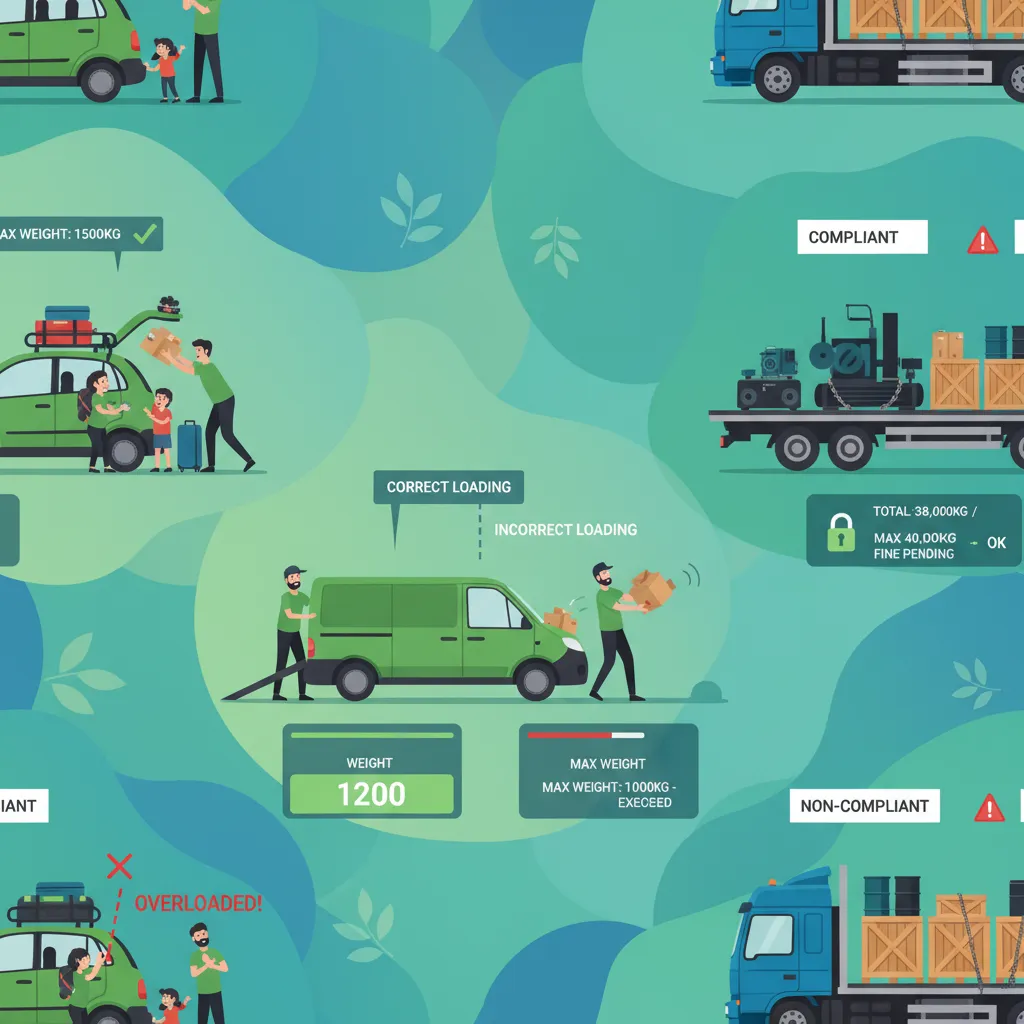
This lesson introduces the legal framework governing vehicle and axle weight limits in Poland and the EU. Learners will understand how to determine a vehicle's maximum permissible payload and interpret official load charts and documentation. The content covers the importance of correct weight distribution to avoid exceeding individual axle limits and explains the serious legal and safety consequences of operating an overloaded vehicle.
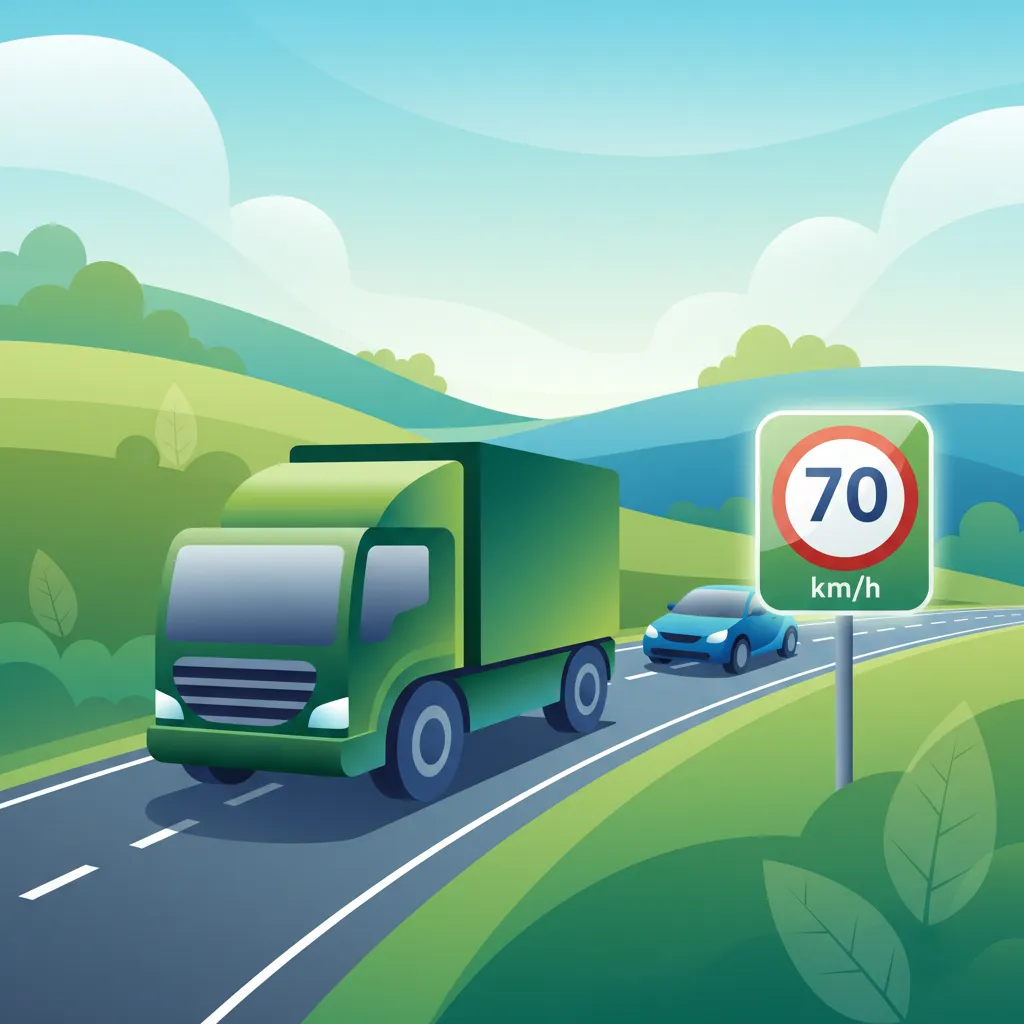
This lesson outlines the statutory speed limits that professional drivers of Category C vehicles must adhere to on Polish roads. It clearly distinguishes the maximum permitted speeds in built-up areas, on single carriageways, and on motorways. The content also explains how to interpret road signs that may indicate temporary or vehicle-specific speed restrictions, ensuring drivers remain compliant with the law and avoid penalties from speed enforcement measures.

This lesson provides a detailed breakdown of vehicle classifications relevant to the Category C licence. It explains the concept of 'dopuszczalna masa całkowita' (permissible total weight) and how it defines a vehicle's category. Learners will identify different truck types, such as rigid vehicles, based on their axle configurations and understand the specific roadworthiness and registration requirements for each class, ensuring correct vehicle operation under the law.

This lesson defines the scope of vehicles permitted under a Category B licence, primarily passenger cars up to 3,500 kg maximum permissible mass. It clarifies the rules on seating capacity and the regulations for towing trailers, distinguishing between a standard B licence and a B+E entitlement. Understanding these classifications ensures drivers operate vehicles legally and safely.
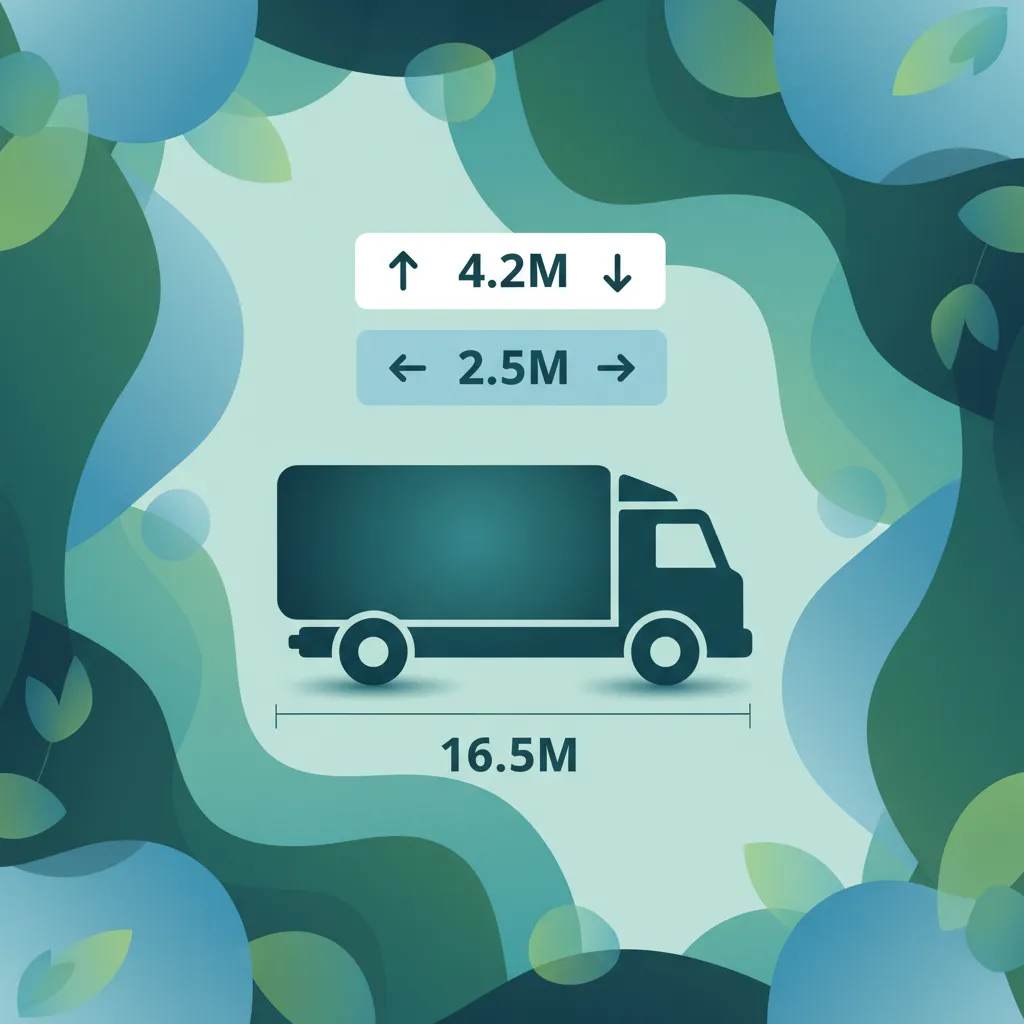
This lesson concentrates on the specific road signs that are of utmost importance to HGV drivers. It details how to interpret signs indicating maximum permissible weight, axle load, vehicle height, and overall length. Understanding these restrictions is crucial for effective route planning to avoid bridges with low clearance, roads with weight limits, or tunnels that cannot accommodate the vehicle's dimensions, thus preventing accidents and infrastructure damage.

This lesson outlines the essential legal paperwork associated with freight transport. It details the purpose and content of key documents like the load manifest, cargo declaration, and official weight certificates. Learners will understand their legal responsibility to verify that all documentation is accurate and complete before departure, and the importance of maintaining proper records for potential inspections by transport authorities or for cross-border customs procedures.
This lesson explains the scope of the Category T licence, distinguishing it from other categories and outlining the vehicles covered, such as agricultural and forestry vehicles. It details the legal basis for operating these vehicles on public roads, including specific provisions in the Prawo o ruchu drogowym. Learners will understand the regulatory environment defining where and how Category T vehicles may be driven within Poland.

This lesson provides comprehensive guidelines for safely transporting agricultural equipment, focusing on proper load securing techniques and weight distribution calculations. It discusses route planning that accounts for road conditions, bridge weight capacities, and seasonal obstacles like mud or snow. The lesson also emphasizes the use of protective equipment and regular compliance verification for safe operations.

This lesson explores the dynamic relationship between cargo weight and a vehicle's performance. It explains how increased mass raises kinetic energy, significantly lengthening braking distances and requiring earlier, more gradual brake application. Learners will also analyze how a heavy or poorly distributed load alters the vehicle's handling characteristics, particularly during cornering, and understand the necessity of adjusting speed and driving style to compensate for these effects.
Find clear answers to common questions learners have about Load Securing, Weight Distribution, and Stability. Learn how the lesson is structured, which driving theory objectives it supports, and how it fits into the overall learning path of units and curriculum progression in Poland. These explanations help you understand key concepts, lesson flow, and exam focused study goals.
In Poland, loads on agricultural vehicles must be secured to prevent shifting, falling, or causing danger to traffic. This includes using appropriate securing devices like straps or nets, ensuring the load does not exceed vehicle dimensions or permissible weight limits, and maintaining visibility for the driver. Failure to comply can result in fines and points on your licence.
The center of gravity (CG) greatly affects stability. A higher CG or one located too far back can make the tractor-trailer combination more prone to tipping, especially on slopes, uneven terrain, or during sharp turns. Proper load distribution aims to keep the CG as low and central as possible, enhancing stability and control.
Common mistakes include overloading one axle, placing too much weight at the very front or rear, or concentrating heavy items too high. These errors can lead to uneven tire wear, compromised braking efficiency, excessive trailer sway, and difficulty in steering, all of which are dangerous and illegal under Polish traffic law for Category T vehicles.
Absolutely. If a load shifts forward during braking, it can increase the effective weight on the tractor's rear axle (or trailer's front axle), potentially overloading brakes and extending stopping distances. Conversely, a rearward shift can reduce traction on driving wheels, making braking less effective and potentially causing jackknifing or loss of control, which is critical for agricultural vehicles.
Depending on the cargo, equipment can range from strong webbing straps with tensioners for bales or machinery, to nets for loose items like silage, and proper lashing points on the trailer itself. The key is to select equipment appropriate for the weight and nature of the load and to ensure it's in good condition, as required by Polish safety standards for agricultural transport.
Build custom practice sessions tailored precisely to your needs. Focus on areas requiring improvement, review specific Polish road signs, or master complex traffic rules to ensure full preparation for your official driving license exam.