
This lesson is crucial for Category T drivers to understand Polish dimensional and weight restrictions for agricultural vehicles. You will learn to interpret road signs and markings that indicate width, height, and weight limits. Mastering these rules is vital for safe navigation on Polish rural roads and ensures compliance with the law, preparing you thoroughly for your theory exam.

Lesson content overview
Operating agricultural vehicles, such as tractors and their trailers or attached implements, requires a thorough understanding of road signs indicating dimensional and weight restrictions. These regulations are not arbitrary; they are critical for protecting public infrastructure, ensuring the safety of all road users, and preventing costly damage or legal penalties. For individuals pursuing a Polish Driving License Theory – Category T, mastering these concepts is fundamental to safe and compliant driving across Poland's diverse road network, particularly on rural routes where such limitations are common.
This lesson will explore the various signs governing vehicle width, height, and weight, including specific Polish bridge classification systems. We will delve into the practical implications for load planning and distribution, seasonal variations in restrictions, and the legal framework that underpins these rules, equipping you with the knowledge to navigate restricted areas safely and legally.
Roads, bridges, tunnels, and other infrastructure elements are designed to withstand specific loads and accommodate vehicles up to certain dimensions. Agricultural vehicles, especially when combined with wide or heavy implements, often push these boundaries.
Compliance with dimensional and weight restrictions prevents structural damage to bridges and road surfaces, avoids traffic blockages, and mitigates the risk of collisions with fixed roadside objects or other vehicles. It is a cornerstone of responsible driving for Category T licence holders.
Ignoring these limits can lead to severe consequences, ranging from significant fines and vehicle impoundment to catastrophic infrastructure failure and serious accidents. Therefore, understanding and adhering to these restrictions is paramount for safe and legal operation of agricultural machinery on public roads in Poland.
Several core principles govern how dimensional and weight restrictions are applied and enforced in Poland. These form the foundation of safe and legal agricultural transport.
These define the maximum allowable width (horizontal) and height (vertical) for any vehicle or vehicle combination, including its load, on a specific road segment.
The primary purpose of dimensional limits is to prevent vehicles from colliding with roadside barriers, bridge overpasses, tunnels, or other fixed structures. For agricultural drivers, this often means measuring wide implements like sprayer booms or tall machinery such as grain hoppers.
These set the maximum total mass permitted for a vehicle (including cargo, fuel, and passengers) and, crucially, the maximum load permissible on individual axles.
Weight limits protect road pavements and bridge structures from excessive stress and wear. Overloaded vehicles also have longer braking distances and can be more difficult to control, posing a significant safety hazard.
Poland employs a specific system, denoted by K-classes (e.g., K-1 to K-5), to indicate the permissible load capacity of bridges.
This classification aligns the vehicle's total mass and axle configuration with the bridge's structural strength. Drivers of heavy agricultural vehicles must be aware of the K-class rating of bridges on their planned route.
This is the systematic process of calculating cargo weight, distributing it appropriately across a vehicle's axles, and assessing overall dimensions before commencing travel.
Effective load planning ensures compliance with all posted restrictions, optimizes vehicle stability, and is a legal requirement under Polish transport regulations.
Under Polish law, specifically the Road Traffic Act (Ustawa o ruchu drogowym), drivers have a statutory duty to obey all posted restriction signs.
Non-compliance constitutes a traffic offense and is subject to penalties. This legal framework ensures uniform safety standards and infrastructure protection across the national road network.
Width restriction signs are vital for agricultural vehicles, which often feature wide implements. These signs alert drivers to sections of the road, such as narrow bridges, tunnels, or constricted urban areas, where the vehicle's overall width is limited.
The D-6 sign is a blue circular sign with a white border and a black symbol. Inside, two vertical arrows point outwards from a central number, which specifies the maximum allowable width in meters, for example, "2,5 m". This limit applies to the entire vehicle envelope, meaning the absolute widest point of the tractor, trailer, and any attached or carried implements.
For Category T drivers, it is crucial to measure the widest part of their vehicle combination accurately. This includes sprayer booms, cultivators, ploughs, and any part of a trailer that extends beyond the tractor's dimensions.
A common misunderstanding is assuming the sign applies only to the vehicle body, ignoring attached implements. Always consider the total overall width, including mirrors and any load protrusions.
If a tractor with a wide implement, such as a 3-meter wide disc harrow, approaches a D-6 sign displaying "2,5 m", the driver must not proceed. Options include detaching the wide implement, re-configuring the equipment to be narrower if possible (e.g., folding sections), or finding an alternative route. In exceptional cases where a wider load is essential, a temporary road permit (zezwolenie) must be obtained from the competent road authority, and the designated route must be strictly followed.
Height restriction signs warn drivers about limited overhead clearance, typically found at overpasses, tunnels, or entrances to farm buildings. These are particularly relevant for agricultural vehicles carrying tall loads like grain hoppers, bales of hay, or certain types of machinery.
The D-4 sign is also a blue circular sign with a white border. It features a central number, indicating the maximum permissible height in meters (e.g., "3,5 m"), with two vertical arrows pointing downwards from the top and upwards from the bottom. This limit applies to the entire vertical envelope of the vehicle and its load.
Before approaching any structure with a height restriction, the driver must verify the exact height of their vehicle and its load. This includes any part of the vehicle that might extend upwards, such as exhaust pipes, air intakes, or even antennas, in addition to the primary cargo.
Drivers often make the mistake of measuring only the tractor's height, forgetting to account for the attached trailer or tall equipment. Always consider the highest point of the entire combination.
If a tractor-trailer combination with a combined height of 3.8 meters approaches a tunnel marked "3.5 m" (D-4), the driver must not attempt to pass. Such an attempt could result in a severe collision, causing significant damage to the vehicle, the load, and the infrastructure, potentially leading to lengthy traffic disruptions and substantial legal penalties. The driver must either reconfigure the load to be lower, if possible (e.g., collapsible parts), or seek an alternative route.
Weight restrictions are crucial for preserving road infrastructure, especially bridges and less robust road surfaces, commonly found in rural areas. There are two primary types of weight restriction signs relevant to Category T drivers in Poland: those limiting total vehicle mass and those limiting axle loads.
The D-38 sign, a blue circle with a white border, displays a number in tonnes (e.g., "3 t"). This value represents the maximum gross vehicle weight (GVW) allowed for any single vehicle or combination passing that point. For agricultural vehicles, this means the combined weight of the tractor, trailer(s), and all cargo (e.g., grain, fertilizer, water) must not exceed this figure.
The D-40 sign, also a blue circle with a white border, shows a number in tonnes accompanied by a symbol of a single or tandem axle. This sign specifies the maximum load that a single axle or an axle group can exert on the road surface. This is particularly important for heavy agricultural machinery where individual axles can carry substantial weight, even if the total vehicle weight is within limits. Overloading a single axle can cause localized damage to roads or bridges, even if the total weight is compliant.
Weight limits are implemented based on engineering assessments of the road or bridge's capacity. Exceeding these limits, even slightly, accelerates wear and tear, leads to structural fatigue, and can cause immediate damage like cracking or collapse.
Drivers must accurately calculate the total mass of their loaded vehicle combination and understand the distribution of that weight across each axle. This often involves referring to vehicle specifications and using scales, especially when transporting bulk materials like grain or silage.
Failing to comply with weight restrictions can lead to severe penalties, including substantial fines, mandatory off-loading of excess cargo, and even vehicle impoundment. Polish traffic regulations, particularly those enforced at weigh stations, are strict regarding these limits.
Beyond general weight limits, Poland utilizes a specific bridge load classification system, known as K-classes, to provide detailed information about a bridge's structural capacity. These classifications are crucial for Category T drivers, as agricultural vehicles often operate on rural roads with older bridges.
Bridge classification signs typically display a 'K' followed by a number, ranging from K-1 to K-5, or sometimes higher for major routes. This system indicates the maximum permissible axle loads and, indirectly, the total load capacity of the bridge.
K-1: Represents bridges with the lowest capacity, typically allowing up to 2 tonnes per axle. These are often found on minor rural or farm access roads.
K-2: Indicates a slightly higher capacity, generally up to 3 tonnes per axle.
K-3: Allows for higher axle loads, often up to 4 or 5 tonnes per axle, depending on specific bridge design and local regulations.
K-4 / K-5: These categories represent bridges with significantly higher load-bearing capacities, suitable for heavier traffic, including multi-axle commercial vehicles and the heaviest agricultural machinery.
Drivers must know the individual axle loads of their loaded tractor-trailer combination. This information is typically found in the vehicle's documentation or can be determined by weighing individual axles. Before crossing a bridge, the driver must compare their heaviest axle load with the permissible load indicated by the bridge's K-class sign.
It is a common error to assume K-class refers only to total weight. The critical factor is often the load exerted by individual axles, as uneven distribution can critically stress specific points on a bridge.
If a tractor's rear axle (which often carries significant weight, especially with attached implements or heavy trailers) has a load exceeding the K-class limit for the bridge, the driver must find an alternative route or adjust the load distribution. Violating K-class restrictions can lead to structural failure of the bridge, resulting in severe accidents, extensive infrastructure damage, and significant legal liabilities for the driver and vehicle owner.
Effective load planning is a proactive measure that ensures compliance with dimensional and weight restrictions, enhances vehicle stability, and promotes overall road safety. For Category T drivers, this process is particularly important due to the varied nature of agricultural loads and machinery.
Before setting out, a driver must calculate the precise total weight of the tractor, any attached trailers or implements, the cargo, and even the fuel and occupants. This total must then be compared against any D-38 (total weight limit) signs on the intended route. Similarly, the overall width (including side mirrors, folded implements, etc.) and height (including any elevated components) of the entire combination must be measured against D-6 (width) and D-4 (height) signs.
Measure Dimensions: Accurately determine the maximum width and height of your entire vehicle combination, including all extensions and parts of the load.
Calculate Total Weight: Sum the unladen weight of the tractor and trailer(s), the weight of all cargo, and any attached implements.
Distribute Axle Loads: Carefully position cargo to distribute weight evenly across all axles. Use load-distribution charts or guidelines specific to your vehicle if available. The aim is to ensure no single axle exceeds its permitted load (D-40 signs) or the limits set by bridge K-classes.
Secure the Load: Ensure all cargo is properly secured using appropriate methods (straps, nets, chocks) to prevent shifting during transit. Shifting loads can alter axle weights, affect vehicle stability, and create hazards.
Check Route Restrictions: Consult maps and road information for any posted D-4, D-6, D-38, D-40 signs, or K-class bridge markings along your planned route.
Proper load distribution also involves managing the vehicle's center of gravity (CG). A high or poorly positioned CG can make the vehicle unstable, increasing the risk of rollovers, especially on uneven terrain or during turns. For instance, loading heavier items closer to the ground and centered over the axles improves stability. Polish regulations (Rozporządzenie Ministra Infrastruktury) emphasize that loads must be secured and evenly distributed to maintain vehicle stability and prevent hazards.
By meticulously planning and verifying dimensions and weights, Category T drivers can avoid violations, reduce mechanical stress on their vehicles, and significantly enhance safety for themselves and other road users.
In addition to permanent dimensional and weight limits, Polish roads, particularly in rural areas, are often subject to temporary or seasonal restrictions. These are typically put in place to protect infrastructure during periods of increased vulnerability.
An additional sign, often rectangular, placed beneath a main traffic sign to provide specific conditions, exceptions, or validity periods for the primary restriction.
These temporary restrictions are usually indicated by supplementary plates mounted beneath the main D-signs (D-4, D-6, D-38, D-40) or K-class bridge signs. These plates specify the duration of the restriction, for example, "Od 1 Listopada do 31 Marca" (From November 1st to March 31st) or "W Okresie Odwilży" (During Thaw Period).
Drivers must always check supplementary plates. Ignoring the validity period displayed on a plate, such as a "max 2 t" limit active only in winter, constitutes a violation even if the permanent limit is higher.
For Category T drivers, this means being particularly vigilant during autumn, winter, and spring months. Planning routes with awareness of potential seasonal restrictions is essential. If a planned transport falls within a restricted period and the vehicle or load exceeds the temporary limit, the driver must either reduce the load, reschedule the transport, or obtain a special temporary permit (zezwolenie). Failure to comply can result in higher penalties due to the increased risk posed to vulnerable infrastructure.
Adherence to dimensional and weight restrictions is not merely a recommendation; it is a strict legal obligation under Polish law. The primary legal framework governing road traffic is the Ustawa z dnia 20 czerwca 1997 r. Prawo o ruchu drogowym (Act of 20 June 1997 – Road Traffic Act). This act, along with implementing regulations like the Rozporządzenie Ministra Infrastruktury (Regulation of the Minister of Infrastructure) on road signs, sets out the rules for vehicle dimensions, weights, and driver conduct.
Exceeding dimensional or weight limits can lead to a range of severe penalties:
It is imperative for every Category T driver to be fully aware of these legal obligations. Regular checks of vehicle dimensions and weight, meticulous load planning, and obtaining necessary permits are not just good practice but legal requirements designed to ensure safety and infrastructure preservation.
Applying the theoretical knowledge of dimensional and weight restrictions to real-world driving situations is crucial for Category T drivers. Here are a few scenarios illustrating how these rules apply.
These scenarios highlight the importance of meticulous pre-trip planning, accurate measurement, and careful interpretation of all road signage for Category T drivers.
Driving agricultural vehicles often involves unique challenges, particularly when dealing with large dimensions and heavy loads. Effective risk management goes beyond mere compliance; it requires an understanding of the underlying principles and potential hazards.
Drivers often underestimate the actual dimensions or weight of their vehicles. Clear and well-placed restriction signs are crucial visual cues that compensate for this cognitive bias. However, drivers must actively look for and correctly interpret these signs.
Always assume your vehicle is at its maximum allowable dimensions and weight until you have verified otherwise. This 'worst-case scenario' mindset can prevent many violations and accidents.
For Category T drivers, the presence of oversized agricultural equipment means a larger "vehicle envelope" to consider. This also impacts interaction with vulnerable road users. An over-wide sprayer boom, for instance, might extend into a cyclist's path, necessitating extreme caution and ample clearance.
In Poland, data often shows that overweight and oversized agricultural vehicles contribute to a notable percentage of road and bridge repairs, particularly on rural and communal roads. Strict enforcement of these regulations, therefore, serves a dual purpose: it directly enhances safety on the roads and indirectly protects the extensive network of Polish infrastructure, reducing the burden on public funds for maintenance and repairs.
By understanding the scientific and statistical rationale behind these rules, Category T drivers can cultivate a more proactive and safety-conscious approach to operating their machinery.
Successfully operating agricultural vehicles on Polish roads requires more than just driving skill; it demands a deep understanding of the legal and practical implications of dimensional and weight restrictions. For aspiring Category T license holders, this knowledge is a cornerstone of safe, compliant, and responsible driving.
By diligently applying this knowledge, Category T drivers can confidently navigate Poland's agricultural transport network, ensuring both legal compliance and the highest standards of road safety for themselves and others.
This lesson covers how Category T drivers in Poland must interpret and comply with dimensional and weight restriction signs. The four key sign types are D-6 for width, D-4 for height, D-38 for total mass, and D-40 for axle loads, each displayed in a blue circle with a white border. Poland's K-class bridge system (K-1 to K-5) specifically governs axle load limits and must be matched against individual axle weights rather than total weight. Effective load planning requires measuring the entire vehicle envelope, distributing cargo to avoid overloading single axles, and always checking for seasonal supplementary plates that temporarily override permanent limits. Non-compliance risks severe penalties, vehicle impoundment, infrastructure damage, and liability for repair costs.
A short set of high-value points that capture the most important learning from this lesson.
Width restriction D-6 signs specify maximum permissible vehicle width in meters, including all attached implements and protrusions like mirrors.
Height restriction D-4 signs apply to the total vertical envelope of the vehicle combination, including exhaust pipes, antennas, and any tall cargo.
D-40 axle weight limits often matter more than total weight limits because uneven load distribution can concentrate stress on bridge structures.
Polish bridge K-classification (K-1 to K-5) indicates permissible axle loads that must be matched against your vehicle's individual axle weights, not just total mass.
Supplementary plates beneath restriction signs take priority over permanent limits during their specified validity periods.
Explore all units and lessons included in this driving theory course.
D-6 equals width, D-4 equals height, D-38 equals total mass, and D-40 equals axle load.
K-class limits refer to individual axle loads, not total vehicle weight—distribute cargo to keep the heaviest axle below the bridge rating.
During thaw seasons (typically March–April), temporary weight restrictions often halve permanent limits even if the main sign shows a higher value.
A transport permit (zezwolenie) is legally required when dimensions or weights exceed standard limits.
Measure the entire vehicle envelope—tractor, trailer, attached implements, and cargo—before assuming you fit a restriction.
Checking only the tractor's height or width while forgetting attached trailers, implements, or folded equipment.
Misinterpreting K-class signs as referring to total weight rather than individual axle load capacity.
Ignoring supplementary plates that indicate seasonal or temporary restrictions, assuming the main sign applies year-round.
Assuming wide farm equipment is exempt from D-6 width restrictions or does not need to be folded for transport.
Proceeding on a route with axle loads exceeding K-class limits because the total vehicle weight seemed acceptable.
Lesson content overview
A short set of high-value points that capture the most important learning from this lesson.
Width restriction D-6 signs specify maximum permissible vehicle width in meters, including all attached implements and protrusions like mirrors.
Height restriction D-4 signs apply to the total vertical envelope of the vehicle combination, including exhaust pipes, antennas, and any tall cargo.
D-40 axle weight limits often matter more than total weight limits because uneven load distribution can concentrate stress on bridge structures.
Polish bridge K-classification (K-1 to K-5) indicates permissible axle loads that must be matched against your vehicle's individual axle weights, not just total mass.
Supplementary plates beneath restriction signs take priority over permanent limits during their specified validity periods.
Explore all units and lessons included in this driving theory course.
D-6 equals width, D-4 equals height, D-38 equals total mass, and D-40 equals axle load.
K-class limits refer to individual axle loads, not total vehicle weight—distribute cargo to keep the heaviest axle below the bridge rating.
During thaw seasons (typically March–April), temporary weight restrictions often halve permanent limits even if the main sign shows a higher value.
A transport permit (zezwolenie) is legally required when dimensions or weights exceed standard limits.
Measure the entire vehicle envelope—tractor, trailer, attached implements, and cargo—before assuming you fit a restriction.
Checking only the tractor's height or width while forgetting attached trailers, implements, or folded equipment.
Misinterpreting K-class signs as referring to total weight rather than individual axle load capacity.
Ignoring supplementary plates that indicate seasonal or temporary restrictions, assuming the main sign applies year-round.
Assuming wide farm equipment is exempt from D-6 width restrictions or does not need to be folded for transport.
Proceeding on a route with axle loads exceeding K-class limits because the total vehicle weight seemed acceptable.
Explore search topics learners often look for when studying Width, Height, and Weight Restrictions. These topics reflect common questions about road rules, driving situations, safety guidance, and lesson level theory preparation for learners in Poland.
Browse additional driving theory lessons that cover connected traffic rules, road signs, and common driving situations related to this topic. Improve your understanding of how different rules interact across everyday traffic scenarios.
Explore the legal framework and specific Polish road traffic laws governing vehicle dimensions and weight restrictions for Category T agricultural vehicles. Understand driver obligations, penalties, and the importance of protecting road infrastructure.
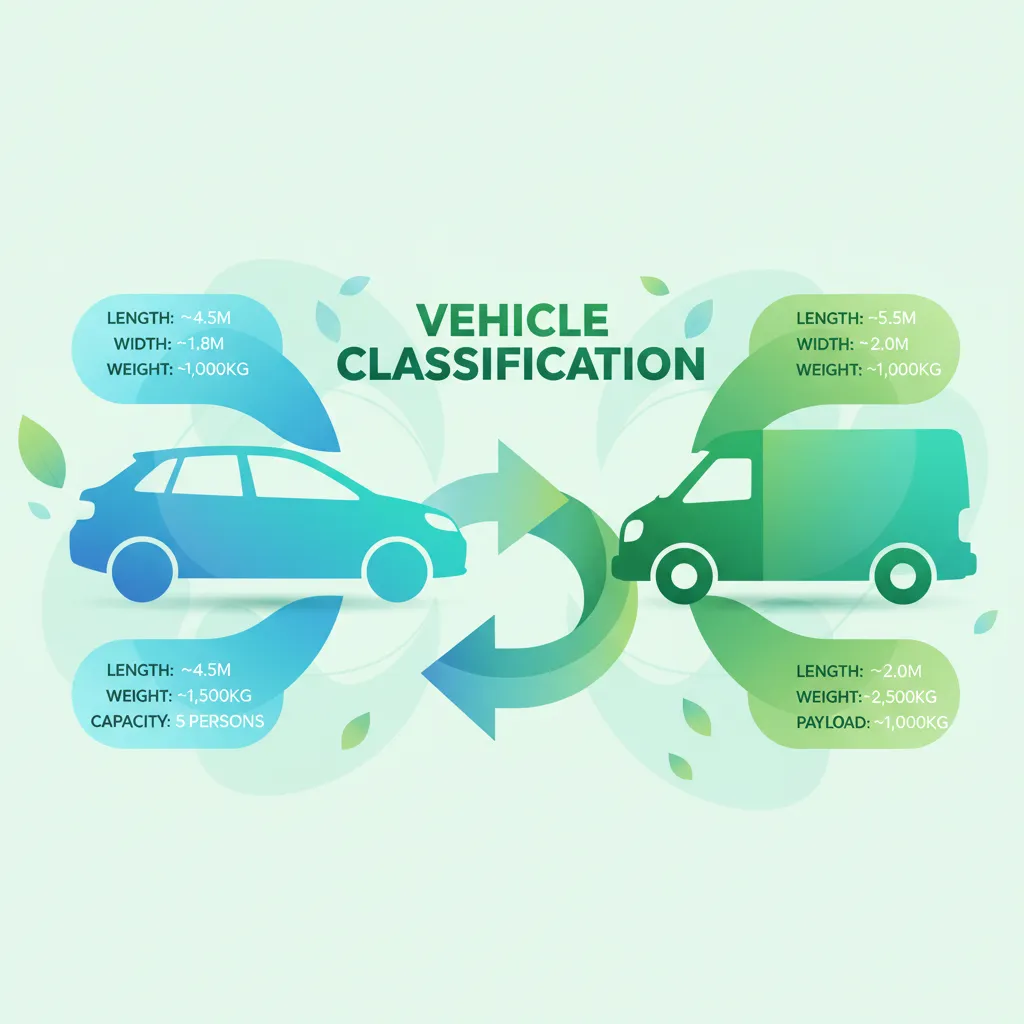
This lesson focuses on the precise classification of agricultural vehicles as defined by Polish law, differentiating between tractors, forestry machines, and trailers. It examines the legal parameters such as maximum permissible weight, width, height, and length that affect roadworthiness certifications. The lesson clarifies terminology used in official documents, ensuring learners can correctly identify the vehicles they are permitted to operate.
This lesson outlines the legal responsibilities of tractor drivers as stipulated by Polish traffic law, emphasizing the duty to comply with all rules of the road. It discusses the liability framework for accidents involving agricultural vehicles, including the need for appropriate insurance and potential penalties. The lesson also explains the importance of maintaining accurate documentation, such as registration papers and a driver’s licence.

This lesson explores the correct lane and road positioning for tractors, emphasizing the use of the right-hand lane or shoulder where appropriate. It clarifies how speed limits differ between road types and provides guidelines for adjusting speed based on vehicle load, road condition, and traffic density. Proper positioning improves safety for both the tractor driver and other road users sharing the same space.

This lesson provides comprehensive guidelines for safely transporting agricultural equipment, focusing on proper load securing techniques and weight distribution calculations. It discusses route planning that accounts for road conditions, bridge weight capacities, and seasonal obstacles like mud or snow. The lesson also emphasizes the use of protective equipment and regular compliance verification for safe operations.
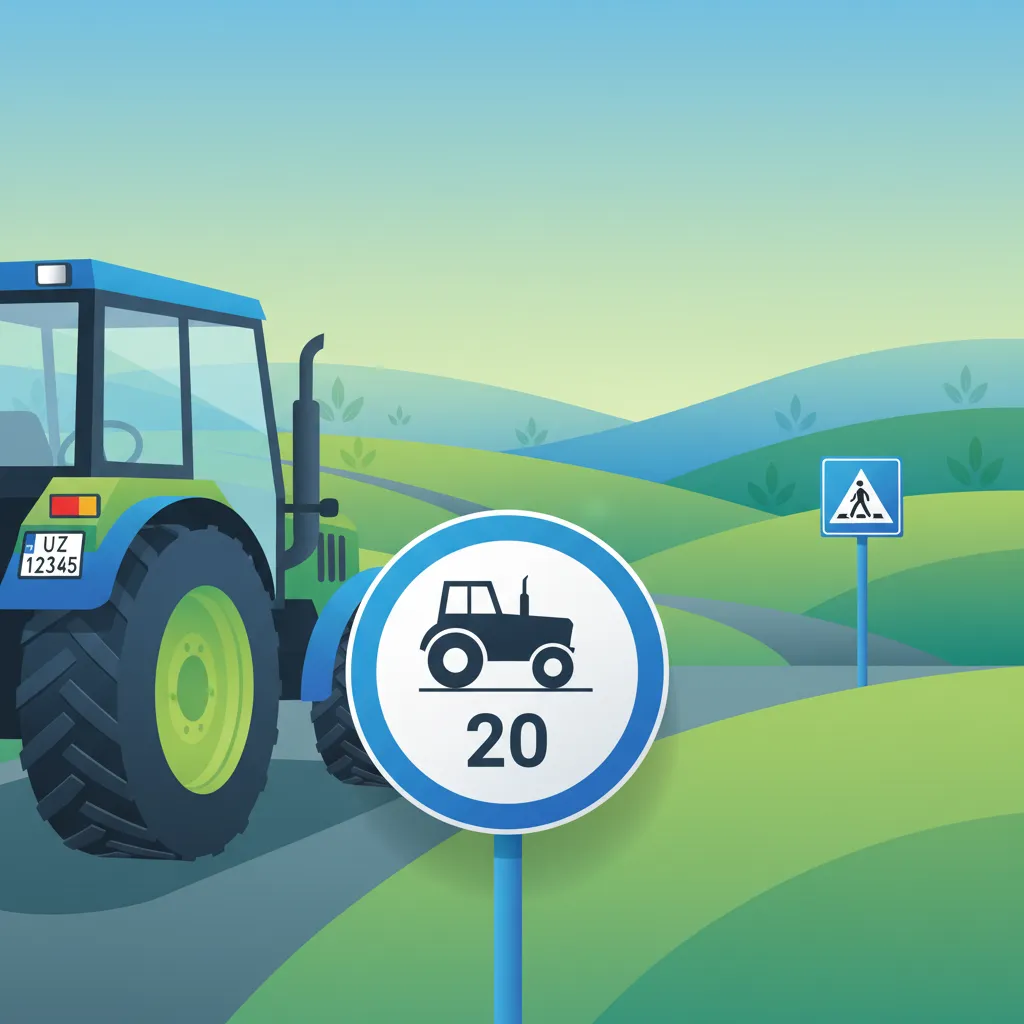
This lesson reviews the core set of regulatory and warning signs that all road users must obey, emphasizing those that affect agricultural tractors such as speed limits, stop, and give-way signs. It clarifies the colour and shape conventions used in Polish signage, enabling drivers to quickly recognize and react to sign information. The lesson also addresses the placement of signs in rural environments where visibility may be compromised.
This lesson explains the scope of the Category T licence, distinguishing it from other categories and outlining the vehicles covered, such as agricultural and forestry vehicles. It details the legal basis for operating these vehicles on public roads, including specific provisions in the Prawo o ruchu drogowym. Learners will understand the regulatory environment defining where and how Category T vehicles may be driven within Poland.

This lesson details the formal prerequisites for obtaining a Category T licence, focusing on the minimum age and mandatory health assessment. It outlines the specific medical certificates required, the process for submitting proof of identity and residency, and the role of the local road transport office. The content also clarifies the importance of maintaining up-to-date health documentation and the legal consequences of non-compliance.

This lesson delves into the physics of load management, teaching learners how to calculate payloads, locate the center of gravity, and distribute weight to preserve stability. The lesson addresses methods for securing cargo using straps and tie-downs, while also covering the effect of load shift on braking. Proper load planning ensures compliance with legal regulations and mitigates risks associated with trailer sway.
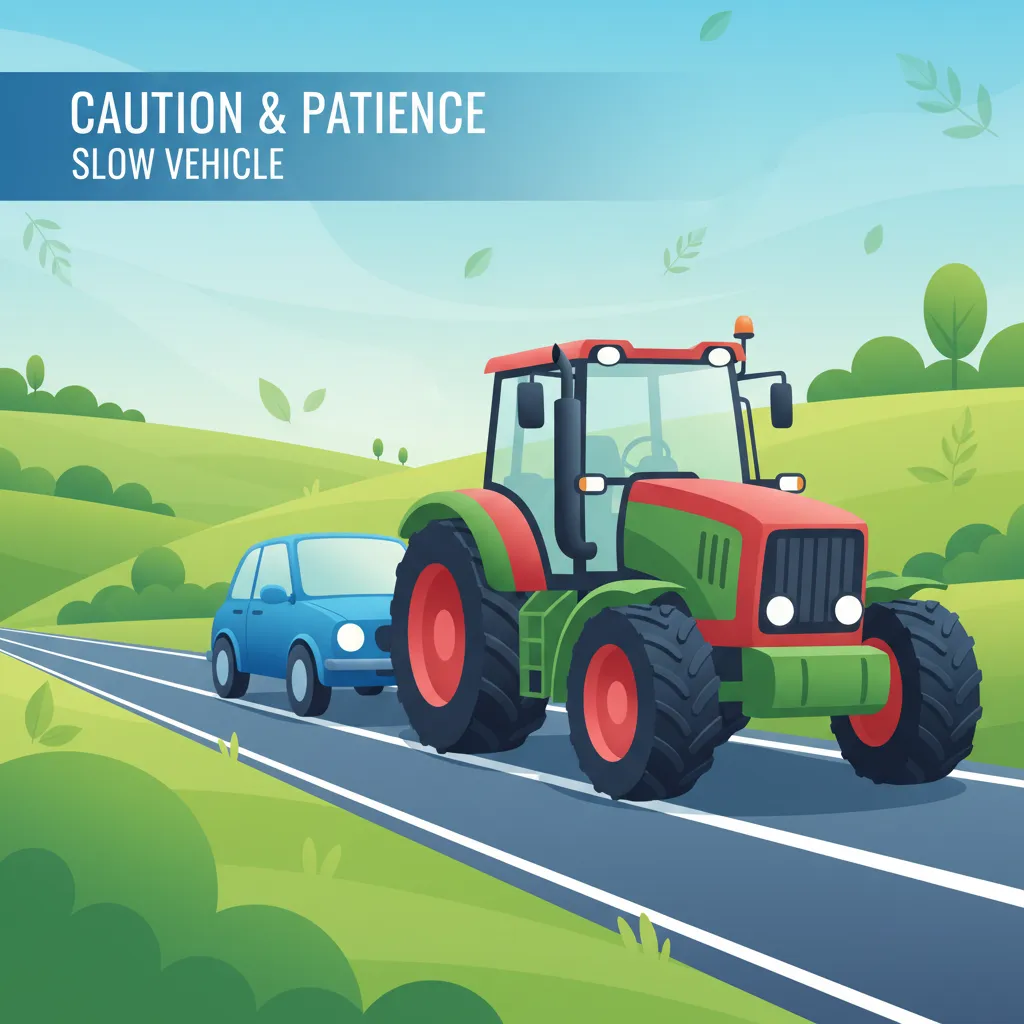
This lesson addresses encounters with slow-moving vehicles, such as tractors, which are common on rural roads. It teaches drivers to be patient, maintain a safe following distance, and only overtake when it is absolutely safe and legal to do so. Recognizing the large size and limited maneuverability of such vehicles is crucial for avoiding accidents.

This lesson focuses on the specific signage and on-vehicle markings used to indicate slow-moving vehicles, a critical element for tractors on public roads. Learners will understand the design and meaning of the triangular sign and the requirements for flashing amber lights. The content also discusses proper lane positioning and speed adjustments required when sharing the road with faster traffic.
Learn essential load planning and distribution techniques for Category T agricultural vehicles. Understand how to manage weight across axles, maintain vehicle stability, and ensure safe operation under Polish traffic regulations.
This lesson delves into the physics of load management, teaching learners how to calculate payloads, locate the center of gravity, and distribute weight to preserve stability. The lesson addresses methods for securing cargo using straps and tie-downs, while also covering the effect of load shift on braking. Proper load planning ensures compliance with legal regulations and mitigates risks associated with trailer sway.
This lesson provides comprehensive guidelines for safely transporting agricultural equipment, focusing on proper load securing techniques and weight distribution calculations. It discusses route planning that accounts for road conditions, bridge weight capacities, and seasonal obstacles like mud or snow. The lesson also emphasizes the use of protective equipment and regular compliance verification for safe operations.
This lesson focuses on the precise classification of agricultural vehicles as defined by Polish law, differentiating between tractors, forestry machines, and trailers. It examines the legal parameters such as maximum permissible weight, width, height, and length that affect roadworthiness certifications. The lesson clarifies terminology used in official documents, ensuring learners can correctly identify the vehicles they are permitted to operate.
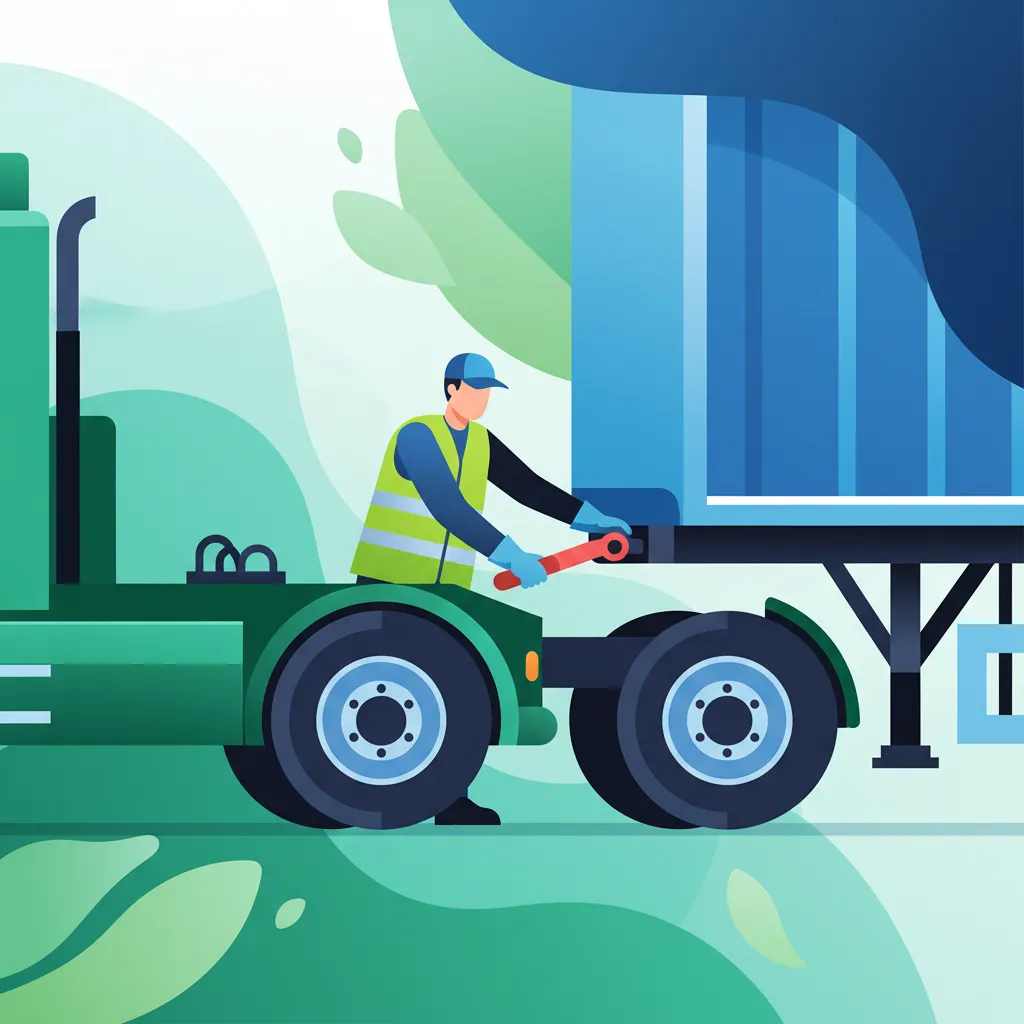
This lesson provides a step-by-step guide to safely coupling and uncoupling trailers, highlighting the correct use of hitches, drawbars, and safety chains. It emphasizes pre-couple inspections, alignment checks, and the necessity of confirming secure connections before movement. Learners will also study procedures for safely uncoupling, including establishing a safe zone and verifying trailer stability.
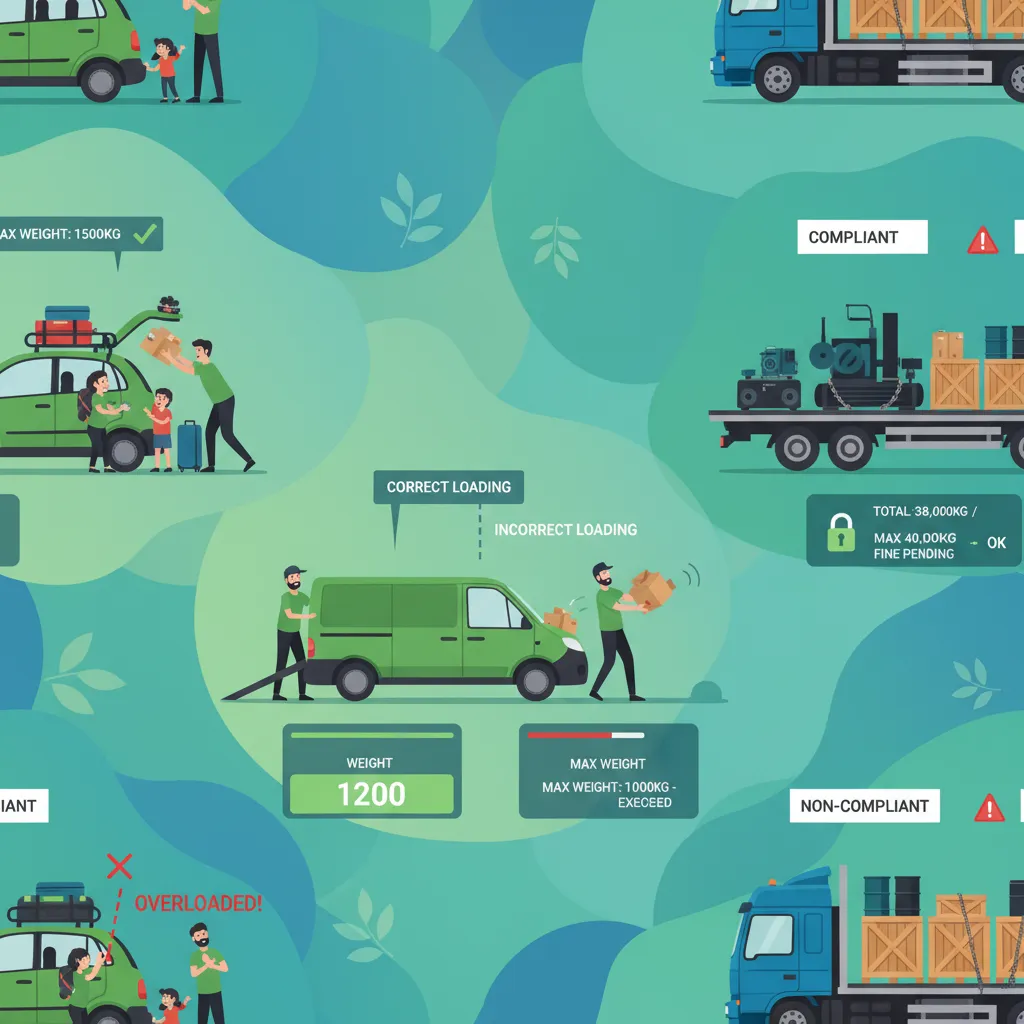
This lesson introduces the legal framework governing vehicle and axle weight limits in Poland and the EU. Learners will understand how to determine a vehicle's maximum permissible payload and interpret official load charts and documentation. The content covers the importance of correct weight distribution to avoid exceeding individual axle limits and explains the serious legal and safety consequences of operating an overloaded vehicle.

This lesson provides a detailed breakdown of vehicle classifications relevant to the Category C licence. It explains the concept of 'dopuszczalna masa całkowita' (permissible total weight) and how it defines a vehicle's category. Learners will identify different truck types, such as rigid vehicles, based on their axle configurations and understand the specific roadworthiness and registration requirements for each class, ensuring correct vehicle operation under the law.
This lesson outlines the legal responsibilities of tractor drivers as stipulated by Polish traffic law, emphasizing the duty to comply with all rules of the road. It discusses the liability framework for accidents involving agricultural vehicles, including the need for appropriate insurance and potential penalties. The lesson also explains the importance of maintaining accurate documentation, such as registration papers and a driver’s licence.
This lesson explores the correct lane and road positioning for tractors, emphasizing the use of the right-hand lane or shoulder where appropriate. It clarifies how speed limits differ between road types and provides guidelines for adjusting speed based on vehicle load, road condition, and traffic density. Proper positioning improves safety for both the tractor driver and other road users sharing the same space.

This lesson examines real-world case studies of harvest traffic, where multiple tractors and trailers share limited road space during peak agricultural periods. Learners explore strategies for coordinating speed, maintaining safe distances, and using signaling to communicate intentions. The content also addresses the challenges of field access points and the need for cooperation with other drivers.
Find clear answers to common questions learners have about Width, Height, and Weight Restrictions. Learn how the lesson is structured, which driving theory objectives it supports, and how it fits into the overall learning path of units and curriculum progression in Poland. These explanations help you understand key concepts, lesson flow, and exam focused study goals.
In Poland, the standard maximum width for agricultural vehicles without a special permit is typically 2.55 meters. However, specific regulations for tractors and certain implements may allow slightly larger dimensions for transport, especially during specific operational periods. It's crucial to check the current Prawo o ruchu drogowym for precise details regarding exceptions and specific conditions for Category T.
Yes, temporary road signs indicating weight limits, often found near bridges or during roadworks, apply to all vehicles, including agricultural tractors and trailers (Category T). Drivers must always adhere to these limits, as exceeding them can cause structural damage and legal consequences. Planning your route to avoid such restrictions or obtaining necessary permits is essential.
The general maximum height for vehicles in Poland is 4 meters. For Category T, you must measure your tractor and any attached implements or loaded trailers carefully. Always look for specific height restriction signs, especially under bridges, tunnels, and overhead structures. If your vehicle exceeds 4 meters or any signposted limit, you must find an alternative route or obtain a special permit.
Exceeding dimensional or weight restrictions for Category T vehicles in Poland can result in significant fines and points on your driving license, as per the Prawo o ruchu drogowym. In some cases, the vehicle may be impounded, or you might be required to adjust the load immediately, leading to delays and additional costs. Repeated violations can also impact your eligibility to hold a Category T license.
Build custom practice sessions tailored precisely to your needs. Focus on areas requiring improvement, review specific Polish road signs, or master complex traffic rules to ensure full preparation for your official driving license exam.