
This lesson explains the correct lane and road positioning for Category T agricultural vehicles in Poland, crucial for safe navigation. You'll learn how speed limits vary by road type and how to adjust your speed based on vehicle load, road conditions, and traffic density. Mastering these rules is essential for protecting yourself and other road users, and for passing your Polish driving theory exam. This lesson sets the foundation for safe interaction in mixed traffic environments.
Lesson content overview
Driving an agricultural vehicle, such as a tractor or combine harvester, on public roads requires a specialized understanding of traffic rules. For holders of a Polish Category T driving license, correctly positioning your vehicle on the road and adhering to appropriate speed limits are crucial for safety, efficiency, and legal compliance. These guidelines not only protect the tractor driver but also significantly reduce risks for other road users who share the same space.
This lesson explores the specific requirements for agricultural vehicles under Polish traffic law (Prawo o ruchu drogowym), highlighting how they differ from regulations for passenger cars. You will learn where to position your tractor on various road types, how to adjust your speed based on conditions and load, and the legal implications of improper practice.
Proper vehicle positioning and speed control are fundamental aspects of safe driving, especially when operating large and slow-moving agricultural machinery. For Category T vehicles, specific rules are in place to address their unique characteristics, such as size, weight, lower acceleration, longer braking distances, and limited maneuverability compared to lighter vehicles.
Effective positioning minimizes the risk of lateral collisions, ensures clear sightlines for the driver, and makes the tractor's movements predictable to others. Similarly, adhering to appropriate speed limits, which are often lower for agricultural vehicles, directly impacts the ability to stop safely and maintain control, particularly when towing heavy loads or navigating challenging road conditions. Mastering these principles is vital for passing the Polish Category T driving license exam and, more importantly, for safe daily operation on public roads and agricultural terrains.
Lane discipline refers to the practice of keeping your agricultural vehicle within the designated part of the road that is appropriate for its type and the current traffic situation. This ensures a predictable trajectory and prevents conflicts with other road users.
On two-lane roads that have a central dividing line, agricultural vehicles are generally required to use the right-hand lane. This is the standard position for slower-moving traffic in Poland and helps maintain an orderly flow. Faster vehicles will then be able to overtake your tractor safely on the left side.
Staying correctly centered within the right-hand lane ensures that there is adequate space for other vehicles to pass while also providing the tractor driver with maximum forward and peripheral visibility. It's important to keep a safe distance from the road's edge to avoid unexpected hazards or falling off the paved surface.
While the right-hand lane is the primary travel space, Polish law, specifically Article 57 § 2 of the Road Traffic Act, permits agricultural vehicles to use the shoulder under certain conditions. This is typically allowed when the carriageway width is insufficient for safe lane sharing, or when the tractor's low speed would significantly impede faster traffic. The shoulder must be paved and of sufficient width, generally at least 1.5 metres, to be legally used by a tractor.
However, it is a common misunderstanding to assume that a tractor may always drive on the shoulder. Shoulder usage is conditional and should only occur when it genuinely improves traffic flow and safety without compromising the tractor's stability or the safety of pedestrians or cyclists who might also use the shoulder. The tractor must be able to return to the main lane safely when necessary, for example, to turn or pass an obstruction on the shoulder.
Some rural roads in Poland are designed with dedicated agricultural lanes. These special lanes are specifically designated for agricultural machinery and are often marked by distinct road signs, frequently green in colour, indicating their purpose. When such a lane is available, Category T vehicles are obliged to use it.
The presence of a dedicated agricultural lane significantly enhances safety by separating slower-moving farm vehicles from faster general traffic. This separation allows agricultural vehicles to maintain their operational speed, which might be lower than the main road's limit, without obstructing other road users. Drivers should always pay attention to signage indicating the start and end of these lanes.
Road positioning extends beyond just staying within a lane; it encompasses the overall placement of your agricultural vehicle on the road network relative to the road edge, centerline, and other traffic. It's about making conscious decisions about where your tractor is situated to optimize safety and traffic flow.
Maintaining safe lateral positioning means aligning your tractor’s centerline appropriately within the chosen lane. This involves keeping a consistent and safe clearance from the edge of the road, parked cars, or any obstacles. A minimum lateral clearance of 0.5 metres is generally advisable to prevent accidental contact or driving too close to unstable road edges.
Longitudinal positioning refers to maintaining a safe following distance from the vehicle ahead. Due to their weight and often limited braking capabilities, tractors require a significantly longer stopping distance than passenger cars. Therefore, drivers must leave ample space, especially when pulling trailers or implements, to allow for safe braking in emergencies.
On narrow, single-track country roads, agricultural vehicles should stay as far to the right as possible without compromising safety or driving onto an unstable verge. This helps maximize clearance for oncoming traffic. When encountering obstacles like parked vehicles, roadworks, or cyclists, the tractor driver must adjust their positioning to provide sufficient clearance, even if it means momentarily crossing the centerline (after checking for oncoming traffic) or reducing speed significantly.
When navigating narrow bridges, especially those less than 4 metres wide, it's crucial for the tractor to occupy the central part of its side of the carriageway. This minimizes the risk of sideswiping the bridge structure or opposing traffic, as there is often insufficient width for shoulder use. Such situations demand reduced speed and heightened caution.
Speed limits for agricultural vehicles are distinct from those for passenger cars and are a critical aspect of Category T driving. These limits are set to account for the vehicle's characteristics, load, and the environment it's operating in.
Outside built-up areas (on open rural or national roads), the maximum speed limit for Category T vehicles without a trailer is generally 40 km/h. This limit is stipulated in Annex 2 of the Polish Road Traffic Act. Even if the posted speed limit for other vehicles on that road is higher (e.g., 70 km/h or 90 km/h), a tractor must not exceed 40 km/h. This accounts for the tractor's inherent limitations in braking distance and handling at higher speeds.
When driving within built-up areas (urban zones, residential streets), the speed limit for Category T vehicles is further reduced. Generally, a tractor must not exceed 20 km/h in these zones. This applies even if the general speed limit for passenger cars in the built-up area is 50 km/h or a specific "zone 30" sign is present. The lower speed is crucial for safety in areas with higher pedestrian density, mixed traffic, and limited maneuverability.
One of the most important speed regulations for Category T drivers involves load-dependent speed limits. When a tractor is towing a trailer or carrying heavy cargo (typically exceeding 500 kg), specific speed restrictions apply due to the increased mass and inertia.
According to Annex 3 of the Polish Road Traffic Act, a tractor pulling a trailer must limit its speed to 30 km/h on any road where the general speed limit is above 30 km/h. This reduction is mandatory because heavy loads significantly increase braking distance and reduce vehicle stability, especially during turns or emergency maneuvers. Drivers must assess the weight of their load before setting off and adjust their speed accordingly, often proactively reducing it further than the legal minimum if conditions warrant.
Always remember that exceeding load-dependent speed limits dramatically increases the risk of losing control, especially on curves or during sudden braking.
Beyond statutory limits, Category T drivers must practice speed adaptation, adjusting their speed based on prevailing road, weather, and traffic conditions. Article 59 § 1 of the Road Traffic Act mandates that "The speed of a vehicle must be adapted to the road, traffic, and weather conditions."
Interacting with faster traffic is a common occurrence for Category T drivers. Understanding the rules for overtaking and yielding is crucial for maintaining safety and smooth traffic flow.
As agricultural vehicles generally travel at lower speeds, they are frequently overtaken by other traffic. Polish law (Article 32 of the Road Traffic Act) mandates that drivers impeding the movement of faster traffic should give way. This means that if a tractor is traveling in the right lane and faster vehicles wish to pass, the tractor driver should facilitate this.
If safe to do so, and if a paved shoulder of sufficient width exists, the tractor may temporarily move onto the shoulder or a dedicated agricultural lane to allow faster traffic to overtake on the left. It is important not to obstruct the flow of traffic unnecessarily. However, a tractor should not move onto the shoulder if it cannot safely return to the lane or if it endangers pedestrians or cyclists on the shoulder.
There are also rules that prohibit other vehicles from overtaking agricultural machinery under specific circumstances. For instance, overtaking is prohibited on a road where a tractor is on the shoulder if the road width does not permit a safe return to the lane. This rule, implied by Article 57 § 4, prevents dangerous swerving and potential collisions. Tractor drivers must also be aware of situations where they themselves cannot safely overtake, such as on curves, at intersections, or where visibility is limited.
The Polish Road Traffic Act (Prawo o ruchu drogowym) provides the legal framework governing all road users, with specific provisions for agricultural vehicles. Adhering to these regulations is not only a matter of compliance but a core component of safe driving.
Understanding these articles and their associated annexes (especially Annex 2 and 3 for speed limits) is fundamental for Category T drivers.
Agricultural vehicles, due to their size, lower speed, and often irregular profile, require enhanced visibility on public roads. Flashing amber beacons are mandatory for Category T vehicles in conditions of reduced visibility, such as at dusk, at night, or in fog. This requirement, outlined in Article 40 of the Road Traffic Act, significantly increases the tractor's detectability for other road users, allowing them to anticipate its presence and slower speed. Failure to use a beacon when required is a violation that can lead to fines and, more critically, increase the risk of serious accidents.
Ignoring or misinterpreting the specific rules for agricultural vehicles can lead to dangerous situations and legal penalties. Here are some common violations:
Every rule regarding lane positioning and speed for agricultural vehicles is rooted in fundamental safety principles, physics, and human psychology.
By understanding the "why" behind these rules, Category T drivers can develop a deeper sense of responsible and defensive driving.
This lesson covers the essential positioning and speed regulations for Category T agricultural vehicles in Poland, drawing from specific articles of the Polish Road Traffic Act (Prawo o ruchu drogowym). Key rules include mandatory right-hand lane usage, conditional shoulder use only when carriageway width is insufficient and the shoulder is paved and at least 1.5 metres wide, and the three-tiered speed structure (40/30/20 km/h depending on road type and load). Load-dependent speed restrictions apply when towing trailers or carrying cargo over 500 kg, requiring a mandatory reduction to 30 km/h. Flashing amber beacons are mandatory in any reduced visibility condition, and speed must always be adapted to road, weather, and traffic conditions beyond meeting statutory limits.
A short set of high-value points that capture the most important learning from this lesson.
Category T vehicles must use the right-hand lane as the default position on two-lane roads to allow faster traffic to overtake on the left
Shoulder usage by tractors is conditional—only permitted when carriageway width is insufficient or speed would significantly impede traffic, and only on paved shoulders at least 1.5 metres wide
Three-tier speed structure applies: 40 km/h on open roads, 30 km/h when towing trailers or loads exceeding 500 kg, and 20 km/h in built-up areas
Flashing amber beacons are mandatory for Category T vehicles in any reduced visibility conditions (night, dusk, fog, rain)
Speed must always be adapted to road, traffic, and weather conditions, often requiring further reduction below legal limits
Explore all units and lessons included in this driving theory course.
Article 57 § 2 governs conditional shoulder use; Article 59 § 1 requires speed adaptation to conditions; Article 40 mandates amber beacons in low visibility
When a trailer or load exceeds 500 kg, maximum speed drops to 30 km/h regardless of road type or other posted limits
In built-up areas, the 20 km/h limit applies to Category T vehicles even when general limits are 50 km/h or higher
Maintain at least 0.5 metres lateral clearance from road edges and obstacles; on bridges under 4 metres wide, position centrally on your side of the carriageway
Nighttime speed should be limited to approximately 80% of the daytime legal limit for the conditions
Assuming a tractor may drive on the shoulder whenever convenient, rather than only when lane sharing is genuinely unsafe
Failing to reduce speed when towing a trailer, forgetting that load-dependent limits apply whenever cargo exceeds 500 kg
Not using a flashing amber beacon in low visibility conditions, which dramatically increases rear-end collision risk
Applying passenger car speed limits to Category T vehicles or believing the tractor's posted road limit takes precedence over the 40 km/h agricultural limit
Neglecting further speed reductions in adverse weather, assuming the legal limit alone is sufficient for safe stopping distance
Lesson content overview
A short set of high-value points that capture the most important learning from this lesson.
Category T vehicles must use the right-hand lane as the default position on two-lane roads to allow faster traffic to overtake on the left
Shoulder usage by tractors is conditional—only permitted when carriageway width is insufficient or speed would significantly impede traffic, and only on paved shoulders at least 1.5 metres wide
Three-tier speed structure applies: 40 km/h on open roads, 30 km/h when towing trailers or loads exceeding 500 kg, and 20 km/h in built-up areas
Flashing amber beacons are mandatory for Category T vehicles in any reduced visibility conditions (night, dusk, fog, rain)
Speed must always be adapted to road, traffic, and weather conditions, often requiring further reduction below legal limits
Explore all units and lessons included in this driving theory course.
Article 57 § 2 governs conditional shoulder use; Article 59 § 1 requires speed adaptation to conditions; Article 40 mandates amber beacons in low visibility
When a trailer or load exceeds 500 kg, maximum speed drops to 30 km/h regardless of road type or other posted limits
In built-up areas, the 20 km/h limit applies to Category T vehicles even when general limits are 50 km/h or higher
Maintain at least 0.5 metres lateral clearance from road edges and obstacles; on bridges under 4 metres wide, position centrally on your side of the carriageway
Nighttime speed should be limited to approximately 80% of the daytime legal limit for the conditions
Assuming a tractor may drive on the shoulder whenever convenient, rather than only when lane sharing is genuinely unsafe
Failing to reduce speed when towing a trailer, forgetting that load-dependent limits apply whenever cargo exceeds 500 kg
Not using a flashing amber beacon in low visibility conditions, which dramatically increases rear-end collision risk
Applying passenger car speed limits to Category T vehicles or believing the tractor's posted road limit takes precedence over the 40 km/h agricultural limit
Neglecting further speed reductions in adverse weather, assuming the legal limit alone is sufficient for safe stopping distance
Explore search topics learners often look for when studying Lane Positioning, Road Positioning, and Speed Limits. These topics reflect common questions about road rules, driving situations, safety guidance, and lesson level theory preparation for learners in Poland.
Browse additional driving theory lessons that cover connected traffic rules, road signs, and common driving situations related to this topic. Improve your understanding of how different rules interact across everyday traffic scenarios.
Learn the specific Polish regulations for agricultural vehicle lane positioning, including shoulder usage and dedicated lanes. Understand legal speed limits for Category T vehicles, with and without trailers, and how to adapt to different road conditions for safe driving.

This lesson examines the signs that convey dimensional and weight restrictions, which are vital for safe tractor and trailer operation. It outlines how to read width, height, and weight limit signs and the legal implications of exceeding these limits. The lesson provides guidance on planning loads to comply with bridge and road classification restrictions found across Polish rural networks.
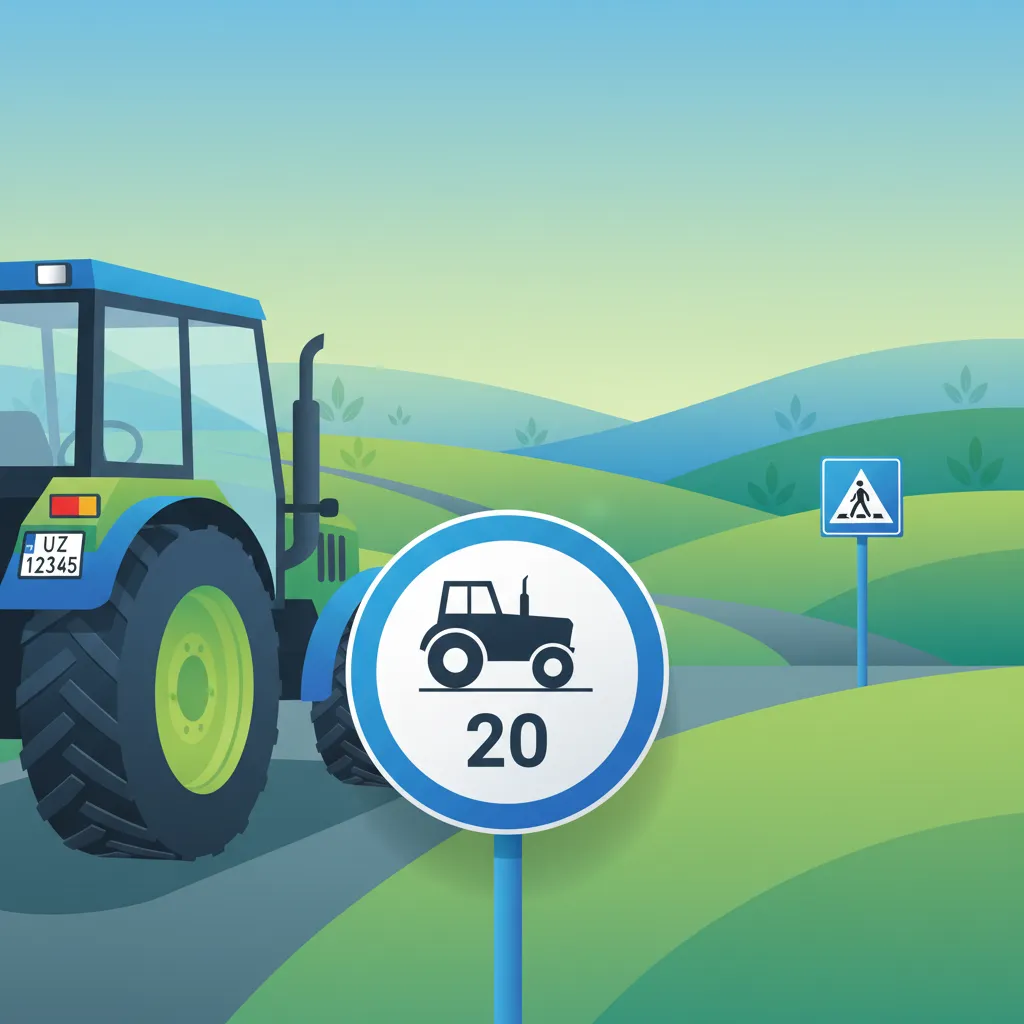
This lesson reviews the core set of regulatory and warning signs that all road users must obey, emphasizing those that affect agricultural tractors such as speed limits, stop, and give-way signs. It clarifies the colour and shape conventions used in Polish signage, enabling drivers to quickly recognize and react to sign information. The lesson also addresses the placement of signs in rural environments where visibility may be compromised.
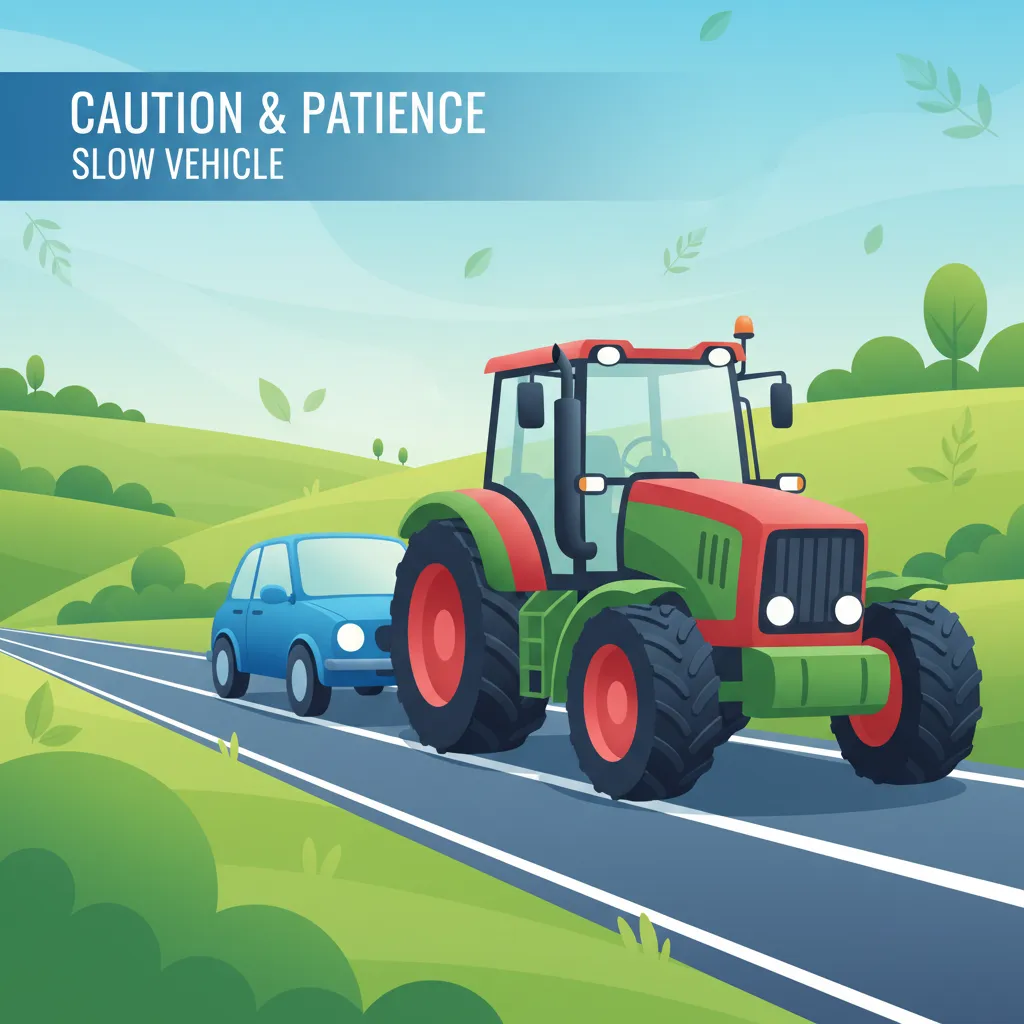
This lesson addresses encounters with slow-moving vehicles, such as tractors, which are common on rural roads. It teaches drivers to be patient, maintain a safe following distance, and only overtake when it is absolutely safe and legal to do so. Recognizing the large size and limited maneuverability of such vehicles is crucial for avoiding accidents.
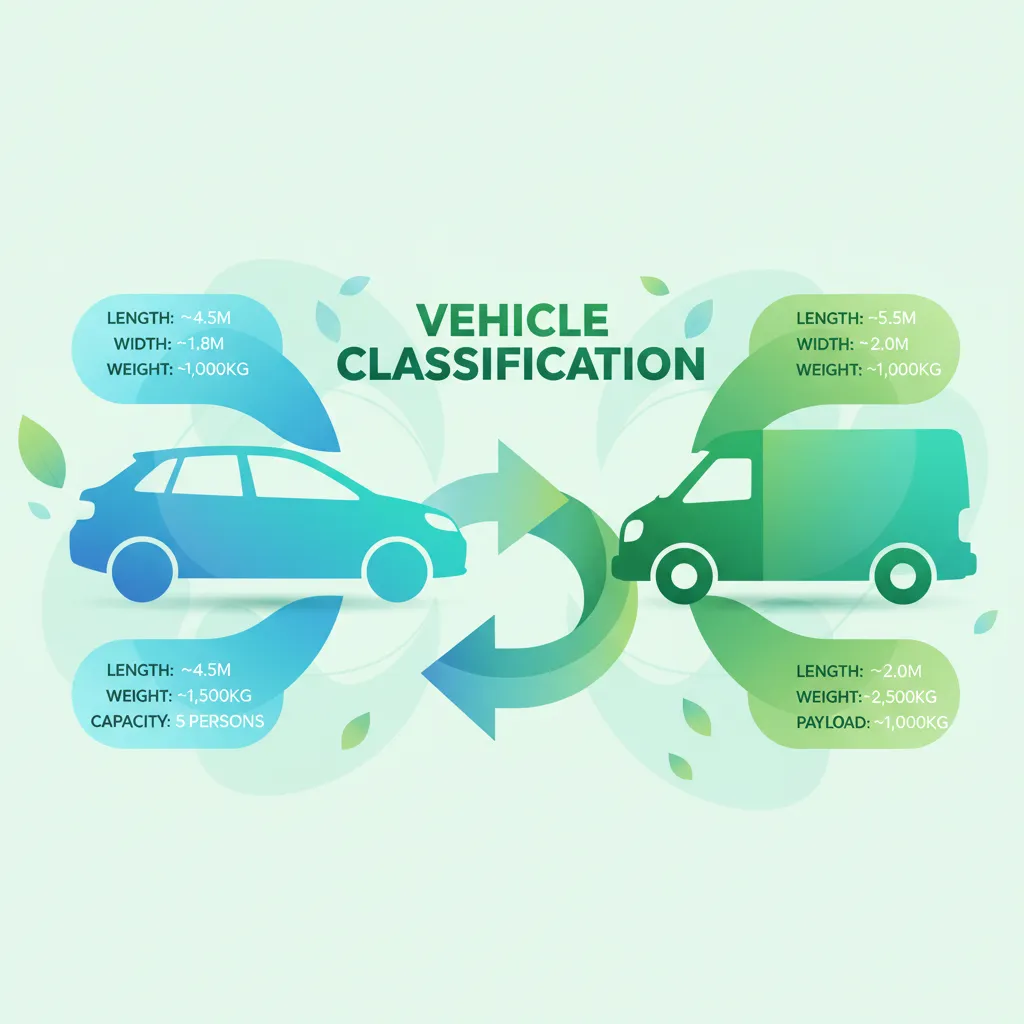
This lesson focuses on the precise classification of agricultural vehicles as defined by Polish law, differentiating between tractors, forestry machines, and trailers. It examines the legal parameters such as maximum permissible weight, width, height, and length that affect roadworthiness certifications. The lesson clarifies terminology used in official documents, ensuring learners can correctly identify the vehicles they are permitted to operate.
This lesson outlines the legal responsibilities of tractor drivers as stipulated by Polish traffic law, emphasizing the duty to comply with all rules of the road. It discusses the liability framework for accidents involving agricultural vehicles, including the need for appropriate insurance and potential penalties. The lesson also explains the importance of maintaining accurate documentation, such as registration papers and a driver’s licence.
This lesson examines real-world case studies of harvest traffic, where multiple tractors and trailers share limited road space during peak agricultural periods. Learners explore strategies for coordinating speed, maintaining safe distances, and using signaling to communicate intentions. The content also addresses the challenges of field access points and the need for cooperation with other drivers.
This lesson outlines the statutory speed limits that professional drivers of Category C vehicles must adhere to on Polish roads. It clearly distinguishes the maximum permitted speeds in built-up areas, on single carriageways, and on motorways. The content also explains how to interpret road signs that may indicate temporary or vehicle-specific speed restrictions, ensuring drivers remain compliant with the law and avoid penalties from speed enforcement measures.

This lesson focuses on the specific signage and on-vehicle markings used to indicate slow-moving vehicles, a critical element for tractors on public roads. Learners will understand the design and meaning of the triangular sign and the requirements for flashing amber lights. The content also discusses proper lane positioning and speed adjustments required when sharing the road with faster traffic.

This lesson provides comprehensive guidelines for safely transporting agricultural equipment, focusing on proper load securing techniques and weight distribution calculations. It discusses route planning that accounts for road conditions, bridge weight capacities, and seasonal obstacles like mud or snow. The lesson also emphasizes the use of protective equipment and regular compliance verification for safe operations.

This lesson examines how a tractor driver should interact with a variety of road users, focusing on right-of-way rules at intersections and with cars, trucks, cyclists, and pedestrians. It discusses safe overtaking practices, appropriate signaling to communicate intentions, and the importance of checking blind spots. The lesson highlights the need for heightened caution near schools, villages, and areas with high pedestrian activity.
Master how to safely position and adjust speed when driving agricultural vehicles alongside cars, cyclists, and pedestrians in Poland. Understand how to handle reduced visibility, adverse weather, and nighttime driving to ensure safety for all road users.
This lesson introduces defensive driving principles for rural settings, teaching learners how to continually scan the environment and anticipate potential hazards. It discusses the unique challenges posed by slow-moving agricultural traffic, field entrances, and unpredictable farm equipment maneuvers. The lesson emphasizes proactive decision-making and early brake application to avoid collisions in mixed traffic.
This lesson examines how a tractor driver should interact with a variety of road users, focusing on right-of-way rules at intersections and with cars, trucks, cyclists, and pedestrians. It discusses safe overtaking practices, appropriate signaling to communicate intentions, and the importance of checking blind spots. The lesson highlights the need for heightened caution near schools, villages, and areas with high pedestrian activity.
This lesson addresses encounters with slow-moving vehicles, such as tractors, which are common on rural roads. It teaches drivers to be patient, maintain a safe following distance, and only overtake when it is absolutely safe and legal to do so. Recognizing the large size and limited maneuverability of such vehicles is crucial for avoiding accidents.

This lesson focuses on the specific hazards introduced by seasonal weather, such as mud, snow, ice, fog, and heavy rain. It explains how these conditions affect traction, braking, and driver visibility, and provides guidance on adjusting speed and using appropriate tires. The lesson also covers the proper use of lights and reflectors to improve visibility in low-light conditions.
This lesson examines real-world case studies of harvest traffic, where multiple tractors and trailers share limited road space during peak agricultural periods. Learners explore strategies for coordinating speed, maintaining safe distances, and using signaling to communicate intentions. The content also addresses the challenges of field access points and the need for cooperation with other drivers.
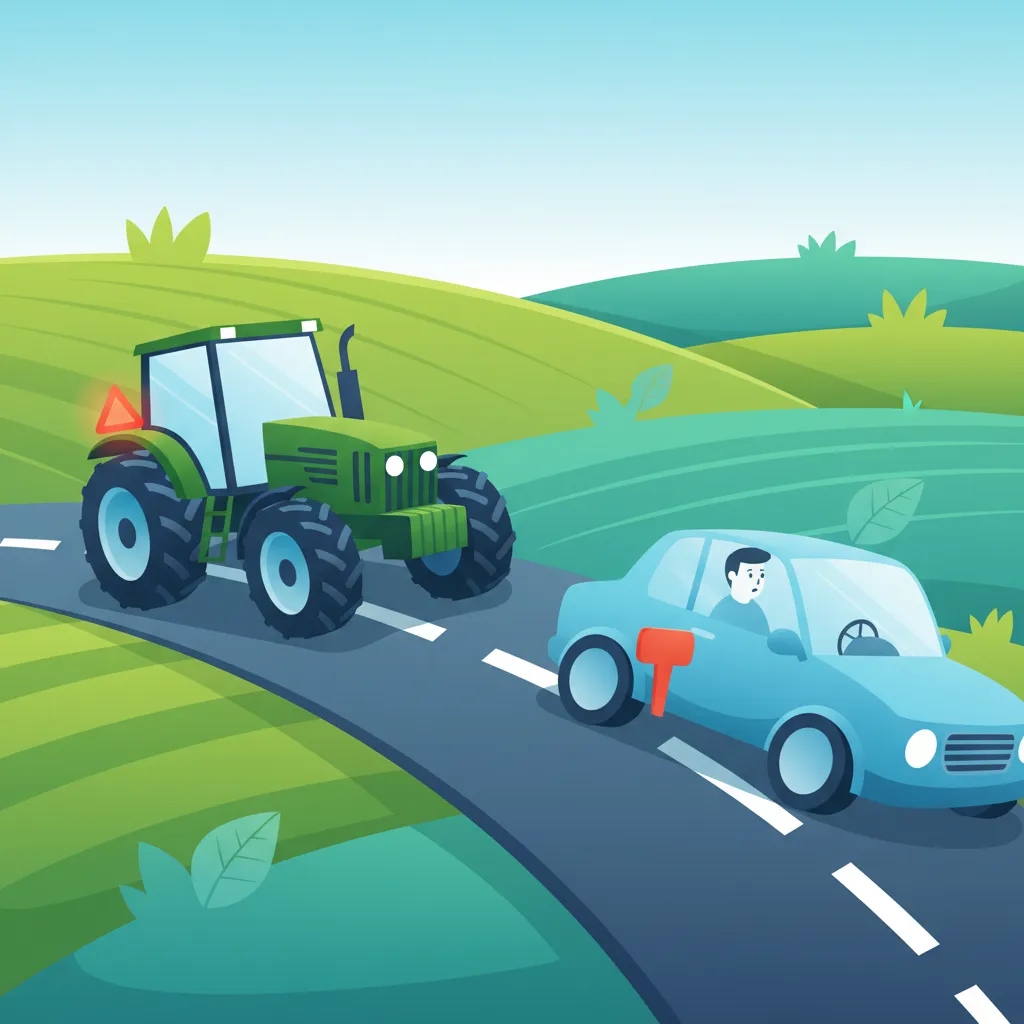
This lesson introduces hazard perception concepts specific to agricultural vehicles, teaching learners how to identify potential dangers such as unexpected farm equipment or changing road conditions. It outlines a systematic approach to visual scanning, risk evaluation, and timely decision-making to avoid accidents. The lesson provides guidelines for interpreting scenario simulations that mirror real-world rural road hazards.
This lesson reviews the core set of regulatory and warning signs that all road users must obey, emphasizing those that affect agricultural tractors such as speed limits, stop, and give-way signs. It clarifies the colour and shape conventions used in Polish signage, enabling drivers to quickly recognize and react to sign information. The lesson also addresses the placement of signs in rural environments where visibility may be compromised.
This lesson focuses on the precise classification of agricultural vehicles as defined by Polish law, differentiating between tractors, forestry machines, and trailers. It examines the legal parameters such as maximum permissible weight, width, height, and length that affect roadworthiness certifications. The lesson clarifies terminology used in official documents, ensuring learners can correctly identify the vehicles they are permitted to operate.
This lesson examines the signs that convey dimensional and weight restrictions, which are vital for safe tractor and trailer operation. It outlines how to read width, height, and weight limit signs and the legal implications of exceeding these limits. The lesson provides guidance on planning loads to comply with bridge and road classification restrictions found across Polish rural networks.
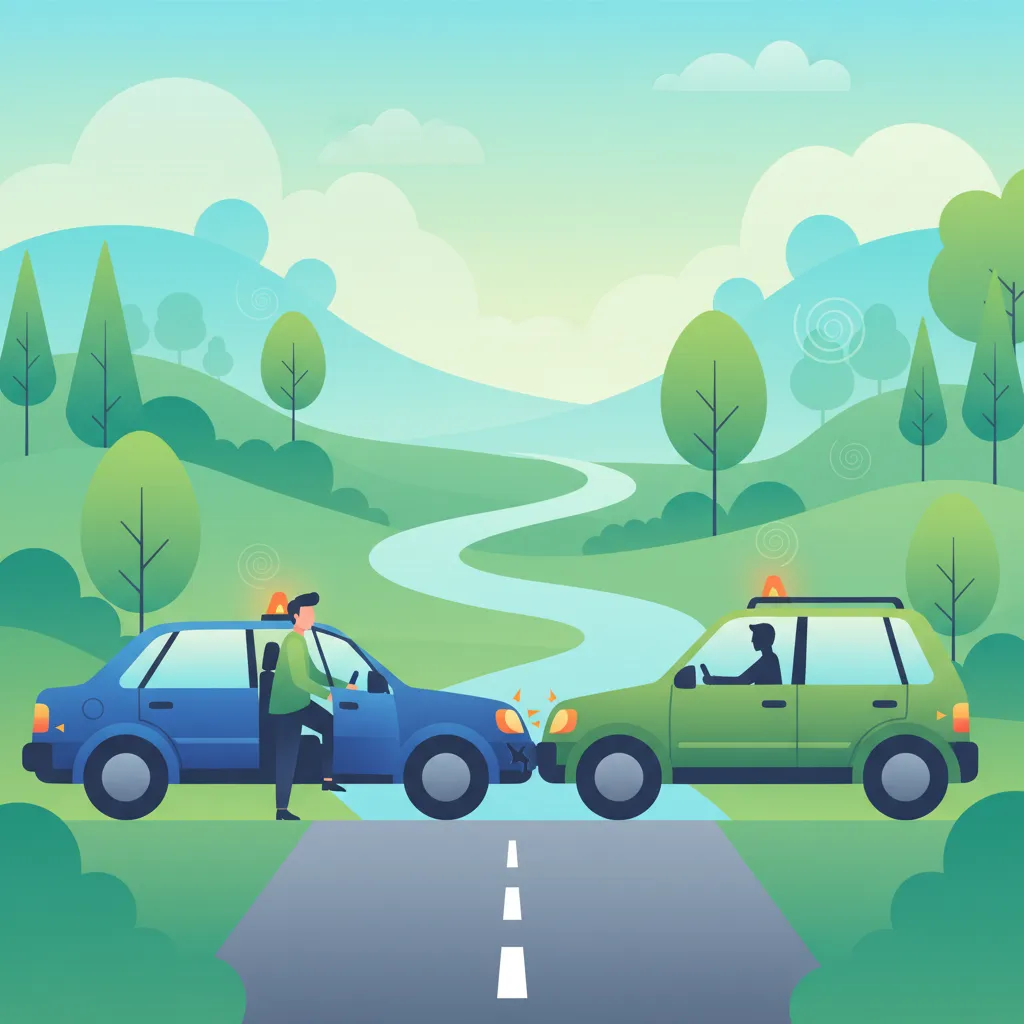
This lesson outlines the emergency procedures a tractor driver must follow in case of a breakdown, trailer detachment, or accident. It covers immediate actions such as pulling over safely, deploying warning triangles, and using hazard lights to alert other road users. The lesson details the steps for reporting the incident, providing first aid, and securing the scene to prevent further hazards.
Find clear answers to common questions learners have about Lane Positioning, Road Positioning, and Speed Limits. Learn how the lesson is structured, which driving theory objectives it supports, and how it fits into the overall learning path of units and curriculum progression in Poland. These explanations help you understand key concepts, lesson flow, and exam focused study goals.
While agricultural vehicles, especially slow-moving ones, should generally keep to the right and may use the hard shoulder if safe and necessary, it's not always mandatory. On multi-lane roads, they should use the rightmost available lane. However, they may need to move left for turning maneuvers or to overtake obstacles. The key is safe and appropriate positioning for the conditions.
Agricultural vehicles (Category T) are generally prohibited from using motorways and expressways in Poland if their construction speed is less than 40 km/h. If they meet the minimum speed requirement and are legally permitted, they must still adhere to general motorway speed limits or their own maximum design speed, whichever is lower. It's crucial to check specific vehicle classifications and regulations.
Even if the posted limit is high, a Category T driver must always adjust speed to conditions. Factors include vehicle load (especially with trailers), road surface (mud, gravel), visibility (fog, rain), traffic density, and the vehicle's own capabilities. Overloaded or unstable vehicles require significantly reduced speeds to maintain control.
Navigating roundabouts with a tractor and trailer requires extra caution due to their length and reduced maneuverability. Drivers must ensure they occupy enough space to prevent other vehicles from attempting unsafe overtakes. Proper lane selection before entering and maintaining a consistent, safe speed are crucial. They might need to use more than one lane to safely pass, provided they do so with caution and indicate clearly.
While agricultural vehicles are inherently slow, they must not unduly obstruct traffic. Where a hard shoulder or designated slow-moving vehicle lane exists and is safe to use, they should utilize it. If a queue builds up behind them, especially on narrow or winding roads, Polish law implies a duty to allow faster traffic to pass when it is safe to do so, for example, by pulling over where possible.
Build custom practice sessions tailored precisely to your needs. Focus on areas requiring improvement, review specific Polish road signs, or master complex traffic rules to ensure full preparation for your official driving license exam.