
Building on hazard perception, this lesson focuses on proactive strategies for motorcyclists: planning escape routes and adopting protective riding positions. Understanding these concepts is crucial for maintaining a safety margin and reacting effectively to unexpected traffic situations on Polish roads. This knowledge will help you navigate complex scenarios with greater confidence and prepare you for specific questions in the Category A theory exam.

Lesson content overview
Effective motorcycle riding extends beyond simply controlling your vehicle; it demands proactive strategies to anticipate and avoid potential collisions. This lesson, part of your Polish Motorcycle Theory – Comprehensive Licence Preparation for Category A, focuses on two critical defensive riding skills: planning escape routes and adopting protective positioning. Mastering these techniques is essential for enhancing your safety, improving reaction time in emergencies, and fulfilling your legal obligations under Polish road traffic law.
These advanced defensive riding concepts build upon foundational knowledge from earlier units, including basic traffic rules, vehicle dynamics, blind spot awareness (8.2), and safe following distances (5). By integrating these principles, you will learn to maximize your visibility and create a robust safety corridor around your motorcycle, allowing for smoother, controlled evasive actions when necessary.
Defensive riding centers on creating and maintaining a safe "visibility corridor" and a "protective position." A visibility corridor refers to an unobstructed line of sight that allows you to detect hazards early and ensures other drivers can see you. A protective position, meanwhile, strategically places your motorcycle to minimize its exposure to potential collisions. This proactive approach reduces the need for sudden, emergency braking and improves your ability to maneuver safely.
The underlying logic is straightforward: early detection of hazards provides more time for decision-making and controlled evasive actions. Physics dictates that a larger lateral and longitudinal buffer—the safety gap around your motorcycle—offers greater time and space for both your reaction and the motorcycle's maneuverability. Furthermore, Polish law requires drivers to exercise due care and maintain safe distances, meaning defensive positioning not only enhances safety but also demonstrates compliance with your legal duty of care.
This lesson directly connects with other critical topics in your curriculum:
To effectively plan escape routes and adopt protective positioning, several core principles must be understood and applied. These principles work together to create a comprehensive safety strategy on the road.
The chosen path on the road that maximizes visibility for the rider and minimizes exposure to other traffic hazards.
This line is not necessarily the exact center of the lane; it's a dynamic path that constantly adapts to traffic, road conditions, and potential hazards. By carefully selecting your riding line, you can reduce your vulnerability to blind spots and ensure you have sufficient space for corrective action.
The practice of positioning your motorcycle where it is least likely to be struck in a collision, often by occupying the "right-hand lane" on Polish roads.
Protective positioning aligns your presence with legal right-of-way rules and enhances your predictability to other drivers. It involves both longitudinal (front and rear) and lateral (side-to-side) placement within your lane and on the roadway.
The pre-emptive identification of at least two viable paths (a primary and a secondary) to avoid a perceived hazard.
This continuous mental exercise ensures that you can react quickly and decisively without indecision when a hazard materializes. It demands constant scanning and mental rehearsal of potential maneuvers.
A minimum safe longitudinal and lateral distance maintained from surrounding vehicles and road elements.
The buffer zone provides crucial reaction time and physical space for evasive actions. It dictates how far you should follow other vehicles and how much lateral space you should keep from them or from obstacles.
An unobstructed line of sight from the rider to potential hazards, both forward and sideways, ensuring early detection and mutual visibility.
Maintaining a clear visibility corridor ensures you can see hazards as early as possible and, equally important, that other road users can see you. This influences everything from your body posture to the choice of riding position within a lane.
The defensive riding line is your chosen trajectory on the road that optimally balances forward progress with safety. It involves consciously selecting a path that keeps you clear of blind spots, intersections, and other high-risk zones.
On multi-lane roads, a central lane position is often preferred when traffic flow allows, as it provides space on both sides. However, an offset position, where you ride slightly to one side of the lane, might be better in specific situations. For instance, riding slightly to the right in your lane can keep you out of a car driver's left-hand blind spot or provide a larger buffer from oncoming traffic on a two-lane road. The Polish road code generally requires staying on the right side of the roadway unless overtaking, which influences your lane choice on multi-lane roads.
Common mistakes include riding too close to the curb or road edge, which can limit your escape options, expose you to uneven surfaces, and reduce your visibility to vehicles entering from side roads. Similarly, hugging the left side of a lane on a two-lane road can reduce your lateral buffer from oncoming traffic.
For example, on a straight highway with multiple lanes, a rider typically chooses the rightmost lane for normal travel, maintaining a consistent lateral offset from the lane markings. This allows for clear scanning ahead for slower traffic and provides space to react if needed. This concept is closely related to the buffer zone and visibility corridor, as your chosen line directly impacts both.
Protective positioning involves intentionally placing your motorcycle where the risk of being struck by other road users is minimal. In Poland, this primarily means occupying the right-hand lane when not overtaking and maintaining adequate distances from other vehicles.
This concept has both longitudinal and lateral components. Longitudinal positioning refers to keeping a safe distance ahead and behind other vehicles, ensuring you have enough braking and reaction time. Lateral positioning involves choosing your lane center or offset within the lane to maximize your visibility and create a safety buffer.
When approaching a junction, for instance, maintaining the right-hand lane until you signal and complete your turn is an example of good protective positioning. This prevents other drivers from misinterpreting your intentions or cutting you off. A common mistake is cutting across lanes to overtake on the right or riding too close to traffic, especially within an overtaking zone, which can lead to dangerous situations and traffic violations.
Consider a motorcyclist approaching a roundabout. By staying in the right lane and yielding to vehicles already in the circle, the rider minimizes conflict points and uses a clear, predictable path. This strategy not only protects the rider but also helps other drivers anticipate their movements, reducing the likelihood of right-of-way disputes. Protective positioning is intertwined with the defensive riding line and the buffer zone, as they all contribute to creating a safe operating space.
Escape route planning is the mental and visual process of identifying at least two possible trajectories to avoid any perceived hazard. This proactive approach ensures you are always prepared to react, eliminating indecision in critical moments.
Every time you observe a potential hazard, you should instinctively look for a primary escape route—the most direct and safest path—and a secondary escape route, an alternative in case the primary is blocked. This constant assessment means you're not waiting for danger to appear before considering your options.
For instance, if a vehicle ahead suddenly brakes, your pre-planned escape route might be an open lane to the left for a swift swerve. This requires not only scanning ahead but also checking your mirrors and blind spots to ensure the escape path is clear. Polish road rules permit sudden lane changes only when safety can be assured, emphasizing the need for pre-planning.
Continuously scan the road ahead and around you. Identify potential escape routes as you ride, even when there's no immediate hazard. This mental rehearsal improves your reaction time significantly.
A common mistake is waiting until a hazard appears before looking for an escape route, which leads to delayed reactions and may force you into an emergency braking situation instead of a controlled evasion. On a narrow city street, a rider might identify the far side of the lane as an escape route in case a car pulls out without signaling. This constant readiness is a cornerstone of advanced defensive riding, relying heavily on your visibility corridor and buffer zone.
The buffer zone defines the minimum safe distances, both laterally (to the side) and longitudinally (front and rear), that you should maintain from other road users and roadside obstacles. This critical safety margin provides the essential time and space for you to react and maneuver safely.
The longitudinal buffer is typically measured in seconds of travel time behind the vehicle ahead. A general rule is to maintain at least a 2-3 second gap. This allows sufficient time to react, brake, or swerve if the vehicle ahead stops abruptly or changes direction unexpectedly. In adverse conditions like rain, fog, or low light, this gap should be extended to 4 seconds or more.
The lateral buffer refers to the side-to-side distance. It is recommended to maintain at least 1.5 meters from the outer edge of a vehicle in the same lane, and also from parked cars, cyclists, or pedestrians. This distance prevents you from being affected by sudden movements from others (e.g., a car door opening, a cyclist swerving) and keeps you out of their immediate blind spots.
Polish law explicitly mandates maintaining a safe distance to prevent collisions. Tailgating, or following too closely, is a common and dangerous violation. Similarly, riding too close to the edge of the lane where a parked vehicle could suddenly open a door, or where road debris might accumulate, constitutes a failure to maintain an adequate lateral buffer. Extending your buffer zone in rainy conditions to 4 seconds, for example, directly addresses the reduced grip and increased stopping distances on wet roads. This principle is fundamental to both protective positioning and effective escape route planning.
The visibility corridor is a clear, unobstructed line of sight that extends both forward and sideways from the rider. Its purpose is twofold: to ensure you can detect potential hazards as early as possible and to ensure other drivers can clearly see you.
Forward visibility means having an unobstructed view of the road ahead, allowing you to identify hazards, traffic flow changes, and road conditions well in advance. This requires proper body posture and helmet positioning to avoid obstructions. Side visibility involves constant awareness of traffic in adjacent lanes, vehicles at intersections, and potential blind-spot zones.
Maintaining a clear visibility corridor often means adjusting your helmet angle and body posture to keep your eyes on the road and actively scan for obstacles. You must also avoid positioning yourself in the blind spot of a large vehicle, where you become invisible to its driver.
Never assume other drivers see you, even if you are in a brightly colored helmet and gear. Actively work to place yourself in their line of sight.
A common mistake is riding in the blind spot of a large truck or bus for extended periods, making you virtually invisible to the driver, especially during lane changes. Another error is prolonged turning of the head away from the main traffic flow, which reduces your forward scanning capabilities. On a multi-lane highway, a rider might use a slight lateral offset to stay out of a large truck's blind spot while maintaining a clear forward view. This strategic positioning is directly linked to the defensive riding line and protective positioning principles, as it guides your choice of lane and position within that lane.
Adhering to Polish traffic laws (Prawo o ruchu drogowym) is not merely a legal obligation but a fundamental aspect of defensive riding and ensuring your safety. Many regulations directly support the principles of escape route planning and protective positioning.
| Rule | Applicability | Legal Status | Rationale |
|---|---|---|---|
| Maintain safe distances – Drivers must keep a distance that allows them to stop safely without endangering other participants. | All traffic situations, especially at higher speeds. | Mandatory (Polish Code of Road Traffic, Art. 7). | Prevents rear-end collisions and provides sufficient reaction time for evasive maneuvers. |
| Ride on the right side of the carriageway – Motorcyclists must keep to the right lane unless overtaking, preparing for a turn, or avoiding an obstacle. | Two-lane roads and multi-lane roads. | Mandatory (Art. 33). | Aligns with standard traffic flow, improves driver predictability, and facilitates protective positioning. |
| Use appropriate signals before lane change – Signals must be given clearly and in advance. | Any lane change or turn. | Mandatory (Art. 30). | Alerts other road users to your intentions, allowing them to adjust their speed and position, thus reducing collision risk. |
| Obey speed limits and adjust speed for conditions – Speed must be reduced during adverse weather or low visibility. | All road types, especially when visibility is compromised. | Mandatory (Art. 41). | Ensures sufficient stopping distance and control, particularly when road adhesion is reduced. |
| Yield to pedestrians at crosswalks and to vehicles already within a roundabout – Priority rules. | Intersections, roundabouts, crosswalks. | Mandatory (Art. 23, 57). | Prevents right-of-way violations, which are common causes of collisions, especially for vulnerable road users. |
| Prohibited overtaking on the right – Overtaking must typically be performed on the left side of the vehicle. | All overtaking maneuvers. | Mandatory (Art. 28). | Reduces surprise for the overtaken driver and promotes a more predictable traffic flow. Exceptions exist for specific multi-lane situations (e.g., queueing traffic). |
Following these rules is critical. For instance, maintaining safe distances directly relates to your buffer zone. Riding on the right side of the carriageway influences your defensive riding line and protective positioning. Properly signaling before a lane change or turn, as required by Article 30, is vital for informing other drivers and preventing them from obstructing your escape routes. Failure to comply with these regulations can lead to legal penalties, including fines and penalty points, and significantly increase your risk of being involved in a collision.
Understanding common mistakes is crucial for developing robust defensive riding habits. Many collisions result from riders inadvertently compromising their safety margins or predictability.
Consequences of these violations range from increased collision risk and legal penalties (fines, penalty points) to loss of control, severe injury, or even fatalities.
Effective defensive riding is dynamic, requiring adjustments based on prevailing conditions. Your application of escape routes and protective positioning must vary with weather, lighting, road type, vehicle state, and the presence of vulnerable road users.
The principles of escape route planning and protective positioning are rooted in fundamental scientific and legal considerations that underscore their importance.
The average human reaction time is approximately 1.5 seconds from perceiving a hazard to initiating a physical response. This precious window is significantly extended by defensive positioning. By maintaining a larger buffer and actively scanning for escape routes, you gain valuable extra fractions of a second or even whole seconds, which can be the difference between a near-miss and a collision. This additional time allows for smoother decision-making and more controlled maneuvers, reducing panic and improving safety outcomes.
Maintaining a larger buffer zone directly influences the physics of your motorcycle's motion. The required deceleration (a) to avoid a collision is inversely proportional to the square of the distance (s) available for braking (simplified from a = v² / 2s). This means that a larger buffer distance dramatically reduces the force required to stop or avoid an obstacle, decreasing the likelihood of wheel lock-up, loss of traction, or an uncontrolled swerve. Simply put, more space equals more options and less abrupt physics.
Studies have consistently shown that motorcyclists who adopt a central or slightly offset lane position are significantly more likely to be seen by other drivers compared to those who ride close to the curb or road edge. This enhanced visibility can reduce the probability of other drivers violating your right-of-way or making errors that lead to collisions. Statistical data from Poland, for example, indicates that a significant percentage of motorcycle crashes involve a failure to maintain a safe following distance. Implementing protective positioning and adequate buffer zones can substantially mitigate this risk.
Failure to signal, maintain safe distances, or observe correct lane usage, as prescribed by Polish law, not only increases collision risk but can also result in legal citations. In the event of an accident, your adherence to these duties of care will be a crucial factor in determining liability. Defensive riding principles, therefore, directly support your legal obligation to operate your vehicle safely and responsibly.
Let's explore how these principles apply in real-world Polish driving scenarios.
Setting: A busy city street in Warsaw, clear weather, moderate traffic. You are approaching an intersection, and a car in the opposite lane is signaling a left turn. There is also a pedestrian waiting at a crosswalk on your right.
Correct Behavior: As you approach, maintain your defensive riding line by staying in the right-hand lane. Keep at least a 2-meter lateral buffer from the lane markings and any parked cars. Scan the turning car's wheels to anticipate its movement. Simultaneously, identify a primary escape route (e.g., a straight path if the car turns slowly) and a secondary escape route (e.g., a slight swerve into the clear left side of your lane if the car cuts sharply). Signal your intentions clearly even if going straight, and be prepared to stop for the pedestrian.
Incorrect Behavior: You cut sharply into the left side of your lane to gain a better view, squeezing between two cars. You fail to signal your intention to go straight and don't notice the pedestrian. The turning car misjudges your speed, and you are forced into an emergency stop or a dangerous swerve into the pedestrian's path.
Setting: A three-lane motorway, dry conditions, you are traveling at 100 km/h in the middle lane. A faster vehicle is approaching rapidly from behind in the leftmost lane. There's a slower truck in the rightmost lane ahead.
Correct Behavior: Maintain your defensive riding line in the middle lane, ensuring a 3-second longitudinal buffer from the vehicle in front. Check your mirrors and blind spots. If you need to overtake the truck, signal early, verify your left-hand escape route is clear (the left lane), and smoothly accelerate to pass. Once past, signal right and return to the middle or right lane, maintaining your protective position. Your primary escape route is typically to return to the right lane, while a secondary might involve carefully utilizing the shoulder if a severe hazard develops.
Incorrect Behavior: You attempt to overtake the truck on the right side without signaling, entering the lane of the slower vehicle unexpectedly. This violates protective positioning and is often illegal, creating a surprise for the truck driver and risking a side-swipe collision.
Setting: A rural road during heavy rain, visibility is low, and the speed limit is 70 km/h. A truck ahead suddenly applies its brakes.
Correct Behavior: Immediately increase your longitudinal buffer to at least a 4-second following distance due to the reduced grip. Scan for an escape route, which might be the left shoulder or the clear space within your lane if traffic permits. Reduce your speed early and apply gentle, progressive braking. Be prepared for a swift, controlled swerve if the truck stops completely.
Incorrect Behavior: You follow at a typical 2-second gap. When the truck brakes, you brake sharply, causing a rear-wheel lock-up and loss of control on the wet surface.
Setting: A roundabout with two lanes and light traffic. You are approaching from the right-hand lane, intending to take the second exit (straight through).
Correct Behavior: Maintain your defensive riding line in the right-hand lane, suitable for taking the second exit. Yield to circulating traffic, establishing your visibility corridor. Maintain a lateral buffer from merging vehicles as you enter. Your primary escape route involves continuing around the outer lane if a sudden stop or conflict arises, while the secondary might be accelerating safely through an open gap.
Incorrect Behavior: You veer into the left lane before fully entering the roundabout, causing confusion for drivers already in the circle and creating a potential conflict point.
This lesson has provided a comprehensive framework for proactive motorcycle safety through intelligent positioning and preparedness.
By consistently applying these principles, you will significantly enhance your safety, ride more confidently, and contribute to safer roads for everyone.
This lesson teaches motorcyclists how to plan escape routes and adopt protective positioning to avoid collisions on Polish roads. The core strategy involves selecting a defensive riding line that maximizes visibility while minimizing exposure, maintaining adequate buffer zones (2-3 seconds longitudinally and 1.5 meters laterally), and continuously identifying primary and secondary escape routes for any perceived hazard. Protective positioning aligns with Polish traffic law by keeping riders in the right lane, making them predictable and legally compliant. These techniques require contextual adjustments based on weather, lighting, road type, and the presence of vulnerable road users, with increased buffers during adverse conditions. Mastering these proactive strategies significantly enhances rider safety and confidence while preparing learners for the Category A theory exam.
A short set of high-value points that capture the most important learning from this lesson.
The defensive riding line is a dynamic path that maximizes your visibility and minimizes exposure to hazards, constantly adapting to traffic and road conditions rather than simply following lane center.
Protective positioning in Poland means staying in the right lane when not overtaking, aligning with legal right-of-way rules and making you predictable to other drivers.
Escape route planning requires continuously identifying at least one primary and one secondary path whenever you spot a potential hazard, not waiting until danger materializes.
Buffer zones provide essential reaction time and maneuver space; maintain 2-3 seconds longitudinally and at least 1.5 meters laterally, extending both in adverse conditions.
The visibility corridor ensures you can detect hazards early and that other road users can see you, requiring constant scanning and proper positioning within your lane.
Explore all units and lessons included in this driving theory course.
Polish law requires keeping safe distances that allow stopping without endangering others (Art. 7) and riding on the right side of the carriageway unless overtaking (Art. 33).
Increase longitudinal buffer to 4+ seconds in rain, fog, snow, or low light because reduced road grip significantly increases stopping distances.
The average human reaction time is 1.5 seconds from perceiving a hazard to initiating a response—buffer zones buy you precious extra time.
Always signal at least 30 meters before any lane change or turn (Art. 30) to alert other road users and prevent them from obstructing your escape routes.
Never remain in a truck or bus blind spot; either pass quickly or drop back to ensure the driver can see you in their mirrors.
Tailgating in stop-and-go traffic drastically reduces your longitudinal buffer and can cause rear-end collisions if the vehicle ahead stops suddenly.
Riding too close to the curb or road edge limits your lateral escape space, exposes you to uneven surfaces, and reduces visibility to vehicles at intersections.
Waiting until a hazard appears before looking for an escape route causes delayed reactions and may force emergency braking instead of controlled evasion.
Overtaking on the right side of a vehicle violates protective positioning principles and is typically illegal under Polish traffic rules (Art. 28).
Entering an intersection without mentally identifying exit paths increases accident risk, particularly from vehicles turning left or running red lights.
Lesson content overview
A short set of high-value points that capture the most important learning from this lesson.
The defensive riding line is a dynamic path that maximizes your visibility and minimizes exposure to hazards, constantly adapting to traffic and road conditions rather than simply following lane center.
Protective positioning in Poland means staying in the right lane when not overtaking, aligning with legal right-of-way rules and making you predictable to other drivers.
Escape route planning requires continuously identifying at least one primary and one secondary path whenever you spot a potential hazard, not waiting until danger materializes.
Buffer zones provide essential reaction time and maneuver space; maintain 2-3 seconds longitudinally and at least 1.5 meters laterally, extending both in adverse conditions.
The visibility corridor ensures you can detect hazards early and that other road users can see you, requiring constant scanning and proper positioning within your lane.
Explore all units and lessons included in this driving theory course.
Polish law requires keeping safe distances that allow stopping without endangering others (Art. 7) and riding on the right side of the carriageway unless overtaking (Art. 33).
Increase longitudinal buffer to 4+ seconds in rain, fog, snow, or low light because reduced road grip significantly increases stopping distances.
The average human reaction time is 1.5 seconds from perceiving a hazard to initiating a response—buffer zones buy you precious extra time.
Always signal at least 30 meters before any lane change or turn (Art. 30) to alert other road users and prevent them from obstructing your escape routes.
Never remain in a truck or bus blind spot; either pass quickly or drop back to ensure the driver can see you in their mirrors.
Tailgating in stop-and-go traffic drastically reduces your longitudinal buffer and can cause rear-end collisions if the vehicle ahead stops suddenly.
Riding too close to the curb or road edge limits your lateral escape space, exposes you to uneven surfaces, and reduces visibility to vehicles at intersections.
Waiting until a hazard appears before looking for an escape route causes delayed reactions and may force emergency braking instead of controlled evasion.
Overtaking on the right side of a vehicle violates protective positioning principles and is typically illegal under Polish traffic rules (Art. 28).
Entering an intersection without mentally identifying exit paths increases accident risk, particularly from vehicles turning left or running red lights.
Explore search topics learners often look for when studying Planning Escape Routes and Protective Positioning. These topics reflect common questions about road rules, driving situations, safety guidance, and lesson level theory preparation for learners in Poland.
Browse additional driving theory lessons that cover connected traffic rules, road signs, and common driving situations related to this topic. Improve your understanding of how different rules interact across everyday traffic scenarios.
Explore how defensive riding, escape routes, and protective positioning adapt across various Polish road types. Understand urban, rural, and motorway specific hazards and safety adjustments for Category A theory.

This lesson focuses on the unique demands of urban riding within Polish cities, addressing traffic lights, pedestrian zones, one-way streets, and the presence of tram tracks. Learners will study safe lane positioning on narrow roads, blind-spot management, and how to share the road with buses and cyclists. The content also covers strategies for navigating stop-and-go traffic, anticipating signal changes, and maintaining visibility in dense urban environments.

In this lesson, learners explore riding on rural and countryside roads, where road markings may be sparse and surface conditions varied. The content covers safe overtaking in single-lane sections, interaction with agricultural vehicles and animals, and the handling of gravel or uneven surfaces. Learners will also study the importance of anticipating curves and adjusting speed to light conditions, equipping them with the skills needed for safe countryside travel.
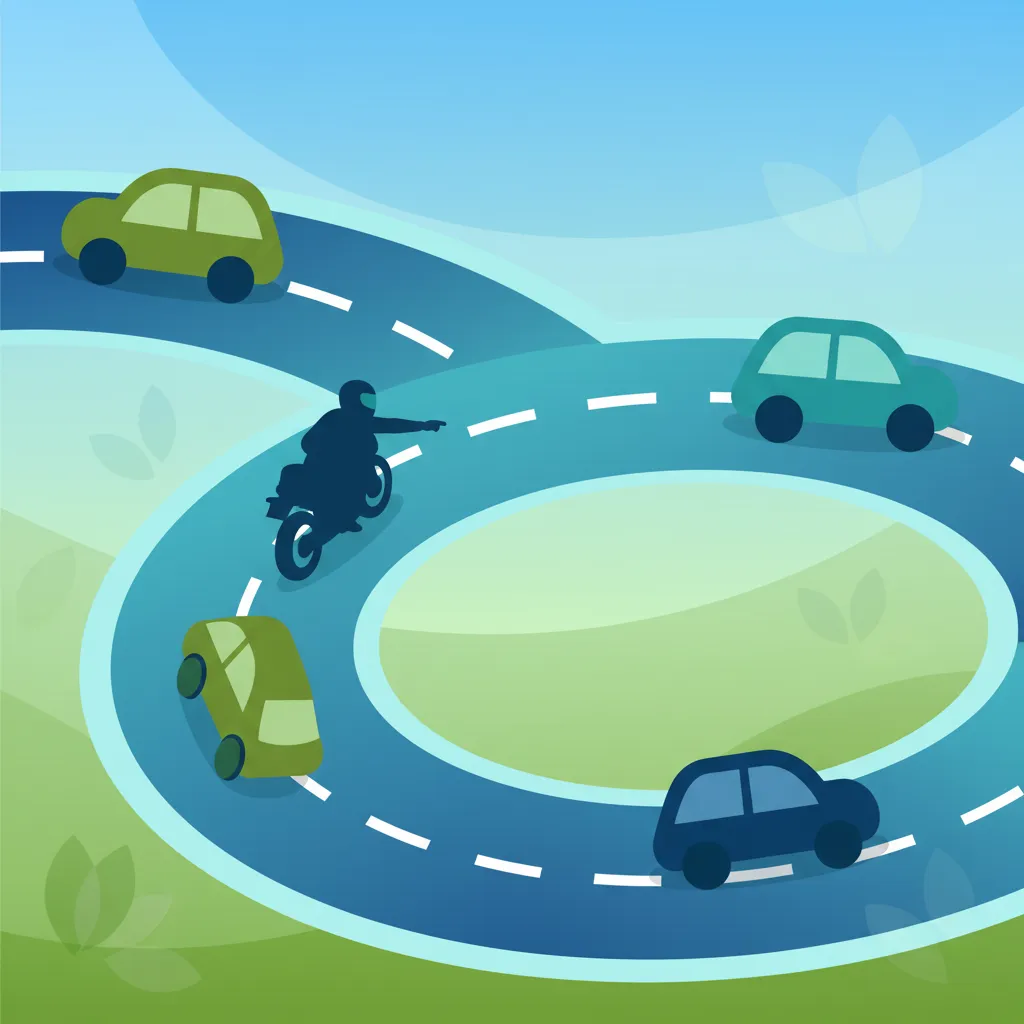
This lesson focuses on the proper techniques for negotiating roundabouts, which are common in Polish urban environments. Learners will learn the correct approach to entering a roundabout, yielding to circulating traffic, selecting the appropriate lane, and signaling intentions when exiting. The lesson also discusses speed adaptation for safe circulation and blind-spot checks before changing lanes within the roundabout, ensuring smooth and legal navigation.

This lesson examines the specific rules and etiquette for riding on Polish motorways and high-speed highways, focusing on proper lane positioning, entry via acceleration lanes, and maintaining appropriate following distances. Learners will study overtaking protocols at high speeds, proper use of deceleration lanes for exits, and techniques for aerodynamic positioning. The content also covers safe lane changes and emergency lane usage to ensure efficient travel.
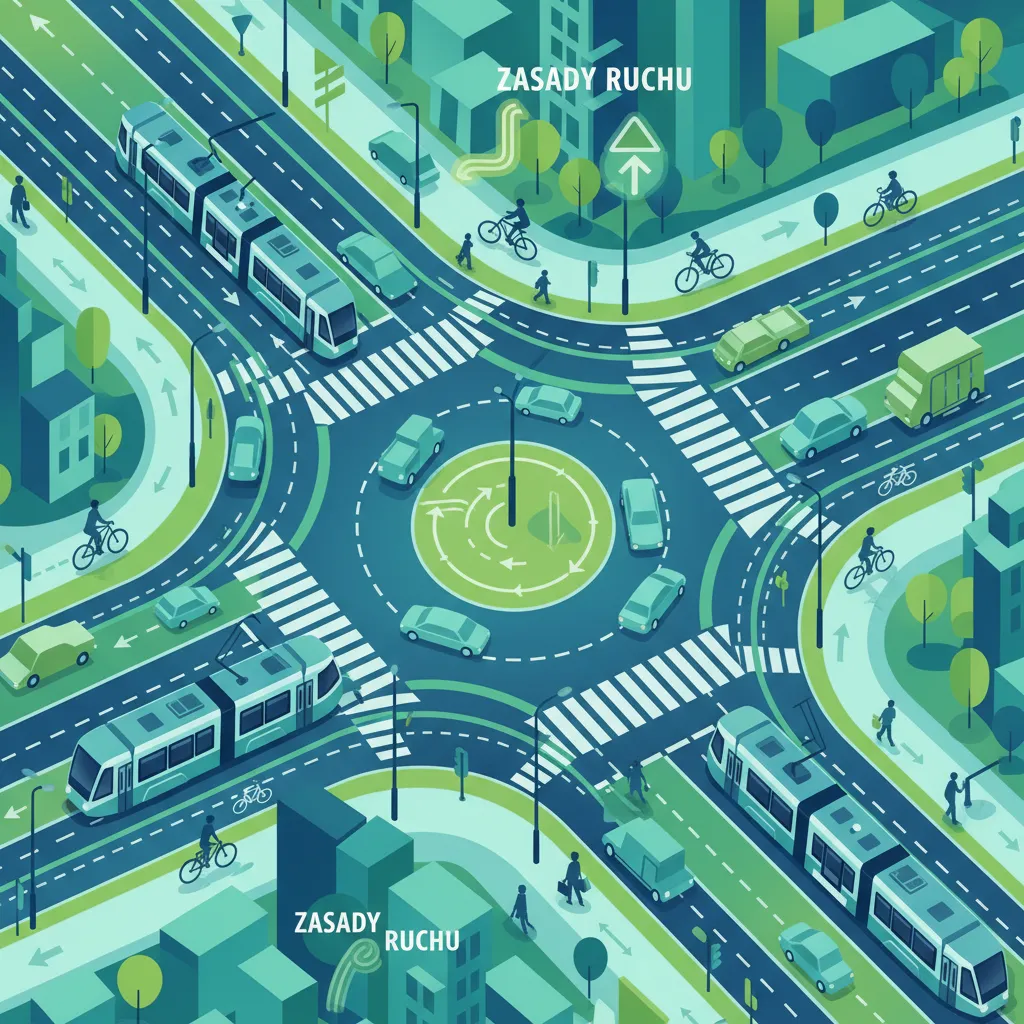
In this lesson, learners investigate complex junctions and intersections found across urban, rural, and highway environments, focusing on multi-lane configurations, traffic light coordination, and roundabout navigation. The content emphasizes priority rules, blind-spot assessment when merging, and safe lane selection for turning maneuvers. Learners will also consider interactions with cyclists and pedestrians, and the importance of adjusting approach speed for safe navigation.
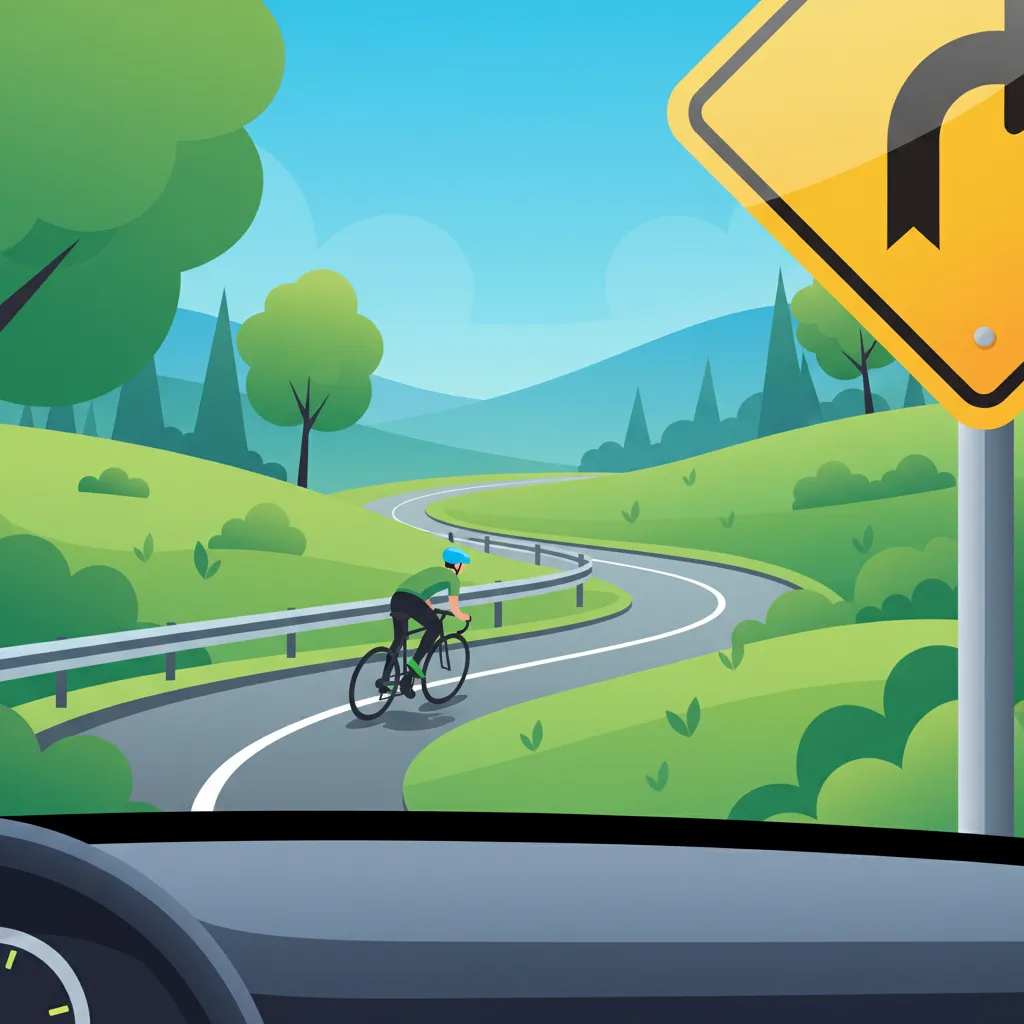
In this lesson, learners study warning signs that alert drivers to potential hazards, focusing on those that are particularly relevant to motorcyclists. The content includes signs indicating curves, slippery surfaces, animal crossings, tram tracks, and construction zones, each requiring specific riding adjustments. The lesson teaches riders how to interpret these signs to anticipate hazards, adjust speed appropriately, and maintain a safe distance from potential dangers.
This lesson examines the variety of pavement markings that define lane structures, traffic flow, and special zones on Polish roads. Learners will study solid and broken lines, lane division markings, and the distinct symbols for bicycle lanes, bus lanes, and tram tracks, all of which affect motorcyclist positioning. The lesson also addresses surface texture indicators that signal changing road conditions, enabling riders to maintain correct lane discipline.

This lesson is dedicated to the safe overtaking of two-wheeled vehicles. It explains the legal requirement to leave a sufficient lateral distance (at least 1 meter) when passing cyclists. The content highlights the vulnerability of these road users and the need for patience, reduced speed, and careful judgment.
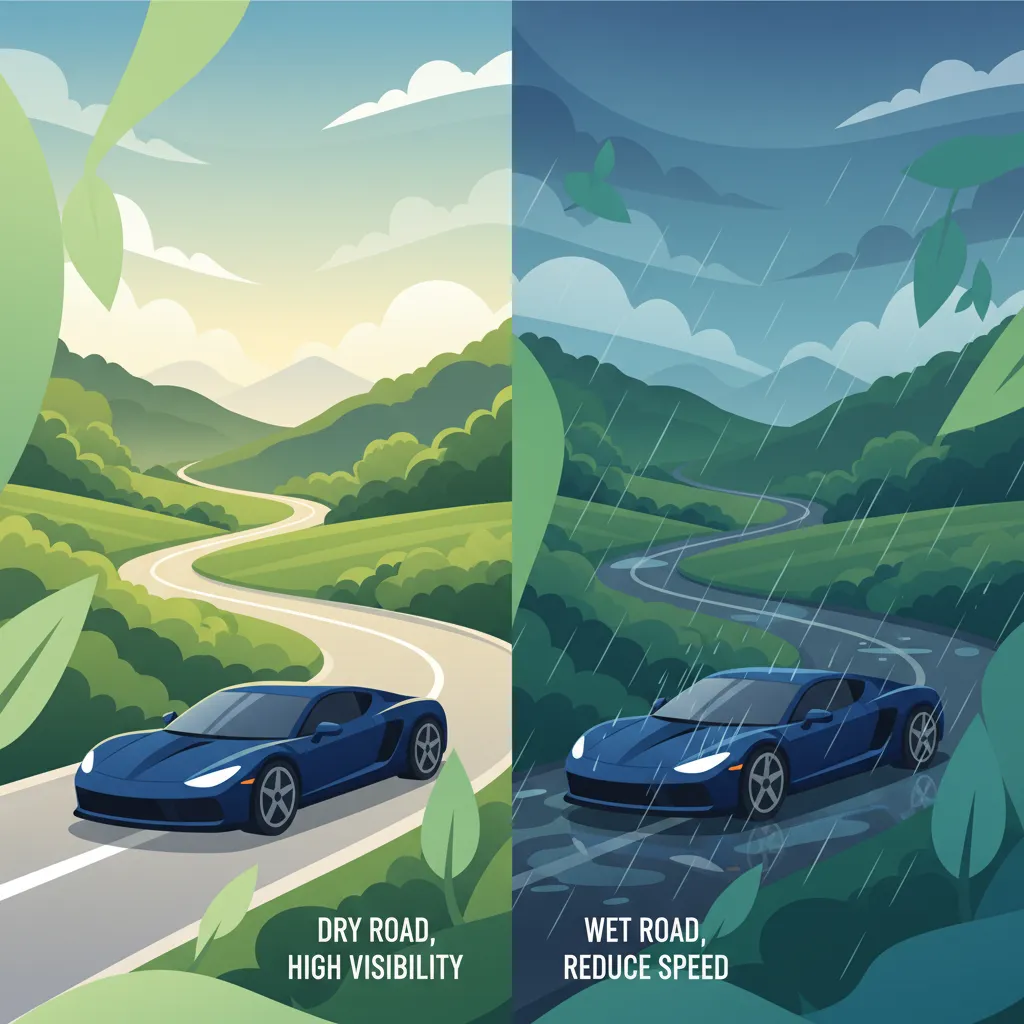
In this lesson, learners examine how environmental conditions such as rain, wind, ice, and reduced visibility necessitate adjustments in riding speed. The content provides guidelines for assessing road surfaces, judging appropriate cornering speeds, and reducing speed proactively in adverse weather. Learners will understand the impact of temperature on tyre performance and the need to increase safety margins, mastering adaptive speed management to maintain control.

This lesson addresses environmental factors that impact rider visibility, such as low light, night conditions, fog, and glare from headlights. Learners will explore strategies for riding safely in reduced visibility, including the use of reflective gear, proper headlamp settings, and appropriate eye protection. The content also covers hazard detection techniques in adverse weather and how to adjust speed to maintain safety, enhancing rider safety across all conditions.
Learn about frequent errors in motorcycle lane positioning, escape route planning, and buffer zone maintenance. Understand how to avoid these critical mistakes to enhance safety according to Polish driving theory.
In this lesson, learners study warning signs that alert drivers to potential hazards, focusing on those that are particularly relevant to motorcyclists. The content includes signs indicating curves, slippery surfaces, animal crossings, tram tracks, and construction zones, each requiring specific riding adjustments. The lesson teaches riders how to interpret these signs to anticipate hazards, adjust speed appropriately, and maintain a safe distance from potential dangers.
In this lesson, learners examine the core legal obligations that apply to motorcyclists operating on Polish roads, including the mandatory use of helmets, periodic vehicle inspections, and the necessity of valid insurance and registration. The content details the classification of traffic offences and explains the associated penalty system, including fines, demerit points, and potential licence suspension. Additionally, the lesson outlines procedural requirements for accident reporting and interaction with law enforcement, providing a comprehensive view of a rider’s legal responsibilities.
This lesson focuses on the proper techniques for negotiating roundabouts, which are common in Polish urban environments. Learners will learn the correct approach to entering a roundabout, yielding to circulating traffic, selecting the appropriate lane, and signaling intentions when exiting. The lesson also discusses speed adaptation for safe circulation and blind-spot checks before changing lanes within the roundabout, ensuring smooth and legal navigation.
This lesson focuses on the unique demands of urban riding within Polish cities, addressing traffic lights, pedestrian zones, one-way streets, and the presence of tram tracks. Learners will study safe lane positioning on narrow roads, blind-spot management, and how to share the road with buses and cyclists. The content also covers strategies for navigating stop-and-go traffic, anticipating signal changes, and maintaining visibility in dense urban environments.

This lesson examines the responsibilities of motorcyclists when approaching pedestrian crossings and interacting with cyclists, emphasizing the marked right-of-way for pedestrians at zebra crossings. Learners will study how to determine safe passing distances, adjust speed, and use visual cues such as eye contact to ensure pedestrians have cleared the crossing. The content also covers interactions with cyclists sharing the road, highlighting the need for anticipation and adequate passing gaps.
In this lesson, learners explore riding on rural and countryside roads, where road markings may be sparse and surface conditions varied. The content covers safe overtaking in single-lane sections, interaction with agricultural vehicles and animals, and the handling of gravel or uneven surfaces. Learners will also study the importance of anticipating curves and adjusting speed to light conditions, equipping them with the skills needed for safe countryside travel.

In this lesson, learners examine defensive overtaking practices, focusing on when and how to safely pass other road users. The content covers speed differential calculations, appropriate passing distances, and the importance of maintaining clear visibility during overtaking. Learners will also study the impact of road curvature, traffic flow, and lane selection on overtaking safety, allowing them to minimize risks associated with passing maneuvers.

In this lesson, learners focus on the identification and management of blind spots that affect motorcyclists, particularly when sharing the road with larger vehicles such as trucks and buses. The content covers the use of side mirrors, head-turn techniques, and optimal rider positioning to minimize blind-spot exposure. Learners will also study the characteristics of blind spots at intersections and during overtaking maneuvers to reduce collision risk.
This lesson examines the variety of pavement markings that define lane structures, traffic flow, and special zones on Polish roads. Learners will study solid and broken lines, lane division markings, and the distinct symbols for bicycle lanes, bus lanes, and tram tracks, all of which affect motorcyclist positioning. The lesson also addresses surface texture indicators that signal changing road conditions, enabling riders to maintain correct lane discipline.
This lesson addresses environmental factors that impact rider visibility, such as low light, night conditions, fog, and glare from headlights. Learners will explore strategies for riding safely in reduced visibility, including the use of reflective gear, proper headlamp settings, and appropriate eye protection. The content also covers hazard detection techniques in adverse weather and how to adjust speed to maintain safety, enhancing rider safety across all conditions.
Find clear answers to common questions learners have about Planning Escape Routes and Protective Positioning. Learn how the lesson is structured, which driving theory objectives it supports, and how it fits into the overall learning path of units and curriculum progression in Poland. These explanations help you understand key concepts, lesson flow, and exam focused study goals.
Protective positioning involves choosing a lane position that maximizes your visibility to other road users and provides you with the best escape route if a hazard develops. For example, riding in the 'primary riding position' (often towards the centre or left side of your lane, depending on traffic flow) can make you more visible and offer a clearer path forward or to the side, crucial for navigating Polish traffic safely.
Planning an escape route means constantly assessing your surroundings for potential hazards and identifying clear paths away from danger. This involves looking ahead for traffic, road conditions, and potential conflicts, and ensuring that your chosen lane position gives you options to move to if needed. Always keep your eyes scanning for opportunities to move aside or brake safely.
Distance buffers are essential for providing yourself with adequate time to react to unexpected events. On a motorcycle, you have less protection than in a car, so maintaining a sufficient gap to the vehicle in front, behind, and to the sides gives you the space needed for braking or evasive maneuvers. This is a key aspect of defensive riding tested in the Polish theory exam.
Counter-steering is the fundamental technique used to initiate a lean for turning. In an emergency swerve, quick and precise counter-steering inputs allow you to rapidly change direction to avoid an obstacle. While this lesson focuses on the planning and preparation for such maneuvers, understanding the underlying control mechanism is vital for effective execution.
Yes, the Polish theory exam often includes questions that assess your understanding of safe riding practices. Questions about lane positioning, maintaining safe distances, and anticipating hazards to create escape routes are common. Mastering these concepts, as covered in this lesson, will directly help you answer these questions correctly.
Build custom practice sessions tailored precisely to your needs. Focus on areas requiring improvement, review specific Polish road signs, or master complex traffic rules to ensure full preparation for your official driving license exam.