
Welcome to the essential lesson on motorcycle braking systems, crucial for safe riding and passing your Category A theory exam. This section delves into how to effectively use your front and rear brakes, the role of ABS, and the principles of safe deceleration, building upon your foundational knowledge of motorcycle mechanics.

Lesson content overview
Effective motorcycle braking is a fundamental skill that directly impacts rider safety and control, making it a critical component of the Polish Motorcycle Theory – Comprehensive Licence Preparation for Category A. This lesson delves into the intricate mechanisms of motorcycle braking systems, the physics governing deceleration, and the techniques necessary to bring your machine to a safe, controlled stop under various conditions. Understanding these principles is not just theoretical; it empowers riders to make quick, informed decisions in real-world scenarios, significantly reducing the risk of collisions and ensuring compliance with Polish road traffic regulations.
Modern motorcycles are equipped with sophisticated braking systems designed to provide powerful and controllable deceleration. These systems are typically divided into independent front and rear brakes, each playing a distinct role in the overall stopping process. Familiarity with their components, operation, and capabilities is essential for safe riding.
The front brake system is the most powerful braking component on a motorcycle, often responsible for generating 60-80% of the total stopping force. This dominance is due to a phenomenon called weight transfer, where the motorcycle's weight shifts significantly to the front wheel during deceleration, increasing its grip.
Typically, the front brake consists of one or more disc rotors attached to the front wheel, with calipers clamping brake pads onto these discs. This action, usually activated by pulling the right-hand lever, creates friction that rapidly slows the wheel. Almost all contemporary motorcycles utilise hydraulic actuation, where fluid pressure from the lever is transmitted through a line to the calipers, ensuring precise and responsive braking. Understanding how to apply the front brake progressively and firmly without locking the wheel is paramount for optimal stopping performance.
While the front brake provides the majority of stopping power, the rear brake system is crucial for stability, fine-tuning speed control, and assisting in low-speed manoeuvres. It typically accounts for 20-40% of the total braking force, a proportion that can vary depending on road conditions and rider input.
The rear brake is usually operated by pressing the right-foot pedal. Like the front brake, modern rear systems commonly feature disc brakes, though they are often smaller than their front counterparts. Older or smaller motorcycles might still use drum brakes, which are enclosed units that use shoes pressing against the inside of a drum to create friction. The rear brake is particularly useful for maintaining balance and stability when slowing down gently, especially in congested urban traffic or during precise parking manoeuvres. However, it's more prone to locking up on slippery or loose surfaces if applied too forcefully, as the weight transfer away from the rear wheel reduces its available traction.
The Anti-Lock Braking System (ABS) is a significant safety innovation that has become a standard feature on most new motorcycles and is legally mandated for all new motorcycles sold in the European Union, including Poland (EU directive 2006/42/EC). ABS is designed to prevent wheel lock-up during braking, thereby maintaining steering ability and significantly reducing stopping distances, especially on low-friction surfaces.
At its core, ABS operates using wheel speed sensors that continuously monitor the rotational speed of each wheel. If a sensor detects that a wheel is decelerating too rapidly – an indicator of imminent lock-up – the ABS control unit momentarily reduces the hydraulic brake pressure to that specific wheel. As the wheel regains traction and speeds up slightly, the pressure is immediately reapplied. This rapid pulsing of brake pressure occurs many times per second, ensuring the wheel continues to rotate at the optimal rate for maximum braking without skidding. This modulation allows the rider to maintain steering control even under hard braking, a critical factor in emergency situations.
According to Polish road traffic law (Rozporządzenie Ministra Infrastruktury), if a motorcycle is equipped with ABS, the system must be fully functional. It is illegal to tamper with, disable, or remove the ABS system. The functionality of the ABS system is checked during mandatory periodic technical inspections (STK). A functioning ABS light, which typically illuminates briefly upon ignition and then extinguishes, indicates that the system is operational. Riders should be aware that while ABS is a powerful safety aid, it does not eliminate the need for proper braking technique. It enhances control, but riders must still apply brakes smoothly and progressively.
Achieving optimal braking performance hinges on understanding and managing brake balance in conjunction with dynamic weight transfer. These principles dictate how effectively a motorcycle can decelerate while maintaining stability and control.
When a motorcycle decelerates, its centre of mass shifts forward. This phenomenon, known as weight transfer, significantly increases the load on the front wheel and decreases the load on the rear wheel. The increased load on the front tyre provides it with significantly more grip, allowing it to handle a greater proportion of the braking force before locking up. Conversely, the reduced load on the rear tyre means it has less grip available, making it easier to lock if too much brake pressure is applied. Riders must account for this by applying more pressure to the front brake and less to the rear brake under hard braking conditions.
Brake balance refers to the proportion of braking force applied to the front versus the rear wheel. For a motorcycle on a dry, ideal road surface, the optimal brake balance for maximum deceleration is typically around 70% front and 30% rear. This ratio maximizes the use of the front tyre's increased grip due due to weight transfer. However, this balance is dynamic and must be adjusted by the rider based on various factors:
The friction circle is a theoretical concept that illustrates the total available grip of a tyre in both longitudinal (braking/acceleration) and lateral (cornering) directions. It represents the maximum combined forces a tyre can generate before losing traction. If a tyre is generating maximum braking force, it has very little lateral grip remaining for cornering. Conversely, if a tyre is cornering at its limit, it has almost no grip left for braking or acceleration.
Understanding the friction circle helps riders comprehend the trade-offs. For instance, when braking hard into a corner, the rider must complete the majority of braking while the motorcycle is upright, reducing speed sufficiently before leaning into the turn. Attempting to brake excessively while heavily leaned over can quickly exceed the tyre's friction circle, leading to a loss of grip and a fall.
Effective braking is not just about applying force; it's about applying force intelligently and progressively. Progressive deceleration is a technique where the rider incrementally increases brake pressure, allowing for sensory feedback from the motorcycle and tyres, and enabling subtle adjustments to maintain control.
The hallmark of progressive braking is smoothness. Instead of grabbing the brake lever or stomping on the pedal, the rider should gently initiate braking, then gradually increase pressure as needed. This allows the motorcycle's suspension to compress, the tyres to load up, and the weight transfer to occur in a controlled manner. This technique prevents abrupt shifts in weight that can destabilize the motorcycle and potentially lead to wheel lock-up. It also improves rider comfort and confidence, especially in unexpected situations or on variable road surfaces.
Start with a gentle squeeze of the front brake lever and a light press of the rear brake pedal. As the motorcycle begins to decelerate and weight shifts forward, gradually increase pressure on the front brake while easing slightly on the rear, always listening to the feedback from the tires.
Engine braking refers to the deceleration force created by the engine when the throttle is closed and a lower gear is engaged. While not as powerful as mechanical brakes, engine braking can significantly assist in slowing down, especially over long descents or when anticipating a gradual stop. By downshifting gears sequentially as speed decreases, the rider can leverage the engine's natural resistance to rotation. This technique not only helps conserve mechanical brakes but also provides a smoother, more controlled deceleration, allowing the rider to maintain better stability and prepare for the next phase of riding. It's particularly useful in conjunction with light mechanical braking to scrub off speed gradually.
Many variables can significantly influence a motorcycle's stopping distance:
Always maintain a safe following distance that allows you to stop completely, even if the vehicle in front brakes abruptly. Polish traffic law mandates a safe distance that accommodates for braking under normal conditions.
Polish road traffic law (Prawo o ruchu drogowym) and its implementing regulations (e.g., Rozporządzenie Ministra Infrastruktury) impose strict requirements on motorcycle braking systems to ensure safety. Adherence to these rules is mandatory for all motorcyclists, particularly those pursuing a Category A licence.
Both the front and rear braking systems must be operable independently. This means the rider must be able to apply the front brake without activating the rear brake, and vice versa. This design ensures redundancy, allowing the rider to maintain some braking capability even if one system fails. It also enables riders to modulate brake force precisely for each wheel, adapting to different riding conditions.
As previously discussed, if a motorcycle is equipped with an Anti-Lock Braking System (ABS), the system must be functional and not disabled. This is a mandatory safety requirement reflecting the system's proven ability to reduce accidents. Disabling ABS not only compromises safety but also constitutes a violation of regulations, potentially leading to fines or failure of vehicle inspection.
The rear brake light must illuminate automatically when the rear brake is applied. While the front brake also causes deceleration, many motorcycles are designed so that only the rear brake lever/pedal activates the brake light. It is critical to ensure that both brakes, or at least the rear brake, are used sufficiently to activate the brake light. This alerts following vehicles to your deceleration, preventing rear-end collisions. Polish law (art. 25 Ustawa o ruchu drogowym) explicitly requires functioning brake lights.
All motorcycles in Poland are subject to mandatory periodic technical inspections (STK). During these inspections, the entire braking system—including pads, discs, hydraulic lines, fluid levels, and ABS functionality—is thoroughly checked to ensure it is in good technical condition and meets performance standards. Riders are responsible for regular maintenance, such as replacing worn brake pads, ensuring proper brake fluid levels, and checking for leaks, to keep their braking system in optimal working order between inspections.
Polish regulations acknowledge that vehicle load influences dynamic performance. When carrying a passenger or cargo, the rider must adjust their braking technique to compensate for the altered weight distribution and increased mass. This typically involves shifting the brake balance slightly rearward and allowing for longer stopping distances. Failure to adjust can lead to unstable braking, reduced effectiveness, and a higher risk of accidents.
Even experienced riders can make mistakes when braking, especially under pressure. Awareness of these common errors and practicing correct techniques can significantly enhance safety.
A skilled motorcyclist constantly adapts their braking technique to the prevailing environmental conditions. What works on a dry, sunny day may be dangerous on a wet or icy road.
Snow and ice offer extremely low friction coefficients, making braking exceptionally challenging.
Mastering motorcycle braking is a continuous process of learning and adaptation. By understanding the underlying mechanics, physics, and legal requirements, you can significantly enhance your safety and confidence on Polish roads.
Effective braking is not just a skill; it's a critical safety habit built on knowledge and practice. Integrate these principles into your riding, and you will be well-prepared for any situation on the road.
This lesson covers motorcycle braking systems for the Polish Category A theory exam, detailing how front brakes generate most stopping power through weight transfer while rear brakes provide stability. It explains ABS functionality, which prevents wheel lock-up by modulating hydraulic pressure many times per second. The optimal brake balance is approximately 70/30 front-to-rear on dry surfaces, shifting rearward on wet or low-traction conditions. Key factors affecting stopping distance include speed, road surface friction coefficient, vehicle load, and weather conditions. The lesson also addresses Polish legal requirements for independent brake operation, functional ABS, brake light activation, and proper maintenance, while emphasising progressive braking techniques and contextual adaptation to different road and weather conditions.
A short set of high-value points that capture the most important learning from this lesson.
The front brake provides 60-80% of total stopping power due to weight transfer during deceleration, making it the primary braking component.
Optimal brake balance shifts dynamically: approximately 70% front / 30% rear on dry roads, adjusting to 60% front / 40% rear on wet surfaces.
ABS prevents wheel lock-up by rapidly modulating brake pressure, maintaining steering control on low-friction surfaces.
Progressive deceleration—incrementally increasing brake pressure—prevents abrupt weight shifts and maintains control.
Stopping distance increases exponentially with speed; doubling speed quadruples braking distance.
Explore all units and lessons included in this driving theory course.
The front brake delivers primary stopping power through weight transfer, while the rear brake provides stability and fine speed control.
The friction circle illustrates that tyre grip is limited; maximum braking leaves little traction for cornering and vice versa.
ABS must remain fully functional on motorcycles equipped with it—disabling it violates Polish regulations.
Always ensure brake lights activate when decelerating to alert following traffic of your slowing or stopping.
When carrying passengers or cargo, shift brake balance slightly rearward and increase stopping distances.
Excessive rear brake force on loose or slippery surfaces causes rear wheel lock-up and loss of control.
Applying maximum front brake force on wet roads can easily lock the front wheel, eliminating steering control.
Relying solely on front brake for gentle stops may not activate brake lights, creating rear-end collision risk.
Using the same brake balance when carrying a passenger as when riding solo ignores altered weight distribution and grip.
Braking heavily while already leaned into a corner exceeds the tyre friction circle, causing loss of grip.
Lesson content overview
A short set of high-value points that capture the most important learning from this lesson.
The front brake provides 60-80% of total stopping power due to weight transfer during deceleration, making it the primary braking component.
Optimal brake balance shifts dynamically: approximately 70% front / 30% rear on dry roads, adjusting to 60% front / 40% rear on wet surfaces.
ABS prevents wheel lock-up by rapidly modulating brake pressure, maintaining steering control on low-friction surfaces.
Progressive deceleration—incrementally increasing brake pressure—prevents abrupt weight shifts and maintains control.
Stopping distance increases exponentially with speed; doubling speed quadruples braking distance.
Explore all units and lessons included in this driving theory course.
The front brake delivers primary stopping power through weight transfer, while the rear brake provides stability and fine speed control.
The friction circle illustrates that tyre grip is limited; maximum braking leaves little traction for cornering and vice versa.
ABS must remain fully functional on motorcycles equipped with it—disabling it violates Polish regulations.
Always ensure brake lights activate when decelerating to alert following traffic of your slowing or stopping.
When carrying passengers or cargo, shift brake balance slightly rearward and increase stopping distances.
Excessive rear brake force on loose or slippery surfaces causes rear wheel lock-up and loss of control.
Applying maximum front brake force on wet roads can easily lock the front wheel, eliminating steering control.
Relying solely on front brake for gentle stops may not activate brake lights, creating rear-end collision risk.
Using the same brake balance when carrying a passenger as when riding solo ignores altered weight distribution and grip.
Braking heavily while already leaned into a corner exceeds the tyre friction circle, causing loss of grip.
Explore search topics learners often look for when studying Braking Systems and Safe Deceleration. These topics reflect common questions about road rules, driving situations, safety guidance, and lesson level theory preparation for learners in Poland.
Browse additional driving theory lessons that cover connected traffic rules, road signs, and common driving situations related to this topic. Improve your understanding of how different rules interact across everyday traffic scenarios.
Explore the detailed mechanics of motorcycle front, rear, and ABS braking systems. Understand how weight transfer affects braking performance and learn about factors like brake fade and fluid maintenance crucial for safe riding in Poland.
This lesson explores how increasing speed amplifies kinetic energy, thereby affecting braking efficiency and required stopping distances. Learners will learn about brake fade due to heat, the differing contributions of front and rear brakes, and how ABS assists in maintaining stability on slippery surfaces. The lesson covers techniques for proper brake modulation, especially when decelerating from high speeds, to help riders apply appropriate braking techniques for safety.
In this lesson, learners explore the complexities of winter riding, including snow-covered roads, ice patches, and the impact of low temperatures on both the rider and the motorcycle. The content addresses the use of ABS and traction control on slippery surfaces and the need for appropriate tyre pressure. Learners will also learn about appropriate clothing layers, frostbite prevention, and how to adjust riding technique for safe cornering and braking on ice.
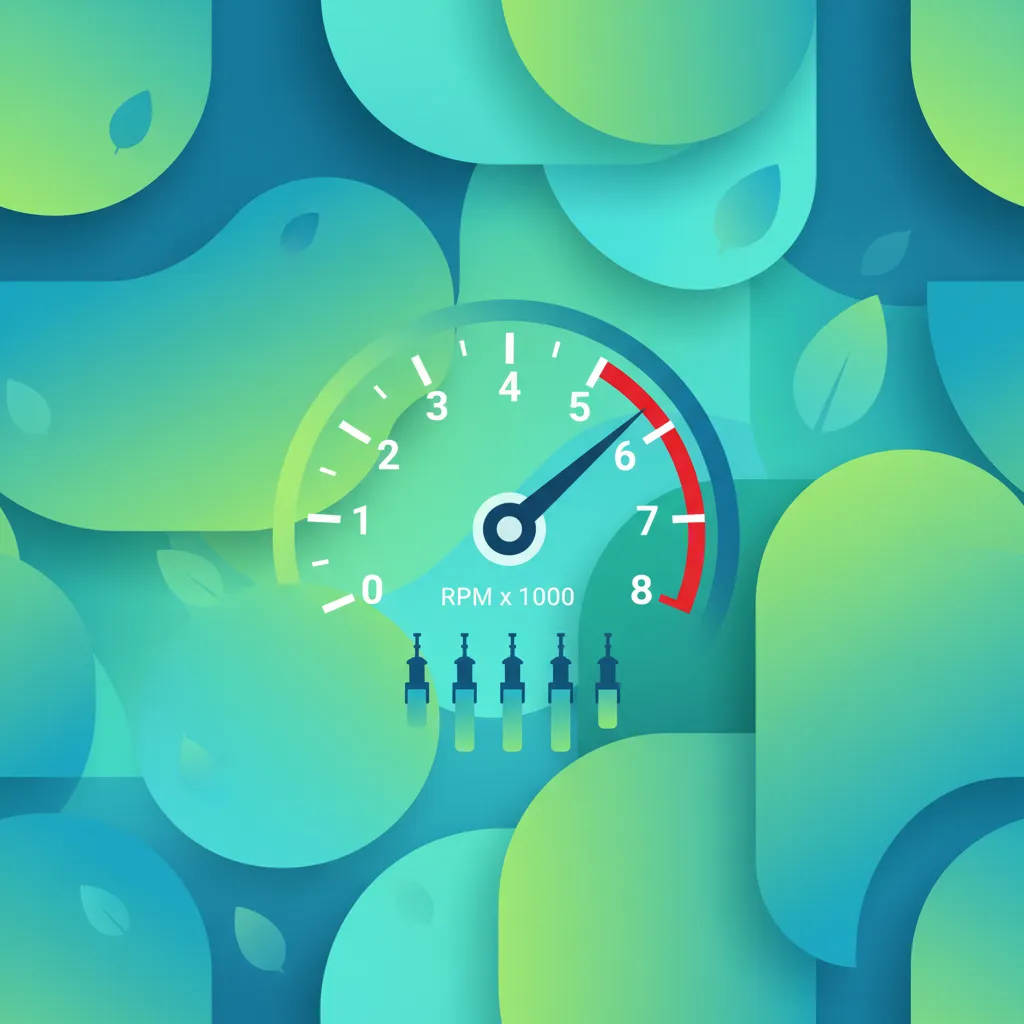
This lesson explores how riders can use engine braking to manage speed without over-relying on the mechanical brakes, especially during downhill scenarios. It teaches the proper use of downshifts combined with clutch modulation to achieve controlled deceleration while maintaining stability. The lesson also covers optimal gear selection for hill climbing and fuel efficiency, explaining how rpm management affects engine load and overall power delivery for enhanced safety.

This lesson covers the braking mechanisms specific to large passenger vehicles, focusing on air brake systems and retarders. Learners will understand the components and operation of service and parking brakes, as well as the function of ABS and ESC. It also addresses strategies for emergency braking and the importance of regular maintenance for optimal performance.
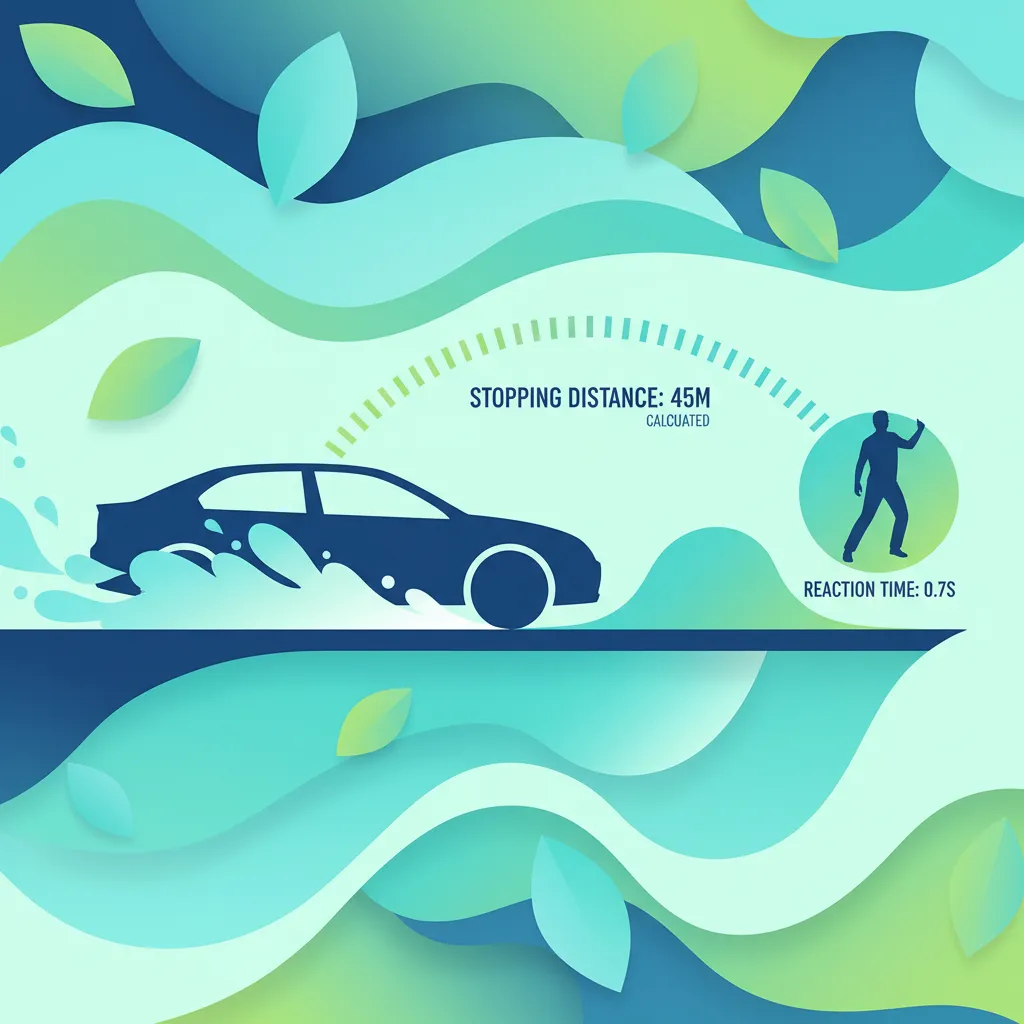
In this lesson, learners study the physics behind stopping distances, breaking it down into perception-reaction time and braking distance components. The content explains how speed, vehicle mass, and road surface friction influence the total stopping distance. Learners will practice calculating stopping distances under different conditions and understand the importance of maintaining a safety margin by improving hazard perception and rider response.

This lesson focuses on the specific challenges of riding in rain, detailing how wet road surfaces reduce tyre grip and increase braking distances. Learners will learn about hydroplaning risk, the importance of deep tyre tread, and the need for smooth throttle and brake modulation to maintain stability. The content also covers visibility concerns, such as proper headlamp use and the selection of waterproof clothing, so riders can safely navigate wet conditions.
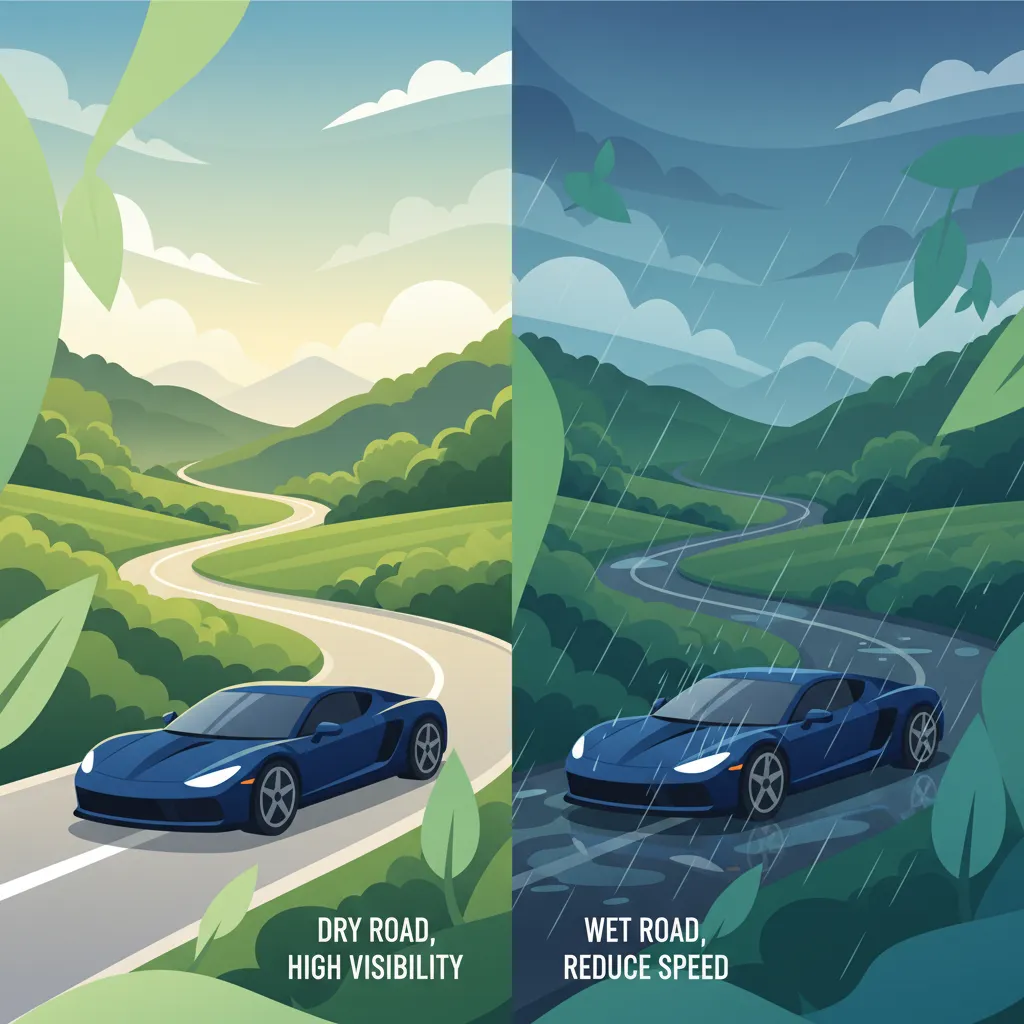
In this lesson, learners examine how environmental conditions such as rain, wind, ice, and reduced visibility necessitate adjustments in riding speed. The content provides guidelines for assessing road surfaces, judging appropriate cornering speeds, and reducing speed proactively in adverse weather. Learners will understand the impact of temperature on tyre performance and the need to increase safety margins, mastering adaptive speed management to maintain control.
This lesson introduces the core operations of the throttle, clutch, and gearbox, explaining how throttle input modulates engine power and how clutch engagement allows seamless gear changes. Learners will study the gear ratio system, the sequential shifting pattern, and the importance of locating the neutral position correctly. The content also covers techniques for smooth acceleration, proper timing for upshifts and downshifts, and the concept of rev matching to maintain vehicle stability during transitions.

This lesson is dedicated to the critical braking systems of heavy goods vehicles. It provides a detailed explanation of the air brake system, including the compressor, air tanks, and brake chambers, and highlights the safety function of the dual-circuit design. Learners will also differentiate between various types of auxiliary braking systems, such as engine brakes and retarders, and understand their role in managing speed and preventing service brake overheating on steep gradients.

This lesson outlines strategies for planning escape routes and adopting protective positioning to avoid potential collisions. Learners will study the concept of a defensive riding line that maximizes visibility and provides an optimal safety corridor. The content emphasizes maintaining adequate distance buffers, choosing lanes that reduce exposure to hazards, and preparing for emergency maneuvers such as swift swerves, allowing riders to react quickly in critical situations.
Learn how to adapt motorcycle braking techniques to various road surfaces, weather conditions, and traffic environments. This lesson covers stopping distance calculations and hazard perception related to braking on Polish roads.
In this lesson, learners study the physics behind stopping distances, breaking it down into perception-reaction time and braking distance components. The content explains how speed, vehicle mass, and road surface friction influence the total stopping distance. Learners will practice calculating stopping distances under different conditions and understand the importance of maintaining a safety margin by improving hazard perception and rider response.
This lesson explores how increasing speed amplifies kinetic energy, thereby affecting braking efficiency and required stopping distances. Learners will learn about brake fade due to heat, the differing contributions of front and rear brakes, and how ABS assists in maintaining stability on slippery surfaces. The lesson covers techniques for proper brake modulation, especially when decelerating from high speeds, to help riders apply appropriate braking techniques for safety.
In this lesson, learners examine how environmental conditions such as rain, wind, ice, and reduced visibility necessitate adjustments in riding speed. The content provides guidelines for assessing road surfaces, judging appropriate cornering speeds, and reducing speed proactively in adverse weather. Learners will understand the impact of temperature on tyre performance and the need to increase safety margins, mastering adaptive speed management to maintain control.

This lesson equips learners with a structured approach to risk assessment and decision-making when facing adverse weather or seasonal conditions. The content introduces a hazard perception framework, guiding riders to assess weather forecasts, evaluate road surface conditions, and calculate safety margins. Learners will learn how to make go/no-go decisions, adjust speed dynamically, and plan contingencies for unexpected events to prioritize safety.
This lesson focuses on the specific challenges of riding in rain, detailing how wet road surfaces reduce tyre grip and increase braking distances. Learners will learn about hydroplaning risk, the importance of deep tyre tread, and the need for smooth throttle and brake modulation to maintain stability. The content also covers visibility concerns, such as proper headlamp use and the selection of waterproof clothing, so riders can safely navigate wet conditions.
This lesson outlines strategies for planning escape routes and adopting protective positioning to avoid potential collisions. Learners will study the concept of a defensive riding line that maximizes visibility and provides an optimal safety corridor. The content emphasizes maintaining adequate distance buffers, choosing lanes that reduce exposure to hazards, and preparing for emergency maneuvers such as swift swerves, allowing riders to react quickly in critical situations.
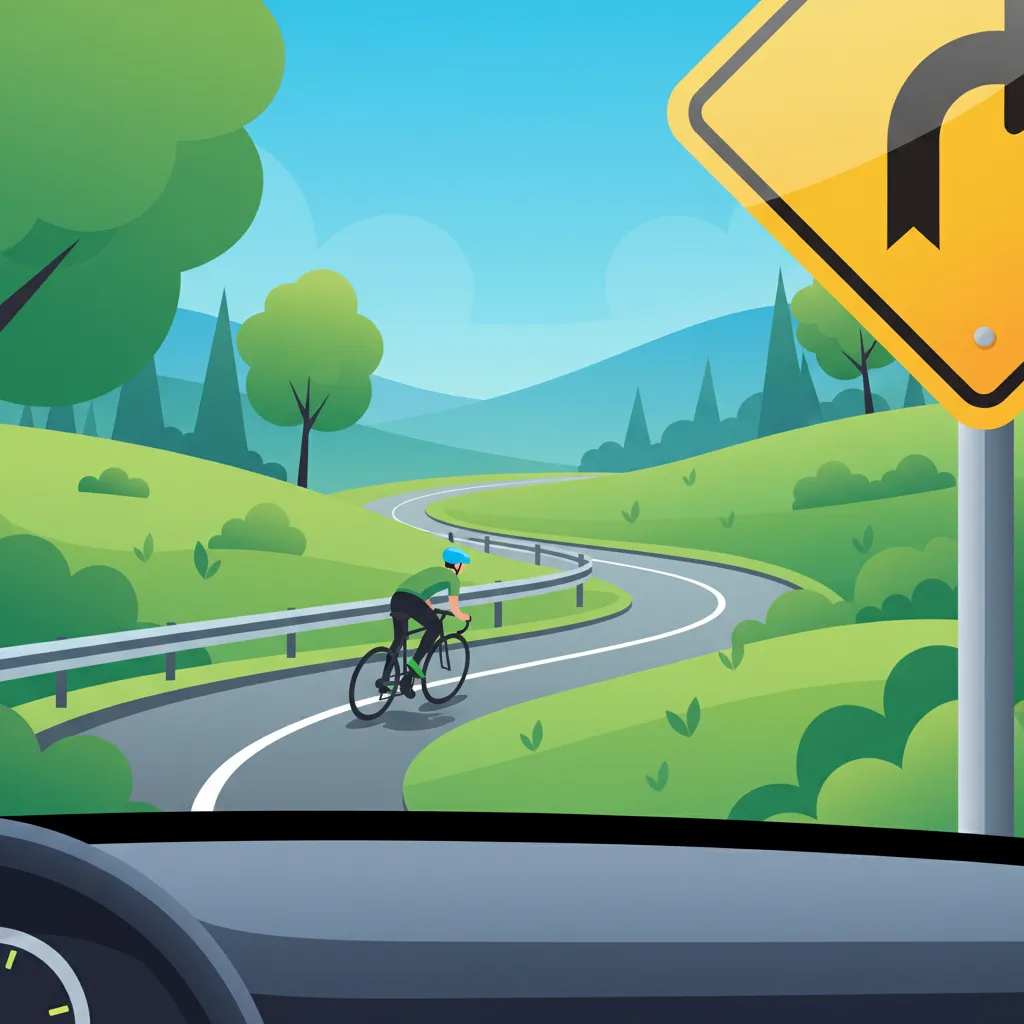
In this lesson, learners study warning signs that alert drivers to potential hazards, focusing on those that are particularly relevant to motorcyclists. The content includes signs indicating curves, slippery surfaces, animal crossings, tram tracks, and construction zones, each requiring specific riding adjustments. The lesson teaches riders how to interpret these signs to anticipate hazards, adjust speed appropriately, and maintain a safe distance from potential dangers.

This lesson breaks down the physics of stopping a vehicle. It defines reaction distance (the distance traveled before applying the brakes) and braking distance (the distance traveled while braking). The content explains how factors like speed, road condition, and tire grip influence the total stopping distance, and introduces proper braking techniques.

This lesson teaches systematic visual scanning techniques that enhance situational awareness while riding a motorcycle. Learners will explore forward and peripheral vision strategies, the importance of regular rear-view checks, and methods for anticipating hazards through environmental cues. The content outlines scanning patterns that allow riders to monitor traffic flow, detect lane changes, and assess vehicle speeds, enabling them to identify potential dangers early.
This lesson explores how riders can use engine braking to manage speed without over-relying on the mechanical brakes, especially during downhill scenarios. It teaches the proper use of downshifts combined with clutch modulation to achieve controlled deceleration while maintaining stability. The lesson also covers optimal gear selection for hill climbing and fuel efficiency, explaining how rpm management affects engine load and overall power delivery for enhanced safety.
Find clear answers to common questions learners have about Braking Systems and Safe Deceleration. Learn how the lesson is structured, which driving theory objectives it supports, and how it fits into the overall learning path of units and curriculum progression in Poland. These explanations help you understand key concepts, lesson flow, and exam focused study goals.
The front brake typically provides about 70-80% of a motorcycle's stopping power, while the rear brake accounts for the remaining 20-30%. It's crucial to use both brakes, but learn to apply the front brake more forcefully and progressively for efficient and safe deceleration.
ABS prevents the wheels from locking up during heavy braking by automatically modulating brake pressure. This allows the rider to maintain steering control and stability, significantly reducing the risk of skidding and crashing, especially on slippery surfaces.
While the front brake is the primary stopping force, relying solely on it can be dangerous, particularly in emergencies or on uneven surfaces. Using both brakes in a balanced way ensures maximum stopping power and stability. Over-reliance on the front brake without proper technique can also lead to a dive or loss of control.
Road surfaces drastically affect braking distances. Dry asphalt provides good grip, leading to shorter stopping distances. Wet surfaces reduce friction, increasing stopping distances significantly. Ice or loose gravel offers very little grip, making stopping distances extremely long and challenging, highlighting the importance of ABS and careful braking.
Brake fade is a temporary loss of braking performance caused by overheating of the brake components, often during prolonged or heavy braking. To prevent it, use a combination of front and rear brakes, avoid 'feathering' the brakes unnecessarily, and utilize engine braking when appropriate, especially on long descents.
Build custom practice sessions tailored precisely to your needs. Focus on areas requiring improvement, review specific Polish road signs, or master complex traffic rules to ensure full preparation for your official driving license exam.