The P1 'Stop' sign is a crucial traffic control signal used by police officers, particularly at intersections. It means you must come to a complete stop if you are approaching the officer from the front or from behind, and the officer is facing in your direction. Traffic approaching from the officer's sides is usually permitted to proceed. Remember, the officer's directions always override traffic lights and other signs, so always pay close attention to their body orientation and any gestures.
Mastering the P1 'Stop' road sign meaning is essential for your Swedish theory test revision. This explanation helps clarify when and why you must stop for a police officer, ensuring safe interpretation of traffic signs.
This signal means STOP for road users approaching the officer from the front or from behind. It is commonly used in intersections and remains valid as long as the officer continues facing the same direction. The officer’s body orientation is the key: if you are in the direction the officer faces, you must stop and wait. If you approach from the side, it indicates the way is clear for you and you are allowed to drive, provided you do so safely.
You must stop if you approach the officer from the front or from behind while the officer is oriented in your direction. Traffic coming from the officer’s sides may proceed.
Get clear, practical answers to the most common questions about the P1 - Stop (Officer Facing You From Front or Back) road sign. Learn how the sign works, what rules it represents, and how it affects real driving situations. This FAQ strengthens your understanding and supports accurate decision making for the Swedish driving theory exam in Sweden.
The P1 'Stop' sign means you must stop your vehicle if you are approaching a police officer from the front or from behind, and the officer is facing your direction. If you are approaching from the side, you may proceed if safe. This signal is critical for traffic management by law enforcement.
The P1 'Stop' signal is valid only as long as the police officer maintains the same body orientation. Once the officer turns to face traffic from the sides, or changes their direction, the signal for vehicles previously stopped may change. Always watch the officer's movements.
No, when a police officer is directing traffic using signals like the P1 'Stop' sign, their directions take precedence over traffic lights, other traffic signs, and road markings. You must follow the officer's instructions precisely.
A common mistake is assuming that if the officer is not directly looking at you, you can proceed, or failing to stop completely. Another trap is believing that a green light or a 'go' signal from another direction overrides the officer's stop command. Always prioritize the officer's body orientation and explicit gestures.
Yes, if you are approaching the police officer from their side, and they are facing away from you or towards other traffic, you are generally permitted to proceed. However, you must still do so safely and be aware of any other instructions the officer might give.
A clear reference image of the P1 - Stop (Officer Facing You From Front or Back) road sign used in Sweden.

The P1 - Stop (Officer Facing You From Front or Back) road sign may also be known by these alternative names or terms.
The P1 - Stop (Officer Facing You From Front or Back) road sign is part of the Signals by Police Officer (P) category, which groups together signs with similar rules and functions.
Comparing related traffic signs like the 'Stop' signal by a police officer helps solidify your understanding and prevent common mistakes during your theory test revision. Effective traffic sign comparison is key for better sign recognition and theory test preparation.

What to do when a police vehicle signals you to follow and stop.

P11: Pull Over and Stop for Police Vehicle Instructions

You must stop when the police officer's palm faces you.

Understand the P3 'Stop' Sign with a Police Lantern

Understand the Police 'Proceed' Signal (P4) and How to React Safely

P5: Slow Down When You See the Officer Facing You

P6 Control Sign: You Must Enter the Inspection Area
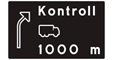
P7 Advance Information: Control Ahead warns you of an upcoming checkpoint.
Connect visual signage with essential Swedish traffic rules by exploring our curated set of practice questions and detailed road safety explanations. These resources reinforce your ability to interpret complex road situations according to Transportstyrelsen standards.
Understanding road markings is a fundamental requirement for the Swedish driving license theory exam and safe daily driving. This guide provides a clear breakdown of critical markings such as M13, M14, M15, and M16, explaining how they define priority and safety boundaries even when standard road signs are absent. You will learn the specific behavioral expectations required when approaching crossings, ensuring you can navigate Swedish traffic with confidence and compliance.
As Sweden transitions toward a more sustainable and technologically advanced transport system, new challenges and opportunities emerge for road users. This overview explains how concepts such as automated driving, high-capacity transport, and vehicle electrification affect daily driving and long-term infrastructure. Developing a solid understanding of these shifts is essential for mastering the modern Swedish traffic environment and understanding future regulatory standards.
Master essential pre-trip lighting and visibility checks to ensure safety on Swedish roads.
Navigate Swedish Railway Crossings Safely and Confidently for Your Driving Theory Exam
This instruction is directed at the driver of the vehicle behind the police vehicle. It means you must continue following the police vehicle as it leads you to a safe stopping location. When the police vehicle stops, you must stop behind it and wait for further directions. The command may be reinforced or given using a stop paddle to make it unmistakable. You should follow calmly, keep a safe distance, and avoid abrupt manoeuvres.
This is a direct stop command aimed at the road user the officer’s palm faces. The palm acts as a clear visual barrier meaning you are not permitted to continue. The signal can be reinforced or replaced by a stop paddle, which makes the command easier to notice. You must stop promptly and remain stopped until you are given a different instruction.
After reviewing this complete list of Swedish road signs, deepen your understanding by exploring signs by category or practicing with simulated test questions. Solidify your recognition skills and ensure you are fully prepared for every aspect of the official driving theory exam.
All Swedish Road Signs List