
The P11 road sign is an instruction given by a police vehicle using alternating blue and red flashing lights, signalling that you must pull over to the roadside and stop your vehicle ahead of them. This is a critical communication method used by law enforcement to halt traffic safely. When you see this signal, it's essential to indicate your intention, check your mirrors and blind spots, and find the nearest safe location to stop without endangering yourself or others. Wait for further instructions from the police after you have stopped.
This crucial sign, P11, directs you to pull over and stop ahead of a police vehicle displaying flashing blue and red lights. Proper interpretation is vital for road safety and compliance during traffic stops, making it a key topic for theory test revision.
This signal instructs the driver of a vehicle ahead of the police vehicle to pull in to the side of the road and stop. It is given using alternating flashing blue and red lights, making it clear that you are being directed to stop. You should indicate, check mirrors and blind spots, and choose the nearest safe place to stop without creating danger for others. Stop in a position ahead of the police vehicle and wait for further instructions.
If you are driving in front of the police vehicle and it shows alternating blue and red flashing lights, you must pull over to the roadside and stop ahead of the police vehicle.
Get clear, practical answers to the most common questions about the P11 - Pull Over and Stop in Front of the Police Vehicle road sign. Learn how the sign works, what rules it represents, and how it affects real driving situations. This FAQ strengthens your understanding and supports accurate decision making for the Swedish driving theory exam in Sweden.
The P11 sign isn't a physical sign; it's a directive from a police vehicle. When police use alternating flashing blue and red lights behind you, it means you must pull over to the side of the road and stop your vehicle at a safe location ahead of their car. This is a signal to halt your journey temporarily.
Upon seeing the flashing blue and red lights, you must safely pull over and stop. This involves signalling your intention, checking mirrors and blind spots, and choosing a safe spot to stop without blocking traffic or creating a hazard. You should stop ahead of the police vehicle and wait for instructions.
Common mistakes include continuing to drive, stopping abruptly in an unsafe place (like a curve or bridge), or not signalling. In the theory exam, remember that safety and clear communication are key. Always indicate, check thoroughly, and find a safe stopping point before stopping ahead of the police car.
Yes, you should avoid stopping in obviously unsafe locations like sharp bends, on bridges, or too close to junctions if a safer alternative exists nearby. However, if no better option is available, you must stop even in a less ideal spot, but do so with extreme caution and be ready to move if directed.
While not always mandatory, turning on your hazard lights can be a good idea if you are stopping in a place that might surprise other drivers or if it's dark or visibility is poor. This helps warn other road users that your vehicle is stationary. Always prioritise safe stopping first.
A clear reference image of the P11 - Pull Over and Stop in Front of the Police Vehicle road sign used in Sweden.

The P11 - Pull Over and Stop in Front of the Police Vehicle road sign may also be known by these alternative names or terms.
The P11 - Pull Over and Stop in Front of the Police Vehicle road sign is part of the Signals by Police Officer (P) category, which groups together signs with similar rules and functions.
Comparing signs like 'P11: Pull Over and Stop for Police Vehicle Instructions' with other police signals helps solidify your understanding and improve recall. This focused traffic sign comparison is crucial for effective theory test revision and mastering sign recognition.

Stop Your Vehicle Immediately If an Officer is Facing You or Your Rear

What to do when a police vehicle signals you to follow and stop.

You must stop when the police officer's palm faces you.

Understand the P3 'Stop' Sign with a Police Lantern

Understand the Police 'Proceed' Signal (P4) and How to React Safely

P5: Slow Down When You See the Officer Facing You

P6 Control Sign: You Must Enter the Inspection Area
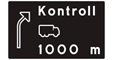
P7 Advance Information: Control Ahead warns you of an upcoming checkpoint.
Connect visual signage with essential Swedish traffic rules by exploring our curated set of practice questions and detailed road safety explanations. These resources reinforce your ability to interpret complex road situations according to Transportstyrelsen standards.
Learn about the dominant car colors on Swedish roads, with white, black, and grey leading the pack according to Transportstyrelsen. While most cars are becoming more anonymous, some colors like green and orange are seeing a rise. This information can enhance your awareness of vehicle visibility and how it relates to safe driving practices in Sweden, a subtle but important aspect for your theory exam.
Master Emotional Control for Safer Driving and a Confident Exam Pass.
Learn why keeping your vehicle's lights clean and operational is paramount for safe driving in Sweden, particularly during its extended periods of low light, snow, and fog. This guide focuses on practical ways to ensure your lights are effective, allowing other road users to see you clearly, a key aspect for both safe driving and passing your theory test.
Master the hazards of slush and melting snow for a safer drive and a successful exam.
Amber arrows are lane control signals that instruct drivers to move out of a particular lane and into another lane in the direction indicated. They are used to manage traffic around hazards, incidents, or lane closures ahead. When amber arrows are displayed, you should begin planning your lane change promptly, check mirrors and blind spots, signal clearly, and move smoothly when it is safe. The goal is to clear the lane before it becomes closed or before you reach a dangerous area.
This warning sign indicates a railway level crossing that does not have barriers. Because there are no gates to physically block traffic, you must rely on observation and any warning signals present. Reduce speed, look and listen carefully for trains from both directions, and be prepared to stop. Do not cross unless you are sure the track area is clear and you can complete the crossing without stopping. Visibility may be reduced by curves, vegetation, buildings, or weather, making cautious approach essential.
After reviewing this complete list of Swedish road signs, deepen your understanding by exploring signs by category or practicing with simulated test questions. Solidify your recognition skills and ensure you are fully prepared for every aspect of the official driving theory exam.
All Swedish Road Signs List