The P2 sign, showing a police officer's palm facing you (or a stop paddle), is a direct command to stop. This traffic sign indicates you must halt your vehicle immediately and remain stopped until given a different signal. This directive overrides traffic lights, so always obey the officer's command for safety and traffic flow.
This crucial police signal demands an immediate stop when the officer's palm is directed at you, signifying a critical point for decision-making during your theory test revision. Proper recognition and response to this traffic sign explanation are vital for safe Swedish driving and exam success.
This is a direct stop command aimed at the road user the officer’s palm faces. The palm acts as a clear visual barrier meaning you are not permitted to continue. The signal can be reinforced or replaced by a stop paddle, which makes the command easier to notice. You must stop promptly and remain stopped until you are given a different instruction.
You must stop when the officer’s palm is facing you. The signal may also be given using a stop paddle.
Get clear, practical answers to the most common questions about the P2 - Stop (Palm Facing You) road sign. Learn how the sign works, what rules it represents, and how it affects real driving situations. This FAQ strengthens your understanding and supports accurate decision making for the Swedish driving theory exam in Sweden.
The P2 sign means you must stop your vehicle immediately when a police officer's palm is directed towards you. This signal, sometimes reinforced by a stop paddle, is a mandatory stop command that takes precedence over other traffic signals like traffic lights.
If a police officer's palm is facing you, you must stop your vehicle safely and promptly. Do not proceed until the officer signals you to do so, for example, by waving you on or changing their signal. This applies even if your traffic light is green.
No, creeping forward is not allowed. The 'Stop (Palm Facing You)' signal is a clear command to halt. You must stop immediately in a safe position, ensuring your vehicle doesn't obstruct any crossings or junctions, and wait for further instructions from the officer.
A common mistake is assuming the signal is not for you or trying to proceed under a green light. Learners sometimes also hesitate to stop completely or stop too far past the officer. Always remember: if the palm faces you, you must stop, no exceptions.
No, there is no functional difference. A stop paddle is often used to make the stop command even clearer, especially in busy traffic or poor visibility. Whether it's the officer's hand or a stop paddle displaying 'STOP' and facing you, the instruction to stop remains the same.
A clear reference image of the P2 - Stop (Palm Facing You) road sign used in Sweden.

The P2 - Stop (Palm Facing You) road sign may also be known by these alternative names or terms.
The P2 - Stop (Palm Facing You) road sign is part of the Signals by Police Officer (P) category, which groups together signs with similar rules and functions.
By reviewing signs like "Stop (Palm Facing You)" alongside other police signals, you enhance sign recognition and reduce confusion. This focused comparison is essential for accurate driving theory test revision and mastering traffic sign differences.

Stop Your Vehicle Immediately If an Officer is Facing You or Your Rear

What to do when a police vehicle signals you to follow and stop.

P11: Pull Over and Stop for Police Vehicle Instructions

Understand the P3 'Stop' Sign with a Police Lantern

Understand the Police 'Proceed' Signal (P4) and How to React Safely

P5: Slow Down When You See the Officer Facing You

P6 Control Sign: You Must Enter the Inspection Area
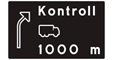
P7 Advance Information: Control Ahead warns you of an upcoming checkpoint.
Connect visual signage with essential Swedish traffic rules by exploring our curated set of practice questions and detailed road safety explanations. These resources reinforce your ability to interpret complex road situations according to Transportstyrelsen standards.
When you encounter a traffic accident in Sweden, your immediate actions can be critical. This guide explains how to prioritise your own safety while fulfilling your legal duty to assist and report the incident. Learn the correct procedures for securing the scene, offering aid, and contacting emergency services like Polisen or the national emergency number 112, all essential knowledge for passing your driving theory test.
Discover what Swedish traffic law requires of you if you witness or come across a traffic accident. This guide explains how to stop safely, offer appropriate assistance using the L-ABC method, and what to report to emergency services. Knowing these procedures is vital for both your safety and legal compliance in Sweden.
Master Emotional Control for Safer Driving and a Confident Exam Pass.
Master the hazards of slush and melting snow for a safer drive and a successful exam.
This sign warns that you are approaching a bridge that can open for boat traffic. When the bridge is opening or about to open, traffic may be stopped using signals, barriers, or both. You should reduce speed, watch for traffic lights and gate arms, and be ready to stop at short notice. Never drive around barriers or ignore red signals, as the roadway may separate or become unsafe. Wet surfaces and metal bridge components can also reduce grip.
This sign warns of a risk of stone chips from loose gravel or debris being thrown up by passing vehicles. Stone impacts can damage windscreens, paintwork, and headlights, and the hazard increases when vehicles drive too close at speed. Reduce speed, increase following distance, and avoid hard acceleration that sprays gravel. The sign is generally not used on gravel roads where stone chips are common; instead it highlights unusual or temporary conditions such as resurfacing or loose chippings on an otherwise paved road. Be cautious when meeting large vehicles, which can throw stones with greater force.
After reviewing this complete list of Swedish road signs, deepen your understanding by exploring signs by category or practicing with simulated test questions. Solidify your recognition skills and ensure you are fully prepared for every aspect of the official driving theory exam.
All Swedish Road Signs List