
The P5 'Reduce Speed' road sign is a specific instruction given by a police officer, meaning you must slow down when the officer is facing you and giving the slow-down signal. This sign is used to manage traffic flow, especially around hazards, incidents, or during checks. At night or in poor visibility, it might be accompanied by a white or yellow light or reflector for better visibility. Drivers should anticipate this signal by slowing down smoothly and early, maintaining a safe distance, and being ready for further instructions.
Master the P5 'Slow Down' road sign meaning to correctly interpret this critical police signal during your theory test revision. Understanding traffic sign explanation for officer signals ensures safe interaction with Swedish traffic authorities.
This signal instructs the road user the officer faces to slow down. It is used to calm traffic approaching hazards, incidents, checks, or areas with limited visibility. In darkness or reduced visibility, the signal can be clarified by a lantern showing white or yellow light, or by reflective equipment returning white or yellow light. You should slow down early, keep a safe following distance, and be prepared for additional directions such as stopping or diverting.
You must reduce your speed when the officer is facing you and gives the reduce-speed signal. At night or in poor visibility, it may be reinforced with a white or yellow light or reflector.
Get clear, practical answers to the most common questions about the P5 - Reduce Speed (Officer Facing You) road sign. Learn how the sign works, what rules it represents, and how it affects real driving situations. This FAQ strengthens your understanding and supports accurate decision making for the Swedish driving theory exam in Sweden.
The P5 sign is a direct command from a police officer indicating that you must reduce your speed when they are facing you and giving the slow-down signal. It is not a passive warning but an active instruction to alter your speed for safety or traffic management.
You must reduce your speed as soon as you understand the officer's signal. If it's dark or visibility is poor, the signal might be reinforced by a white or yellow light or reflector. Slow down smoothly and promptly, maintaining awareness of the officer and surrounding traffic, and prepare for potential further directions like stopping.
A common mistake is failing to react promptly or adequately to the signal, perhaps by maintaining speed or braking too late. Learners might also overlook the signal if it's reinforced by lights, assuming it's just part of the equipment. Always treat the officer's signal as a direct command requiring immediate and appropriate action.
No, the P5 sign's primary instruction comes from the officer's gesture. Lights or reflectors may be used to enhance the visibility of the signal, particularly at night or in adverse weather conditions, but they are not mandatory. The officer's signal itself is the critical element.
No, overtaking is generally not permitted when you are being signalled to reduce speed by an officer. Your priority is to comply with the instruction to slow down, maintain a safe distance from vehicles ahead, and remain attentive to the officer's directions. Overtaking would be unsafe and contrary to the intent of the signal.
A clear reference image of the P5 - Reduce Speed (Officer Facing You) road sign used in Sweden.

The P5 - Reduce Speed (Officer Facing You) road sign may also be known by these alternative names or terms.
The P5 - Reduce Speed (Officer Facing You) road sign is part of the Signals by Police Officer (P) category, which groups together signs with similar rules and functions.
Comparing signs like 'Reduce Speed (Officer Facing You)' with others helps you quickly identify key differences and similarities, crucial for accurate theory test revision and preventing mistakes on the road. Sharpen your traffic sign comparison skills to build stronger recall.

Stop Your Vehicle Immediately If an Officer is Facing You or Your Rear

What to do when a police vehicle signals you to follow and stop.

P11: Pull Over and Stop for Police Vehicle Instructions

You must stop when the police officer's palm faces you.

Understand the P3 'Stop' Sign with a Police Lantern

Understand the Police 'Proceed' Signal (P4) and How to React Safely

P6 Control Sign: You Must Enter the Inspection Area
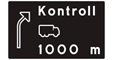
P7 Advance Information: Control Ahead warns you of an upcoming checkpoint.
Connect visual signage with essential Swedish traffic rules by exploring our curated set of practice questions and detailed road safety explanations. These resources reinforce your ability to interpret complex road situations according to Transportstyrelsen standards.
When you encounter a traffic accident in Sweden, your immediate actions can be critical. This guide explains how to prioritise your own safety while fulfilling your legal duty to assist and report the incident. Learn the correct procedures for securing the scene, offering aid, and contacting emergency services like Polisen or the national emergency number 112, all essential knowledge for passing your driving theory test.
Discover what Swedish traffic law requires of you if you witness or come across a traffic accident. This guide explains how to stop safely, offer appropriate assistance using the L-ABC method, and what to report to emergency services. Knowing these procedures is vital for both your safety and legal compliance in Sweden.
Master Emotional Control for Safer Driving and a Confident Exam Pass.
Master essential pre-trip lighting and visibility checks to ensure safety on Swedish roads.
This warning sign indicates a stretch where vehicles pulled by animals, such as horse-drawn carts, frequently cross or may be present on or near the road. These vehicles typically move slowly and may take up significant space, creating large speed differences and overtaking risks. Horses can be startled by noise or close passing, which can lead to unpredictable movements. Reduce speed, give wide clearance, and be ready to stop if necessary. Watch for additional symbols, as the sign may vary depending on local conditions.
This sign warns of a constructed hump or dip in the road designed to calm traffic. Passing it too fast can damage the vehicle, reduce control, or cause discomfort to passengers. Reduce speed early and keep the vehicle stable, especially if the hump is near crossings, schools, or residential areas. Be prepared for pedestrians or cyclists nearby, since speed-reducing features are often placed where vulnerable road users are present. In wet or icy conditions, the approach and exit can be slippery, so avoid harsh braking or acceleration.
After reviewing this complete list of Swedish road signs, deepen your understanding by exploring signs by category or practicing with simulated test questions. Solidify your recognition skills and ensure you are fully prepared for every aspect of the official driving theory exam.
All Swedish Road Signs List