
The P4 'Proceed' sign, often called a police wave-on, indicates that a police officer is directing you to continue forward. This signal authorizes traffic in the indicated direction to move, typically used to manage intersections or clear stopped traffic. While waved on, you must still proceed with caution, remain alert for other road users like pedestrians and cyclists, and be prepared for further instructions. Remember, you are always responsible for driving safely.
Mastering the meaning of the P4 'Proceed' signal is crucial for navigating Swedish traffic situations and preparing for your theory test. This police officer signal dictates when you may continue forward, ensuring smooth and safe progression on the road.
This signal authorizes traffic in the indicated direction to move on. The officer gives a waving motion in the direction of travel, communicating that the road user may proceed. It is typically used to release stopped traffic, manage flows through an intersection, or guide vehicles past an incident. You must still proceed carefully and be prepared to stop again if conditions change or another instruction is given.
You are allowed to continue forward in the direction indicated by the officer’s waving motion.
Get clear, practical answers to the most common questions about the P4 - Proceed (Continue Forward) road sign. Learn how the sign works, what rules it represents, and how it affects real driving situations. This FAQ strengthens your understanding and supports accurate decision making for the Swedish driving theory exam in Sweden.
The P4 sign means a police officer is directing you to continue moving forward in the direction they are indicating with a waving motion. It signifies that it is safe to proceed through the controlled point.
When a police officer gives the P4 'Proceed' signal, you should move forward smoothly and under control in the direction indicated. Always remain alert and be prepared to stop again if the officer changes their signal or if conditions require it.
No, you should not accelerate aggressively. The 'Proceed' signal means you can move, but you must still do so smoothly and under control, maintaining a safe speed and being mindful of your surroundings and other road users.
Yes, absolutely. Even when waved on by a police officer, you remain responsible for driving safely. You must yield to pedestrians, cyclists, or any other road users who may still be crossing or present in the area.
The P4 signal is specific to the direction indicated. If only one lane is being signaled to proceed, you should not assume all traffic is released. Wait for a clear signal for your lane or direction of travel, or follow any other instructions given by the officer.
No, the P4 'Proceed' signal is a temporary traffic control measure used by police officers to manage traffic flow manually. It is not a fixed road sign installed permanently. You will only see it when an officer is actively directing traffic.
A clear reference image of the P4 - Proceed (Continue Forward) road sign used in Sweden.

The P4 - Proceed (Continue Forward) road sign may also be known by these alternative names or terms.
The P4 - Proceed (Continue Forward) road sign is part of the Signals by Police Officer (P) category, which groups together signs with similar rules and functions.
Comparing similar road signs like the 'Proceed' signal with other police commands helps build strong recognition patterns crucial for your theory test revision. Sharpen your sign recognition and avoid confusion by studying these related traffic sign comparisons.

Stop Your Vehicle Immediately If an Officer is Facing You or Your Rear

What to do when a police vehicle signals you to follow and stop.

P11: Pull Over and Stop for Police Vehicle Instructions

You must stop when the police officer's palm faces you.

Understand the P3 'Stop' Sign with a Police Lantern

P5: Slow Down When You See the Officer Facing You

P6 Control Sign: You Must Enter the Inspection Area
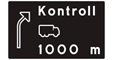
P7 Advance Information: Control Ahead warns you of an upcoming checkpoint.
Connect visual signage with essential Swedish traffic rules by exploring our curated set of practice questions and detailed road safety explanations. These resources reinforce your ability to interpret complex road situations according to Transportstyrelsen standards.
The Swedish BE license requires a thorough understanding of towing heavy trailers, extending beyond basic car driving. This article details critical theoretical aspects including load securing, stability management, and speed adaptation, all crucial for passing the Transportstyrelsen's theory examination and ensuring safe travel on Swedish roads.
The Swedish driving theory test presents unique challenges for non-native speakers. This guide focuses on building a robust glossary of Swedish traffic terminology and enhancing your comprehension of typical question formats. Understanding key terms and sentence structures used by Transportstyrelsen is crucial for translating your knowledge into correct answers and passing the exam.
Master the hazards of slush and melting snow for a safer drive and a successful exam.
Master Swedish Lane Rules for a Smooth, Safe, and Exam-Ready Drive
This warning sign indicates a danger ahead that cannot be adequately described by any other standard warning sign. It serves as a general alert to increase your vigilance and prepare to adjust your driving. The specific hazard is often clarified with an additional plate or nearby information, and it may be temporary or location-specific. Reduce speed, scan the road environment carefully, and be prepared for unexpected conditions such as unusual road layouts, temporary hazards, or local risks. Treat this sign as a prompt to drive defensively until the hazard is clearly passed.
This warning sign indicates a railway level crossing that does not have barriers. Because there are no gates to physically block traffic, you must rely on observation and any warning signals present. Reduce speed, look and listen carefully for trains from both directions, and be prepared to stop. Do not cross unless you are sure the track area is clear and you can complete the crossing without stopping. Visibility may be reduced by curves, vegetation, buildings, or weather, making cautious approach essential.
After reviewing this complete list of Swedish road signs, deepen your understanding by exploring signs by category or practicing with simulated test questions. Solidify your recognition skills and ensure you are fully prepared for every aspect of the official driving theory exam.
All Swedish Road Signs List